The Forecast
Trend in sight
Consumers today have more choice than ever over what they wear, how they shop and which fashion brands they want to associate themselves with. At the same time, for those plying their trade in the industry, doing the right thing and enjoying business success has never been trickier. Increased competition is a factor but so too are increasingly savvy customers who prioritise sustainability, manufacturing standards and an item’s longevity.
While it’s great that there is a movement to buy better, not every label is playing by the same rules, with greenwashing running rampant and a broader industry mentality still focused on an outdated seasonal model. There’s room for improvement across the entire world of fashion, from better shop fit-outs to smarter production. And thankfully a creative cast of business leaders is keen to make some important changes happen.
With this in mind we’ve asked a number of the sector’s top players to highlight the issues they will be focusing on in 2022. From the future of the suit – something slouchier but still smart and stylish – to the ingredients in our perfumes, we learn about the ideas they’re cooking up for an overhaul. These solutions will make the business of our high streets healthier, while also helping those manufacturing our clothes to work in fairer conditions.
The aim is to forecast where the diverse and complex industry of fashion is heading and plot a positive course for all of us, whether we’re buying or selling. So come on a journey with us, from Belgium’s best independent fashion retailer to the studio of the designer dreaming up the future of the department store, to learn a little more.
Interviews by Sebastian Cabrices, Ivan Carvalho, Annabelle Chapman, Aleksandar Cvetkovic, Nolan Giles and Nic Monisse.
1.
Fashion destinations to watch
Ania Kuczynska
“Economically, Central and Eastern Europe are going strong – and so is the fashion here. During the 1990s and 2000s, foreign companies were just producing clothes in the region but the market has changed, with more local designers now. Poland is fresh; its energetic and entrepreneurial people reflected in design. My brand shows how companies here can grow organically. I studied fashion in Rome and Paris, before returning to Poland to create my label here in Warsaw, under my own name. When I was growing up, Poland was changing rapidly and this has had a major impact on my work. My generation still remembers the grey times of communism but also the wild capitalism of the 1990s. This has left a strong mark on me and I have tried to capture it in my designs, which are very monochromatic. This brutalist vibe is trending now, which explains the wider appeal of design from the region.”
About the interviewee:
Kuczynska has made a name for herself with her sharp, mostly monochrome pieces for women, which are available in her showroom in Warsaw and online.
2.
The future of fashion communications
Lucien Pagès
“Every industry, including fashion, needs a good image. Traditional media will remain very important for the fashion industry, because we will always need quality journalism to provide the correct information. But in a world full of information and communication, fashion brands need to tell stories about themselves that people truly connect with. The efficiency of a brand’s communications will increasingly rely on the consistency of its story. These stories have to remain authentic. I could think of many ways to improve fashion communications myself, and more sustainable processes is one of them. We could, for example – even if it’s a small gesture – stop sending printed invitations, because everyone can receive them via email now.”
About the interviewee:
With his namesake PR and communications firm representing brands including JW Anderson, Schiaparelli and Courrèges, Pagès is particularly busy during fashion months.
3.
Innovation in retail
Ilse Cornelissens
“As a brand it’s important to make your own rules as to when you sell, and communicate it with your retailers. And if they don’t want to accept your rules, then don’t work with them. It’s very important to make sure that what fashion companies make and produce is given enough time to be sold fairly. About five years ago we decided to never put any item on sale in our shop. We thought, ‘If we’re going to do this, maybe our clients won’t understand why.’ Which made us think about ways to really involve our clients in what we were doing; we came up with this second-hand client sale as a result. We ask all our clients to bring in their old clothes and we resell them over one weekend. We do it once a season, emptying out the full store and filling it with only second-hand clothing from our clients. For what they sell, they receive a voucher that they can spend in our shop.”
About the interviewee:
Cornelissens is co-founder of Antwerp’s Graanmarkt 13, a restaurant-cum-guest house with a shop that stocks quality, independent labels.
4.
What buyers should be looking for
Damien Paul
“A sense of enjoyment and freedom in fashion has come back in a big way. Whenever you look at history, after uncertain times there’s always been this idea of dressing up as a mood-lifter – and that’s what we’re experiencing now. Customers are focusing on mood-lifting pieces more than ever and using fashion as a kind of feel-good experiment. In terms of how we buy going forward, so much of what we do is about really understanding fabrications and fit. Physically experiencing a new product is crucial. This year we’ll need to find the balance between remote and in-person buying to ensure that someone from our team is always seeing new brands or shows in the flesh and relaying that to the wider team back in London. We’re a global business, so we need to have a global mentality about how we buy and how we curate for different territories.”
About the interviewee:
Paul is head of menswear at Matchesfashion. He oversees the introduction of designers and product categories, exclusive collections and studio franchises.
5.
Where next for fragrance?
Victoire de Taillac-Touhami
“The fragrance industry should follow what is happening in cosmetics, which is becoming transparent about ingredients and composition. It should not only be about the name on the bottle. When people buy from the big commercial brands, it is first of all about the name, followed by the scent and the physical bottle. But there should also be an awareness of the ingredients. Niche perfume brands are gaining more of a following now because people want to buy real stuff. At Buly, we committed to water-based perfume when no-one was doing it. My husband’s vision was to find a way to make perfume without alcohol. It was a challenge but it has been a big success: water-based perfume accounts for 30 to 40 per cent of our sales. The next thing in the fragrance industry should be a greater commitment to traceability – as in the food industry. It is happening already, though it will be a long journey.”
About the interviewee:
De Taillac-Touhami and her husband Ramdane Touhami built their fragrance company Buly on the foundation of an older French perfumer that they bought in 2014.
6.
The future of jewellery
Nathalie Jean
“Jewellery’s future is looking bright. People now look more and more for customised service and truly personalised pieces. This extends even to ‘recycling’ jewellery heirlooms one has in the family and transforming them into more contemporary creations, which in a way is ecological. Man-made or lab-grown gems have recently started to appear on the market; it is still a bit early to understand how people will react but they potentially will be favoured by millennials. Shopping for jewellery online is, of course, on the rise. For now, though, most luxury shoppers use websites and social media to gather information and compare prices prior to an in-store purchase. When people put their money into serious, high-end pieces, they want something classic, as it is an investment that will maintain its value.”
About the interviewee:
Jean designs her jewellery line in Milan and is co-owner of Jean/Prampolini, a consultancy that develops haute jewellery and contemporary pieces for high-end luxury brands.
7.
Where menswear is heading
Mats Klingberg
“We’ve exhausted the leisurewear and loungewear thing that’s dominated menswear for the past couple of years. It’s still going to be there but now it’s more about how to dress up in a softer, more comfortable way. Tailoring is going to be less about wearing armour and more about unstructured, casual separates. We’re also expecting customers to return to shopping in-store in a big way, now that physical shopping is possible again. Certainly, we’ve learned that our customers prefer to shop in person – to be with other people, to interact and get advice, touch and feel the clothes. There’s a lot of talk about new online tools and avatars and so on but consumers have realised that in-person shopping is the best way to have an enjoyable experience and create a long-term relationship with a brand that’s built on trust.”
About the interviewee:
Klingberg is the founder of Trunk Clothiers, a brand affiliated with Monocle. It serves a menswear audience from its shops in London and Zürich and its website.
8.
The design of department stores
Ellen Van Loon
“The issue with our recent redevelopment project for KaDeWe in Berlin was thinking about how a shopping environment of such a large scale operates in the future. Is it about quantity of product or experience? In Europe you see many old department stores with beautiful glass windows and plasterboards put up in front of them, just to create more shelf space for what’s being sold there. This is not what a customer wants anymore. Department stores should be about quality of product and space. What we’ve been trying to provide, for many years, are simple things like getting the windows open again, providing terraces, exterior spaces and public access to the roof. For an architect these are the most normal things but somehow in retail this was totally neglected. You don’t want to be in an office without daylight, so why would you want to shop in an environment without daylight?”
About the interviewee:
Van Loon is a partner at Rotterdam-based architecture firm oma, working on shops from South Korea’s Galleria Department Store in Gwanggyo to blox/dac in Copenhagen.
9.
A more sustainable fashion industry
Dalena White
“I’m very optimistic. I was really depressed after what I saw in Bangladesh, Cambodia and India, I’ve seen ‘indigo rivers’ [where dye affects the water supply], child labour and horrific pollution. This was all caused from the pressure at the top of the industry to go cheap. For the first time I’m feeling like there is the will to change this. The EU has its pef process, which will trace a product’s environmental footprint. The International Wool Textile Organisation [iwto], where I work, is involved in it. We’re getting to a point where for the first time in history, globally, there will be a group of legislative people getting involved and saying, ‘OK, this is where we’re going to draw the line and actually legislate the fashion and textile industry.’ Many countries are watching what will play out here, so it’s imperative to get it right.”
About the interviewee:
White is the secretary-general at the iwto, which is currently working with the EU’s pef programme, developing ways to measure the environmental effects of consumer goods.
10.
The future of men’s tailoring
Claudio Marenzi
“The suit jacket, tie and shirt haven’t seen so much daylight recently but people are now coming back to being more dressed up. However, they’re no longer going to sacrifice comfort in doing so. It puts a lot of pressure on the jacket, because it’s the piece at the centre of what I call ‘new formal’. We’re in a period of reinvention that personally excites me. This garment [the jacket] should anchor your look, whether that is being dressed up for serious events, or being more casual and wearing it with jeans and sneakers. From a design perspective, it’s difficult to achieve this more relaxed look, because everything is about proportion. Garments need to be bigger or looser but without looking too ‘street’. It is a fine art getting the proportions right; we’re talking millimetres, not centimetres. This is something that Italian companies have the skill to do, so it gives our industry here an advantage.”
About the interviewee:
Marenzi is the president and CEO of Italian fashion company Herno. He’s also president of Pitti Immagine, leading the world’s most important menswear event, Pitti Uomo.
Soft centre
When it comes to international hubs of luxury fashion manufacturing, certain cities or regions spring to mind. Paris is known for haute couture, while Milan, the birthplace of high-end hat-making (ever wondered where the term “milliner” comes from?), remains a key component of northern Italy’s rich textile-making industry. Lesser known is Hawick in Scotland but, as the sign that’s posted on the small town’s border suggests, this is a world capital of top-tier cashmere manufacturing.
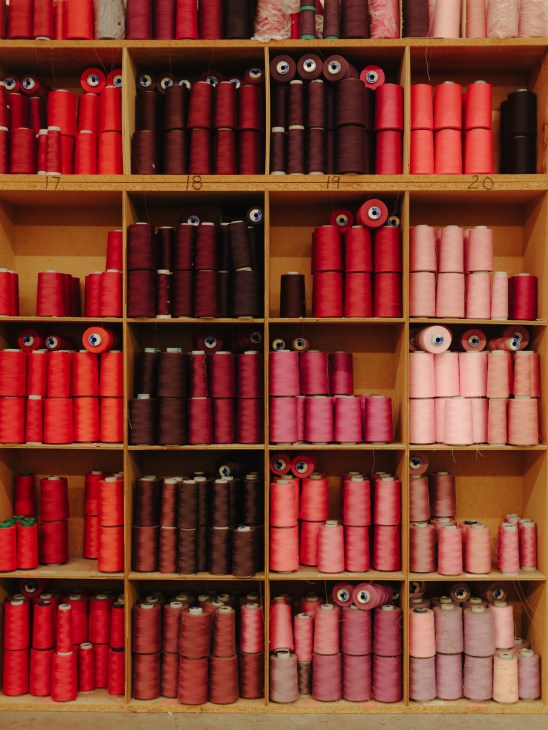

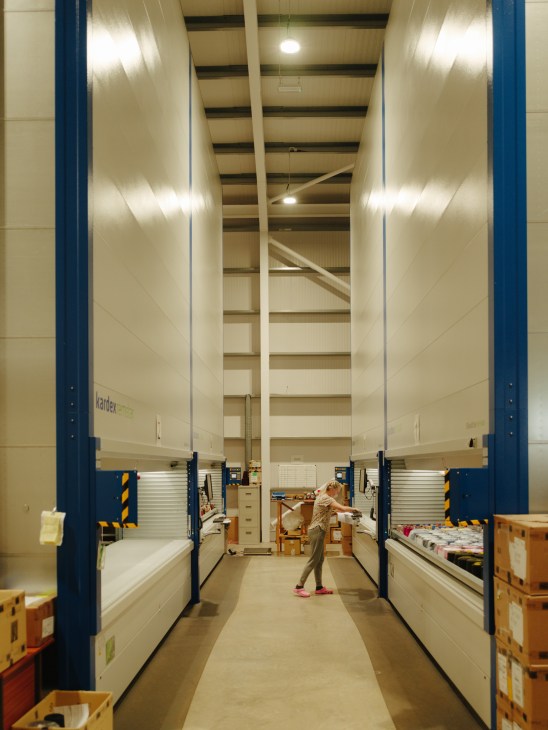
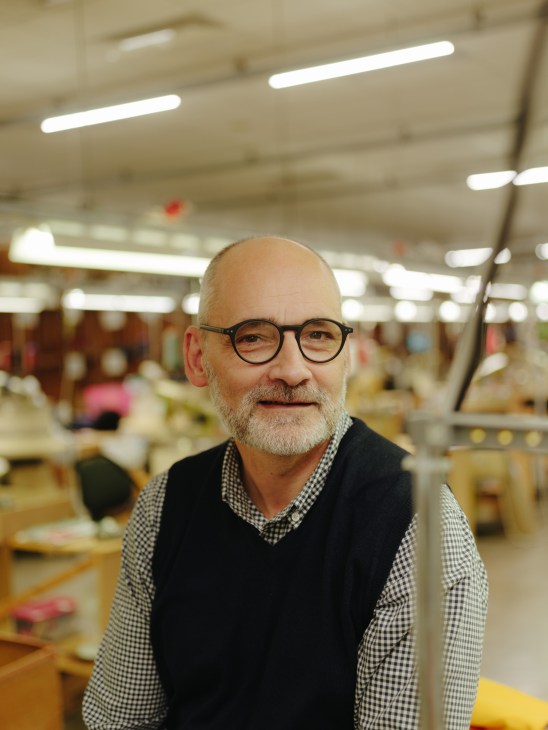
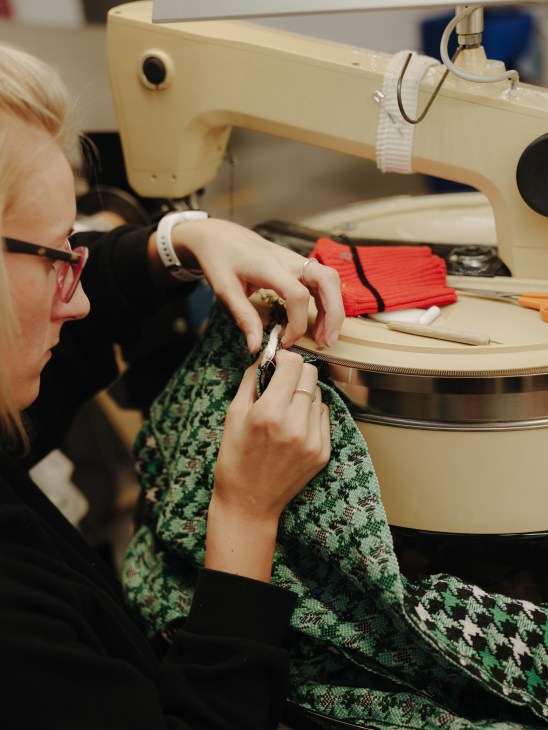
An hour and a half’s drive south of Edinburgh, at the confluence of the rivers Slitrig and Teviot on the nation’s southern border, Hawick has been a hub for clothes making since the 1700s. Today it’s a global go-to for the production of cashmere knitwear; the goat’s hair from which it is made is more weather resistant, lighter and warmer than that of a sheep. Many businesses make their own wares, including well-known brands such as Barrie, Hawico and Johnstons of Elgin. Their books are balanced by producing white-label cashmere garments for continental fashion houses, including Prada, Dior, Hermès and Chanel.
“Coco Chanel used to fish in the rivers here,” says Clive Brown, commercial and development director at Barrie, which was acquired by Chanel in 2012. “She found inspiration here and would come to Scotland a lot.” Founded in 1903, Barrie was an established mill when Chanel visited the region in the 1920s but it wasn’t until 1984 that they first worked together. That was when Barrie, then just a knitwear-maker, became Chanel’s cashmere producer of choice. For the French fashion house, Hawick’s woollen products and workers were regarded as the world’s best, offering the softest yarns and most skilled artisans, who were reared on the craft. Today, Barrie has harnessed its partnership with Chanel to grow its own eponymous label. As The Forecast tours its factory, workers – some of whom are third-generation employees – cut, stitch and sew scarves, jumpers and cardigans. Their attention to detail is meticulous and, despite machine assistance, the human touch is in evidence everywhere. “Our knowledge lies in the handcraft and methods that have been passed down by families through the generations,” says Brown.
These skills, such as the workers’ ability to identify the precise moment when a garment has been washed for the correct length of time, has helped Hawick to retain its reputation. It was also a factor in attracting the area’s current largest employer, 224-year-old Johnstons of Elgin, to move to the town. Originally a weaving company from the north of Scotland, it set up in Hawick in 1980 with a plan to expand into knitwear. “We were looking for a skilled workforce of people who could do the handwork on the knitting,” says Nick Bannerman, Johnstons’ global sales director. The company, which has a cashmere label of its own that’s considered an international luxury brand, also produces for a host of continental couture houses. “Our own brand represents about a third of our business, while the rest is private label serving a lot of the big houses,” says Bannerman. “We’ve had long relationships with them.”
These relationships have stayed the course, even in the face of increasing competition from Italy and Asia. Bannerman explains that Hawick’s endurance as a manufacturing base comes down to the purity and quality of its products. Italian cashmere is often knitted in a slacker way, while Asian cashmere might feel softer when it’s first worn but its quality can falter after multiple wears. Scottish cashmere is more tightly knitted and, for Bannerman, this is crucial. It results in items becoming more supple over time, lasting longer, holding their shape and resisting pilling. “What makes cashmere a luxury is that it should last,” says Bannerman. “Buying cashmere pieces should be an investment; the sort of thing that can be passed down from your dad to you and from you to your children.”
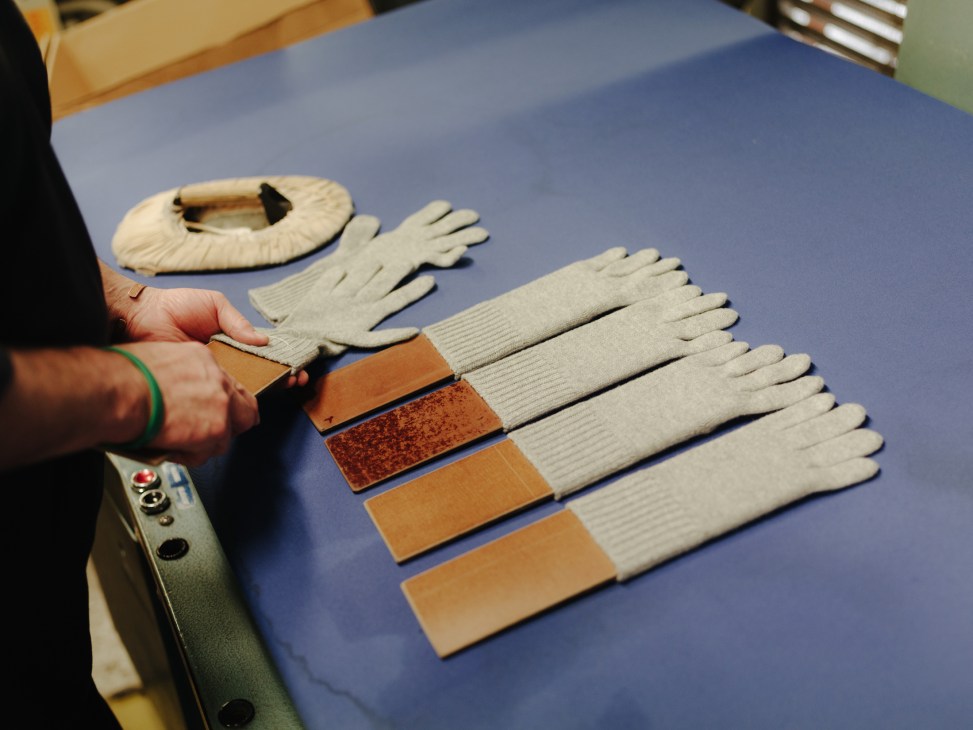
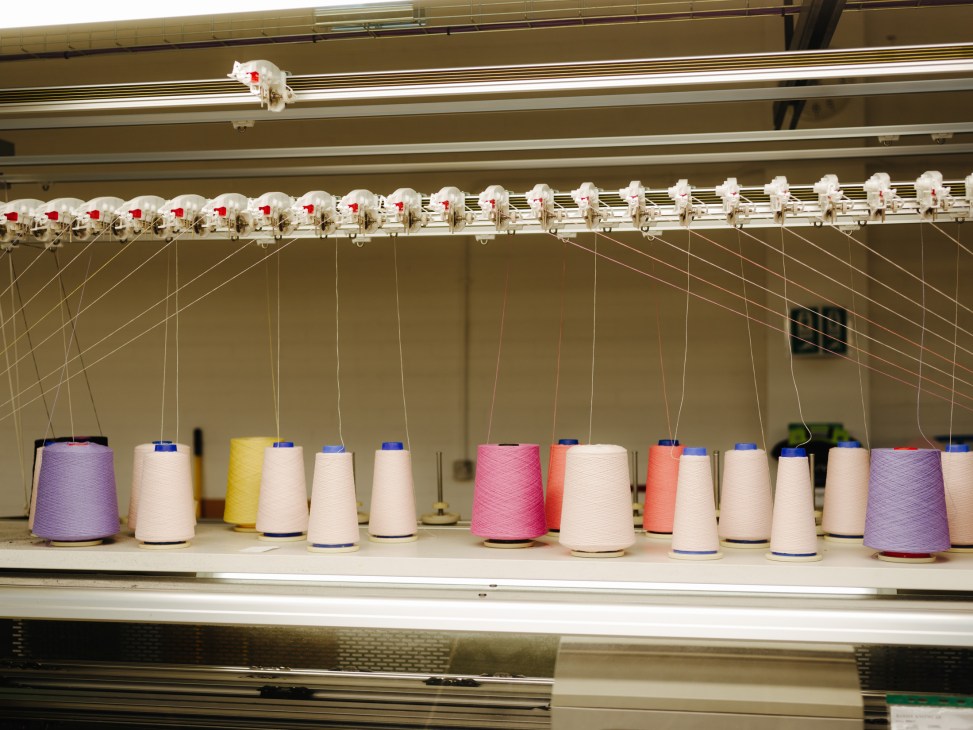
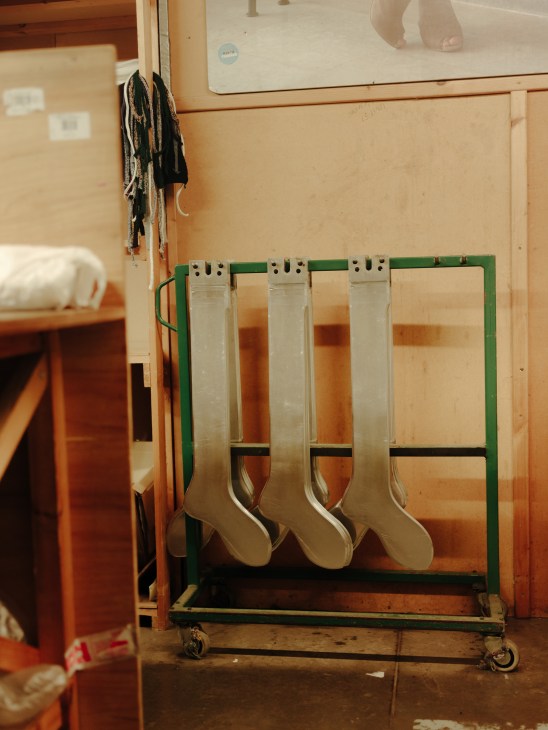


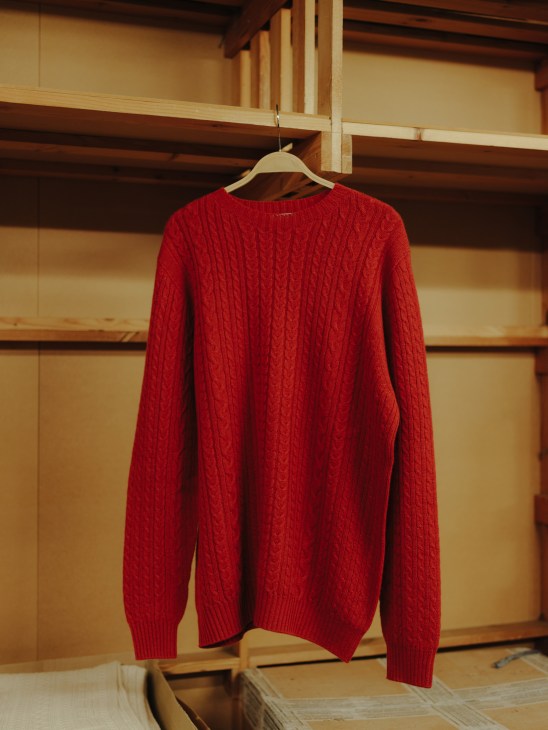
Not too long ago, the future of luxury fashion manufacturing in Hawick looked shaky. A downturn in the late 1980s and 1990s, in part due to international competition, resulted in work drying up and many makers, including Pringle of Scotland and McGeorge, closing or selling off their production facilities. But with Chanel’s investment in Barrie a decade or so later, and the rise of a more quality-conscious consumer across Europe, Hawick’s future as a manufacturing hub seems secure. Heritage brand Scott & Charters recently opened a factory in the town, while Barrie has established a trainee school with the capacity to take on 20 new pupils at a time – some of them the children of existing workers.
Hawick is reaping the benefits of striking the right balance between local entrepreneurship and foreign investment. “The big thing for Chanel was to save the knowledge, workmanship and handcraft for the future,” says Barrie’s Brown. “And it wasn’t just for them but for the whole of the couture and luxury industry. They couldn’t allow these skills to die.”
Generation game
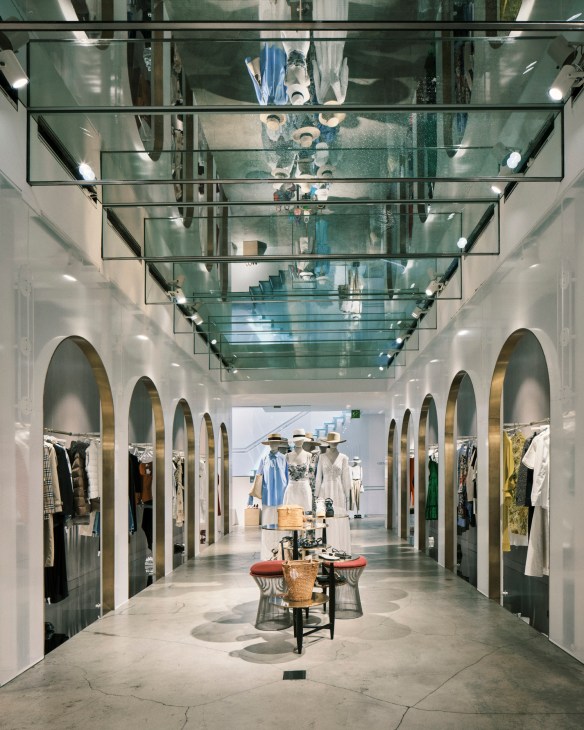
Established as an upmarket Florentine department store in 1929, Luisa Via Roma has grown into one of Italy’s most famous luxury fashion retailers. In the 1960s and 1970s it was the city’s go-to for cutting-edge ready-to-wear. Later it became one of the world’s first multi-brand retailers to go digital, with its e-commerce operations starting in 1999. The family business still operates from its department store on Via Roma in Florence, and has become known internationally as an online high-style tastemaker. Fashion successes like Sweden’s Totême and New York’s Khaite were given early exposure by Luisa Via Roma before reaching more mainstream success.
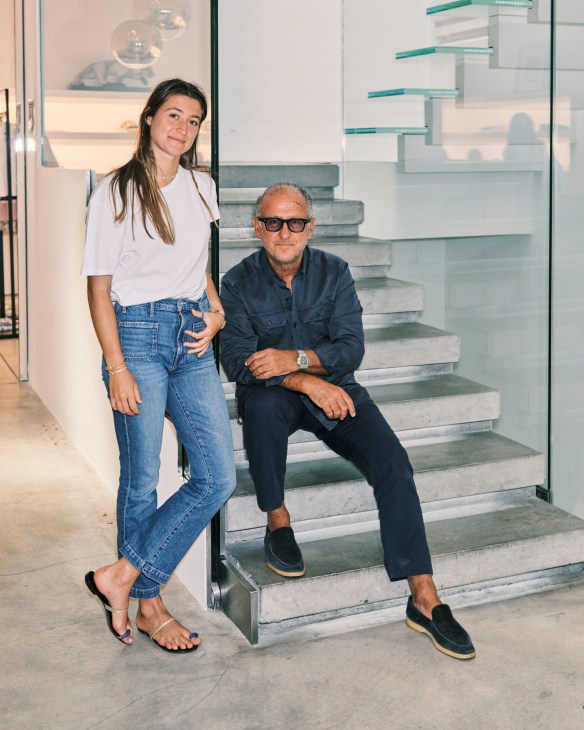
In October the company took on a €130m investment from Milan-based equity fund Style Capital, setting Luisa Via Roma on the path of global expansion. While the aim is to become a publicly traded company, the Panconesi family maintains 60 per cent of the empire they created. Andrea Panconesi took over the business from his grandmother Luisa when he was 18, and his 25-year-old daughter Annagreta Panconesi (pictured, on left, with Andrea) is creative director. They sat down with The Forecast to talk family business and global expansion.
After more than 90 years as an independent family business, why take on investment now?
Andrea Panconesi: There are just 10 major digital retailers like us in Europe and the US, but for a long time we’ve been the only large online multi-brand shop to remain completely in private hands. Luisa has been growing by 30 per cent year-on-year but we need to grow faster to keep up with the competitors as the cost of online marketing – the price of getting a customer to find and choose Luisa Via Roma over other outlets – is sky-rocketing.
You had no shortage of business suitors. How did you settle on a deal?Andrea: We received dozens of offers but we chose a partner, Style Capital, who shares our way of thinking. We have very clear ideas about the future and with this increase [in equity], we can grow internationally, especially in our primary market, the US. We’ll be able to beef up our logistics, which is the foundation of any online retailer and invest further in our proprietary digital platform. All of our staff will remain but we’ll add many more engineers.
How are you growing your US appeal?
Annagreta Panconesi: We’ve brought on a wide range of US brands, from emerging designers such as Sid Neigum and Peter Do to established names like Gabriela Hearst, Adam Lippes and Prabal Gurung. And the new generation of customers there is very aware of a company’s social responsibility, which is something that’s very important to us and that we can cultivate now with this investment. A part of our site is already dedicated to sustainable fashion brands and we’re planning our own resale branch of the online shop, like Vestiaire Collective, to create a circular market with vintage and second-hand designer goods, because that idea is so fundamental for fashion now.
Investors can be more interested in profit than a company’s social conscience. How will you navigate this?
Andrea: We made sure that our investor shared our sensibility. You can’t operate a business just based on profits any more; you need positive results for the environment and for the wellbeing of the world. Our business needs to be good, in the moral sense. We’ve partnered with charities, such as Unicef for which we raised €5m with an event this summer, and we’ll continue to do more in that respect. Society needs to change the way in which it operates, because what’s at stake is our survival. I hope that more businesses will adopt this philosophy.
You’re known for showcasing small designers. How do you choose them?
Annagreta: My dad used to meet designers himself and fret for days about what to order. But today I have a team of 35 buyers and we get everything done quickly because we have a clear idea about what we are looking for: primarily brands making a very high-quality product, often in Italy, that have a precise and recognisable identity. They need to reflect our style of luxury, to be seen on actors or other people in the public eye that reflect our taste and to have a well-organised business structure with reliable manufacturing. Many are still emerging and not that well known. But if we believe in their strategy when they tell us about their plans, and we believe in the capability of the person running the brand, we put our faith in them, which means investing our time and money in photographing and marketing their line. We carry more than 600 brands now, and we try to add 15 small designers to our mix every season. This year we’ve added Peter Do, Gimaguas, Amina Muaddi, Casablanca, Magda Butrym, Totême, Martine Serre, Christopher Esber and more.
Why did Luisa Via Roma leap into online retail so early?
Andrea: It happened by chance, just like all of the best things in my life, including my children. Nicola Antonelli, who is the son of one of my collaborators and who still works with us in marketing, came up with the idea of an online shop for Luisa and offered to create it for free. I couldn’t fathom what he was talking about but went for it anyway. Immediately after it launched I understood the potential of this tool, which allowed me to simultaneously share images of the collections I was buying for the shop with my clients abroad, where previously I was actually faxing and mailing images to them one by one. Then I hired engineers from the University of Pisa to create the system to run the online business, because there was nothing in those days – no Google, no social media, nothing. It was a different internet.
What’s next for Italian retail?
Andrea: Italy is made up of hundreds of cities and even little towns have had their own high-end multi-brand boutique as a point of reference for style culture. These small shops in small cities have been the force that imbued Italians with a passion for dressing well, introducing locals to luxury brands and to lesser-known brands that otherwise wouldn’t get exposure. Today the shops can’t keep up with online competitors and they risk going under. We need an organisation to save these boutiques. If they die out, fashion dies out, because fashion is born in Italy – it belongs to our bella vita – from fine Italian fabrication to the birth of ready-to-wear here in Florence. We need these shops to join forces in order to expand their online presence.
As a father-and-daughter team, what have you two taught each other?
Andrea: To dare! To throw yourself into new areas that are beyond your comfort zone – that’s what guides the progress of humanity. I didn’t know what I was doing with fashion when I was young. I was too distracted by the models to pay attention to the clothes themselves but I was curious about exploring things that were new or unknown to me. We were the first to order Kenzo in Italy. I didn’t sell a single kimono of theirs for three seasons but then it exploded.
Annagreta: We’re very different; we love each other but we could kill each other sometimes, at work. I’m much more conservative in certain things. I love history but he wants to erase history and only focus on the future. I’m interested in craft, in the way things were made in the past, so I bring that outlook to the brands I select for the shop. But I admire his forward- looking vision. Our approaches are opposite but they work well together.
Can West Berlin’s ICC become a cultural hub again?
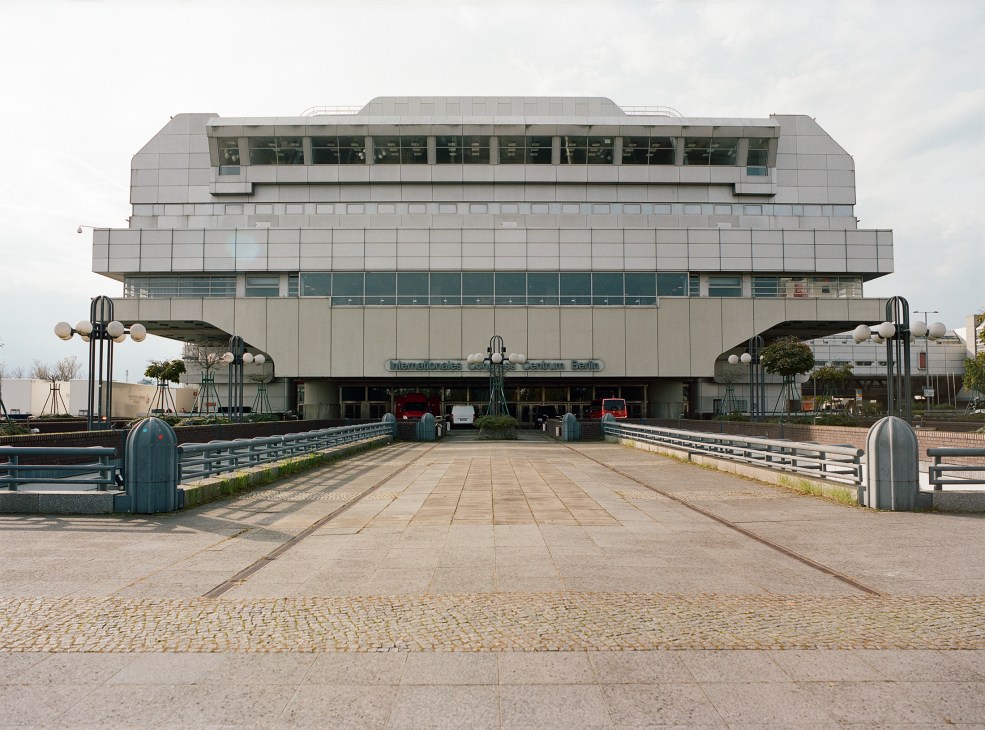
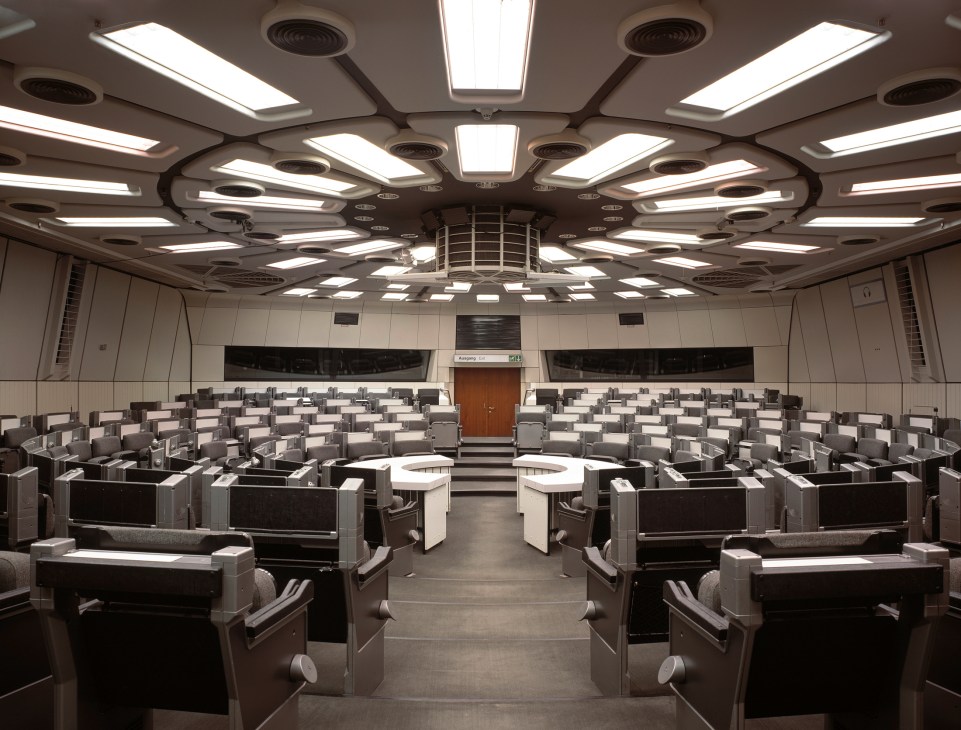
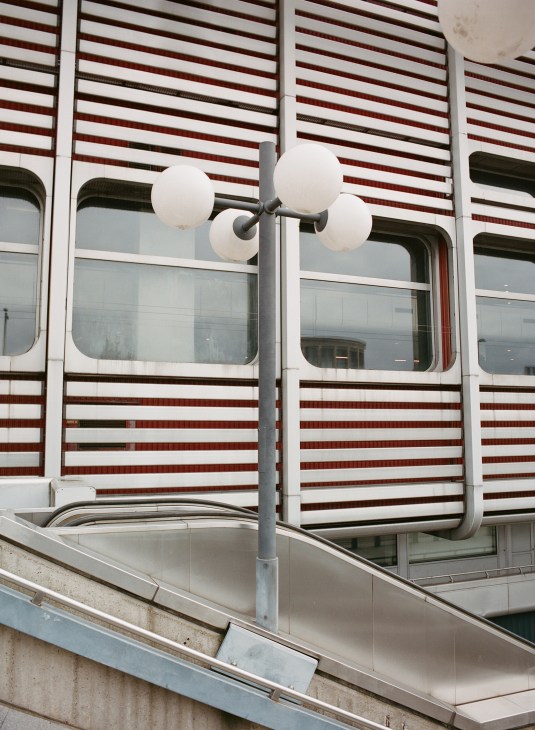
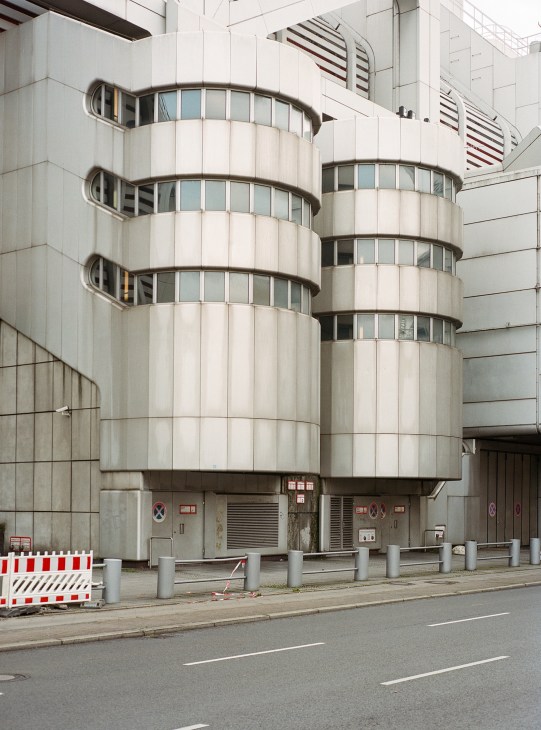
When the International Congress Centre (ICC) opened in West Berlin in 1979 it was one of the largest and most hi-tech conference venues in the world. Designed by architects Rolf Schüler and Ursulina Schüler-Witte, the spaceship-like building was more than 300 metres long and housed more than 80 rooms, a vast foyer, central bar, restaurant and lounge with views over the city. In the ICC’s 1980s and 1990s heyday it played host to events as big as the annual meeting of the World Bank and the IMF, and as avant garde as a concert by musician Laurie Anderson. Across the ICC’s two main auditoria, up to 9,000 delegates could watch keynote presentations on comfy chairs equipped with reading lamps and plugs for headsets with channels for simultaneous translations in up to eight languages. After a long day, the seating in the stalls could be pivoted to reveal a party-ready, timber-floored ballroom underneath.
Yet the ICC, which is connected via footbridge to the city’s main Messe Berlin fairgrounds, has been standing empty for eight years. The building’s slow decline started after the German capital’s reunification in 1990, when it was no longer needed to show off the technical prowess of West Berlin. With structural issues piling up, its doors closed for good in 2014. For a much-needed renovation to go ahead, local politicians will need to determine how the extraordinary space, which can accommodate up to 20,000 visitors on any given day, should be filled in the future.
“There is a whole generation of people who have never entered the building and don’t appreciate it from the outside,” says Thomas Oberender, the director of storied cultural institution Berliner Festspiele, which celebrated its 70th anniversary in October with a special event, The Sun Machine Is Coming Down, at the ICC. “My intention was to open it to the city again,” he adds. It was the first time the public could enter the ICC in almost a decade, and for 10 days, the blockbuster show brought in 26,000 visitors. There were film screenings and concerts in the two large halls, circus performances staged in the rear lounge, and site-specific artworks dotted along the promenades – but many came just to gawk at the interiors.
Stepping inside the ICC’s sprawling entrance foyer can give the impression of entering another era altogether. From the large moveable stage partitions and crisscrossing escalators to details such as the machine-like information points and coloured neon signage, the convention centre’s futuristic original interiors have been preserved remarkably well. Yet the building’s most innovative aspect is not the hi-tech auditorium but rather its floor plan. Less than a fifth is fixed for the use of congresses and the rest is open, flexible space. “The architects thought that the most important thing in every congress is not to meet in a locked room but to socialise outside,” says Oliver Elser, curator of the Deutsches Architekturmuseum in Frankfurt and an expert on the ICC’s history. “Nobody would pay for this kind of great gesture again.” But parts of the building are in a tired state: the dormant escalators are gathering dust, windows are flecked with dirt and the grey carpets look a decade overdue for a wash.
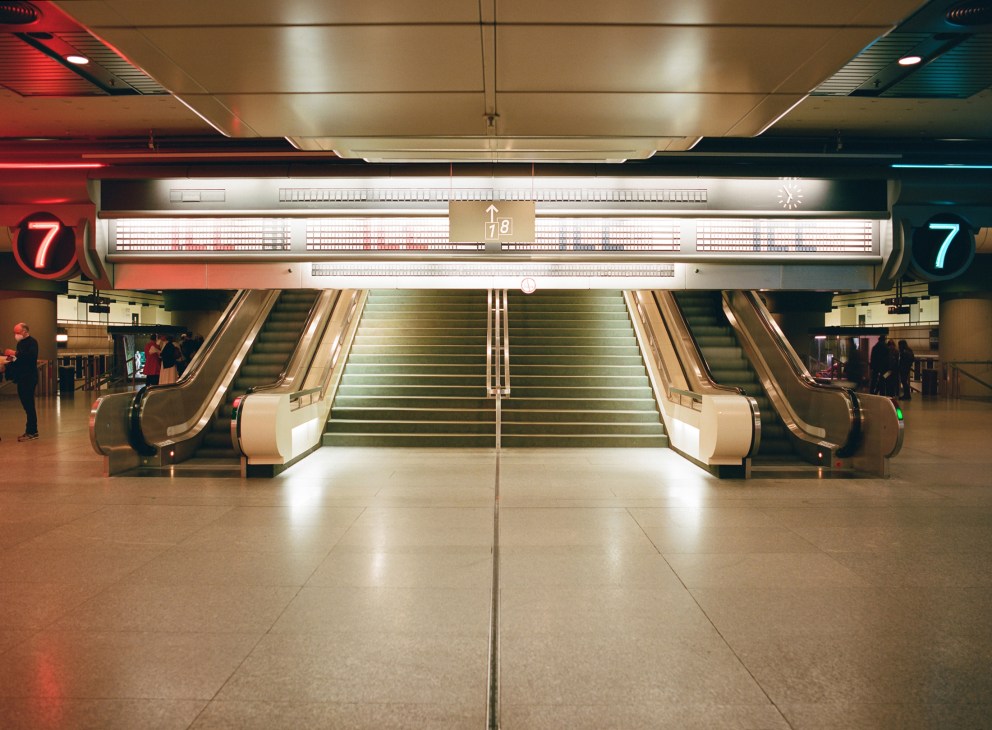
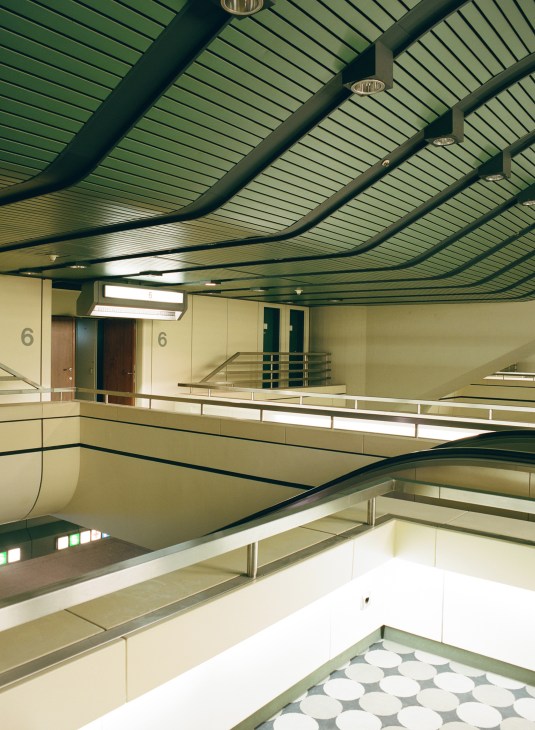
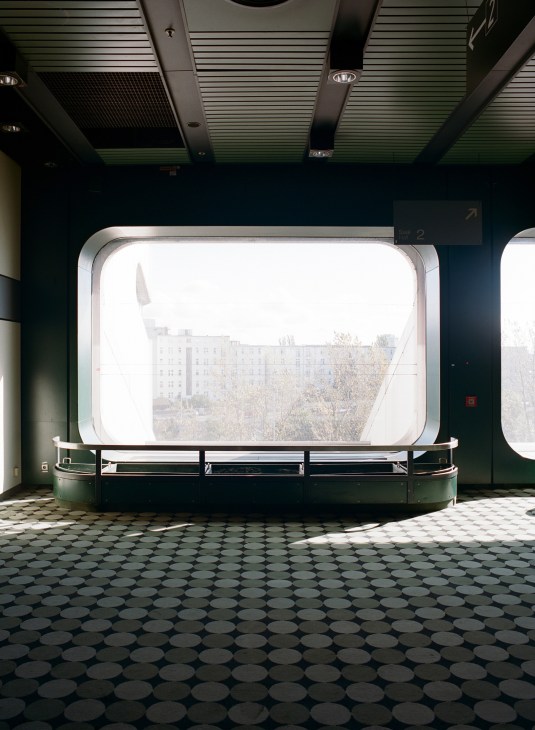
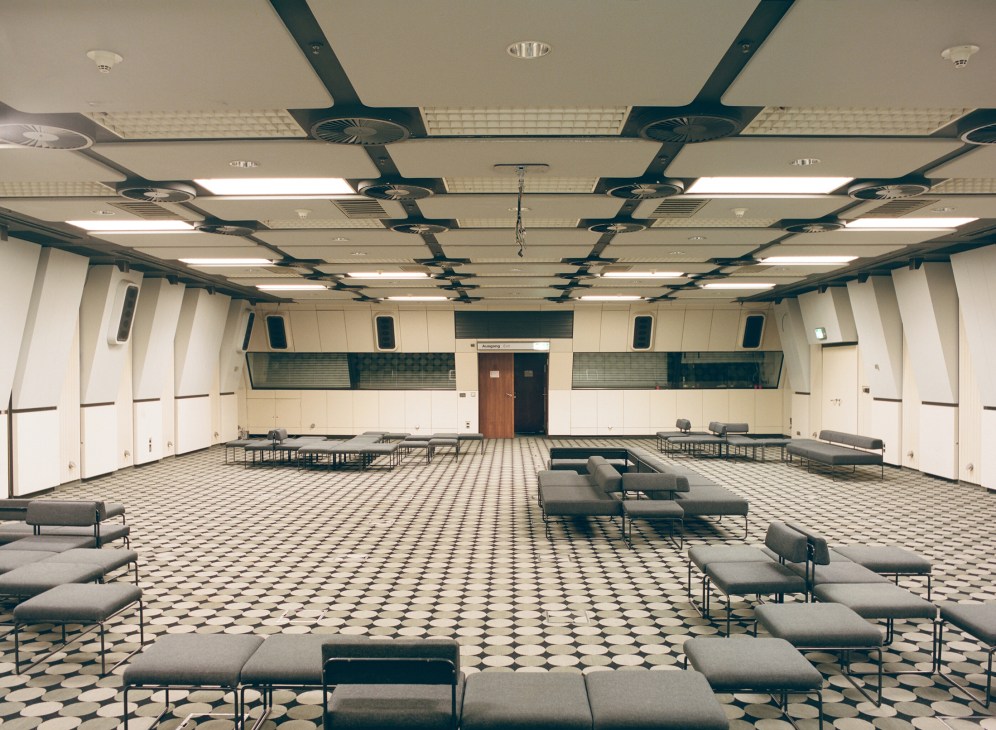
Oberender, however, remains optimistic about the ICC’s future, noting that his ambitious idea for staging The Sun Machine Is Coming Down was embraced by city officials. “They all loved it immediately,” he says. “The main task at the moment is to develop a scenario, a mission, for how the building could be used.” This is welcome news to Christoph Rauhut, head of the Berlin Heritage Authority. After taking up the post in 2018, he swiftly assigned heritage protection to the ICC, which means that it cannot be visibly remodelled without permission. The status has typically been reserved for buildings built more than 50 years ago but under Rauhut the agency has moved to preserve architecture from as late as the 1990s.
“These 20th-century buildings add to the history of Berlin not only in terms of architecture and design but also because they were so important politically,” says Rauhut. However, Rauhut also recognises that it can be a challenge to find suitable new occupants and mentions the decommissioned Tempelhof and Tegel airports in Neukölln and Reinickendorf, respectively, as other examples of large, little-used buildings in the city. “In Berlin, there are many sleeping giants,” he says.


The Sun Machine event offered a glimpse of the ICC’s potential as a venue for the creative industries and it is easy to envision the building as a spectacular setting for artists’ studios, performances, fashion shows or the city’s annual film festival. The prospect would not require the ICC to forgo its old remit either. One proposal for the building is to use it as both a cultural and convention centre, renaming the building the International Centre for Contemporary Culture (ICCC). “The architects actually intended the ICC to function about 50 per cent of the time for congresses and the rest for additional events,” says Julia Albani of Berlin-based communications agency Bureau N, which developed the concept for a private investor.
Reopening the ICC for conventions would capitalise on a trend that can only be expected to increase in 2022: industry jamborees expanding far beyond today’s typical fairgrounds. As attendees gathered at Milan’s Salone del Mobile in September after a two-year hiatus, the most talked-about event was not at the Rho Fiera fairgrounds but rather Alcova, a show organised in a centuries-old former military hospital. A few days later at the iaa Mobility show in Munich, multiple car-makers chose to showcase their newest models on plazas in the old city centre instead of the vast exhibition spaces of the fair itself. These trade events brought together a far broader audience by venturing outside anonymous exhibition halls and taking over storied locations. If the ICC is given a second lease of life, exhibitors in Berlin would only need to cross a footbridge to follow suit.
Future of the ICC
The biggest problem with convention centres the world over is that they are largely devoid of design personality and rarely make an architectural statement that reflects their surroundings. It’s a strange phenomenon because in a lot of cases visitors from across the globe travel to these locations and see little else beyond the cold interiors of these venues.
For these places to be successful, they should be more reflective of their cities and programming should be adapted to support this. Serving Heineken at Dutch convention centres or mediocre panini at Milan’s Fiera exhibition facilities is not going to cut it anymore. Whole restaurant concepts should be adopted from a convention centre’s home city to feed hungry delegates.
We will continue to come together for international exhibitions in the years ahead and those planning to build new venues should think about better integration into the urban fabric. Housing, retail and hospitality buildings can work within and around these mega sites, forming a year-round buzz and bringing the city’s culture to people who are there on short business trips.
Small is beautiful
Time for a sea change? With many people realising that they can live a full and productive life outside of the world’s larger metropolises, 2022 might just be the year of the small city. The benefits of downsizing your home city include a more cost-effective lifestyle, the chance to have a bigger back garden and the simple excitement and invigoration of discovering a new environment.
After two successful editions of our annual Small Cities Index, we have decided to shake up the format this time. Modifying our metrics, we have leaned towards destinations that do it all. Having learned what it’s like to lose the luxury of travel during the pandemic, we have chosen to champion cities that you don’t need to leave for anything other than perhaps a holiday. Our ranking highlights self-sufficient places with industries and populations that possess a global outlook.
While beautiful, these cities are not simply nice spots to perch yourself in front of a computer screen and do business digitally. These are locations with inspiring communities and cultures that you’ll want to be a part of. So sit back and imagine your new life, whether it’s sipping espressos over Alpine views or riding post-work waves with a handsome cast of Spanish surfers.
1.
Bolzano, Italy
photographer: Andrea Pugiotto
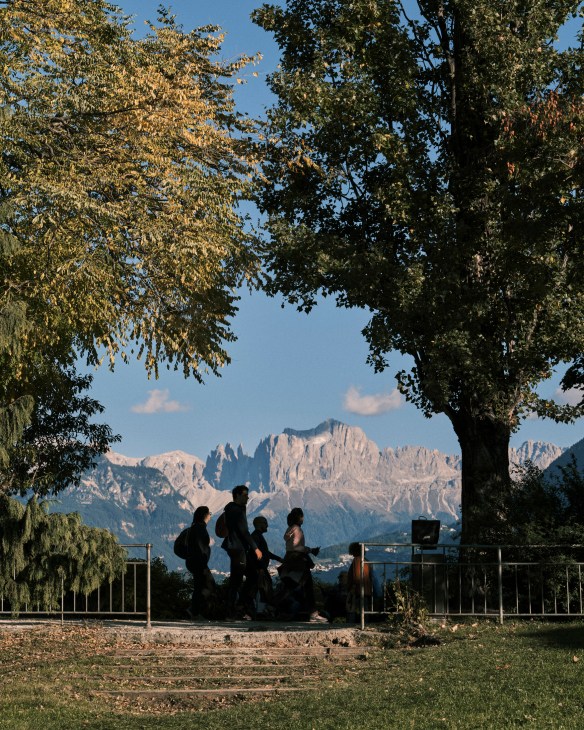
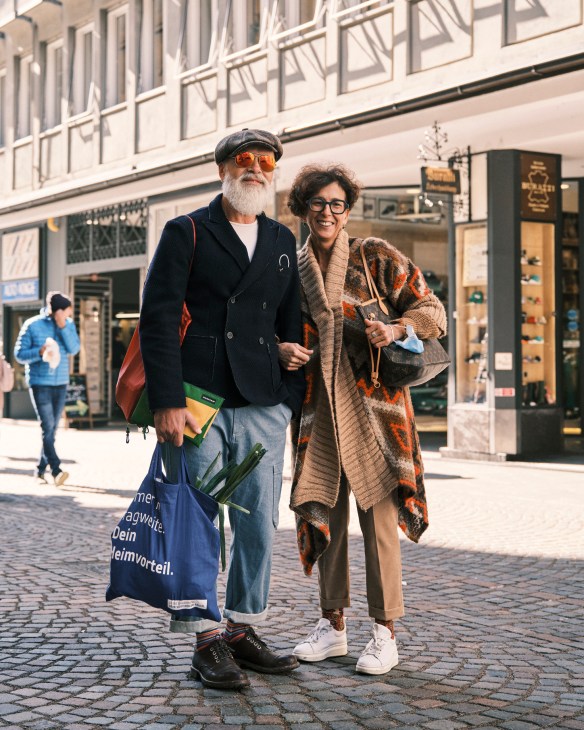
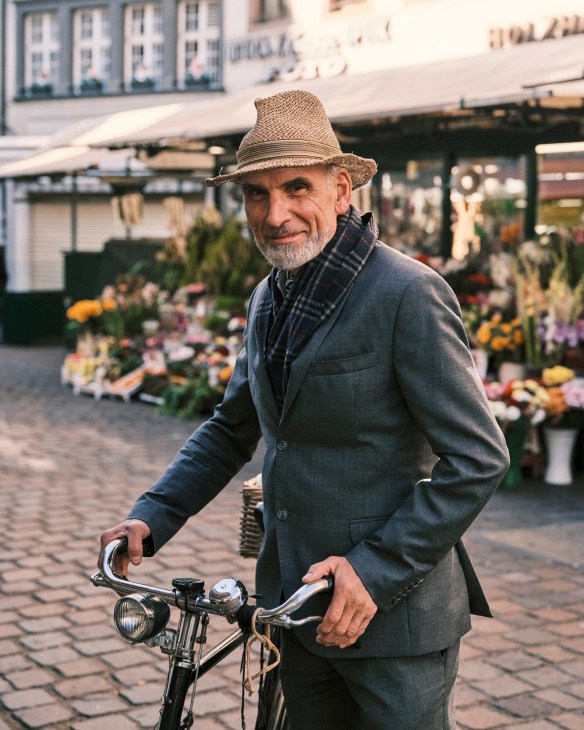
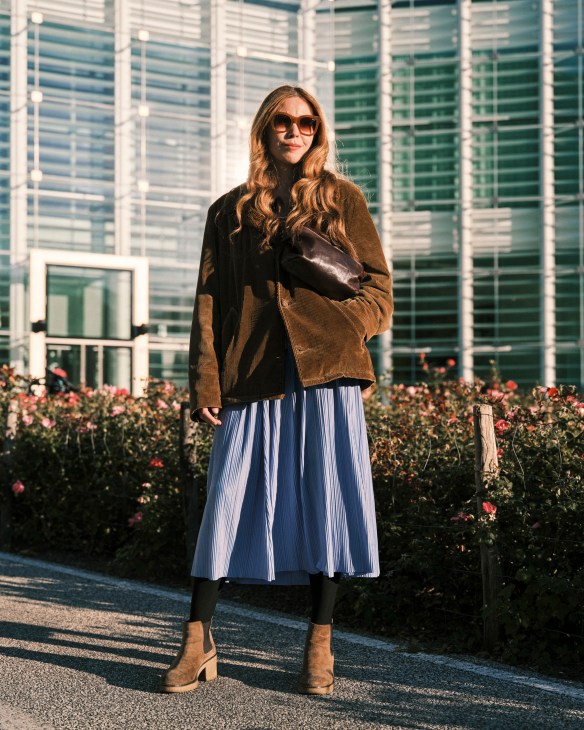
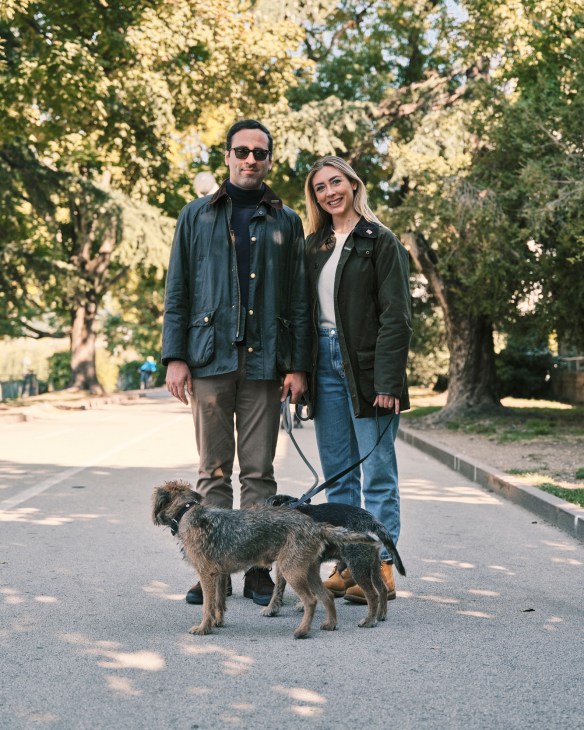
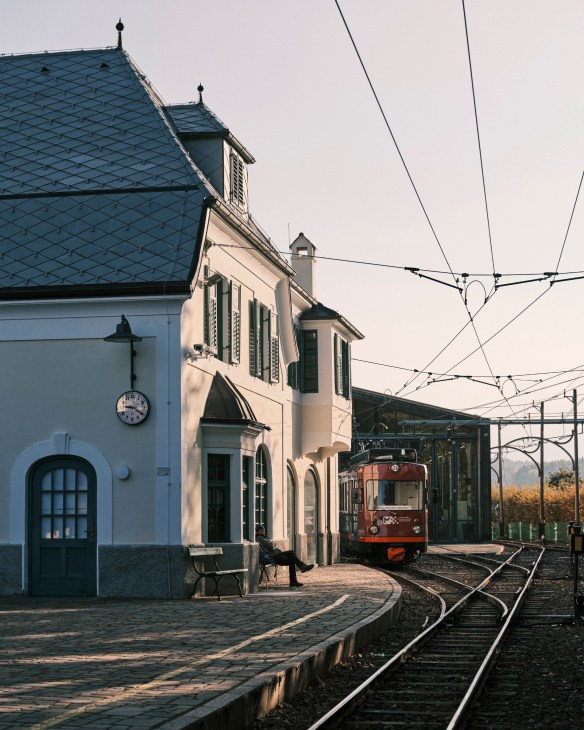
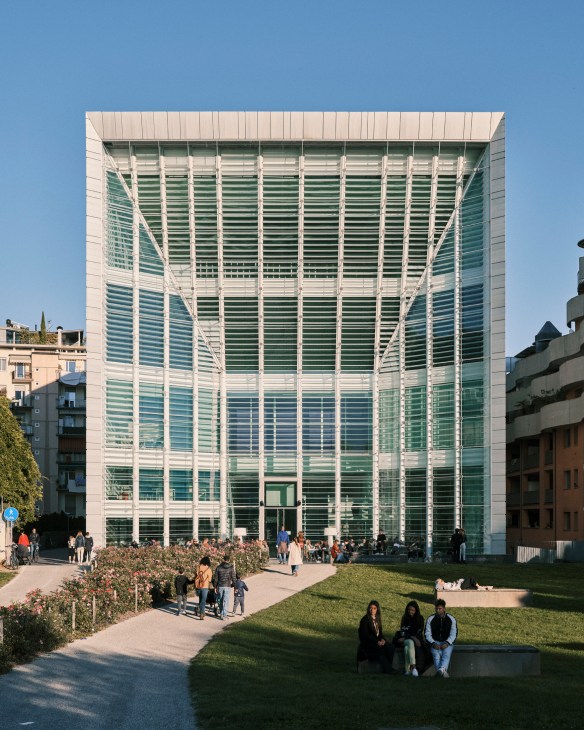
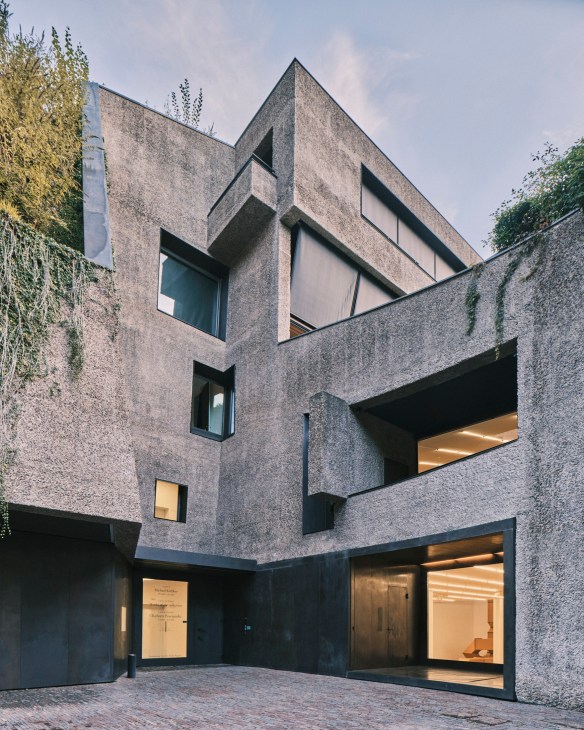
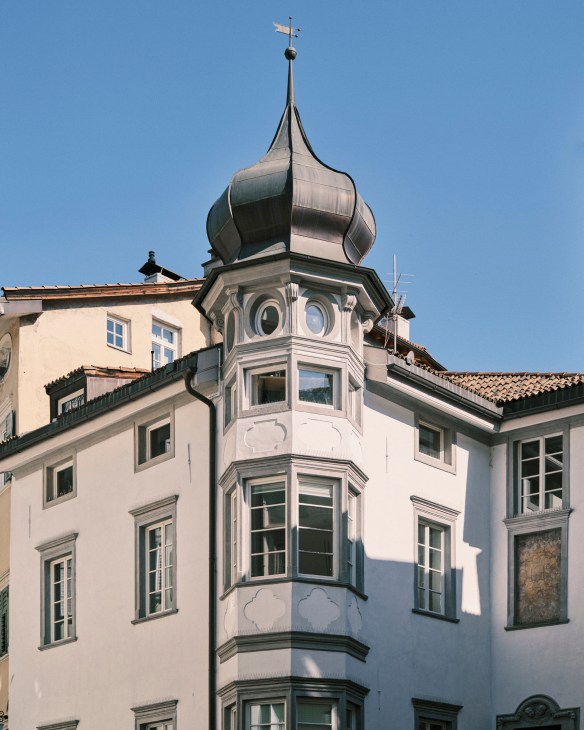
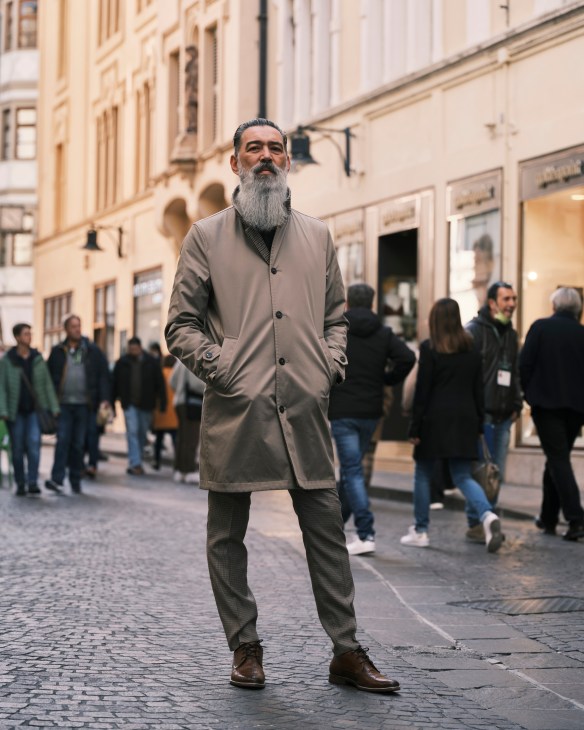
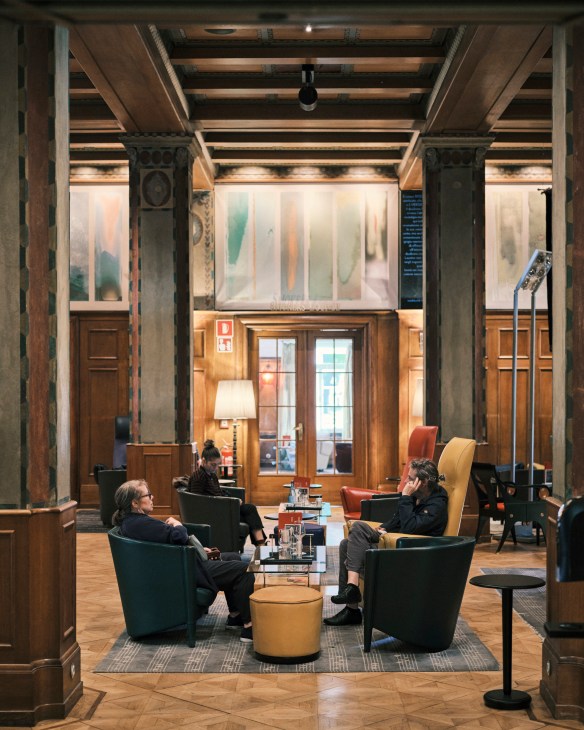
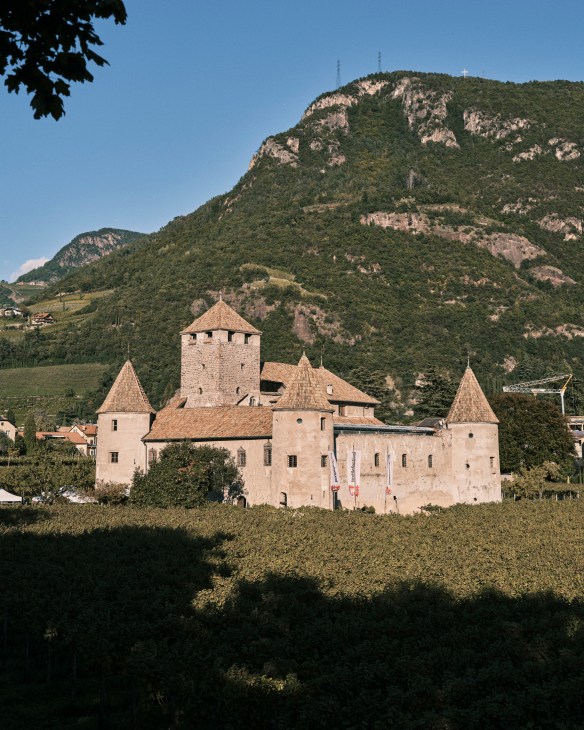
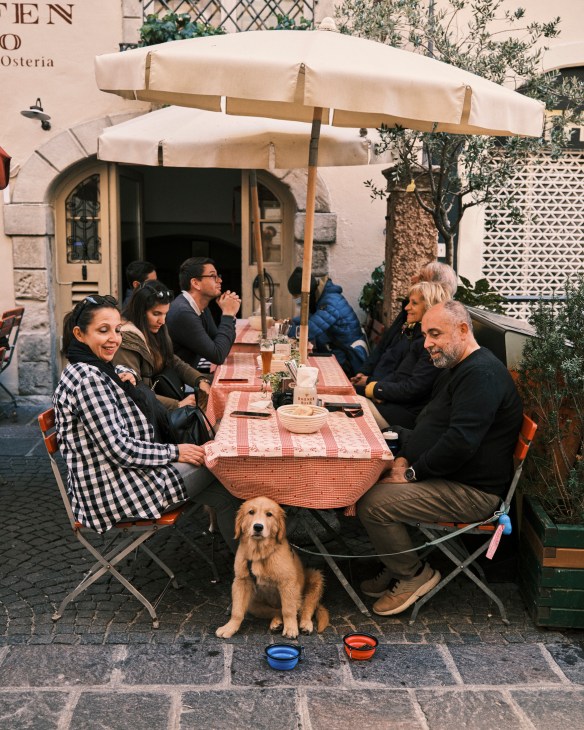
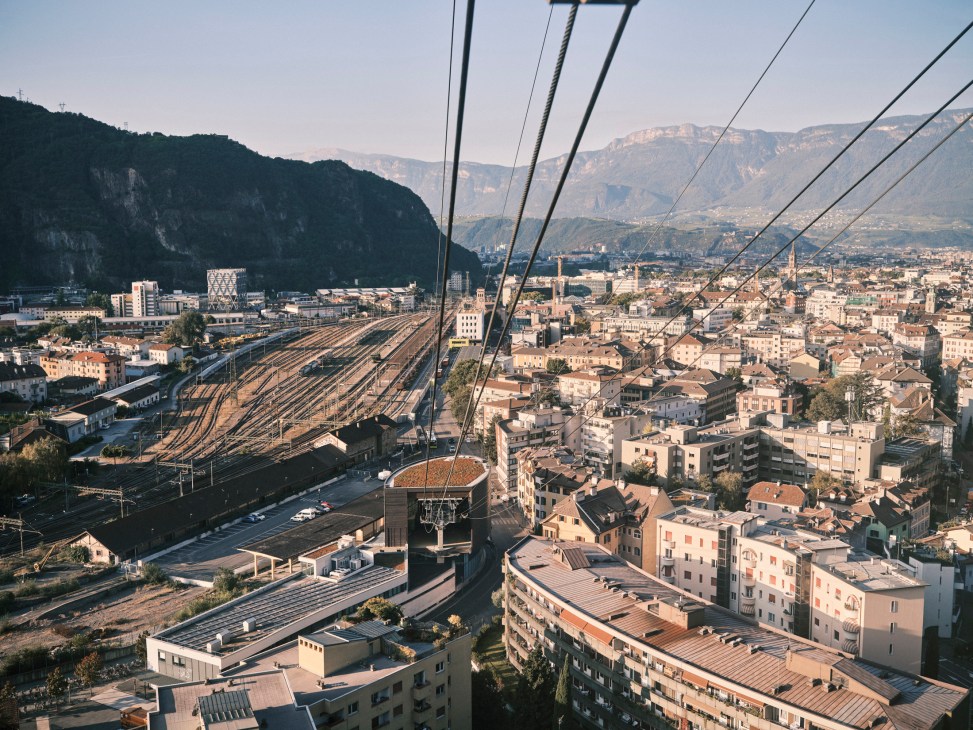
Italy’s northern autonomous province of South Tyrol is nicknamed “L’Isola Felice” (“The Happy Island”). The name begs no explanation when you’re taking in the central square of its capital on a sunny afternoon. On Piazza Walther in Bolzano, well-dressed bolzanini or Bozner (many of the city’s residents are fluent in both Italian and German) soak up the golden hour with a spritz in hand, enjoying the view of the verdant Dolomites that rise up behind pastel-hued buildings. This city of about 108,000 inhabitants repeatedly takes the top spot in Italy for employment rates, average income and life expectancy – and for the first time this year, Monocle’s Small Cities Index too.
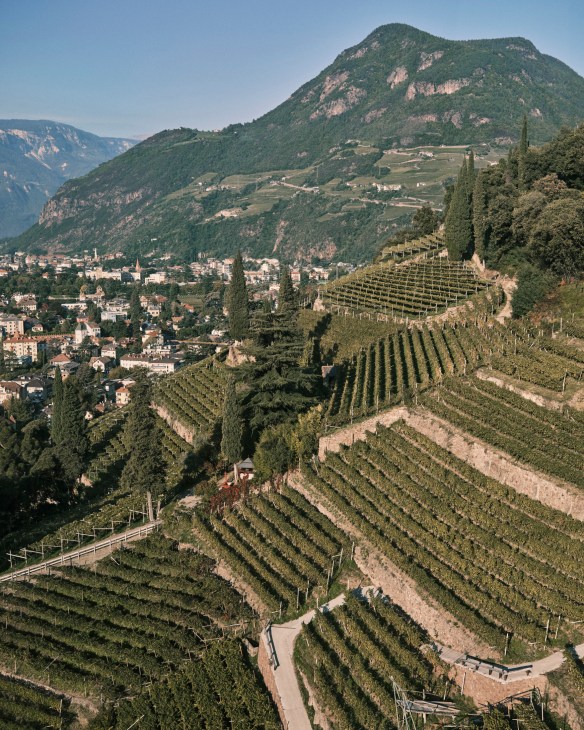
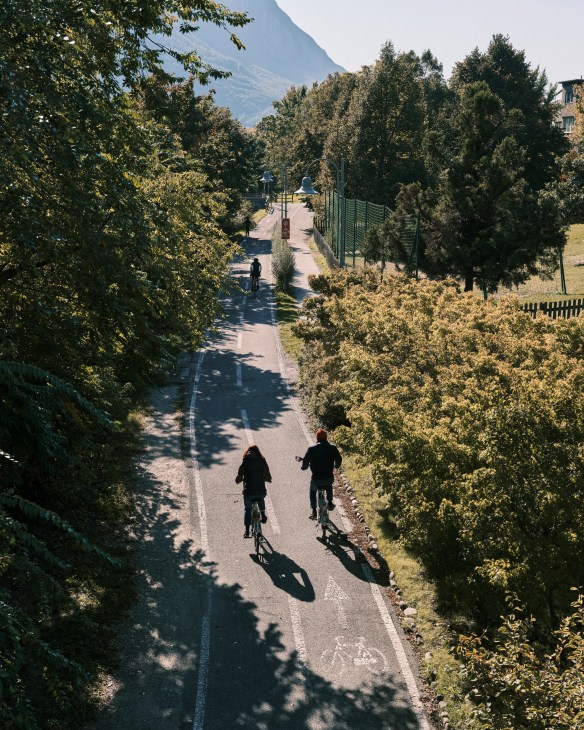
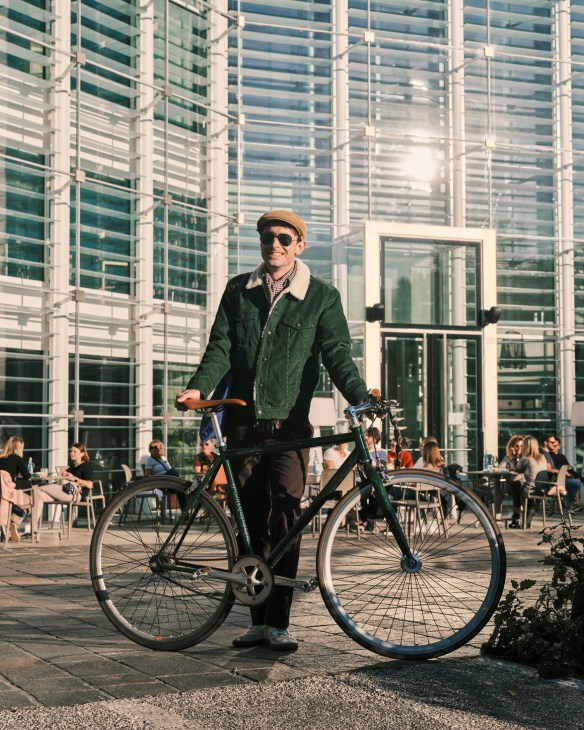
Bolzano, which was part of Austria until 1919, strikes a balance between Germanic efficiency and the Italian pace of life. After starting the day with an espresso al banco while leafing through one of the area’s dailies, Alto Adige or Dolomiten, you’ll find it easy to get to the office on one of the city’s punctual electric buses or, as most choose to do, by bike. A car comes in handy at the weekends, when many head to the mountains to hike, bike or ski; the nearest slopes are a 20-minute drive away. Once back in town for supper, diners are spoilt for choice between traditional Tyrolese or Italian cuisine.
Thanks to a strong agricultural sector, the city’s weekly farmers’ markets are always piled up with fresh produce. In terms of wine, the region’s reds and whites – some of Italy’s best – use grapes harvested from vines that climb the surrounding valley. There’s a healthy start-up scene too, centred around noi Techpark, a former aluminium plant that is now a research-and-innovation centre.
While you’ll find all the ingredients for the good life right here, you might eventually need to go on a business trip or on holiday. Since 2021, there has been little need to rely on neighbouring Innsbruck or Verona for air travel; Bolzano’s small airport now operates year-round direct flights to destinations including Berlin, London and Ibiza. Returning travellers place feet on the tarmac a few kilometres from Piazza Walther and are welcomed home by the stunning mountain scenery.
Why stick around?
South Tyrolean wine is world-renowned, so expect to have a well-stocked cellar in no time.
2.
Onomichi, Japan
Photographer: Kentaro Ito
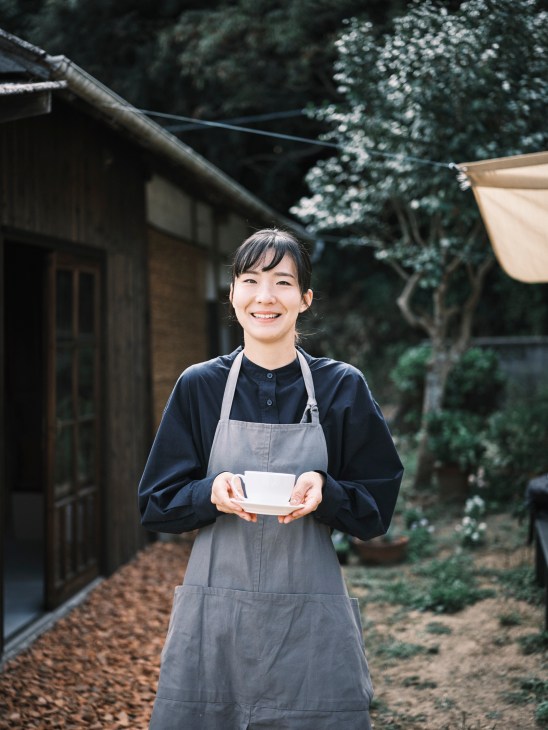
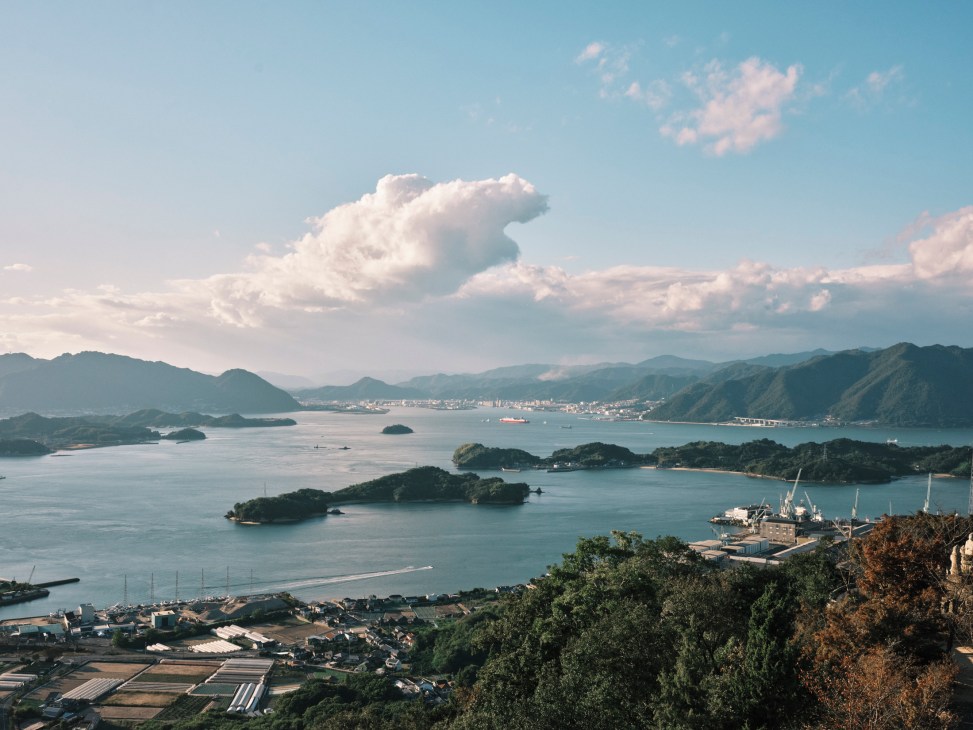
“There’s no reason to leave Onomichi,” says Eri Takekuni. “It has everything that you need.” The Onomichi native, who works for hospitality company Discoverlink Setouchi, has been loyal to her home city her entire life, apart from two years that she spent in Tokyo on behalf of her firm. We meet at Onomichi Share, a co-working space with a café and bike shop. “Many of our members have moved from other places,” says Takekuni. “They meet and connect here. We have a web designer, a manga artist, an architect and a translator, to name but a few. And we have this view.” The floor-to-ceiling windows frame an ocean landscape with passing boats and busy shipyards on the other side of the water.
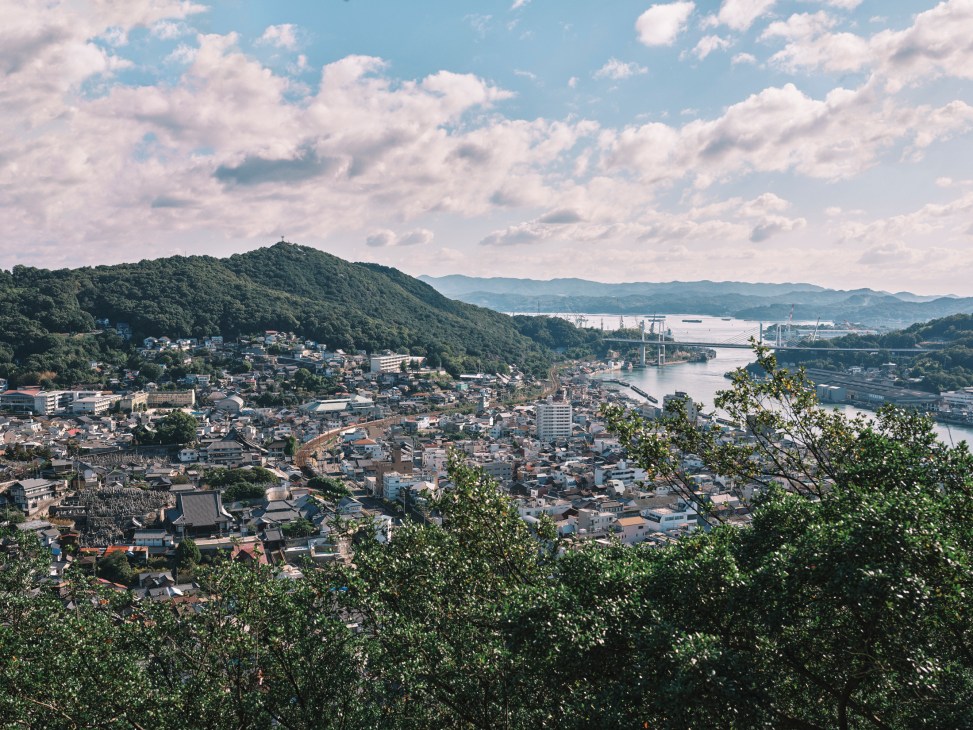
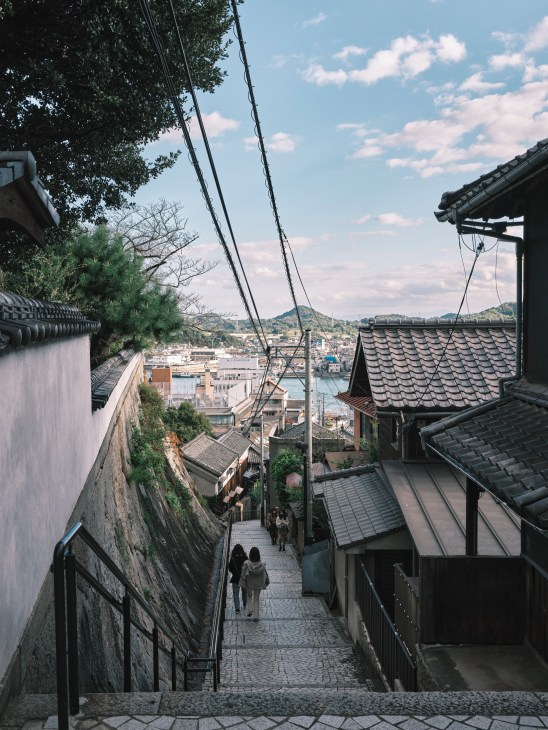
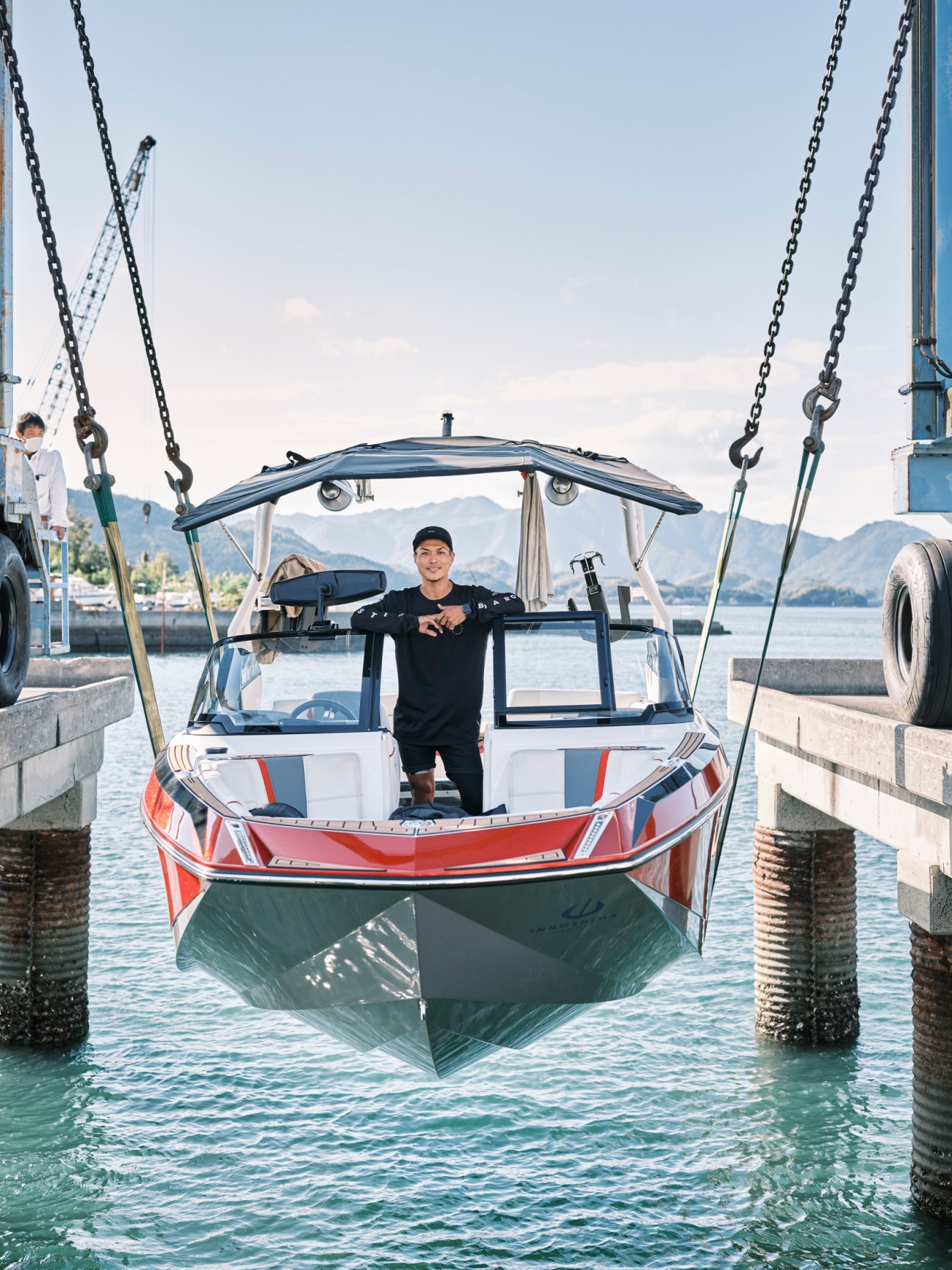
Facing the Seto Inland Sea, Onomichi is a picturesque city of 132,000 in Hiroshima prefecture with an enviable work-life balance. It is home to a vibrant hospitality scene and the old hillside residential area is punctuated with temples and greenery. The Shimanami Kaido cycle road provides stunning, scenic bike journeys. “The ocean is part of our life,” says Kojiro Utsumi, a 37-year-old professional wakeboarder, who started marine sports company Play Onomichi here two years ago. “That man I was just towing came to hit the waves in his lunch break – that’s Onomichi style,” he says. “The quality of life here is amazing. You can make a go of whatever you’d like to do and also play.”
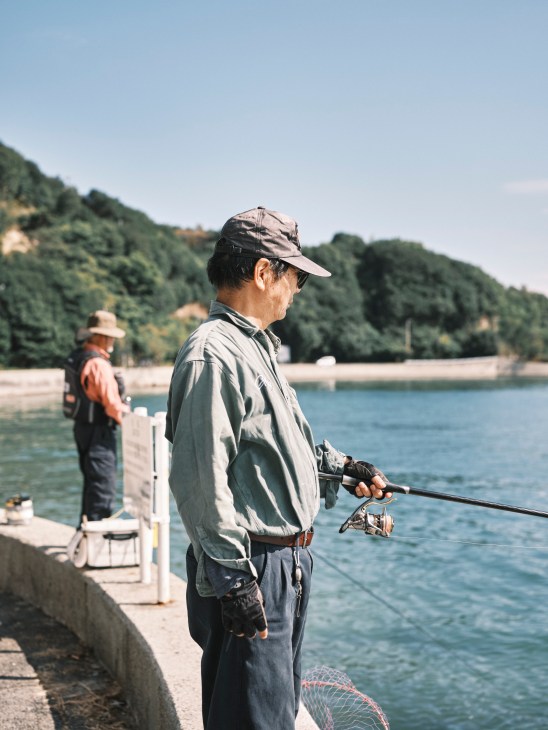
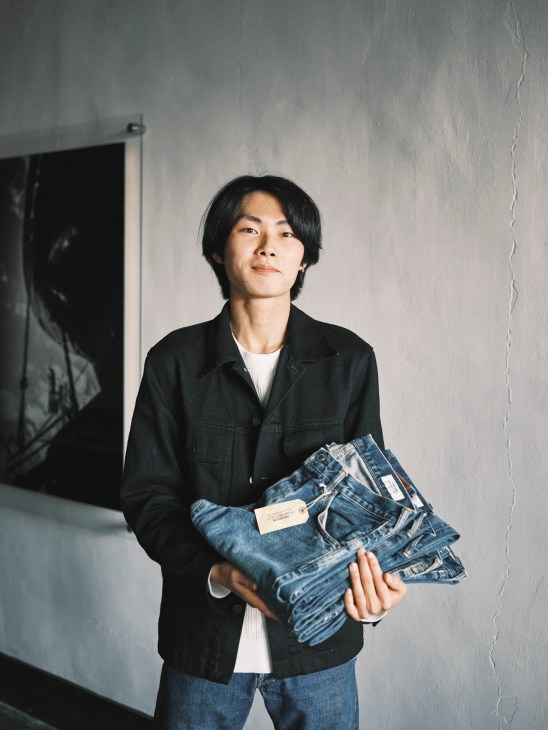
Indeed, this small city is punching above its weight. The entrepreneurial spirit is high and there is a strong sense of community. Yumi Soulé is a relatively new Onomichi resident. The Fukuoka-born cycling enthusiast co-runs a business in Europe that offers bike tours on Tour de France and Giro d’Italia courses. “I cycled across Japan to find a new home and chose Onomichi,” she says. “I have met an incredible number of people since I moved here just a few months ago. They’re so kind and helpful.” The city offers plenty of inspiration for entrepreneurs such as Soulé: from a craft beer start-up and a fashion-retailer-cum-bistro to a denim-specialist-turned-fisherman, it seems that almost everyone is doing their bit to add to the city’s dynamism.
Why stick around?
The people of Onomichi are well known to be friendly and supportive of new business ventures in the city.
3.
San Sebastián, Spain
Photographer: Ben Roberts
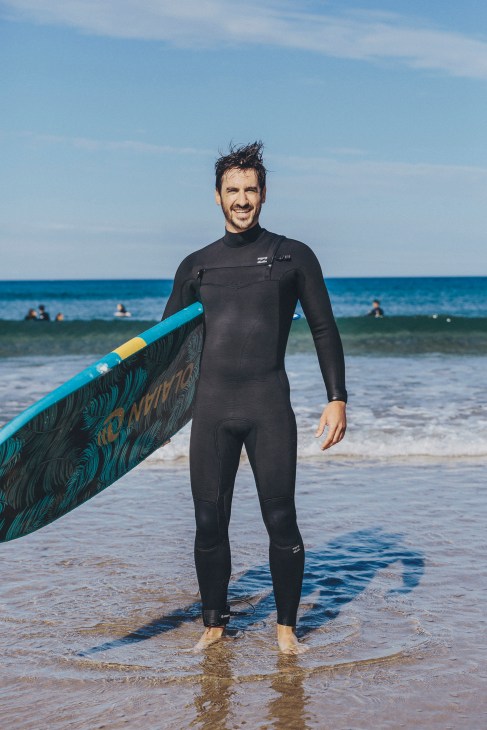
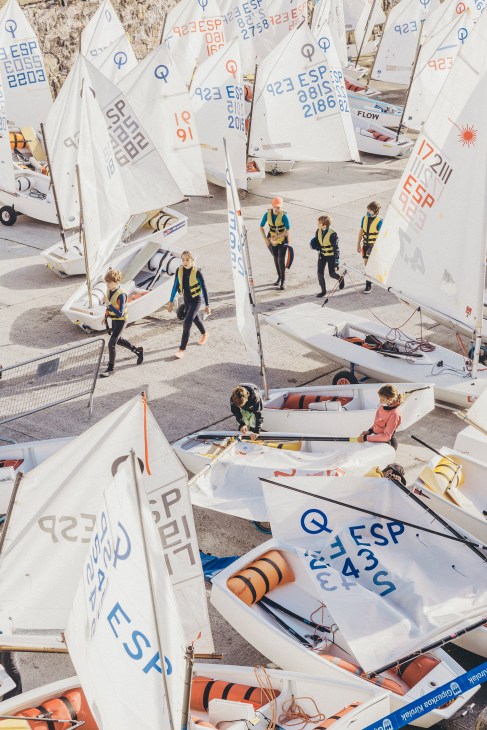
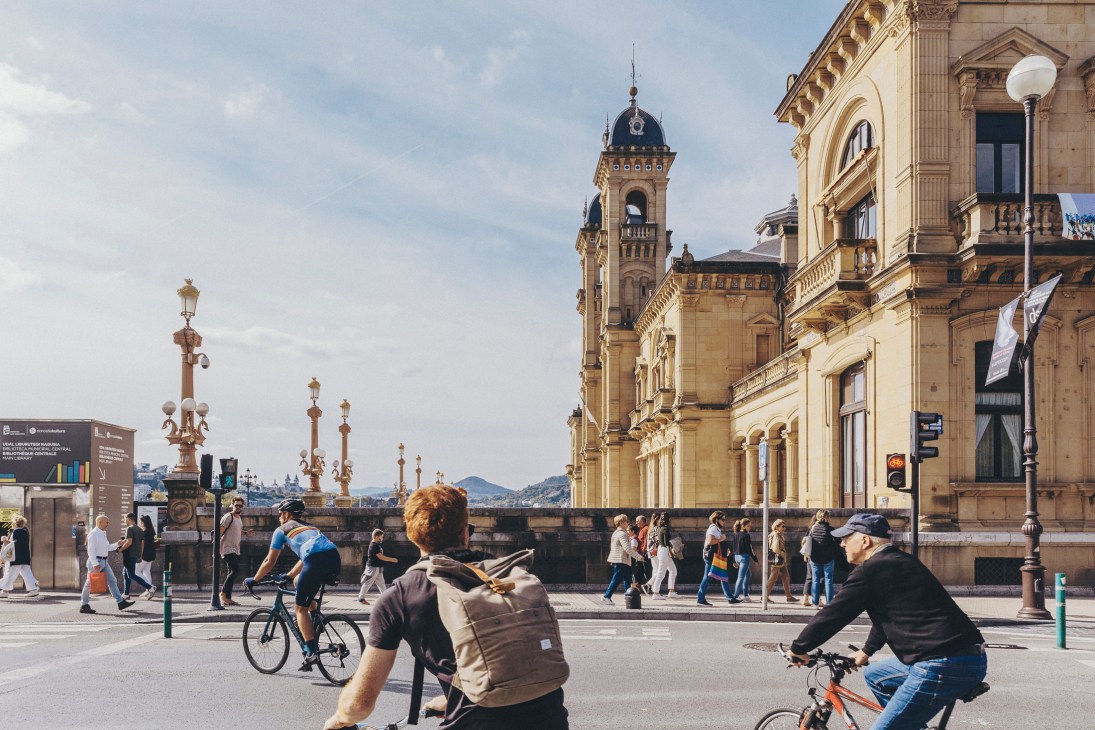
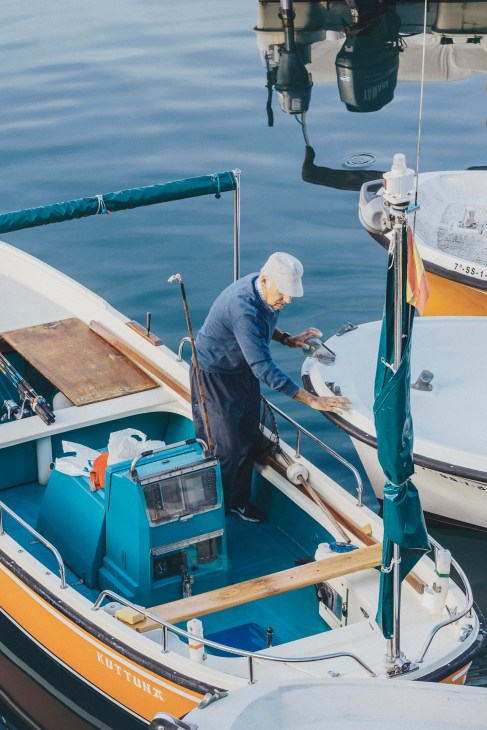
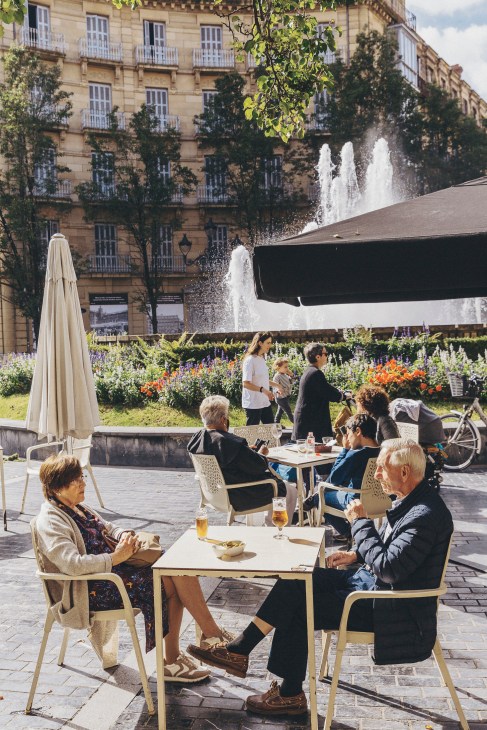
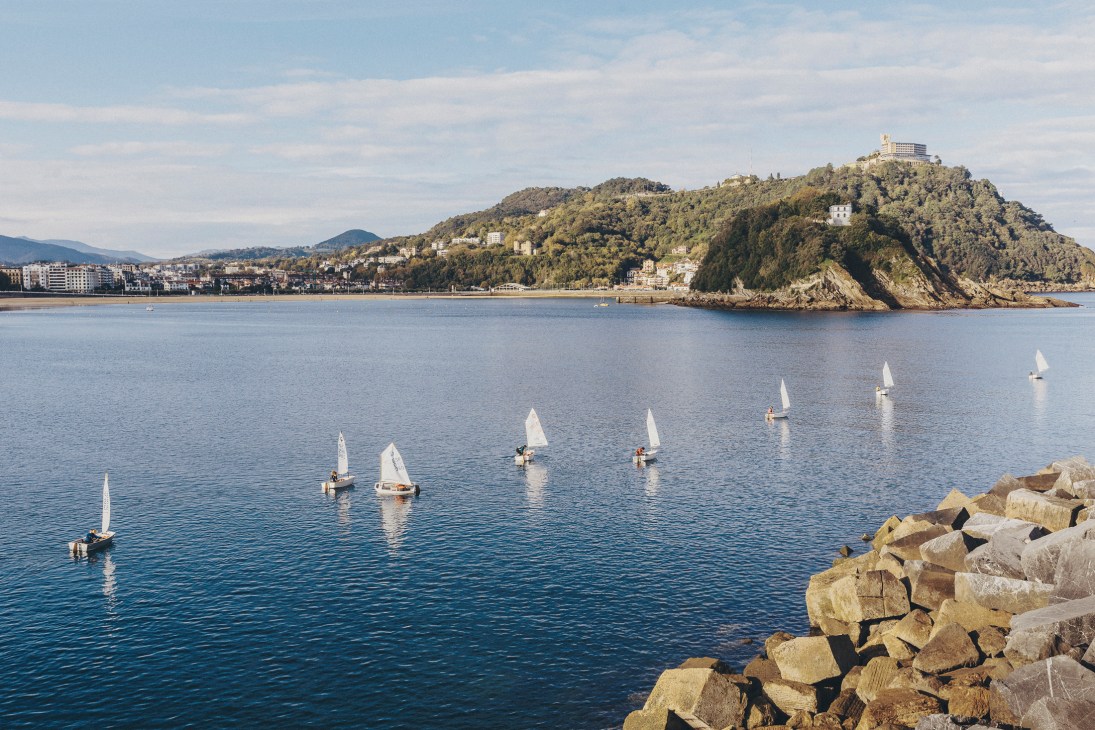
Its shell-shaped beach, world-class cuisine and A-list film festival have long made this coastal city a desirable place to visit and, indeed, to live. Located on the Atlantic coast on the Bay of Biscay, just a short drive from the French border, this city of 188,000 inhabitants is small enough to have a tight sense of community but big enough that you’ll never run out of reasons to stay.
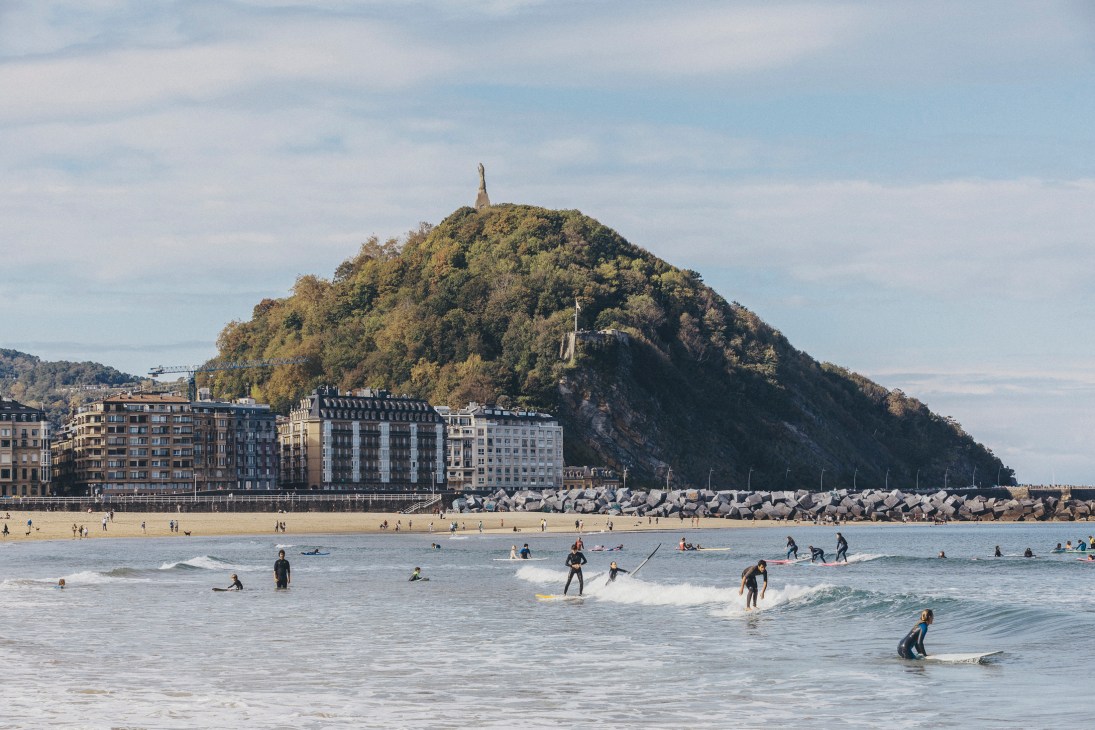
Grand belle époque hotels, palaces and casinos lining the seafront are a reminder of its days as a holiday resort for royalty and aristocrats in the 19th century. The city maintains the grandeur from that era but combines it with a relaxed atmosphere. New arrivals from all over the world and donostiarras (as the city’s residents are known) make the most of the three city beaches by surfing amenable waves, swimming or simply strolling along the picturesque promenade of La Concha.
The city has become particularly attractive for those working in restaurants and hospitality. With a high concentration of Michelin stars – the most per capita of anywhere in the world – new arrivals will find plenty of opportunities for fine dining. As the birthplace of the Nueva Cocina Vasca movement, it’s also home to the Basque Culinary Centre, created in 2009 to train the next generation of chefs.
The food culture is just one example of the city’s constant search for innovation. Its commitment to sustainability has resulted in pioneering smart projects to reduce energy consumption and help local businesses, while the growing network of bicycle lanes (bidegorris in Basque), which even extend to the surrounding green hills and countryside, has made getting around easier.
Why stick around?
San Sebastián is probably the world’s best small city for dining out.
4.
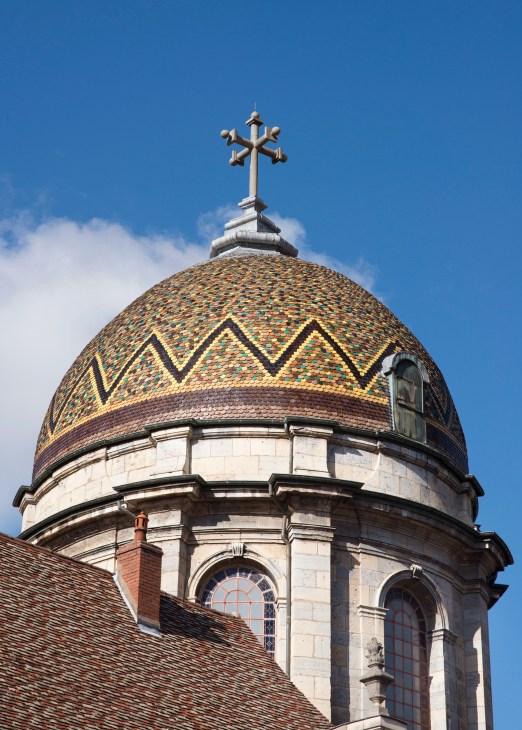
Besançon, France
Photographer: Thomas Humery
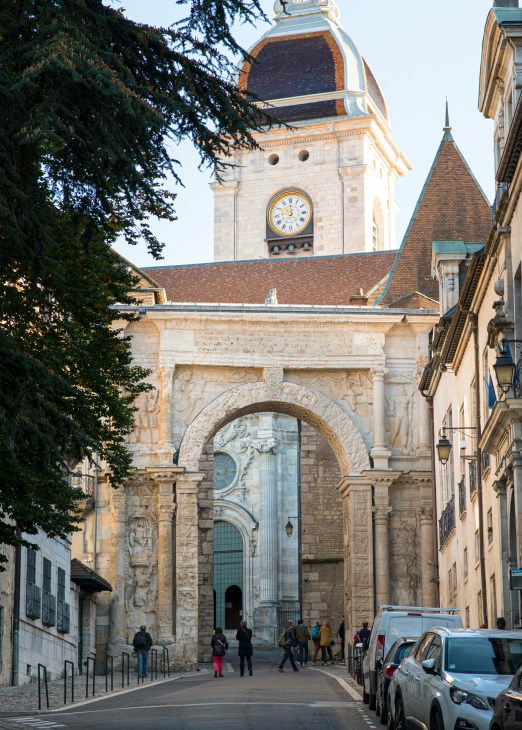
In 58bc, Julius Caesar captured Besançon, which was then known as Vesontio. Impressed by the city’s beauty and strategic location, he decided to make it one of the capitals of Gaul. It remains as appealing today. Just like Caesar, newcomers choose Besançon for its location. With its imposing fortress designed by Sébastien Le Prestre de Vauban juxtaposed with the hills and forests enveloping the city on both sides of the Doubs river, it offers a unique kind of urbanism.
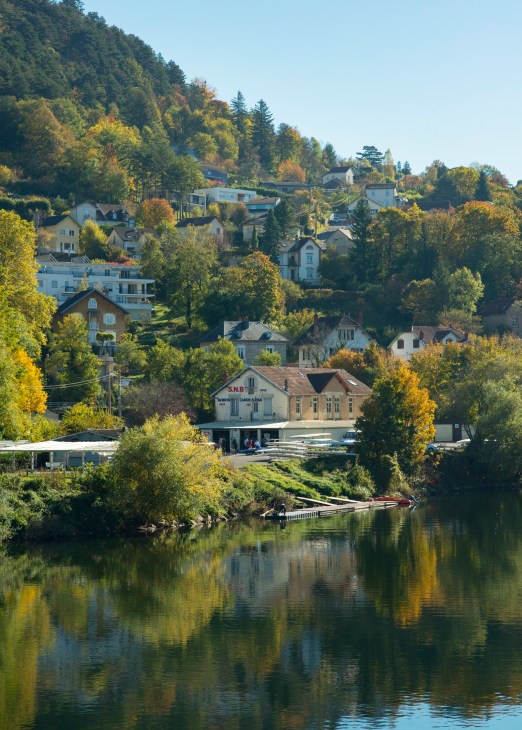
Beyond Besançon lies the first plateau of the Jura mountains. The pristine environment is ideal for hiking, horseback riding and skiing; its slopes, meanwhile, produce the acclaimed arbois wine and comté cheese. Drive 50km to the west and you will enter the Forêt de Chaux, one of the largest hardwood forests in France.
Well aware of this enviable location, the city’s government introduced policies to preserve its biodiversity long before such measures became fashionable. It banned the use of pesticides in green spaces (almost 40 per cent of the city falls under this category) and worked hard to preserve endangered environments and species, such as bobcats.
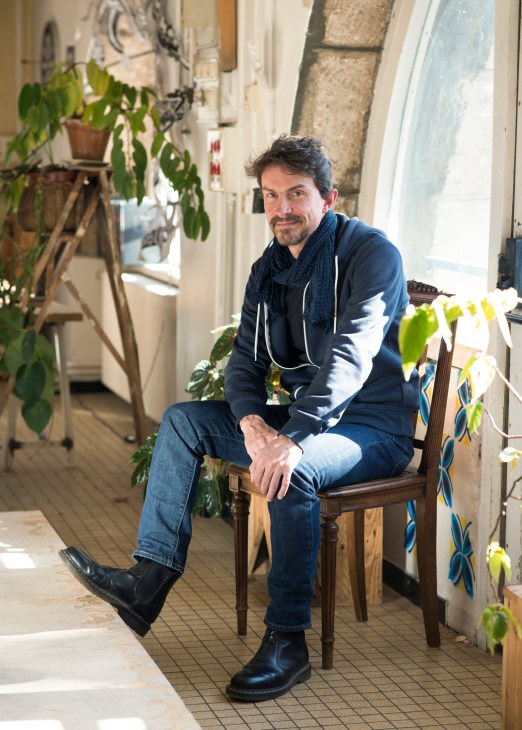
Textile designer Cyrielle Meza Diaz left Lyon a few years ago with her partner and family mainly to get away from pollution. “As a result, our overall health and quality of life significantly improved,” she says. “There’s no need for a train or bike here; a 10-minute walk is enough to be completely surrounded by greenery.” But the tgv high-speed train service provides fast connections to Paris and Swiss business hub Basel. These transport links are a key asset for the former capital of clock-making, which now maintains a commanding position in the technology industry with cutting-edge labs and start-ups of various kinds.
“I’ve been astonished by Bisontins, their benevolence and their hospitality,” says Meza Diaz, whose workshop is located in Hôp Hop Hop, a former hospital that has been turned into a creative hub. “There’s less suspicion and less incivility – and people trust each other,” she adds. “I enjoy having more relaxed relationships.”
Why stick around?
The easy access to some of the world’s best skiing spots ensures that every winter spent here is a winner.

5.
Guimarães, Portugal
Photographer: Matilde Viegas
Guimarães is working hard to entice those who might previously have relocated to Lisbon or Porto. The historic, Unesco-listed city of 150,000 sits within Portugal’s globally important fashion-manufacturing region. This makes it a strategic spot for enterprising designers who are looking for easy access to world-beating textile-makers and more. Its well-kept beauty adds to its allure. Named European Capital of Culture in 2012, Guimarães has benefited from significant investment; the city is now home to shops selling smart wares, squares packed with diners and an abundance of leafy parks.
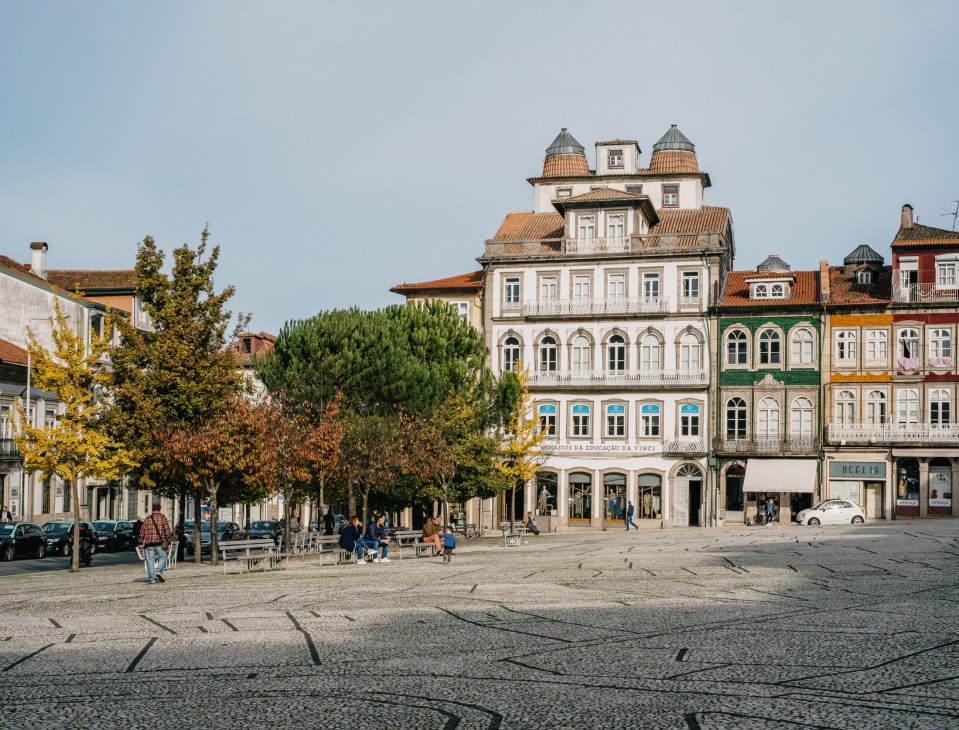
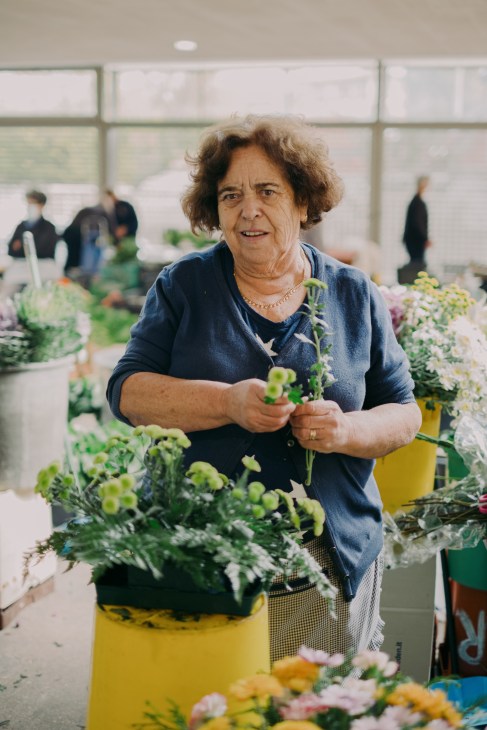
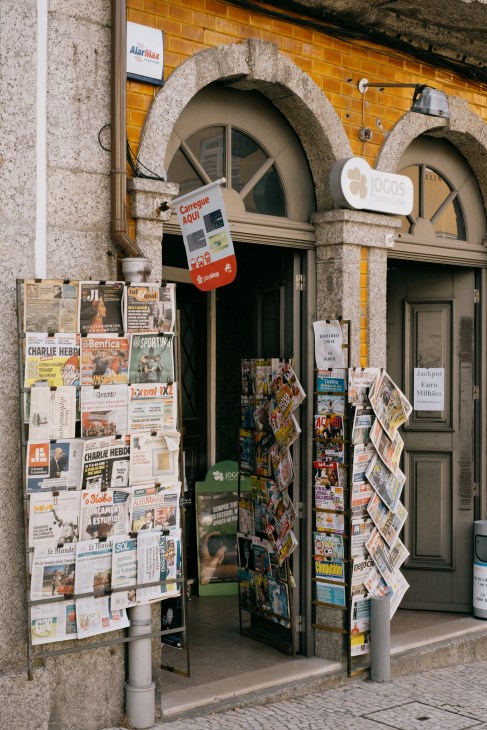
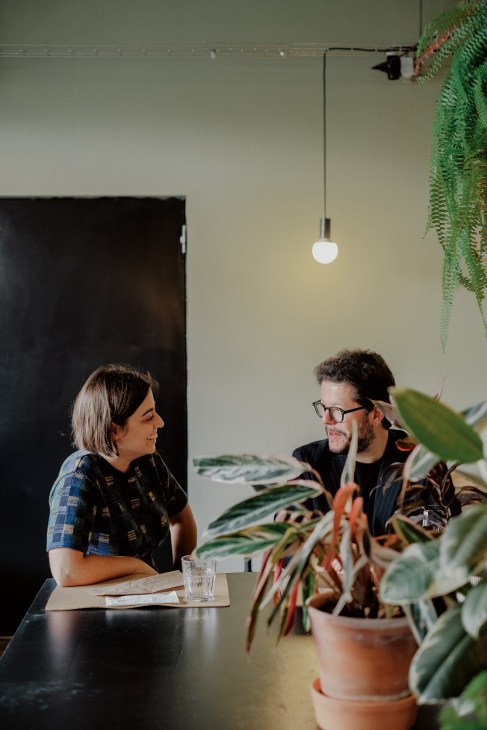
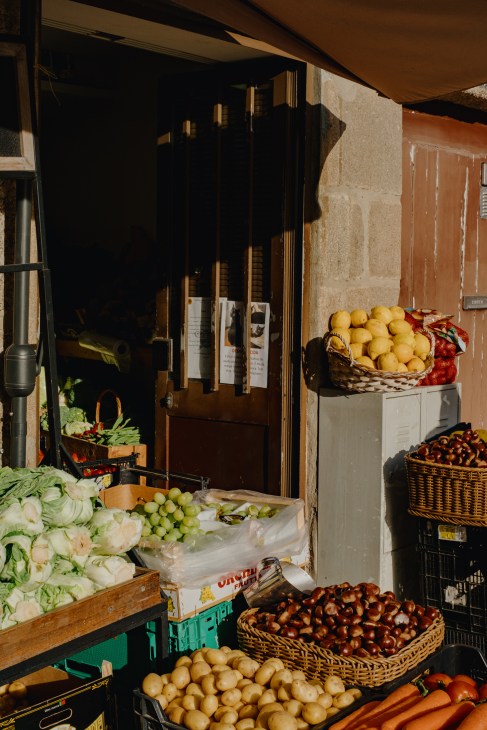
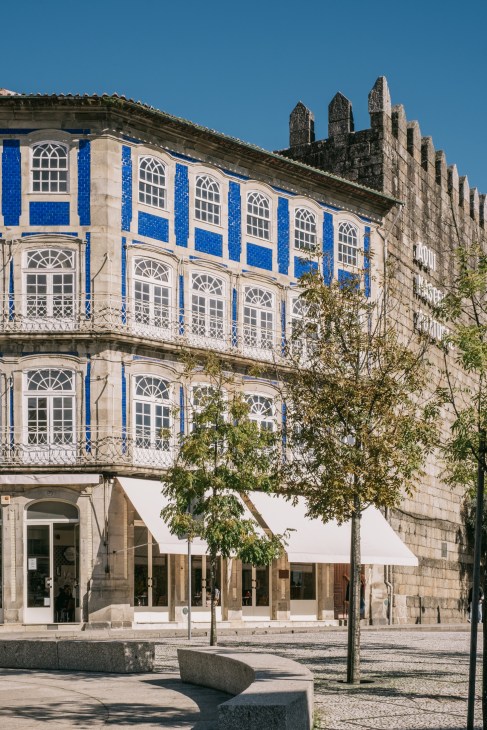
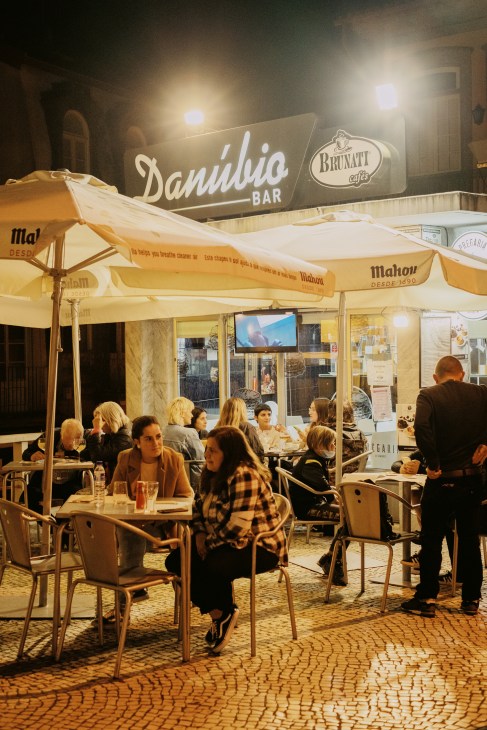
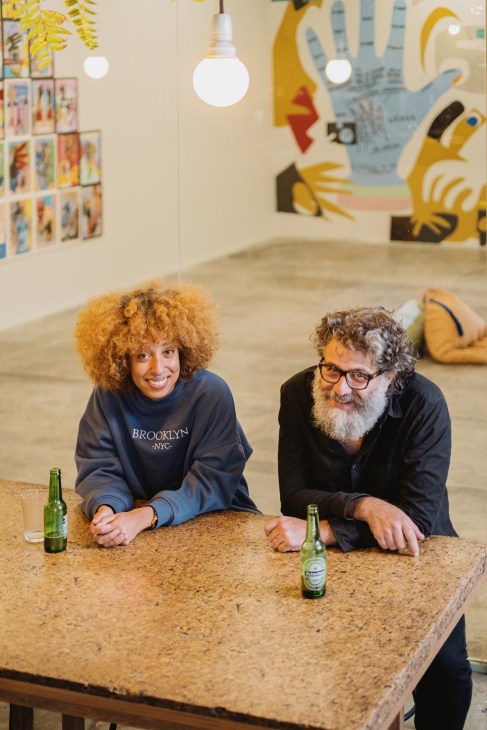
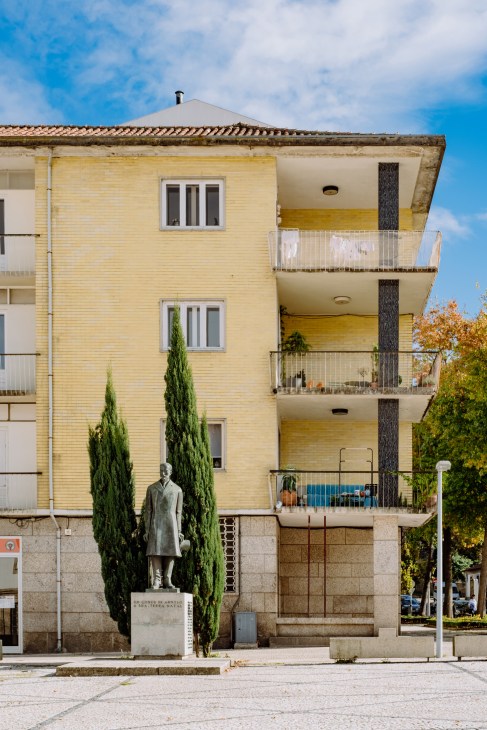
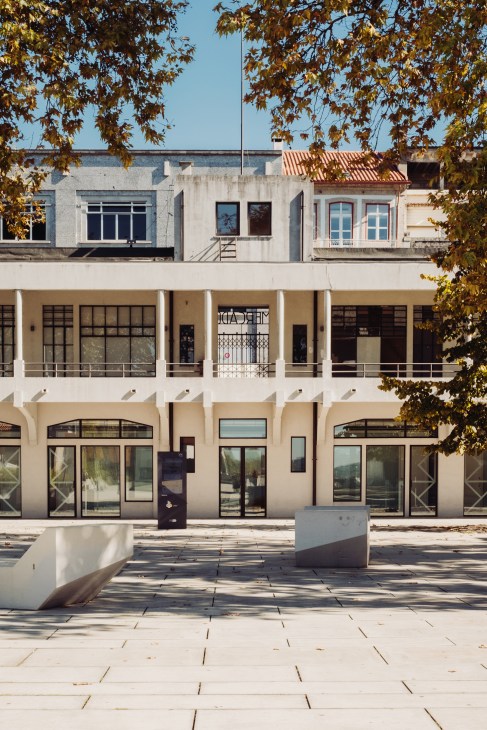
“We didn’t want to turn our city into a museum,” says José Nobre, director of the department of culture and tourism at Guimarães city hall. “So we worked with residents on what they wanted.” The result? Plazas have been repaved, buildings refreshed and new cultural institutions launched. Crucially, residents feel that places such as the São Tiago and Oliveira squares in the heart of the old town – the kind of locations that would have been turned over to tourists in many other cities – belong to them. “We actually use the city,” says Guimarães native Sofia Pinto. “We go to those squares and spend time there.”
Pinto and her partner, Pedro Martins, grew up in Guimarães and are part of its returning diaspora. After a few years away, they came back to establish a shop selling craft and food products made in Portugal. This feels appropriate in a city with thriving textile and fashion industries, with major companies such as Giliana, which exports almost 90 per cent of its output to global markets, bolstering its clout.
Other creative industries, such as the arts, are also supported, with the municipality offering €600,000 a year in grants to artists and cultural institutions. Art gallery Centro Internacional das Artes José de Guimarães and the Casa da Memória museum are world class. All of this takes place in a valley surrounded by vineyards and hiking trails. Guimarães will appeal to both enterprising entrepreneurs and those who are simply keen to live with good weather and great food, and enjoy a rich sense of community.
Why stick around?
Following the recent international buzz around Porto and Lisbon, Guimarães is a good bet for the next Portuguese city to back.
6.
Boulder, USA
Nestled at the foot of Colorado’s Rocky mountains, Boulder has it all: some 250 days of sunshine a year, great restaurants, a thriving live-music scene and an abundance of natural beauty. Hailed as the healthiest city in the US, Boulder also has a sporty population that makes the most of its many hiking and cycling routes, as well as skiing resorts and reservoirs for swimming. Nature aside, Boulder’s government has been working hard in recent years to brand the city as America’s start-up capital, with more new hi-tech enterprises per capita than any other US urban centre. But it’s not all business: Boulder is also renowned for its craft beer.
Why stick around?
Boulder’s bustling nightlife has something for everyone, with people from all walks of life congregating at its busy bars.
7.
Aachen, Germany
Historically a Roman spa town, Aachen is Germany’s westernmost city, which sits on the borders with Belgium and the Netherlands. Known for its ancient buildings, thermal hot springs and prestigious rwth Aachen University, this melting pot has all the ingredients of a self-sufficient city. About 50,000 students attend Aachen’s four major colleges and universities, making it a youthful and lively place to live and work, and giving it a prosperous start-up scene. The city ranks favourably among expats, who value its high quality of life and good connections.
Why stick around?
This border city blends Belgian elegance with German efficiency, fostering a stylish but well-structured way of life.
8.
Leiden, the Netherlands
As the seat of the oldest university in the Netherlands, Leiden is a start-up-friendly, lively city, dotted with cafés and bars. It is also the birthplace of Rembrandt van Rijn, whose paintings can be seen at the Museum de Lakenhal, one of many cultural institutions in the city. Leiden is home to the Hortus Botanicus, where the first Dutch tulips were cultivated. A base for expats and Dutch citizens alike, its urban infrastructure is on par with larger cousins Amsterdam and The Hague. What’s more, it’s a short drive from the beaches and surfing spots of the sandy North Sea coast.
Why stick around?
Leiden offers a well-functioning ecosystem of students, start-ups and businesses.
9.
Reykjavík, Iceland
Bordered by geysers and dramatic landscapes, access to nature has always been part of Reykjavík’s appeal. Recently, however, the city has rebranded itself to prove that it’s also a resourceful, culturally diverse and commercial Nordic centre. More than a decade after Iceland’s economic crisis, Reykjavík is cultivating a flourishing commercial sector by bolstering its long-standing fishing and agriculture industries, while aiding entrepreneurs with simple tax structures and government support. Despite its small size, Reykjavík’s youthful expat community makes the city welcoming to foreigners. It’s also a leader in political diversity, appointing an almost female-majority parliament earlier this year.
Why stick around?
No one enjoys doing their taxes. Reykjavík has one of the world’s simplest tax structures, meaning more time to enjoy the city’s pleasures.
10.
Porto, Portugal
With its thriving design, culture and hospitality scenes, Porto is Lisbon’s pluckier, edgier sibling. And while the city itself, especially its recently restored historic centre, provides plenty of charm, its many students and hip new establishments (more of which seem to open every week) give the place a distinctly modern atmosphere. The municipal government here continues to support the creative industries: industrial designers from abroad can set up shop here with relative ease and connect with the region’s manufacturers, while the technology and innovation sectors are booming.
Why stick around?
Surfing is one way to enjoy the Atlantic here; the other is dining on the daily catch at one of the city’s many seafood restaurants.
11.
Patras, Greece
Known as the gateway to the West, Patras finds itself in an enterprising position in the northern Peloponnese, in reach by ferry of Italy as well as the rest of Greece. Its geography has made it regionally important as a shipping hub but opportunities extend beyond its prosperous past. After Greece’s debt crisis, the authorities in Patras have increasingly sponsored its start-up ecosystem, hoping to foster new employment for its residents. Though it is the country’s third-largest city, Patras’s proximity to nature is astounding, with varied cycling trails, beaches and even ski resorts on the city’s doorstep.
Why stick around?
This sunny city is temperate all year, kept cool in the summer by the breeze rolling in from the Aegean.
12.
Odense, Denmark
With more than 120 green spaces and 540km of cycle lanes, Hans Christian Andersen’s hometown has shed its reputation as a mere industrial centre and is vying to usurp Copenhagen as Denmark’s most sustainable city. With quality of life being extremely high here, there’s little reason for residents to trek to the nation’s larger cities. On Wednesdays and Saturdays, citizens pick up fresh produce to top their smørrebrød at the farmers’ market and, on weekends, the archipelago is ideal for island-hopping or cycling.
Why stick around?
Those who want to live an urban life without a car can do so with ease in one of the world’s most cycle-friendly cities.
13.
Lausanne, Switzerland
Perched on the northern bank of a serene Swiss lake, Lausanne is a self-contained gem of a place that residents of larger metropolises can only envy. Despite its compact size, this city packs a global punch as home to leading universities, including the École polytechnique fédérale de Lausanne and the École hôtelière de Lausanne, which tops international hotel-management school rankings. It’s also home to the International Olympic Committee (IOC). Lausanne’s French-influenced cuisine means that quality regional cheese and wine are close at hand, and with swimming in the summer and skiing on the nearby slopes in the winter, it’s easy to stay active all year.
Why stick around?
As well as the IOC, many international non-profit organisations have their headquarters here, forging a diverse and interesting expat scene.
14.
Ballarat, Australia
Ballarat is a rural Aussie city that’s bustling with culture, creativity and a diverse community – and a growing number of urbanites want a piece. Crowned a Unesco Creative City in 2019, Ballarat is a hive of activity all year, thanks to its brewers, restaurateurs, artists and artisans. Residents and visitors alike also flock to the Art Gallery of Ballarat, the oldest and largest regional gallery in Australia, for internationally acclaimed exhibitions. What’s more, Ballarat makes a great case for its liveability, thanks to affordable housing, excellent education and reliable transport, with an extensive network of bicycle lanes currently in the works.
Why stick around?
Ballarat shares nearby Melbourne’s ambitions for top-quality, progressive hospitality venues, with new food concepts popping up regularly.
15.
Freiburg, Germany
Freiburg is Germany’s sunniest city but that’s not the only reason more and more people are relocating to this southwestern destination. Bordering the wooded slopes of the Black Forest and the region’s vineyards, Freiburg is becoming increasingly known for its progressive green policies. The government wants to source 100 per cent of its energy from renewable sources by 2050 and is building a veritable paradise for pedestrians and cyclists thanks to its car-free neighbourhoods.
Why stick around?
Packed with museums, Freiburg’s cultural offering punches well above its weight for a small city.
16.
Tartu, Estonia
Tartu is Estonia’s dynamic hidden gem, with a long-established reputation in the fields of technology and sustainability. Situated in a country that’s notable for playing a crucial role in the global rise of Skype, as well as for its fast internet and e-services ranging from healthcare to business management, Tartu is a haven for technology start-ups. As for sustainability, Tartu’s green initiatives include energy-efficient street lighting and electric public transport, beating even the capital Tallinn’s efforts by a landslide.
Why stick around?
Estonia is an extremely easy place to start a business and for non-Europeans, it’s an alluring option for an entry point to life in the EU.
17.
Stavanger, Norway
Much more than Norway’s oil capital, this coastal city is also ideal for those who want a more relaxed urban lifestyle with quick access to the great outdoors. Stavanger’s 18th-century timber houses and cobblestones are thoroughly charming, and the colourful Øvre Holmegate street offers quality cafés and bars that are frequented by the city’s many university students. The mild maritime climate means that winters in Stavanger are not as harsh and, in the summer, that the waterfront comes to life in true port-city style.
Why stick around?
Hiking opportunities abound, while those who prefer to enjoy their sport seated can watch the city’s football team at the impressive Viking Stadion.
18.
Santa Cruz de Tenerife, Spain
Sitting on the northeastern tip of the largest of the Canary Islands, Santa Cruz de Tenerife boasts a warm climate and incredible access to nature, with forests, beaches and mountains just a short drive away. Urban views include the Teide dormant volcano – the tallest peak in Spain – and one of the country’s busiest ports, which acts as a connecting hub between Europe, Africa and the Americas. Far from just a holiday destination, Santa Cruz is a buzzing city with neighbourhoods of colourful houses, good public transport, plenty of parks and lively squares with bars at which to grab a morning barraquito (coffee cocktail).
Why stick around?
Having a good time all year is easy here: residents enjoy cocktails at beach bars over the Christmas period.
19.
Seogwipo, South Korea
As an alternative to Seoul or Busan, Seogwipo is the second-largest city on the subtropical Jeju Island, with rocky cliffs, white-sand beaches and verdant mountain trails nearby, as well as a buzzing urban centre. It’s also more cost-effective than the island’s clogged capital, Jeju City. Like any South Korean city worth its salt, barbecue restaurants and karaoke bars abound, and the ocean-facing Chilsimni Food Street is crowded with places to sample fresh seafood. The autonomously governed Jeju Island also has a more liberal immigration policy than the mainland. Investors who buy property worth at least 500 million won (€370,000) are rewarded with a quick pathway to permanent residency.
Why stick around?
South Korea is famous for its food and Jeju Island for its homegrown soju, creating an appetizing combination.
20.
Lille, France
Lille, on the Belgian border, is in the midst of a transformation, with smart urbanites fleeing Paris to establish exciting new businesses here. Foreigners have also been arriving since the city launched the Hello Lille initiative, which aims to bypass Paris in attracting and supporting international entrepreneurs. Additionally, Lille has long cultivated a reputation as a cultural capital that celebrates its French-Flemish roots. Here, numerous art museums, cathedrals and modern art venues are within easy access of residents.
Why stick around?
Technology hubs need not be boring. In Lille, those in start-ups can also appreciate the rich culture of northern France.
—
21 – 25
Honourable mentions:
Five more small cities that are on our radar, from a remote outpost in the Andes to the ‘other Portland’.
21.
Winterthur, Switzerland: Its proximity to Zürich, Switzerland’s largest city, kept Winterthur out of our main top 20. Yet an affordable cost of living, enviable public infrastructure, cycling network and support for small businesses push this place well beyond the realms of being simply a commuter city.
22.
Galway, Ireland: For a relaxed lifestyle in an English-speaking coastal city, young families are increasingly choosing Galway. Home to well-known artists and writers in years past, the city council is doing much to provide incentives to attract and nurture a new generation of creative talent.
23.
Loja, Ecuador: As its transport options are limited, Loja, which is perched on a small plain at the northwestern foot of the Andes mountains, might be a touch too isolated for some. But this quiet beauty of a city has long attracted musicians, artists and other creative types seeking a gentler way of life.
24.
Portland, USA: Not to be confused with Portland, Oregon, this small Maine city lives up to the “Vacationland” tagline on the license plates of the state’s cars. Increasingly, however, its easy access to pristine lakes, forests, coastline and islands is making this a full-time home for a sharp set of residents.
25.
Grenoble, France: The European Green Capital for 2022 lies at the intersection of four mountain ranges in the Alps. Shaking off a reputation as only being a hub for the sciences, its authorities are pushing the arts and tourism industries to broaden Grenoble’s horizons.
What makes cities tick?
Ensuring that our urban centres are robust, resilient and home to engaged citizens has never been more important. Andrew Tuck asks the brightest and best in architecture, planning and government to reveal the secrets of their successes.
‘The Urbanist’ airs at 20.00 London time every Thursday on Monocle 24. Listen live at Monocle.com/radio
Korea change
When Adrienne Carter, Asia editor of The New York Times, moved to Hong Kong in 2019, the pro-democracy protests against the Chinese government were at their height. The city of more than seven million, which had long been a hub for foreign journalists in East Asia, was racked with near-constant clashes between armed police and protesters.
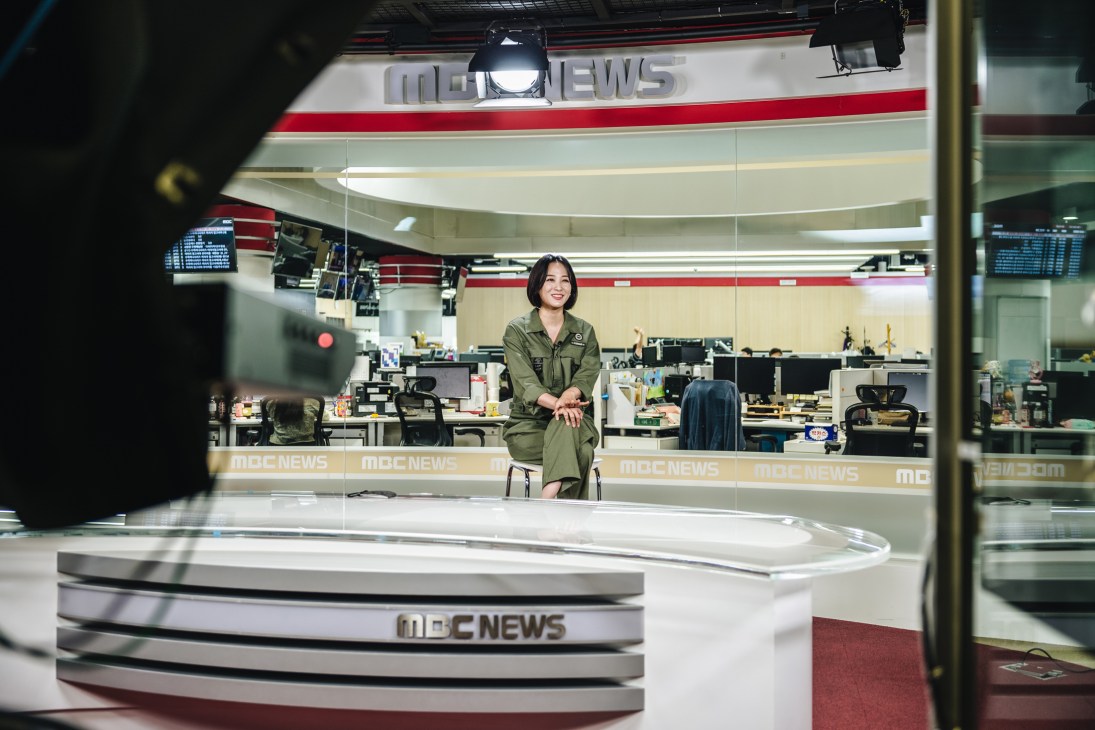
“Then the pandemic hit and everything went quiet,” says Carter, sitting in a high-rise in Seoul, where her employer opened a global news hub in May 2021 and relocated its digital team from Hong Kong. The building is in Gwanghwamun, where the South Korean capital’s old palace gates stand between gleaming skyscrapers. An open working space with adjustable desks and windows overlooking the city, the office is spacious and has a capacity of 50 staff.
When Beijing introduced the national security law in Hong Kong in 2020, the former British colony’s independence was restricted and foreign journalists began to feel the rope tightening. “We started to have problems getting visas, which is something you see a lot in mainland China,” says Carter. “It’s an interesting inflection point as China exerts its authority but from an operational perspective we had to rethink where our team was. We wanted to diversify.”
Enter Seoul, a megacity with a population of about 10 million and the heart of a country that is home to more than 5,000 registered media outlets. The city might not be as multilingual as Hong Kong but it’s not too difficult for reporters such as Carter to navigate. Having transitioned from military dictatorship to democracy in 1987, South Korea is now home to many international media companies. The Washington Post launched a global news hub there in July, with 10 people dedicated to the bureau. Its office, like that of The New York Times, will be in Gwanghwamun. “Seoul was appealing because of its friendly environment to foreign businesses, its relative press freedom and its talent base, with a big pool of well-trained, English-speaking journalists,” says Douglas Jehl, the newspaper’s foreign editor.
Carter cites similar reasons. “We probably looked at every city in the region,” she says. “We looked at proximity: how easy is it to get around in Asia? We looked at cost, taxes, press freedom, ease of life, the ability to set up shop quickly and easily. In the end, Seoul seemed to come out on top.”
For the South Korean government, it’s easy to take this as a vindication that the country has “made it” – and it seems to be encouraging that perception. “We have the best press freedom in Asia,” says Jung-Youl Park, director of the Korean Culture and Information Service (kocis), a branch of the Ministry of Culture, Sports and Tourism. Its Foreign Press Center (fpc Korea) is located on the 10th floor of a towering building that hosts key organisations such as the Journalists’ Association of Korea. “We believe that Seoul will naturally become the media hub of Asia with more foreign press coming here,” says Park. “So we would like to help journalists actively.” The fpc plans to expand its operations, both in terms of office infrastructure and manpower, to accommodate the growing number of incoming journalists.
It’s not just the government that thinks that the sands are shifting. According to Reporters without Borders, South Korea has held the first place in press freedom in Asia for three consecutive years, ranking 42nd worldwide out of 180 countries surveyed. “But we have to be wary of the fact that this kind of freedom may not last forever,” says veteran correspondent Don Kirk, who started covering the country in 1972 for the Chicago Tribune. Kirk remembers the military dictatorship era when he was escorted by a government minder. Censorship was the norm; journalists had to risk their lives to defy it.
Even in more recent history, South Korea has had issues with freedom of speech. Before 2017, during the conservative administration, citizens were penalised for even minor praise of North Korea. A Japanese journalist was sued for allegedly defaming president Park Geun-hye (the reporter was acquitted in 2015). Even under Moon Jae-in’s more liberal current administration, a South Korean journalist for a US media outlet was called “almost treasonous” by the ruling party for an unflattering portrait of the president as “Kim Jong-un’s spokesperson”. But Jehl believes in his paper’s choice. “We have concerns but nowhere has a perfect record,” he says. “Looking across the region, South Korea’s record is a lot better than most.”
The recent moves by the two US publications may have drawn attention to the country but Seoul has been a centre of media activity for years. The fpc Korea has almost 300 foreign journalists on its roster; countless other unregistered reporters contribute to outlets worldwide. In 2015, npr created a Seoul bureau, joining the likes of CNN and the BBC, the latter of which has had a regional service, BBC Korea, since 2017.
Today, South Korea’s media landscape is bubbling with enterprise. Home-grown internet giants Kakao and Naver offer a vast array of services, from social media to streaming platforms. Supported by a robust digital infrastructure with one of the world’s fastest internet speeds and about 16 million mobile subscribers on the 5G network, more Koreans are trying out being a journalist, a role that’s still often restricted to those who pass a national exam.
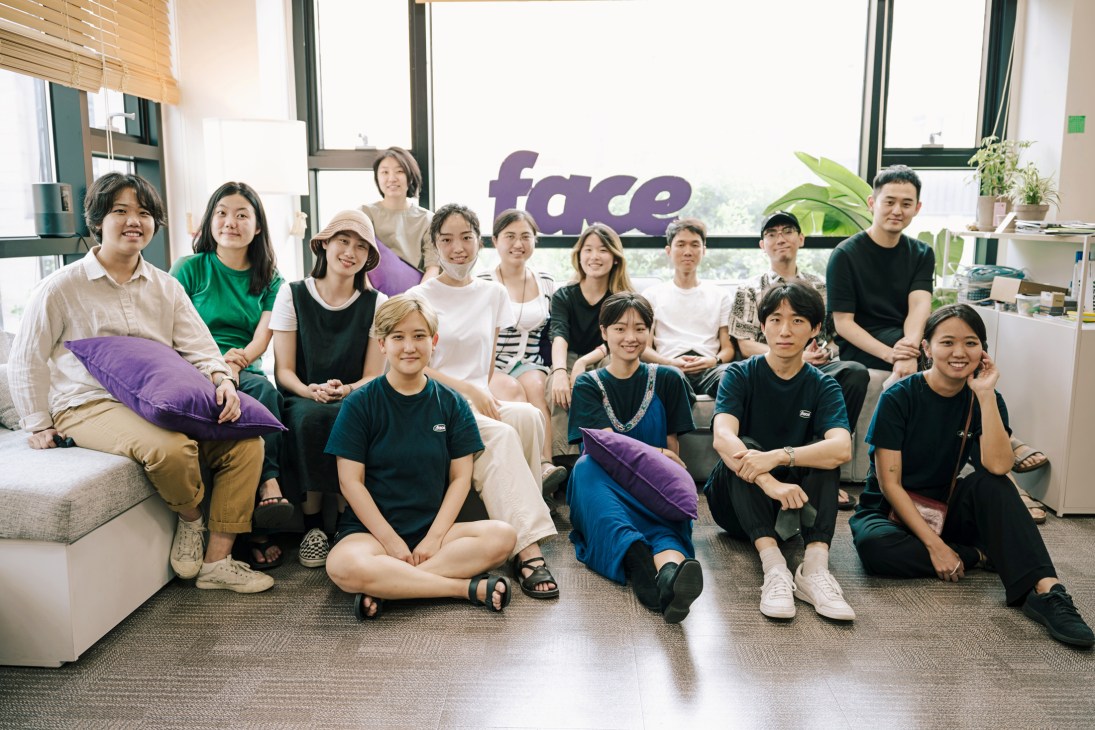
“It’s easy to experiment using limited resources,” says Sodam Cho, CEO of media start-up Dotface, which was created in 2016 to tell stories that Cho and her colleagues felt were being neglected by the more established media outlets. Its 15-member team produces documentaries, articles and community campaigns; among its output is an award-winning documentary covering child prostitution on messaging apps. Despite its growing popularity, Dotface still has to work hard to sustain itself financially but recent seed investment of about 600 million won (€443,000) could change that. The company has also been innovative in encouraging its followers to get involved through crowd-sourcing campaigns and to join a paid membership community called Dotface People. “We don’t just alert people to a problem,” says Cho. “We gather them to participate in concrete ways to influence our reality.”
The arrival of foreign titles to Seoul may galvanise the Korean-language media but for papers such as The Korea Herald, an English-language publication founded in 1953, the new neighbours will also create some healthy rivalry. “Certainly there’ll be more competition for stories,” says Hoo-ran Kim, its culture editor. Housed in a red-brick building in Huamdong, the Herald is a microcosm of what the country’s legacy media is experiencing today: trying to adapt to the changing digital climate, it is expanding online, where its readers are more global (most of the 100,000 subscribers to its print edition are South Korean).
Still, the daily has an advantage over its competitors: not many foreign reporters enjoy the same level of access to government briefings. “We sort of feed off each other,” says Kim, referring to the relationship between the Herald and foreign journalists. “We’re reading the same information but they might have different priorities, which is why we end up doing different stories.”
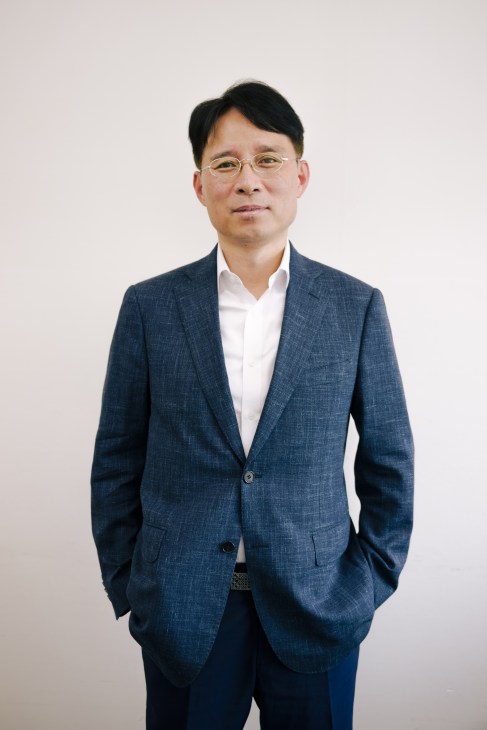
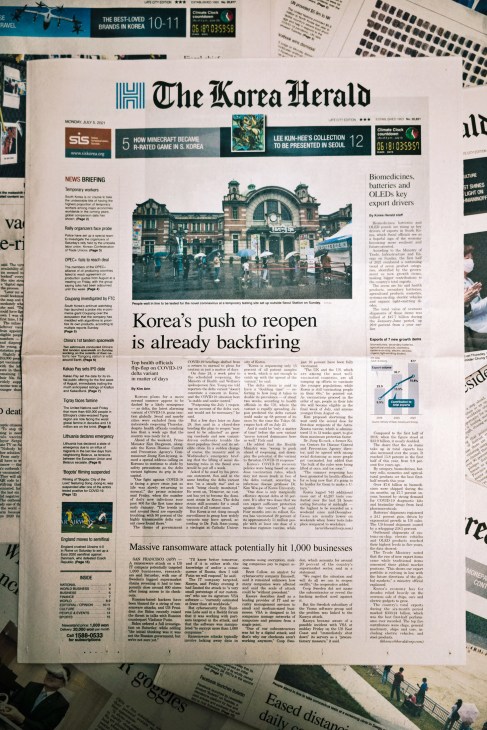
After all, an increased foreign presence in Seoul doesn’t necessarily need to translate to more stories about this specific patch, treading on local media’s toes. “We are not putting this hub in Seoul because we want to expand our South Korea coverage,” says Jehl. Rather, the newspaper plans to serve its global audience by operating the office as part of a worldwide, 24-hour newsroom. The New York Times, which will have about 30 people in Seoul by the end of 2021, sees its South Korean office in a similar way. “We are not just doing Asia coverage but also anything that happens in the world while London and New York are asleep,” says Carter.
So will Seoul emerge as the media hub of Asia? Many international outlets remain stationed elsewhere – including Singapore, Bangkok and, yes, Hong Kong. Is it just a matter of time before they make the jump? “Seoul is a media hub, definitely,” says Kirk. “But maybe there is no single Asian media hub because the perspectives are so different from one place to another.” Even so, the view from Seoul at the moment is pretty enticing.
Syncing feeling
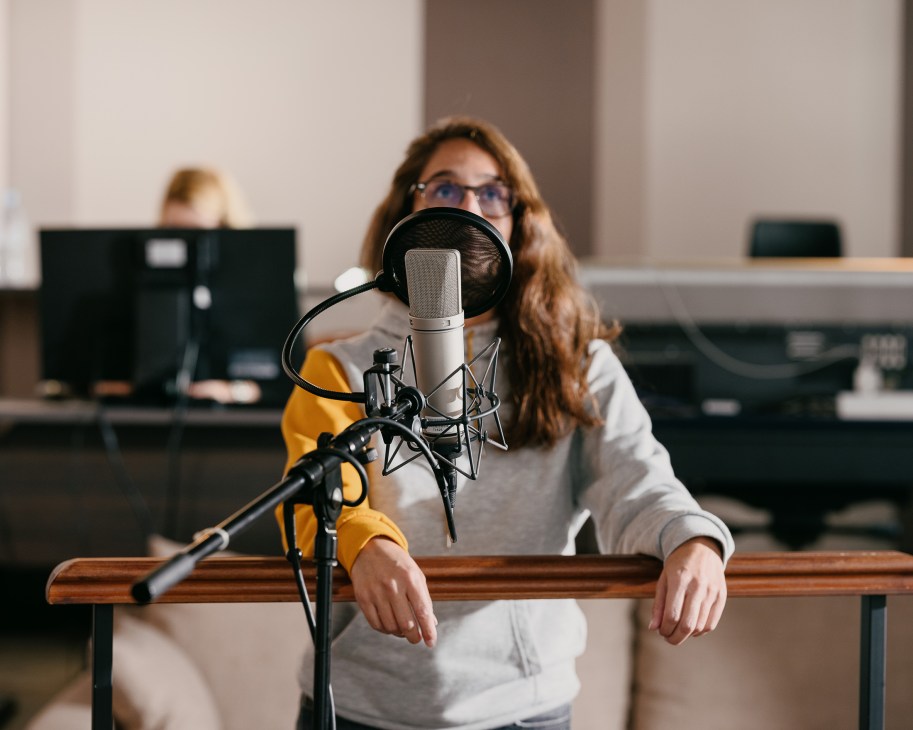
In a dubbing studio in Saint-Ouen, just outside Paris, a screen shows a scene from a US thriller. Two blonde women on a porch are poised to toast with champagne. A French translation of the characters’ dialogue runs quickly across the “rhythmo band”, a script that is synced to indicate the exact point at which the phrase should be uttered to ensure a perfect lip sync. The actor dubbing the older woman delivers the line into the microphone with an energetic arm gesture, as though holding a glass herself. “santé!” she says. But the word doesn’t quite fit with “cheers”. “Let’s try ‘chin’ instead,” suggests the director. One more take and “formidable!”; it’s a wrap.
Localisation, the business of adapting films for international audiences, is thriving. Part of the rise in its fortunes is due to the great shooting stoppage of the pandemic, which forced countries to feed off other markets’ pre-existing productions. But mostly it’s thanks to the trend of streaming platforms trying to reach viewers around the world. France has the world’s largest dubbing industry and, according to industry body Ficam, the turnover for these kinds of services has seen a steady increase since 2015. Though more expensive, dubbing remains more accessible to mass audiences than subtitling, so platforms are investing in it heavily. In the UK and the US, where the practice used to be shunned, huge audiences are watching dubbed TV shows for the first time thanks to series such as Money Heist, Narcos and Squid Game.
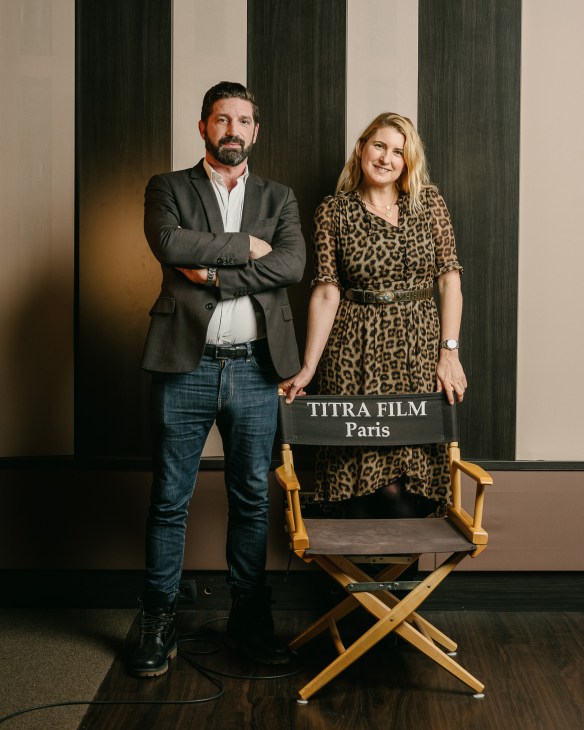
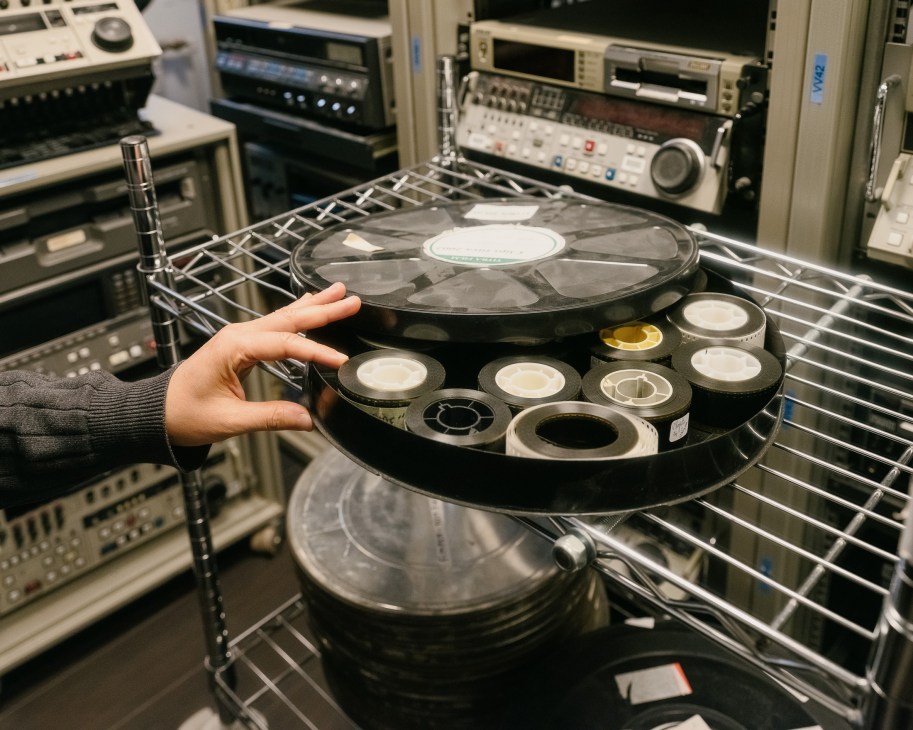
Titrafilm is one of the oldest companies in this “behind-the-scenes” line of work. Founded by Russian immigrants Joseph and Michel Kagansky in 1933, the company pioneered the subtitling process with a technique that involved stamping titles directly onto a film strip: a cheap solution that allowed the first “talkies” to be distributed all over the world. Its first client was Howard Hawks for the subtitling of Scarface. Since then, the company has subtitled most of the films shown at Cannes Film Festival, given voices to much-loved cartoons such as Despicable Me, and even organised a private screening for Charlie Chaplin.
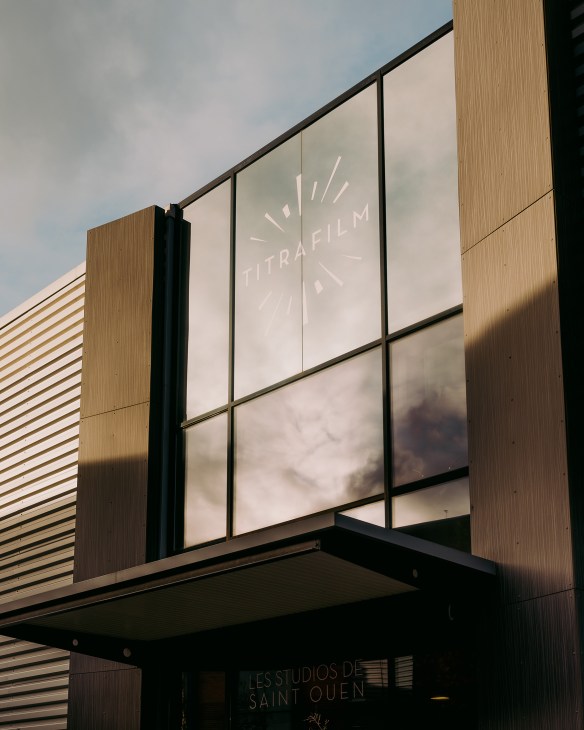
Still a family business, Titrafilm is now in the hands of fourth-generation owner David Frilley-Kagansky and his sister-in-law Sophie Frilley, who have steered the company through its biggest changes since its foundation. Recently it has gone from working mostly for major film studios and TV stations to signing its biggest contracts with Apple, Netflix and Disney+, things that “would have been unthinkable 10 years ago,” says David. But adapting to an industry so closely linked with technological development is anything but easy. The digitalisation of films suddenly made its analogue expertise obsolete and by the early 2010s the company was struggling to survive. “We knew there was a revolution coming but nobody knew which tools we’d need,” says Sophie. “Within a couple of years our turnover was completely wiped out.” The company embarked on a full digital transformation, reinforced cyber security to ensure its clients’ trust and took the plunge into dubbing. It paid off: in 2016, it won a special César award (the French Oscar) for its innovation efforts.
Lost in translation
Worst-dubbed films A bad lip sync is always memorable. For infamous examples, look to the Sergio Leone western classic A Fistful of Dollars (dubbed in post-production because many actors didn’t speak English) or Orson Welles’ take on Franz Kafka’s The Trial, where Welles himself dubbed 10 of his characters.
Most-dubbed films
Perhaps unsurprisingly, many of the most-dubbed films in history are animations (children have less patience than adults with subtitles). But the feature topping the list is 1979’s Jesus, with more than 1,000 translations.
Today the economic shortfalls are a thing of the past, which is why Titrafilm’s HQ (a stone’s throw from the Luc Besson-supported Cité du Cinéma) is undergoing an expansion, including 10 more studios as well as a terrace with an outdoor cinema. According to Sophie, the company’s success lies in the longstanding work of its “dubbing auteurs”, experts in the complex task of translating films. “Some competitors have the same technical skills but call on translators and impoverish the work from a linguistic point of view,” she says. “It’s this quality that has allowed us to preserve our profession until now.” With the winds of change in its favour, Titrafilm is poised to do much more than just survive.
titrafilm.com
Spread the word
When a new player announced in 2013 that it was entering the Portuguese media scene, many were sceptical. The sector was dominated by a handful of titles and it was clear that Observador was picking a tough fight. But the journalists behind it weren’t concerned. “We wanted to shake things up,” says co-founder and publisher José Manuel Fernandes from Observador’s airy office in an old industrial block in the Lisbon neighbourhood of Alvalade.
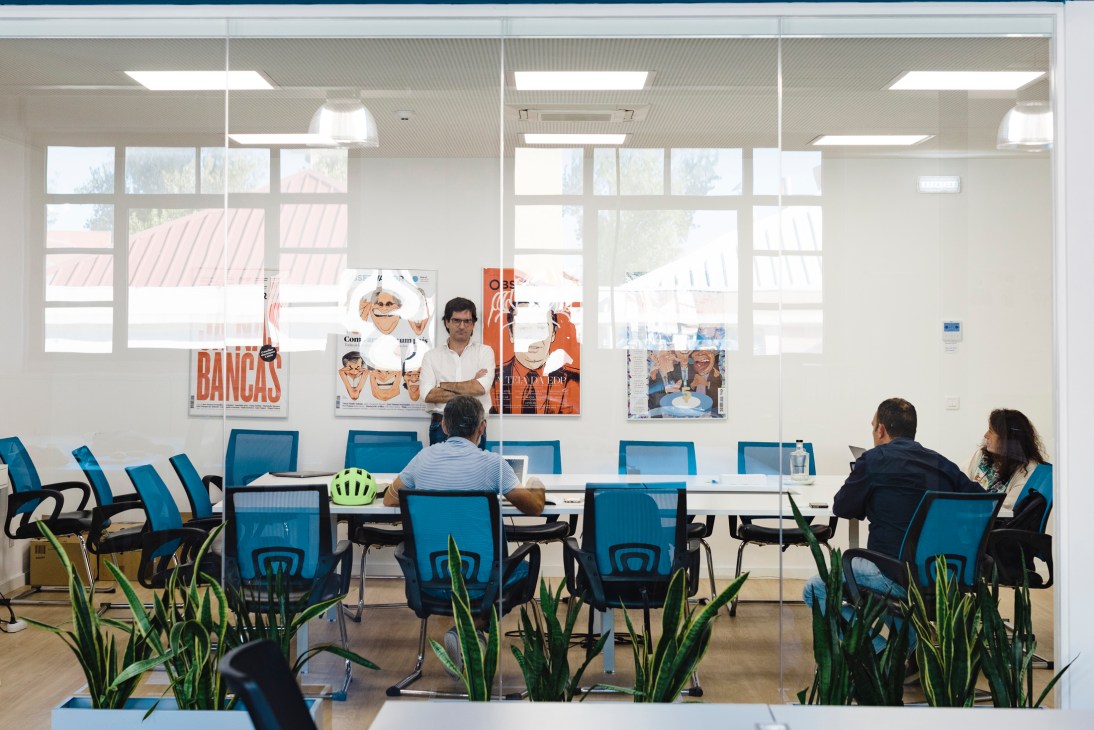
Having launched another of Portugal’s main newspapers, Público, with other journalists in the early 1990s, he knew how to turn an arrivisteinto a success. “We had to disrupt the status quo,” says Fernandes. “To publish the news as it happened and counter the culture of saving stories up for the weekend supplement or evening news. Back then, the only way was to go online.”
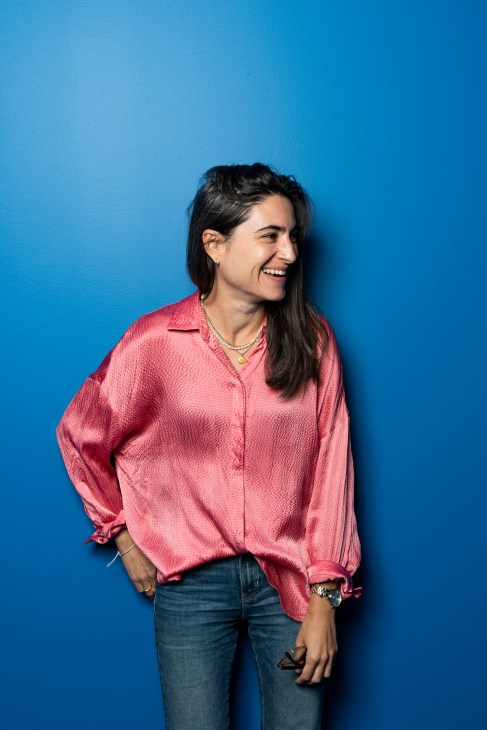
Such a project would only succeed if it remained financially independent, out of reach of the country’s big media conglomerates. The founders became shareholders. “In Portugal there’s an illusion that all media is politically equidistant but in practice that’s not the case,” says Fernandes. “With an online publication, there’s room for all views. We later gathered a group of individual investors who believed in our vision and in that editorial independence.”
Another fundamental step was to bring in new talent: digital natives, who could create the country’s first large-scale digital project. “We built a newsroom founded on raising up journalists,” says Fernandes. “That means we hired fewer senior journalists and instead employed young people who were just starting out. We wanted them to grow up here, together with the project.”
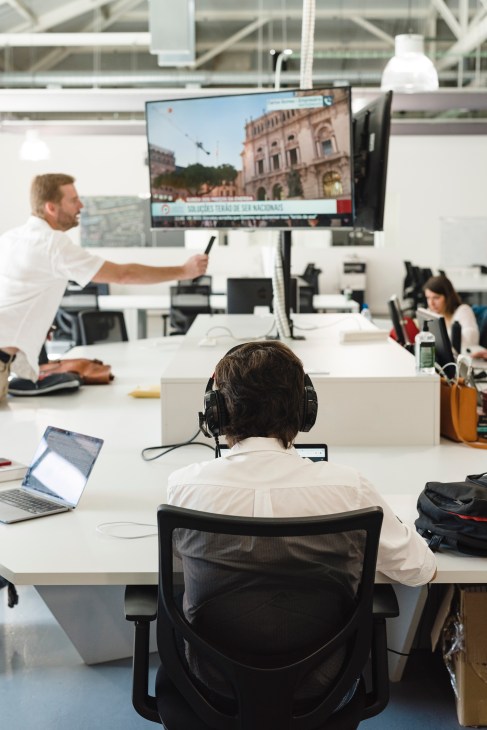
“I’m one of the oldest here and many of my colleagues have been my interns at some point,” says deputy editor Filomena Martins, who, prior to Observador, worked for almost 30 years in some of Portugal’s biggest newsrooms, including as deputy editor of legacy daily title Diário de Notícias.
Since 2013, many of those early hires have grown as journalists with the title. With a staff of 140, Observador is now a go-to source for national political reporting and analysis, serving a domestic audience but also readers across the Portuguese diaspora. “Editorially, our reach goes from the liberal left to the democratic right,” says Fernandes. “We cover the party conferences like no other publication, sending a team of 10 or more.” Other key focuses include regular essays by leading academics and writers; fact-checkers verifying the day’s news; and short explainers on expansive issues. “It was important for us not to assume knowledge and to stop writing our reports as though the readers knew all the context,” says editor in chief Miguel Pinheiro, who sets the editorial line for the title. “Even someone who reads the news every day won’t know the background to every story. We wanted to say, ‘That’s normal and we’re here for you, the reader.’”
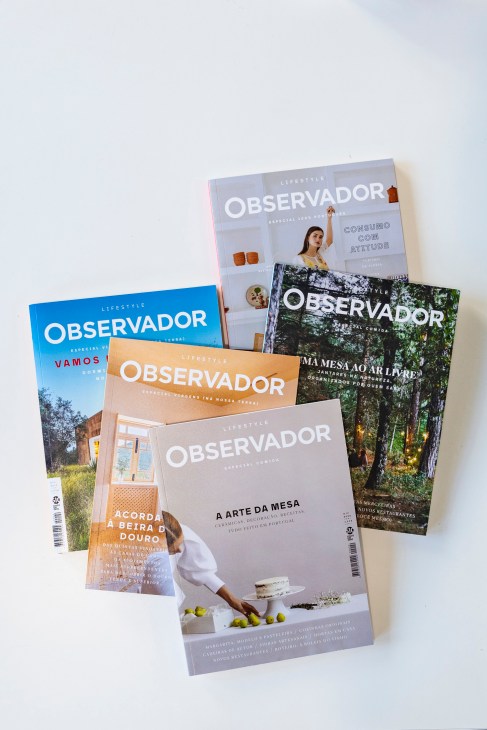
Over the past eight years, Observador has become a fully fledged media brand. “If we stay still for too long and don’t do new things, we start to get restless,” says Fernandes. The first experiments in paper came in 2016, when Observador published an anniversary issue featuring its best reporting from the previous year – now an annual staple. It allowed them to reach a new demographic of people that digest news at a slower pace. And in 2019, Observador and renowned publisher João Miguel Tavares joined forces to create agency 510, which publishes contract magazines for brands as well as quarterly magazine Observador Lifestyle. “It’s about using print in a better way,” says Tavares as he rearranges his bookshelf and flicks through the agency’s latest work for Portuguese coffee brand Delta. “We wanted to grant print the dignity it deserves, with good-quality paper and sophisticated design.”
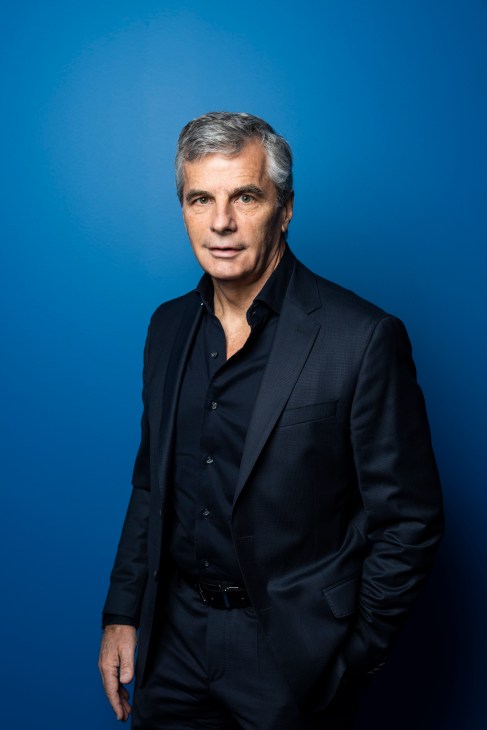
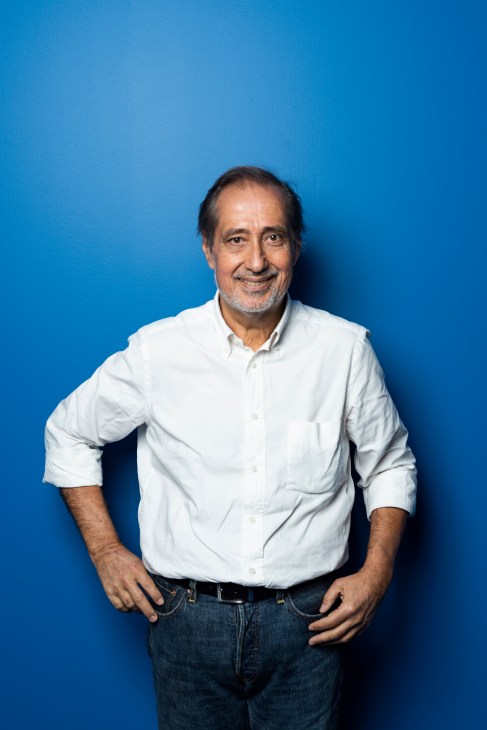
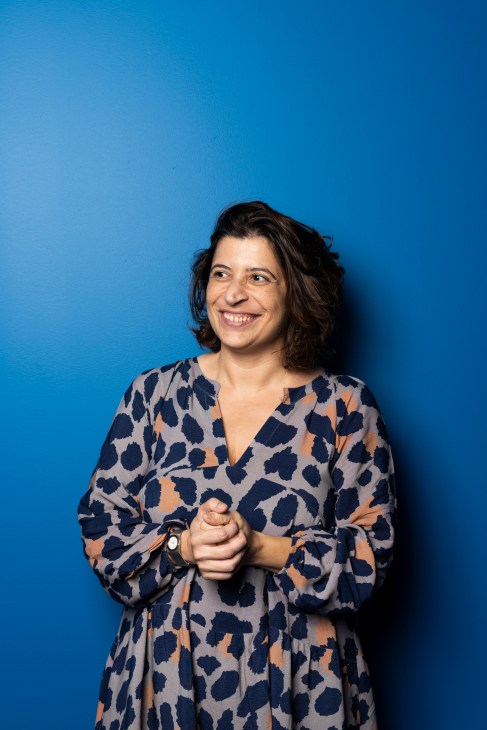
The team has also brought its spirit to the airwaves. “We launched a radio station because everyone thought it was impossible,” says Fernandes. Rádio Observador became the latest addition to the brand’s roster in 2019. Deputy editor Pedro Jorge Castro is at the helm of the 24-hour station, together with executive editor and seasoned broadcaster Ricardo Conceição. “It was a once-in-a-lifetime opportunity to sit down to sketch out plans for the programmes and our sound,” says Conceição.
Broadcasting both in FM and online, the radio’s most striking innovation lies in its informal tone. Despite being a news station, with little music played, the vibe is engaging and upbeat. “If you mix the tone of your favourite commercial music radio with the accuracy and quality reporting of a news channel, you get Rádio Observador,” says host Judite França, who left television news at tvi for this project. As well as overseeing the output for part of the day, she also presents the podcast Zoom, which focuses on international politics and affairs.
For França, it’s the seamless interaction between the brand’s two newsrooms that makes Rádio Observador stand out. “We have the radio team and the newsroom for the actual newspaper,” she says. “The fact that we can be nimble and merge the resources of both is our biggest differentiator.” Observador’s editors and journalists are regular voices and hosts on the airwaves, and interviews by the radio team can often be found quoted in articles on the website. These advertising-led ventures in both print and audio have also brought in steady extra revenue to supplement the existing digital business model: much of the content is free on the website but a paid subscription allows readers to access additional reporting, exclusive newsletters and fewer adverts.
While Observador covers the same issues as many news organisations, its focus falls between domestic politics, economy and lifestyle. “Being close to the reader is extremely important to us, so our days are balanced between the hyper-local and an international outlook,” says lifestyle editor Maria Ramos Silva. “This means we can vary between short news reports and lengthy features.” The team was pleasantly surprised to discover that the public was increasingly drawn to its longer articles. “Everyone thought that online readers only wanted short pieces but some of our most popular are long-form,” says Pinheiro. “So we have been able to commit to special investigations. Two of my journalists have been working on one story for almost four months. It’s not everywhere that you have those sorts of resources.” One of its most popular investigations, “A Corte de Luanda” (“Luanda’s Court”) was an exposé on the power web of Angola’s then-president José Eduardo dos Santos. It was developed to span text, audio and video.
Having by now experimented with all possible journalistic mediums, the team at Observador is still just as ambitious to try something new. “If a journalist is not excited about a story, neither will the reader be,” says Pinheiro. “But here, there’s a clear enthusiasm for the news. People can feel that every day in our reporting.” observador.pt
In good company
1.
Company: MellowVans
Location: South Africa
What it does: Last-mile electric delivery vehicles
What’s next: Further expansion throughout Africa and beyond
“Growing up in South Africa we didn’t have access to public transport,” says MellowVans’ CEO, Neil du Preez, speaking to Monocle from a trade fair in Vienna. Inspired by transport that he had seen while living in southern China, Du Preez set about finding a solution. In 2014 he founded MellowVans, an electric, three-wheeler delivery-van company headquartered near Cape Town. Two years ago, it pivoted to producing for the last-mile delivery market but the goal remains the same: to provide electric mobility for that market. “Africa needs electric vehicles and alternative mobility solutions,” says Du Preez.

MellowVans might have competition from other small-vehicle brands but the company “designed the vans in Africa for African conditions”, so they can take on variable road quality and be charged from a simple plug socket. The company already counts several big-name clients on its books, including dhl, and Du Preez hopes to expand into Europe and the Middle East. The fleet comprises 100 vehicles so far, which have a maximum range per charge of 100km, and Du Preez says that he’ll be ramping up production to four a day by 2022. We’ll be hearing a lot more about these “sexy vehicles” (his words) soon.
mellowvans.com
2.
Company: Solugen
Location: USA
What it does: Petroleum-free chemicals
What’s next: Opening production plants around the world

33-year-old co-founder of Solugen, admits that his company operates from a “petropolis”, a reference to Houston’s notoriety as the global centre for petrochemicals. But that’s precisely the point of being there, he says. “It’s critical. It shows us what doesn’t work and is a constant reminder of what we’re trying to do.” Solugen – valued at $1.8bn (€1.5bn), having raised more than $350m (€300m) in its latest round of funding – produces chemicals made with molecules from plants rather than through refining petroleum or natural gas. It’s a potential game changer in a chemical industry that’s one of the world’s largest polluters. But it also makes good business sense. “Beyond the focus on the sustainable impact, there’s a clear business case for using the Solugen process,” says Chakrabarti. “The molecules we are interested in going after make our offering cheaper than the petrochemical alternative.”
For now, Solugen’s main product is a liquid derived from biomass sugar that’s used to protect infrastructure in water-treatment plants. But the firm is also looking to apply its scientific wizardry to the creation of non-toxic plastics and has about 40 different molecules or products in the pipeline.Solugen was recently recognised as having a carbon-negative factory – not bad in a “petropolis”. A second factory in the Midwest is on the way and expansion to Asia and the UK could follow.
solugen.bio
3.
Company: Auga
Location: Lithuania
What is does: Organic food and the world’s first hybrid tractor
What’s next: Making agriculture truly sustainable
Whereas big industry and transport have, understandably, become easy targets for environmentalists, the heavy footprint of agriculture is often overlooked. “Nobody cares,” says Auga’s general manager, Kestutis Juscius. But he’s not prepared to accept that.
Lithuania’s Auga bills itself as one of Europe’s largest vertically integrated organic-food producers. And it is now leveraging its position to try to shake up the industry. In September the firm unveiled the world’s first hybrid biomethane and electric tractor for professional farm use. Although compressed natural gas and electric alternatives exist, this one can drive for 12 hours, about three times longer than other models. Auga’s tractor combines biomethane fuel (collected from livestock waste; thank you flatulent cows) with an electric battery that’s used if a boost is needed. By removing the superfluous gearbox, Auga was able to find extra fuel capacity, which is stored in gas cylinders for easy reloading.
Yet the company is about more than just a vehicle, according to Juscius. “It’s not about the tractor,” he says. “We’re making breakthrough technologies to produce sustainable food and the tractor is the first step.”
Auga, which supplies to Ocado in the UK among others, is planning to mass-produce the tractors from next year. However, it also views vehicle and technology sharing via an app as a potential part of future plans, alongside tackling livestock feed and further methane management. So can all this change the world? “Yes, of course,” says Juscius. “And very quickly.”
auga.lt
4.
Company: H2Pro
Location: Israel
What it does: Green hydrogen technology
What’s next: Scaling up, opening a factory and going to market

Israeli start-up H2Pro, part-funded by Bill Gates, has found a novel way of splitting water to extract hydrogen that wastes much less energy than traditional methods. The process also brings down the cost. “Taking hydrogen and making it cheaper, so it can be used en masse, can really move the needle,” says H2Pro’s CEO, Talmon Marco, who also founded the Viber and Juno apps.
H2Pro is now scaling up its processes and systems, while a production facility is due to open in Israel in 2023 with the machinery set to go to market globally by 2024. Hydrogen could replace coal in steel production and the heavy-mobility sector is hungry for it: California’s ZeroAvia is working on a plane fuelled by hydrogen, while France’s Alstom is exploring hydrogen trains.
h2pro.co
5.
Company: Olio
Location: UK
What it does: The world’s top food-sharing app
What’s next: Stamping out domestic food waste in cities across the globe
Olio, like most successful apps, began as a way for people to disseminate information instantly. But whereas sites such as Twitter and Instagram indulge human frivolity, Olio’s raison d’être is to encourage frugality. Users post pictures of uneaten food and their location, then someone agrees to take it off their hands. Founded in 2015, the world’s top-rated food-sharing app now has five million users in 59 countries across the globe. So far it has saved 32 million portions of food from the bin: the equivalent of taking 94 million miles of car journeys off the road (in terms of emissions reduction) or saving 4.4 billion litres of water.
Olio’s pared-back, user-generated interface belies a slick funding machine: it raised €5m in 2018 and a further €37m this year. In 2021 the UK’s largest supermarket chain, Tesco, announced a collaboration through which it will hand surplus food from 2,700 of its shops over to Olio’s volunteers for distribution. Founded in an affluent north London suburb (the first item shared on the app was a bag of shallots), Olio has become a way of bringing together residents in cities around the world that suffer from food inequality. In doing so, it has proven that charity which begins in the home can travel far and wide in the modern age.
“We conducted a survey and found that one in three people are physically pained by throwing away food,” says Olio co-founder, Tessa Clarke. “Our mission for the app is an unashamedly bold one: it is for hundreds of millions of interconnected communities where neighbours are sharing the world’s most precious resource.”
olioex.com
6.
Company: Sheep Inc
Location: UK
What it does: The world’s first naturally carbon-negative fashion brand
What’s next: Will other brands follow suit?

Fashion has a sustainability problem. How can new styles be produced without polluting the planet? Sheep Inc has decided to take its cue from nature by creating a balanced ecosystem in order to extract the wool to make its luminous knits. The company plays close attention to ensuring that it keeps its cash cow (or in this case, sheep) well fed, well exercised and well shorn in an example of pastoral farming that gives back more to the environment than it takes. Reared in New Zealand’s High Country, the sheep play a central role in regenerative farming through a symbiotic relationship between animal, vegetable and mineral that stores more carbon than it produces.

CEO Edzard van der Wyck says that the clothes are transported by ship, thus emitting less co2 than flying. When combined with the sequestering of co2 when rearing the wool, this means that Sheep Inc could well be the first naturally carbon-negative fashion brand on Earth. Oh, and the products are nice too: luxuriously soft knitwear in brilliant colours.
sheepinc.com
7.
Company: Sinctronics
Location: Brazil
What it does: Turns electronic waste into raw materials for reuse
What’s next: Expansion in the São Paulo region
When phones, computers and household electronics stop working, our first instinct is to bin them. Sinctronics, a Brazilian company that specialises in recycling consumer electronics, was established to address this.
“At the time, Flex – the manufacturing company behind Sinctronics – was already working with a lot of customers in the electronics industry and one of their clients challenged us to find a solution,” says Linda de Oliveira, Flex’s communications co-ordinator. “We needed to help our clients out with solutions rather than just logistics.” The result? An “integrated ecosystem” that takes electronic waste that contains recyclable plastics and metals such as gold and platinum, and turns them into raw materials for reuse in new products. It’s an approach that has caught the eye of several companies, including Hewlett-Packard and Toshiba, which are both working with Sinctronics to increase the use of recycled materials, remanufacturing them into their new products and packaging.
After launching in the small Brazilian city of Sorocaba, Sinctronics is now looking to expand its recycling efforts into larger markets, including the São Paulo region. “Our intention is to keep expanding in Brazil, working with co-ops and hopefully, in five years, growing to work with about 30 companies,” says Oliveira. Expect Sinctronics to soon establish a nationwide reverse supply chain.
sinctronics.com.br
8.
Company: Triodos
Location: The Netherlands
What it does: Finances businesses committed to positive socio-cultural change
What’s next: Helping more companies to go net-zero
Voting with your wallet might not be as easy as it seems. A 2020 report from the Rainforest Action Network and five other non-profits found that 35 major banks had donated €2.3trn to fossil-fuel companies since the Paris Agreement was ratified. But is there room for change? Triodos certainly thinks so. In 2019 the Dutch bank invested in the first major rollout of electric-vehicle charging points to supermarket car parks. And in the past year alone, Triodos has financed 561 sustainable energy initiatives and provided 59,000 people with accommodation via its financing of social housing projects. The bank believes that ethical investment isn’t only possible – but necessary. And while its model might become more common in the future, Triodos has always considered it to be the logical thing to do.
“The role of banks is to keep people’s money safe and use it in their long-term interests,” says Triodos UK’s CEO, Bevis Watts. “What’s the point of banking and investing if you’re undermining your customers’ own future, health and prosperity?” This is why Triodos’s next big commitment is setting a science-based net-zero target for his company. “From our point of view, most people making net-zero claims don’t really understand what it means,” says Watts. “It doesn’t mean offsetting. What net-zero really means is a transition to a completely different kind of economy. We’re going to end up with a completely different finance sector. Businesses should start looking at sustainable forestry, regenerative agriculture and nature-based solutions if they want to become entirely sustainable.” And they should be prepared to brace themselves for change.
triodos.com
9.
Company: Neot
Location: France
What it does: Provides solar power to rural areas
What’s next: Expansion throughout Africa
About four in 10 people living in Africa don’t have electricity in their homes. In many cases this is due to the fact that they live in an area that’s not served by electricity at all. In a bid to fix this, investment company Neot, through its Offgrid Africa programme, is equipping 49 villages in Sierra Leone and Uganda with off-grid solar solutions, and will be supplying almost 60,000 people with reliable power for the first time in 2022. The move is part of a €14m investment in Sicilian-made mini-grids for remote settings, which will be rolled out in partnership with UK energy company Winch, with plans to invest another €5m in the scheme.

“The energy that will be accumulated will break down one of the biggest barriers of development and help support the villagers’ livelihoods,” says Philippe Ringenbach, president of Neot Offgrid Africa, explaining that the improvements in quality of life for the scheme’s beneficiaries are significant. “It will establish internet access for households, helping economic growth and providing schools and health centres with electricity.”
Added to this is the fact that the scheme is scalable, which means that the 40 per cent of Africans not currently connected to electricity could be powered by solar energy solutions in the coming years. “It will lead to a brighter future for other African countries, such as Nigeria and Ethiopia, which Neot plans to expand to in 2022,” says Ringenbach.
If this trajectory continues, Africa will soon be home to a vast number of communities powered by renewable energy. The continent’s future, it seems, could be green.
neotcapital.com
10.
Company: Sinfonia
Location: Italy and Austria
What it does: Improves energy efficiency in old buildings with smart retrofits
What’s next: The project’s expansion across Europe
It’s no secret that our homes and offices contribute enormously to greenhouse gas emissions; our buildings generate nearly 28 per cent of annual global co2 output. And it’s an issue compounded by energy-inefficient old buildings.
In an effort to rectify this and preserve building stock in mid-sized cities, EU-backed organisation Sinfonia launched in 2014. Its aim is to retrofit energy-inefficient social housing in Bolzano in Italy and Innsbruck in Austria. Partnering with other organisations, such as research development consultant Zabala, it replaced doors and windows, upgraded electrics and insulated façades on housing from the mid-20th century, improving energy efficiency in some buildings by more than 350 per cent. Following its initial success, the system will now be replicated in five other cities across Europe.
sinfonia-smartcities.EU
On the charge
It’s Sunday morning in New Delhi and the city is quiet in comparison to the frantic pace of the week. It’s 05.30 and the sun is rising on the sparse traffic that rarely stops for red lights. Reena Katyal zips through the streets on her Trek roadbike, eager to clock up 65km before breakfast. She’s joined by a group of 20 others on similar high-end bikes, all of them decked out in sunglasses, helmets and Lycra that bears the name of their club: the Delhi Cyclists. Several such clubs have sprung up in India’s metropolises in recent years, with colourful names such as Doctors on Pedals and Cyclesutra.

“Since most cities in India don’t have any concept of cycling lanes, we come out at this time to beat the traffic and not get stuck in jams,” says Katyal, sipping water during a brief pit-stop 45 minutes into her ride. “For me and many others, the purpose of cycling is to stay fit through an outdoor activity we enjoy.” Katyal, who works for an IT firm in the Indian capital, sees cycling as a social and health pursuit rather than a low-cost way to commute. And with a fast-expanding middle class and total population of more than 1.3 billion, it’s easy to see why brands, domestic and international, are keen for a piece of the action.
One manufacturer looms large over India’s cycling scene: Hero Cycles. Today a multinational, multibrand company (it opened a design centre in Manchester in the UK in 2016), Hero started life in 1956 with very different aspirations. The idea at its inception was to build cheap bikes that lasted, largely for commuters. Premium bicycles didn’t exist at that time and spending an equivalent amount on a bike to what you might on a car was unthinkable.
Hero remains largely mass market: between March 2020 and March 2021, 1.2 million people in India bought a Hero entry-level single-speed Roadster commuter cycle, which costs about €52. The group the brand is part of, Hero Motors Company (HMC), also makes motorbike components and controls 46 per cent of India’s bicycle market, making everything from children’s to hybrid bikes. But hmc, the world’s largest integrated cycle maker, which employs some 10,000 people, is also looking to tap India’s leisure-biking converts and appeal to aspirational Indians seeking an upgrade.
The irony of the commuter bike that made Hero its fortune is that it remains a stop-gap arrangement for the millions who ride it. Bollywood movies and TV shows continue to push the idea that a motorbike is the next step. But Hero thinks that there’s an opportunity to challenge that paradigm. With its commuter bike sales ticking over, it can focus attention on the leisure and fitness cyclists – a market that Reena Katyal is a part of. In 2015, Hero pedalled its way into the high-end sector with the purchase of Indian premium brand Firefox, with the aim of competing with foreign brands that were starting to enter the Indian market, such as Bianchi, Scott and Trek.
“Today, people in India [are] buying cycles worth €10,000, the price of two Maruti hatchback cars,” says Pankaj M Munjal, chairman and managing director of hmc Group, over the phone from Hero’s London headquarters. But as the company’s fortunes have grown, one of its closest rivals, Atlas Cycles, has moved in the opposite direction. In 2020, the brand, which was founded six years before Hero in 1950, announced that it was halting production at its largest plant, in Sahibabad, Uttar Pradesh, due to a financial crunch, although it insists that it will bounce back.
A few hours at the Supreme Cycle Shop in Delhi’s Yusuf Sarai neighbourhood gives a clear picture of the dynamism of the cycling scene in India today. The business was started in 1962 by Gaurav Wadhwa’s grandfather and today there are three shops a few hundred metres apart. The smell of freshly cooked paratha flatbreads wafts over from a nearby restaurant. “Our customers are a mix of people,” says Wadhwa. “Apart from Hero, smaller Indian brands such as bsa-Hercules, Avon, FitTrip and Suncross Bikes are also popular in the local market.” Wadhwa explains that ever since Firefox came into the market, people have started to show an interest in both domestic and international high-end brands, spending anything from 20,000 rupees (€230) to 350,000 rupees (€4,000) on a bike. Wadhwa, an avid long-distance rider, is also the organiser behind Delhi Cyclists riding group.
Hero’s Pankaj Munjal says that he wants Hero to be known for “software and technology” in the future and that part of the company’s modernisation plan includes widening the group’s offering into e-bikes – regular cycles with a battery-operated electric motor that saves a lot of sweat by propelling the pedals. Some e-bikes have throttles that kick in like accelerators. Bengaluru in southern India, previously known as Bangalore, has been an early adopter of e-bikes thanks to a large number of technology companies based in the city that have been eager consumers. E-bike sharing platforms have also sprung up in cities such as Delhi and Mumbai.
Hero bought German e-bike player hnf in January 2020, a deal that was “a value-add in terms of technology and r&d capability”, says Munjal. But the leader in India’s emerging e-bike sector is Lectro, a brand run by Munjal’s 32-year-old son Aditya. In April this year, Hero opened a 750 crore-rupee (€86m), 40-hectare production facility with partners in Punjab. The aim is to be making two million e-bikes a year by December, with half destined for the domestic market. “Our ambition is to have anyone travelling less than 20km on a daily basis, be it for work or otherwise, use an e-cycle,” says Aditya. “It makes sense from a number of perspectives, be it economy per kilometre, health or protecting the environment around us. Even if the battery dies out along the way, one can always pedal an e-bike – an advantage compared to e-scooters.”
Aditya wants to get India biking – and he doesn’t want electrified to be a niche sector for the few who can afford it. Instead, this third-generation member of the family company says that he hopes, one day, to “move millions on these bikes” – a vision that his grandfather and great uncles, who founded the company, would undoubtedly approve of. E-bikes can be plugged into conventional wall sockets for charging and prices start at €270. They won’t be affordable to all in India but Aditya believes that they can replace the more expensive, less efficient “step up” motorbikes that many Indians aspire to owning. He also hopes to bring down the price of the bikes in future.
To date, the infrastructure in India has been slow to keep up with the growing numbers of cyclists. But the fact that there are now bike mayors in cities such as Mumbai, Bengaluru, Gurugram, Chennai and many more is an indication that moves are being made in the right direction. Appointed by the Amsterdam-based bycs foundation, these volunteer mayors are working towards the common goal of getting 50 per cent of residents to commute by bike by 2030; the hope is that, alongside this, the leisure market will continue to grow.
Whether or not those goals are reached, more Indians seem set to take to cycling. An increasing number of mountain-biking and endurance-riding events are appearing on the calendar, catering to people like Reena Katyal and her fellow bike-clubbers. But if Hero has anything to do with it, India’s pedal power won’t stop there. One day, e-bikes might be affordable enough to make the country a true testing-ground for e-mobility solutions. India is gearing up.