How a new generation of hoteliers is keeping Grindelwald on the map
With its spectacular scenery, Grindelwald in the heart of the Bernese Oberland has long attracted skiers and nature lovers alike. But this celebrated mountain village isn’t resting on its laurels.
“Differentiation is the recipe for success today,” says Lars Michel of Hotel Fiescherblick, which he has run with his brother, Matthias, for about three years. “In the past, it used to be more about group tourism,” he says. “Today, however, there are more travellers looking for quality and something special.”
The Fiescherblick stands next to Hotel Gletschergarten, run by the brothers’ parents and founded in 1899 by their great-great-grandfather. “Our great-grandmother, Huldi, was the first woman in Grindelwald to drive a car in the 1930s,” says Lars. “She was quite a character.” In Hotel Gletschergarten’s lobby and staircase, he shows Konfekt (Monocle’s sister publication) a series of black-and-white family photographs, including one of him and Matthias as little boys. Their next venture – Da Huldi, a small osteria that is expected to open across the street in 2027 – will be named after their great-grandmother.
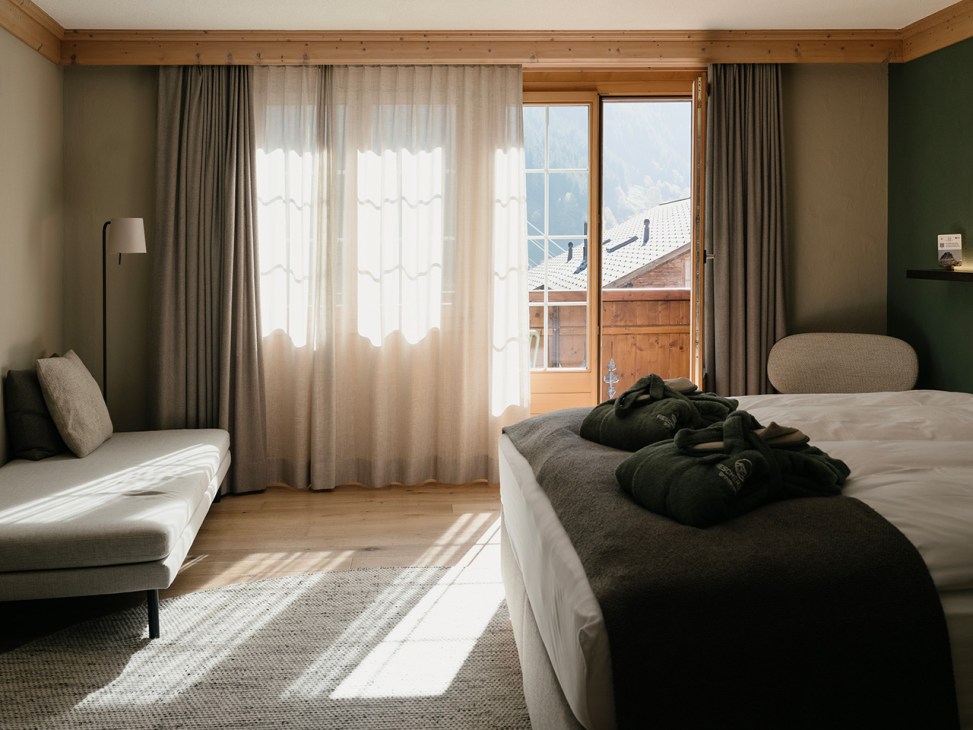
A special treat can be found at the Fiescherblick’s restaurant, where chef Aurélien Mettler serves a 13-course tasting menu in the evenings using fresh, locally sourced ingredients. From the menu, Konfekt opts for homemade sourdough bread with Alpine butter and warm cauliflower with gochujang and pumpkin seeds; this is followed by Grindelwald venison with potatoes, peach and cabbage. The Michel brothers lend a hand by harvesting mushrooms in the autumn and blueberries in the summer, which adorn the plates. This collaborative spirit has helped to make Grindelwald a hub of excellent cuisine after a long day on the slopes.
Jan and Justine Pyott, who moved to Grindelwald in 2016, embody the same spirit. Originally from Biel, Jan is an ex-triathlete, while Parisian Justine was an avid base jumper with an interest in both urban and mountain jumps. “You can’t be a professional in sports forever,” says Jan. “Neither of us has any training in hospitality or tourism, so taking over one of the oldest hotels in the region, which dates back to 1864, has been a great adventure.”
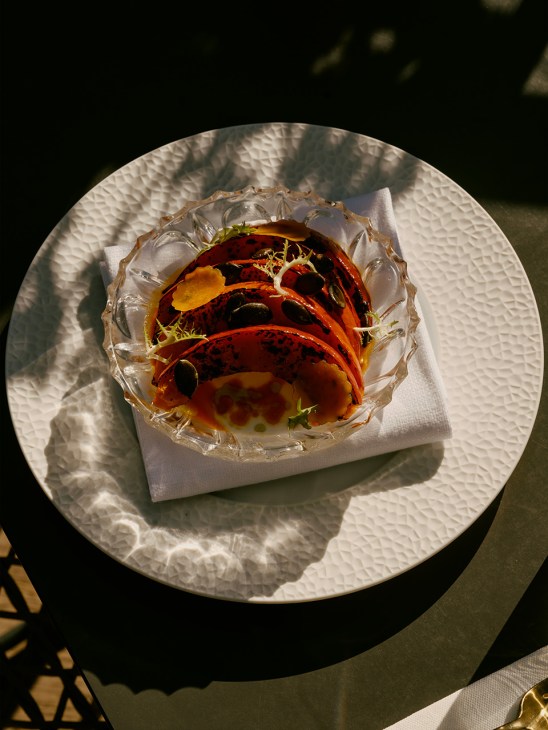
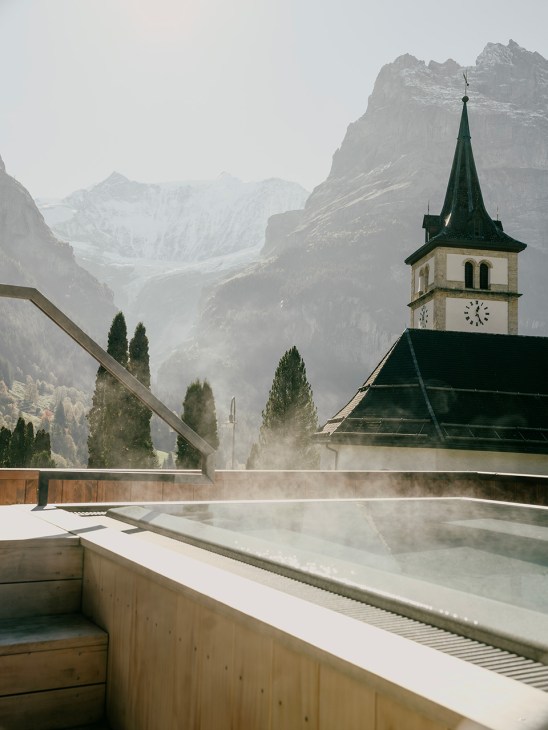
The couple also operate the Grindellodge, an inn with an interior that subtly evokes Japanese decor with plenty of light wood. Here, in the evenings, Umami restaurant serves warming ramen soups and donburi rice bowls prepared by Tokyo-born chef Shota Hasegawa. This connection to Japan is no accident. The Alpine village has a long history with the country’s mountaineers, says Jan. In 1921, Maki “Yūkō” Aritsune achieved the first ascent of the Eiger’s Mittellegi Ridge; in 1969, Japanese climbers conquered the Direttissima route up the Eiger north face.
In 2025 alone, seven family-run hotels handed over their leadership to younger family members. “The movement and creativity in the sector are inspiring for all of us,” says Stefan Grossniklaus, the host of Hotel Aspen and president of the Swiss Hotel Association Bernese Oberland. The village is defined by its proximity to the mountains and a strong sense of connection to the land, with about 70 working farmers.
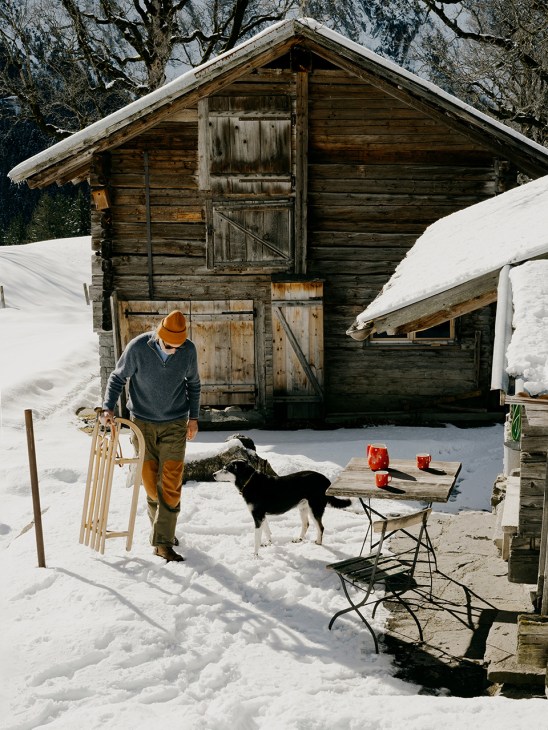
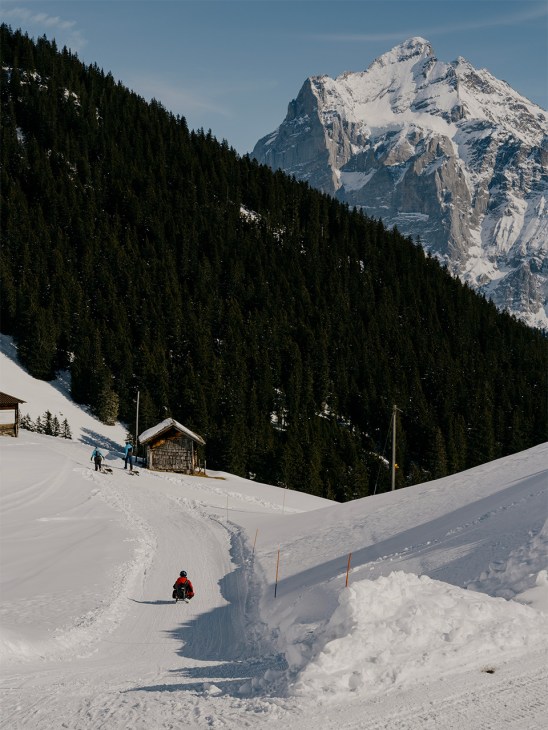
For all the innovation in the valley, the quirks of the past remain very much alive. It was this village that pioneered wooden bicycle sledges known as Velogemels in the early 20th century. They’re still produced locally and feature in a traditional race that’s held every February. It’s a joyful celebration of Alpine heritage and speed.
This article is from the journalists at our sister publication, Konfekt. The perfect gift of sharp dressing, drinking, dining, travel and design. Explore gift subscriptions here.