Discovering Gora Kadan Fuji, a new luxury ryokan built to frame Mount Fuji
Fujisan’s iconic outline is familiar to all – but a stay at the new Gora Kadan Fuji hotel offers beguiling views of Japan’s highest peak that will make you see it anew.
“People tend to think of Mount Fuji as symmetrical and always covered in snow,” says Ryutaro Hashimoto, the CEO of Japanese hotel business Gora Kadan. “But it can look completely different, depending on the season or the time of day. It changes minute by minute.” Hashimoto’s new opening, Gora Kadan Fuji, is a stunning 42-room hotel in Shizuoka that looks directly onto Japan’s highest peak.
Even a single night here is enough to reveal Fujisan’s many faces. Red at sunrise and a forbidding silhouette in the dark, it can look curiously unfamiliar from different angles, particularly before it has had its seasonal dusting of snow. During a stay at Gora Kadan Fuji, it can be hard to take your eyes off the mountain, which feels alive as the light shifts and the colours change.
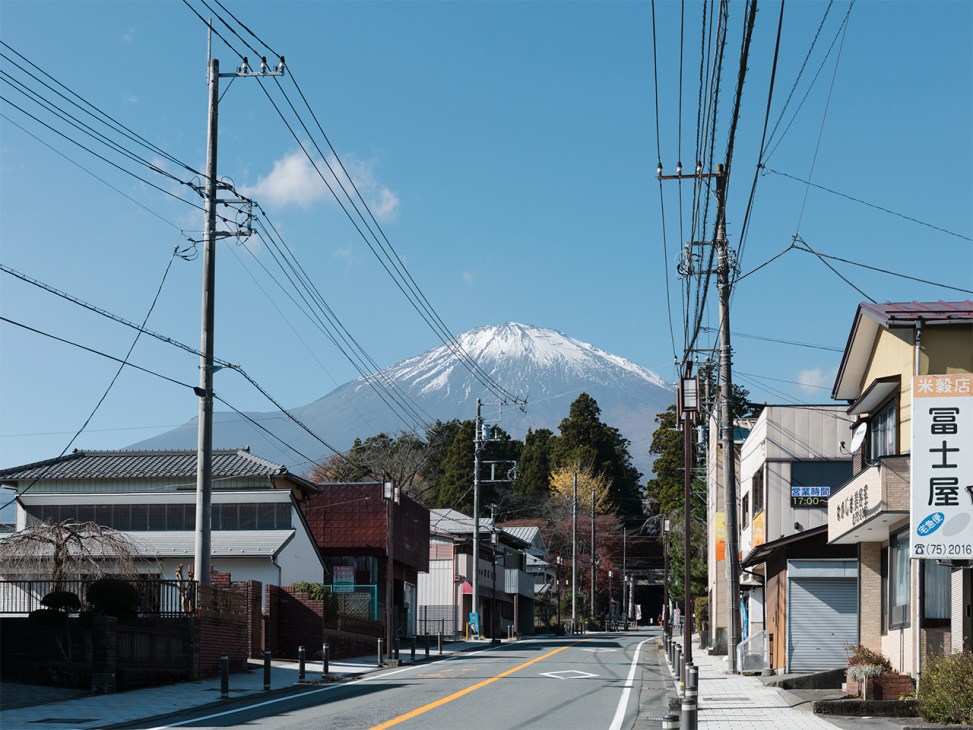
Mount Fuji became a World Heritage site in 2013. This includes not just the mountain but a wider area that takes in Shinto shrines, lakes, springs, waterfalls and pine groves. Not that the Japanese need to be told that their tallest mountain is important. They have been worshipping and viewing it for centuries. It’s hard to overstate how powerful a symbol this active volcano is for the country: it’s everywhere, reproduced in myriad representations.
Rising to almost 4,000 metres of conical perfection, it towers over the Kanto plain, where Tokyo sits, and is visible for miles. Along with cherry blossoms and red shrine gates, Mount Fuji has long been a visual shorthand for Japan. Travellers are thrilled when they catch a glimpse of it from a plane, a Tokyo skyscraper or the bullet train to Kyoto.
The mountain has been painted, drawn and printed countless times, both in classical art and on a million fridge magnets. This includes Hokusai’s celebrated ukiyo-e work “The Great Wave Off Kanagawa”, part of his popular series Thirty-Six Views of Mount Fuji (look below the foaming curl of the wave and there it is). That image, surely the most famous in Japanese art, is also on the ¥1,000 note. Meanwhile, Naoki Ishikawa, Japan’s great mountaineer-photographer, has been capturing Fuji in mesmerising detail since he was 19.
Now legions of tourists are following. Some can’t resist the urge to climb it, even though an ascent is no afternoon stroll – much to the irritation of local rescuers. Most visitors, though, are happy simply to look at Fuji and capture its languid slopes from a safe distance.
Monocle’s trip starts at Tokyo Station. We take a 42-minute Shinkansen ride to Mishima, a small town in Shizuoka, southwest of Mount Fuji, which is famous for its mineral water. From there, we drive up to Kawaguchiko, one of the lakes that make up the Fujigoko (Fuji Five Lakes) around the mountain’s base. It’s not far but we have already moved into the neighbouring prefecture of Yamanashi.
If you want a classic view of Fuji, this is where you should come. Oishi Park on the edge of the lake offers uninterrupted views of the mountain across the water. The lake is enormous, fringed by hotels, restaurants and museums, including one that’s dedicated to the work of kimono-dyeing artist Itchiku Kubota and another that’s devoted to antique European music boxes and mechanical instruments.
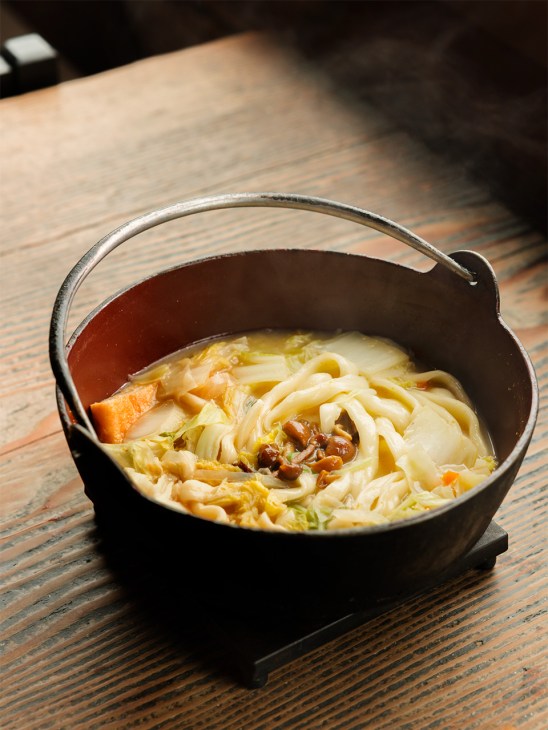

The food to eat in this part of Yamanashi, particularly on a cold day, is a steaming bowl of hoto noodles. These chunky, flat noodles were said to have fuelled samurai before they went into battle. Today you can come to Hotou Fudou’s popular Kawaguchiko restaurant and sit on tatami mats under hefty wooden beams, as an iron pot is brought to your table, overflowing with fresh vegetables bubbling in a miso-based broth.
We pass another Hotou Fudou branch on the outskirts of Fujiyoshida, a nearby town that’s known for textile manufacturing. This one, which looks like a cloud outside and a cave inside, was designed by Takeshi Hosaka and has become a local landmark.
From Kawaguchiko, we head towards Lake Yamanaka, making a stop at one of the stations on the Subashiri trail, a popular route up the mountain. Serious climbers do this on foot but the gate can also be reached by a winding drive that snakes to almost 2,000 metres above sea level. Clouds can sometimes obliterate the view but it’s still a muchloved hiking trail and is teeming with wildlife.
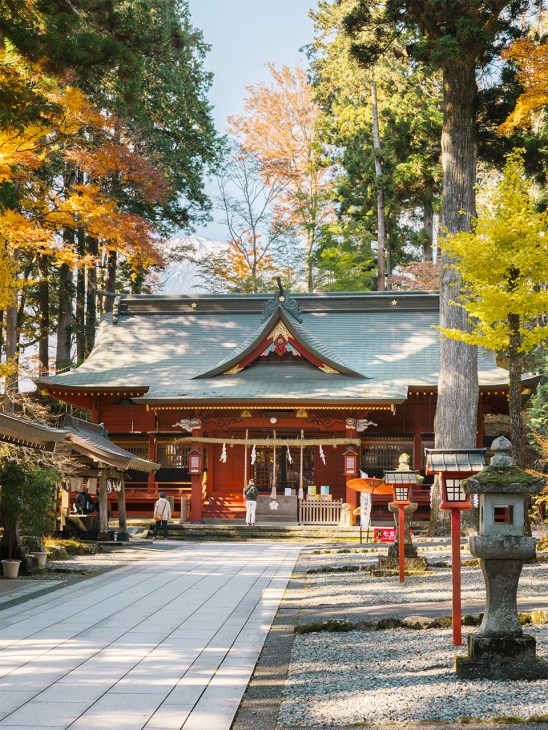
The final stop before the hotel is Fuji Sengen Shrine, one of many in the area dedicated to the mountain and the deity within. Climbers customarily purify themselves here with cold water before beginning their ascent and Shinto priests perform rituals and ceremonies to keep the gods happy and climbers safe. This shrine, thought to date back to 807 CE, is a starting point for the Subashiri route. It was damaged by the volcano’s last great eruption in 1707 and rebuilt in 1718.
The ubiquity of shrines around the base of (and on) Mount Fuji is a reminder that it is more than a backdrop: in Japan, it has huge spiritual significance. Climbing it used to be the preserve of mountain-worshipping Shugendo ascetics. According to Shinto lore, mythical princess Konohanasakuya is enshrined in the mountain. Believers hope that this goddess can keep volcanic activity at bay; known as the “blossom princess”, she is also associated with cherry blossoms, the ultimate Japanese symbol of life’s transience.

And so to Gora Kadan Fuji, a new build with staggering views. You can see why Hashimoto wanted to build here. Gora Kadan Fuji comes with serious pedigree. The original Gora Kadan hotel, which opened in 1948 in the small town of Gora in Hakone – a cool-clime retreat not far from Tokyo – incorporated the summer villa of a member of the imperial family. That hotel, which was acquired by Wasaburo Sato in the 1950s, was renovated in 1989 by architect Kiyoshi Takeyama, who preserved the old building and added a six-metre-high, 120-metre-long colonnade. It made sense that the hotel’s special brand of hospitality should have another location.
The place that Gora Kadan eventually chose is in Oyama in Shizuoka, on a 50,000 sq m site, 800 metres above sea level, which looks out west to the mountain with nothing but forest in between. Once the team had located the underground hot spring that they were hoping for – 1,500 metres down – construction began in earnest. In the heady days of Japan’s economic bubble, the temptation might have been to build a bruising block with as many rooms as possible but Gora Kadan wanted something less monumental: 39 rooms and three separate guest villas (one with a private swimming pool). Architect Ikuo Ogitsu did everything to make the building as unobtrusive as possible from the outside.
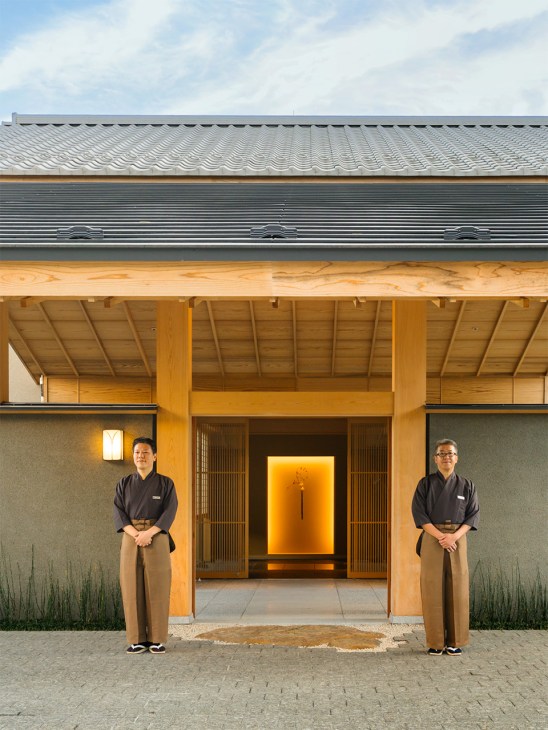
Guests enter through the discreet main gate to be greeted by staff wearing kimonos (even the general manager, Tomoyuki Miyagawa, spends much of his day in traditional garb), at this point unaware of what will greet them as they turn the corner: a gasp-inducing, up-close view of Mount Fuji that few would have had the privilege to see before. Everything is designed around this panoramic vista: the lobby lounge with its open fire, library, swimming pool, hot-spring baths and restaurant. Can there be a more inspiring way to start the day than having breakfast on an open terrace overlooking Mount Fuji?
Ogitsu’s design blends polished concrete and wood. A corridor, inspired by the colonnade at the Hakone hotel, is flanked by towering cypress columns, its light filtered through shoji paper screens. There is art everywhere; photographer-turned-architect Hiroshi Sugimoto is represented with two framed works.
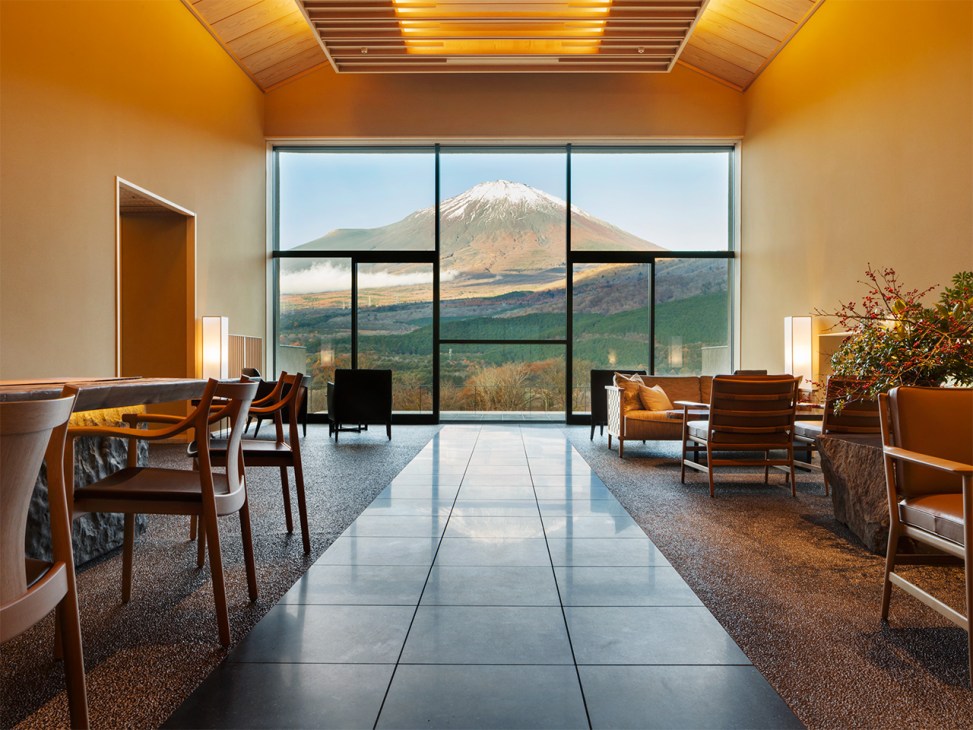
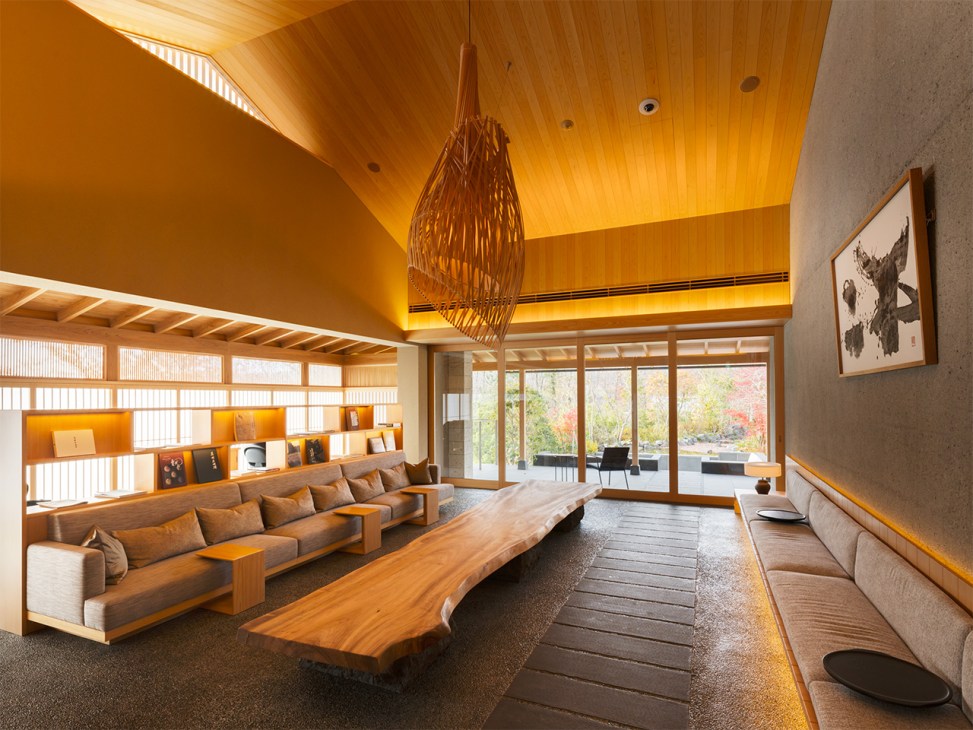
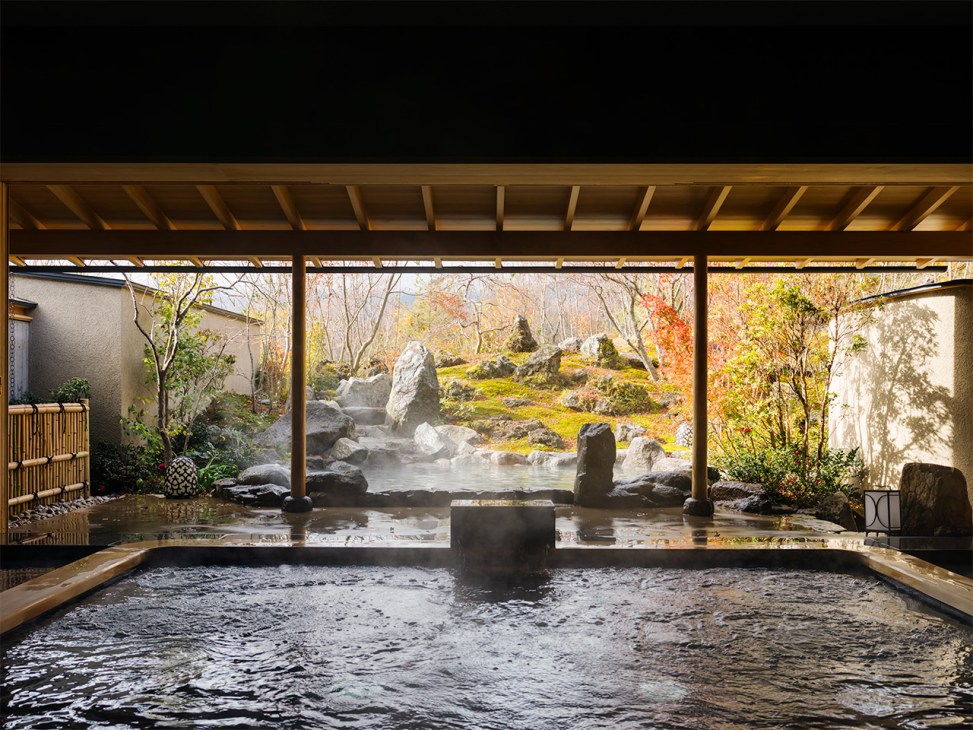

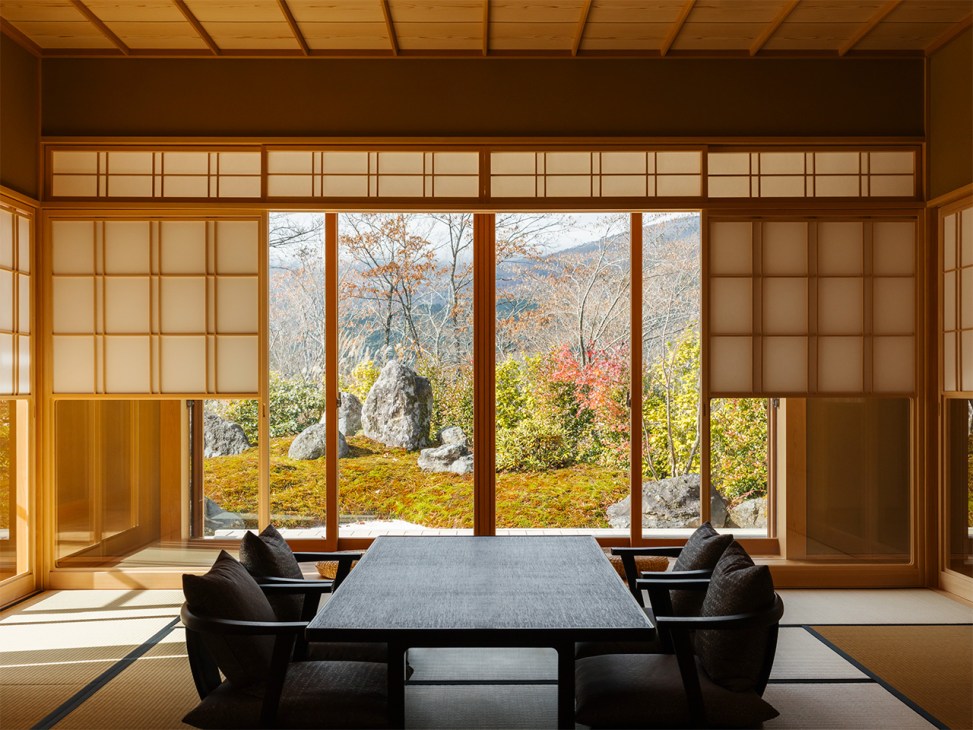

Gora Kadan Fuji asks nothing more of its visitors than that they relax. A dip in the hot spring, indoors or outside, might be followed by a swim in the pool or a massage in the spa. The bath lounge has newspapers and books about Japanese art and Mount Fuji. Guests take off their shoes at the entrance to their room; inside, there are tatami floors, low beds and handmade lanterns. The walls are finished in the traditional way with juraku mud plaster and the ceilings are lined with cedar planks. Some of the suites have their own outdoor hot-spring baths, while others have indoor tubs with hot, alkaline water gushing from the taps.
Energetic guests who crave more than relaxation can be connected to local guides who will accompany them on a hike. The golf course next door, meanwhile, boasts scenic fairways, just 12km from the mountain. Food is a big part of Gora Kadan Fuji’s appeal (and another reason not to leave the grounds during a stay). Sushi is served at an outpost of the highly regarded Sushi Sho, while teppanyaki is overseen by Kanda, a three-Michelin-star restaurant in Toranomon.
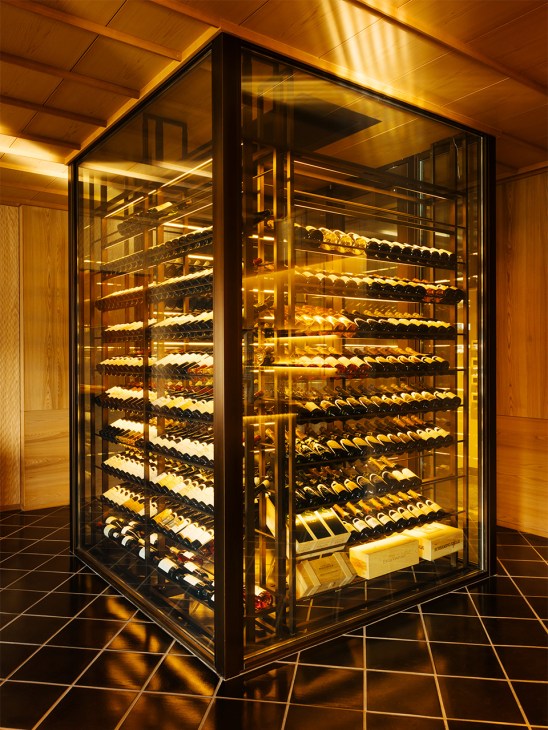
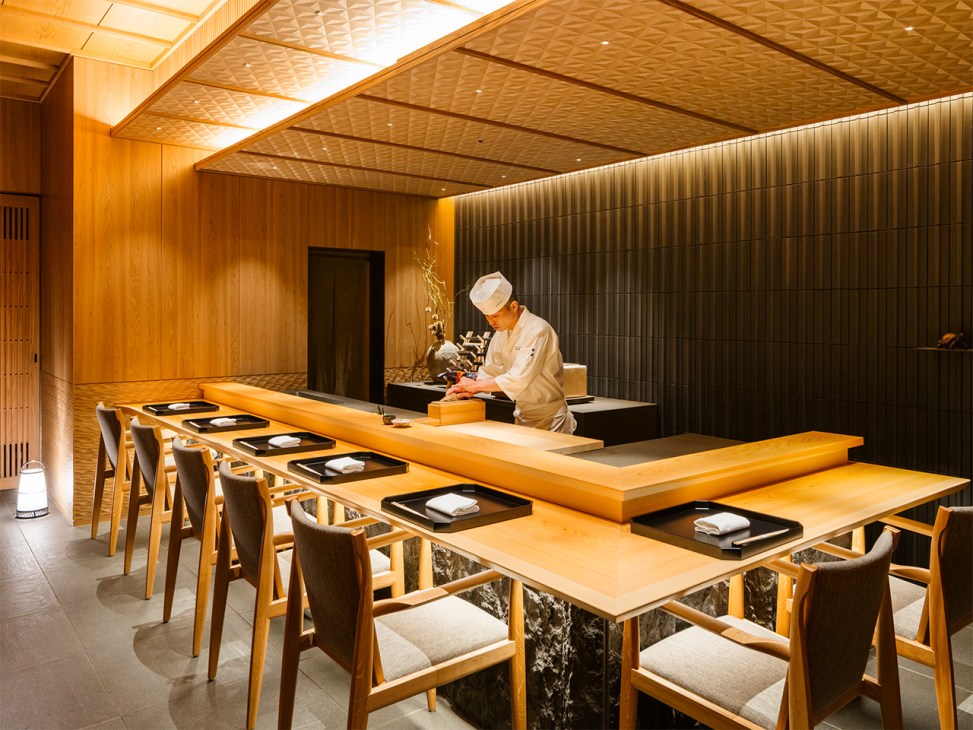
Monocle opted for a counter seat at the kappo restaurant. It’s a pleasure to watch chef Yuki Nakata at work. A veteran of the Hakone hotel, Nakata is so dedicated to his craft that he travels near and far to forge relationships with producers and source the best ingredients. The menu changes as the seasons move but dishes on our visit include gingko nuts on pine needles, vinegared vegetables with persimmon and white miso soup with Matsuba snow crab dumplings. There is an impressive wine cellar but this delicate cuisine calls out for one of the local sakés on the menu, such as Yukige or Isojiman, both from Shizuoka.
Gora Kadan’s style is easy-going but supremely attentive. There are both young local staff and seasoned hospitality veterans who take the role of the okami that you would find in a good ryokan.


Another Gora Kadan will open in Kyoto in 2030 and there are tentative plans to open overseas. That elusive international location will have to fit the Gora Kadan criteria. “We want to find a place where the Japanese ryokan philosophy feels natural, rather than transplanted,” says Hashimoto. “Cultural integrity is difficult but it’s important and also very exciting.”
He isn’t interested in scaling up for its own sake or opening too many hotels. “I’m trying to create meaningful places where architecture, landscape and atmosphere feel in harmony,” he adds. “I see my role less as a matter of running a hotel than about cultural responsibility – working out how the quietness, precision and respectful nature of Japanese hospitality can work for a new generation of travellers.”
Address book
Stay
Gora Kadan Fuji
Contemporary 42-room ryokan with exquisite architecture, gardens, food and hot-spring baths.
gorakadan.com
Eat
Hotou Fudou Kawaguchiko North
Chunky hoto noodles with vegetables in miso broth are a favourite local speciality, as is the side dish of horse sashimi. Great for warming up on a chilly day.
houtou-fudou.jp
Visit
Oishi Park
Come here for uninterrupted views of Mount Fuji on Lake Kawaguchi. They have even planted flowers to complete the picture.
2525-11, Oishi, Fujikawaguchiko, Minamitsuru District, Yamanashi
Visit
Subashiri Fuji Sengen Shrine
The traditional starting point for any ascent of Mount Fuji is a prayer for safety at a Shinto shrine. This historic example in Oyama is close to the Subashiri fifth station.
126 Subashiri, Oyamacho, Sunto District, Shizuoka