Berlin’s arson attack has exposed a long-standing German division
As the German capital went dark after an extremist group set fire to a cable bridge, leaving residents without power for days, the nation’s political deeper crisis came to light.
Berlin’s authorities struggled to disguise their helplessness after an arson attack on a cable bridge on 3 January that plunged parts of the city into darkness and cold. Many neighbourhoods were left without electricity or heating for days and with winter temperatures well below seasonal norms, the timing could hardly have been worse. Several hospitals were forced to be evacuated and schools faced closures.
A left-wing, extremist anarchist group claimed responsibility for the fire, framing the attack as part of a global struggle against “climate destruction, digitalisation, artificial intelligence, the arms industry and capitalism”. It said that it sought to disrupt the lives of the city’s wealthy residents, later conceding that cutting power, heating, warm water and even mobile-phone reception for approximately 100,000 people went far beyond its intent, issuing apologies to less well-off Berliners.
For many Germans, the attack was an unsettling reminder of how brittle the systems underpinning everyday urban life have become. Yet the blackout resonated for reasons that go beyond infrastructure and highlighted the country’s increasingly deep-seated divisions.
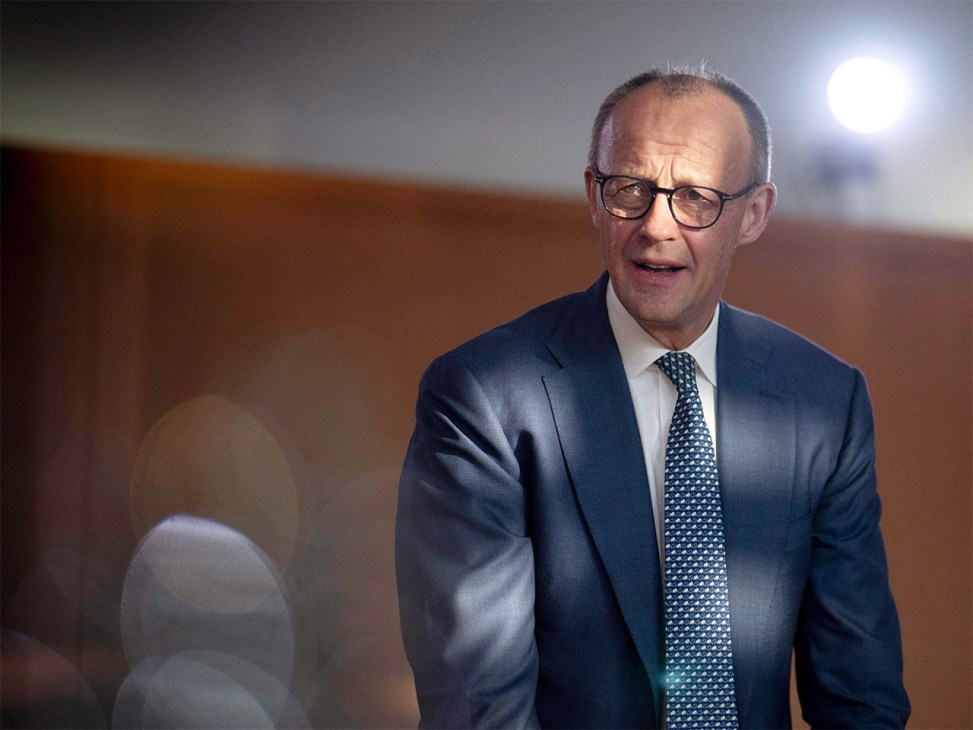
After the collapse of the so-called “traffic-light” coalition between the Greens, Social Democrats and liberal FDP in 2024, Friedrich Merz, leader of the Christian Democratic Union, promised a Neuanfang – a fresh start intended to stitch the country back together. Instead, Germany’s political fault lines appear to have widened.
This week the far-right Alternative für Deutschland (AfD) party topped national opinion polls, a sobering marker in postwar German politics. Merz, meanwhile, has struggled to command authority beyond his core electorate. His approval rating stands at just 22 per cent – the lowest of any chancellor in the country’s history and hardly the profile of a conciliator.
To critics on the left, Merz is the embodiment of corporate privilege: a wealthy former Blackrock executive perceived to be out of touch from everyday realities. To the right, he is dismissed as hesitant and insufficiently conservative; too attached to the centrist consensus to address cultural anxieties but accused of borrowing the AfD’s rhetoric without offering a coherent agenda of his own.
The arson attack also exposes a long-standing blind spot in German politics. While the nation has invested heavily in confronting right-wing extremism, violence from the far left has not been dealt with in the same way. This asymmetry is rooted in the fear that taking a firmer stance against the radical left could fracture alliances that are deemed essential in the wider struggle against the radical right.
In a country already anxious about economic stagnation, ageing infrastructure and geopolitical vulnerability – compounded by fears of foreign sabotage, particularly from Russia – this selective vigilance deepens the impression that control is slipping. Merz attempted to counter that narrative in his New Year’s address, insisting that “We are not victims of circumstance. We are no one’s geopolitical plaything. Our hands are not tied. We are responsible for our own security and we live in a safe country.”
Germany’s strength, he added, rests “on social cohesion, above all”. But a recent study by the Technical University of Dresden suggests that such cohesion is in short supply. More than four in five Germans say that they perceive the nation as being deeply divided. Yet the research also offers an interesting insight: beneath the rhetoric of polarisation, many positions remain less entrenched than public debate implies.
The tone, however, has indeed hardened. Whether Merz can translate reassurance into resolve will depend, in no small part, on his own – something that he has previously struggled to find. His response to moments such as Berlin’s blackout will shape not only his legacy as a leader but Germany’s ability to steady itself at a time when solidarity has become both the nation’s most invoked ideal and its rarest resource.