Beyond the water’s edge: How are embassies adapting in an increasingly fractious and data-dense world?
Monocle’s security correspondent explores how countries in the 21st century are reframing the importance of in-person diplomatic missions.
Embassies are back on the geopolitical front line. Though seen by some as relics of a bygone diplomatic age, many missions are becoming increasingly important in terms of security and intelligence gathering. Cold War-era patterns have re-emerged, particularly among Chinese, Russian and US embassies. Diplomatic buildings can also double as intelligence arenas with sprawling compounds and diplomats who often wear two hats. Following political violence directed towards embassies, especially in regions such as the Middle East, features that include setback distances and layered perimeters became de rigueur for diplomatic architecture. Today they’re becoming more pronounced.
Security and intelligence-gathering considerations help to explain China’s push to secure a new mission building at London’s Royal Mint Court. But the UK’s approval of the compound is not quite as surprising as some critics suggest. Though the decision sparked protests and legal challenges, it reflects a view that one purpose-built site is easier to monitor and regulate than several scattered offices.
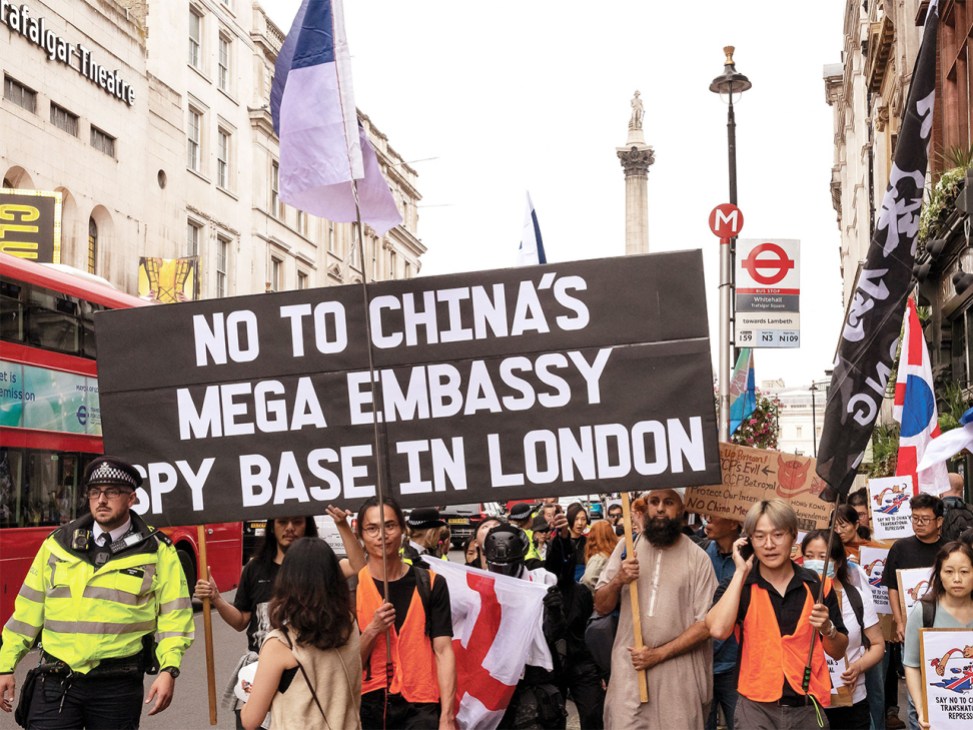
Yet there are important differences from the Cold War era. Today’s embassies are nodes in a data-dense, commercially connected world. Investment, telecommunications, science and technology officers sit alongside those with a political brief. Chancelleries increasingly matter for economic statecraft, overseeing everything from investment screening to sanctions enforcement and technological diplomacy.
At the opposite end of the spectrum to Royal Mint Court are the small resident missions (or “mini-embassies”) central to contemporary competition in the Indo-Pacific region. Under the Biden administration, the US opened embassies in several Pacific Island states, such as Tonga and the Solomon Islands, as part of its outreach efforts with regard to Chinese competition.
Leveraging its Indo-Pacific overseas territories, France has also re-established or expanded its diplomatic footprint, including a new embassy in Samoa last year and a defence mission at its embassy in Fiji in 2023. These modest posts, often led by a resident ambassador supported by a handful of diplomats and local staff, typically manage development programmes and political reporting. While such missions are relatively inexpensive, they signal commitment in ways that non-resident accreditation can’t, anchoring relationships and building trust. The effect is reminiscent of the Cold War scramble for recognition among newly independent states but today the currency is coastguard support, infrastructure finance and climate adaptation funds.
Embassies are again theatres for domestic politics. Reporting on US diplomats’ involvement in fundraising linked to the country’s 250th-anniversary celebrations this year reveals that ambassadors are being encouraged to seek corporate backing for commemorative events, blurring the line between public diplomacy and partisan spectacle. When embassies seem to serve domestic political branding as much as foreign policy, it contradicts statesman Arthur Vandenberg’s maxim, “Politics stops at the water’s edge.” In this new era, the embassy is not fading. It reveals how states understand power, legitimacy and competition in the 21st century.