

‘Focus on the fundamentals – that’s what strengthens the quality of life’: Helsinki’s millennial mayor outlines his plan
We meet Daniel Sazonov, Helsinki’s millennial mayor, to discuss his city’s progress and challenges, from maintaining its green image to diplomatic risk management.
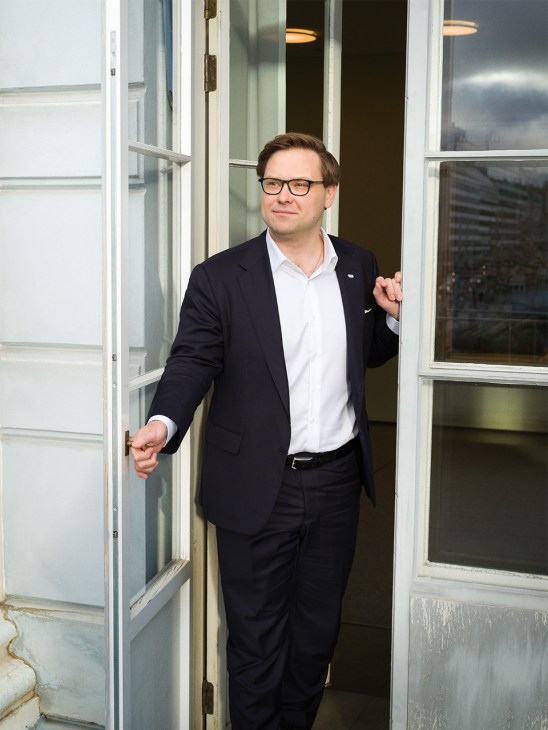
Daniel Sazonov, Helsinki’s 33-year-old mayor, is among the youngest leaders of any European city and one of a number of millennial mayors to have recently taken office worldwide. The politician, who was elected last June, represents the liberal wing of Finland’s centre-right National Coalition Party and has had a busy few months. Plans for car-free neighbourhoods are advancing, tourism is up by 15 per cent year on year and major waterfront developments continue at pace. But there are challenges too. Since its 2011 win, Helsinki has slipped in Monocle’s Quality of Life rankings, its high street is yet to fully bounce back from the coronavirus pandemic and the city’s proximity to the Russian border is affecting trade. Monocle meets Sazonov at the capital’s City Hall, which was built in 1833 under Russian rule.
What are your biggest goals as mayor?
Economic growth, jobs and vitality. The city can’t solve everything but it can do a lot. We need basic services to function well, especially schools and early-childhood education, and access to healthcare must be fast. Growth and good services go together. Many European cities are growing but also becoming less equal or affordable.
What makes Helsinki different?
Housing is key. Across Europe, colleagues tell me that their biggest problem is the lack of housing. People can’t afford to live in the city. We face challenges in Helsinki but we have avoided a housing crisis. We are building about 7,000 new homes a year. Construction in the city has sparked a debate. Some residents worry that Helsinki is losing its green character. It’s one of Europe’s greenest capitals. And with the sea and the archipelago, it’s also one of the bluest. We’re trying to combine development with access to nature.
Is your age an advantage or a disadvantage?
Age and background influence how you see a city. I grew up in social housing in the suburbs. That shapes how I connect with people. Almost half of Helsinki’s residents are between 15 and 44. I represent that generation. It doesn’t solve everything but it’s a good starting point.
You describe yourself as internationalist and liberal – but Europe is moving in a more populist direction. How do you navigate that?
In many countries, things are too dominated by identity politics. In the city government, we focus on practical issues that affect everyday life: education, healthcare and rescue services. Of course, we disagree about how to organise services or balance the budget. But when you concentrate on concrete problems, there’s less room for artificial tensions.
Tourism is up by 15 per cent but remains below previous levels. Helsinki lost Russian and many Asian visitors after the pandemic and the invasion of Ukraine. Is this rebound sustainable?
The growth rate that we’re seeing is the fastest since the pandemic. What is positive is that the base is more diverse. Visitors are coming from many countries, not just one or two markets. That makes it more sustainable.
Finland has joined Nato and shares a 1,300km border with Russia. Some investors see risk.
In 2022 those were logical questions. But now Finland is a Nato member. We have firm security guarantees and one of Europe’s strongest militaries relative to our size. Helsinki invests heavily in preparedness. The tourism figures and investment decisions show that the message is understood.
Helsinki topped Monocle’s Quality of Life ranking in 2011 but has not reclaimed the top spot since. What do you think you could improve?
Livability comes from many factors. It’s about safety, public transport, how schools function and how quickly you can access healthcare. We are investing in those basics all the time. We’re also building housing to avoid the kind of crisis facing many European capitals. If we focus on the fundamentals and constant improvement, that’s what strengthens the quality of life.