
Who will be the next UN secretary-general? Ecuador’s María Fernanda Espinosa makes her case
Seven candidates are racing to lead the UN, and all face the daunting task of reforming it amid geopolitical fracture. We sit down with Ecuador’s María Fernanda Espinosa and check out her competition.
Seven candidates are vying to become the next UN secretary-general at a time when the organisation appears to be in great peril. Trust is haemorrhaging among member states and the general public, and multilateralism is in retreat. The job of whoever succeeds the outgoing António Guterres, whose term ends in December, will be nothing less than to overhaul the entire institution.
Guterres is stepping down after a tenure that has seen huge global upheaval, including the coronavirus pandemic, Russia’s full-scale invasion of Ukraine, Hamas’s 7 October attack and the ensuing war in Gaza, and the re-election of Donald Trump. Though viewed as a competent administrator, he has lacked the global profile of predecessors such as Kofi Annan and Ban Ki-moon, and has chosen a low-key approach at odds with seismic geopolitical events.
The candidates to replace him must strike a delicate balance. Though US scepticism about the size, budget and role of the UN means that the new secretary-general will need to signal a willingness to change, too much reforming zeal will not be popular with the five permanent members (P5) of the Security Council – the UK, US, France, Russia and China – that jealously guard their veto power. To be elected, candidates take part in a series of straw polls, in which the P5 and the 10 non-permanent Security Council members cast ballots encouraging, discouraging or giving no opinion on the candidates. Once one of them has the support of at least nine Security Council members and no veto from a P5 member, they go to a full vote at the 193-member General Assembly, which traditionally backs the recommendation.
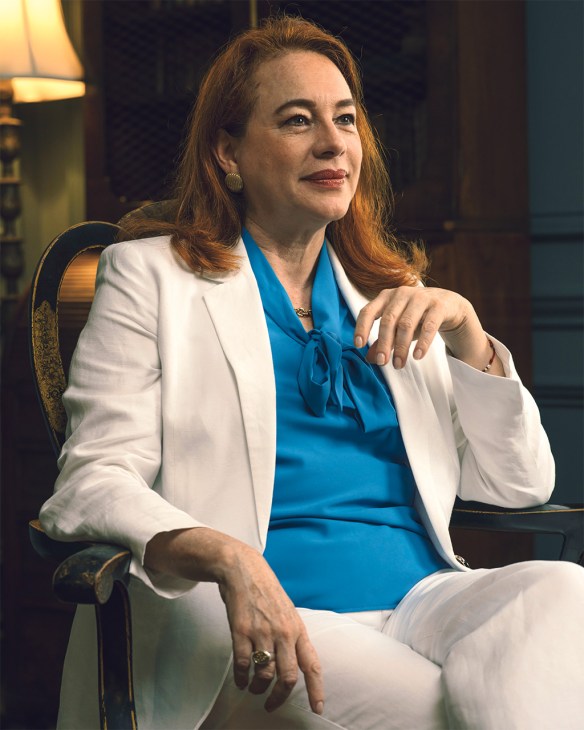
Conventional wisdom holds that a candidate from Latin America should prevail, given that just one of the previous nine secretaries-general, Javier Pérez de Cuéllar, has come from the region. There’s also a feeling that it’s time for a woman to take the helm. María Fernanda Espinosa, a former Ecuadorean defence minister and a former president of the UN General Assembly, is one of the four female aspirants. Monocle sat down with Espinosa to find out about her plans for the body.
What do people want from the next UN secretary-general?
As a citizen, you want to see the secretary-general up there sitting at the table – sometimes leading but sometimes supporting too. We have seen that this is perfectly doable. All of this will be possible with a renewed, strong leadership. It’s really an advantage to know the system well but not be captured by it.
I have full respect for the main asset of the organisation, which is the very committed, high-quality staff that it has. But you cannot continue to operate under 40,000 mandates [Since 1946, more than 40,000 resolutions, decisions and presidential statements have been adopted across key UN bodies] in times when, frankly, the UN will be getting not more money but less.
What differentiates you from other candidates?
I have touched on all of the spaces and places where the UN operates. I have seen it from the perspective of a high-level government official and also been on the receiving end, negotiating national co-operation frameworks with UN teams at the country level. But I have never worked for the UN so my impulse is not to preserve the status quo. It’s to change it. I was responsible for reforming the armed forces of my country. I had to make very structural, profound changes and wasn’t afraid to do so. I received the highest decoration that the Ecuadorian armed forces provide to a non-military person. I understood that it was best for them to modernise, to change the institutional culture.
Is multilateralism really in retreat?
If you look around, everybody wants more international co-operation. It’s inevitable: we are living in times of radical interdependence. We learnt that the hard way during the coronavirus pandemic and are learning it again with the Strait of Hormuz situation. It’s impossible to say that we are on our own. The national interest is connected to our common interest and everybody understands that, at some point, we need to co-operate with each other.
How important will receiving the backing of the US be for the next secretary-general?
Persuading the US to support – and not veto – your candidacy is not just a formality. I see America as a critical partner for the future of the UN. The US is a founding member. The country has contributed the most to the UN financially. It is responsible for 20 per cent of the overall budget and more than 20 per cent of the peacekeeping operations. So it’s not only about the US being the funder of the UN. It was there at the origins of the organisation and plays a very crucial role in the three pillars of peace and security, development and human rights. So it’s symbolically, financially and politically vital to have the trust and the backing of the US.
How would you rebuild trust among citizens?
It’s true that sometimes people don’t trust what the UN is doing or what its leaders are discussing or agreeing to. That is a response to a very divided, polarised world. When I say that I will be a leader who rebuilds trust, I understand that it isn’t just something that’s declared in a memo. You have to earn it. And I think that people will trust a leadership or a leader that is seen as impartial, as not having any alignments, as faithful to the UN Charter and to international law. A person who everybody can believe in is predictable. They abide by the rules and treat everyone equally. That is very important, especially in the present times.
Why do you want to be UN secretary-general at a time like this, when the organisation is facing huge challenges?
I have something to contribute when it comes to making the organisation better and more effective. I believe that the UN has a lot more to give and has a responsibility to modernise and to revitalise itself. And this is not done by magic. It is done by putting in some hard work and by having a deep knowledge of the organisation without being captured by it. My experience of it has been more from the member-state side, from the government side. So I know what the UN can do, the frustrations that it can create, and I understand very well what the role of the secretary-general should be. I’m a reformist. I like a challenge and think I can do it.
The other runners and riders
1.
The insider
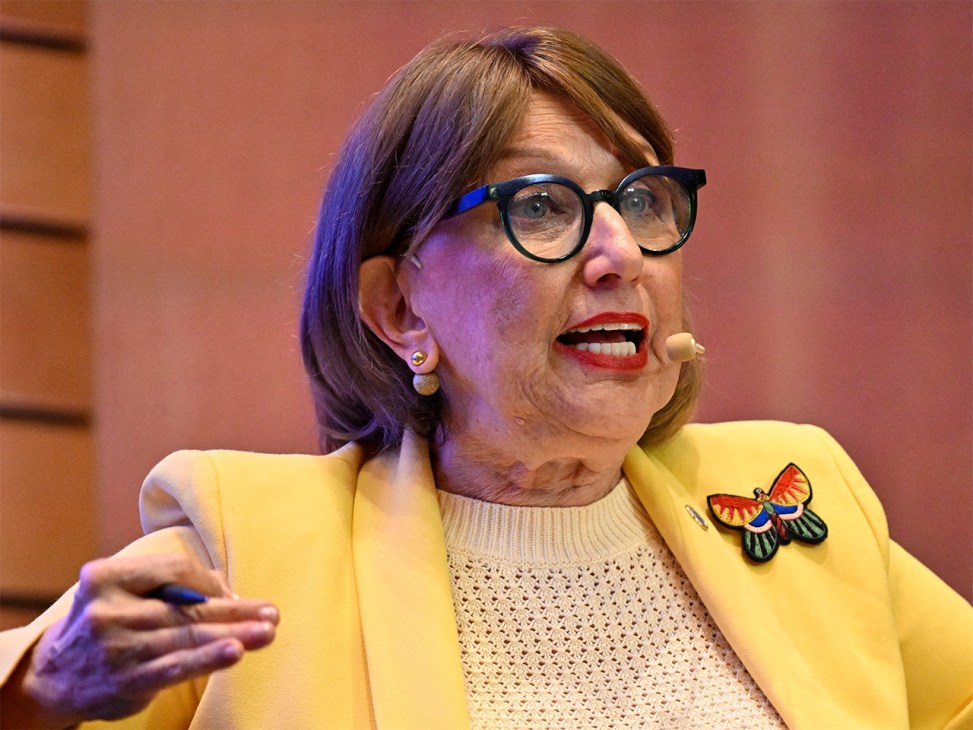
Rebeca Grynspan, Costa Rica
Taking special leave from her role as secretary-general of the UN Conference on Trade and Development, economist Rebeca Grynspan emerged as an early frontrunner. The vice-president of Costa Rica from 1994 to 1998, Grynspan moved into UN roles and has held senior positions in trade and development. This gives her an insider perspective – her vision statement promises to make the world body “more useful, more agile and more accountable to the governments and people it serves”. With a strong track record in multilateralism, she’s seen as a safe establishment candidate and has the backing of senior figures.
2.
The dark horse
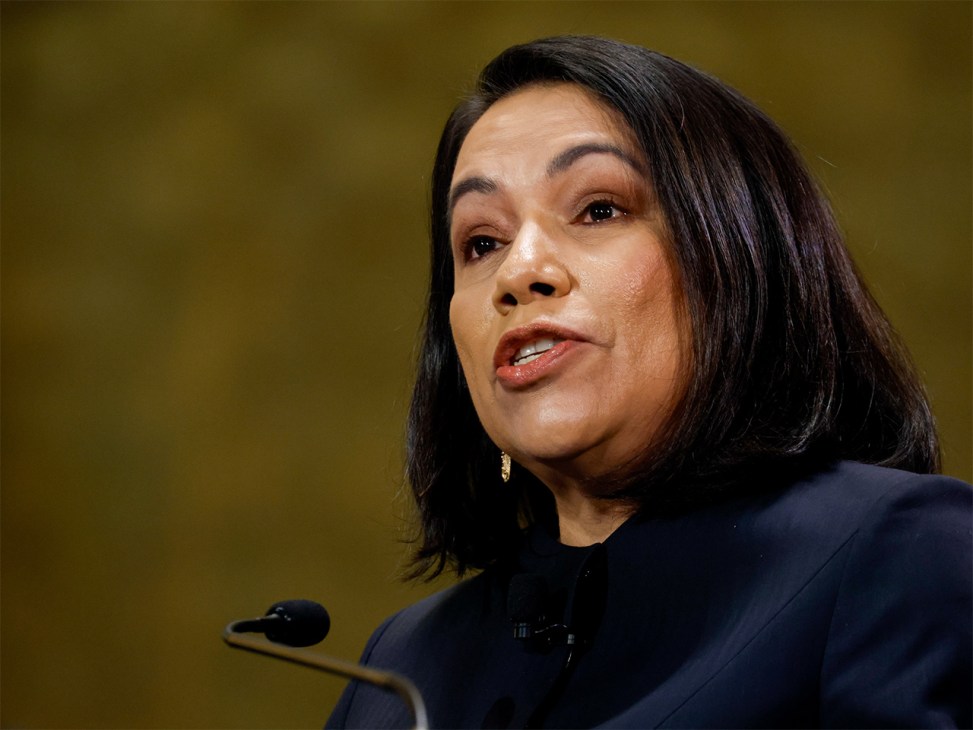
Carolyn Rodrigues Birkett, Guyana
Guyana’s current permanent representative to the UN and its former minister of foreign affairs, Carolyn Rodrigues Birkett has extensive experience in government and a deep understanding of the UN’s workings. She has also impressed in debates with UN staff and civil-society representatives. Though she has a relatively low international profile, this could work in her favour, because world powers are not looking for a big personality but rather a competent administrator and quiet reformer.
3.
The nuclear option
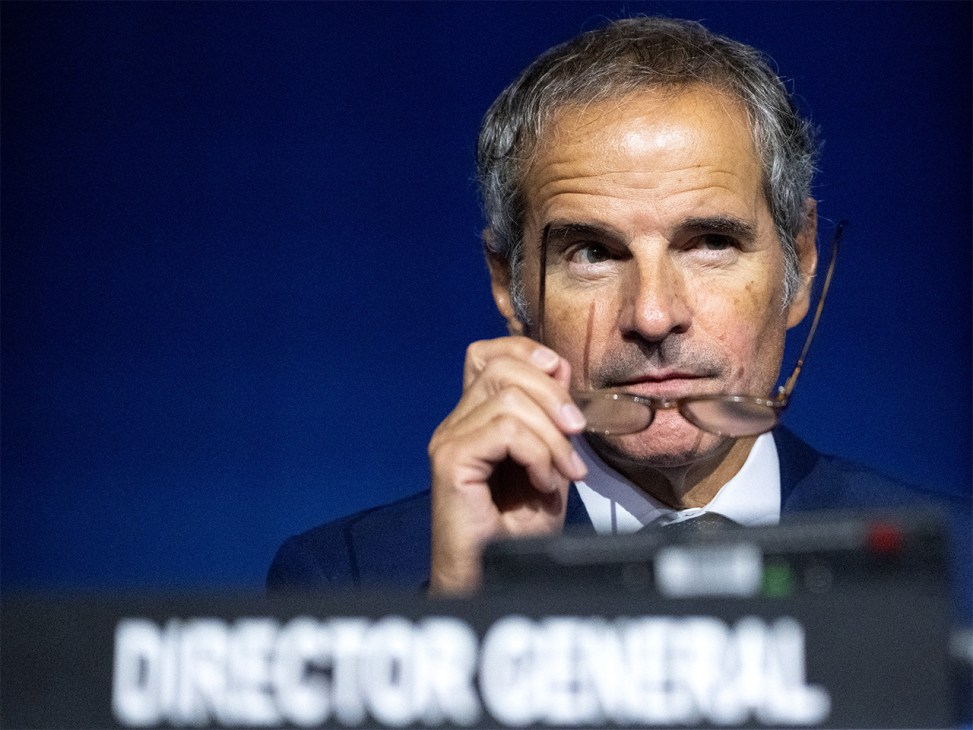
Rafael Grossi, Argentina
Once a leading contender, Rafael Grossi might have hurt his chances by not taking a leave of absence from his role as director-general of the International Atomic Energy Agency while campaigning. With Iran’s nuclear programme in the headlines, he has been busy with global diplomacy, which might have affected his ability to travel and lobby for the UN position. But he has been at the heart of some of the most pressing issues today and, should there be a breakthrough with Iran, he could claim some credit. But Grossi was nominated by Argentina’s president, Javier Milei, whose recent sabre-rattling about the Falkland Islands could make the veto-wielding UK apprehensive.
4.
The high-profile candidate
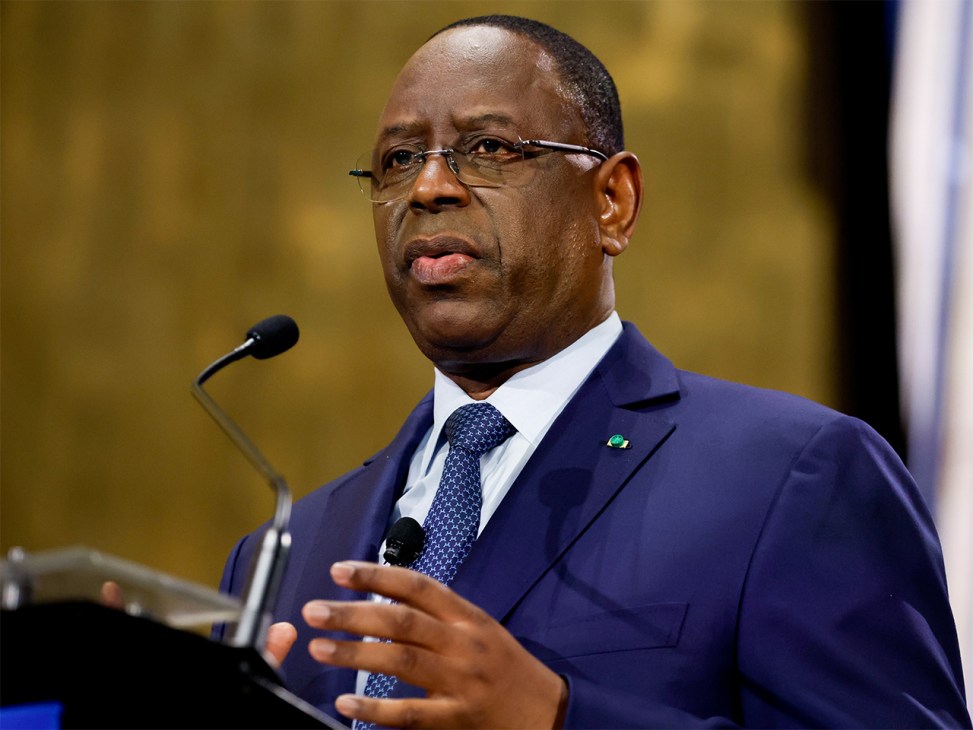
Macky Sall, Senegal
The president of Senegal from 2012 to 2024 and a former chair of the African Union (AU), Macky Sall is well versed in international diplomacy. Devolving some of the UN’s mandates to regional bodies such as the AU could be part of the streamlining process that many nations are demanding, so his experience will be an advantage. However, Sall’s vision might be at odds with those of some of the permanent Security Council members: he has called the body “the last vestige of a bygone world order”. While reforming the Security Council is a popular sentiment among the UN’s 193 member states, the prospect of a major overhaul is less welcome among the five permanent members, who prize their veto power.
5.
The elder statesman
Olara Otunnu, Uganda
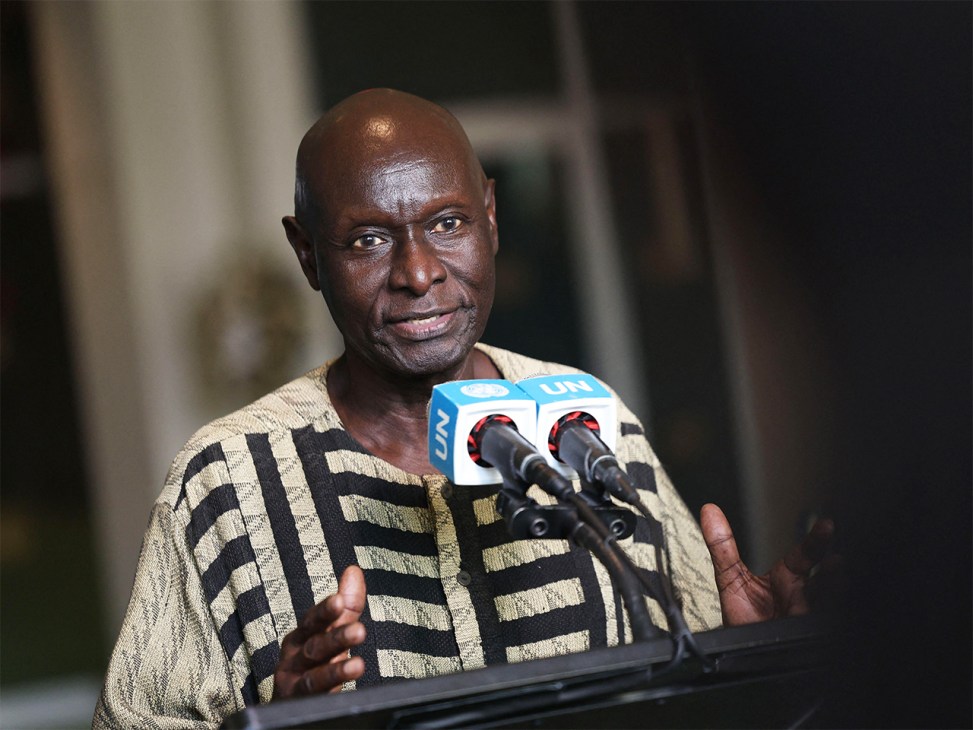
A veteran of Ugandan politics who served as UN under-secretary-general for Kofi Annan, 76-year-old Olara Otunnu strikes a good balance between governmental and institutional experience. His candidacy has gained traction between the first few rounds of polling. He served as Uganda’s foreign affairs minister and its permanent representative to the UN, and is a respected diplomat with a good contacts book. He has campaigned on a promise of focusing on multilateral regulation of AI. If he can leverage panicked headlines about the technology into actionable talking points among the Security Council members, that could give his campaign added traction. But he could be foiled by his nominating government, which has faced criticism from UN bodies over its record on human and LGBT+ rights.
6.
The wild card
Ivonne A-Baki, Ecuador
Another Ecuadorian candidate, Ivonne A-Baki also has Lebanese heritage and served as her country’s ambassador to the US, France and Qatar. She claims close ties to Donald Trump, a relationship that she traces back to 2004, when she helped him bring Miss Universe to Ecuador. Being a Trump whisperer could be useful, given his withdrawal of the US from 31 UN entities and his threats to the body’s funding. But touting a special relationship with any one government is a risky strategy – Russia and China also have veto powers and will not want to hand the role to anyone tied to a rival. A-Baki’s candidacy is also viewed as an anomaly because she was not nominated by her home country but by tiny Polynesian nation Tonga – and she has not performed well in straw polls so far.