Diplomatic Design 101: The UN’s newest visitor centre is a study in architectural monotony
If minimalism has become the visual language of institutional reassurance, then the Portail des Nations speaks it fluently.
The late, great British architect Richard Rogers once said that “Architecture is always political.” Few buildings embody that idea more than the UN’s new visitor centre, the Portail des Nations (Portal of Nations) in Geneva. The building, which opened to the public in June, has been designed to welcome some 200,000 visitors each year into a microcosmic utopia of the UN’s own design: a threshold between Geneva and the world of international diplomacy.
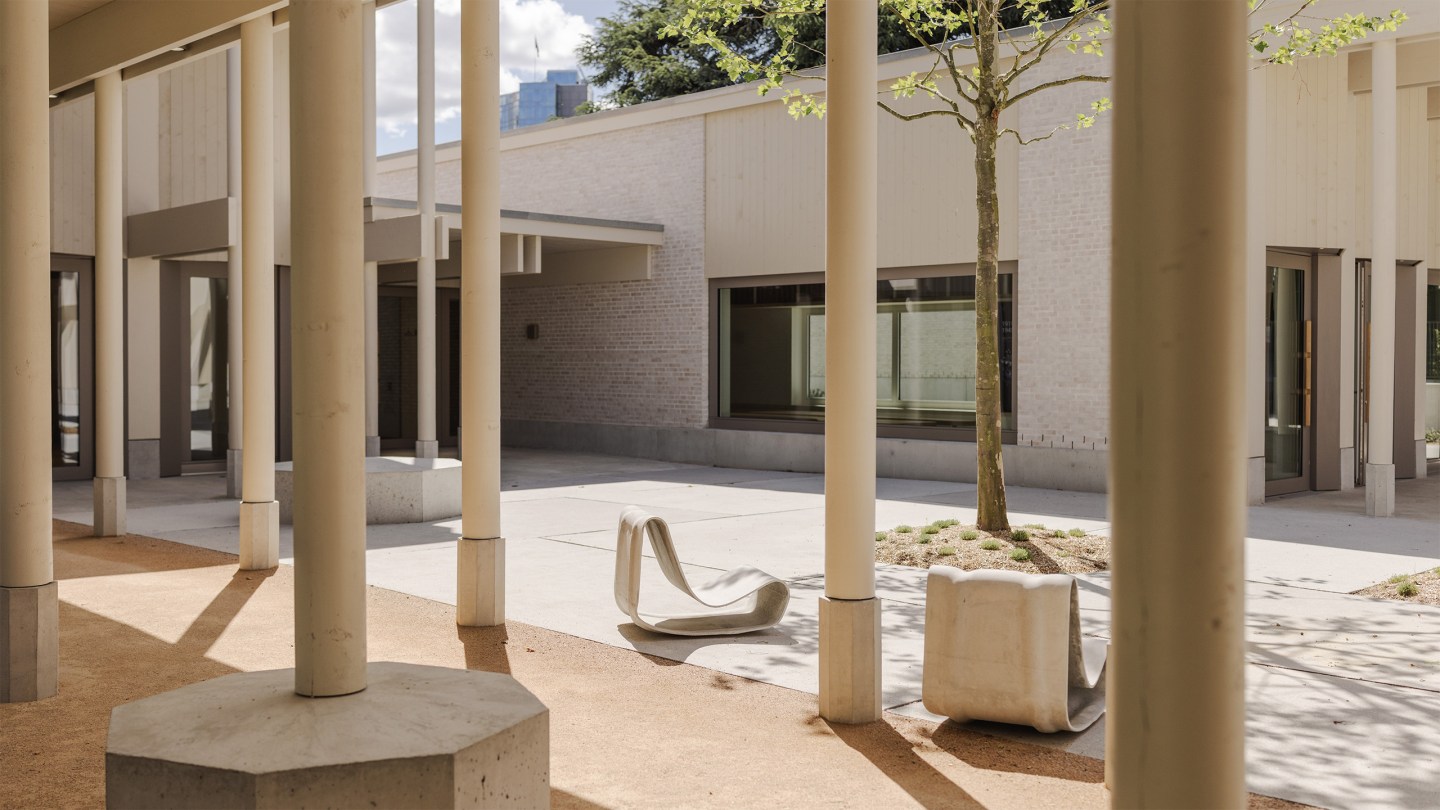
Designed by Swiss firm Charles Pictet et Baptiste Broillet Architectes Associés, the Portail is located just beyond the Allée des Drapeaux (Alley of Flags), leading to the Palais des Nations, the UN’s main building. Visitors enter the Portail through a central courtyard Agora – a reference to the Grecian origins of democracy – that connects three pavilions housing immersive installations dedicated to the international organisation’s work. The installations invite visitors to imagine working collaboratively towards the greater good. It’s an idealistic yet somewhat ironic proposition given that international co-operation is in increasingly short supply.
Its idealism puts the Portail at risk of becoming something akin to a Disneyland for diplomats – not because it trivialises diplomacy but because it transforms sprawling geopolitical problems into a carefully choreographed experience that visitors can navigate in under an hour. Like Disneyland, the visitor centre relies on immersive storytelling, controlled movement through space and emotional participation to render a complex world more understandable.
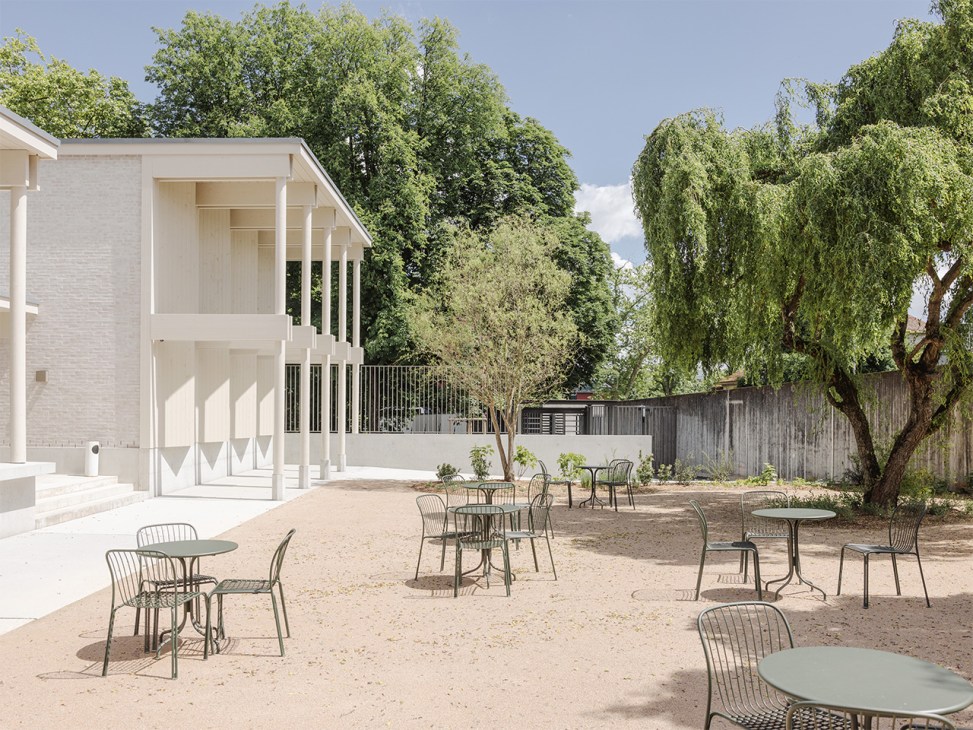
The Palais des Nations is visible throughout the Portail’s pavilions and the contrast between the two structures is revealing. While the stripped classical grandeur of the Palais des Nations is, unsurprisingly, palatial and awe-inspiring, the Portail is subdued. It’s a single-storey complex with wooden colonnades that support terracotta and timber roofs – an effect that creates an air of humility, groundedness and accessibility. The modest scale reinforces equality of experience rather than institutional authority.
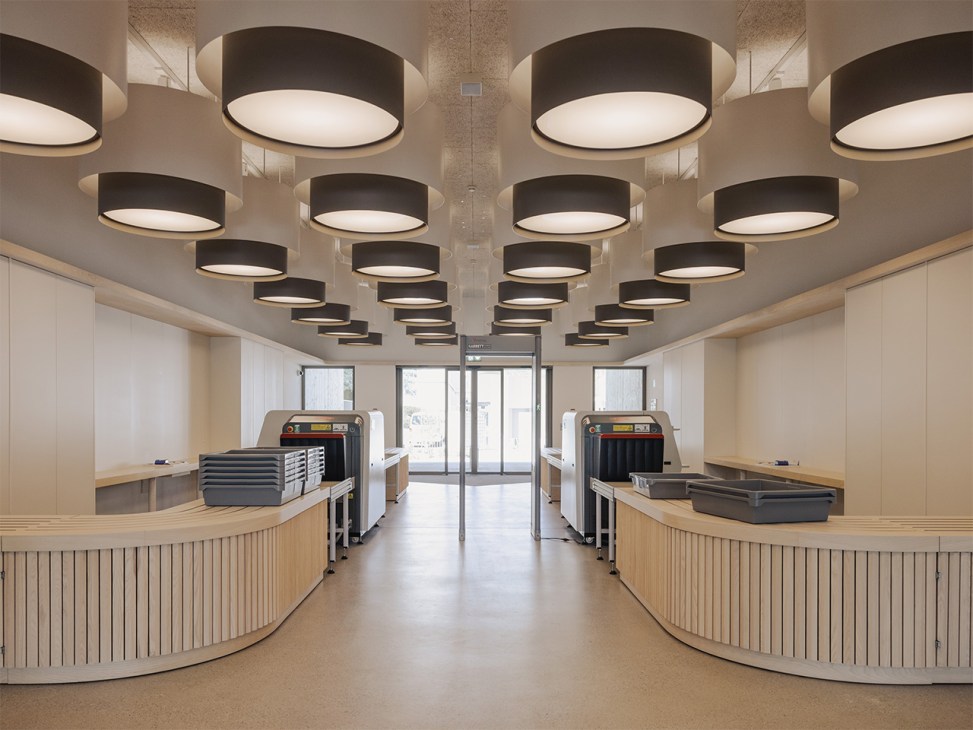
Ultimately, the Portail des Nations had the opportunity to challenge our collective understanding of diplomatic design but it doesn’t quite hit the mark. With a clear aversion to causing offence of any kind, its architectural language resembles a checklist in Diplomatic Design 101: large windows for transparency, neutral tones for tranquillity, a single-storey floorplan for universality. Check, check and check. If minimalism has become the visual language of institutional reassurance, then the Portail des Nations speaks it fluently.
Diplomatic architecture need not be sanitised within an inch of its life. Geneva’s own Hôtel de Ville has stood in the heart of the city’s political life for more than 500 years. Its monumental ramp remains one of Europe’s great civic spaces and it was here that the first Geneva Convention was signed in 1864. Architecture can embody diplomacy without retreating into neutrality.
The Portail is curiously devoid of the UN’s character. Were it transplanted elsewhere, stripped of its exhibitions and signage, there would be little to distinguish it as a building belonging to the world’s foremost international organisation.
By contrast, Kieran Timberlake’s US embassy in London consciously embeds national symbolism into its architecture, notably through its star-spangled façade. The Portail, by comparison, functions as a competent venue for diplomacy rather than an architectural expression of it.
Lead architects Charles Pictet and Baptiste Broillet have clearly delivered – without contest – the project that they were commissioned to realise. Yet you cannot help but wonder what forms and styles could have been proposed by firms from other parts of the world had the visitor centre been the subject of an open architectural competition. Might the fluidity of neo-futurism, the environmental intelligence of contemporary tropical modernism or the material experimentation of emerging practices have offered a more compelling expression of an organisation that continues to evolve? Therein lies the missed opportunity.
If all architecture is political, then each brick is a vote. Here, the votes are stacked not into a monument to power but into one devoted to participation. The Portail des Nations might not become Geneva’s next architectural icon but it could just become one of its more important civic spaces. In that sense, its social ambition may prove more thrilling than its form.