By downsizing its premises, is Bangkok’s Dutch embassy signalling its diminished ambitions?
The Dutch embassy in Bangkok, which once stood proud in its historic spot on Wireless Road, is proving that buildings matter with its relocation to a new, much less grand office block.
Western European countries have some impressive embassies in Bangkok. The riverside compounds of France and Portugal, Thailand’s oldest diplomatic partners, rub shoulders with the capital’s ritziest luxury hotels and premium shopping centres. Dutch diplomats, however, have recently had a change of scenery. Since earlier this month, they have been reporting to an address at Dusit Central Park, a landmark mixed-use development opposite Lumpini Park, rather than their century-old former premises on Wireless Road.
The Hague’s decision to sell off one of its most beautiful Asian outposts – occupying a prime, leafy spot next to the US embassy – is a repeat of a regrettable move by the UK. London left the same road in 2018; British diplomats now occupy the 12th floor of a nondescript office tower that is named after an insurance company. Is it a sign of the times for these middle powers or a sign of decline? The answer depends on who you ask and where you sit.
Young attachés from The Hague on their first posting outside Europe will no doubt enjoy the new facilities, including the shopping centre below and the rooftop bar above. But greyer heads will surely raise a glass of Heineken to mark the passing of their globetrotting nation’s most prestigious shop windows in Asia – a platform for values and principles as much as products. The outgoing ambassador has said that the move has caused a “pain in his heart”, according to foreign correspondent Annelie Langerak, who has been covering the story for national newspaper De Telegraaf.
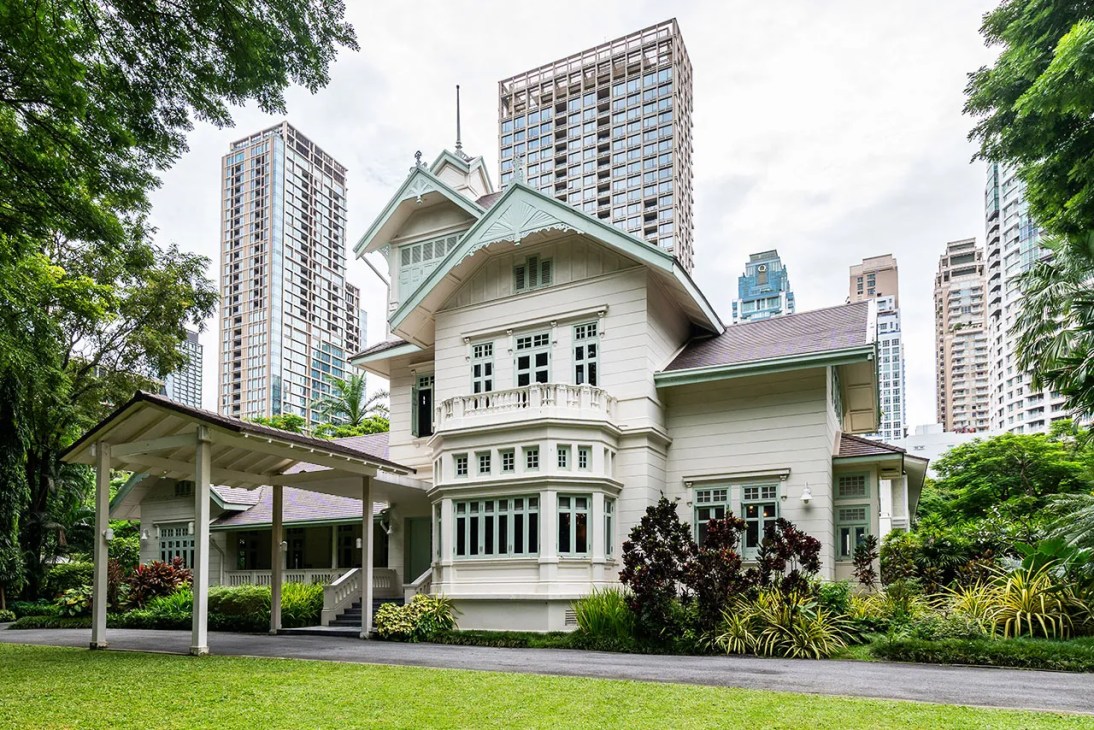
Langerak is a longstanding member of the Dutch expat community in Thailand. Her family typically spends King’s Day, Liberation Day and St Nicholas Day at the embassy party, and she shares her fellow Nederlanders’ anger and frustration about the decision. “We are all part of this and it is a part of home,” says Langerak. The new embassy will now have to hire a ballroom or conference room to host large-scale events and presumably work 10 times harder to deliver the same wow factor to invited guests and visiting dignitaries.
The Netherlands’s decision to downsize its embassy comes after 400 years in Thailand. Dutch ships first arrived in Siam, as Thailand was then known, in the early 17th century, several years before those of their UK rivals. In the first half of the 20th century, both trading nations moved into large compounds on Wireless Road on the outskirts of the capital. Today the road is home to the Swiss and Japanese embassies, alongside a growing number of high-end property developments. The Central Embassy shopping centre was built in the garden of the former UK embassy, which was sold off in 2006. The UK government flogged the rest of its embassy, including some remarkable heritage buildings, during Boris Johnson’s time as foreign minister for £420m (€490m). The proceeds were meant to be spent on upgrades to other diplomatic outposts around the world and the Dutch government seems to be following the same playbook.
At the time of the UK’s embassy sell-off in 2018, the British ambassador claimed that London’s standing in Thailand would not be affected. “Prestige is nebulous and we should be judged instead on what we’re doing here,” he reportedly said. There is merit to that argument but the UK has been fairly invisible during my time in Bangkok. It’s perhaps no coincidence that the two middle powers that have made the biggest impression, France and Australia, have invested in their presence in Bangkok with new buildings designed by homegrown architects. I will leave the architectural critique to our design editor but those two nations’ efforts have demonstrated a concrete commitment to their work in this country that says more than the often nebulous words of many diplomatic speeches.
Imagine fleeing in the dead of night to the British or Dutch embassy for protection, only to find yourself banging fruitlessly on the front gate. That scenario might sound like something straight out of a Hollywood film but it’s a genuine concern in this part of the world, where China likes to flex its authority. Our double agent, free-speech warrior, outspoken artist or valiant human-rights whistleblower turns up at the correct Grade A Sathorn tower – but finds that the lobby is closed after office hours and the security guard has fallen asleep. Jogging over to the US embassy compound would take at least 20 minutes and who knows what reception our hero would get? At a time when the US has abandoned its role as a responsible power and become a playground bully, the world needs to see more from countries such as the Netherlands and the UK – not less.
Will other middle powers follow London’s lead? Selling an embassy in any of Southeast Asia’s rapidly growing cities, from Jakarta to Hanoi, could raise some precious pennies for cash-strapped Nato countries that are under pressure to spend more on defence rather than diplomacy. But before they do, they should consider a third way. Around the same time that the UK sold its embassy in Bangkok, Germany threw open the doors of Deutsches Haus, a state-of-the-art skyscraper in Ho Chi Minh City built on the site of the old consulate. The German consul-general and his team now share the address with some of the country’s leading corporations, including Siemens, BASF and Merck. It’s an impressive calling card in Vietnam’s commercial capital and the Deutsches Haus sign illuminated on the top of the tower can be seen from across the city.
The UK and the Netherlands could have done something similar in Bangkok. Both countries still have the globetrotting multinationals to fill such a tower. Instead, they are both sending out new ambassadors to Thailand to share an office tower with insurers, co-working companies and other paying tenants.