From the ground in Davos: Bigger budgets and bigger deals
A look inside the record crowds, rising geo-economic uncertainty and US-centric diplomacy at The World Economic Forum.
Annual meetings of The World Economic Forum (WEF) have never been cheap but this year’s edition seems to have blown its own budget. From footing the bill for US president Donald Trump’s security to hosting 3,000 participants and more than 60 heads of state, the gathering appears to be working hard to mitigate doubts about its relevance, bolstered by the new in-person presence of USA House.
I arrived at a familiar landscape in Davos but to an unmistakable change in scale compared to WEFs gone by. It looks as though this year’s event has melted any concerns about whether Davos has lost its thrill.
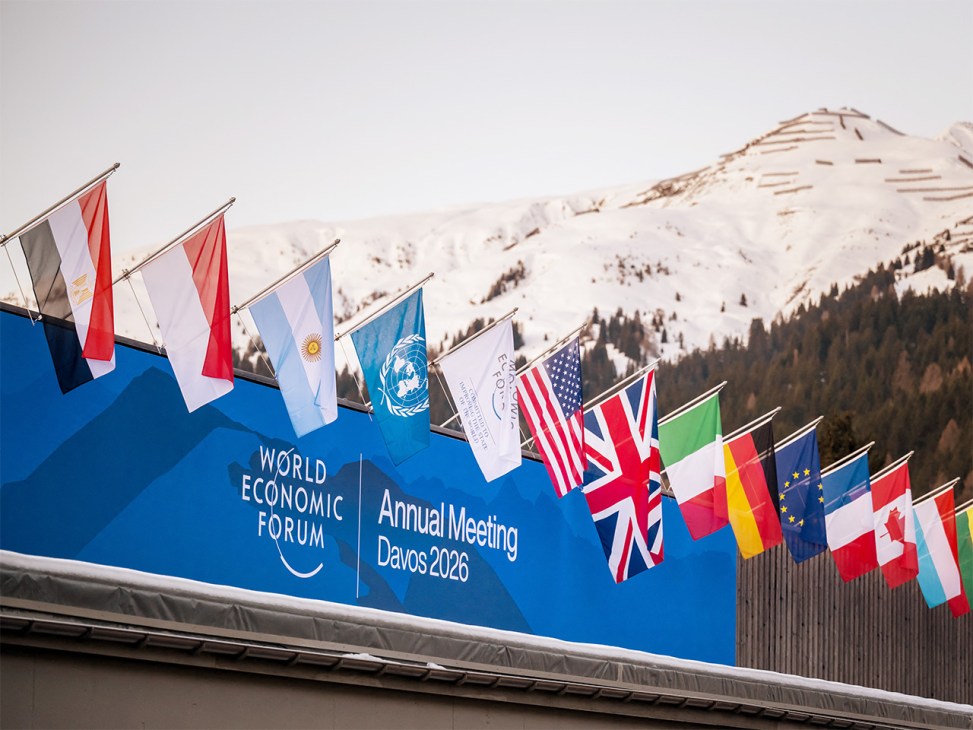
The 2025 edition was relatively empty by comparison; everyone was talking about whether it was the end of the WEF’s annual meetings. But the change in leadership at WEF has brought back an entrepreneurial and commercial feel to Davos, in addition to the hosting of high-level geopolitical conversations between leaders. This sets the tone for the next 12 months and no doubt many discussions will continue in February at the Munich Security Conference.
Security for the summit has come at a reportedly whooping cost of CHF41m (€44.2m), with some 5,000 soldiers being deployed to secure the perimeter in and around Davos while the air force established a no-fly zone with a radius of 25 nautical miles, inclusive of Swiss, Austrian, Liechtensteinian and Italian territory. This is, of course, all to secure the arrival of Trump and his 300-strong delegation, including five members of his cabinet, several members of his family and staff.
It’s also interesting that this comes hand in hand with the first ever official USA House. We have seen smaller iterations of this in the past but they were never sanctioned by the Department of State. This time, USA House is here and in full swing. They have taken over the church on the promenade here in Davos and have a packed programme of panels, discussions and networking receptions.
President Trump is due to speak to delegates on Wednesday afternoon, with several of the houses along the promenade holding watch parties, which are open to the public. One can easily imagine that the reaction of the crowd watching his speech at Ukraine House will be vastly different from that of those at USA House. For the media, the queue to secure a spot in the Congress Center will begin to take shape quite early; last year, when Trump joined via video link, the majority of journalists (including Monocle) ended up watching the address on a big screen outside the main hall.
But Trump’s ability to draw a crowd is not something to be snubbed. His presence at WEF is one of the main reasons why there is such a big contingent of business executives – about 850 chairpersons and chief executives. The most important deals made at the event this year will be framed against a backdrop of threatening tariffs, leaked private exchanges between leaders, gunboats in Venezuela and his alleged plans to tell European leaders that the US “has to have” Greenland.
On the eve of Trump’s arrival, European Commission president Ursula von der Leyen warned Davos attendees that “nostalgia will not bring back the old order”. Sentimentality aside, it’s clear that this year’s summit is anything but business as usual.
Monocle Radio is on the ground reporting every day on‘The Globalist’, ‘The Briefing’ and ‘The Daily’. You can listen to Monocle Radio live here.