The political honeytrap has a long history – but it might not spice up the Hungarian elections
Hungarian opposition leader Péter Magyar, who is leading in the polls ahead of the country’s pivotal April elections, is hardly the first politician to be threatened with the publication of compromising material of an intimate nature. Though if the best that his opponents can do is threaten to release video of a healthy 44-year-old man having consensual sex with an apparently enthusiastic partner, he is entitled to feel confident about the looming vote.
The honeytrap is, nevertheless, a venerable espionage technique, used throughout history to great effect – frequently on balding, pudgy, middle-aged male officeholders who have clearly not paused to wonder why 22-year-old lingerie model Svetlana finds their views on missile procurement so riveting. This past Valentine’s Day, the US Army Counterintelligence Command posted an image of a scarlet-clad woman making eyes at a gawky, bespectacled grunt with the caption, “It doesn’t take a mathematician to figure out 10 + 5 = honeytrap. Report suspicious behaviour.”
A model for such operations might be that which undid Sir Geoffrey Harrison, a UK ambassador to the USSR in the mid-1960s. Harrison embarked on an affair with a Russian chambermaid in the embassy’s employ, heedless of the near-certainty that she was a KGB plant. The Briton gave himself up to his superiors at the Foreign Office after the Red Army marched into Czechoslovakia in 1968 and was swiftly, if discreetly, recalled. Speaking about the incident years later, he said, “It is happening all the time to diplomats and journalists.”
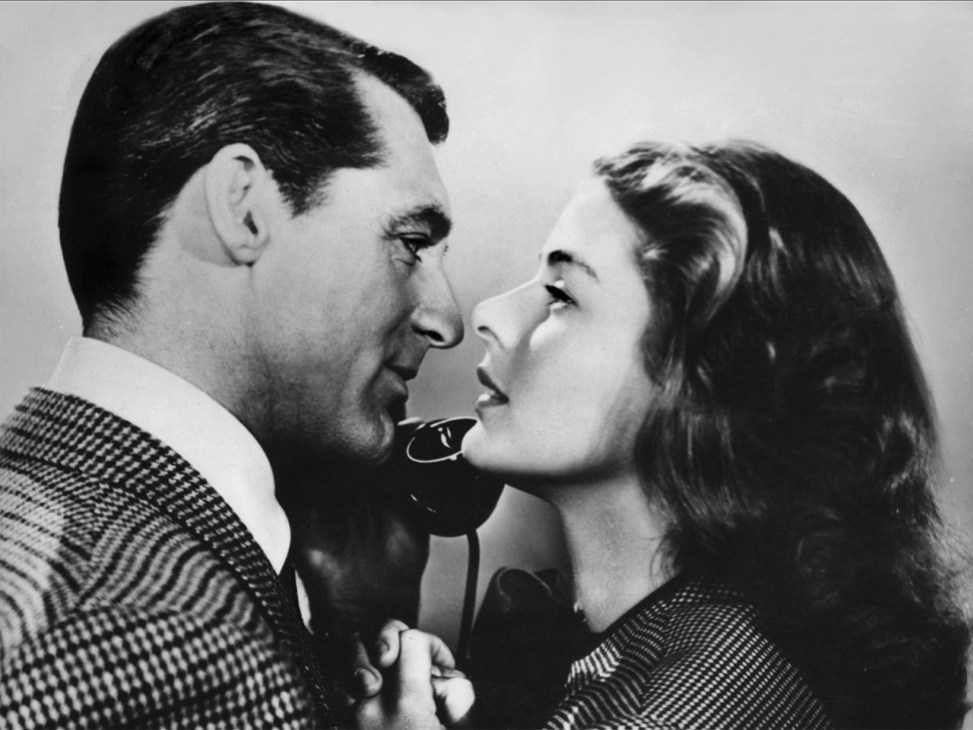
The honeytrap is not exclusively a tactic of the West’s antagonists or a relic of the Cold War. Mordechai Vanunu was an Israeli nuclear technician who, in 1986, spilled details of his country’s officially denied nuclear weapons programme to a British newspaper. While in London, he struck up a relationship with an American tourist, who suggested a city break to Rome. The American tourist was a Mossad agent, as were her colleagues waiting in the Italian capital. They spirited Vanunu to an Israeli navy ship and back home to stand trial for treason and espionage. He served 18 years in prison.
Last year, a 60-something retired US Army Lieutenant Colonel David Slater, working as a civilian contractor on Offutt Air Force Base in Nebraska – overseer of American nuclear forces – was handed nearly six years in the federal clink for conspiring to disclose classified material. In 2022 he had been chatting online, or so he believed, to a Ukrainian woman with what should have seemed a perturbing line in conversation: “Beloved Dave, do Nato and Biden have a secret plan to help us? American intelligence says that already 100 per cent of Russian troops are located on the territory of Ukraine. Do you think this information can be trusted?”
As long as there are ruthless intelligence services and lonely, gullible people in high office, honeytrapping will continue, which prompts the question of how to combat it. The most obvious way is, of course, to maintain an unforgivingly rigorous assessment of your own attractiveness relative to that of the vision gazing adoringly over the martini glasses as you expound upon the footnotes of this treaty that you’re negotiating. The other – amoral but effective – is to regard such importuning as a perk of the job.
Regrettably unprovable but persistent Cold War legend has it that during one visit to the USSR by Indonesian dictator Sukarno circa the 1950s and 1960s, special measures were taken to ensure his loyalty to the Kremlin. A bevy of comely KGB operatives were disguised as Aeroflot hostesses and deployed to the bar of Sukarno’s Moscow hotel under instruction to inveigle him to a room rigged with surveillance equipment and show him a good time. However, the Soviet spooks misjudged their mark: when they showed the subsequent good time back to Sukarno on film, he did not, as they might have hoped, cower in obeisance. Instead, he exclaimed his delight and asked for copies of the tapes.
Andrew Mueller is a contributing editor and the host of ‘The Foreign Desk’ on Monocle Radio. Listen to more about Hungary’s elections on Monocle Radio’s ‘The Globalist’ here.