Marco Rubio has cannily swerved the world’s most divisive issues – but he can only avoid them for so long
The US secretary of state has been focused on easy wins in Latin America, disappearing at the first sign of political turmoil.
Just before jetting off to Colombia to meet Abelardo de la Espriella, the country’s Donald Trump-friendly president, Marco Rubio, the US secretary of state, was asked why he wasn’t visiting Venezuela, where a controversial oil deal was recently inked with its acting president, Delcy Rodríguez. “You can’t go everywhere,” he replied, before boarding a plane to Bogotá, then Peru and Ecuador, where he will have the not-so-tough task of sitting down with friendly conservative leaders to discuss their common aims.
It was classic Rubio: come the merest whiff of backlash or a potential political quagmire, he pulls off his disappearing act. In the past week, vice-president JD Vance has been floundering in front of the press in the White House, arguing the semantics of whether the protracted war in Iran is, in fact, a war and parrying questions about when it will end. Meanwhile, Trump’s special envoys Steve Witkoff and Jared Kushner have been in Russia and Ukraine, trying to restart talks.
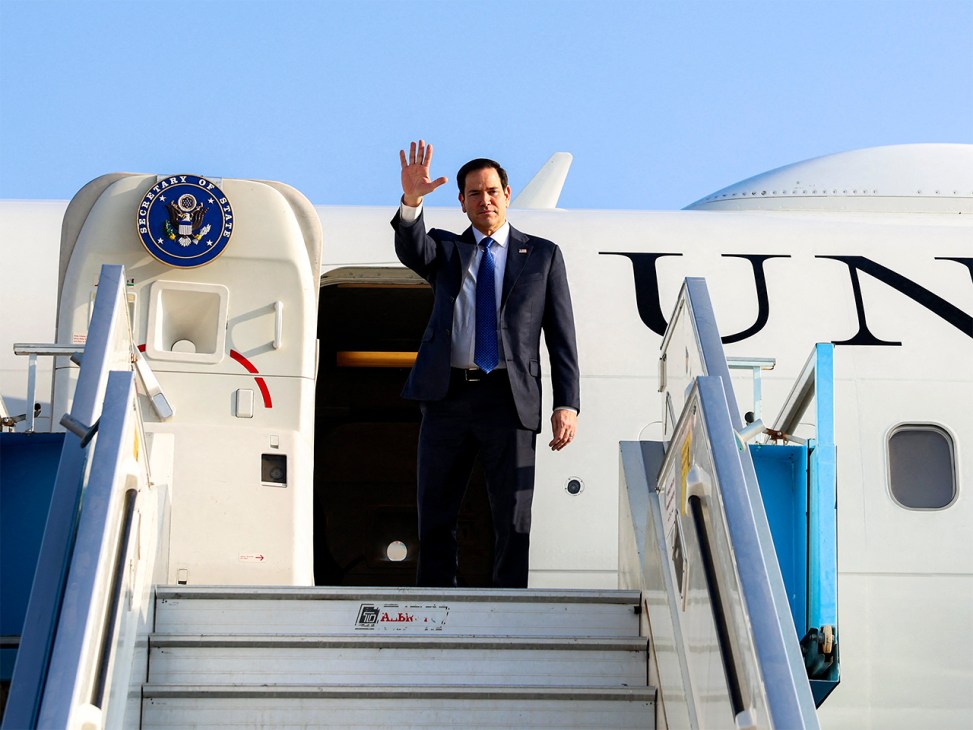
These are two of the most pressing foreign-policy issues that the US faces today but the man who is meant to be the country’s most senior diplomat appears to have precious little investment in either. The war in Gaza is another divisive political hot potato; Rubio has not been to Israel since October last year. He was expected to travel there in March but the trip was called off when the US started bombing Iran and, though the US secretary of state did make a trip to reassure Gulf allies in June, he has not been personally involved in any of the direct negotiations to end the war.
In a normal administration, this might be read as a sign that the president lacks trust in his secretary of state and is redirecting crucial issues to Vance or Kushner. But this is not a normal administration. Trump made that clear when he quipped in June that he would “blame JD” if an early deal with Iran fell through. Everyone is trying to dodge a bullet and please their boss. And the one man who seems to be the expert at playing “not it” with the trickiest assignments is the ever-evasive Rubio.
As others deal with crises in the Middle East, Rubio, the son of Cuban immigrants, has made Latin America his territory. He has been dogged in his efforts to hobble the communist regime in Cuba – a deeply personal goal for him – by applying a range of economic sanctions. He was also happy to claim a role in the January raid to capture Venezuela’s then president, Nicolás Maduro, which some saw as an audacious success.
The recent Venezuelan oil deal, which gives the US access to untapped reserves, is more divisive: it was signed by Maduro’s unelected left-wing successor, Delcy Rodríguez. While Rubio helped to negotiate the deal, he has been cagey when answering questions about an exact timeline for elections in Venezuela.
But Venezuela’s democratic future isn’t an issue worrying large swaths of the US. Instead, Americans are concerned about the impact of the Iran war on their wallets. And anyone tainted by association with the conflict will struggle to shake it off. Rubio, who is considered a frontrunner for the Republican nomination for the 2028 presidential race, has so far played a savvy game, hitching his wagon to foreign-policy success stories and identifying the issues to avoid.
But there are pitfalls to this approach. If Rubio wants to be president, he needs to keep a high profile and show the electorate what he stands for. His tour of Colombia, Peru and Ecuador was not exactly front-page news and promoting democracy in Cuba, while pursuing economic gain in Venezuela, raises questions about double standards.
Rubio will need to find a way to connect with ordinary Americans on the issues that they care about, not just pursue those that he cares about. Right now, keeping a distance from an unpopular president and an unpopular war seems canny. But he can only avoid the world’s most pressing problems for so long before the public starts wondering whether it’s time for him to start doing his job.
Charlotte McDonald-Gibson is a Washington-based journalist and regular Monocle contributor. For more opinion, analysis and insight, subscribe to Monocle today.