Americas
The view from the campaign trail in Chile and the lowdown on elections in Argentina.
Making room
Brazil
Brazil’s commercial airport infrastructure is a concern ahead of next year’s World Cup. With 3,000 private aircraft expected to enter Brazil’s airspace, military and private airstrips might have to take up the slack.
View from the campaign trail
Old enemies, new battles
By Steven Bodzin
At a glance, Chile’s presidential election looks like a 1970s rerun. Socialist Michelle Bachelet represents parties of the left under a coalition banner, “Nueva Mayoría”. Evelyn Matthei represents the two conservative parties, together called the Alianza. Both are daughters of air-force generals from opposite sides of the political fault line that fractured the country 40 years ago.
Bachelet’s father, Alberto, took a political job under President Salvador Allende, the first socialist to be freely elected to lead a country in the Americas. After a military coup in 1973, General Bachelet was tortured to death by troops loyal to General Augusto Pinochet. As Pinochet consolidated power into a 17-year dictatorship, Matthei’s father rose to become head of the air force.
But rather than a rehash of old grudges, this election promises to be the first in decades where the candidates’ relationship to the dictatorship is largely off the table. One reason is demographics. Those voting for the first time this year were born as recently as 1995, five years after Pinochet left office. They can barely remember a time without mp3 players, much less without democracy.
Even among the older set, generational traumas may be drawing to a close. While the actions of both Allende and Pinochet infuriated their opponents, it is the actions of more recent presidents that tend to rile voters today.
While Bachelet remained personally popular when she stepped down four years ago, her centre-left coalition had begun to take its support for granted. Current conservative president Sebastián Piñera has lost what trust the left might have given him by responding to social movements with riot police rather than dialogue.
Not that the dictatorship has lost all emotional force. Just months ago, a Santiago borough changed the name of September 11 Avenue to Nueva Providencia, deleting a name that had for 33 years commemorated the date of Pinochet’s coup. Opponents on the city council boycotted the meeting, saying the change opened old wounds. The vote was attended by a throng of cheering anti-Pinochetistas.
But the candidates have more contemporary concerns. Bachelet, Matthei and other candidates such as the Progressive Party’s Marco Enríquez-Ominami all put proposals for increasing the quality and equality of education front and centre. The candidates differ on whether to loosen the law that makes abortion a criminal offence. They differ on how to reform the country’s legislature. The constitution designs elections to exclude small parties from congress and keep big parties from getting too powerful, all but guaranteeing a duopoly.
As it happens, unequal education, the anti-abortion law and the perma-gridlocked congress are all inherited from Pinochet. The irony is that people had to stop arguing about who supported whom in Pinochet’s time before they could fix his policy errors.
Three big challenges for Chile’s next president:
1.
Increase social mobility. Behind social unrest is a rigid class system that has eluded reform.
2.
Boost electricity supply without wrecking the environment. Chile lives on copper and copper mines need megawatts.
3.
Appreciate Chile. Tourism can grow if the country shows off its strengths, rather than imitating others.
Election watch
Argentina
Type: Parliamentary
Date: 27 October
Candidates:
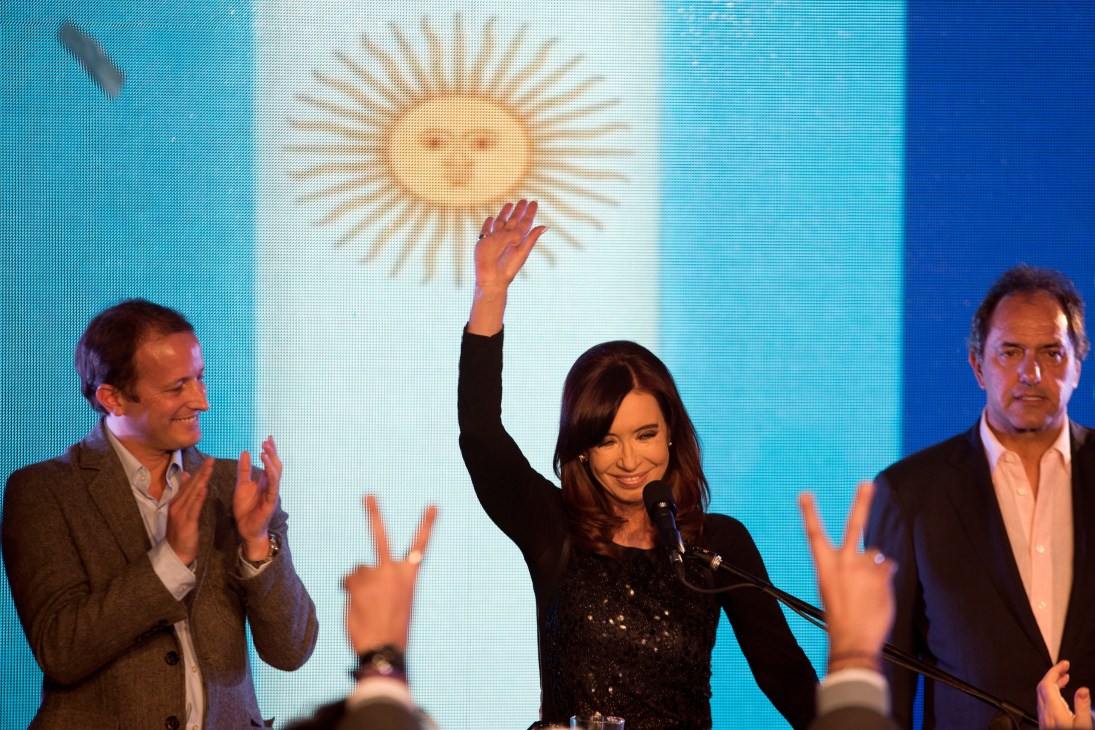
Half the seats in the Chamber of Deputies and a third of the seats in the Senate are up for grabs. The Front for Victory, led by President Cristina Fernández de Kirchner, is the largest party bloc in both houses but pre-election polls held in August showed it losing ground to rivals.
Issues:
The economy: some predict a return to recession next year. Inflation is at 25 per cent.
Monocle comment:
It would be nice if people could make it to polling day without mentioning the Falklands. There are more important issues than a bunch of rocks in the South Atlantic.
Images: PA Images
Infographics: Lamosca