Africa/Middle East
The "new mod" style of Iranian prime minister Hassan Rouhani, and the Democratic Republic of Congo army's first ever victory.
Baby doom
Iran
Iran’s ageing population is worrying its supreme leader, Ayatollah Khamenei. He has called for Iranian families to create more babies – the average family had around seven children in 1970, now it’s 1.9.
Style leader 49.
The turbanist
Hassan Rouhani
Iran
Whenever you hear the word “moderate” applied to the leader of a country, it’s worth remembering it’s a relative term. Hassan Rouhani, elected as president of Iran in June, is routinely described as a “moderate” – which, where he lives, means he’s in favour of punishing homosexuality with death and imposing a dress code on women under threat of arbitrary violence.
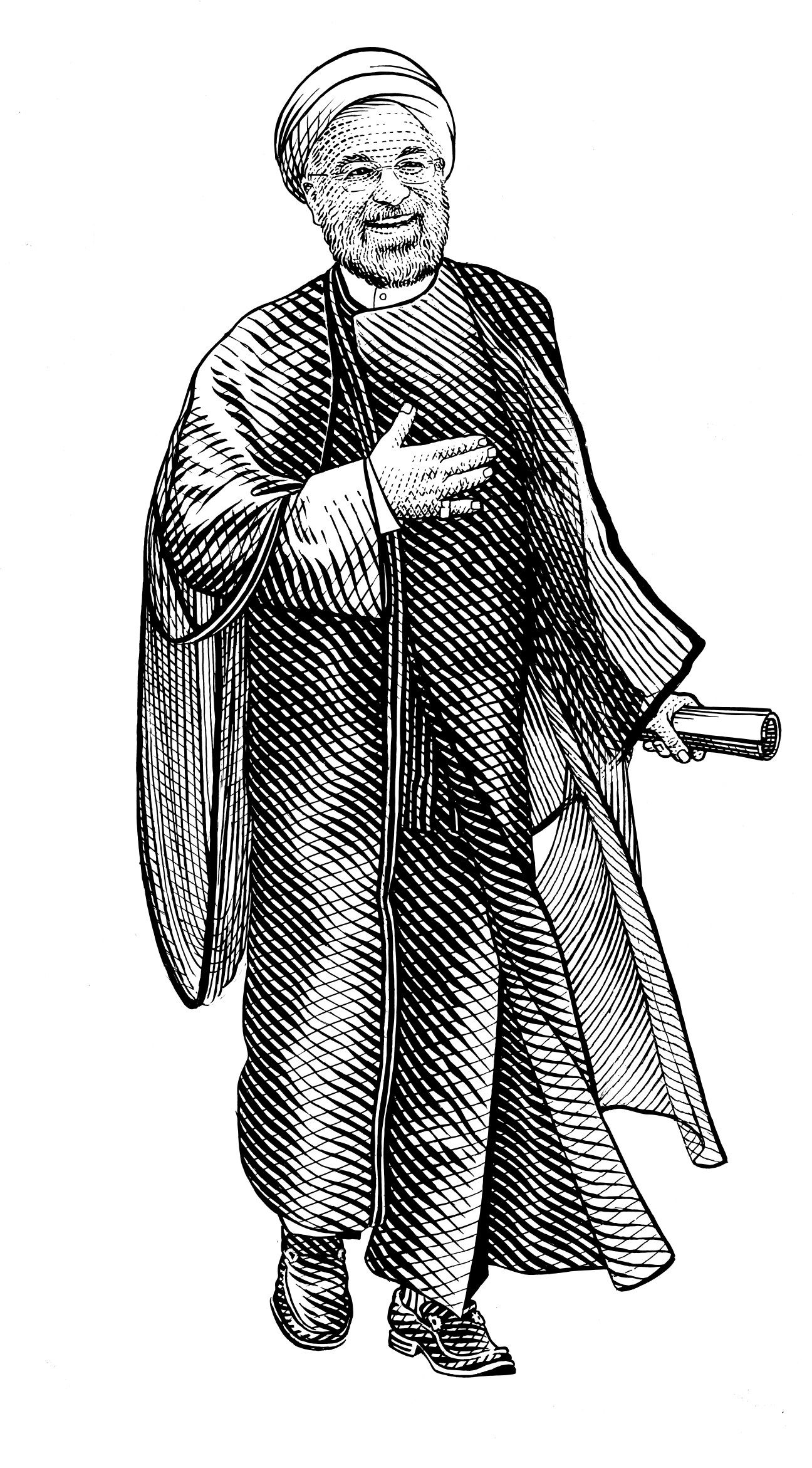
His appearance is a clue. Rouhani, 65, wears the robes of a mid-ranking Shi’a cleric, known as a Hojatoleslam. He’s a graduate of the conservative seminary at Qom (and, somewhat weirdly, of Glasgow Caledonian University, where he completed a thesis on Sharia law in the 1990s).
“Clerics care a lot about their clothes,” says British-Iranian journalist Ramita Navai, whose book about Tehran, City Of Lies, will be published this year. “But where someone like [former president] Khatami liked his bold colours, Rouhani is all about restraint. He’s very exact.”
The contrast with Rouhani’s immediate predecessor, the charmless Mahmoud Ahmadinejad, is irresistible. His modest mufti meant for a while he too was seen as a “moderate”.“People were embarrassed by Ahmadinejad’s looks,” says Navai. “Clerics aren’t the country’s favourite people, which was partly why he got elected. But now people don’t care what you look like as long as you fix the economy.”
The look:
1.
Rouhani wears a white turban. In the Shi’a Islam observed by most Iranians, the black turban (sported by some previous Iranian presidents) denotes the status of a Sayyid – a direct descendent of Mohammed – which Rouhani is not.
2.
Thin, rimless, an essential part of a determinedly friendly visage. Rouhani has brought a similar superficial openness to his presidency – using Twitter and encouraging his cabinet to launch Facebook pages. Both sites are blocked to most Iranians.
3.
It’s not impossible to reach high office in Iran without a beard – Rouhani’s mentor president Akbar Hashemi Rafsanjani went audaciously clean-shaven, while Ahmad-inejad just looked like he’d lost his razor. Rouhani’s beard is full but carefully maintained – in keeping with his general deportment.
4.
The outer layer is always black wool, the inner tunic chosen from shades of grey or blue. The Iranian holy city of Qom is also host to Iran’s best clerical tailors. “You can tell from the cut of his robes that he’s very fastidious and that the fabrics are very expensive,” says Navai.
A rare victory
DR Congo
Military
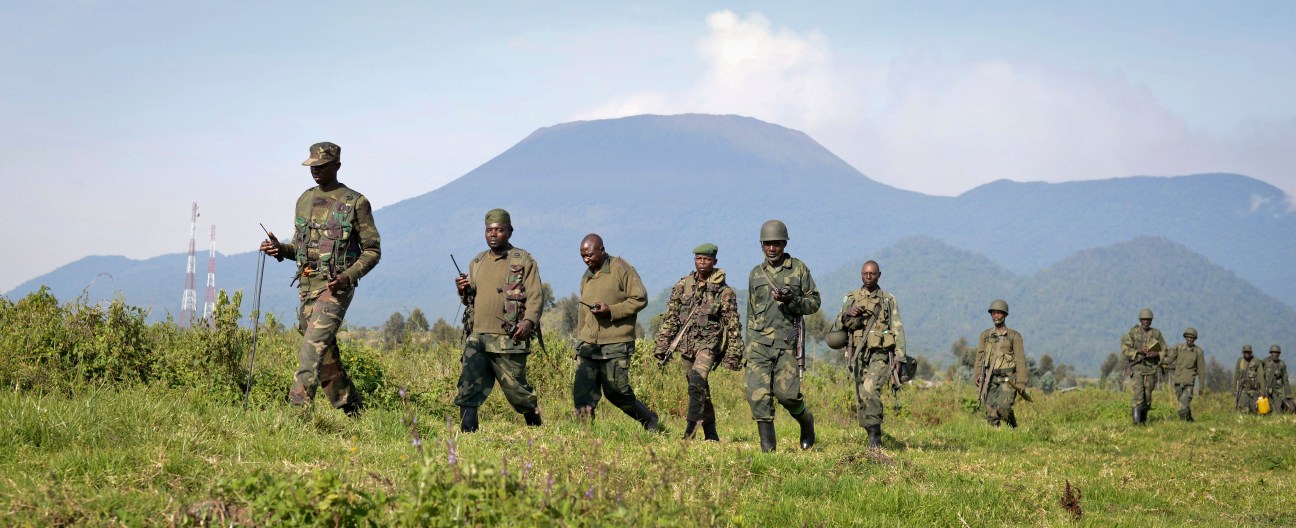
The army of the Democratic Republic of Congo is among the world’s worst; renowned for human-rights abuses, mass rape, avarice, cowardice and ineptitude. But in late October something strange happened: they celebrated a victory. Congo expert Jason Stearns calls the defeat of the M23 rebel group “the first major victory the Congolese army has ever won”. In a matter of days the retooled army, backed by a new UN brigade with a more aggressive mandate, chased the rebels out of territory they had held for over a year.
Victory over M23 has raised hopes that dozens of the other armed groups roaming Congo may also be defeated. Whether the army can become a force for good is another question.
Don’t speak
Egypt
Protest
Schoolgirls holding balloons and a schoolboy with a political symbol on his ruler: these aren’t the most fearsome of critics but over the past year Egypt’s military has shown an astonishing contempt for free speech, jailing children who dare to criticise the regime – however mild the protest. Elections are due to be held this year, though some analysts say the military will be reluctant to cede control.
Images: PA Images, Lamosca, UN Population Division