The art of the amble: Exploring the social rituals of evening walks across Spain, Italy and Greece
A languid stroll is an enriching daily ritual in much of southern Europe. In Spain, Italy and Greece, it is an art form. We join the crowds to learn how it’s done.

The Italian tradition of la passeggiata is so much more than the mere act of walking. It is a custom so deeply ingrained in the nation’s psyche that, wherever you might find yourself in Italy, you will see smartly dressed residents strolling and mingling in the late afternoon or after dinner to grab a cooling gelato. People promenade – and there really is no rush. They’re there to see and be seen, swap news and gossip. It’s the journey, not the destination, that matters.
The tradition has found a foothold among the Spanish too, who partake in el paseo, while the Greeks have the peratzada. Monocle mingles with the crowds on three leisurely meanders as the day winds to an end but before the evening’s revelries begin.
1.
‘El paseo’
San Sebastián, Spain
When Monocle asks those ambling along San Sebastián’s Ondarreta esplanade where they’re heading, the answer, more often than not, is “nowhere in particular”. They aren’t being evasive. They’re simply doing what Spaniards do best. “Dando el paseo” – taking a stroll – is a national pastime during which the destination doesn’t matter. Instead, the focus is entirely on the journey.
This city, known as Donostia in Basque, has more than one paseo a day. The first is in the morning, before the rising sun warms the pavements. This stroll is about kicking both body and mind into gear. With 26.6 per cent of residents over the age of 65, the city has one of Spain’s biggest senior populations. It joined the World Health Organization’s Age-Friendly Cities framework in 2010 but an active and inclusive lifestyle comes naturally here.


As well as the morning stroll, there’s its after-dinner cousin. Partly intended to aid digestion, this paseo can be a touch romantic too. But Spain’s main stroll happens between 19.00 and 21.00, before dinner. It’s healthy, social and, most importantly, cultural – an aimless meander that keeps the country connected and moving. In San Sebastián, there’s an unspoken consensus that you should look your best: think sophisticated señoras and smartly dressed señores with no Lycra or leisurewear in sight.
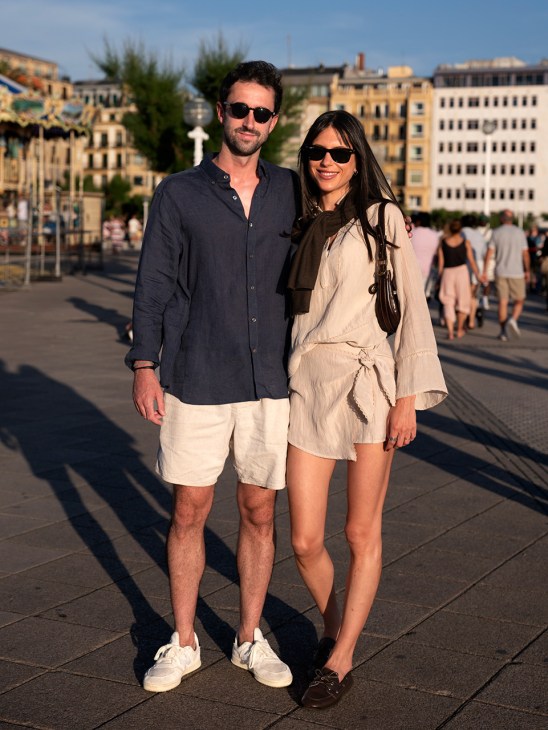
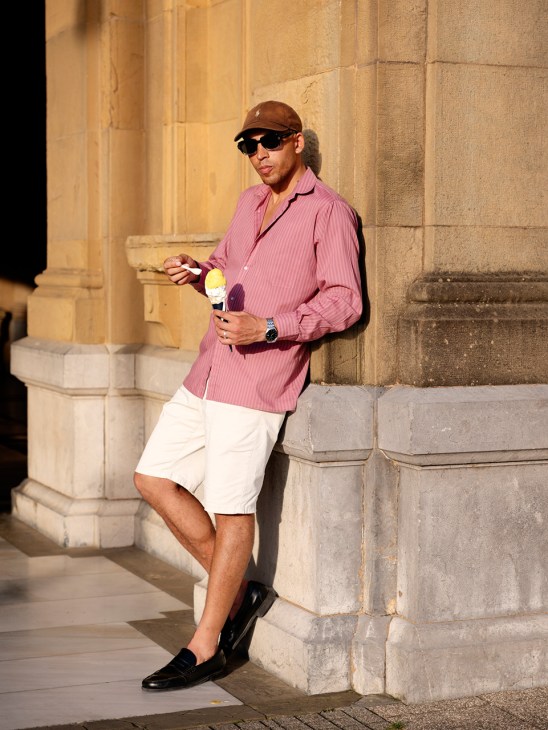
It’s a warm evening so we find walkers sticking to the cooler streets of the old town. Elegantly dressed, Karmele Kaperotxippi tells us that she’s “just passing through”. In head-to-toe pink, Maite Recalde says she’s on her way to buy a bikini but has taken the long route “to soak in the energy”. Jonathan Oloniluyi-Abel Rodrigo is likewise in no hurry, apart from when it comes to eating his ice cream before it melts.
Back on the ornate and curved esplanade of La Concha beach, we meet a mix of young couples, chatty amigas and dog walkers. Ana, Jorge and Gizmo have stepped out to “dar una vuelta” (take a walk).
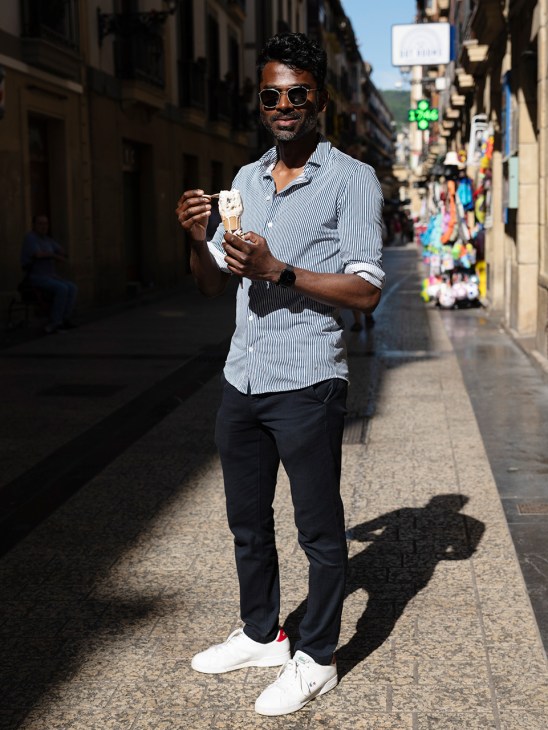

There’s also a spirited side to walking along this beach, one of the busiest stretches of the Camino de Santiago: among the aimless amblers are those on pilgrimages. San Sebastián is one of the most beautiful stretches of the religious route. We meet Vivek Bhasin from Himachal Pradesh in India; he tells us that he regularly takes long walks across the globe. His last pilgrimage was 1,200km long. “It’s a reflective path and a way to savour time,” he says. Thankfully for him, this section of the Camino de Norte (Northern Way) is a little shorter at 803km.
Back in mid-20th century Paris, situationist thinkers such as Guy Debord romanticised the unplanned stroll as the dérive – the act of drifting. They created an art movement around observational walks – an early and sociopolitical take on mindfulness. In Spain, however, strolls aren’t so intellectually freighted. The paseo is a simple, universal pleasure in which one steps onto the street to reconnect with the world, strut a little, chat a lot and see and be seen.
As the sun sets and the evening rolls on, the footfall along San Sebastián’s streets begins to decrease. But the city’s wayfarers will no doubt be back tomorrow, ready for another day of wandering nowhere in particular.
2.
‘La passeggiata’
Pietrasanta, Tuscany
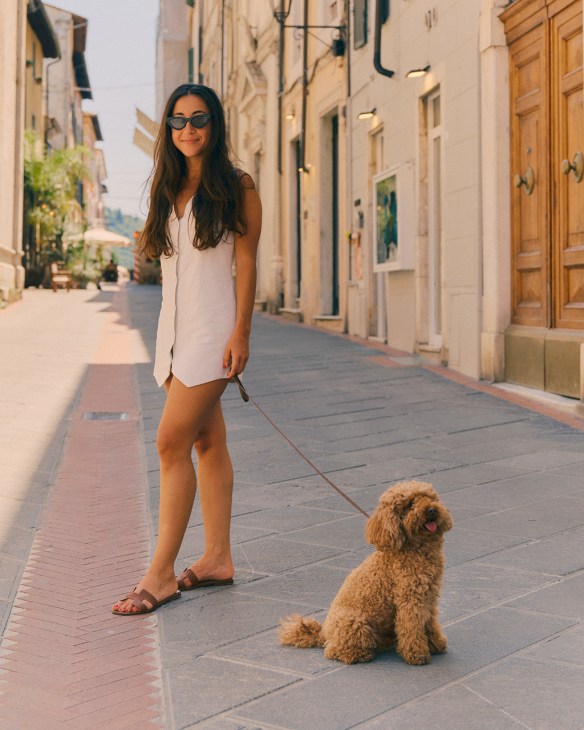
Once the summer sun softens to a golden haze, the pedestrianised streets of tiny Pietrasanta become the stage for the urban choreography of la passeggiata – a pleasure stroll that requires no destination. Instead, it’s a leisurely civic ritual and a refreshingly analogue social network that continues to connect local life.
La passeggiata has deep roots across Italy, with promenaders in couples and small groups traversing the main piazzas and shop-filled streets of towns and cities – most commonly in the evening hours before dinner, when the day’s work or beach visit is over and bars begin serving aperitivi. The point is not to seek solitude but rather to participate in public life among fellow denizens. The ritual remains especially entrenched in small towns where the sense of community is still palpable.

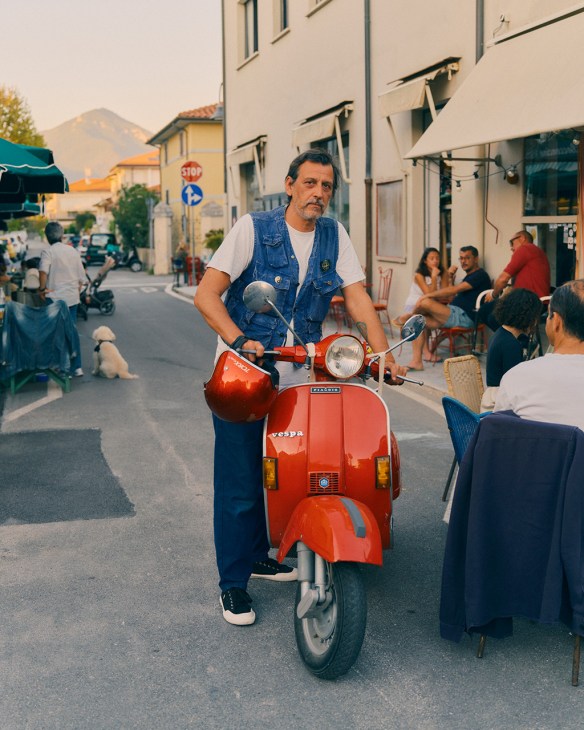
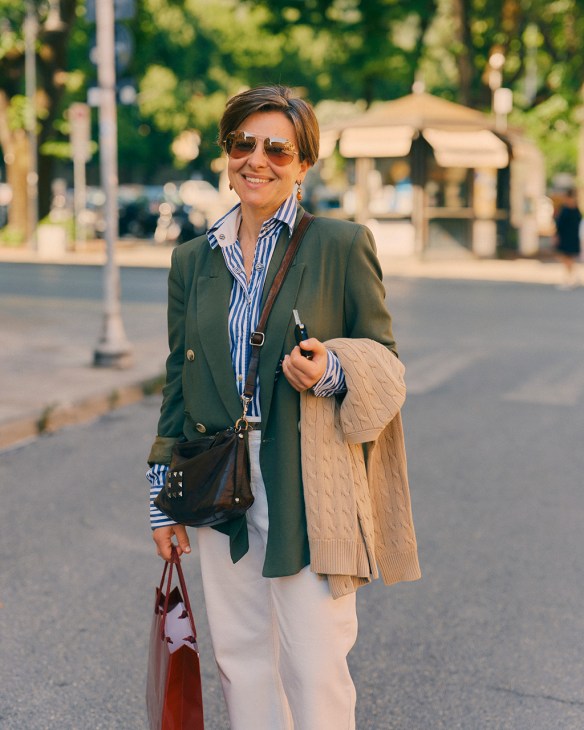
In Pietrasanta, as in many seaside spots, the summer meander is an essential part of the day’s rhythm, elevated by the town’s singular character. Located by the mountains that yield the world-famous Carrara marble, the district has a long history of stone carving and the bronze casting of sculptures. These credentials have rendered Pietrasanta a magnet for artists – Isamu Noguchi, Fernando Botero and Igor Mitoraj all maintained studios here. The town’s public spaces are rich in art, from the train station’s Kan Yasuda sculpture and Botero’s church frescoes to the monumental works installed annually in the main piazza.
Alongside museums, such as the Igor Mitoraj foundation and the Museo dei Bozzetti, Pietrasanta’s compact criss-cross of streets is home to dozens of art galleries. “Even people from neighbouring towns like to come to Pietrasanta for a passeggiata because there’s so much art to look at as you walk,” says Sara Ferron Cima, c0-founder of Bloc Studios, which works with marble from nearby quarries. “Strolling through town is a chance to marvel at all the beauty around you,” says her husband, artist Paolo Ciregia, who points to the art but also to the proximity of the mountains, sea and forested hills.
The central area is lined with distinctive independent shops: La Stramberia’s Tuscan-made hats; Santa Riva’s dapper men’s selection; Thanks Dad, with its in-house clothing line. But it’s the enduring presence of artists and artisans that preserves the town’s rare authenticity. “This is a small working community of skilled craftspeople and artists,” says designer Marco Guazzini, who moved to the area after holidaying here for years. He is enjoying a beachside aperitivo. “You see faces you know when you walk around and that keeps the town human.”


“A passeggiata and an aperitivo – that’s how we end the day whenever we can,” says his tablemate, architect Andrea Leonardi, who usually has his son in tow, kicking a football through the town with the other kids.
Head down to Marina di Pietrasanta, the town’s seaside quarter, and you’ll find roads edged with marble yards and stone depots before reaching the row of vintage beach clubs that front the sand. Along the car-free promenade, locals on bicycles drift by while others are on foot – freshly changed from the beach and ready to take part in the languid spectacle.
3.
‘Peratzada’
Chania, Crete
As Chania’s heat dissipates, its old harbour starts to fill up. Families, hotel guests, students and elderly couples emerge to begin their peratzada. Taken from the Greek word pernao, meaning “to pass by”, the peratzada is an amble that includes a few key stops along the way – for a coffee, beer, meze or, when the temperature starts to rise, vyssinada, a soft drink made with sour cherries, sugar and water, served ice-cold.
“There are many different stretches that I pick for my walk, depending on my mood,” says 33-year-old architect and photographer Nikos Kouklakis, who returned to the Cretan city from Vienna nine years ago to renovate his grandmother’s apartment in the old town, where he now lives. “But there’s something special about starting here [in the harbour], in the openness of the waterfront.”
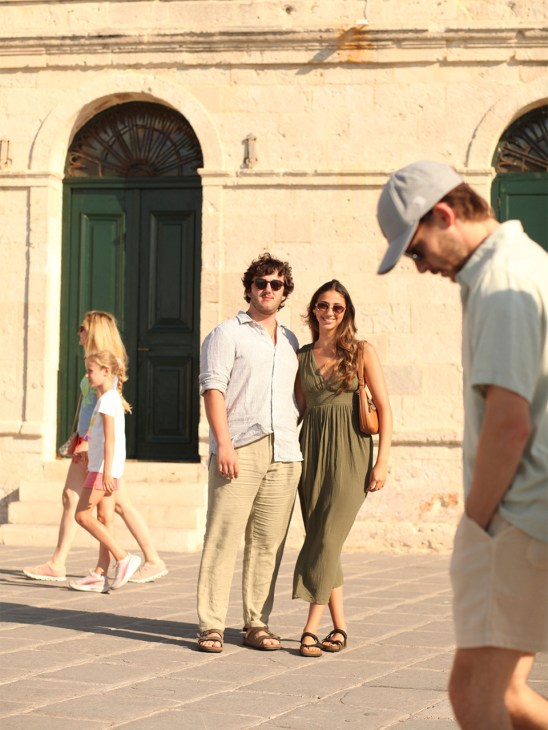
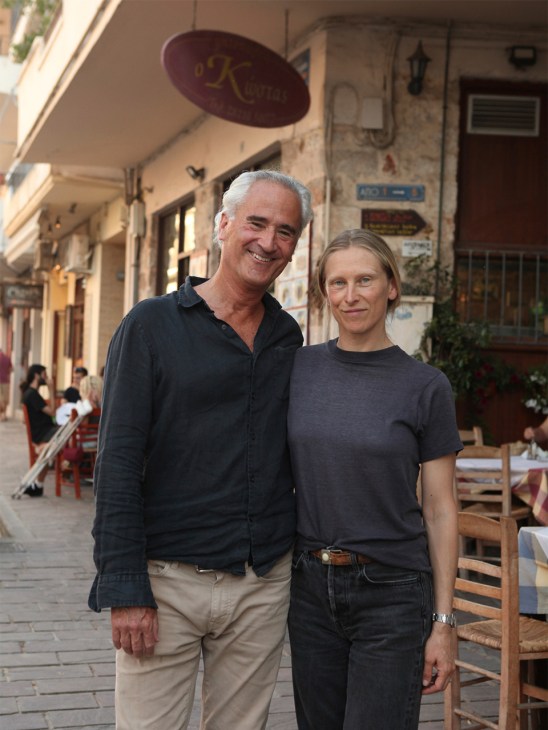

This evening, the city’s layered past, which includes Venetian, Ottoman and Byzantine periods, appears briefly unified in the shimmering glow. Few Mediterranean promenades pack so much history into such a short distance: within 10 minutes, the walk passes the Ottoman mosque of Yali Tzami, with its distinctive domes, Venetian warehouses and shipyards, and small Byzantine churches. But far from being an open-air museum gazing wistfully at the past, it feels more like a lively urban stage. Cafés occupy old customs houses; Venetian mansions are now boutique hotels; and tavernas spill on to former dockyards. In Neoria, the long, arched shipyards where Venetian boats were once built and repaired, fishermen now moor their vessels beneath the stone arches.
Chania’s most beloved peratzada often begins on the waterfront. But for locals in the know, it disperses into a series of routes. “We enjoy meeting visitors and getting to know them,” says entrepreneur Nikos Tsepetis, owner of Ammos Hotel and Red Jane bakery. “But that doesn’t mean our volta [walkaround] doesn’t have a few twists and turns that only we know.”

One of the best-known detours climbs up to Rosa Nera, a 19th-century neoclassical mansion on Kasteli Hill. Now controversially occupied by squatters, it remains one of the city’s most accessible viewpoints. “My favourite walk after a ramble on the waterfront is climbing up the steps here,” says 35-year-old hotelier Zaira Apostolaki, the owner of Aisha Hotel, which opened in 2024 on the hill. “I love sitting at the makeshift café at sunset.” From Kasteli Hill, the walk often continues through the lanes behind the harbour. Around Mhairadika, a corner of the city named after the old knifemaking workshops that still line the street, people are sipping early evening drinks with a view of the towering Venetian walls. The city’s various routes then converge on Splantzia Square, in the old Turkish neighbourhood.
At the square’s centre stands the Church of Agios Nikolaos, a building dating back to the 14th century that features a slender Ottoman minaret rising beside the church’s bell tower. It’s a testament to the many influences that the city has absorbed. “My favourite time here is at dusk, when tables spill across the square beneath the plane trees,” says Alkida Metai, a fourth-year architecture student. The perfect end to an unhurried promenade.