Supremacy usurped: Iran’s Ayatollah Ali Khamenei confirmed dead in US-Israeli strikes
Iran’s Supreme Leader has been killed in a US-Israeli airstrike. While some celebrate the end to his iron rule of the Islamic Republic, others warn of deeper regional instability.
The Islamic Republic of Iran, founded in 1979, was created in the image of its inaugural Supreme Leader: Ayatollah Ruhollah Khomeini, the fundamentalist firebreather who encouraged his acolytes to seize the US Embassy in Tehran, offered to underwrite the murder of a British novelist and ordered hundreds of thousands of his country’s young citizens to pointless deaths in a war against Iran’s neighbour, Iraq.
It is arguable, however, that the crucial figure in the history of the Islamic Republic was Khomeini’s successor, the cooler and cleverer Ayatollah Ali Khamenei, who has been confirmed dead in US-Israeli strikes, aged 86. Iran’s power politics flourished on his watch, at least for a while, taking advantage of the Middle East’s chronic chaos to assert itself as the dominant regional power – albeit one which had no friends or allies, merely clients and vassals.
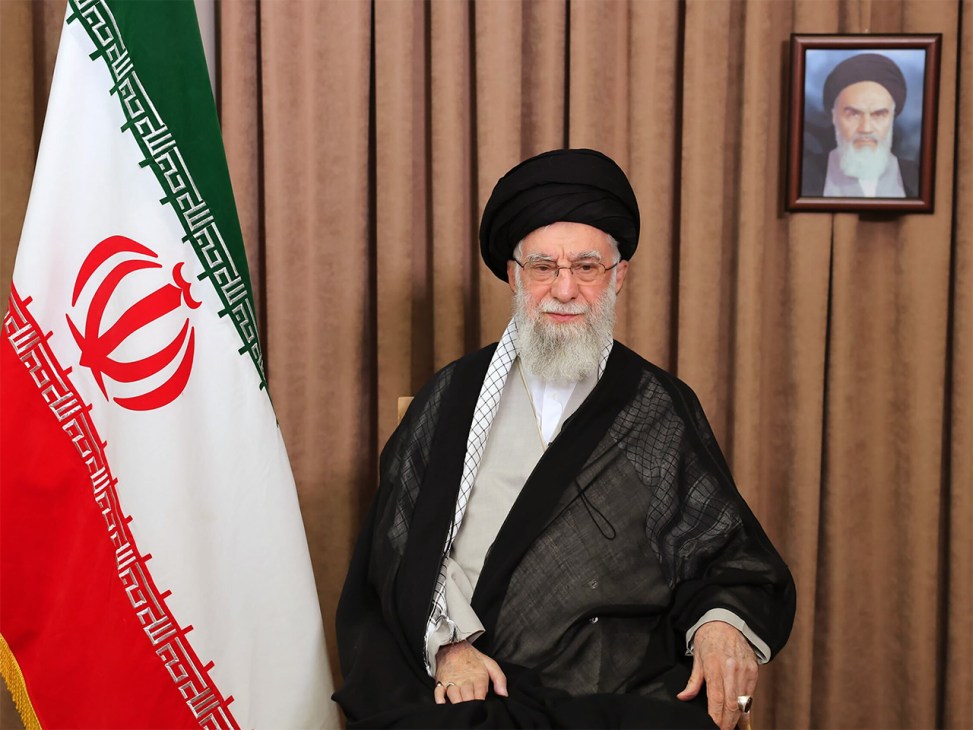
Ali Khamenei was born in Mashhad on 17 July 1939. He was set on his path early, enrolled in Islamic schools from the age of four. By his early twenties, Khamenei was studying in the Islamic seminary at Qom, one of the most prestigious – and one of the least compromising – centres of learning for up-and-coming Shia clergy. Among Khamenei’s teachers was a charismatic agitator with firm views regarding Iran’s then-leader, the repressive – and US-backed – Mohammad Reza Shah Pahlavi. The name of Khamenei’s early and lifelong mentor was Ruhollah Khomeini.
When the Shah wearied of Khomeini’s fulminating and drove the turbulent priest into exile in 1963, Khamenei remained in Iran. He paid a price for his enduring loyalty to the older cleric: he was arrested and tortured, spent three years in prison and another three in internal exile. When Khomeini returned to Iran to lead his revolution in 1979, Khamenei was welcomed into the inner circle. This was no guarantee of safety: an assassination attempt in June 1981, attributed to the eccentric militant organisation Mojahedin-e-Khalq, cost Khamenei the use of his right arm; he was elected president four months later while still recuperating. When Khomeini died in 1989, Khamenei was the obvious choice as the Islamic Republic’s second Supreme Leader.
Khamenei’s most impressive accomplishment might have been preserving his role as long as he did. Pro-democracy protests in 2003 and 2009, some of them bloodily suppressed, did not untowardly wobble him and nor did the upheaval of the Arab Spring from 2011 onwards. Indeed, Iran seized the opportunity presented by the latter tumult, becoming a significant – if not the significant – power broker in five Arab centres: Beirut, Sana’a, Gaza, Damascus and Baghdad.
Domestically it was difficult to acclaim Khamenei’s rule a success. Iran was economically hobbled by bureaucracy and corruption, and by sanctions imposed to thwart the country’s ambiguous nuclear ambitions. Iran, a potential powerhouse, stayed needlessly poor. Khamenei’s unbending interpretation of Islam saw Iran remain a country in which, well into the 21st century, gay men were hanged for being gay men, and women were assaulted by employees of the state for failing to adhere to a dress code.
And yet despite setbacks Khamenei’s forbidding visage continued to glower, apparently inextinguishably, from posters overhanging Iran’s public spaces. In 2020 the architect of Iran’s regional machinations, Islamic Revolutionary Guard Corps (IRGC) Major General Qassem Soleimani, was killed by a US drone strike. Other IRGC officers and Iranian nuclear scientists met picturesque demises, either overtly or covertly, at the hands of Israel. There were further mass protests against Khamenei’s rule in 2022, occasioned by the death of a young Kurdish woman named Mahsa Amini in the custody of the goons ordered by Khamenei to punish immodest flashes of female hair.
It began to unravel for Khamenei on 7 October 2023. The Palestinian militant group Hamas, long supported by Iran, broke from the confines of the Gaza Strip and killed more than 1,200 people. Israel’s response was not confined to Gaza, or to Hamas. Israel hit Iran’s proxies Hezbollah in Lebanon, the Houthis in Yemen and targets associated with the regime in Syria, where Iran had propped up former president Bashar al-Assad through the Arab Spring and beyond.
By June 2025, Hamas was destroyed, Hezbollah decapitated, the Houthis diminished and Assad defenestrated. Israel, with the assistance of the US, came for Iran directly, bombing nuclear and other sites. Iran was unable to muster much response beyond ineffectual rockets and blundering drones. Iran’s people sensed weakness, rose again – and were, again, put brutally down. Thousands were killed.
Towards the end, as the US and Israel prepared a decisive strike against him, Khamenei found himself in the impossible position of being a stubborn old man ruling an impatient young people. He probably understood, and just as likely did not care, that his ossified theocracy could not have survived compromise or engagement with the modern world. It is altogether unknowable whether he derived much satisfaction from embracing the martyrdom to which he urged – and condemned – so many others.