
If Trump’s threats have made anything clear, it’s that Danes don’t care about Greenland
Donald Trump has reiterated his desire to take over Greenland. But are Danes as concerned as they might seem?
When I have asked a number of Danes how they would feel if they “lost” Greenland, two points have been raised: first, that it’s not theirs to lose and, second, that many of them would not be all that bothered. When I point out that their kingdom would lose the largest island in the world, a crucial territory in what is rapidly becoming the 21st century’s most important geopolitical conflict zone, I have been met with shrugs. “We would only be proud if the Greenlanders took control of their country and if we helped with that in an orderly way,” the director of a Danish technology company told me over lunch last week. A senior civil servant, also at the table, agreed. “I think we’d be very satisfied if they felt they could go it alone,” she said.
With a population of about 56,500, “going it alone” is not really an option for Greenland, which has always been an economic burden on the Danes. Denmark spends about DKK5bn (€670m) a year on the territory – not just within it but also, for example, on flying hundreds of Greenlanders to Copenhagen every year for often relatively routine medical procedures. But it has also been a long-term moral burden. Denmark’s colonial past is much like that of every other nation with such history: there are incidents of which it is not proud.
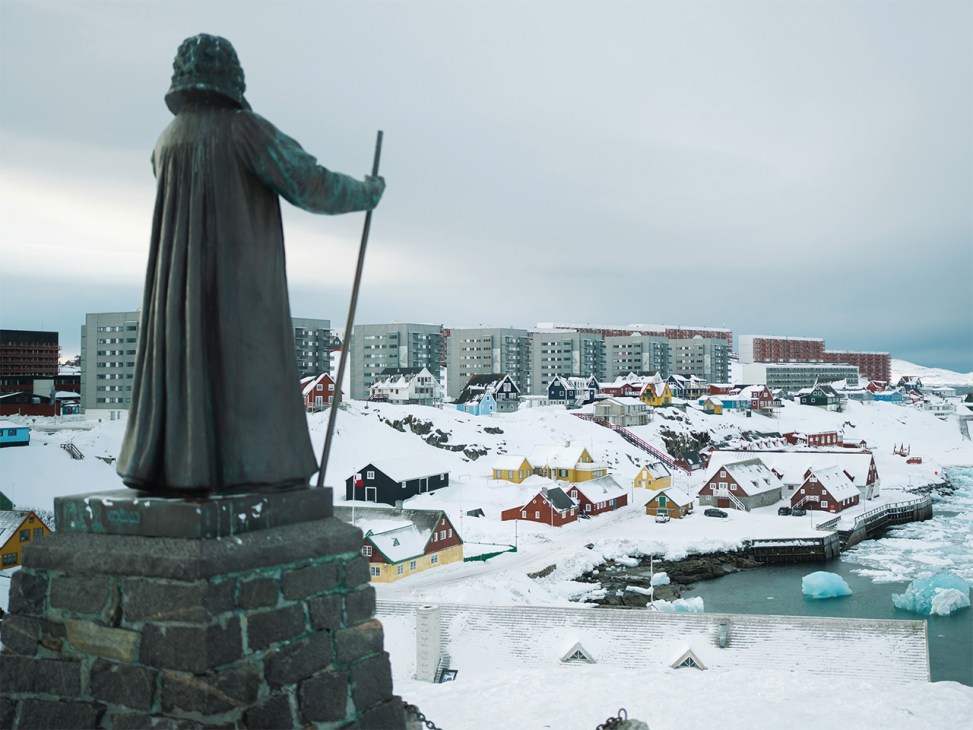
Last year, for instance, the Danish prime minister, Mette Frederiksen, apologised for contraceptive devices fitted to thousands of Greenlandic women without their consent by Danish healthcare workers in the 1960s and 1970s.
But Danes can also get a little weary of these kinds of grievances. A while ago, I was invited for a presentation at Det Grønlandske Hus in Aarhus. I expected a forward-looking pitch about the wonders of Greenland’s nature and landscape; perhaps something positive about independence. Instead, I received an hourlong lecture about the injustices and hardships suffered by Greenlanders under the colonial yoke over the centuries and a contemporary portrait of social hardship, neglect and victimhood. I left feeling marginally more sympathy towards the Danes than the Greenlanders, which I don’t think was the aim.
There is, of course, the eternal promise of the mineral riches beneath the Arctic permafrost that would be lost. But Danish friends point out that those riches are as yet largely unverified and will be hugely expensive – perhaps impossible – to extract, even with the ice gone. There is almost no infrastructure in place in Greenland and its hostile climate makes the construction of roads and ports prohibitively expensive, they say.
What Greenland has brought Denmark over the decades is international status, a seat at the Arctic table and the proud if rather hollow boast about the sheer quantity of square mileage at its command. This might explain why Danish politicians have remained so actively engaged in the matter while the populace at large is, at best, indifferent.
When the US president, Donald Trump, first voiced his wish to make Greenland the 51st state of the US during his first term, Frederiksen openly mocked him. She isn’t laughing now but is instead playing the Nato card. The US taking territory by force from another Nato member would mean the end of the Western alliance and of the postwar world order – which is why European leaders have been unusually trenchant in their support of Denmark too. (In a debate in the European Parliament, one Danish right-winger told Trump to “fuck off”. Only time will tell if that was a counterproductive strategy.)
But who really controls Greenland? Not the United States. But not entirely Denmark either – the Danes run foreign and defence affairs only. Even Greenlanders don’t really “own” it, at least not individually. Under Greenlandic law, no one can own the land on which their property stands – they merely lease it from Greenland’s government. Does that make it simpler or more complicated to “buy” the island? To be honest, at this stage, I have absolutely no idea. But what I do know is that the fate of Greenland would seem to offer no upsides for Denmark, either way.
Read next: Shake in your boots, Russian soldiers – I’m prepared to die for Denmark