
Turkic states are investing in soft power but it’s Ankara that seeks to steal the show
Central Asia has been pulled between Russian and Turkish spheres of influence for centuries but today it is increasingly gravitating towards the latter. Many countries in the region, such as Kazakhstan and Uzbekistan, are in the process of swapping the Cyrillic alphabet (imposed during the Soviet era) for Latin in school textbooks and official documents so as to be more in line with Turkish.
Military co-operation is ramping up too. At the recent summit of the Organisation of Turkic States (OTS) – a multilateral body founded by Turkey that includes Azerbaijan, Kazakhstan, Kyrgyzstan and Uzbekistan – agreements were made to co-develop military technologies and conduct joint-military exercises with Ankara in 2026. With influence over petrochemical resources and trade routes, Turkey’s president, Recep Tayyip Erdoğan, is cementing his nation’s position as the regional hegemon. But drills and summits aren’t always enough. Soft power is key and now Turkish television series are also proving to be hits in Central Asian living rooms.
OTS members have agreed to set up a common television channel for the Turkic world (a collection of countries with a shared linguistic and cultural heritage that stretch from the Bosphorus to the Mongolian Steppe) – a sign that traditional broadcasting is still a powerful medium. Turkey is already using television as a diplomatic tool by selling its historical productions, which show glamourised, glossy dramas of the Ottoman Empire, to dozens of countries in the Middle East, Southeast Asia and Latin America.
Ankara’s biggest hits include The Magnificent Century, a paean to the 16th-century reign of Sultan Suleyman the Magnificent, and Payitaht, which puts a falsely positive spin on the era of one of the last Ottoman sultans, Abdulhamid II. Elsewhere, TRT World is targeted at Anglophone Muslims worldwide. The English-language version of Turkey’s state-television channel presents Erdoğan as fighting back against Islamophobia in the West and supporting Palestinians against Israel.
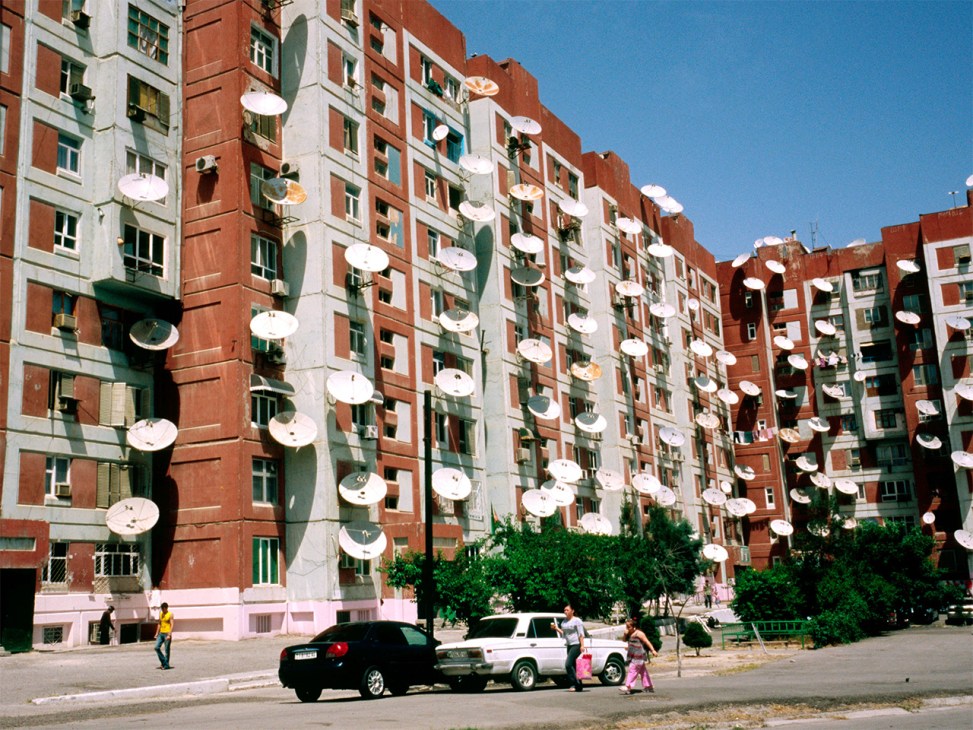
Sharing broadcasting services for statecraft and as an alliance-building tool is a well-tested idea. The European Broadcasting Union (EBU), an alliance of public broadcasters, was launched in 1950, partly as a technical oversight body but also to promote international understanding after the Second World War. Today the EBU’s remit stretches far beyond Europe’s geographical borders, including to Azerbaijan, which won the EBU’s Eurovision Song Contest in 2011 and hosted the event a year later.
The new OTS broadcaster will have a far greater scope, including joint development of both satellite and AI technology. But the political imperative remains the same as it did for the EBU 75 years ago: to shape a common culture among states. The OTS summit in October ended with the Gebele Declaration, an agreement that outlines a vision for the Turkic world as a cultural, economic and security bloc. For viewers, the union will provide access to programming from across the vast region, including domestically produced documentaries, children’s shows and feature films.
Many of the foundations for a Turkic broadcasting union are already in place. Turkey and Azerbaijan have been co-operating bilaterally in the media sphere since 2020, when they formed a joint media platform to shape coverage of the Nagorno-Karabakh war. A Turkic radio station and song contest already exist.
But the new proposals for shared Turkic broadcasting go beyond light entertainment or propaganda, aiming to shape an evolving region’s idea of itself. Turkey hopes to foster shared norms and aspirations among communities from the Caucasus to the border of China. It is a bet that Erdoğan is making as traditional soft-power titans such as Europe and the US are pulling funding from public media. Meanwhile, Turkey’s traditional rival in the region, Russia, is distracted by war. Ankara is looking to cement itself as the major power in Central Asia in 2026. Tune in.
Hannah Lucinda Smith is Monocle’s Istanbul correspondent. For more opinion, analysis and insight, subscribe to Monocle today.