Is the reinvention of downtown Cairo Egypt’s most controversial comeback?
The Egyptian capital is fast evolving as developers seek fresh opportunities on its storied streets. Here we investigate whether the restoration of its bustling heart can be done without sacrificing its essence.
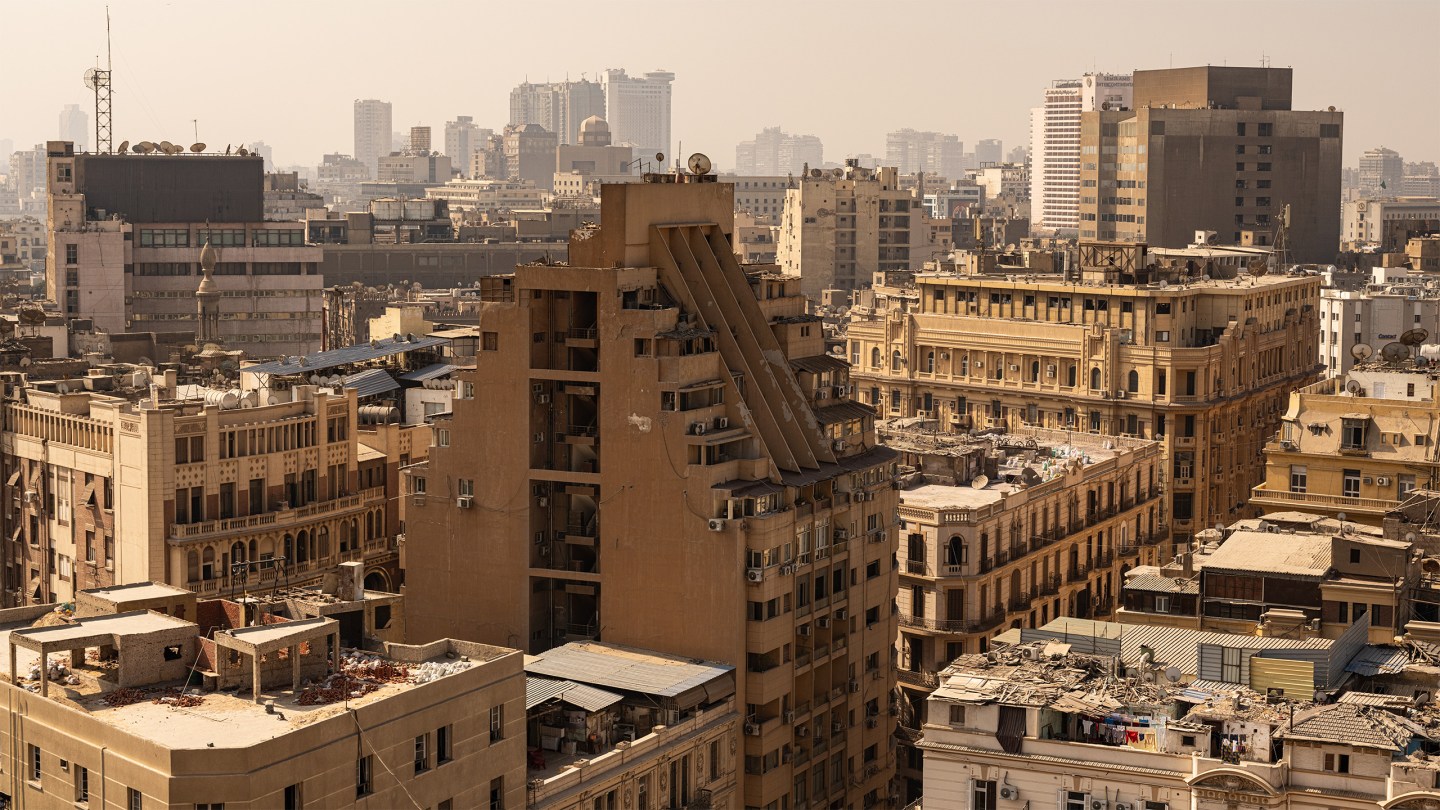
Karim Shafei likes to tell visitors that he has a short commute. The chairman of Al Ismaelia property investment fund lives within walking distance of his office down a pedestrian alley in central Cairo. Known as Kodak Passage because it was once home to several photographic studios, it leads to the striking Sha’ar Hashamayim Synagogue, which was inaugurated in 1908. On the surrounding streets, several buildings are covered with scaffolding, while others have already been given a facelift. This bustling district, which locals refer to as wust al-balad (“city centre” in Arabic), is undergoing a transformation and Shafei is at its heart. Since Al Ismaelia was founded in 2008, it has bought and renovated dozens of properties here, setting the tone for a revival that is gathering pace. “He’s Mr Downtown,” says one resident of the area.
Cairo, the sprawling home of 23 million people, is a city in flux. In its hinterland rise new satellite cities, including a purpose-built administrative capital and suburbs of residential compounds. Centuries-old cemeteries have been demolished to make way for roads and bridges. On the banks of the Nile, beloved houseboats have been dismantled and public gardens replaced by concrete walkways. All of this has taken place under the tightly controlled rule of Abdel Fattah el-Sisi, who rose to Egypt’s presidency about a year after leading a military coup in 2013. The changing face of Cairo since then has not been without controversy but the regeneration of its downtown is a particularly sensitive issue because of the place that it has long occupied in the Egyptian imagination.
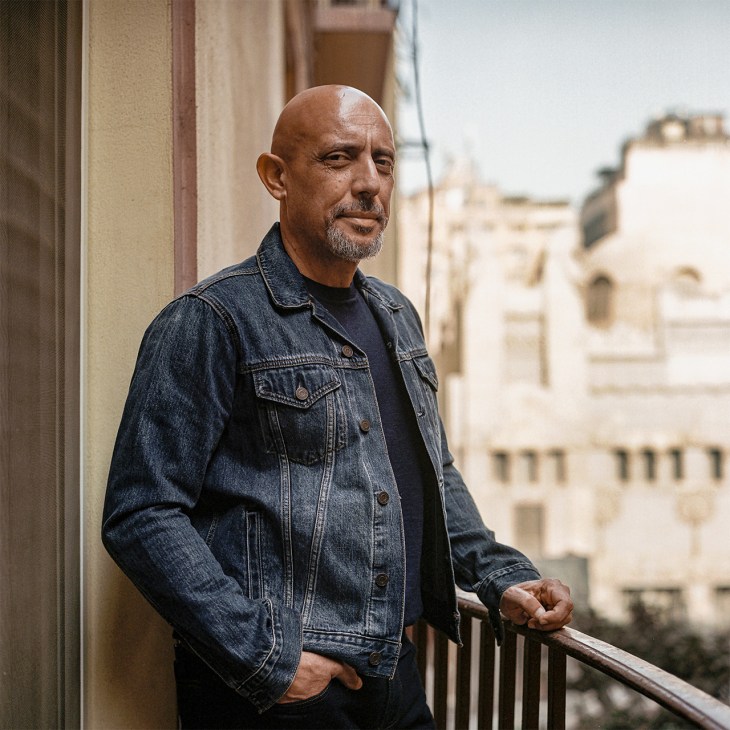
“Downtown is unique,” says the denim-jacketed Shafei as he takes Monocle on a walking tour of some of Al Ismaelia’s properties. It is mid-morning and the air is filled with a cacophony of car horns. A man cycles past, balancing on his head an enormous tray piled high with freshly baked bread. The core of downtown Cairo’s architectural landscape – where crumbling belle époque façades can be spotted alongside later structures that nod to art deco and modernist influences, as well as neo-everything, from pharaonic to Renaissance and Ottoman – dates back to a modernisation drive launched by 19th-century Egyptian ruler Ismail Pasha. Influenced by Haussmann’s Paris, the resulting avenue-lined quarter became an international social and cultural centre of gravity. Numerous films and novels were set in and around the coffee houses, cinemas, theatres and clubs dotting its elegant boulevards.


Since the mid-20th century, however, the character of Cairo’s downtown has been gradually transformed by revolutions, coups and economic crises. For many years, the district was a melancholic version of its former self: dilapidated, dusty and traffic-clogged. Pollution and grime had degraded its formerly grand apartment buildings, mansions and palaces. In 2008, The American University in Cairo – one of the most prestigious academic institutions in the Middle East – relocated its campus to the suburbs, removing the buzz of student life from the area. Government ministries, company headquarters and banks also migrated to the city’s outskirts. When construction of the recently opened Grand Egyptian Museum began in Giza, it seemed as though the older, salmon-pink neoclassical national museum on Tahrir Square was – like wust al-balad more generally – fading into the past. Today traces of the neighbourhood’s cosmopolitan heyday remain in the names on many of its shopfronts, including Stephenson & Co Chemists, the Anglo-Eastern Pharmacy, the Greek Club, and the Lehnert and Landrock bookshop.
As we cross downtown with Shafei, ducking through alleyways and skipping across rooftops, he explains that though Al Ismaelia’s vision for the area respects its extraordinary heritage, it is not nostalgic. “We want to make this a place where different layers of contemporary Egyptian identity are celebrated – a place where all parts of society feel comfortable,” he says. Nearby, shopfronts featuring mannequins dressed in skimpy lingerie contrast with others selling Islamic headscarves.
Born and raised in the affluent Dokki neighbourhood on the other side of the Nile, Shafei realised downtown’s potential in 2000 after he attended the groundbreaking Nitaq contemporary arts festival, at which exhibitions and performances took place in neglected buildings and other spaces. He points out several Al Ismaelia buildings as we stroll. The former French consulate is now a four-storey co-working space; an old pension known as La Viennoise has become Mazeej Balad, a hotel with a buzzy rooftop bar and restaurant. The famous Cinema Radio complex, meanwhile, has been lushly restored and now hosts cabaret shows. The adjoining passageway features a sleek espresso bar, a Levantine restaurant and a branch of Diwan, a female-founded shop that revolutionised bookselling in Cairo.
In the maze of narrow streets behind Cinema Radio, Al Ismaelia’s assets include two warehouses renovated for events and exhibitions, and a handful of commercial premises, among them retailers selling vintage clothing and the work of regional designers. Here, Shafei wants to prioritise a “Made in Egypt” sensibility. “We’re interested in Egyptian concepts, brands, designers, thinkers and innovators,” he says.


Al Ismaelia is not the only driver of change in downtown Cairo. Recent legal reforms are bringing decades-old rent-controlled tenancies to an end. This is expected to further open up the district’s property market to both domestic and foreign investors, while potentially pushing out some long-term residents. At the 70-metre-high Immobilia Building, which was the tallest skyscraper in the Middle East and Africa when it was completed in 1940, four apartments have been refurbished and turned into high-end serviced rentals.
Tahrir Square’s past, present and future
Tahrir Square was once the focal point of downtown Cairo. The vast intersection on the Nile side of the neighbourhood was named Tahrir (“liberation” in Arabic) after the end of British rule in the early 1950s. Until recent years, it was the frequent site of protests and celebrations. In January 2011, hundreds of thousands gathered here to demand the departure of the then-president, Hosni Mubarak, who had been in power for almost three decades. Those protests spread beyond the capital and gained such momentum that Mubarak was forced to step down within weeks. It was a key turning point in the Arab Spring as protests and uprisings spread in other parts of the Middle East and North Africa.
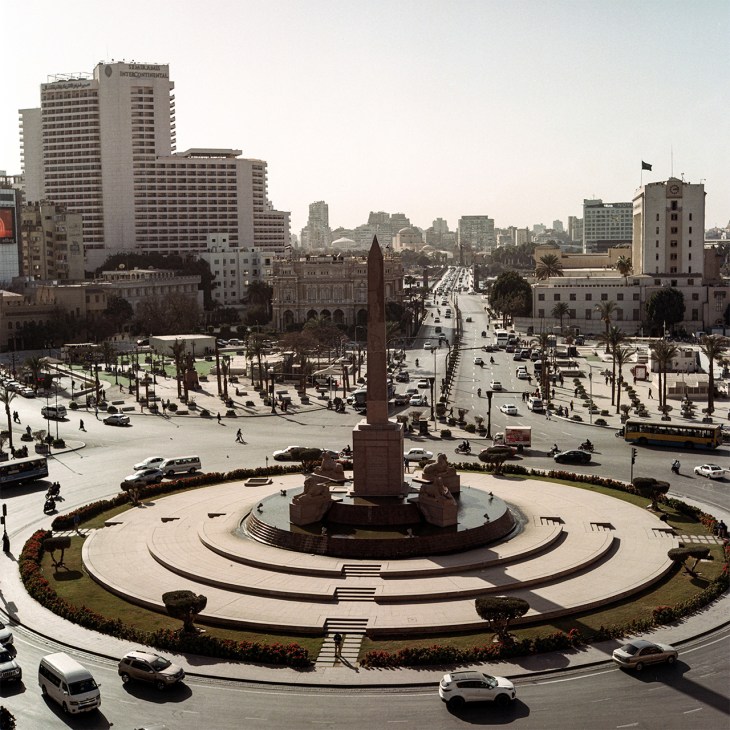
A coup two years later ushered in the military rule of Abdel Fattah el-Sisi. Since then, various laws have effectively banned street demonstrations. Today, Tahrir is heavily policed and a number of surrounding buildings have been demolished. The HQ of the Arab League, built in 1955, is still in the square but the Mogamma, an imposing government building, is being turned into a hotel. Between 2019 and 2020 an obelisk and four sphinxes from a temple in Luxor were relocated here, despite the objections of heritage specialists. The Egyptian authorities seem keen to turn the square into a tourist attraction without political or social significance
US-born journalist Patrick Werr is one of wust al-balad’s handful of longstanding expatriate residents. He first moved to Cairo in the late 1970s, returned in 1990 and has lived in downtown since 1999. He bought his handsome residence, which overlooks an ornate, neo-Mamluk-style former government ministry, in 2007; he also owns two other apartments in the district and manages a third. “So many of the buildings here are masterpieces,” he says. Sitting in his high-ceilinged salon furnished with art deco and Islamic antiques sourced from local shops, Werr sees downtown’s revival as positive and key to preserving its architectural splendour, if managed properly.
Commercial rents are also due to rise significantly, deepening fears of a wider gentrification that could uproot generations-old family businesses, ranging from tailors to barbershops. “Gentrification is a big part of the conversation,” says restaurateur Hourig Mekhtigian, who is part of the team behind the reinvention of the historic redbrick Tamara building, an Al Ismaelia property now known as Tamara Haus that features airy showrooms for Egyptian designers. The in-house menu includes a nod to Mekhtigian’s Armenian heritage. She sees the transformation of downtown as an opportunity for a new generation of Egyptians to showcase their creative talents. “It’s exciting in so many ways but the gentrification question shows that it needs to be sensitively done,” she says.


Others worry about potential investors who have little appreciation for the district’s rich architectural heritage and distinctive social mix. It has long been a place where small business owners share space with artisans, mechanics, bankers, creatives and bawabs (Cairo’s ubiquitous doormen) from Upper Egypt. Unlike many of the city’s newer neighbourhoods, you can walk almost everywhere, even though the pavements are often cracked. Some of Cairo’s best-known dive bars are just steps from the Automobile and Touring Club of Egypt, a members-only institution established in 1924.
Huda Lutfi is a longtime resident and one of Egypt’s leading contemporary artists. She lives just a short walk from Al Ismaelia’s Cinema Radio complex and is wary of the kind of investment that disregards her neighbourhood’s social mix. “If the priority is profit, that will raise prices and people will be forced out as a result,” she tells Monocle in her ninth-floor flat, high above the din of the streets below. She mentions the hip restaurants that have sprung up nearby, considering them incongruous with the long-established metal workshops, shisha bars and traditional coffee stands. “The fabric of this place, the soul of downtown, is changing,” she says. “I’m concerned that we will be left with just another shopping area.”


Filmmaker Lamia Gouda has channelled her passion for wust al-balad into Baladina, a company that offers walking tours exploring its multilayered past. When Monocle meets her at the storied Café Riche, where portraits of Egyptian literary and cinematic stars who once made up its clientele hang on the walls, she shares her conflicted views on what she describes as the “coolification” of downtown. “I dream of a Cairo that’s more than just a polished façade,” she says. “I want a place that remains a living organism. The restoration of our heritage should not come at the cost of the artists and thinkers who have always been its heartbeat.”
A few streets away on Abdel Khalek Tharwat, a busy thoroughfare known for its booksellers, scooters swerve in and out of traffic as Chris Mikaelian takes another order in his crowded premises. His Egyptian-Armenian family has run Reader’s Corner since 1950; it started as a bookshop before becoming one of the city’s most popular picture framers. He has seen this piece of Cairo evolve over decades and remembers a time when it seemed that the area was being abandoned. “People were moving to other places and business was slowing,” he says, between greeting customers. “We saw a generation emerge that didn’t frequent this part of the city. They didn’t know anything about it. That’s changing now and I think it’s a good thing. I love seeing people – whether young Egyptians or foreigners – discovering downtown and appreciating it again.”


Among the newcomers is a younger cohort of Egyptian designers who see wust al-balad as an inspiring district where past and present collide. Close to the Cinema Radio complex, Ramzi Makram-Ebeid points out one of two locations where he is designing shops for Egyptian menswear brands. Every Cairo resident he knows has a formative memory of downtown and all have a different opinion on its transformation. “Some people are understandably critical or concerned about the direction of change, and those conversations are important for responsible urban evolution,” he says. “That said, in my view, it would be a far greater risk to allow these historic structures to deteriorate beyond repair. Once they are lost, they are gone forever.”
Downtown can be a cipher for different types of nostalgia. When director and curator Adham Hafez, who was part of the pioneering downtown art scene of the late 1990s and 2000s, walks around its grid of streets, he summons vivid memories of that era. He also notes addresses connected to long-gone shops that were owned by his great-grandparents. Hafez has lots of ideas on how to maintain the diversity that several new champions of wust al-balad, including Al Ismaelia, say that they want to protect. These include rent caps and a fund that supports local artisans, craftspeople and small business owners so that they can flourish amid the changes. “I would like to see a thriving and truly alive neighbourhood again,” he says.
Back at his office, decorated with old black-and-white photographs of downtown, Shafei says that Al Ismaelia is commissioning an impact study that he hopes will address some of the concerns. “We don’t want to lose the diversity that exists in downtown. I want to see it continue as a place where people from all walks of life can gather.” He adds that wust al-balad has a singular character shaped over many decades that is resilient enough to survive changes in the law or the arrival of companies such as his.
“Downtown has a life of its own and we’re conscious of that,” he says. The push and pull over the future of the area is rooted in Cairo’s history but it also has echoes of similar debates elsewhere. It’s understandable that some people fear that certain aspects of its ongoing transformation risk undermining what made this corner of the Egyptian capital so special to begin with. A balance between continuity and change must be found.


A short walk from Al Ismaelia’s headquarters, El Araby El Araby is carving fat slices of beef behind the counter at Boucherie El Araby, a business that has been in his family for generations. The original signage in Arabic and French gold lettering, and the curved, zinc-and-mahogany cash desk hark back to very different times. A plaque outside declares that Othman Abaza, a prominent mid-century Egyptian actor and director, once lived in the building. “Downtown is indeed changing in many ways,” acknowledges El Araby as he lines up a gleaming joint and slams down his sharp blade. “But some things never change.”
Downtown Cairo checklist
Culture:
The recently opened Grand Egyptian Museum on the city’s outskirts might have grabbed all the headlines but the charmingly old-school Egyptian Museum on Tahrir Square still deserves a visit. The oldest archaeological museum in the Middle East, it houses 170,000 artefacts.
Drink:
Order a refreshing karkadé – a popular Egyptian drink made from hibiscus flowers and served hot in winter or with ice in summer – in Café Riche, where writers, actors and intellectuals have swapped gossip and debated the issues of the day for more than a century.
Shop:
Choose from a wide selection of Egyptian literature in translation – from works by Nobel laureate Naguib Mahfouz to those by more contemporary novelists – at Diwan bookshop in the Cinema Radio complex.
Eat:
Drop into El Horreya Cafe or Estoril, both downtown institutions, for an ice-cold beer, before checking out the Egyptian-fusion rooftop restaurant at Mazeej Balad.
Shop:
Pick up a souvenir at the downtown branch of Markaz, an interior-design shop that works with artisans and craftspeople across Egypt.