Comfort, style and brand: An airline’s uniform is so much more than a consistent look
With its connotations of sameness and monotony, the word “uniform” isn’t often used as a compliment. But pay close attention to tailoring and fit – as well as the needs of the people who will actually wear them – and airline uniforms can do so much more than merely differentiate employees from guests. They can frame a first impression, serve as a salute at a country’s borders and evoke a sense of theatre, pride and style.
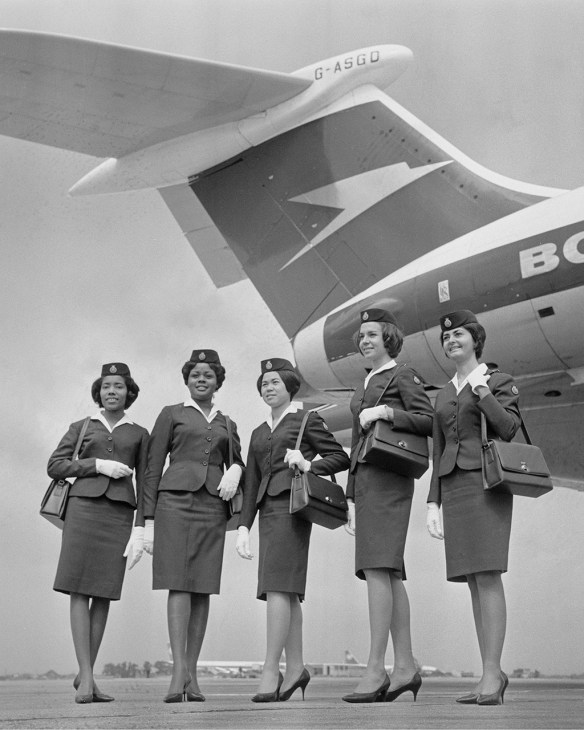
Following the Second World War, France took the lead in bringing fashion sensibilities into the realm of branding. Tasked with refreshing Air France’s image, Marc Bohan, who was then at Dior, delivered robust, classical silhouettes in modern fabrics.
In the late 1960s, Spanish couturier Cristóbal Balenciaga took over, with pastel, double-breasted looks. Across the Atlantic, Emilio Pucci outfitted the staff at US carrier Braniff in playful block colours and transparent “space bubble” helmets. Meanwhile, Greece’s Olympic Airways turned to Pierre Cardin, whose tailoring gave its crew a look straight out of an imagined future.
By 2000, utility was king and overtly gendered styles fell out of favour. For Air France’s most recent overhaul in 2005, Christian Lacroix produced pared-back, navy and red-accented ensembles that prioritised ease and practicality (he designed 100 mix-and-match pieces).
The travel sector’s interest in fashion is now piquing once again. New carrier Riyadh Air engaged Ashi Studio for retro uniforms featuring boxy shoulders, cinched waists and pillbox hats; they made their debut in June 2024 at Paris Haute Couture Week.
In summer 2025, London-based, New Zealand-born designer Emilia Wickstead unveiled her designs for Air New Zealand’s 6,000 staff, created in collaboration with ta moko artist Te Rangitu Netana. Violet and navy blouses and dresses are adorned with hand-painted prints of kowhai blossoms, while ground-crew uniforms have a traditional cross-stitch pattern representing stars and constellations.
Australian designer Rebecca Vallance is creating new kit for Qantas’s 17,500 employees, to be unveiled in 2027. “They need to allow for ducking through galley curtains and corralling travellers, constant movements and 16-hour flights, all while looking impeccable,” she says. It’s all about aiming high.
Comment
When it comes to air travel, the get-up of the crew might seem like a minor detail – but done well, it can set the tone for a journey and promote the carrier’s nation.
Read next: The five top hospitality uniforms spotted on our editors’ travels