Aviation in times of conflict: The CEO of Dubai Airports reflects on operating through missile attacks and winning back passengers
Paul Griffiths believes that the Gulf’s extraordinary aviation setback will be temporary.
Dubai’s location between Europe, Asia and Africa has made it a popular hub for international air traffic. This year, however, the very geography that fuelled its rise became its Achilles heel.
In March 2026, missile and drone strikes rattled the UAE, grounding flights, prompting government warnings and sending foreign airlines scrambling for safer skies. Dubai International Airport saw passenger numbers plunge to 31.5 million in the first half of 2026 – a steep 31.3 per cent drop from the previous year. Yet hope is now returning, with traffic growing from 3.5 million in April to 5 million by June.
But will travellers who found new routes through Seoul, Singapore or Istanbul continue to come back? Asian hubs have benefitted from a pause in Dubai air traffic and for a city whose airport powers its economy, permanently breaking the habit of transit is a far greater threat than a temporary dip in numbers.
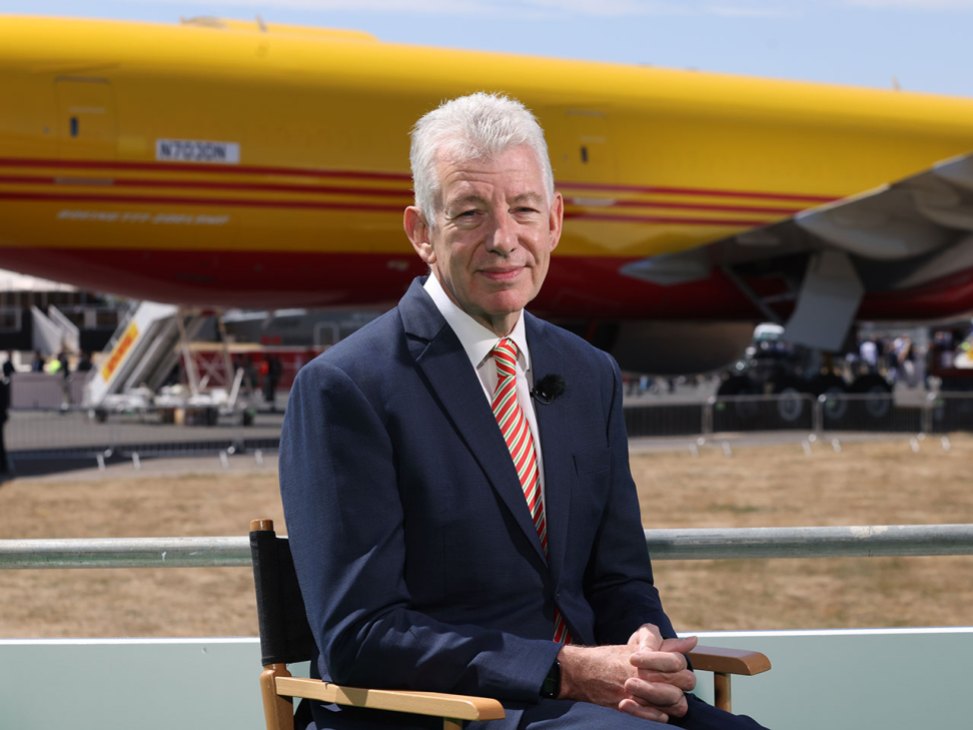
Paul Griffiths, CEO of Dubai Airports – the operator managing both Dubai International Airport (DXB) and Al Maktoum International (DWC) – remains optimistic. When Monocle sat down with him, he spoke about ballistic alerts, emergency drills and refuelling solutions, arguing that Dubai’s aviation engine was already roaring back to life.
This conversation can be listened to on The Globalist from Monocle Radio.
Was this the most difficult period you have faced running Dubai Airports?
How many CEOs have you interviewed who have been subjected to direct ballistic attacks on their infrastructure? There was nothing in my studies that said, “In the case of a ballistic missile attack, this is how you deal with it.” It was extraordinary. Fortunately, the impact on our infrastructure was slight but it tested the resilience and professionalism of our people.
Where were you when the conflict began?
I was sitting in my garden having coffee with friends. The British ambassador was with me and suddenly his phone started going off; so did mine. He went into one room to take calls from the prime minister and foreign secretary, and I went into another to find out what was happening. I then got to the airport operations control centre.
The temptation as a leader is to rush in and take charge. But the better thing [to do] was to support [the people] making the real-time decisions.
Can you actually prepare an airport for missile attacks?
We had something like 111 alerts for ballistic activity. The liaison among the military, regulators and the government was incredibly quick. We would receive an alert, take the appropriate action to make sure that everyone was safe and then, minutes later, go back to normal.
Even when we couldn’t fuel aircraft, we developed a “splash and dash” contingency whereby aircraft took off from DXB, landed at DWC, refuelled and then continued their journeys. A contingency plan emerged from each incident, allowing us to keep the operation running.
Figures from the first half of 2026 show just how significant the disruption was. How quickly can you recover?
We started the year with our busiest-ever month, with 8.7 million people. During March and April we still moved six million passengers on 32,000 flights.
Traffic is now back to about 80 per cent of where we were last year, and that is increasing month to month. Emirates and Flydubai are back in the 90 per cent range compared to 2025. I’m confident that we should be back to 100 per cent of our operation by about the end of the year.
Passengers who used to connect through Dubai have spent months travelling through Asia instead. How do you win them back?
If you look at the services that have resumed, their load factors are incredibly high. People really missed their routines.
We have about 56 airlines serving 236 airports in 100 countries. People have very short memories. If you’ve dealt with a crisis professionally and given nobody reason to doubt the integrity or quality of your operation, people will return for more.
Some European airlines still haven’t returned. Does that frustrate you?
During the crisis, many governments advised against travel to the UAE and in some cases that advice has not yet been corrected. That affects passengers getting travel insurance and it can affect airlines getting cover too.
But if I were running one of those airlines ahead of the summer [in the northern hemisphere], I might have taken aircraft out of the Gulf and redeployed them to Spain, Greece and Italy, where I knew I could sell the seats with certainty. That was quite a wise thing to have done.
Air France has recommenced services and its load factors have been strong immediately. When the summer ends, I’m sure we’ll see more of that capacity return to the Gulf.
You hoped that DXB would pass 100 million passengers this year. Is 2027 now the target?
If we continue on the trajectory [of recovery] that we’re on, it’s just a question of time. When that moment comes, it will be a very sweet one.
Has any of this changed your long-term plans for Dubai World Central?
Absolutely not. One of the biggest mistakes people make is confusing long-term strategic objectives with short-term hiccups.
I asked my chairman whether the conflict created any concern about where we were heading. It was the shortest conversation: the answer was an absolute ‘no’. We’ve put 17,000 concrete piles into the ground and moved 45 million cubic metres of earth. The 2032 timeline for building the world’s largest airport remains.
Hear more from Paul Griffiths on The Globalist from Monocle Radio.
Further reading:
– As regional conflict takes its toll, Dubai’s hoteliers are responding strategically
– Summer in Dubai isn’t for everyone – but that’s the beauty of it