On the up: ITA Airways joins the Star Alliance but will growth dilute its Italian identity?
The small Italian airline is readying itself for turbulence in the industry by joining the global aviation network, providing the carrier with more route options and padding against market fluctuations.
Six years after it was formed out of the ashes of a bankrupt Alitalia, ITA Airways (ITA) commemorated its official entry into the Star Alliance network at a recent gala in Rome. From the vaulted porticos of the Villa Miani, the Italian carrier marked the occasion with lighting coloured in the brand’s royal blue, live music and a team of 23 flight attendants in uniform representing some of the global network’s roster. Also on the itinerary were a number of speeches delivered by Germans – with a few attempts at Italian to varying degrees of success.
The presentation came on the heels of a challenging few years for the airline as it struggled to find its place in the market, culminating in Lufthansa Group’s purchase of a 41 per cent stake in the company last year. At the same time, former Air Dolomiti CEO (and Lufthansa pilot) Joerg Eberhart was appointed CEO of ITA.
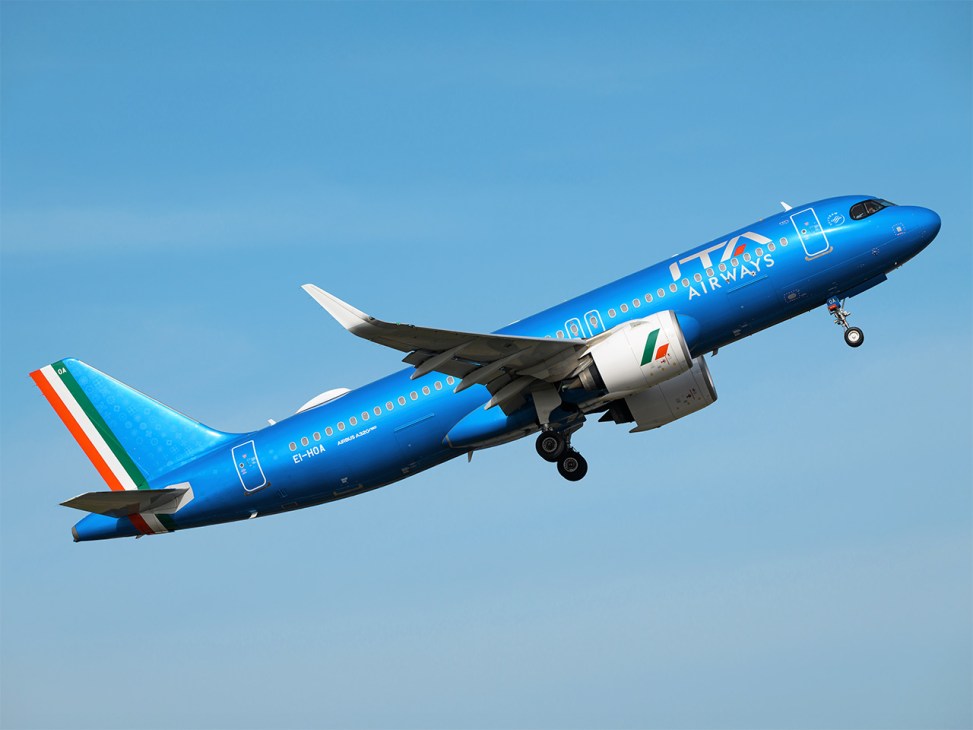
The German-Italian combination seems ripe for cultural clashes as far as branding goes but so far the effects have been positive. ITA’s fleet and network has been gradually growing and in 2025 the airline reported its first-ever full-year net profit of €209m. Days prior to the gala, ITA relaunched its Heathrow to Rome service, after having left the market two years ago partly due to the high price of slots at the UK airport. ITA says that with the Star Alliance link-up and Lufthansa Group membership, passengers stand to benefit.
“Our airline being now part of Star Alliance and Lufthansa Group opens so much more of the world to [our customers],” says Eberhart. Passengers will have access to more loyalty perks and 1,000-plus lounges worldwide. “And with us in the family, there’s more of Italy to be explored for the other airlines’ loyal customers,” he adds.
While recent success has been bolstered by some years of a healthy airline industry, the looming effects of the conflicts in the Middle East could dampen ITA’s momentum. This is the sort of moment where being part of a larger group, rather than an independent airline based out of a second-tier European market, can help weather any turbulence. The German carrier group can mitigate risks by shifting assets, co-ordinating schedules and streamlining the overall network according to where demand is rising or falling, or where fuel availability becomes problematic. ITA taking on two slots at Heathrow from Lufthansa is one good example. And the added Star Alliance integration will mean streamlined IT and processes, plus better chances to fill airplanes as partner airlines feed passengers to each other.
With regards to brand essence, ITA is keen to maintain its image as Italy’s carrier, even as it integrates into the middle-European Lufthansa Group. That means focusing on Italian cuisine and hospitality, and partnering exclusively with Italian labels for onboard items such as amenity kits by Italian wellness brand QC Terme and uniforms by Brunello Cucinelli. And if the gestures toward Italian food and culture come alongside increased reliability and a more streamlined passenger experience, that’s sure to be a win for both the company and its customers.
As we enter a period where carrier networks have begun to shrink, with flights cancelled and capacity constrained, it’s no small thing for passengers to have access to wider groups and alliance networks to reach their desired destinations. At the end of the gala, guests were handed traditional colomba di pasqua Easter cakes in ITA-blue boxes – a move signalling that even while ITA aims to leverage its new global partnership, it intends to hold fast to its Italian identity.