New York City aims to lead a revival of US airports
New York has long had an ability to turn grit into glamour. But in recent decades, few have bothered to pretend that the city’s two commercial airports – John F Kennedy International and LaGuardia – are anything but unappealing.
In 2017 the state’s advisory panel tactfully described JFK as, “not what the airport passengers expect when arriving in one of the greatest cities in the world”. As for LaGuardia, in 2018 the Airport Service Quality Award (ASQA) ranked it as the worst in North America. Since then, two of LaGuardia’s terminals have been extensively renovated; they were reopened in 2022. In a stunning reversal, the airport topped its category in the ASQA rankings in both 2023 and 2024.
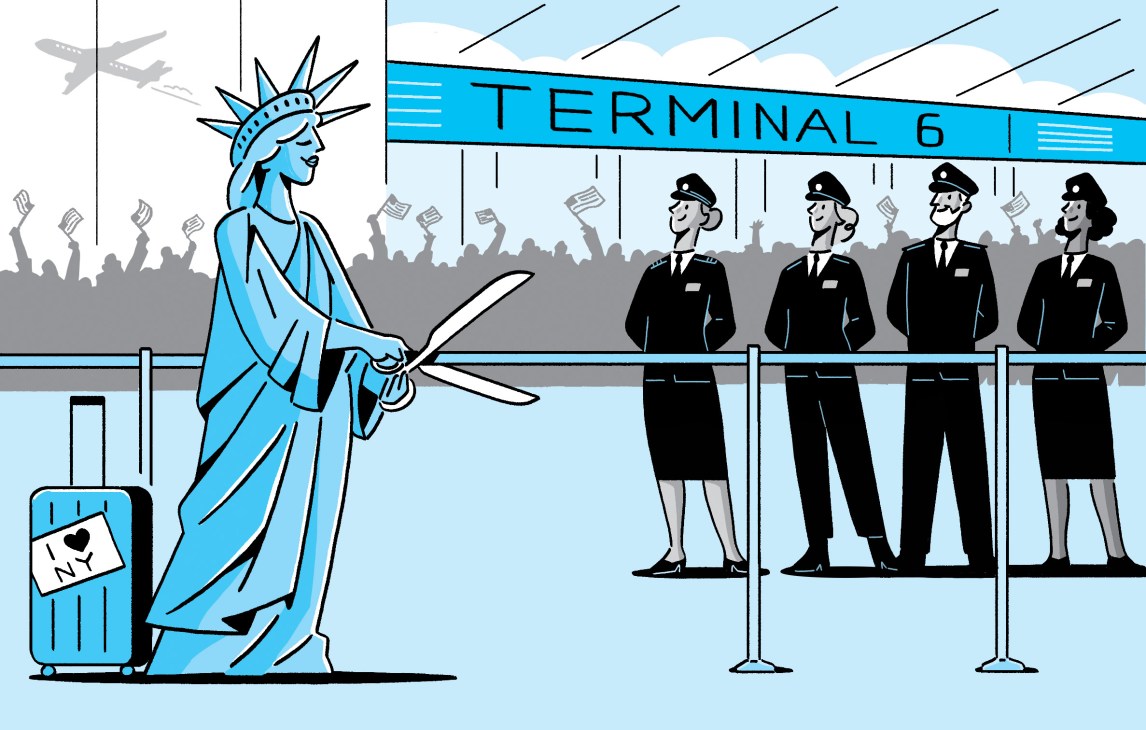
At $8bn (€7bn), LaGuardia’s redevelopment was one of the most expensive airport projects in US history. But it is dwarfed in cost and scale by the ongoing redevelopment of JFK, which is focused on two largely independent terminal refurbishments. A new Terminal 1 will cater exclusively to international passengers, while a redeveloped Terminal 6 will serve domestic and international routes.
Both projects are being delivered through public-private partnerships, while the road network around the airport is being redeveloped primarily with public funds. In total, the works are expected to cost $19bn (€16.5bn). Combining public and private money to fund airport projects has been normal in much of the world since the late 1980s but it is relatively uncommon in the US, where most airports are publicly owned.
The Terminal 1 redevelopment involves a consortium whose principal backer is Spanish company Ferrovial Airports. With a price tag of $9.5bn (€8.3bn), it is the largest publicprivate partnership ever undertaken in US aviation. The Terminal 6 project, meanwhile, is being overseen by JFK Millennium Partners and will sit next to one of the most architecturally striking terminal buildings in the world: the TWA Flight Center by Finnish-American architect Eero Saarinen.
For Barry Yanku of architecture firm Corgan, the project’s lead designer, the challenge is to create a sense of civic grandeur, as Saarinen managed, while meeting the technical requirements of a modern terminal. “This is our front door here in New York,” he says. There is hope that if the JFK project is successful, it will prove the effectiveness of public-private partnerships as a way of funding airports and provide inspiration for other long-maligned American hubs.
Read next: Why Donald Trump’s ‘beautiful architecture’ mandate could make Washington look worse