Tales of existential danger from tech bosses have a provenance problem. What if the real risk is the AI bubble bursting?
Tech titans warn us of an AI apocalypse. But behind the sci-fi scare tactics lies a technology struggling to prove its worth. It’s about time we were told how AI can actually benefit us.
There’s something fishy about the warnings that AI can and might soon obliterate humanity. Namely, some of the most powerful CEOs cautioning us about the dire situation are also the ones creating and selling the technology. The warnings – reiterated yesterday in Anthropic’s leaked preparations to go public – might be justified but they’re also economically handy for the people behind big tech’s biggest bet yet. The companies crowing about the need for regulation are, lucky us, also best placed to sell the solutions.
This isn’t the first time that anxiety and uncertainty have been deployed by people who are flogging AI. Think of the narrative pushing every hairdresser, handyman and CEO into adopting the technology or risk being left behind and jobless in an unrecognisable world. Or the long-running suggestion that any tiny speed bump in technological progress might allow some dreaded Chinese company to overtake a US one in the “race” (note the urgent terms employed).
But here’s a question: the race to what? US geopolitical advantage? Making money for investors? Benefiting society? These aren’t the same aim, nor have they been meaningfully unpacked. Many large language models still produce woefully mixed results. Anyone who’s used the technology will recognise that, for all the vast world-altering potential, it’s still clumsy, error-prone and of dubious utility.
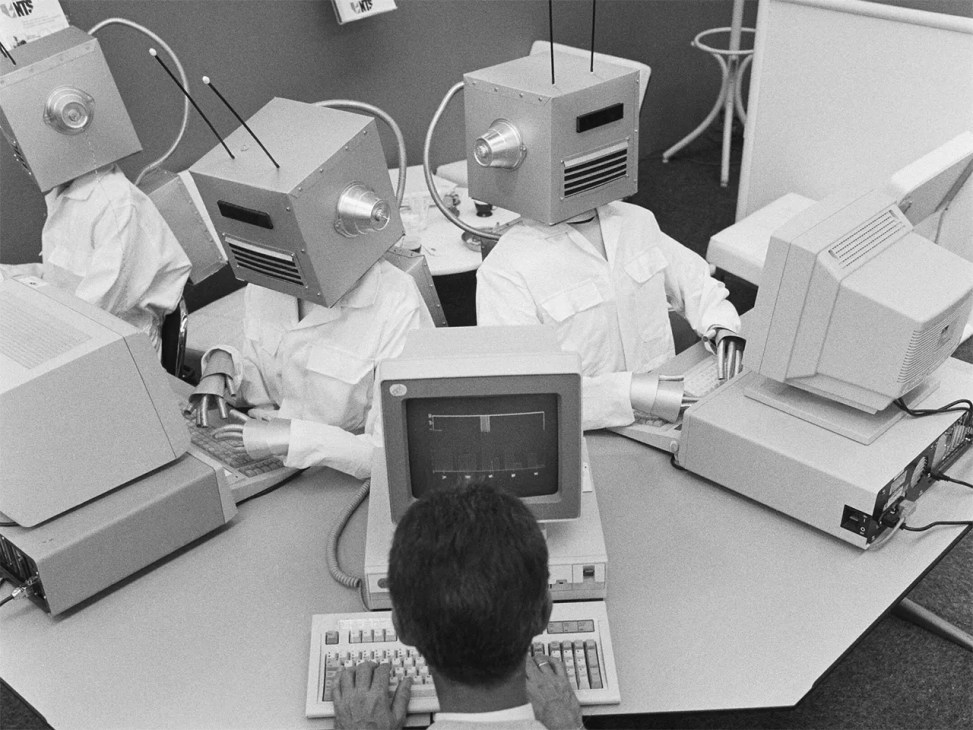
Despite the provenance problem of the warnings, AI’s dangers are all too real. A cyberattack could destabilise critical infrastructure, rogue bots could wreak havoc on the economy or healthcare systems; the perilous permutations are endless. But that’s exactly why now is the moment to think about how the technology can be more usefully applied. The public, investors and governments could do with some good news.
We all agree that AI could change the course of human history for better or worse. The problem is that there are scant examples of how. If widespread political, private and public adoption is the goal, companies urgently need to move beyond the sci-fi tropes of global destruction and set out some advantages. Or at least try. What’s in it for us, exactly? This will take both computing and creativity.
The realistic short-term danger for you and me might not be robots running riot but the AI companies overpromising. For all of this future-gazing, it’s starting to feel a little like pre-crash 2007 or the last months of the dot-com bubble. Without some sense of an upside to where we’re heading, those long-hoped-for gains, profits and sunlit uplands might yet date as badly as a stroll in the metaverse or that shiny new NFT.
If AI succeeds in unlocking untold efficiency – and, fingers crossed, humanity survives – then great. Investors will rejoice too. There might even be trickle-down economic benefits for some parts of the world amid the upheaval. But if the gamble doesn’t pay off, confidence will wane and the AI bubble will burst; and you and I (and our already heavily indebted governments and shaky economies) will pay the price. Perhaps we’ll need to find a bright side to the conundrum: it’s not the end of the world, after all.
Josh Fehnert is Monocle’s editor. For more analysis and opinions, subscribe today.