Taiwan is putting itself back on the global art stage and the world is taking notice
Despite tensions with a neighbouring power that refuses to recognise its autonomy, Taiwan has a cultural scene all its own. A new wave of galleries, museums and collectors is affirming the island’s identity.
A diplomatic row erupted at this year’s Gwangju Biennale in South Korea. Despite its original billing, the “Taiwan Pavilion” was renamed the “NTMOFA Pavilion” – after the National Taiwan Museum of Fine Arts – on promotional posters made by the event. The move sparked protests from artists, curators and Taiwan’s culture ministry, which called it an act of political censorship. When organisers restored the original name, China withdrew from the biennale. Beijing’s embassy in Seoul stated that it went against the One China principle.
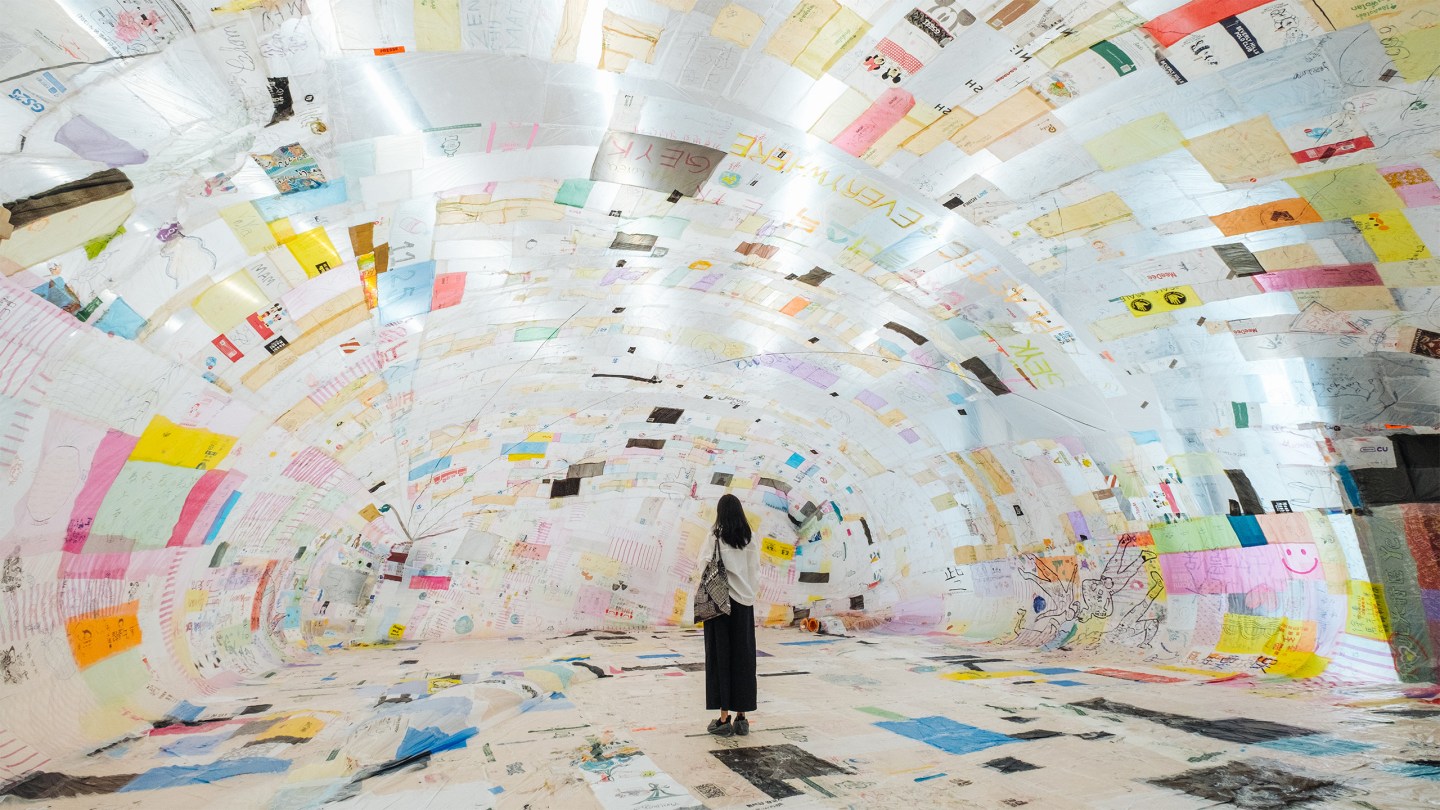
This wasn’t the first time that Taiwan had to fight for its name during a major art event. In 2003 geopolitics stripped it of national pavilion status at the Venice Biennale. At the São Paulo Art Biennial in 2002, organisers scrubbed “Taiwan” from artist Chien-Chi Chang’s nameplate after China threatened to withdraw from the event. In response, six countries gave letters from their own signs to spell out the T-word on the artist’s wall. Taiwan’s contemporary-art scene often draws attention for these disputes but the republic is starting to build a reputation that goes beyond headline spats. New cultural policies, a generational handover in patronage and fresh capital are converging to put the island’s art scene on the global map.


Spurred by the 2015 Museum Act, which established frameworks for public funding and regional museum networks, ambitious art projects are emerging across Taiwan, alongside a wave of urban development. In the north, the New Taipei City Art Museum anchors the Sanying Cultural Corridor, served by a recently launched train line that winds past mountain river valleys. In the northwest, the Taoyuan Museum of Fine Arts is opening in phases across three sites. Its Hengshan Calligraphy Art Center and Children’s Art Center are already up and running, building momentum for the 2028 debut of the main museum building, designed by Pritzker Architecture Prize winner Riken Yamamoto and Taiwan’s Joe Shih.
Further south, Taichung is showing off its own Pritzker pedigree. Sanaa’s Green Museumbrary (more elegant in Chinese, where the words “green”, “museum” and “library” combine to mean “a beautiful picture”) opened in late 2025, bringing together the Taichung Art Museum and Taichung Public Library in a verdant park setting. In a couple of years, Frank Gehry’s China Medical University Museum of Fine Arts will also arrive in Taichung in metallic resplendence, promising the city its own Guggenheim effect.
These buildings aren’t just showpieces. “Many of these new museums are working to look into their own regional art history, building up local cultural assets,” says Yi-Hsin Lai, the director of the Taichung Art Museum. However, their sights are equally set on global exchange. Horizon Ablaze, one of her museum’s summer shows, was curated by teams from Taiwan, the Philippines and Panama.


On a weekday at the Museumbrary, the building’s porous, silver-white mesh lets in light as readily as people. Students and office workers dropping off books end up in the same café queue as families who stroll in from the surrounding parkland. At the New Taipei City Art Museum, meanwhile, hikers straight off the trail come to rest in its shaded plazas, before wandering into the galleries. These places are not only drawing in a seasoned art crowd but becoming part of civic life and bringing in new audiences.
Running parallel to this infrastructure boom is a surge in private capital. Taiwan’s art market has long been powered by family wealth: those with industrial, shipping and property fortunes known for keeping blue-chip works behind closed doors. “Mainstream collecting power still sits with patrons who are about 50 years old,” says Viola Yao, the art director of commercial fair Art Taipei. “But the 30-to-45 age group is steadily growing, many representing second-or third-generation wealth.”
Taiwan’s new money comes from technology. Claudia Chen, the chair of the Taiwan Art Gallery Association and a co-founder of Liang Gallery, notes that some 30 per cent of Art Taipei buyers consist of foreign technology executives based in the city, with some semiconductor and supply-chain founders spending tens of millions of Taiwan dollars on a single artwork.
These buyers have helped new art fairs in the region to take off. “Since Frieze Seoul launched in 2022, it has brought a flood of Taiwanese collectors to the city,” says Chen. “Taiwanese collectors are famous for their strong buying power. Once South Korean galleries experienced this, it gave them huge confidence in the Taiwan market. There were only nine South Korean galleries participating in Art Taipei in 2023. We have 25 this year.”
It’s not just the financial clout of Taiwanese patrons that’s leaving an impression. “I work across Asia and I meet Taiwanese collectors everywhere,” says Minju Kweon, Frieze Seoul’s VIP consultant. “They are young and very serious. They go everywhere – fairs, museums, galleries – to learn and experience things first hand. It’s inspiring for us art professionals to see.” Globally connected and studious, these new collectors do not just amass art. They build galleries and museums, commission works, embrace experimental mediums and stage exhibitions and talks.
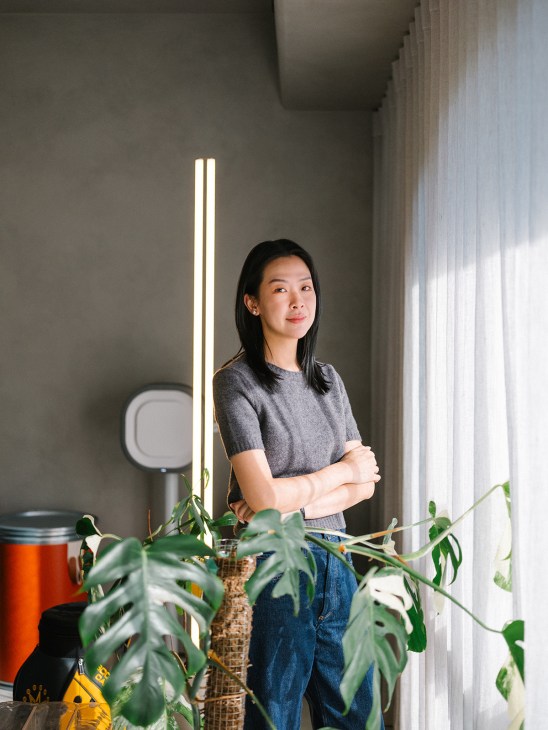
“As a new generation of sophisticated collectors emerges, we’re seeing a growing appreciation for conceptual rigour over purely object-based aesthetics,” says Shelly Wu, who founded TKG+ in 2009 as an experimental counterpart to the gallery of her mother, Tina Keng. TKG+ champions moving-image art, a medium that draws from Taiwan’s technology infrastructure and cinematic legacy. “Independent project spaces here act as vital research hubs, offering artists complete freedom for experimentation and unfiltered discourse,” says Wu.
In the southern port city of Kaohsiung, Yaman Shao and her father opened Alien Art Centre in 2018. They chose to restore a disused military hostel rather than build something new and kept traces of the site’s Cold War past. Hospitality is the Shaos’ family trade, with The Amnis hotel and the Yuimom Residence to their name. Reflecting the city in which it’s based, Alien is a relaxed place to wander. The corridors are airy and free of stuffiness, though the programming is serious. James Turrell’s light installation “Corinth Canal” is a permanent centrepiece here.


“I see Alien Art Centre as a platform to archive our times,” says Shao. In 2021, at the height of the NFT frenzy, she looked into virtual art and emerged from her research with an optical wall sculpture by Italian artist Getulio Alviani instead (no NFTs involved). Her explorations of digital art’s roots in optical and kinetic art movements resulted in Alien staging Alviani’s first solo show in East Asia. Shao, who is keen to bring art out of galleries to be appreciated in everyday life, adorns herself with Japanese artist Jiro Kamata’s wearable glass-lens pieces. Art also permeates the family’s properties. One of its bars serves a JT red & yellow, a cocktail that renders Turrell’s light and colour fields in a glass.
In Taipei’s post-industrial Neihu district, Vicky Chen, the founder of Tao Art, tasked architect Jun Aoki to transform a nondescript office unit into an intimate salon. Beyond the gallery rooms are a tearoom and a living room showing a rotating selection of Chen’s father’s antiques, alongside pieces from her own collection. She trained at New York’s Parsons School of Design and her programming moves between disciplines. When we visit, US painter Robert Rauschenberg’s mixed-media works hang in conversation with pieces by Taiwan-born designer Jason Wu.
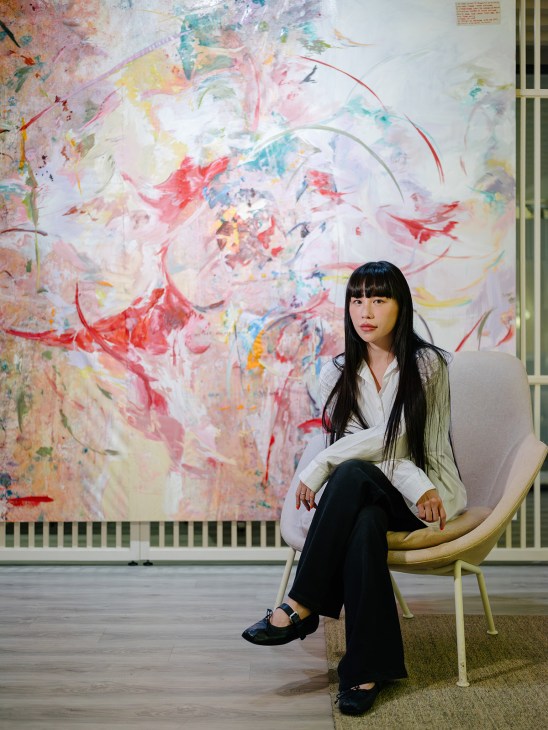
In 2025, in tandem with a presentation at the Asia University Museum of Modern Art in Taichung, Tao Art staged a show of works by Japanese artist Tatsuo Miyajima, known for his LED counters that cycle the numbers one to nine. Miyajima said that showing his installations at both venues at once let each do what the other couldn’t: the gallery helped to express his core philosophy, while the museum venue translated the ideas for a broader public.
Like many of her peers, Chen is a patron rather than just a collector. In 2023 she invited French conceptual artist Laurent Grasso to Taiwan for his first solo show here and backed the work that followed later that year: the film Orchid Island, which was shot off Taiwan’s coast. “He took Orchid Island to Paris, New York, Tokyo and Daejeon,” says Chen. “This is meaningful to me because we introduced him to Taiwan and he introduced Taiwan to the world.”
In 2002 it took six other countries to spell Taiwan’s name on a wall in São Paolo. Now the island’s own art scene is putting that name on everyone’s lips.
Address book
Visiting Taiwan? Here are the cultural spots not to miss.
Alien Art Centre
Kaohsiung
There’s no rush at this leafy sanctuary. People come with time to sit through the two-and-a-half-hour light-and-colour sequence of James Turrell’s installation “Corinth Canal”.
Taichung Art Museum at Green Museumbrary
Taichung
A must visit for art lovers, design pilgrims and bibliophiles alike. The museum shop is run by bookshop-cum-gallery Pon Ding and the library has a foreign-language section.
New Taipei City Art Museum
New Taipei City
Hike, cycle or take the new Sanying train (with cars conceptualised as mobile art museums) to get here. Make time for a stroll in the sculpture park.
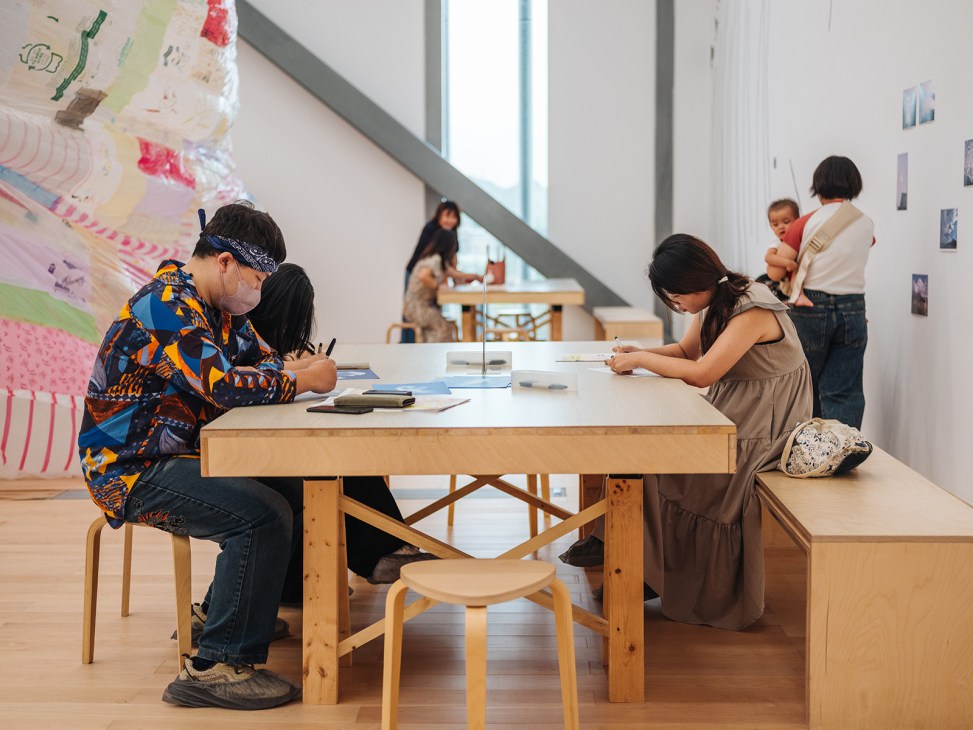
Tao Art
Taipei
Japanese artist Tatsuo Miyajima’s number installation in the tearoom window gives the city a digital pulse.
Taoyuan Museum of Fine Arts
Taoyuan
The first parts of this new complex to open, Hengshan Calligraphy Art Center and Children’s Art Center, are served by the airport MRT line and high-speed rail.
TKG+ Gallery
Taipei
Set in a basement, TKG+ gives space to experimental art, showing video, photography and new media artworks from Taiwan and across Asia.