‘Don’t get too friendly with the wine waiter at lunch’ and 14 other public-speaking tips
If you have a speech to give or a presentation to make, you might want to consult these hard-won pointers.
The low mark was Chengdu, 2019. Monocle was in town to host a conference about making better cities. It was a great event, well, until the incident.
Over the years, I have learned to enjoy being on stage moderating talks, interviewing interesting people. And, with practice, I have discovered a few tricks to keep my nerves in check and panellists feeling that they have been heard.
In Chengdu I remember feeling rather happy with myself as I prepared to wrap my final panel, just pausing to take a couple of questions from the audience before exiting. I scanned the room for raised hands and, several rows back, spotted someone waving. “Can we get the mic to the gentleman in the black coat,” I said, not realising the calamity that was about to hit.
The audience turned to see who the questioner was and, along with me, discovered as soon as they began to ask their question that this was not a man but a woman. A Chinese woman with a 1930s-style, slick, gentleman’s-style haircut. Think of a Chengdu Poirot. I mumbled something about forgetting my glasses but I was too far down the hole to hope for any escape.
Later, at the cocktail reception, I scanned the room to position myself as far away as possible from where the woman who had befuddled my gender radar was standing. But then, out of the corner of my eye, I saw her start weaving through the crowd like a shark (a very nice lady shark). And there she was in front of me. “So, you think I look like a man?” she said. I began to splutter out an apology and she just started laughing.
“I dress like a man, so people make this mistake every day,” she said smiling. It turned out she worked for the government and we ended up having an interesting conversation, exchanged cards even.
After this you might be sceptical about taking any advice from me on public speaking, running a panel or being a moderator but even this incident has helped to shape my thoughts on the topic. Here are 15 things I have learned (and as you can see, not always the easy way).
1.
Before an event, especially in an auditorium you have never been to, insist on seeing the stage and get up there while the theatre or venue is empty. What will this feel like?
2.
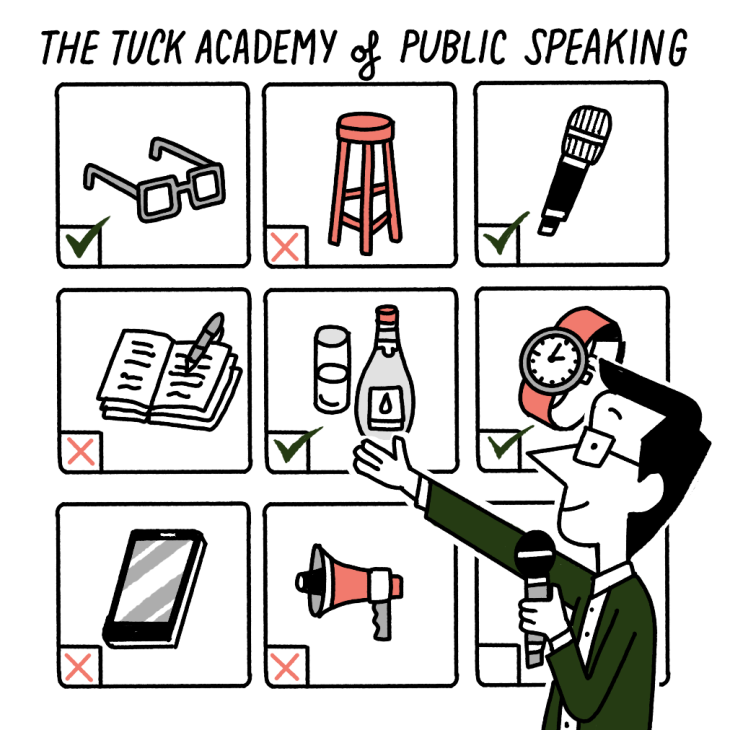
Learn over time how you like to be mic-ed up. Madonna-style headsets and lapel mics will leave your hands free but my preference is for a hand-held mic. It’s comforting having a prop and you are more in charge.
3.
Seating. I am happy to do a fireside chat in a cosy armchair – it works for intimacy, the unfolding of personal stories. Bar stools are OK if you work in tech. Or are in a bar. I also like standing. The energy level rises. You can walk the stage, look at the audience and keep a whole room engaged.
4.
Notes. If you can go note naked, do. Plot out the arc of your conversation, your talk, in advance. Then memorise key words that will trigger a series of questions, thoughts. Sometimes I will have some notes in my pocket, an insurance policy, but you will soon learn to leave them untouched.
5.
Nerves are good, embrace them. The jitteriness you feel before you go on stage is just adrenaline. Think of it as the body’s way of making you sharp, alert.
6.
Oh and feel free to take a second. Get to the lectern, find your seat and then breathe. Wait until you feel in control. Then start.
7.
Yes, you will need a glass of water to hand. Dry mouth, pause, drink, restart.
8.
If your session is late in the day, don’t get too friendly with the wine waiter at lunch. Or the buffet bonanza. It will slow your thoughts down.
9.
The audience is not your enemy (well, not usually). People buy tickets to talks and give up their time to hear you speak because they are interested. People want to have a good time. Remember that.
10.
If you are interviewing someone or running a panel, make sure that you listen to the answers people give. It allows the conversation to have surprising turns. Don’t follow an inflexible script.
11.
Be funny. Be moved. Be engaged.
12.
Keep your questions crisp, sharp and to the point. “How did you feel?” “Was that a mistake?”
13.
Keep to time. You might think this is the best debate or discussion ever but people want coffee, desperately need a wee. If it’s billed at 30 minutes, stop on the dot.
14.
Time will fly. Use it wisely. And sometimes that includes leaving time for a conclusion. A good moderator can pull together the ideas generated by a big panel in a mental goodie bag for the audience to depart with.
15.
Take questions. But make sure you wear your glasses.
To read more from Andrew Tuck, click here.