Lisbon’s Gulbenkian Museum reopens after renovation, with its original vision restored
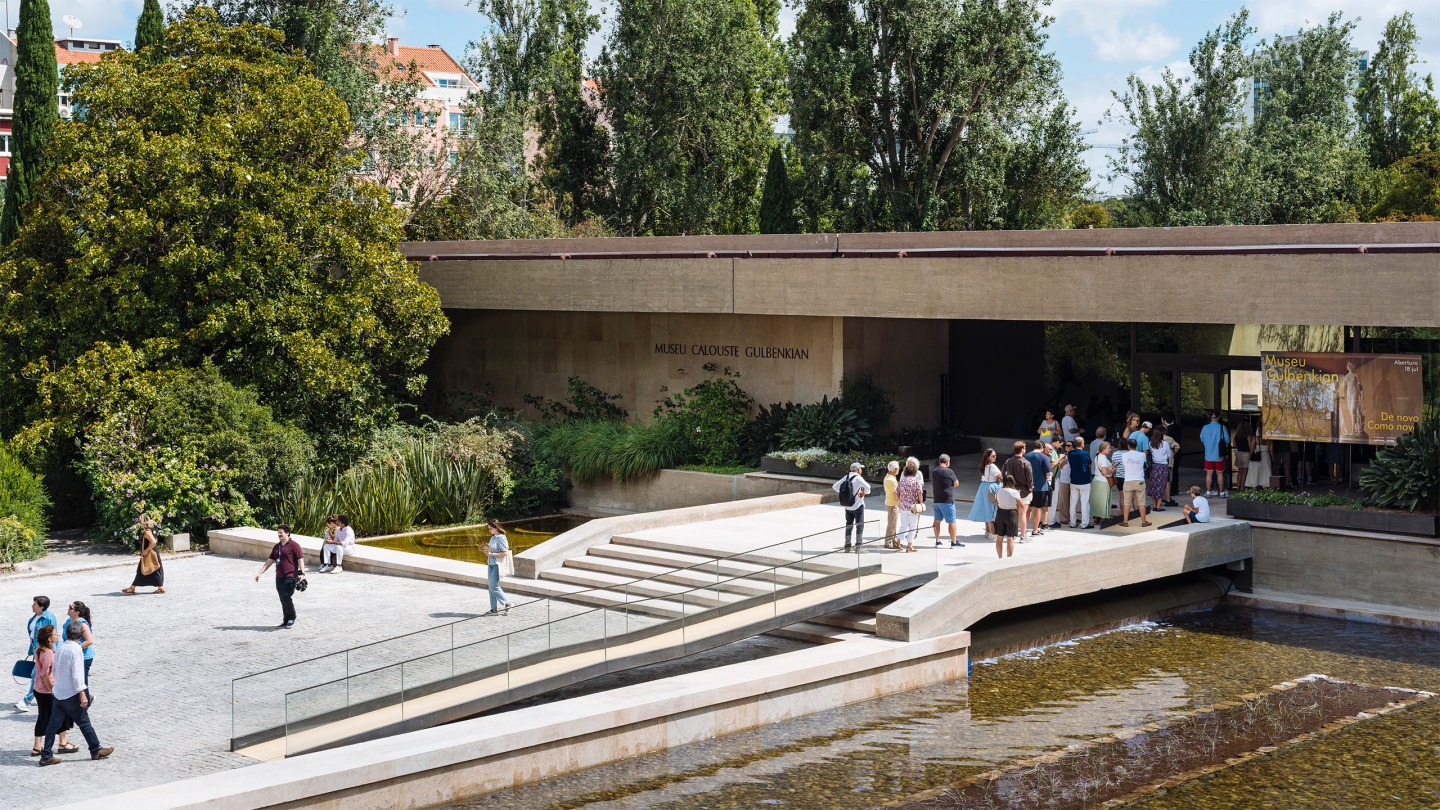
The Calouste Gulbenkian Museum’s architecture is almost as celebrated as the artworks held within. A recently completed major renovation has restored the museum to its original glory.
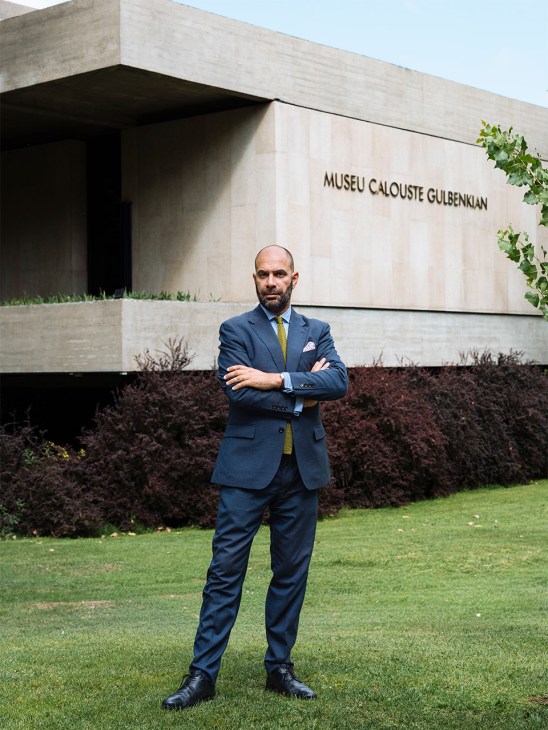
Xavier Salomon landed in Lisbon nine months ago to become the director of the Calouste Gulbenkian Museum but the dark-oak bookshelves in his office are still empty. “I keep joking that I’ve been living out of boxes because the focus has been entirely on the museum,” he says with a smile. Rome-born Salomon arrived in the Portuguese capital from the Frick Collection in New York, tasked with overseeing a major renovation. “It’s a huge honour and responsibility to reshape a museum for the next 50 years,” says Salomon. “There isn’t going to be another redo of the Gulbenkian anytime soon so you have to think carefully about everything that you do. It’s part of a legacy.”
Opened in 1969, the Calouste Gulbenkian Museum is a modernist masterpiece in Avenidas Novas, just north of the city centre, set within capacious landscaped gardens, woodland and ponds. The museum houses the private collection of the namesake Constantinople-born Armenian businessman, collector and philanthropist who made his fortune brokering deals between European interests and oil companies in the Middle East. In almost every deal he secured himself a commission, which earned him the nickname “Mr Five Per Cent”.
Gulbenkian was thought to have been the richest man in the world when he died in 1955. In his will, he stated that his fortune should be used to establish a foundation in Lisbon (where he lived in his final years) to improve its citizens’ quality of life via art, education, science and charitable work. Today, the campus includes the foundation’s HQ, with a 1,200-seater auditorium that is home to the Gulbenkian orchestra and choir. There’s also an art library, modern-art centre and the museum itself, ensconced by lush greenery and water features.
When Monocle visits, the museum’s team is completing final touches before reopening the doors after a 16-month renovation. It’s a sunny morning and a queue of a few dozen people forms outside, eager to explore the revamped institution. “This project was all about restoring the original vision for the museum, while upgrading the technical infrastructure – lighting, ventilation, security and the displays,” says Teresa Nunes da Ponte, one of the architects who led the renovation. “Over the years, the museum had several interventions and we wanted to strip it back to how it was intended; to let the materials speak for themselves and treat the architecture of the building as an art piece in itself.”
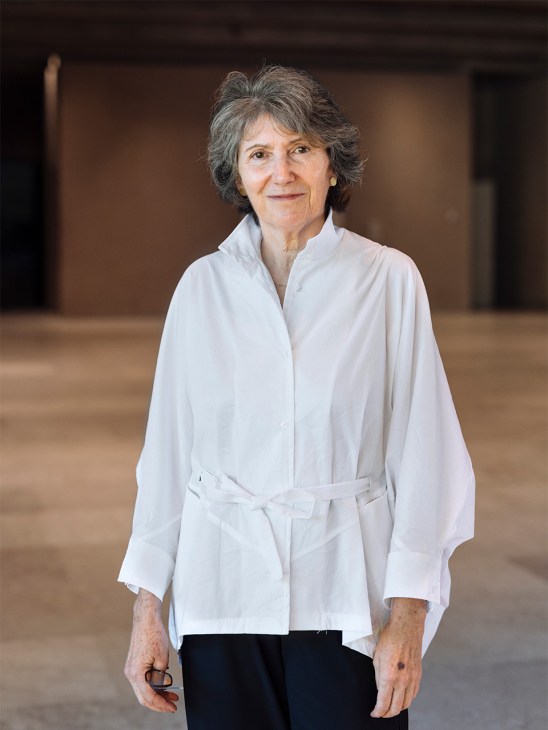
A key moment came when the team found photographs from the 1970s of the museum in its original state. With no paint on the walls, the building’s materials – warm wood, cold stone, bronze and glass – shine through. “There are no hard corners,” says Nunes da Ponte. “As you move through the exhibition, you can peek at what’s coming next. Now, it’s not just about the physical space; we are almost restoring the museum’s original atmosphere and feel.”
The renovation was already halfway through when Salomon joined the museum so any input that he had needed to be added quickly. He had two clear propositions: the first was to keep the windows as unobstructed as possible to maintain a relationship between the interiors and the gardens; the second was to bring back the European galleries’ green carpeting. The latter choice wasn’t merely aesthetic but also to help provide a different feel as visitors crossed between rooms and to reference the vibrant tones of the garden. “There’s this idea that carpets are old-fashioned and ugly but as soon as I started to see it laid down, I knew that it was right,” says Salomon.


The museum reopened to the public on the same day that the Calouste Gulbenkian Foundation marked its 70th anniversary. “When it was decided that we should do a renovation, it was important that it was done soberly and elegantly,” says the foundation’s president, António M Feijó. The literature and humanities scholar believes that the institution’s discreet nature is its greatest strength. “I always like to say that our museum is a ‘cold’ institution – not a ‘hot’ one – meaning that we should let the objects shine by themselves,” he says.
The museum is home to more than 6,000 objects, with 1,000 making up the permanent collection. The pieces span Egyptian antiquities, Islamic art and the work of European old masters; Chinese porcelain, sculpture, tapestries and jewellery. “The collection is finite and we can’t add anything to it because it’s based on what the founder collected,” says Feijó. “He personally chose every piece. It all had to be in mint condition and he never failed in his appraisal of items. His taste was impeccable.”
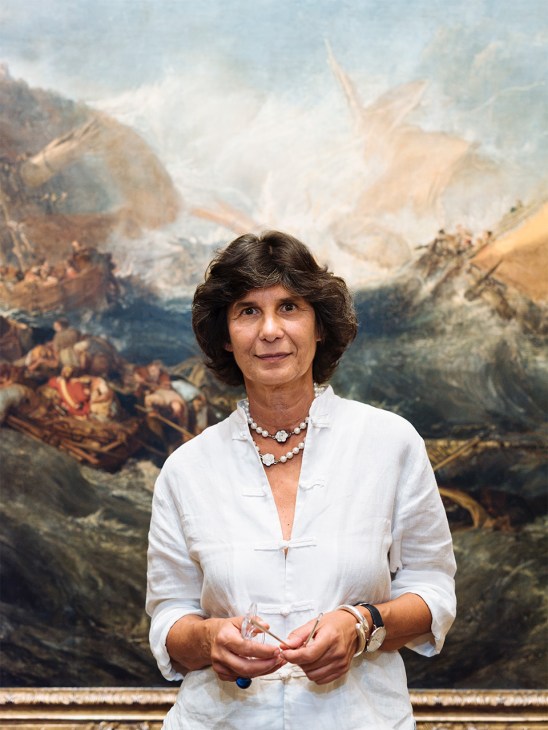
One of the biggest transformations comes at the end of the museum, when you turn into the René Lalique Room, which houses the largest collection by the jeweller outside of his native France. The cabinets are curved in a nod to the art nouveau and art deco turns of Lalique’s work. “We have on display his best piece of work, the ‘Dragonfly’ corsage ornament,” says the museum’s head of collections and senior curator, Luísa Sampaio. She is the longest-serving member of staff, having started as a receptionist in 1989. After seeing many other changes made in the past, she was apprehensive about the renovation but her doubts dissipated once work began. “There’s an enormous cohesion between such diverse areas and cultures,” she says. “In all of them, we have recovered that original ideal of the 1969 museum. I think that the public won’t be disappointed.”
As staff line up to welcome the first visitors, Salomon stands by the door. In lieu of a speech, he offers a handshake and a smile to everyone as they enter. “As a director, I’m just shepherding the place and making sure that everything works,” he says. “The public are the real owners.”
Celebrations of the Calouste Gulbenkian Foundation’s 70th anniversary continue through 2026.
gulbenkian.pt
Three works to see at the Gulbenkian
Planning a visit to the Calouste Gulbenkian Museum? Xavier Salomon highlights the pieces not to miss.
1.
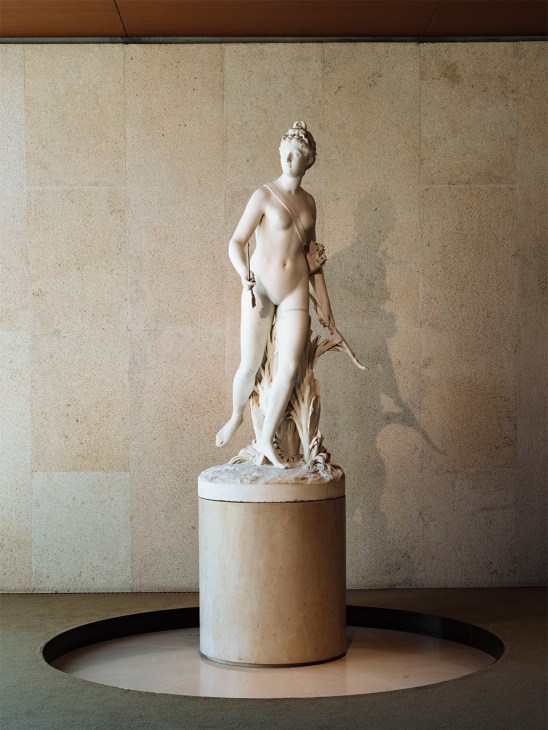
‘Diana’ by Jean-Antoine Houdon
Paris, 1780
“This is a masterpiece by the French sculptor, a statue of the goddess Diana. It’s as if she has just come in from the gardens. It’s the only single object that has a room by itself and that area captures the entire essence of the museum because you have the work of art, the architecture and nature through the window.”
2.
Mosque lamps
Egypt, Mamluk period, after 1321
“The glass lamps are one of the areas of absolute excellence in the museum – we have this group of about 10 mosque lamps from the Mamluk period. It’s the most important collection in the world of these objects in terms of quantity, quality and historic importance. When you see an entire room of them, with the light shining through the glass, it’s incredibly overwhelming.”
3.
‘The Ship of Fortune’ tapestry, from ‘Children Playing’ by Giulio Romano and Nicolas Karcher
Mantua, 1540-1545
“This is a museum where decorative arts have huge importance. These tapestries were incredibly intricate to make. They are between 500 and 600 years old, in impeccable condition and incredible to look at. They are among the items that set this museum apart.”
Join Monocle at The Calouste Gulbenkian Foundation
Monocle’s Quality of Life Conference will be held at The Calouste Gulbenkian Foundation from 3 – 5 September.
During our annual three-day conference, we look at what makes great cities, how we can create inspiring businesses and discover new ideas and benchmarks for personal success.
One of the reasons the conference has flourished is that it brings together an extraordinary mix of people from around the world. The conversations don’t stop when a panel ends; they continue over lunches, dinners and throughout the host city, where delegates, speakers and Monocle’s editors spend time together.
Learn more about the Quality of Life Conference and why Lisbon is an ideal backdrop here.