‘Expresso’ editor in chief João Vieira Pereira on how the Portuguese weekly remains a trusted democratic source in today’s polarised times
In this month’s Editor’s Chair, Pereira tells Monocle how the newspaper has solidified its identity in the digital age and why he still retains faith in the future of independent journalism.
When Portuguese weekly Expresso was founded in 1973, it was a bold endeavour in a country that was living under censorship. The Estado Novo regime would fall the following year and the newspaper’s status as a beacon of the free press has endured, shaping the national debate and maintaining its place among the country’s elite. “Expresso was created as a house for freedom and it remains that way,” says 53-year-old João Vieira Pereira, Expresso’s personable and energetic editor in chief, who was born the same year as the paper.


Pereira is giving Monocle a tour of the newsroom, an open-plan space shared by Expresso journalists and those of cable-news channel SIC, both owned by parent company Grupo Impresa. “There are synergies and we work together sometimes,” says Pereira as he walks us through busy TV sets and recording studios in a slim cobalt suit. A picture of the company’s founder, Francisco Pinto Balsemão, who died last October, hangs in the newsroom. He remained involved in his media empire until the end. “His death was deeply felt here,” says Pereira. “It was as though we had lost a father. It’s a huge responsibility to carry forward the values that he embedded here, which made it possible for Expresso to persist while so many other papers have disappeared.”
Balsemão’s influence extended into politics. He founded the now governing Social Democratic Party and served as Portugal’s prime minister from 1981 to 1983. Over its five decades, Expresso has been a staple among the country’s political class. Former president Marcelo Rebelo de Sousa cut his teeth as a journalist here (he was later Expresso’s editor in chief); senior politicians, economists and intellectuals frequently air their ideas on its pages. Expresso often reports from within the establishment but its contributors cover the political spectrum – from the populist right to the hard left – while remaining within clear editorial boundaries. “I won’t publish xenophobic, racist or anti-democratic views,” says Pereira. The result is predictable. “Those on the right say that we’re left-wing, while those on the left say that we’re right-wing,” he says. “Being in the centre isn’t necessarily a bad thing.”
Take the coverage of Portugal’s far-right party Chega. As it gained prominence in the 2024 elections, Expresso decided to follow it more closely. “What we don’t want is to be caught off-guard,” says Pereira, pointing to Brazil, where much of the media was unprepared for Jair Bolsonaro’s victory in 2018. “We don’t want to normalise it but we can’t pretend that it sits outside the system when it clearly doesn’t.”
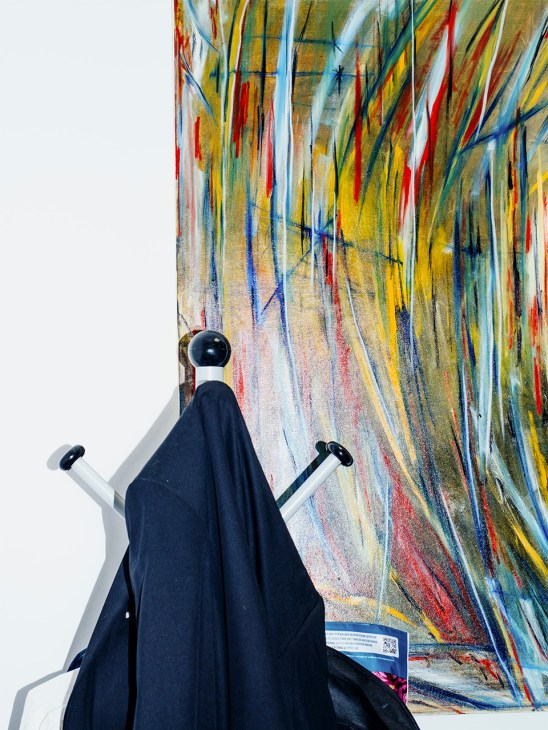

On newsstands every Friday, packed in its signature paper bag, Expresso is Portugal’s bestselling weekly. Its digital version accounts for the largest chunk of its readers today, with 50,000 subscribers and growth of 3.4 per cent in 2025. (An annual online subscription now costs €95.) But the physical paper, which has a readership of 33,000, continues to be central to the business, with sales and advertising representing its largest revenue stream. Around it is an expanding ecosystem of podcasts, events and other branded initiatives that keep things in the black. “We diversified our capacity to make money early on and we still make money,” says Pereira. “That’s fundamental to our independence.”
When we speak, Grupo Impresa, now led by Balsemão’s son, has just announced a capital increase that brings in Media for Europe, owned by the Berlusconi family, as an investor with a significant stake in the business. A moment of change? Pereira is measured on the subject. “What matters is that we continue to have shareholders who guarantee the conditions for us to do great journalism,” he says.
At its founding, Expresso’s format was inspired by UK weekend titles such as The Sunday Times and The Observer, with stories and opinion pieces divided into sections covering a broad spectrum of topics, from politics to culture. In 2006, Expresso shifted from broadsheet to Berliner format. Many supplements have come and gone over time but that overarching structure remains its defining characteristic. “We like to think of members of the same family each reading a different section and sharing the paper,” says Pereira.


Today the paper is organised into four main sections: politics and society, covering national and international affairs; economics; a magazine supplement with culture and lifestyle features; and Ideias (Ideas), a recent addition dedicated to more reflective pieces. Every section has its own editorial line. “It’s not that we’re different newspapers but I like giving editors freedom,” says Pereira, who started off editing Expresso’s economy pages.
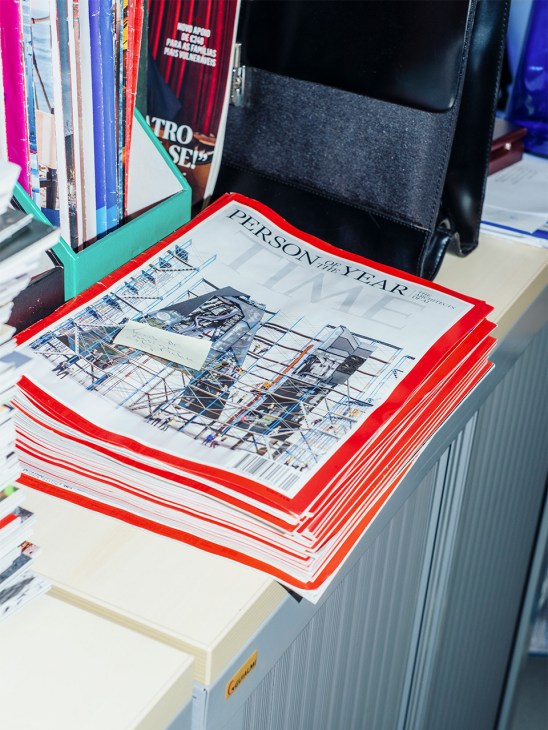
His office, shared with the deputy editor, Miguel Cadete, overlooks the newsroom through glass walls. Its space was a temporary solution in times of social distancing but it stuck. “I’ve asked whether we can remove these two walls,” says Pereira. “I’d prefer to be in the newsroom.” His own media intake constitutes a balanced diet of the main players. Mornings start with a sweep of Portuguese papers before he moves on to the Financial Times and The New York Times (last year, Expresso launched a joint subscription with the latter). Copies of Time magazine are piled up at his desk and he’s a fan of podcasts, from news staples such as The New York Times’ The Daily to deeper dives such as ABC’s If You’re Listening. He’s proud that Expresso’s own audio shows are among Portugal’s most popular.
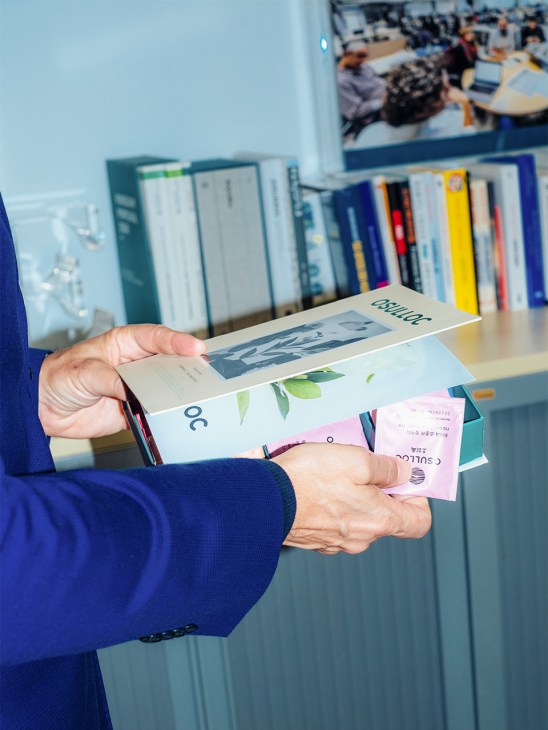
Adapting to a fast-changing media landscape remains a challenge. A defining shift during Pereira’s tenure has been its new focus on the publication’s digital output. “It meant turning a weekly into something closer to a daily,” he says. The newsroom now releases short-lifecycle news online daily for subscribers, while analysis and opinion remain in the print edition at the end of the week. “It’s two different audiences,” says Pereira. The digital strategy has affected print operations too, with decisions about what makes it into the physical paper partly guided by how well a piece has done online. But instinct remains key. “It’s a gut feeling. It’s what an editor does at the end of the day – choose.”
Our conversation turns to the role of journalism in society and how that has been challenged by social media. “We are increasingly closed off on our screens,” he says. “But people go to social media to confirm what they already think.” Newspapers, by contrast, should offer something else. “We are a space of freedom but not a libertarian space,” he says. “ There are rules, fact-checking, an editorial charter.” The task is to adapt without losing that core. “We must meet audiences where they are – through digital, podcasts and new formats – but at the same time insist on what we are: a safe harbour that people can trust.” As for the future, Pereira remains hopeful. “In the end,” he says, “when everything is questioned and up for debate, people will return to mainstream, independent journalism.”
João Vieira Pereira’s CV
1973: Born in Lisbon, 15 days after the first edition of Expresso is published.
1992 to 1997: Studies economics at isg in Lisbon, where he co-edits the student newspaper.
1997: Joins Canal de Negócios, Portugal’s first online newspaper, focused on the economy and business. It would later become the daily Jornal de Negócios.
1999: Leaves to join weekly Semanário Económico, overseeing the launch of its website.
2002-2006: Becomes Semanário Económico’s editor in chief at the age of 29.
2006: Joins Expresso as its economics editor, the same year that the paper shifts from broadsheet to Berliner format.
2019: Becomes its editor in chief, managing its 110-strong staff.