Belgian pop favourite Angèle on how the Paris Olympics’ stage transformed her career
Monocle speaks to the Belgian singer about her unconventional upbringing, what inspires her songwriting and her summer playlist.
Dressed in a black catsuit, Belgian pop star Angèle emerges from a smoky haze of red and blue to the sound of pounding beats. It’s the closing ceremony of the 2024 Paris Olympics and the audience is cheering. She is on stage to perform French electro act Kavinsky’s “Nightcall”, along with indie band Phoenix. It’s a crowning moment in her career.
Though the ceremony marked Angèle’s entry into the international pop pantheon, the Brussels-based musician was already a superstar in the Francophone world. Her debut album, Brol, was a bestseller in France in 2019 and was accompanied by a sold-out tour. That year her single “Balance ton quoi”, which details the everyday sexism that women endure, became a defining song of the “BalanceTonPorc” (“Denounce your pig”) movement – the country’s equivalent of MeToo.
It has been almost five years since Angèle’s most recent album, Nonante-Cinq, but she has recently started releasing new music, most notably “What You Want” with French duo Justice. Here, she tells Monocle about her love for Belgium, writing political songs and where you’ll find her relaxing this summer.
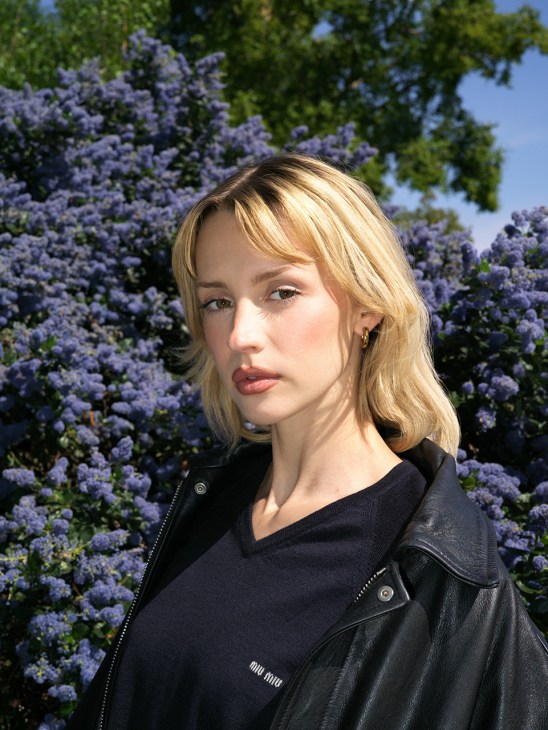
One of your best-known songs, ‘Bruxelles je t’aime’, is a love letter to your home city. What does Belgium mean to you?
It’s a crazy little country that has so much to offer. Being Belgian involves knowing how to make fun of yourself because nothing is ever that serious. I love that.
You grew up in an artistic family and your parents are famous in Belgium [Angèle’s father is the singer Marka and her mother is comedian Laurence Bibot]. How has that influenced you?
My parents were so supportive. Seeing them in their dream jobs, I grew up with the audacity to think that it was the norm. I always knew that I wanted to be in control and not get stuck in situations that I wasn’t happy with. I have had some bad experiences with the industry but have always been very independent. I created my own label and my own publishing company.
You have toured with Belgian-Congolese rapper Damso. What was that like?
It was magical. Now he’s a huge artist but I saw him at the beginning of his career and he saw me at the beginning of mine. Opening for him wasn’t always easy because his audience was into rap; they weren’t ready to see me. It was probably the most humbling thing that I have ever done but it was important to learn that nothing is guaranteed and you have to fight. Damso and I have collaborated many times and we’re good friends. He’s a brilliant artist and a very philosophical person.
And what about the closing ceremony of the Paris Olympic Games?
It was actually a last-minute thing. I was on holiday in Italy when I got the call. To be honest, I freaked out as I hadn’t been on stage for about a year. I asked for some time to decide and my managers encouraged me to do it. They knew that it could change my career.
At the ceremony, you sang a cover of Kavinsky’s ‘Nightcall’ and you have since released the song ‘What You Want’ with Justice. What’s your relationship with electronic music?
It has always been part of my life. I just love the roundness of synths and the sharpness of the bass and beats. Something that I love about [electronic-music genre] French touch is the importance of melody and chords. You can even hear chanson française chords in some Daft Punk and Justice songs. When Phoenix asked me to do “Nightcall”, it felt like a chance to connect with a song that I had grown up with.
Your song ‘Balance ton quoi’ soundtracked the French MeToo movement and the video is set in a satirical anti-sexism academy. Do you ever feel nervous about being politically outspoken?
There’s no doubt that it’s a political song, especially when you see the video, but when I wrote it, it was just my train of thought. I had been harassed on the subway that day and wanted to say something about it. When we made the video, I knew that I had to be serious about what I was saying. I worked with Belgian artist Charlotte Abramow and am proud of what we did. If I had to make a video like that today, I would freak out because I would think that it was too bold. I love how carefree it feels.
Your songs feel very intimate. To what extent do you write from your own experience?
My song “Ta Reine” is about two girls falling in love – well, one girl falls in love and the other is a little unsure. My best friend was going through something similar and I felt connected to that story too. When I got outed by the press [a tabloid magazine published photos of Angèle and her then girlfriend in 2019], I faced homophobia and it was shocking. But it was interesting how it suddenly felt as though I had written ‘Ta Reine’ for myself.
Where will we find you this summer – and what will you be listening to?
I’m not ready to tour so I’ll be relaxing. Brussels is amazing in the summer because it’s hot but still feels fresh. I’ll spend some time in New York too. Right now, I’m listening to European artists such as Amaia, Zara Larsson, Pink Pantheress, Theodora and Rosalía. Amaia recently did a Tiny Desk Concert [for US radio station NPR] where she played the flute with a chair. It was genius.