‘Lawless London’ is suffering an unusual crimewave – one that never actually happened
Wherever you look, from social-media snippets to politicians’ soundbites, the story is the same: London is done for. On its arse economically, socially divided and battered by a crimewave of unendurable brutality, the UK capital is written off as a fast-falling hellscape. Residents inhabiting this version of reality, we’re told, are more likely to have their bike stolen than be offered a cheery “hello”.
Well, perhaps the last part is true – it’s not always the friendliest – but most accounts of the city’s demise have been grossly exaggerated and the case against this misinformation is mounting fast. Even bike thefts have dropped by some 30 per cent over the past 15 years. London’s inbound tourist numbers and spending rose 4 per cent and 6 per cent respectively in the year to October 2025. Last year the capital gained 93,000 residents according to the Office for National Statistics and there’s increasing evidence to suggest that the abandonment of the UK by the tax-fearing wealthy (“Wexit”) is, at best, overstated.
This week the Metropolitan Police confirmed murders to be at a decade-long low in London (a rate five times lower than Los Angeles and half that of New York) and safer than Berlin, Paris and Milan. It’s better than Brussels for goodness sake (an argument that I’d say goes well beyond the murder rate). So why doesn’t it feel as though things are improving?
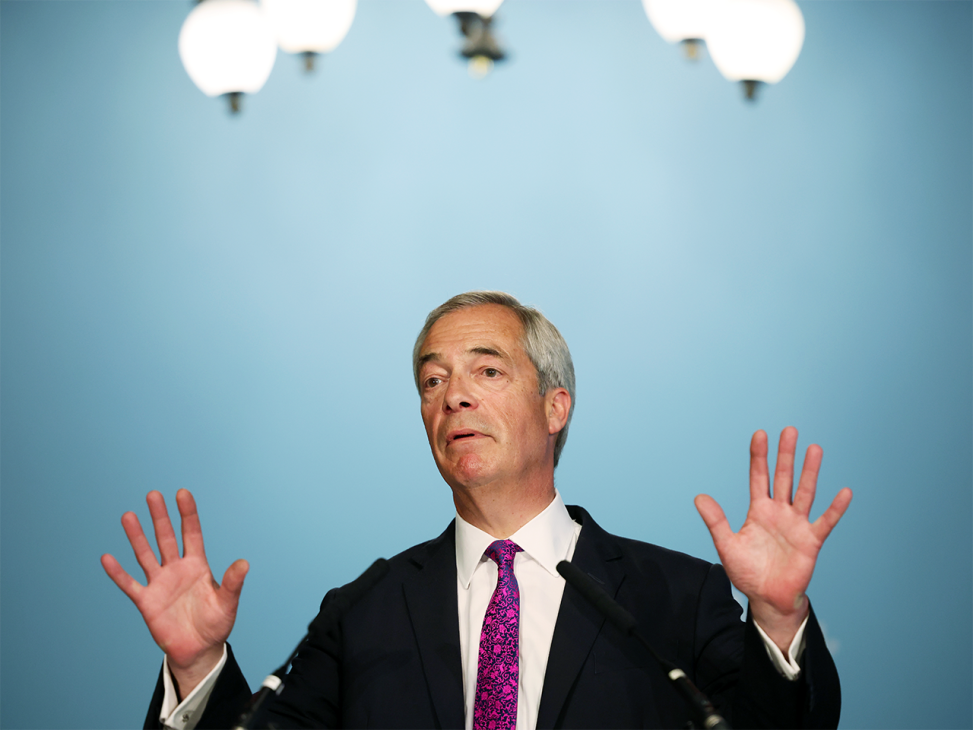
London has never been popular with the rest of the country but it’s not just homegrown grumblers or headbangers such as the Reform UK leader, Nigel Farage, doing it down. The US president, Donald Trump, found time to dub it a “warzone” and fret about the imminent imposition of Sharia law. That (bullshit) narrative hasn’t been helped by a rise in malicious social-media posts and AI-generated twaddle. Deeply suspect screeds, scant on detail but full of scorn for an imagined lawlessness, rose from the hundreds in 2013 to a peak of about 15,000 last year, according to new analysis by King’s College London.
Whether the capital is to your taste as a place to live and do business or not, it’s important to distinguish between real life and out-of-context online rubbish. So, here goes: violent crime is falling and already proportionately lower than any other UK city. Despite the headlines about knife crime, NHS data says that hospital admissions for stab wounds are at historic lows. Assaults have halved since 2000, even as the population has boomed. Abhorrent crimes against women and girls rightly make headlines when they happen but, hearteningly, the best, most serious long-term study suggests that women report feeling increasingly safe – a trend consistent over the past three decades. Air quality is up, road deaths are down and that’s before we risk naming some of the city’s pulls: opportunity, world-leading art, culture, science, history, hospitality, education and media.
Of course, the truth – as in any democratic, liberal city of a certain size – is messy and imperfect and there are issues: a rise in phone-snatching and petty shoplifting among them. There’s much still to fix in the city, from housing to the high street, but the story of London’s failure is wrong by most measures. Seeing nearly 10 million people getting on with precious little of the drama depicted online isn’t entertaining – it doesn’t serve the nonsense nativist narratives of decline – but at least it’s true. Winter can be gloomy but to understand what’s really wrong we can’t let bots, bigots and misinformation make the weather.
Josh Fehnert is Monocle’s editor. For more opinion, analysis and insight, subscribe to Monocle today.