Sorry to burst the vox-pop bubble but most people’s opinions aren’t news
Is vox popping citizens on the street really the best way to cover elections? A new study from Cardiff University suggests that broadcasters are overrepresenting the people to the neglect of policy.
We owe the very term “vox pop” to a misapprehension of its etymology. It is an abbreviation of the tag “Vox populi, vox dei”: the voice of the people is the voice of God.
However, that phrase is cribbed out of context from a warning issued by the eighth-century scholar and courtier Alcuin of York. He was trying to alert Holy Roman emperor Charlemagne to the perils of being distracted and disconcerted by public opinion. What Alcuin actually counselled was, “Those people should not be listened to who keep saying the voice of the people is the voice of God because the tumult of the crowd is always close to madness.”
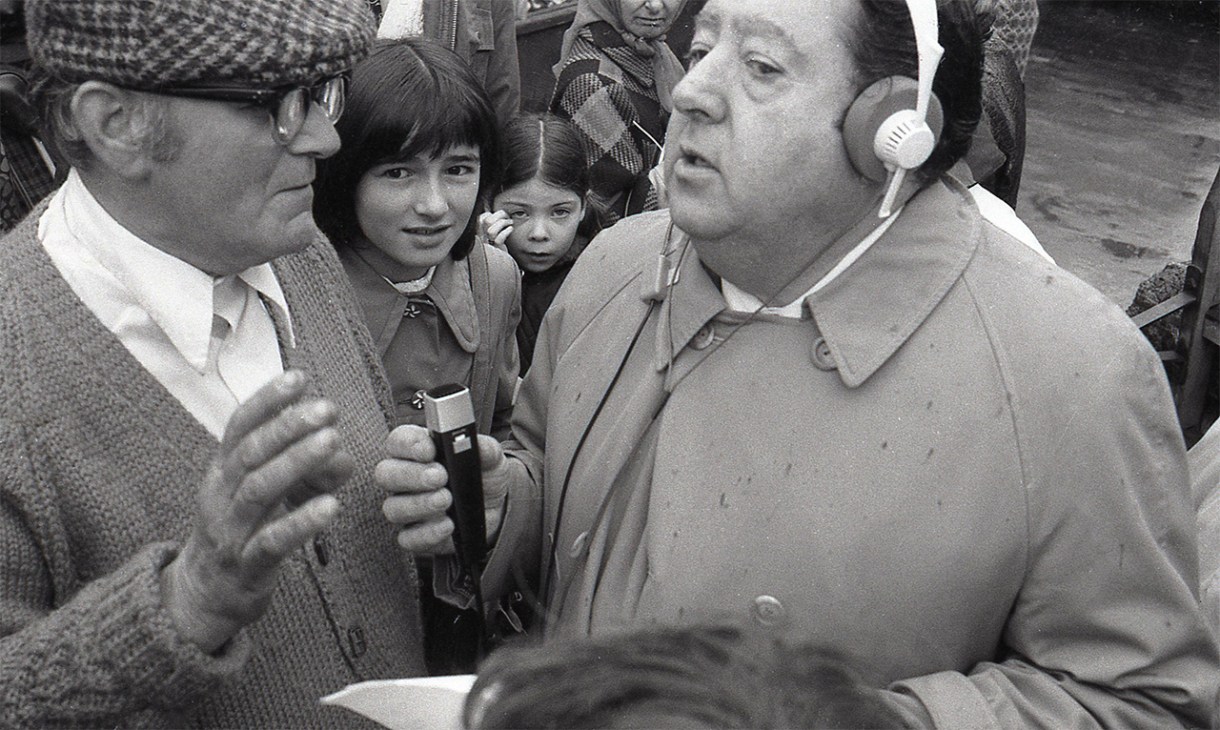
Alcuin’s astute admonition was endorsed – sort of – this week in a study by Cardiff University of television news coverage of campaigning in the UK’s recent local elections. The report noted a number of failings but Cardiff’s boffins pointed especially insistently at over-reliance by broadcasters on vox pops – that is, sticking cameras in the faces of random members of the public to canvas their perspectives on the issues of the day. Viewers in Wales saw far more of bewildered folk out doing their shopping than they did of candidates actually running for office – and that “on this scale, [vox pops] took up valuable airtime at the expense of policy coverage, scrutiny of political claims and explanation of the workings of the Welsh political system”.
This is, of course, correct. Vox pops are mostly useless to the reporter: they are a ritual penance undertaken to deflect criticism that journalists are insufferable elitists who think that we know better than the riffraff. They are rarely illuminating to the audience: by definition, vox pops are dominated by the kind of people who will say yes when a news crew stops them in the street, who are (also by definition) among the last people who anyone should listen to.
Furthermore, vox pops can be edited to fit any narrative. If you interview 100 people, you will find at least a few who will endorse any proposition, however bizarre or idiotic: it would be an afternoon’s work at most to assemble a plausible package of citizens willing to agree that Britain should bomb Belgium. And whatever the subject at hand, the broadcasting of vox pops does not acknowledge that many people, if not most, might know or care little or nothing about it.
But if we must have vox pops, they can be fixed. Any reporter soliciting the sentiments of the general public about whatever the thing is should be compelled to first make some preparatory enquiries to establish baseline expertise. These answers would also have to be broadcast. So in the situation considered by Cardiff University, before getting to any interviewee’s stance on a local election, could be set rangefinders such as, “Can you list three statutory responsibilities of your local council or regional assembly?”; “Do you know who your local councillor is?”; or – in extremis – “What shape is Earth?” An equivalent American test in these times might include “What were the key terms of the Joint Comprehensive Plan of Action?” and “Are you able to point to Iran on this globe?”
A decade ago, British television news was awash with vox pops in the run-up to the Brexit referendum. It would be fascinating to know how firm in their views the vox popped would have dared to be, or how seriously their opinions would have been taken, if they had first been asked to briefly explain the difference between the European Commission and the European Council, list the last three countries to join the EU or name the capital of Denmark.
Andrew Mueller is Monocle’s contributing editor and the host of ‘The Foreign Desk’. For more opinion, analysis and insight, subscribe to Monocle today.