
The beige-toned winner of the Stirling Prize is proof that architecture needs a new pop of colour
The world of architecture was once brimming with radical ideas and cutting-edge design. Are the homogeneous projects that now win awards a sign of the times?
I once called the Stirling Prize, the Royal Institute of British Architects’ award for the UK’s building of the year, “a moment for auto-erotic self-congratulation”. But last week’s winner changed my mind. It’s far worse: a sign that the industry has lost its last shred of imagination. Architectural excitement is tangential and prizes such as the Stirling, which are always a virtue-signalling exercise, are instead awarded to designs that judges want to tell the world are Good Things. Last year, it was housing for the elderly (Appleby Blue Almshouse). The year before that, it was public infrastructure (London’s Elizabeth Line).
Even on such terms, there is little substance. The new-ish Elizabeth Line – the most expensive completed public-infrastructure project in UK history – already looks battered because the architects chose a porous cladding material that is impossible to repair (TfL has been left to patch it up with faux-concrete-effect stickers). But judges are happy to overlook this dereliction of duty to the public purse to clean their conscience. This year the award went to Lion Green Road by Mary Duggan Architects with Ruff Architects. Judges lauded it for “addressing the pressing need for national housing”, ignoring that any new social housing, regardless of architectural merit, does this by definition.
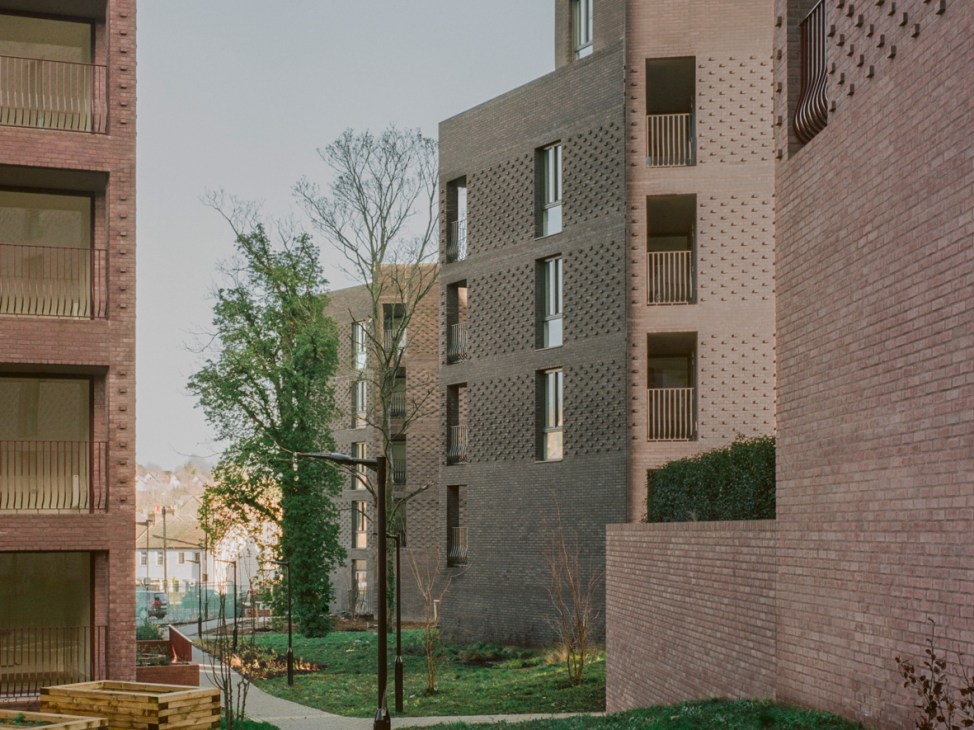
Architects have long flattered themselves with the idea that they might solve the housing crisis. From modular construction to self-built systems, architectural history has built a centuries-spanning pile of ideas to socially re-engineer the nuclear family. The winner’s contribution to this vast intellectual lineage is a “considered arrangement” of blocks cited for its “generous daylight”, “open views” and “connection to nature”.
You might notice that this sounds an awful lot like Le Corbusier’s “essential joys” of modernist urbanism: sun, space and greenery. The last time these were radical propositions was when they were formulated some 90 years ago but even the “sculpted”, angled facade of Lion Green Road is a less-than-coincidental echo of Frederick Gibberd’s The Lawn, the UK’s first residential tower completed in 1951. If this is really the best of the best, it is an admission that 21st-century architecture is stuck on rinse and repeat.
We can still rely on public opinion to pop the judges’ bubble. One punter’s response to this year’s award was, “Am I missing the point? How is this any different from any new beige housing in London?” The fact that the BBC has given up on televising the Stirling Prize due to bad ratings means that another opportunity for architecture to be at the forefront of public conversation has gone down the drain. The award going to Lion Green Road is another. But sure, Riba, keep telling me why I should be excited about brickwork in “three subtle shades of brown”.