Collector by chance: How Pertti Männistö became one of the world’s most accomplished Alvar Aalto archivists
For the Finnish furniture collector, staying true to his interests and following his instincts was the key to amassing a collection even larger than Finland’s Alvar Aalto Museum.
Many serious collections start by chance. Pertti Männistö’s hoard of Alvar Aalto furniture and glassware is a case in point: he didn’t set out to become one of the world’s top collectors of the Finnish designer’s work. “When I moved from the countryside to Turku in 1991, I would go to design auctions with no particular goal,” he says, sitting on a 1940s Armchair 34 at his home in southwest Finland, where he lives with his wife, Kirsti Toikka. “There was Aalto everywhere but nobody paid much attention to it.”
Then something changed. After spotting a prototype Aalto armchair in a private home and buying it for 350 Finnish marks (less than €60), Männistö went to the library the next morning, where he read everything that he could about Aalto and his wife, fellow designer Aino, as well as their furniture company, Artek. “Once I fell in love, I bought their pieces almost in a panic,” he says.
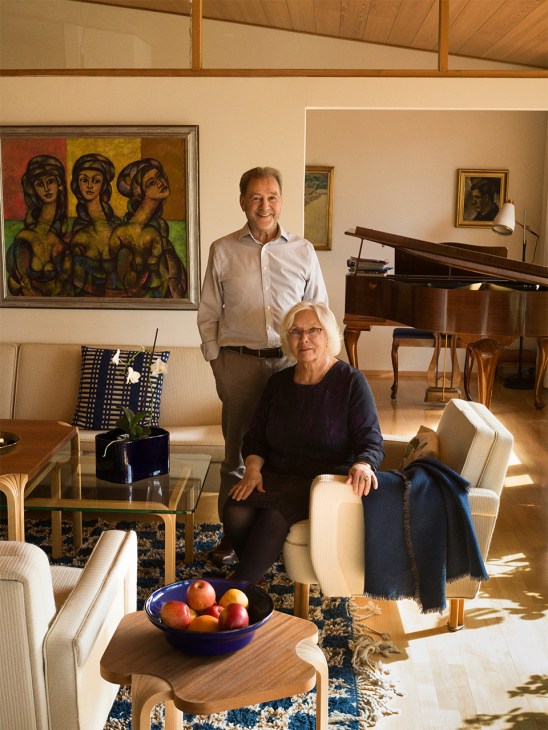
In the three decades since, his collection has grown so large that he claims to own more prototypes by the designers than Finland’s Alvar Aalto Museum. Much of it is in storage and only a few pieces are on display at home. “About 95 per cent cannot handle daily use,” he says. “These are historical objects now.”
Männistö’s focus is on early Aalto furniture – from 1928 to 1965 – before manufacturing processes became more standardised and mechanised. The appeal, says the collector, lies in the richer finishes, the hand-worked surfaces and the patina that has developed over the decades. “New furniture doesn’t age in this way or gain the same spirit,” he says. Among Männistö’s rarest pieces are prototype lighting designs that never entered production, a one-off chair for a 1946 show in Zürich and a Maison Carré armchair – one of only two, signed by Alvar. He also owns about 100 of the designer’s iconic three-legged stools.
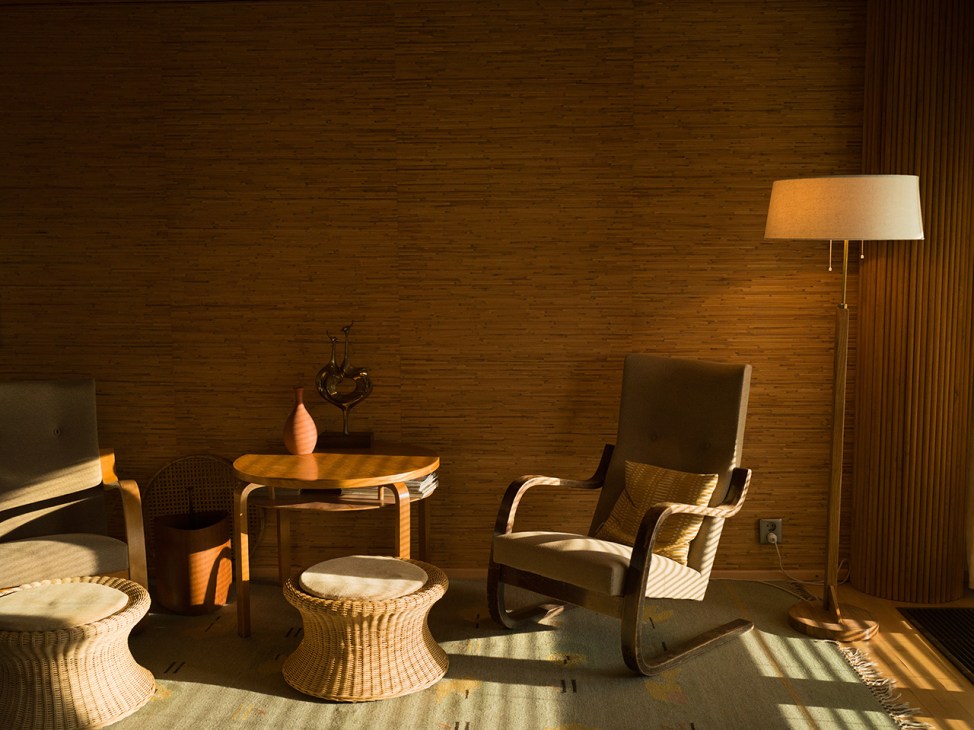
In the 1990s those stools could be picked up for the equivalent of a few euros. Now international demand has supercharged the market. Basic pieces remain attainable but prototypes and early rarities require what Männistö calls “detective work”. To track these down, you need access to a network of dealers, descendants and collectors across Europe and beyond.
Männistö suggests looking beyond Alvar. “People should appreciate his wife, Aino, too,” he says. “They made everything together.” Asked whether new Aalto discoveries are still possible, he doesn’t hesitate. “Always,” he says. “Prototypes and one-offs are still being found. That’s the beauty of it.”
Pertti Männistö on how to hunt for Aalto pieces:
1.
Build a library first
“Prioritise printed catalogues and books over internet listings, where Aalto misinformation is common. The process of authentication starts with comparing dimensions, materials and production details with documented originals.”
2.
Buy the early works
“Earlier Aalto furniture is made from better materials and has richer finishes. It has more long-term value.”
3.
But don’t limit yourself
“Finnish modernists such as Werner West and Ilmari Tapiovaara were designers whose furniture remains undervalued compared to the Aaltos’. It’s worth looking further afield.”