From the Olympic Village to student housing: Manfredi Catella on building Milan’s future
The Coima CEO was a driving force behind the regeneration of Porta Nuova and now, Porta Romana. Monocle spoke to Catella about how he hopes to create sustainable communities at a national level.
Over the past two decades, Milan-based real estate giant Coima has been a driving force in the revitalisation of the Lombard capital. Its founder and CEO, Manfredi Catella, was the driving force behind Porta Nuova, one of Europe’s most groundbreaking urban-regeneration projects. By attracting major international investors, it is regarded as a key contributor in elevating Milan’s position as Italy’s financial and business centre. At this year’s Olympic Winter Games, Coima developed the Porta Romana Olympic Village, which houses athletes during the games before being converted into student accommodation.
Catella met with Monocle’s Europe editor at large, Ed Stocker, in Milan to discuss repurposing some of the city’s unused industrial areas into purpose-built spaces that connect neighbouring communities. The following transcript has been edited for clarity and length.
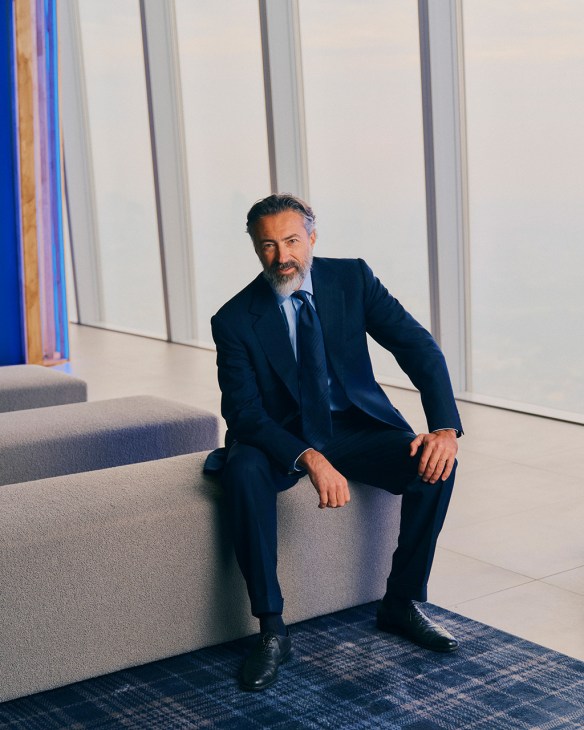
Coima is responsible for some of the biggest and most important projects that have changed the way Milan looks. How does that make you feel?
When you care about urban development, you care about the community because you will [have an] impact on its people for many years. It’s a great sensation and it’s a great responsibility.
Coima helped develop the Olympic Village in Porta Romana. Tell us about that project.
It has been a very intense 30 months developing [housing with] 1,700 beds for the athletes. But we also designed this campus to be used as a student-housing village after the Olympics. It has been quite amazing to listen to all the athletes arriving to the rooms and expressing themselves so nicely. This might be the most satisfying part of the work.
How is the site going to continue to evolve after the Games?
Compared to many European cities, Milan is at a great advantage because it’s late in developing. In our job we look at raw materials, such as the land or sites that you can develop. There are no other European cities with such a scale of brownfields, industrial sites, factories, military barracks and so on that can be repurposed. Many other cities in Europe have already experienced this transition. Porta Romana is a brownfield that reconnects two important parts of the city, [in this way it’s] similar to what we did in Porta Nuova. We’re just at the beginning but the process was accelerated thanks to the Olympics and a part of it is finished already.
A lot gets made about how Milan changed after the World Expo [and the regeneration of Porta Nuova] in 2015. Was that a significant moment in Milan’s recent development?
Porta Nuova was an impossible urban redevelopment. The mindset of the people of Milan was that it was a bad area, despite it being a mere 1.5 kilometres from the cathedral. Our challenge was to reconnect Porta Nuova to the surrounding neighbourhoods. It took 10 years but the project reset a cultural benchmark for Milan and Italy. It was the start of a transition for the city, which is still ongoing.
You’ve got plenty coming up. Give us an idea of some of Coima’s future projects.
Milan must go through three scales of development. One is to develop the brownfields, such as Scalo Farini, Porta Romana and others. The second is the metropolitan area. For example, Milano Sesto, which was a very large, million-square-metre factory site that is 20 minutes from the cathedral by tube. The third dimension is to develop the surrounding cities that, thanks to the high-speed train, can be reached faster than ever. Torino is 40 minutes from Milan today; Bologna is less than an hour. A system of cities – that is what Italy can develop.
With the Olympics on our doorstep, have you been watching?
I have. But my focus has been on our next challenge behind the stage, which is making the Olympic Village the fastest repurposed temporary infrastructure ever. While the Olympic Games are going, we’re planning how to make this open to students by 1 September.
You can listen to the full interview here. For more behind-the-scenes insights on the 2026 Olympic Winter Games, tune in to ‘Monocle in Milan’ on Monocle Radio.
More coverage of the Games
- Ever wondered what goes into a live Olympics broadcast? Here’s how the event makes it to your screen
- Skating’s solo act: Donovan Carrillo is the only Latino on the ice at the 2026 Winter Olympics
- Marco Balich on organising the perfect Milano Cortina Olympic opening ceremony
- The Monocle guide to Milan