Meet the designers behind the Obama Presidential Center’s brand identity
How the small design studio developed signs, web pages and more to help visitors explore the Obamas’ legacy.
The Obama Presidential Center in Chicago opened to the public on 19 June, with a dedication ceremony celebrating its launch held the day before. In attendance were artists, former world leaders (including Angela Merkel and Justin Trudeau) and three former US presidents: George W Bush, Bill Clinton and Joe Biden. The 78,000 sq m campus on the city’s South Side features a museum commemorating the presidency of Barack Obama, a public library, as well as an athletic and events space with an NBA-regulation-sized basketball court. It also serves as the new home of the Obama Foundation, a charity focusing on community empowerment.
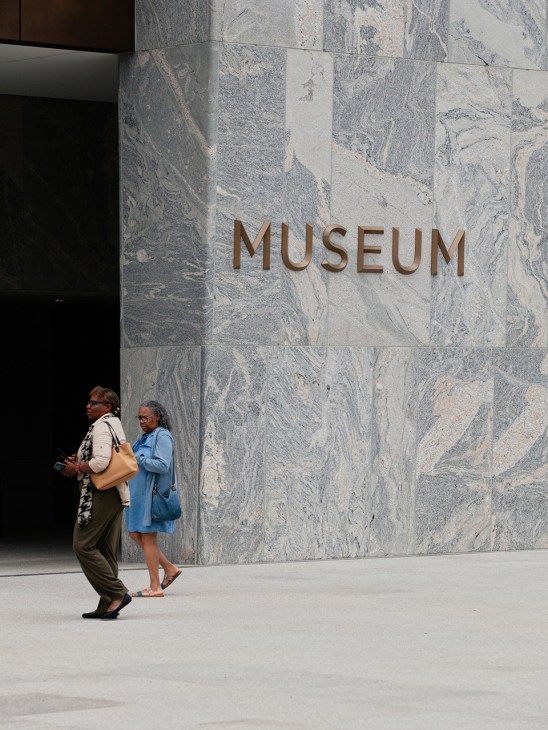
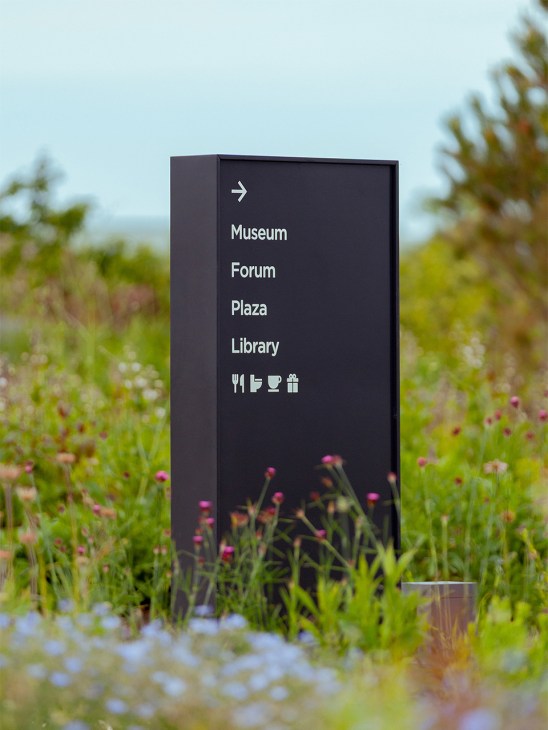
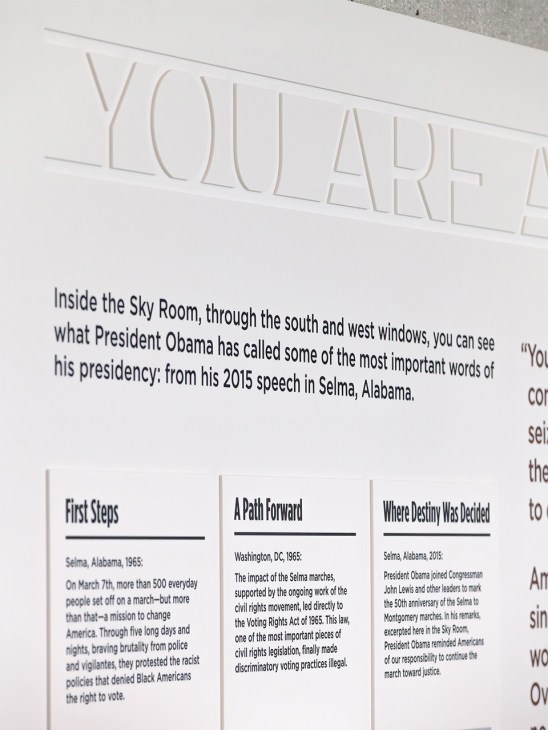
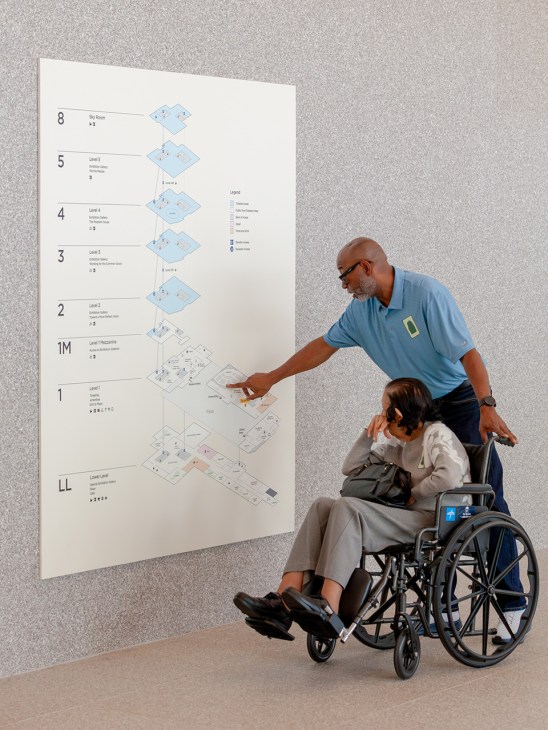
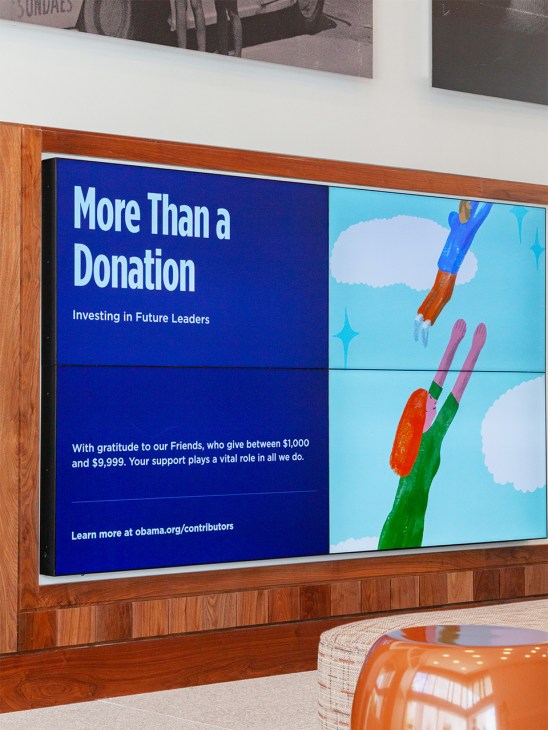
The campus’s construction encompassed more than just its buildings: it required the creation of signs, web pages and other things to help people to interact with the centre both physically and digitally. That’s where Tom Crabtree and Patricia Callaway, the husband-and-wife co-founders of design studio Manual, came in. Appointed as prime design partner in 2023, the studio, which has offices in San Francisco and Amsterdam, led a wide-ranging programme spanning brand identity for the Obama Foundation and visitor experience for the centre, from custom typefaces and maps to signage and wayfinding.
Here, the duo speak to Monocle’s head of radio, Tom Edwards, about getting involved with the project through a social-media message, overcoming impostor syndrome and how their small studio takes on commissions of a presidential scale.
This conversation has been edited for clarity and length. Listen to the full interview on ‘The Entrepreneurs’ from Monocle Radio.
Tell us about the origins of Manual.
Tom Crabtree: I moved to the US in 2006 to work at Apple after nearly a decade in London doing brand identity for arts, culture and hospitality clients. When I left Apple in 2009 I saw an opportunity to start a studio in San Francisco, walking a fine line between culture, nonprofits and technology.
Patricia Callaway: I began my career in marketing at organisations such as the Barbican Centre in London, before moving into product marketing in San Francisco. We started the studio when Tom and I were expecting our first child – a big challenge but an incredibly fun one too.
How did the Obama Presidential Center project come about?
TC: It started with a Linkedin message. Hashem Bajwa, the Obama Foundation’s chief creative officer, reached out to us after seeing some of our work. We used to work at Apple together but didn’t know each other at the time. He invited us to help think about how the Obama brand would show up in the public’s experience of the Obama Presidential Center. That initial project led to a broader partnership.
Did it challenge any of your assumptions about the kind of work that you do?
PC: It was definitely different for us. We were working with people who had had extraordinary careers in politics so there was initially some intimidation and a bit of impostor syndrome. But we were excited by the opportunity to shape what a presidential library could be, since it’s not a kind of space that’s typically associated with innovation or creativity.
TC: What surprised us was that it didn’t begin with leadership meetings in a boardroom. The process was more like what you might see at a start-up, with a series of design sprints in which we would make work, put it in front of people and learn from the response. Rather than asking for permission upfront, we were proving ideas through the work itself. That gave us the freedom to be ambitious and boosted our confidence as the project evolved.
Were there moments when it all felt beyond your comfort zone?
TC: Early on, we built a lot of momentum. We were taking some pretty big swings, testing how far the foundation wanted to push into a more contemporary design language for things such as custom typefaces, colour palettes, motion and patterns. It was encouraging to see that there was an appetite for it. It maybe went all the way up to the president and we were getting feedback such as, “Yes, this is what the Obama Foundation should feel like.” The real challenges came later, when we moved into wayfinding and signage. Suddenly, it was about helping people to navigate a large, complex building. That’s when the weight of it hit us because signage is pretty permanent. Once it’s in, it’s in, so we had to get it right.
Did working on such a high-profile project change the way you do things?
PC: Absolutely. We had to make sure that we had the right team and processes in place, and trust and collaboration became more important than ever. We brought in great partners. Having such strong collaborators around the table made a project of this scale feel achievable.