‘German industry is not agile enough.’ Designer Konstantin Grcic on the Deutsch design crisis
The Berlin-based industrial designer talks us through his archive of abandoned prototypes, the Italian manufacturers who shaped him and what is going wrong in German industry.
In mid-2026, Konstantin Grcic presented a solo show at Berlin’s Deutsches Design Museum that few creatives would have had the means – or guts – to pull off. Streetwise was a display of early prototypes and models, abandoned projects and failed ideas, all drawn from the 61-year-old’s archives. “We make models to see all the defects of an idea,” says Grcic. The resulting show was a peek into the seldom-seen inner workings of a design studio.
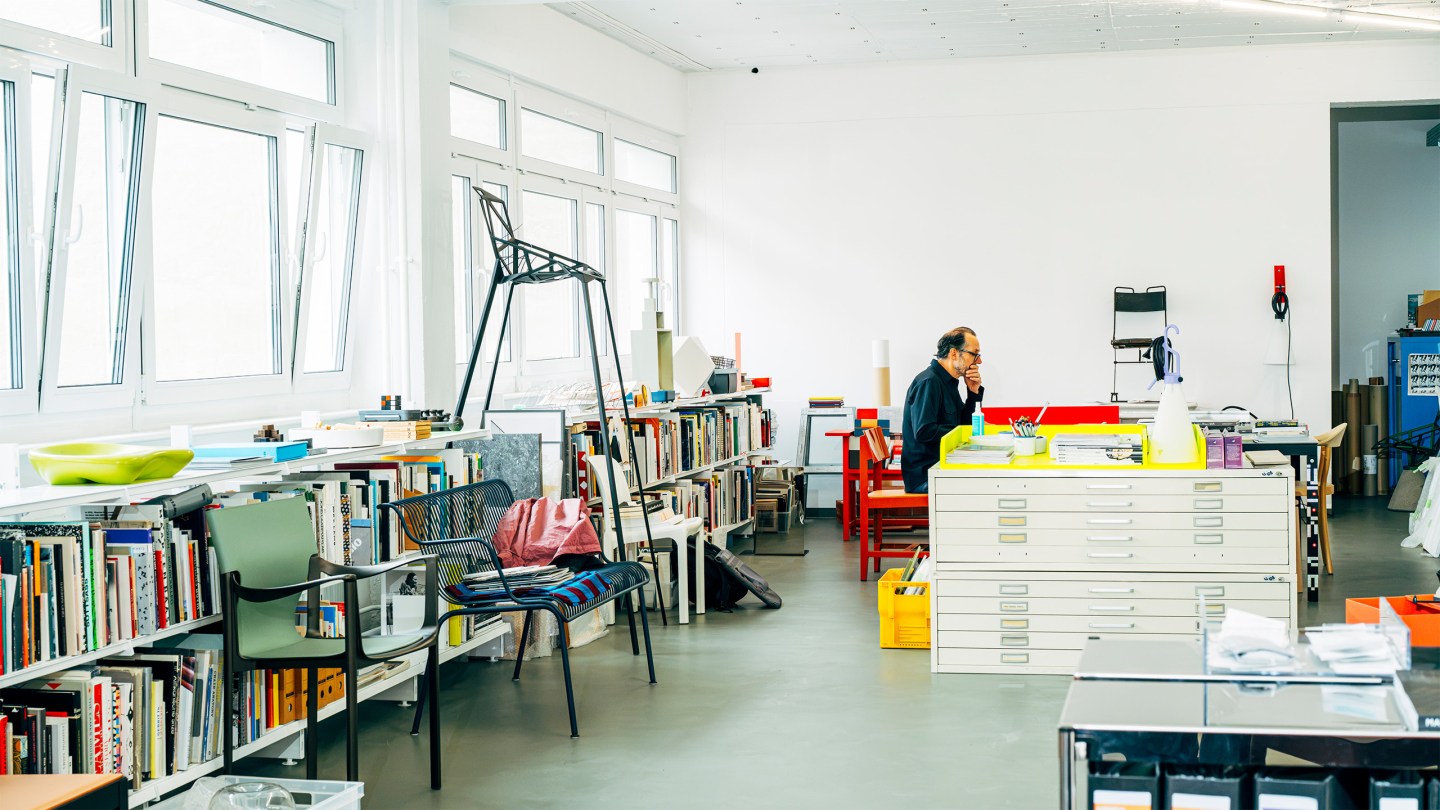
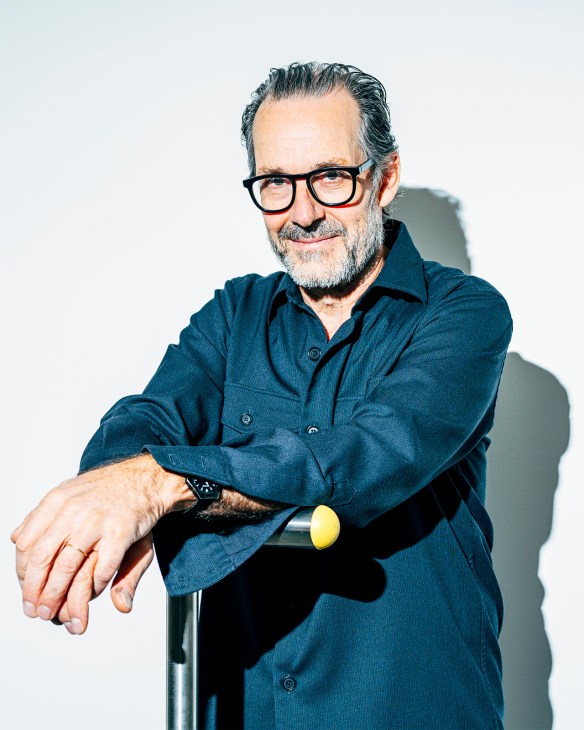
Grcic has a three-decade track record of creating bestsellers, from office chairs and portable lamps to lipstick containers. Experiments with industrial processes and a predilection for angular forms in bright colours have helped define the 21st-century material world. In 2025, he founded his furniture label, 25kg. The same year, Grcic and a seven-strong team moved into a larger studio space in an industrial building in Schöneberg, which is where Monocle sat down with him.
Where do you keep your archives?
I had a space of 300 sq m on the outskirts of Berlin and it was full. We recently shrunk that storage by half, throwing away a lot and creating some kind of order. Our work is physical and designing a chair probably means that there are 10 or more full-scale iterations. It’s a difficult decision: do you keep all of them, some or none?
Is this what gave rise to ‘Streetwise’?
I knew that I would be going through all of this stuff and thought it was a good occasion to pick out some things. These pieces have value for me but maybe they also have some value for someone looking at them. The beauty is that they are the frozen moment of a creative process.
What was it like to revisit those archives?
I have been doing this for 30 years. The models show a very analogue process and it’s shocking to see how much we could do without all the tools that we have today. When I go through these old models, it shows me that the analogue process, the limitations, the focus and the time that we had were really good.
You started your studio in 1991. How long did it take to make a living from your design work?
It paid the bills from the start but those bills were small. My calculation was that I needed 1,500 deutschmarks a month. That’s something like €800. From that, I could pay my rent, a desk space, the phone bill, for food and materials. The struggle started once I had more clients and needed to produce more work more efficiently. I had an assistant and needed my own space. Suddenly, everything became really difficult. The turning point was a job for a kitchen-appliances company, which provided projects one after the other with a fixed fee. It was a big change. But there was a lot of what I never wanted to do: agency meetings with too many people involved, working for a market where there are 10 coffee machines on a shelf next to each other and the success of one model is that it’s cheaper than the others or it has more blinking lights. After four years, I said that I can’t do this any more. But it transformed the studio and I was free again.
What’s the ideal relationship with a manufacturer?
Italian companies really shaped who I became. The postwar Italian industry was always my role model: family-run businesses with a strong head who has an eye for finding designers to work with. These firms were interested in technology, in machinery. I love to work with industry. The studio can be quite a bubble and we could be happy doing stuff that we love but I need the outside world to push me somewhere that I wouldn’t normally go. That can be extremely creative.


Is the current crisis facing German manufacturing largely a design problem?
The design process starts way before you start giving form to something. It’s the analysis and briefing that make you start working on a car. That’s where the German industry went wrong. It was doing the same thing that it was very successful doing for so many years, and didn’t realise that something was starting to change fundamentally. German industry is not agile enough. But in moments of difficulty there is opportunity. The world today is a better world than ever – not to say that everything is perfect but it’s up to us to turn things around.
How did starting 25kg change things for you?
I never wanted to be a designer-producer. I always thought that was limiting. Projects that don’t make it into production, in most cases, I can understand why they don’t. One limitation that I see in the industry is in addressing very niche markets – it can’t do this because the scale of operation is different. But these niches are probably poking at something that we don’t realise yet.
Why do you make temporary public furniture?
Public space is wild and occupied by so many different people and interests. The furniture needs to withstand all of that. It caters to so many more people, rather than being a specific perfect solution. It’s a challenge for design to come to terms with. Seeing my pieces out in the world is nice because you understand how little control that you have over how they end up being used. Reality will never fulfil my ideal but it will surprise me in being better than I would ever have imagined.