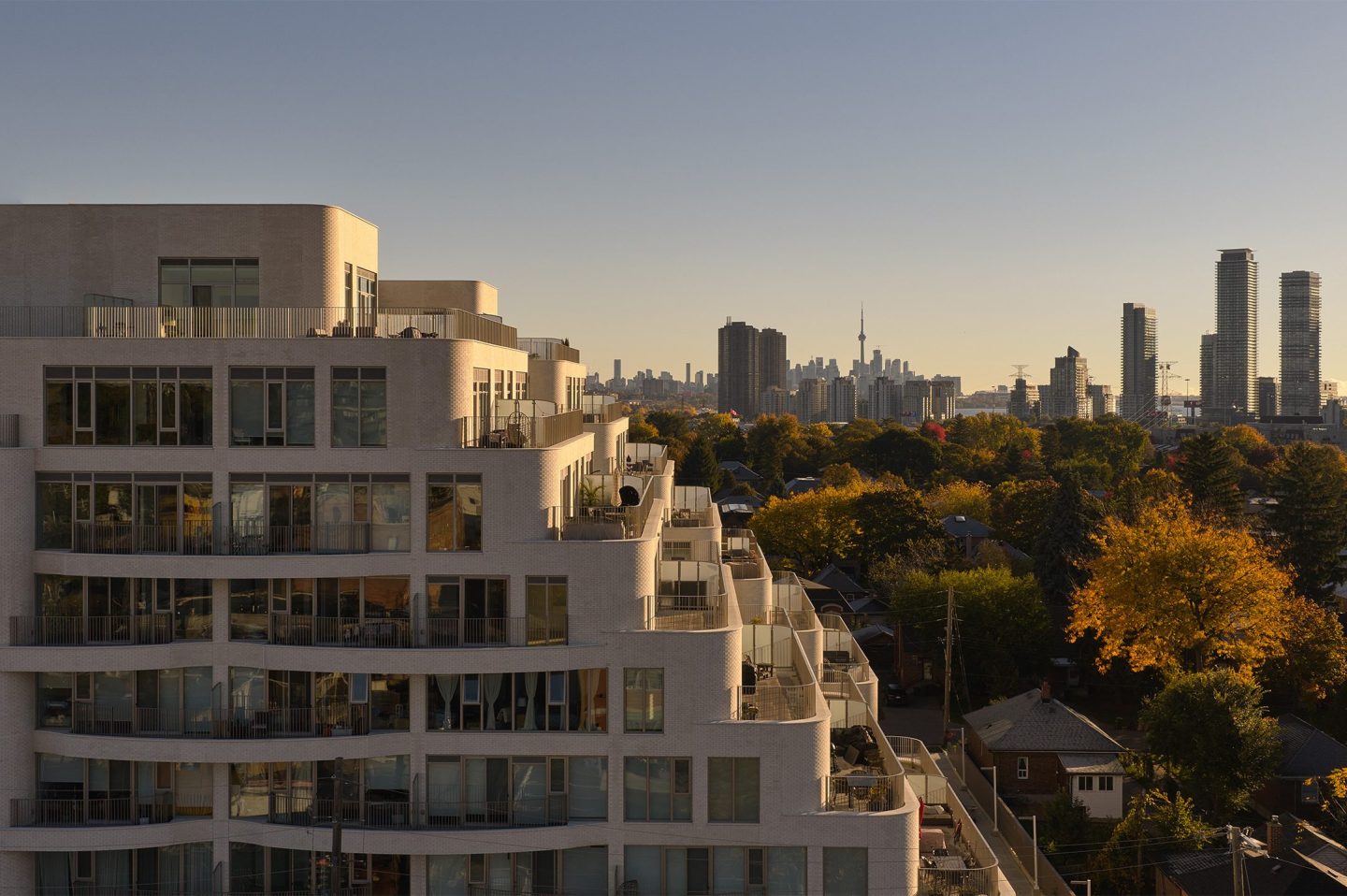
What can you expect from an all-women-designed building? Architecture that prioritises community
Conversations with the community led to the creation of Toronto’s Reina condominium complex, complete with multi-generational units, ample stroller parking and child play areas visible from the communal gym.
What would happen if the developers, architects, engineers and electricians building an apartment complex were all women? Visit Reina condos at 689 The Queensway in Toronto, and you will discover that it leads to generous design decisions, wise consideration of the risks of loneliness for at-home parents and the mother of all stroller parks.
Reina has been designed by Heather Rolleston, principal at BDP Quadrangle. But this project started when her client, Taya Cook of Urban Capital, read an article in Toronto Life about the “Condo Kings” – the 20 men who were said to be transforming the city’s skyline. Cook thought to herself, “I’ve been working in this industry for many years and it’s time for this conversation to change.”
So along with Sherry Larjani from Spotlight Development, she pulled together a women-led team and, after a competition, Rolleston joined as lead architect. Monocle’s Andrew Tuck spoke with Rolleston about how this flipping of the bird to this male-dominated industry led to many wonderful outcomes but also a heavy sense of responsibility. Listen to the full conversation on The Urbanist.
This conversation has been edited for clarity and length.
Could you take a step back for us and explain how this project came about? What decision was made that said: we need an all-women team on this project?
A client of mine, Taya Cook of Urban Capital, was reading an article in Toronto Life magazine called “Condo Kings”. It was about men who had been building a lot of condos, transforming Toronto’s skyline, and she thought to herself, ‘You know, I’ve been working in this industry for many years and it’s time for this conversation to change’. She and Sherry Larjani from Spotlight got together and brainstormed this idea of having a women-led team. That was the impetus for the project and I was interviewed with other female architects and ended up winning the job.
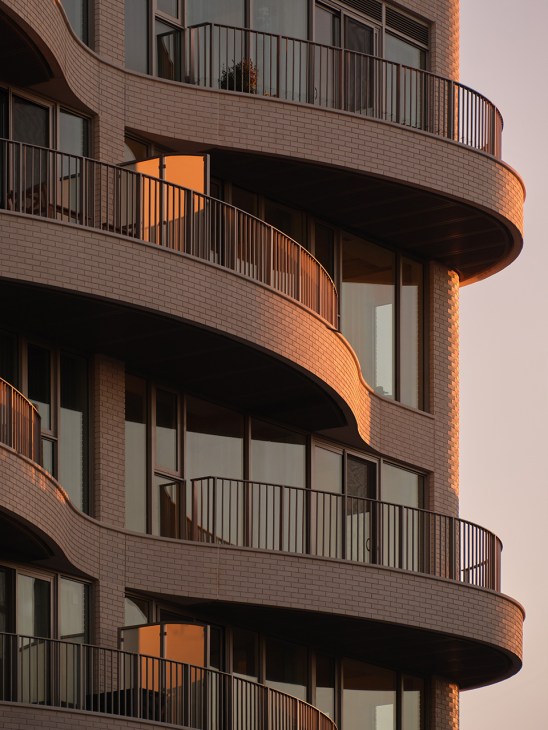
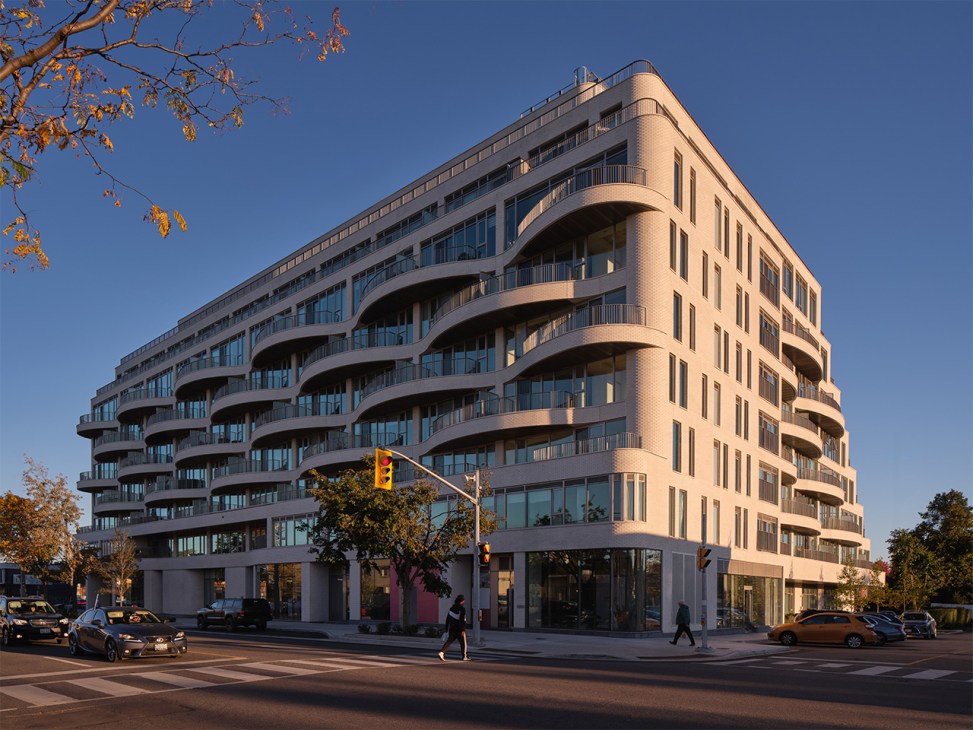
Reina is a polite two fingers up to the world of male-dominated business in the city. The building is beautiful. Tell me the scale of the building and what you’ve designed.
It’s a U-shaped courtyard building. It’s a mid-rise and it gently terraces down towards the adjacent low-rise established neighbourhood. It’s on a main street, The Queensway, and it feels like a well-established neighbourhood. There’s a public school to the west and a vibrant shopping street. Ironically, this project replaced a gentlemen’s club, so that was a great topic when we had groundbreakings and other events on site.

It’s fascinating that you have this [all-women] team – of construction workers, engineers – working on this project. How did that change the decision-making process? What kinds of things did you implement?
We were surprised by the amount of attention that this topic and project got; we were unprepared for that and we were feeling the pressure from the very beginning. We wanted to come at the condo from a different angle but the kind of attention that the project got forced us to think differently. A lot of that came from doing outreach. We had to meet all the same parameters as any other condominium with respect to efficiency, affordability and suite sizes that were great for everyone. But we were aiming higher than that on this project, [so] we started to have conversations with the community. Our client hosted a giant brainstorming session talking about the pain points that people experienced in condominiums.
Tell me about the tenant mix. I hear there are 30 to 40 young children who live there with their families?
There is a wide variety. There are a lot of families, a lot of teenagers. We also designed some intergenerational suites on the ground floor so there are people living here with their aging parents or with their kids in their late twenties. There are single people with dogs. There’s a great sense of community and the amenities that we designed attract like-minded people.
Among the things you’ve added is a stroller park. You go into many nice condominiums and people have to drag the buggy up to their apartment or they’re left in hallways. It’s a simple thing but you thought: let’s sort that out.
When we asked about people’s pain points, that was one of them. For a long time, condominiums aimed to [offer] a kind of a hotel lifestyle but now it’s a different time. A place to put your stroller in an underutilised place in the building, having a shared library so that you can sign out the Kitchen Aid mixer that you only need a couple times a year instead of having it take up space in your linear kitchen. All of these things were suggestions by people [we spoke to]. We planned the ground floor so that people could work out in the gym [while] watching their children play safely. These aren’t difficult things to think about. But when someone suggests it, it’s like: yes, why isn’t it like that?
You’ve created a building where the end users are the key focus. Normally when a building gets made, there’s an investor or a developer who wants to make sure they maximise their profit. Things like ‘let’s have ample space for parking strollers’ or ‘let’s put aside additional space for children to play while mum or dad goes to the gym’ – those things often get engineered out very quickly. Is this an example of when women are in charge of the process, you realise you don’t need to do it in the same old way?
It is a little bit of that. It was just taking more time in the design process, knowing that this was going to be more of a community building from the beginning. We wanted to make a mark with this project. It was about designing from the inside out, which is something that has fallen out of favour recently. Architecture lately has been a bit more about ego – what things look like from the outside – and what’s going to sell in different countries. This was not that. I’m proud to say that the building is beautiful. We didn’t sacrifice any of the beauty in that process of designing from the inside out.