Our 10 favourite shows from Milan Fashion Week autumn/winter 2026
The autumn/winter 2026 edition of Milan Fashion Week delivered creative debuts, sophomore collections and the reaffirming of Italian manufacturing’s prowess. While Georgian designer Demna delivered a blockbuster first chapter for Gucci, Jil Sander’s creative director, Simone Bellotti, showed his sophomore collection for the brand. Finally, luxury houses Max Mara and Tod’s proved that dedication to craft and quality materials are still ambitions worth pursuing. Here are the 10 shows that stood out.
1.
Jil Sander
Simone Bellotti’s second collection for Jil Sander cemented the designer’s status as one of the most exciting and revered creative directors showing in Milan. For his sophomore line-up, he has honed his approach to the minimalism for which the German brand has been synonymous with since the 1990s.
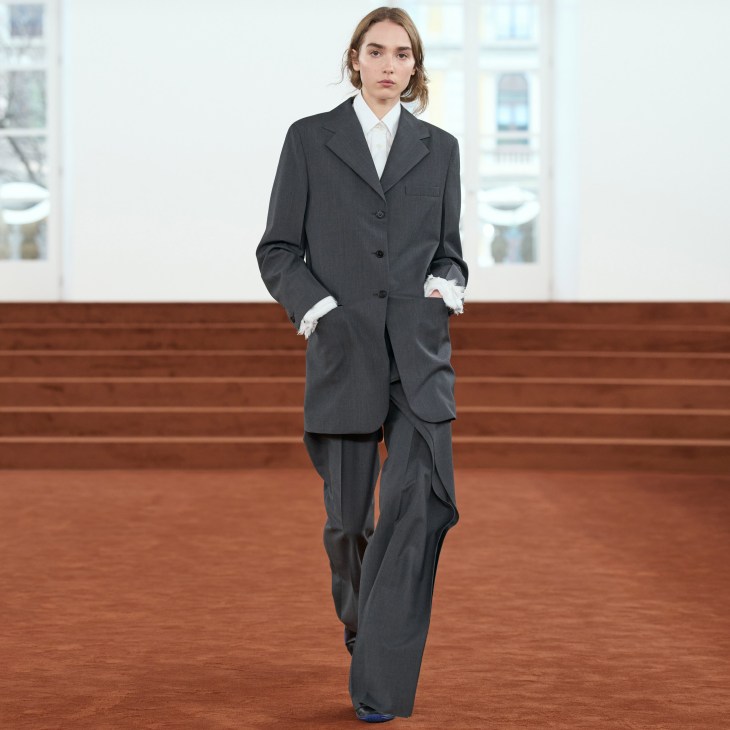
In a near-exclusively black-and-white palette, Bellotti played with proportions and volume, proving that minimalism does not restrain creativity. While distorting classic lines of tailoring with dipped hems, origami folds and jaunty pockets, the collection introduced a feeling of lightly worn spontaneity. Elsewhere, butter-soft leather jackets looked like a second skin, gathered bandeau dresses were hitched up at the front and worn with black tights and flats, while off-the-shoulder dresses were structured yet slinky. The result is a feeling of ease and romance culminating in a finale that brought the audience to rapturous applause.
jilsander.com
2.
Fendi
Maria Grazia Chiuri’s debut at Fendi heralded the start of a new era at the Roman fashion house. The collection marked the first time since the label was established in 1925 by Edoardo and Adele Fendi that a member of the Fendi family hasn’t had a hand in the women’s and menswear collections. It was a full-circle moment for Chiuri, who began her career at Fendi under its famous five sisters – Anna, Carla, Paola, Franca and Alda – and Karl Lagerfeld in the 1990s before enjoying an astonishingly successful career, first at Valentino and later as the first female designer to become the creative director of Dior. Aptly, her debut at Fendi was a finely tuned amalgamation of the design signatures that she has developed along the way. Easy suiting with unbuttoned tuxedo shirts and satin dresses were countered by boilersuits, cropped parkas, cargo shorts and glittery gilets that brought an effortless feel and modern edge.
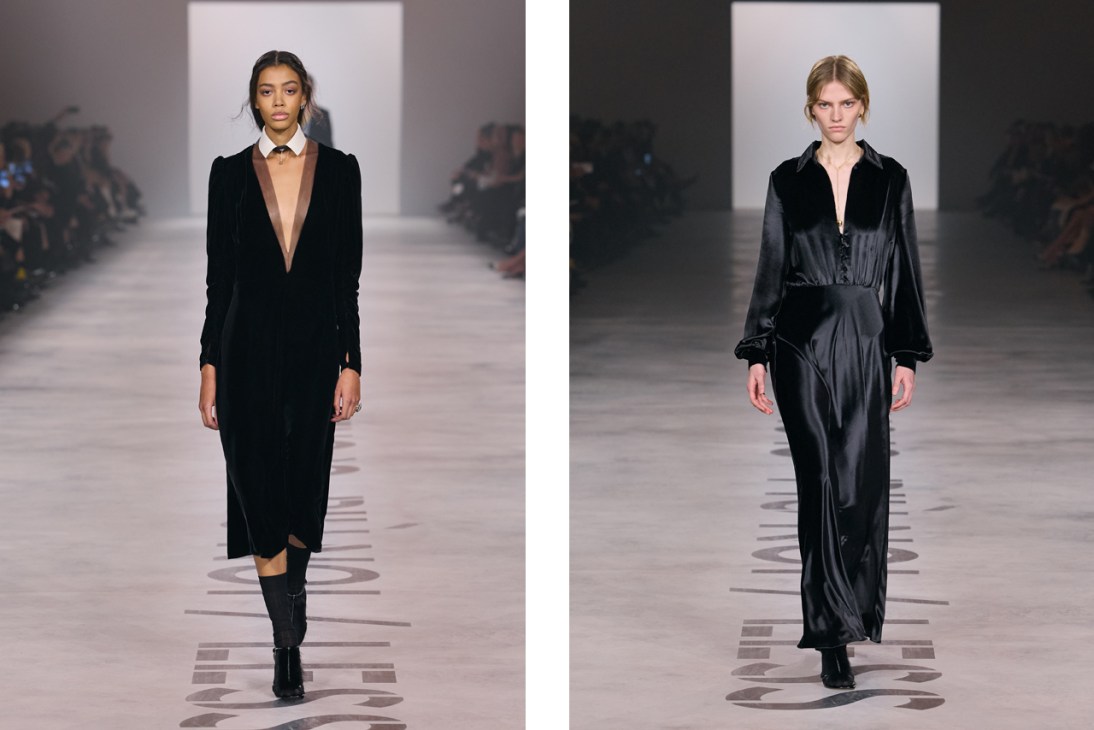
Meanwhile, the A-line silhouette, which she made famous at Dior, lost its strictness and was delivered with an ease better suited to the everyday. Her motto for this collection was “Less I, More Us”, referencing the teamwork that it takes to continue the legacy of a brand such as Fendi – and few know better than Chiuri how to make that stick.
fendi.com
3.
Gucci
Gucci’s new creative director, the one-name designer Demna, leant into the Florentine house’s role in the public consciousness as a purveyor of mass sex appeal for his debut runway show. Staged in the Palazzo delle Scintille amid recreations of statues found in the collection of Florence’s famed Uffizi Museum, Demna sent female models prowling down the runway in skin-tight mini dresses paired with vertiginous heels, while male models squeezed into even tighter T-shirts. More wearable clothing also featured in the collection: attractive skirt-suit sets would work well in an office while the jeans and leather coats echo the style already present on the streets of Milan, Mexico City or Miami. The references to Tom Ford’s fondly remembered time at the house were overtly apparent.
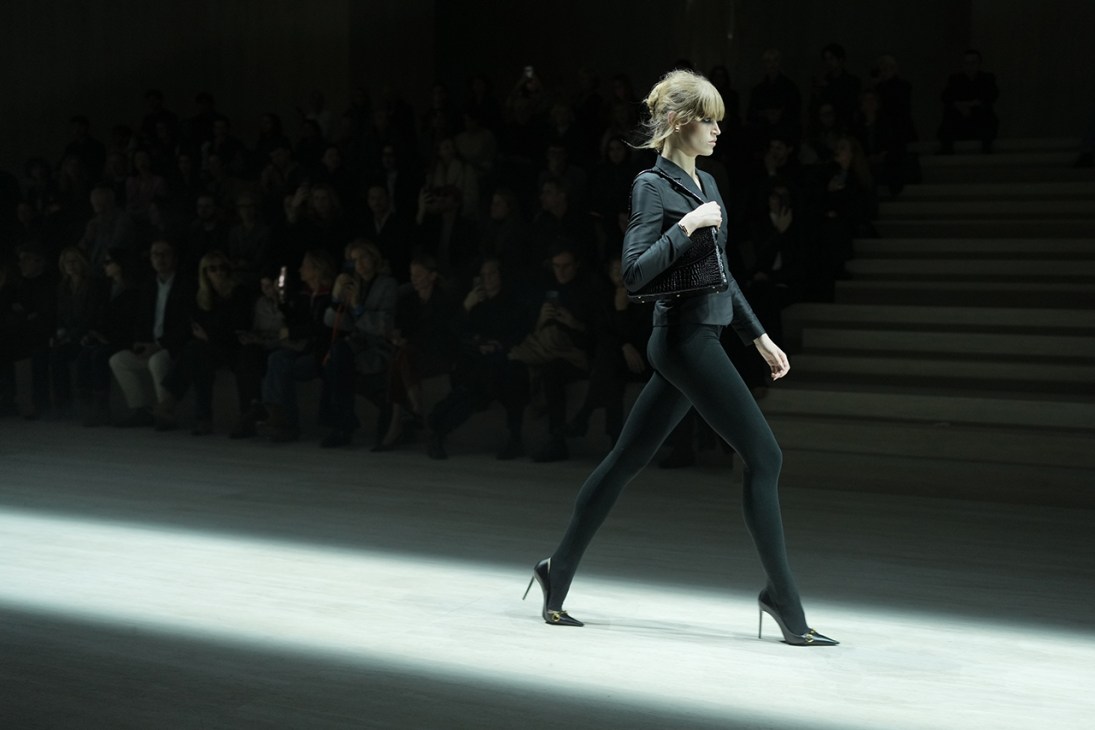
A lot rides on Demna’s ability to bring star power to the brand. Kering, Gucci’s parent company, has reported losses and sales decline for three consecutive years. Last year the group reported a 13 per cent drop in total revenue. Stripping the brand back to its basics, and injecting it with a sense of fun, might help pull Gucci out of this prolonged slump.
gucci.com
4.
Max Mara
Max Mara’s creative director, Ian Griffiths, alluded to the difficulties of our current times through the use of hooded silhouettes, page-boy tunics and over-the-knee suede boots, which he defines as “neo-medieval”. This season’s muse was Matilde di Canossa – the Tuscan countess, born in 1046, who rose to prominence as a diplomat, military commander and patron of the arts. As such, Griffiths aims to imbue those who wear his designs with this sense of female empowerment – albeit in the boardroom, not the battlefield.
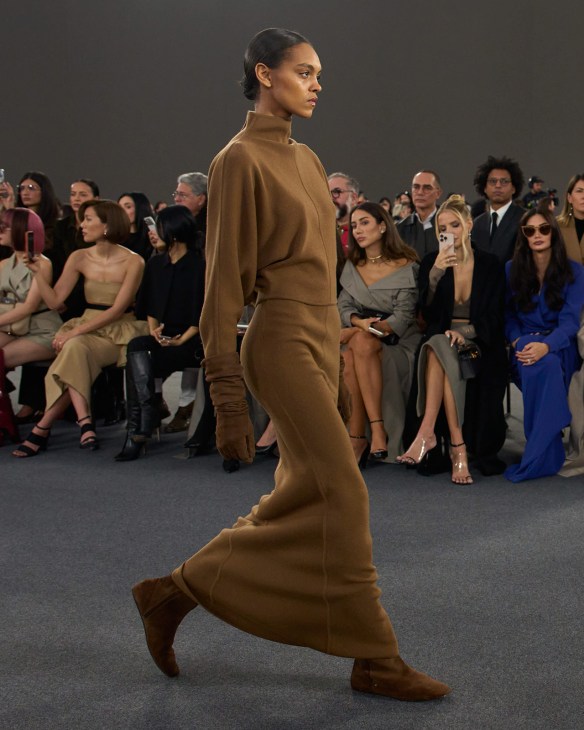
Rather than feeling gimmicky, the effect was eminently wearable with an emphasis on materiality that the Italian brand, a cornerstone of Made-in-Italy manufacturing, is known for. Nubuck patches adorned cashmere jumpers while gloved hands appeared out of wide-cut sleeves. Floor-length coats came in earthy shades of brown, beige, anthracite grey and oxblood. Each piece could easily be seen in regular rotation during the colder months, reinforcing – or should we say fortifying – the structure of a winter wardrobe.
maxmara.com
5.
Prada
This season, Prada’s co-creative directors Miuccia Prada and Raf Simons delivered a high-energy spectacle – akin to a striptease – set to pulsating music at the house’s Fondazione. Fifteen models took to the runway four times each, removing layers at every appearance. “As a woman, your life is layered – each day demands not only a shifting of clothes but a richness of identity within yourself,” said Prada backstage after the show. “This collection reflects the complexity of life. We were interested in a fundamental expression of these endless possibilities.”
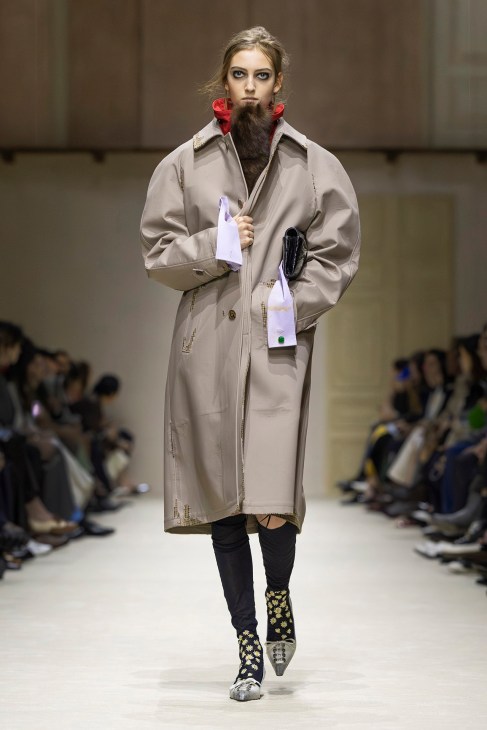
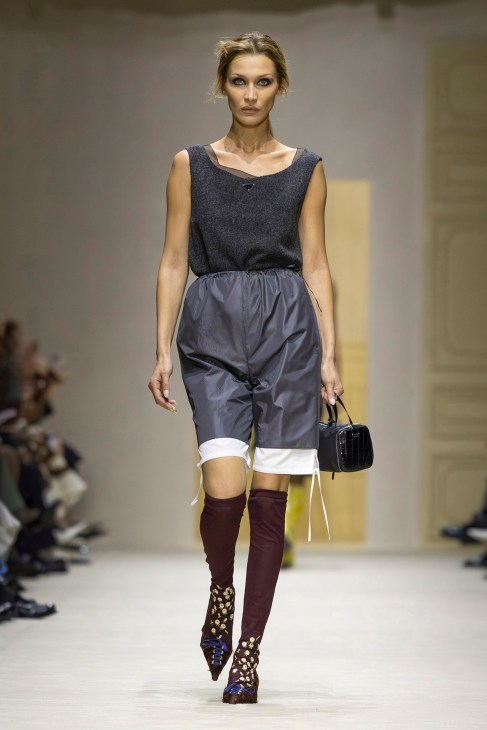
Trench coats and small scarves were gradually removed to reveal embroidered satin dresses, knitted vests and knee-high socks. It was a compelling demonstration of how the format of a runway show can be reimagined while acknowledging the reality of how people deploy their wardrobes in the real world, superimposing different pieces according to the weather or occasion. “There are sport elements mixed with high artisanship,” added Simons. “Pieces are aged, afforded a patina, a sense of a life lived.”
prada.com
6.
Marni
For her debut collection as creative director of Marni, Belgian designer Meryll Rogge turned to her own memories of the Italian brand. “The starting point is my personal relationship to Marni, which started when I was a teenager,” she said backstage after the show. “It shaped my vision of fashion and followed me through my life and career.” As it often is for a creative director’s first outing with a brand, the first port of call was the archive. Rogge dug out some of Marni’s first collections from the 1990s by Swiss designer Consuelo Castiglioni. “It was too tempting not to revisit,” she added.
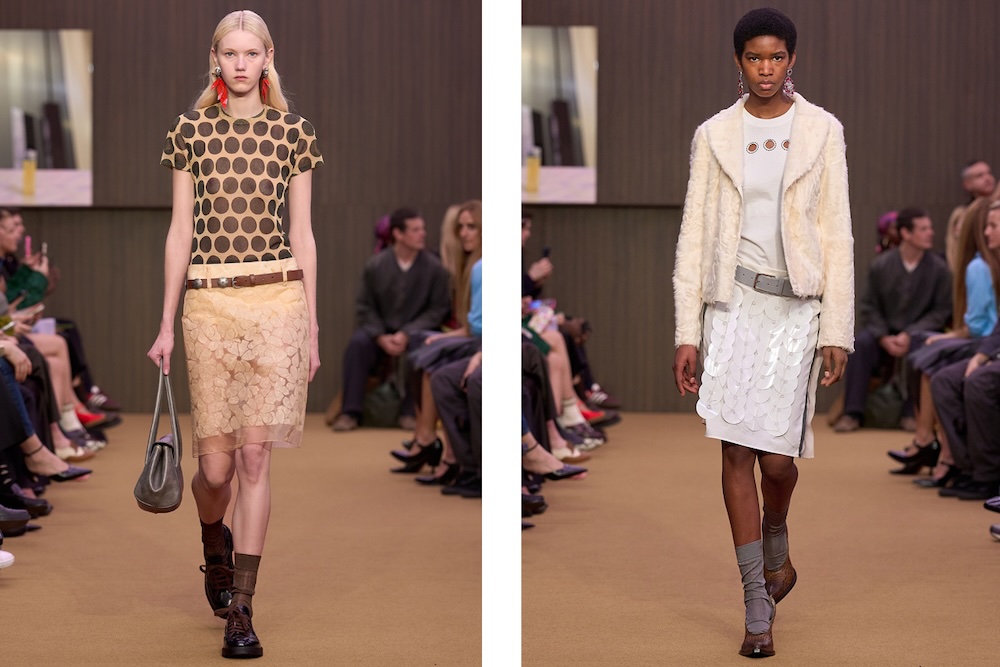
The recurring motif of polka dots – be it as supersized sequins, circular cut-outs in a top or mother-of-pearl embellishments – provided an enjoyable fil rouge. The colourful knitwear was another highlight, a strong suit of the designer’s, whose own brand, BB Wallace, specialises in. “I wanted to bring the brand back to real life,” said Rogge. The set design by Milanese studio Formafantasma, which featured hand-painted mirrors and brown-and-yellow walls, was intended to feel ordinary. “Marni was always a brand intended to be worn from day to night, not for special occasions,” added Rogge. “That’s what we tried to capture in the abstracted space, which could feel like a home, a government building, an office or a gallery.”
marni.com
7.
Tod’s
The prowess of Italian manufacturing and Tod’s own artisans were the focus of this season’s collection. At the show, guests were welcomed by craftspeople at their atelier benches working on the brand’s signature leather loafers and bags, but also artisanal fans, embroidery and metal hardware. On the runway, the ready-to-wear pieces continued on this theme of materiality. The use of Pashmy – an ultra-fine calf leather developed by the label – was used throughout the show on outerwear, skirts and trousers.
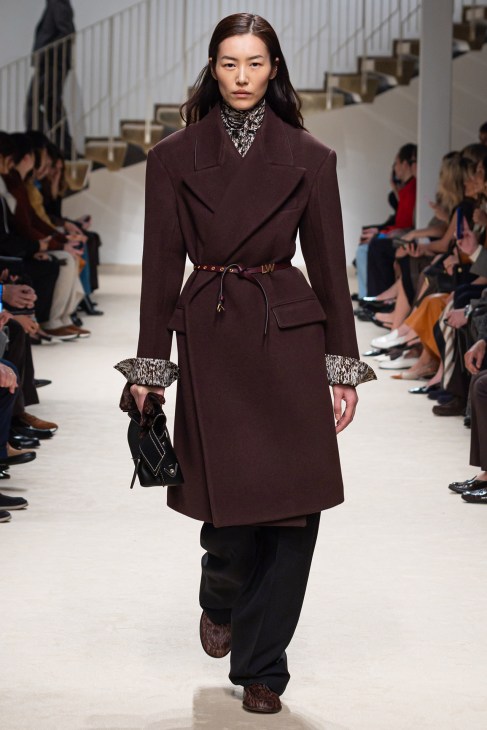
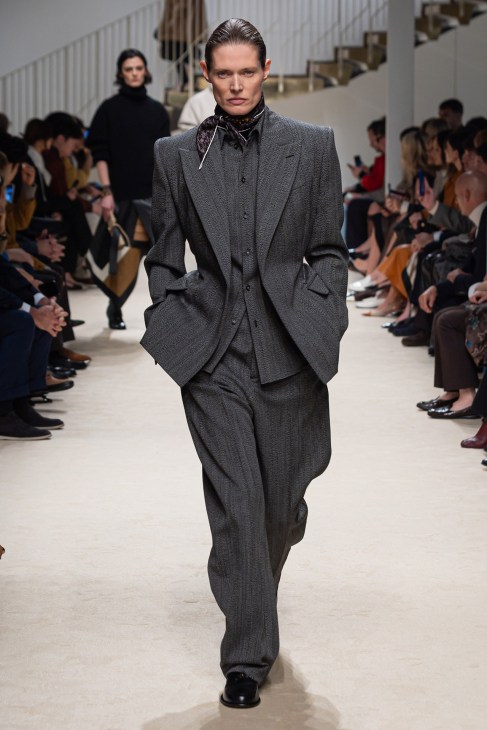
From there, Tod’s creative director since 2023, Marche-born Matteo Tamburini, played with proportions to sculptural effect. Drawing inspiration from the works of artists Marta Pan and Henry Moore, leather-panel dresses draped over models’ shoulders while asymmetric pony-skin shawls brought added interest to otherwise minimal outfits. The colour palette was kept warm, with shades of ginger, chocolate and cream. Ultimately, Tamburini’s vision – brought to life in the capable hands of Tod’s artisans – proves that fashion is at times best when the focus remains unapologetically on quality and creating clothing intended to accompany its wearer throughout their lives.
tods.com
8.
Ferragamo
Ferragamo’s creative director since 2022, Maximilian Davis has been widely praised for bringing a renewed sense of relevance to the heritage Italian brand. Still only 30 years old, this season represented a continuation of his exploration of 1920s references – this time rooting it in maritime and nautical codes. Sumptuous navy peacoats and wide sailor collars came deconstructed, and with detailing such as satin lining, riffing off the uniforms of sea men who have gone off to lay down their roots overseas.
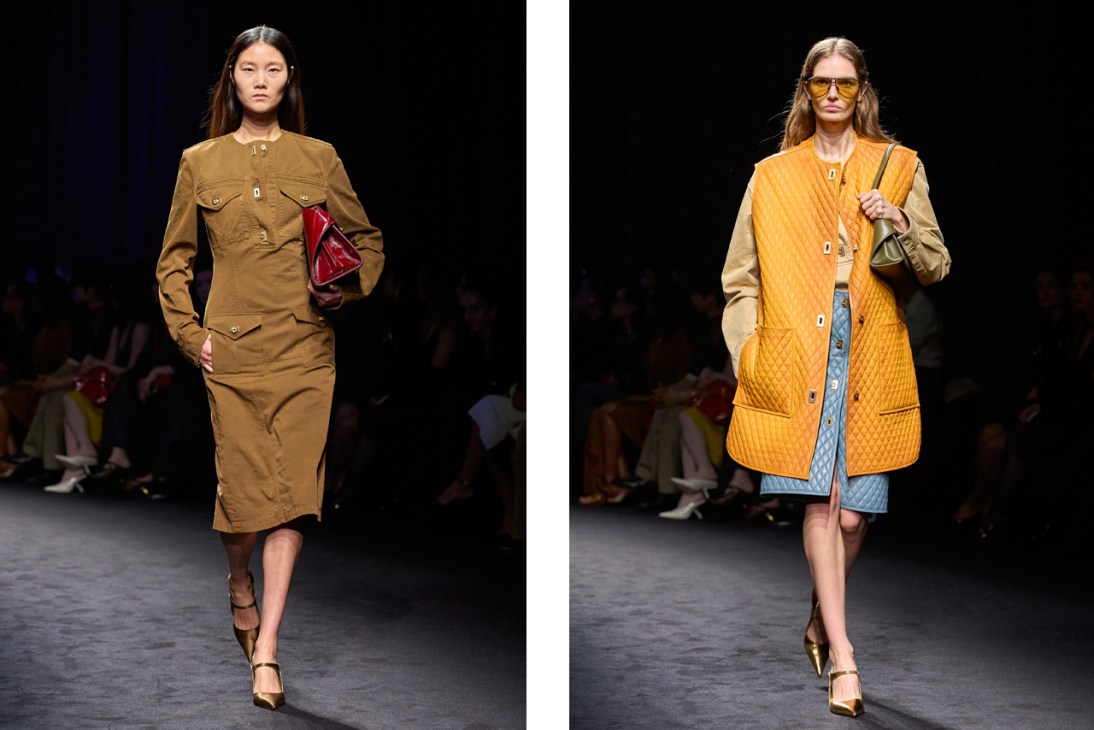
“That’s something that both Salvatore [Ferragamo, the founder of the brand] and my own family experienced – he left his home in Italy for the US before returning home and my family moved from Trinidad and Jamaica to Manchester,” Davis shared in his show notes. “They all crossed the water to discover new beginnings.” Elsewhere, the silhouettes of the era’s speakeasy culture came to the fore, with velvet slip dresses and gowns that looked as though they had been conjured from liquid gold. The footwear for which Ferragamo originally made its name came by way of monk-strap oxfords and wedges.
ferragamo.com
9.
Bottega Veneta
At her first show for Bottega Veneta last September, creative director Louise Trotter revealed how much she was enjoying getting to know her newly adopted home of Milan. Six months later, it seems she has gotten intimate with its juxtapositions. “This is a season of structures, softened,” she said in the show notes. “A study of intimacy as much as protection. The way an austere façade belies beauty on the inside.” It translated to exaggerated volumes in butter-soft leathers and feathers across menswear and womenswear, knitwear with leather panelling and precision-cut tailoring. The palette, meanwhile, was for the most part industrial grey and punctuated with pops of bubblegum pink and retro yellow.
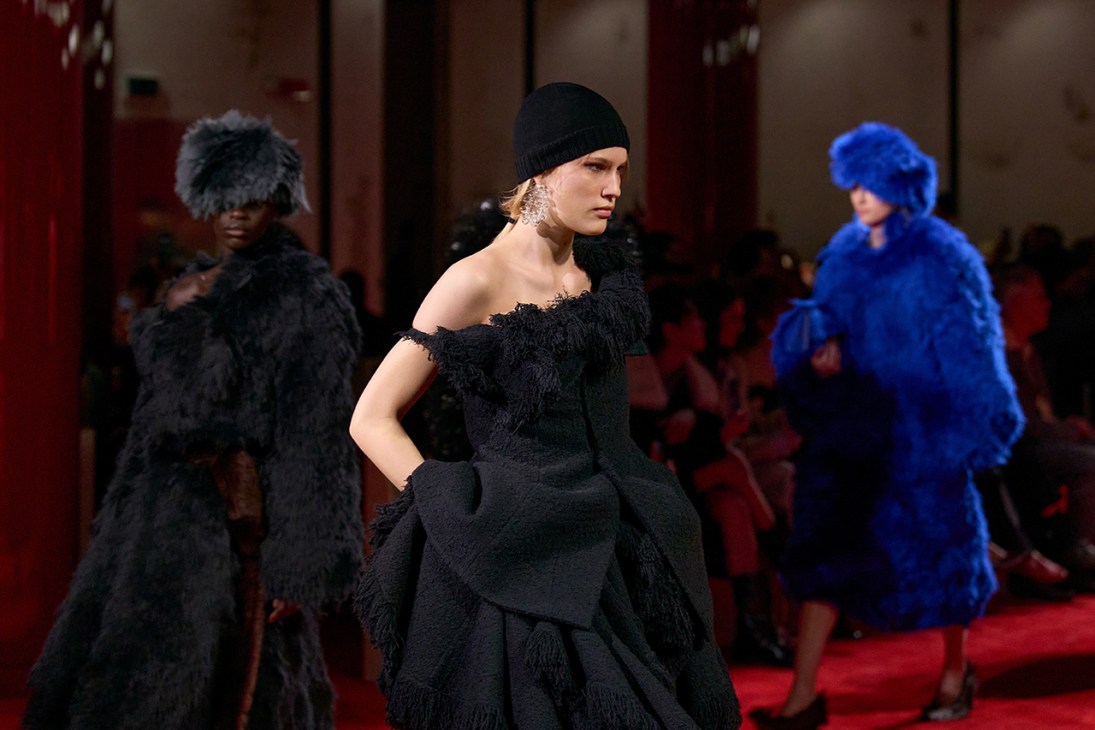
The intrecciato leather-weaving technique for which the brand is famed for was presented in multiple guises, from XL shoulder bags and coat collars, to a trench coat where it was realised in a tartan pattern. To close the show, the fibreglass creations that the designer debuted at her first collection appeared again – this time in a trio of black, blue and pink – that was technically crafted so to mirror the appearance of fur and bounced along the catwalk creating a spontaneous counter to the sobriety seen earlier in the show – a juxtaposition that is inherent to the city of Milan and its style codes.
bottegaveneta.com
10.
Giorgio Armani
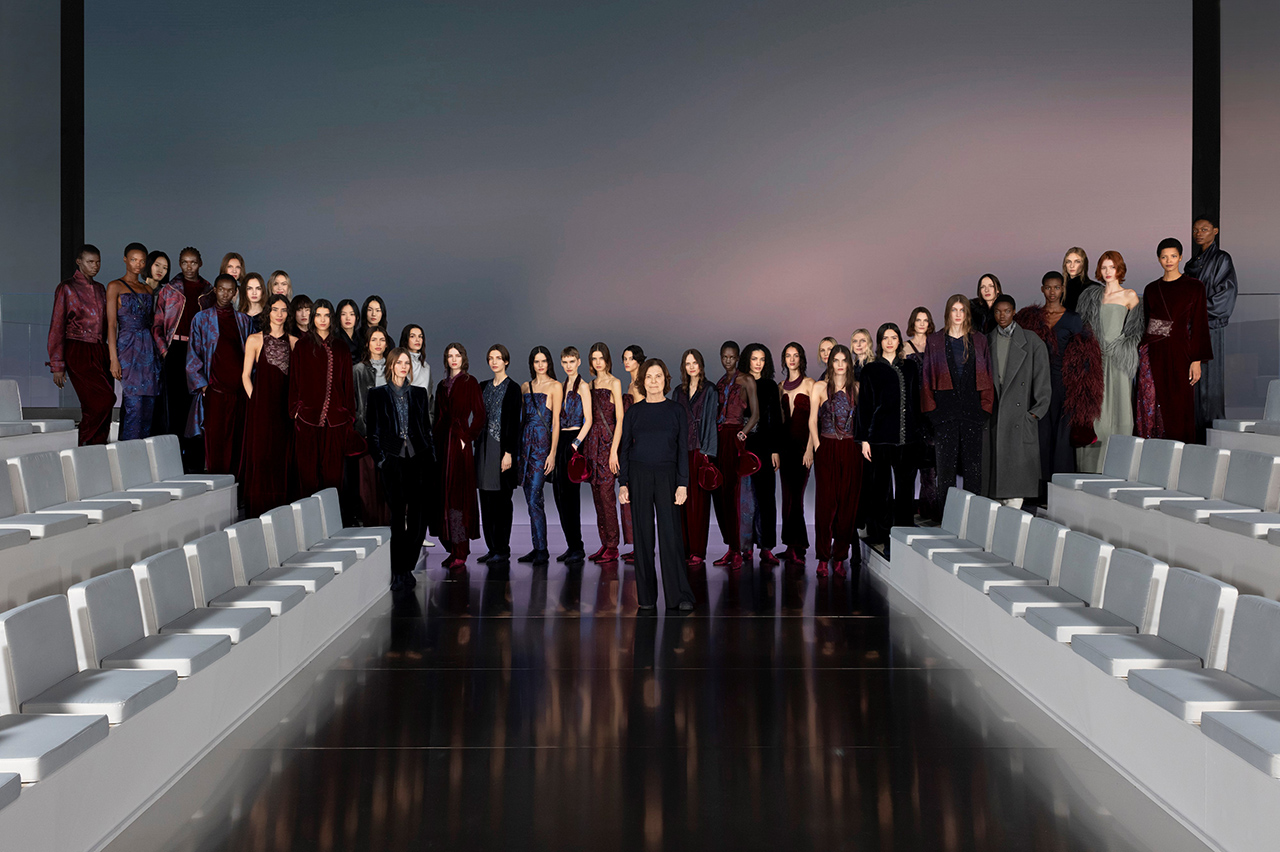
The fashion industry has been rife with speculation about what the world of Giorgio Armani would look like without its eponymous founder who died in September aged 91. The group’s two shows – for Emporio Armani and Giorgio Armani – provided the answer, which is familiar but not the same. With menswear designed by Armani’s long-term right-hand Leo Dell’Orco and womenswear by his niece Silvia Armani (who both worked across the collections when Armani was alive), it was no surprise that the needle didn’t move far from the work of its founder.
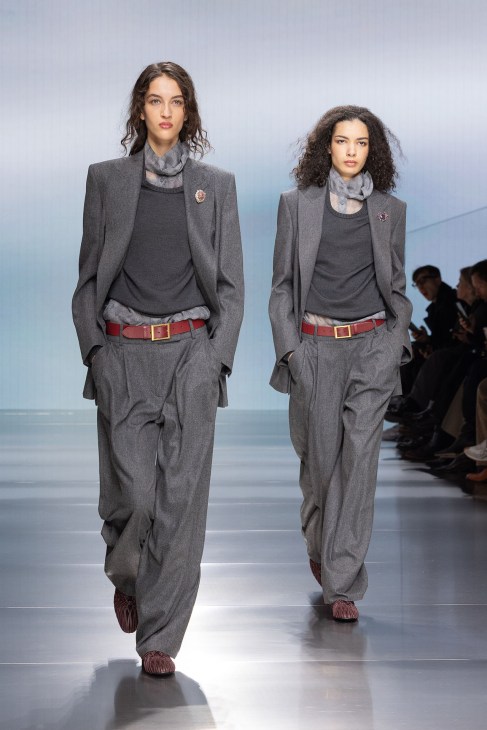
The big question now is, does it need to? At the Giorgio Armani show on Sunday morning, the womenswear collection comprised the embellished velvet co-ords and styling combinations favoured by the late Armani but also included origami-pleat tailoring in grey and brilliant white that infused the old with a new modernity. Meanwhile, evening gowns riffed off the black-tie silhouettes synonymous with the archive, while outerwear included a long leather trench coat and petrol-blue satin bomber jacket that felt more trend driven – something the Armani output has never been about before. With the two designers’ debuts under their belts, an evolution rather than reinvention appears to be on the cards.
armani.com
Read next: The Monocle City Guide to Milan, featuring the best hotels, restaurants and retail spots