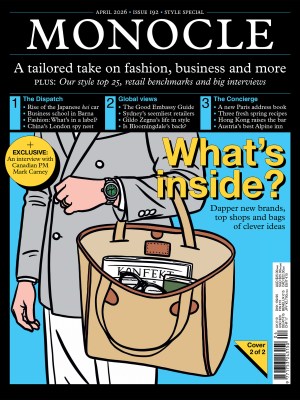
Olivier Bron shares his bold plan to reimagine Bloomingdale’s and revive NY retail
While the future of US department stores is far from certain, customers have been returning to the storied emporiums in recent years – and the CEO of Bloomingdale’s is making sure they stay.
When Monocle steps into the imposing, black-granite flagship of Bloomingdale’s on Manhattan’s 1,000 3rd Avenue on a sunny spring morning, Gucci sales associates are busy arranging spring/summer accessories, a personal shopper is eyeing a designer dress for a client and an affable worker is vacuuming with great care – all in anticipation of customers streaming into the building in a few hours’ time. Anticipation hangs in the air. It’s a little like being in a concert hall just before the patrons arrive.
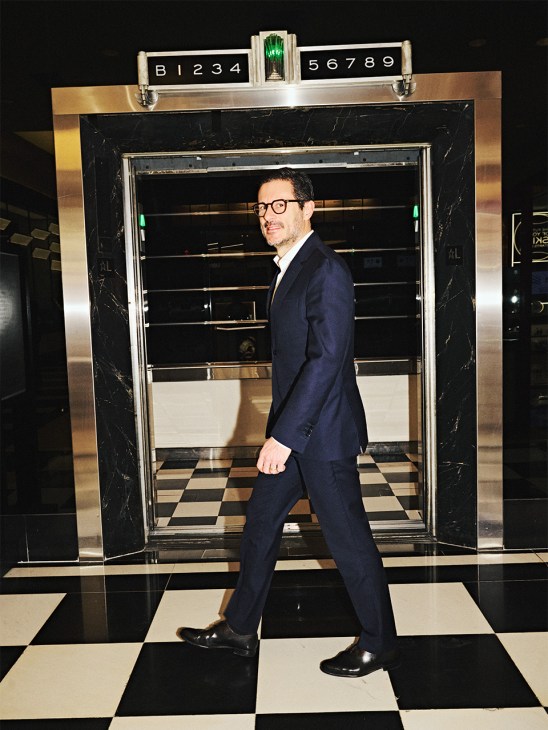
Olivier Bron, the CEO of Bloomingdale’s, is here to orchestrate the morning performance. He dashes into the art deco lifts, buzzes through the luxury floor (now home to a new two-level Chanel salon), points out the updated design accents and greets several staffers by name. In his dark-blue suit and white button-down shirt, Bron is the embodiment of a focused and courteous business leader.
More than two years into his role, the 48-year-old executive leads a team of 1,458 employees in New York and 8,475 nationwide. With 31 department stores, 25 outlets and four smaller-scale Bloomie’s outposts, the 154-year-old company is experiencing a revitalisation under Bron, who hopes to usher in a new era for the business by spearheading an ambitious renovation plan and implementing his “Dream Big” strategy. “My dream is to build the next golden age of Bloomingdale’s,” he says. “The last one was in the 1970s and 1980s, when 59th Street was the convergence point for all New Yorkers.”
In its prime, Bloomingdale’s was indeed a cultural force. Known for its fashion, furniture and food, it reeled in shoppers and casual browsers alike. It was among the first North American department stores to install escalators in 1898; it also helped to popularise frozen yoghurt and pioneered the concept of the branded boutique. The retailer aspired to be not just a store but a destination. The UK’s Elizabeth II dropped by the flagship during a 1976 state visit. Yves Saint Laurent debuted his iconic fragrance Opium here, while Massimo Vignelli, the designer behind New York’s original subway map, created the shop’s iconic Big Brown Bag. Bloomingdale’s was once so in vogue that Andy Warhol called it “the new kind of museum for the 1980s”.
But Bron is not seeking merely to glorify the past. Instead, he wants to reimagine Bloomingdale’s and set new, ambitious goals for the business. There are plans for major renovations of all of its top stores and more. To raise the personal-service bar, the company has hired 90 personal shoppers who each now sell more than $1.5m (€1.3m) of goods a year.
Bron is the former Ceo of Thailand’s Central and Robinson Department Stores, and also has stints at Galeries Lafayette and Bain & Company under his belt. Now he is competing in the US retail arena during a particularly uncertain time. The Chapter 11 bankruptcy filing by Saks Global in January caused a major ripple effect across the industry, once again calling the future of US department stores into question. Bron is naturally vigilant but he tells Monocle that he also sees fresh opportunities for Bloomingdale’s to become “the best solution for brands when they consider US distribution”.
“Saks is a major player in the industry so what’s happening is a revolution,” he says. “We don’t know exactly how this story is going to end. A lot of brands are exposed to this situation so it’s scary. This uncertainty is creating turbulence in the market but we don’t spend too much time focusing on what’s happening at Saks.”
Bron is looking further afield for ideas. “The ways in which Asian department stores leverage social media and social shopping are extremely inspiring,” he says. “Meanwhile, in Europe, it’s really about the way that stores are designed and experiences are built.” He notes that his counterparts in Asia have been quicker to focus on the concessions-based model. “Getting the merchandise right isn’t enough. You need to have the right marketing, the right campaigns and the right store design.”
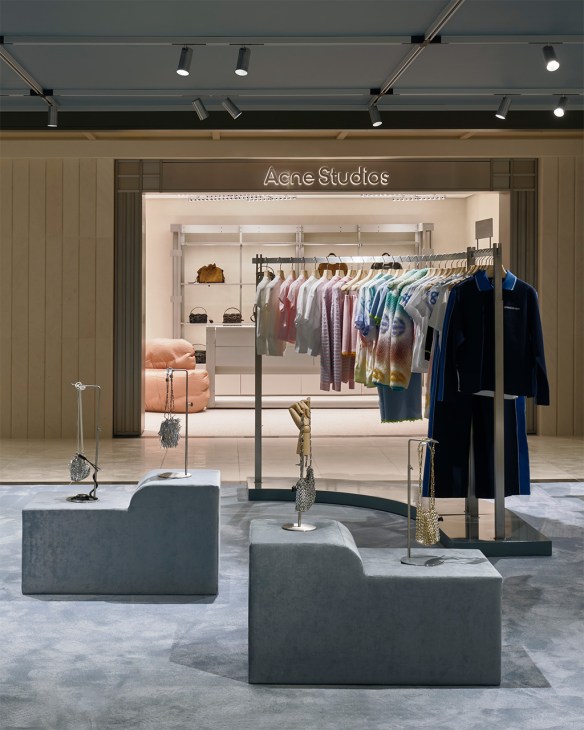
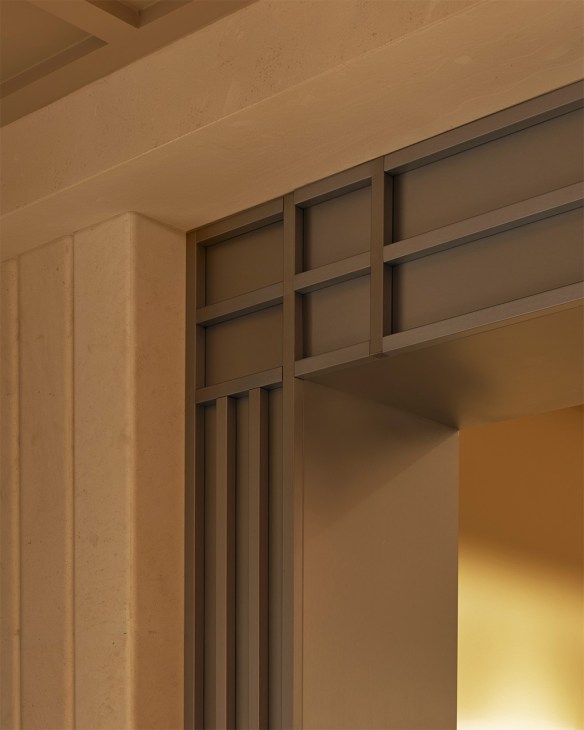
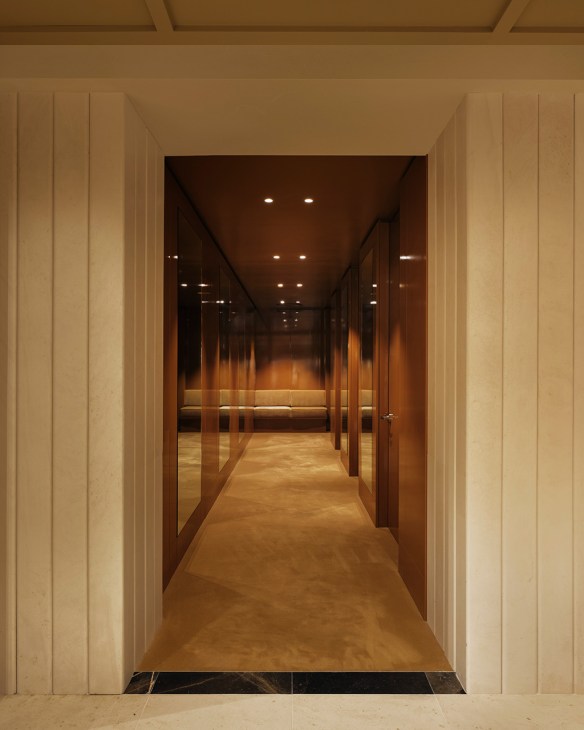
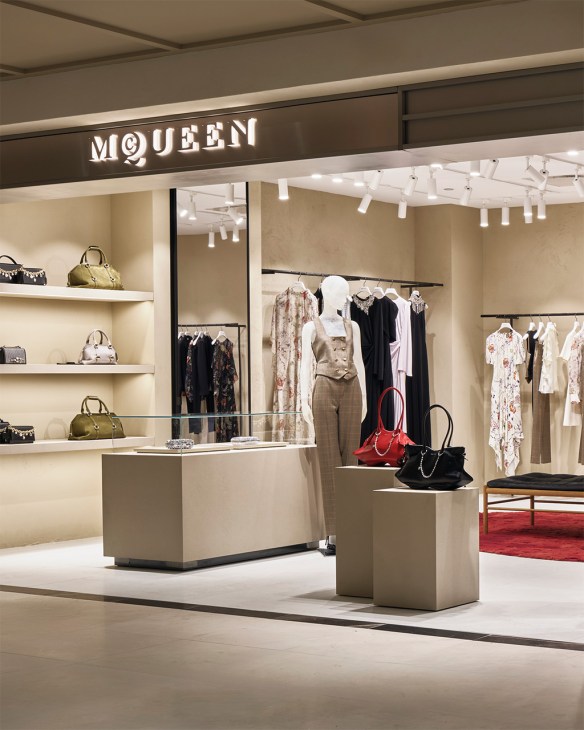
This is why he has been going all in on renovating his company’s property portfolio, starting with the 1,000 3rd Avenue flagship. It’s not just the department store’s outdated black-and-white floor tiles that are being replaced; the goal is to rethink the shop floor completely and, within the next five years, to renovate 12 more top-performing stores in the Bloomingdale’s portfolio. Belgian architect Bernard Dubois, whose finesse can be seen in Paris’s Courrèges store and The Standard hotel in Brussels, has been working on the flagship’s fourth floor, while the retailer’s internal team is refreshing the fifth, opening up space for better storytelling and service.
Bron says that the right retail design can inspire a fresh, more casual way of selling and help to foster connections. “When you think about building a relationship with a person who you enjoy spending time with, you think about space,” he says. “For me, it would probably be a cabin in the mountains with a fireplace, warm materials such as wood, a nice chair and a glass of wine. That’s where I would love to have a discussion with this person. I want all of our customers to feel this way when they come to Bloomingdale’s – for it to feel warm and cosy.”
His philosophy is paying off for Bloomingdale’s. It’s enjoying growing sales, with a 9 per cent year-on-year increase in the third quarter of 2025 (Bloomingdale’s, which is part of holding company Macy’s Inc, doesn’t share full sales figures). Bron is trying to keep up the momentum by challenging teams to outperform their most recent gains.
While some Saks and Neiman Marcus shoppers, suppliers and talent have come knocking at the company’s door, Bron attributes its upturn to the Dream Big vision that was laid out two years ago. This has included opening 3,300 additional points of distribution with new brand partners such as Valentino, Burberry, Chloé, Bottega Veneta, Roger Vivier and Jacquemus.
“The great performance that we have experienced over the past two years is largely the fruit of the strategy,” says Bron. “Is the Saks situation helping our business? Probably but just a little bit – we have had some talent approaching us. But I am sorry that they are facing challenges. It’s not helping our industry. We spend a lot of time defending the department-store model and explaining why it still has a bright future.”
Bron is also adamant that department stores “must have the right service”. It’s why he has been doubling down on wooing high-spending customers. In recent months clients have indulged in private visits to Dior’s 57th Street address; they have been flown to Sicily for a Bulgari outing and enjoyed fine cuisine courtesy of Lalique in Paris. By making shopping more experiential, Bloomingdale’s has been able to reduce its discounted sales significantly compared to 2019. “It’s much more about the relationship, meaning that the customer will be less obsessed with discounting and more interested in the product and getting access to experiences,” he says.
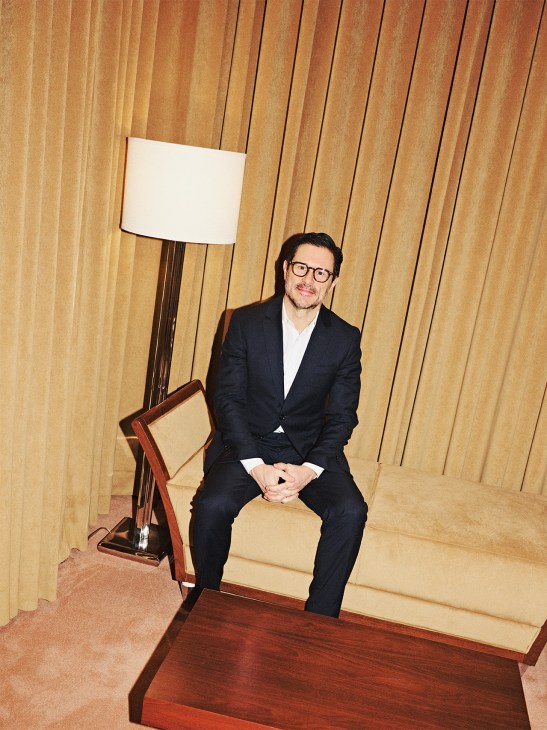
“Olivier came with a good attitude that’s focused on differentiating the chain from rivals and really focusing on the customer,” says Neil Saunders, the managing director of retail research agency Globaldata. “Those things are invaluable in a sector where too little emphasis has traditionally been placed on investing in propositions and creating something meaningful for shoppers.”
While Bloomingdale’s serves the luxury market, it also captures a lot of premium spending from middle-class consumers. “This allows it to fish in multiple pools,” says Saunders. That means On, Nike and Hoka trainers aren’t far from the Christian Louboutin corner with its signature red-lacquered wall. The way that department stores offer proximity to a wide range of products across categories is one of the reasons that Bron is betting on the model’s future. It’s a one-of-a-kind ecosystem that allows brands in all camps to attract customers. Curating a range of independent brands is equally crucial, especially since many have been priced out of New York state’s retail property market.
Bron contends that shoppers want a highly personalised experience. “People are part of a community,” he says. “What are the groups that they belong to? What do they like? How do they act?” He believes that the answer partly lies in bridging what he sees as a disconnect between brand strategies and department stores’ conventional execution. “Sometimes, when you go to shops across the country, there are fantastic brands but you have five products on a rack in the back of a floor with no lights or service. If that’s how you’re representing brands, it’s a problem.”
Such an approach has often left customers disappointed with their department-store experiences compared to those inside single-brand boutiques. So Bron’s latest mission is to match – or even surpass – luxury houses’ level of service. “If you want to buy a bag, you could buy one for $300 [€255]. So why are you buying one for $4,000 [€3,395]?” he asks. “You’re investing in more than just the product. You’re buying a story, an experience and a social marker. Why are our customers walking on the street with a Louis Vuitton or a Chanel bag? It’s not only about the bag. The brand that they carry represents themselves.”
Noting that many Bloomingdale’s customers bought their first luxury products at the department store, Bron sees the retailer as an entry point to this world. Shoppers should feel at ease and free from the intimidation that they might encounter in a stuffy Madison Avenue boutique. “If you want to be a good retailer, you have to care for people,” he says. “That’s why we love this business.” Kevin Harter, the vice-president of Bloomingdale’s integrated marketing and fashion office, nods nearby. He explains that Dream Big was never just a catchphrase. “Two years later, we’re still talking about it,” he says.
The global department-store market is poised to grow from $136bn (€115bn) in 2025 to $202.5bn (€172bn) by 2033, according to data from SkyQuest Technology. This suggests that Bron and his team can continue to dream big. Even when the future of major competitors remains uncertain, Bloomingdale’s offers hope that the glory days of the sector aren’t behind it. “There’s a great opportunity for us right now,” says Bron, listing his plans for the rest of 2026, from launching four major advertising campaigns to hosting 400 client events. “We have to catch it and work hard to deliver.”
A life in retail
Born in France, Olivier Bron studied engineering at ECAM LaSalle in Paris, before earning his master’s degree in strategic management at HEC Paris Business School. In his early career, he worked as a principal at Bain & Company, focusing on retail, consumer goods and private equity transformation. He then moved into the world of department stores, spending nearly eight years at Galeries Lafayette in France, including three and a half years as COO.
In 2021 he became the CEO of Central and Robinson Department Store in Thailand, before joining Bloomingdale’s in November 2023 to spearhead its revival. He and his wife live in New York with their three children.