‘Define your core principles’: Tibi founder Amy Smilovic shares her lessons in entrepreneurship
Get to know your customers, lead your business on your own terms and define your own version of success.
On a late summer afternoon, well-dressed women are walking in and out of a townhouse in London’s Mayfair neighbourhood. They’re here to pay a visit to Tibi, the womenswear brand that has taken over the 12-bedroom house to host styling appointments and meet-and-greets with founder Amy Smilovic. “We’ve had appointments with the most incredible women who come from every kind of industry,” says Smilovic, as she lays back on a chair after a long day welcoming customers old and new.
Smilovic didn’t always have such a direct line of communication with the women wearing her clothes. When she founded her brand in Hong Kong in 1997, she began by following the industry rulebook: multiple collections a year, large-scale fashion shows, trend-driven designs and hundreds of stockists around the world.
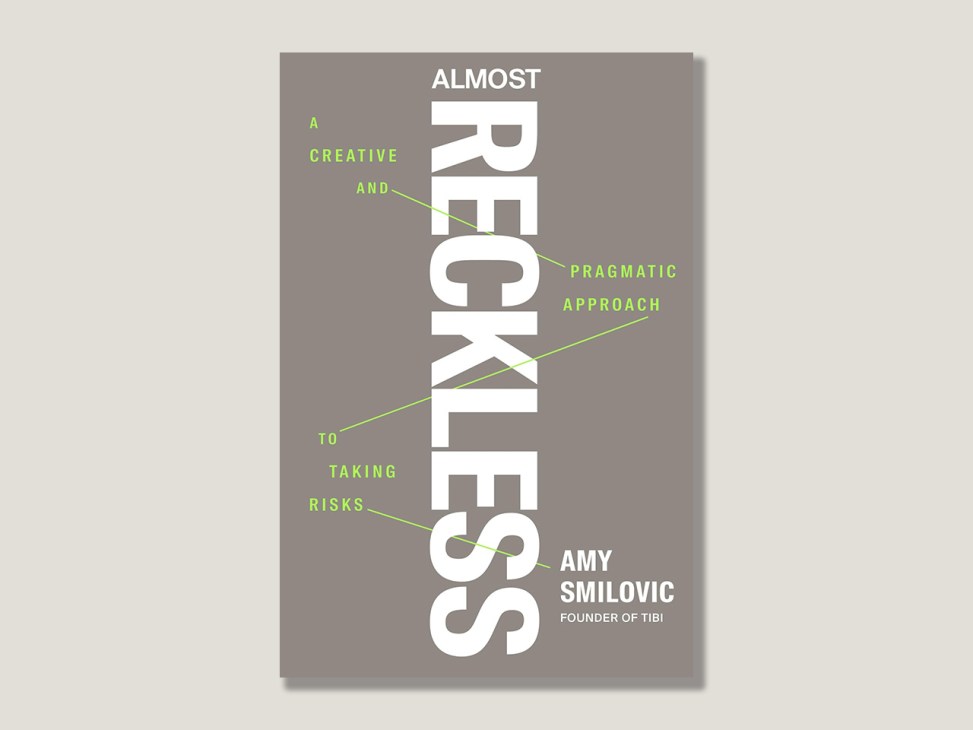
When the pandemic exposed the cracks in the traditional system, Smilovic decided to reassess her definition of success: design only the clothes she wanted to wear and start talking to her customers directly through events and style classes. Her new book, Almost Reckless: A Creative and Pragmatic Approach to Taking Risks, charts the journey of rebuilding her business on her own terms.
Here she shares some of the most valuable lessons with Monocle.

1. Spend time getting to really know your customers
You have to be present and part of these conversations. It just keeps you on your game. You’re constantly coming up with new ideas when you talk to your customers: women who wear Tibi started cryptocurrency funds or they’re heads of boards of finance companies. We’ve created our own mini Davos [during our styling days]: in one room you have more than 30 industries being represented. We don’t even have a merchandiser at Tibi anymore – what would a merchandiser be able to tell me from a spreadsheet that I don’t get by just sitting in these rooms and hanging out with these people? Our conversations help me to make sure that with every new collection, I’m fulfilling their needs: maybe there’s a new mum who needs to feel cool again, or maybe someone needs a jacket for travel. It helps me create storylines for the product to meet different audiences.
2. Ideas aren’t developed overnight
I called the book Almost Reckless because I like taking big swings but doing things pragmatically is equally important to me. I understand that everything is a slow build-up. When we started doing these styling days, we did one per year and assessed what worked and what didn’t. Only then did we start increasing their frequency.
3. Design your business according to your lifestyle and your principles
In 2020 we came very close to shutting down Tibi. We decided to keep the business but only if we could run it exactly as we wanted. One thing that you can do is define your core principles. Mine was agency: having control over my own life, working with people who shared my mindset and being allowed to be creative. You then need to think about how much money it would take for you to always have those elements in place and also be able to take care of yourself in an emergency, such as a catastrophic illness.
We were a $70m (€60m) business looking to be a $150m (€129m) business so that we could sell it to become a $300m (€259m) business. But to live by our principles, we didn’t need to generate $70m in sales anymore, so we downscaled. I can be completely happy and content at $25m (€21m) in gross sales. When the bar is clear, you have nothing to lose and things begin to work out because you decide what works out for you [and] that gives you a tremendous amount of confidence.
4. Write your own definition of success and don’t follow pre-existing rules
Right now, I think we are wildly successful – even if a venture capitalist would disagree if they came in and looked at our ebitda [operating profits]. Everything is subjective: what I find reckless might seem completely safe to someone else.
People believe that we’re part of an industry but in reality no one can even articulate what that means. I mean, what is the fashion industry? Is it Walmart or is it LVMH? Who’s writing the rules? I hated being beholden to the fashion industry. We shouldn’t convince ourselves that there are set ways of doing things and set levels of achievement.
5. There are opportunities in operating outside the mainstream
You might think that you can follow the same systems as those who came before you and use your product as the main differentiator. But brands are more than products. It has always been about so much more: retail, people, stories.
At the moment, the market is conducive to entrepreneurs who want to run smaller businesses, meaning those under $100m (€86m). The door is wide open for people to do things in their own way. But for big businesses, it’s impossible for them to be on the pulse of things or create real communities made up of people who don’t just share similar bank accounts but also similar mindsets.
Many entrepreneurs have been conned into this concept that if you are not in pursuit of scaling at all costs, you’ll die. I used to say that if a shark stops swimming, it will drown. That was my mantra: to surge ahead. But I don’t believe that anymore. There’s something beautiful about just staying healthy and small.
6. Friction makes room for creativity and unexpected opportunities
I have a chapter in the book called “Lead with a compass, not a GPS”. That’s the beauty of a compass: it lets you feel your way out and you don’t know exactly where you’ll end up. We often fall into the trap of comfort, thinking that all knowledge is now all available online. But you have to go out and research. If you’re on a train, look around you or, if you’re on a plane, talk to strangers.
7. Get to know yourself
When something feels right, take a moment to codify it, to put it into words. It helps to be able to describe yourself in a few adjectives. It has worked for me: knowing deeply who I am creates a through line when I’m designing. It’s not easy but it certainly is less nerve-wracking than it used to be. If I’m designing something that I want to wear, I know that I’ll find a way to sell it to someone. It can only go wrong if I start looking at trend reports.