The art of a career pivot: Three fashion professionals who strategically reinvented themselves
Success in one genre need not prevent the pursuit of other opportunities. We meet three masters who have moved on to pastures new.
Moving doesn’t always require a change of place. You might choose to stay close to home, reshaping your life through a decisive professional shift. When do you know that it’s time to take the leap? For some people, the answer lies in an idea that has been brewing in the back of their mind for years. For others, it emerges through a hobby that is finally ready to be taken more seriously or a curiosity that’s sparked after selling the business that defined their early career.
Monocle speaks to creative entrepreneurs across Europe’s fashion capitals about the art of the career pivot and the delicate interplay of strategy and intuition required to navigate a professional reinvention.
1.
From jeweller to shopkeeper
Lauren Rubinski
Founder, Rubirosa’s
Until 2025 the name Lauren Rubinski was synonymous with chunky chain necklaces and diamond signet rings, sold in prestigious shops from Bergdorf Goodman in New York to Ileana Makri in Athens and Muse in Tokyo. Paris-based designer Rubinski launched her eponymous fine-jewellery label more than a decade ago and built a reputation among discerning collectors. But there was always another dream in the background: owning a neighbourhood shirt shop.
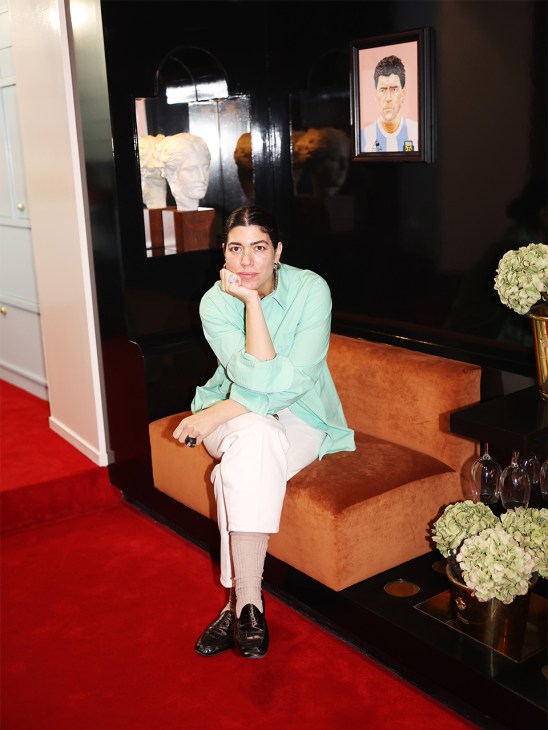
When the right space became available last year on Rue de Grenelle – one of Saint-Germain’s most elegant shopping streets – she snapped it up on a whim. There was no solid plan or strategy in place, just a good idea and an appetite for work. “It might be a small shop but it’s still a big project because I’m by myself – no one is investing in the business,” says Rubinski. “But I never doubted myself or the product.”
Less than a year later, Rubirosa’s has become a place of pilgrimage for those in the know, from Paris locals to fellow creative directors, actors and design enthusiasts who have been visiting the shop from Tokyo, New York and beyond. It is now almost impossible to attend a fashion industry dinner in Paris, London or elsewhere without spotting at least one guest in a sharp button-up shirt in Rubirosa’s distinctive hues (sorbet pink and bold red are favourites), finished with contrast piping.
What makes the success even more striking is Rubinski’s decision to steer clear of e-commerce and online fanfare. In her quest to create a true neighbourhood shop, she has built the business via word of mouth: the only way to acquire one of the her shirts is to make the trip to Paris’s Left Bank.
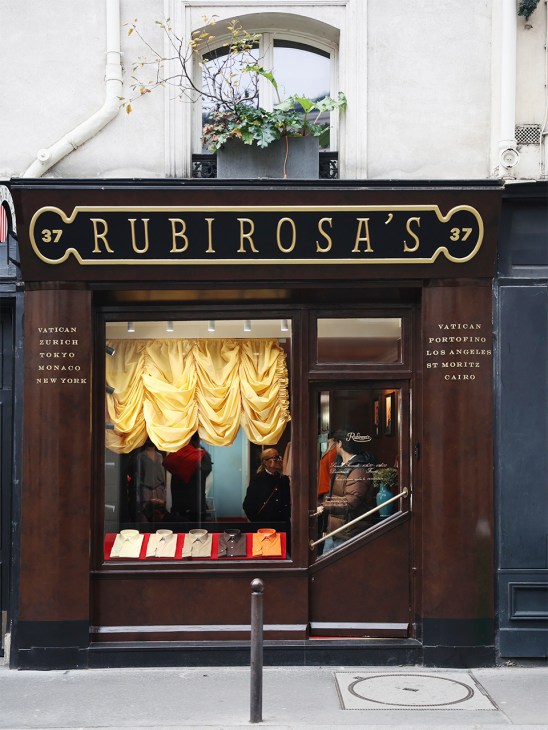
By taking a chance beyond the world of fine jewellery, Rubinski has changed her professional identity. While she continues to design jewellery for her namesake label, she has embraced her new role as shopkeeper, spending most days serving customers at Rubirosa’s. It is a full-circle moment, she explains. “My father had two shops selling bespoke shirts during my childhood and my grandfather was a poplin manufacturer who ran a workshop in Montmartre – I was raised with shirts,” she says, wearing a crisp cotton number from her own range, paired with jeans, a cashmere jumper loosely tied around her shoulders and textured leather loafers – another signature product of Rubirosa’s.
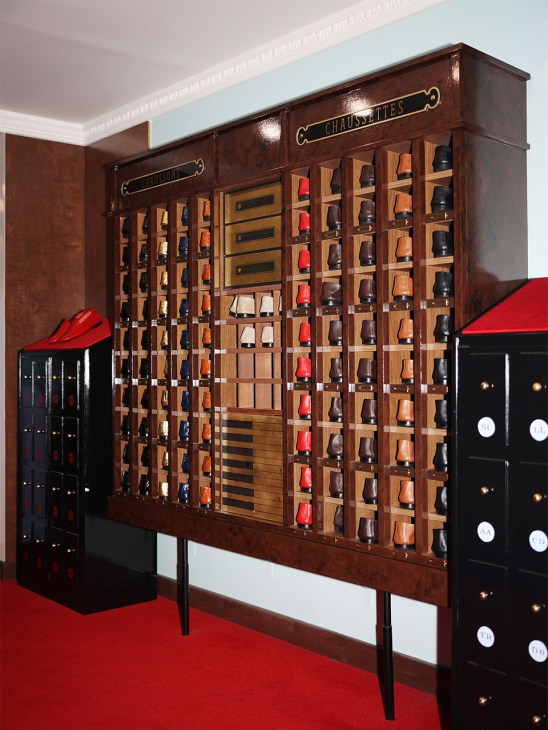
The simplicity of the offer is central to its appeal. Essentials such as poplin-cotton shirts, cashmere jumpers and pyjama sets are neatly stacked in wooden cabinets, while loafers line the room. Both the shirt and loafer ranges are unisex and offered in a broad palette from soft neutrals to vibrant yellows and striped greens. “It’s like a sweet shop for adults,” says Rubinski, who worked with art director Louis Charles Aka to translate that feeling into the interiors.
Eschewing the familiar formula of white walls and bright lighting, Rubirosa’s is fitted with dark mahogany joinery and ruby-red carpets. “All the furniture was made by French artisans but we also added [contemporary] art and a blue room [at the back of the store],” says Rubinski.
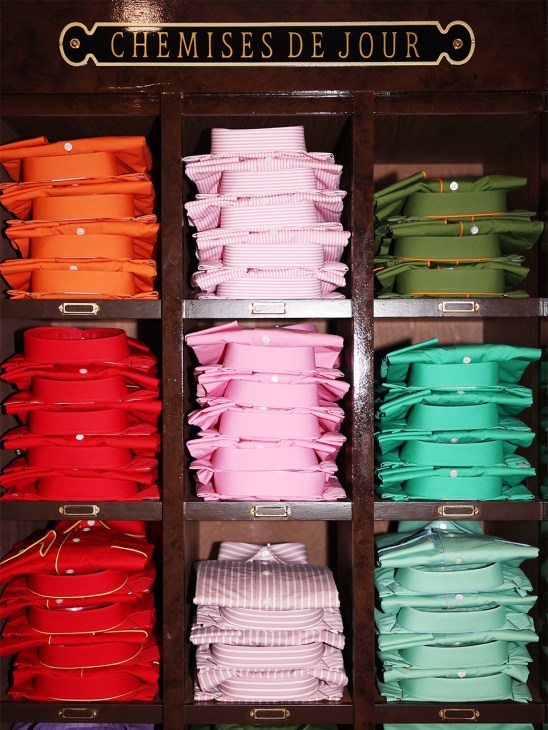
On arrival, a staff member in a rollneck and apron offers a warm welcome – a small detail that sets the tone. “We really want to focus on the human experience,” adds Rubinski. “We’re relaxed and just want to start a dialogue with people and exchange [ideas]. We’d never push anybody to buy a shirt or a pair of loafers. It’s not just about numbers but about reputation.”
It marks a departure from Rubinski’s first business, which operates with a broad network of e-commerce partners alongside its own online store. “Everybody told me I was totally crazy to open a physical shop,” she says.
So why take the risk, especially when she already had a successful brand? “I trusted my taste and my vision – and, at the end of the day, shirt-making is part of my heritage. The manufacturer of Rubirosa’s shirts is one of the people who made my father’s.”
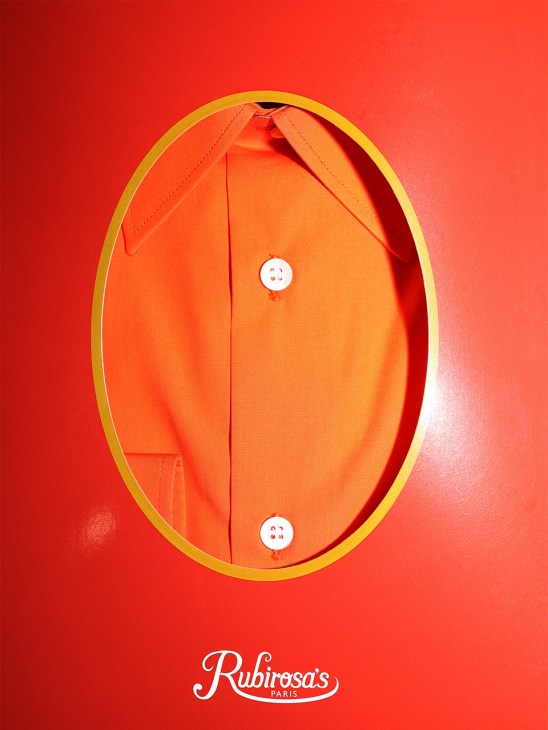

Today, Rubirosa’s offers a refreshing antidote to formulaic retail spaces and trend-led products. Rubinski’s main challenge now is keeping the shelves stocked. “We have managed to create that kind of old French shop that also feels a little bit modern,” she says, adding that her ambition is not to chase scale but to build a reputation as a neighbourhood destination that offers quality at sensible prices. “We welcome different personalities, different styles and different budgets. Ultimately, I’m the first customer. Every day when I come in, I’m so happy – I just love this shop.”
Her conviction and rapid success make a compelling case for pushing against industry trends and reinventing oneself – even for those already at the top of their game. “My parents told me that if it wasn’t going to be me, it would be someone else,” she says. “If I wanted that shop, I just had to make a run for it.”
2.
From streetwear to beauty
Davide De Giglio
Founder, D Capital and Eredi Zucca
Davide De Giglio looks slightly apprehensive. Sitting on a mustard-yellow sofa in a wood-panelled room in his central Milan headquarters, the fashion and beauty entrepreneur tells Monocle that he has only ever consented to a handful of interviews. But the man who helped catapult streetwear culture into the gated realm of high fashion – among the multiple pivots that he has made during his career – soon gets into his stride.
As jazz music floats across the room, what was meant to be a half-hour interview morphs into a 90-minute chat that touches on colourful characters and serendipitous moments. Monocle soon learns that the youthful-looking 50-year-old only stopped wearing boxer shorts by Manhattan-founded skate brand Supreme last year and that one of his defining moments was visiting the Ralph Lauren flagship on Madison Avenue as a nine-year-old. As for his successes? “I believe in destiny,” says De Giglio, dressed in a navy turtleneck and trousers. “When I meet someone, if they are good at what they do, I jump in.”
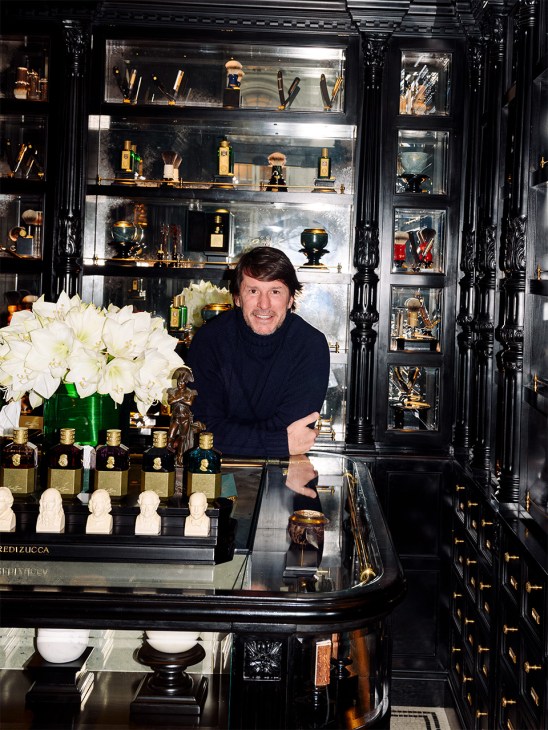
De Giglio has made a career out of jumping in at the right moment as an investor, mentor and strategist. He remains best known for New Guards Group, the holding company that he founded in 2015 that took stakes in a series of fashion start-ups such as Off-White, Palm Angels and Heron Preston. De Giglio advised on everything from pricing to distribution, helping lift these upstarts to the next level. “I always had partners,” he says. “There was always someone more important than me. And together we were something.” Off-White’s American founder, Virgil Abloh, who died in 2021, went on to become menswear artistic director at Louis Vuitton.
For every success, though, De Giglio has also shown a knack for moving on at the right time. When fellow partners Claudio Antonioli and Marcelo Burlon were ready for new pastures, the trio sold New Guards Group to the UK’s Farfetch in 2019 in a deal valued at $675m (€576m). De Giglio stayed on as group CEO for four years. He had what he calls “a five-year lock-up” that prevented him from doing anything else in fashion – but his non-compete didn’t include beauty.
So, just like that, De Giglio changed tack. In 2022, he founded D Capital, a new holding company with diverse interests that are still being defined and refined. One of its first ventures is a personal passion project: Eredi Zucca, a barbershop with old-world flair. It’s across the road from where we sit, on Via Bigli – De Giglio’s Milan fiefdom and the street where he also lives. When his plans to buy Milan’s oldest barber’s, Antica Barbieria Colla, fell through, De Giglio hired a historian and delved into the archives for inspiration. He discovered the Zucca family, who had owned a string of barbershops all over town in the 17th century, when the same multitasking gentlemen would cut your hair and pull your teeth.
De Giglio soon set about reviving the concept (minus the dentistry). The new space pays homage to the past through ornate, restored barbershop chairs imported from the US, as well as dark wood and intricate Murano glass. Regulars are given initialled cabinets near the entrance where they can leave their Eredi Zucca-branded shaving gear between visits. They can also peruse more than 40 house products, from beard shampoo to fragrances inspired by Milan.
Treatments are carried out in one of three private rooms. The idea is that, in today’s fast-paced world, visitors take their time rather than having a 15-minute lunch-break rush job. Back in his office, De Giglio confirms that Eredi Zucca is a concept that will travel. “We are going to expand globally,” he says. “It’s about having the barber store alongside the product.” He’s already looking into New York locations: Midtown and somewhere in lower Manhattan, such as Tribeca or Soho.
What’s striking about Eredi Zucca – which was developed with help from De Giglio’s friend Ramdane Touhami (the man behind the revival of Officine Universelle Buly 1803) – is its attention to detail. “I’m a maniac, in a good way,” De Giglio says. “I’m not obsessed with perfection but rather with the details.” He darts into a side room to retrieve a book about the power of details, Only the Paranoid Survive by former Intel CEO Andrew S Grove. He says that it changed his life – and insists on giving Monocle a copy.
Curious and with just the right dose of eccentricity, De Giglio has also invested in a series of other companies in his new life. He was, for example, an early backer in Hailey Bieber’s wildly successful cosmetics brand Rhode, which was sold to Elf Cosmetics in May 2025 in a deal valued at $1bn (€851m). He has also invested in Tuscan cosmetics and perfume powerhouse Officina Profumo Farmaceutica di Santa Maria Novella, as well as British make-up brand Isamaya Beauty.
So how has he backed so many winning horses? “Luck is part of it. But once you’ve done it three, four or five times, [you realise that] it’s more like a gift,” he says. “And you learn. I can tell when people have something in their eyes, when they talk a certain way.” From somebody else’s lips, those words might sound arrogant. With him, they just sound honest. He clearly saw something in Virgil Abloh, whom he met in Milan as this “shiny guy [who] was always saying the right thing”. It wasn’t long before they were having coffee in New York and deciding to work together.
Today, De Giglio’s eyes are on Umit Benan, a Milan-based Turkish designer known for his impeccable tailoring and branding. De Giglio hopes to turn him into a global star, marking D Capital’s first foray into fashion – and a new personal challenge to build a quieter, more artisanal brand, leaving behind streetwear. He met Benan during the New Guards era but didn’t think that he was “ready”. Clearly, his opinion has changed; he took a majority stake in Benan’s brand in May 2024.
De Giglio whisks Monocle down a corridor in his HQ – past a wall display of Nike X Off-White trainers designed by Abloh – that directly connects to Benan’s airy showroom. Across the road – but still in the orbit of Via Bigli – Benan has opened his first shop, with De Giglio’s help. The two are planning to open another in Los Angeles this year, followed by a third in Paris. “Trust me, it’s really important for me to have fun,” adds De Giglio. You get the sense that he’s not done yet.
eredizucca.com
3.
From fashion buyer to perfumier
Yasmin Sewell
Founder, Vyrao
In fashion circles, Australian-born Yasmin Sewell has long been known for her impeccable taste and instinct for what’s new, whether that be an up-and-coming designer, the colour of the season or the trend that no one else saw coming. This sixth sense helped her build an impressive CV that features companies such as British e-commerce giant Farfetch and institutions Browns and Liberty.
Away from the shop floor, however, Sewell was always nurturing other interests. From an early age, she explored the world of energetic healing and, in 2021, she launched Vyrao, a fragrance brand built around scents designed to shift mood and energy. Five years on, three investment rounds later and with 10 fragrances to her name, Sewell welcomes Monocle into her London office to talk about turning a personal vision into a thriving business.
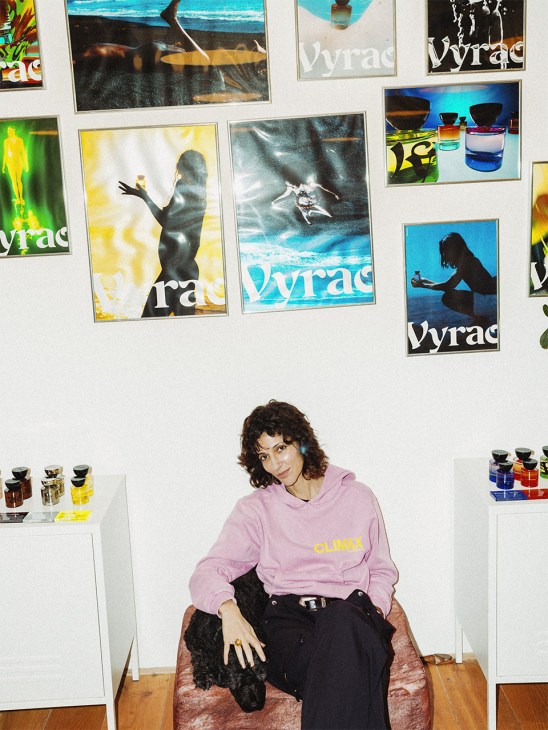
Tell us about your earlier career and how you decided to shift from fashion to beauty.
After my time at Browns, I worked as a consultant for 10 years. Even while I was the chief creative director of Liberty, I was doing other projects. I then took two big jobs, first at Style.com and then Farfetch. Neither were quite what I wanted to do. That encouraged me to really think about creating something that was truly mine.
At the same time, I was renovating my house and I think that process helped take me into a new chapter. The house is where the brand was born; the green colour of the walls became the colour of the brand. I was initially thinking about more typical wellness products, such as ingestibles, but I quickly arrived at scent because it’s one of the fastest ways to shift your energy and mood. Plus, it wasn’t totally new to me; I had already launched Frederic Malle at Liberty and Escentric Molecules at Browns. I didn’t know how the hell to do it but I knew that once I had the vision for it, I could find the right people, the right resources and the right support.
Did you have any sense of hesitation?
I’ve never felt that I’m over fashion. I’m still inspired by runway shows and still love going into retail stores, but I didn’t feel any loss when I left. I think that’s because there was such a clear intention of what I wanted to do.
I loved being in fashion all those years. But I was always aware that I’d move into the wellness industry at some point. I just didn’t necessarily consider the beauty industry. I’ve spent my life training in holistic practices and the intention was to move into the things I cared about and [offer] my take on wellbeing.
Why was it so important to you to take on this type of training outside of your main job?
I trained in reiki, integrative quantum medicine – which is the combination of energetic healing and quantum physics – and ayurveda. I used them to become successful in fashion. When you have to look at the future, you have to tune into your intuition. I used it in everything I did.
How did you start setting up Vyrao?
I found somebody who had made fragrances and could help me in terms of production and logistics. I also brought in [creative director and the founder of More or Less magazine] Jaime Perlman to work on the branding. We were both new to this and I think that it’s great to do things fresh because you have no preconceived ideas.
You launched in 2021, in the midst of the pandemic. Did that require further pivoting?
I began conceptualising the brand in 2019 and planned to launch in 2020 but, because of the pandemic, my investors pulled out and the launch was more humble. I brought in friends who believed in me and put my life savings on the line to scrape it all together.
Since then, I have gone on to raise money three times. Early on, there were a lot of investors who thought I was woo but I wouldn’t want to work with them anyway. If they don’t understand the core of the business it can be damaging in the long term. The partners we brought in are behind the wider purpose of the brand.
You’ve had a lot of success with this year’s launches, Ludeaux and Ludatrix, which promise to evoke flirtation and passion respectively. Why do you think that these scents were such a hit?
We probably had our best launch to date. In the past, we’ve launched fragrances for grounding, happiness and mindfulness – and, of course, people want to feel mindful and happy and grounded, but when you say sex, people just say yes. It was my intention not to shy away from the subject, to launch a series of campaigns and just have fun.
What does it take to create a bestselling fragrance?
It’s so creative. I could do it for the rest of my life. I start with the feeling that I want to channel and, from there, it starts to come together as a scent. We look at ingredients – some are backed by neuroscience, while others go back thousands of years and are linked to [ancient] rituals. Once I’m starting to finalise the formulation, we connect the scent to a colour and create the bottle. We then start to think about what the messaging is. It’s a good two-year journey.
What’s your advice to anyone who is looking to make a similar career shift?
Take a moment. If you’re too caught up in your life, you’re also caught up in the fear. When I took time off, I renovated my house, planted my garden and reflected on everything in my life. That’s when the idea for Vyrao came to me. Those times when you might feel a bit lost and you take a break can lead to incredible things.
vyrao.com