How designer Oyuna Tserendorj uses Pantone colour to reframe modern cashmere
The Mongolia-born designer talks about working with Pantone, making cashmere at home and why colour is always her starting point.
Mongolia-born designer Oyuna Tserendorj hosted her first fashion show last year in Paris to present her eponymous label’s autumn/winter 2025 collection – a cosy line-up of cashmere coats, lightweight knits and loose trousers in earthy honey hues, crisp winter whites and deep blues inspired by dark skies. The striking colour palette was developed in collaboration with Pantone, the global authority on colour trends, which has partnered with companies as wide-ranging as Barbie, Bentley and Roman fashion house Valentino.
Staying true to her brand’s timeless ethos – and her own gentle nature – Tserendorj did things her way: she hosted an intimate, salon-style show at a friend’s Left Bank apartment overlooking the Seine. Models walked barefoot and a family-style dinner was served shortly after the show. The inspiration behind her new collection, dubbed “Caravan”, was the journey of a nomadic Mongolian family moving to its next base for winter and observing the changing natural landscapes along the way.
Here she tells Monocle about the process of working with Pantone to find the colours that perfectly matched her vision, the importance of manufacturing in Mongolia and her new winter residence on London’s Savile Row.
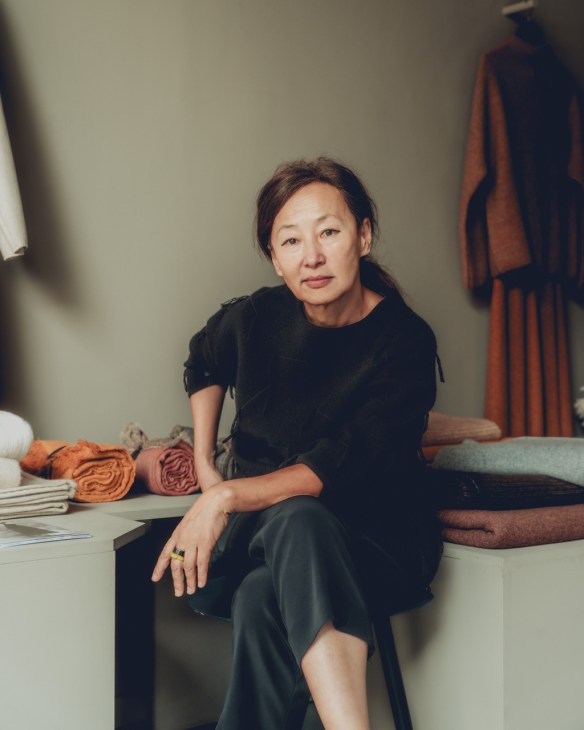
Talk us through the creative process for your new autumn/winter 2025 collection.
I always start with a concept. Sometimes it’s something abstract, the idea of dualities, for example, but this time I was thinking about a nomadic family transitioning from autumn to winter. I looked at images of Mongolia during the changing of the seasons – I had the vision of a family on horses moving from golden autumnal landscapes into colder winter ones.
Given the collaboration with Pantone, it made sense to talk about the richness of colour. But there were also other elements such as belting, inspired by Mongolian nomads who often need to pack up their lives in minutes and keep moving.
What role did Pantone play?
The idea was everything to me, so we colour-matched the images that I had in mind to Pantone shades. I never used colour charts in the past – I would go to flea markets or ribbon shops to find [inspiration for] colours to use – but when you have a specific vision, Pantone charts can give you a much broader spectrum of choice. It’s interesting to see the business opening up and supporting smaller, more niche brands.
Can you share more about the silhouettes that were chosen for the season?
It’s all about having a really nice drape, so that each piece can work on any figure and the wearer can make [the design] their own. I look at clothing as shields. There is this cliché about wearing cashmere to sit on your sofa with a cup of tea – sometimes it’s nice to do that but my designs are about bright colours and wearing them out in the world and bringing about change. It’s connected to Mongolia, where people are always engaging with the outdoors, with animals, with nature.

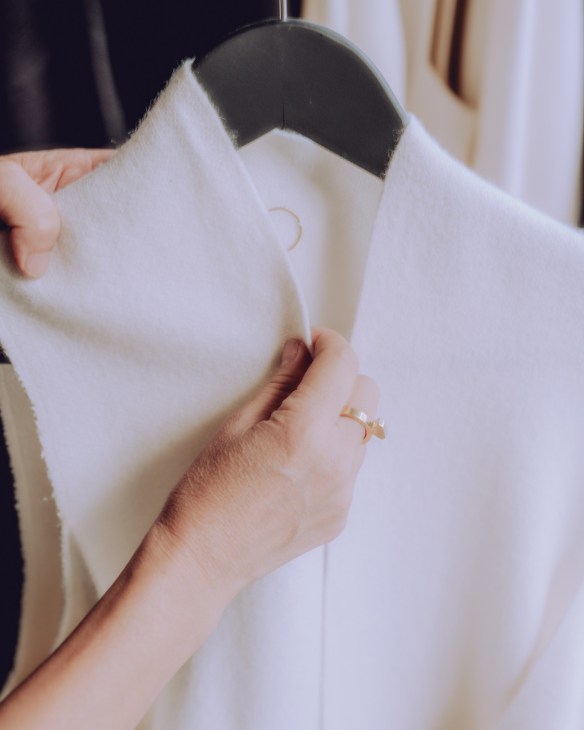

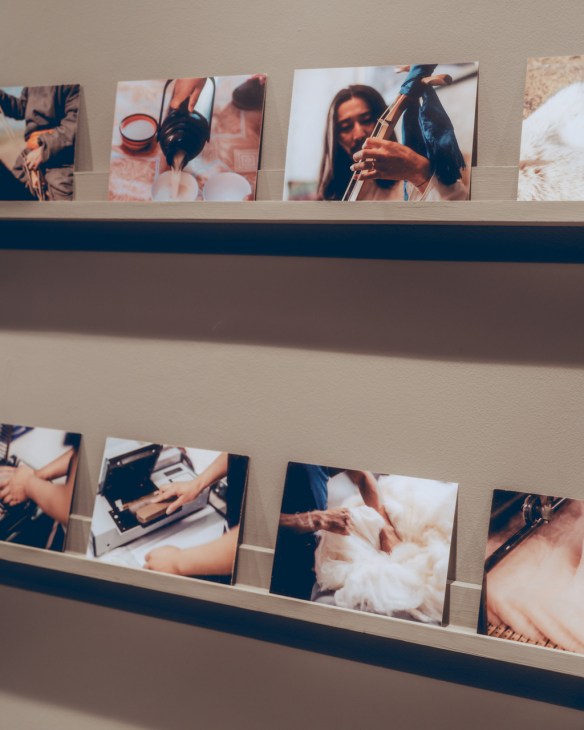
How important is it for you to champion Mongolia and manufacture your collections in local factories?
Mongolian cashmere is so well known but up to 85 per cent leaves the country as raw material – that is why it’s important for me to produce my collections locally. But it’s becoming challenging. There is a major workforce shortage: Mongolia might be a big country but its population is only a little more than three million, so the talent pool is very limited.
Tell us about your new winter residence on Savile Row.
We have been around for 23 years now, so I felt that it was to put our name out there with a central location. When we moved in [to the space], we tried to experiment and do a lot of things by ourselves, including repainting a series of repurposed office desks in a soft grey to match the autumn/winter collection. I also painted some of the cabinets cobalt blue – Mongolia is a country of blue skies, so I always try to incorporate different shades of blue into my work.
Finally, what are the biggest factors to consider when buying cashmere?
I would recommend buying something light that can be layered and worn year-round. Also, remember that cashmere is a natural material so it loves fresh air and sunlight. You don’t need to wash your cashmere after every wear – sometimes all you need to do is leave it outside.