What does it take to make it as a designer today? Paris-based agent Alice Bouleau shares her insights
After years spent scouting designers and artistic directors for major fashion houses, Alice Bouleau has pivoted to helping the creatives that she once headhunted navigate an increasingly turbulent industry.
Alice Bouleau no longer holds meetings in Paris’s dive bars. For years, they were the safest places for one of fashion’s most discreet headhunters to operate unnoticed. Today she prefers hotel lounges and no longer works for fashion houses. After seven years in the recruiting business, Bouleau left to launch The Arrow, an agency that represents designers, helping them to future-proof their careers in an industry that hires quickly, fires publicly and offers little long-term security.
The Arrow is designed to offer something that fashion has long neglected: a dedicated service defending and managing the sector’s design talent. Bouleau negotiates contracts, assists designers in securing sponsors for personal projects and brokers one-off collaborations, all with an eye on long-term strategy. “Stylists, make-up artists, photographers and even architects have agents looking after their careers,” she says. “But designers didn’t. I realised that something had to change.”
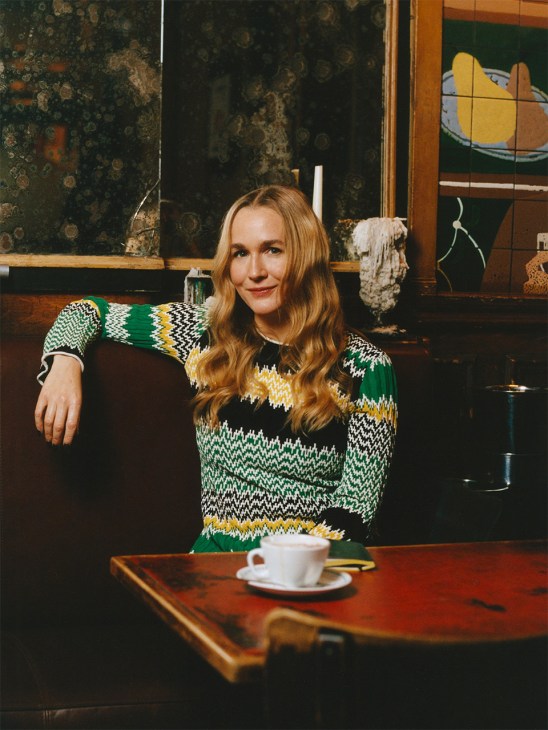
Bouleau has already signed up 15 clients, including footwear specialists Paul Andrew and Serge Ruffieux, New York up-and-comer Hillary Taymour and London menswear designer Priya Ahluwalia. The timing is deliberate. “There are very few creative-director jobs today where you can feel safe for 15 or 20 years,” she says. “Now, when designers take on a role, they have to think about what comes next.”
That outlook was shaped by Bouleau’s previous career. For seven years, she worked behind the scenes as a partner and the creative-practice head at Sterling International, an executive-search firm specialising in fashion and luxury. Her job was to help ceos to find their “dream partners in crime” – creative directors capable of leading studios, delivering covetable collections and hitting ambitious sales targets.
Her searches spanned conglomerate-owned houses “turning over more than €8bn a year” and niche labels with closer to €2m in revenue. She recruited across Europe, Africa, Asia and North America, scouted talent during fashion week in India and at design week in Reykjavík, and arranged clandestine meetings to avoid being spotted. “In our world, you can’t casually take a phone call on the street and you’ll never catch me working on a train,” she says. Over the past two years, that secrecy intensified as the fashion industry underwent one of its biggest-ever executive reshuffles. From Dior to Balenciaga, more than a dozen heritage houses parted ways with their creative leaders and turned to recruiters such as Bouleau to find the next star. Hiring became a high-stakes spectacle. “I was constantly receiving calls from major media outlets,” she says. “There were rumours swirling all the time – and those could genuinely destroy someone’s chances.”
From a business perspective, it was a boom period. “For headhunters, this system works very well,” says Bouleau. “Every couple of years, you get to launch a new search and get paid.” But watching the churn of designers being hired and fired left her uneasy. “Because of how quickly we consume fashion, companies have become more impatient and treat their creative leaders accordingly,” she says. “They don’t give people enough time to succeed.” She points to Phoebe Philo’s tenure at Celine in the 2010s as a rare counterexample. “Everyone wants that kind of success but they forget that she was given the chance to build the foundations of her vision.”
The demands being placed on people have also become unrealistic, says Bouleau. “You’re no longer just expected to design,” she says. “You have to think about PR and social media, oversee campaigns and have a strong commercial understanding. Sometimes, a client would describe their ideal profile and I would tell them that this person doesn’t exist. You can’t have a fresh face with 15 years of experience. Our goal is to tick 80 per cent of the boxes; the rest is where the magic happens. It’s like falling in love. There’s always some tension.”
Today, fashion houses seem less interested in long marriages and more inclined to have short-term flings. “I don’t think that we’ll ever be done because of the pace of the industry,” says Bouleau. “That’s why we need to rethink how we support creative talent. Right now, it feels as though we put them on a pedestal one minute and in the bin the next.”
The risks for designers are substantial. Creative director salaries can range from €400,000 to several million, excluding bonuses, but public failure can be career-ending. “If it doesn’t work out and you’re fired at 40 in a very visible way, it’s extremely hard to find another role,” says Bouleau. That’s where The Arrow comes in. By acting as an intermediary, Bouleau believes that it can help designers to protect themselves and plan beyond a single role. “It can be incredibly lonely at the top,” she says. “People often have to make huge decisions on their own.”
Based in her native Paris, Bouleau now spends her days meeting clients for long brainstorming sessions, often at Hôtel Amour in the 11th arrondissement. “There’s a constant push and pull,” she says. “Sometimes, we discuss existing offers; at others, I think about new collaborations on their behalf. Whether it’s a sponsorship, a product placement or an in-house position, you need to be sure that it won’t hurt your career in the long term.”
As fashion increasingly borrows from Hollywood, with creative directors treated as public figures, career planning has become almost as important as creative output. In this new landscape, agents such as Bouleau are changing the balance of power between brands and design talent. “It’s very different from even five years ago,” she says. “I want to defend the talent I bring forward – not be part of a system that just keeps recycling them.”
Bouleau’s advice for a successful (and lasting) career in fashion:
1. It’s almost impossible to make your own independent brand profitable by itself. It’s important to secure collaborations and consulting gigs.
2. Don’t launch your brand too quickly. Take your time and find the right network and resources. Waiting five years after you complete your training might help you to create a business that has a better chance.
3. Success stories of people being picked out of nowhere to take on big creative-director roles are extremely rare today. You can’t sit and wait to be called for a job at Saint Laurent. So take on side jobs, create your own community and don’t put all of your eggs in one basket. Plan for the long term.
4. There’s no one way to success and it depends on the kind of brand that you’re looking to work for. If you want the Balmain job, you might need to be friends with a few celebrities. But if you want to work for a more discreet house, no one will care about your social-media presence. It’s about building your career in an authentic way and connecting with the right people.
5. Recruitment is very opaque. Most of the time, senior-level positions aren’t even advertised – it all goes through the headhunter or the CEO’s network. So it’s crucial to foster connections. Plus, have a visible Linkedin profile; that’s where recruiters first look and make contact, even at the highest level.
Read next: The Monocle City Guide to Paris, featuring the best hotels, restaurants and retail spots in the French capital