Icebug, the cleverly studded shoe brand keeping Swedes on the go
Icebug’s studded footwear is helping its wearers to stay on their feet while navigating icy terrain. Now, as the climate changes, it’s setting its sights beyond the Nordics.
Every winter, more than 30,000 people in Sweden have accidents caused by slipping on ice, costing millions in lost work hours and hospital care. The fear of falling also means that many Swedes – particularly the elderly – stay indoors when the streets turn icy. That’s the problem entrepreneurs and co-CEOs David Ekelund and Tom Nilsson are looking to fix. Their solution? Steel-studded soles on shoes sold under the brand name Icebug.
“We wanted to make a shoe that keeps feet warm and dry – and keeps people on their feet,” says Ekelund. He and Nilsson are discussing the evolution of their company (which is part-owned by Taiwanese shoemaker Vanbestco) at Icebug’s HQ in Jonsered, just outside Gothenburg. The duo explain how they complement each other: Ekelund is full of ideas, while Nilsson has a knack for seeing which ones are worth running with.
They brought the first Icebug studded running shoe to market in 2001 and then developed the design into an increasingly versatile range of footwear across three distinct categories: the “Bugrip” studded sole for icy surfaces, the year-round RB9X rubber sole for wet conditions and the premium-grip Nordic Traction, the company’s fastest-growing style, based on the same technology that’s used in winter tyres.
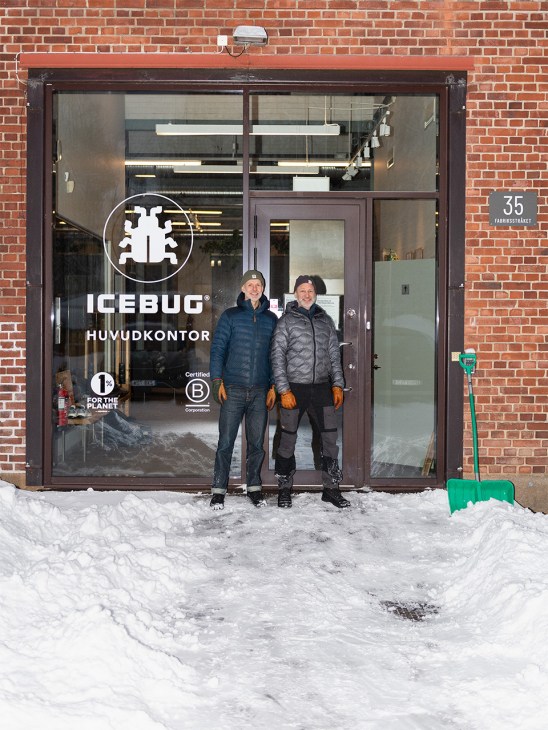
Ekelund began the company with his mother, who was then working for a Taiwanese shoe firm in Europe. A journalism graduate and newspaper reporter, he wasn’t planning on joining the footwear business full-time. “I was thinking that if we were smart about it, we could launch a company that would make us lots of money and allow me to retire to write books,” he says. “I said to my mum, instead of making money for other companies, why don’t we do it ourselves?”
But Ekelund’s get-rich-quick approach soon evolved and he began focusing on developing an advanced and long-lasting product. “Everybody around us was reducing prices and producing as cheaply as possible,” he says. “That’s when I realised that I needed to launch my own brand to be able to make something that I could be proud of.”
The idea of a sole with steel studs started as a joke before the team realised, “Wait a minute, what if we could actually do that?” The company trademarked the stud technology, developed with a Canadian triathlete, and tried getting Icebug into Swedish shoe shops. But no retailer wanted “the weird shoe”. In an unlikely turn of events, Japanese shoe giant Asics helped to turn Icebug from an obscure brand into a respected international business when it presented its own studded shoe at a trade show in Norway not long after Icebug’s launch. Despite market interest, Asics never manufactured that prototype and Icebug was ready to seize the momentum. “We would have had to pack up the business had it produced that style,” says Nilsson. “For us, that became the ticket.”
Eight years later, Icebug broke even and – aside from a pandemic-related dip – the company has been growing steadily ever since. Today it employs 50 people across Europe and North America, works with three factories in Vietnam and sells across most major markets. Last year was the company’s best so far, with sales exceeding €30m. At home in Sweden, Icebug boots have become so ubiquitous that, during winter, it’s common to see signs outside churches and libraries that read, “No Icebugs inside, please.” Thanks to the brand’s success, most footwear shops now also have dedicated studded-shoe sections, helping to prevent Swedes from falling on the ice.
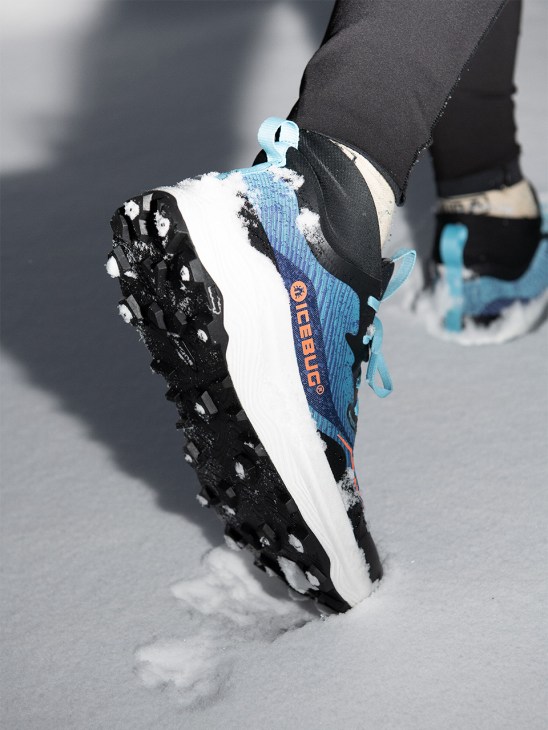
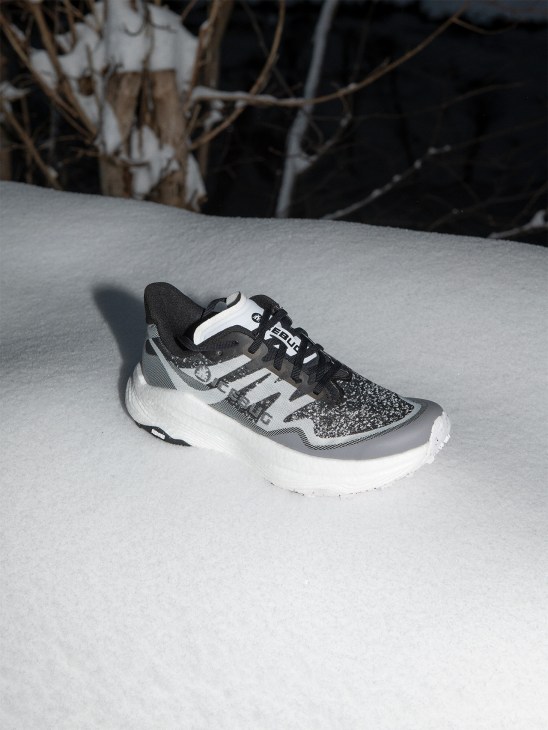
But there’s an issue: there is less ice on the streets. In recent years, there has been talk of “un-winters” in Sweden, with the southern parts of the country no longer seeing reliable snowfall. Swedes wistfully speak of bygone “wolf winters”, when the cold grew so severe and the snow so deep that even wolves were forced out of the forests in search of food closer to human habitation.
Ekelund and Nilsson are responding to Sweden’s un-winters by expanding into snowy North American markets and by becoming increasingly involved in climate action to help “bring winters back”. Shoe production does little to mitigate climate change, yet the duo aims for Icebug to be a brand that pushes for positive change. For instance, the company has installed solar panels at its factories in Vietnam and rolled out a blueprint for other manufacturers to do the same. Icebug is also a member of the 1% for the Planet initiative, donating 1 per cent of its sales to non-profit environmental organisations. “We choose the planet over short-term financial gains and, in the end, that’s also good for our brand,” adds Ekelund.
Back in Jonsered, the Icebug team continues to hone its core product, making it ever sturdier and more adaptable. Like its fantastical namesake, the brand’s latest styles grip even the trickiest terrain. That, says Ekelund, is what the company is all about: making a difference by raising the quality of outdoor life for everyone, whatever the season.
Three more cold-weather brands to know:
1.
Tarvas
Finland
Tarvas’s sturdy boots are made with snowy Nordic climates in mind.The Easy Hiker, co-designed with Danish label Forét, will handle mountain expeditions to city walks.
tarvasfootwear.com
2.
JL-AL
UK
Jean-Luc Ambridge Lavelle’s JL-AL blends handmade techniques, laser-cutting and 3D technology. We love the lightweight down jacket in burnt orange, developed with Japan’s Goldwin.
j-la-l.com
3.
Cordova
USA
Born in the slopes of Sun Valley, Idaho, husband-and-wife duo Jane and Cody Seim’s Cordova has become a go-to for high-performance jackets that work on the slopes and in the city. The Cortina jacket in a charming blue-and-white check is a season highlight.
cordova.co