A Danish icon returns: Inside Urban Jürgensn’s comeback to the watchmaking scene
Having flown under the radar for 250 years, Urban Jürgensen is now gaining prominence for its new owners’ commitment to precision assembly and exclusive service.
Urban Jürgensen is not a name that readily comes up in conversations about the world’s great watchmakers. Outside specialist collecting circles, it has long lingered in relative obscurity – an outlier with a history that stretches back more than 250 years.
Now, a new ownership team is betting that this is precisely its strength. Relaunched in Los Angeles with a trio of high-end timepieces, the Danish brand is being repositioned at the top of contemporary watchmaking. “The high and low ends of the market are where the most interesting things are happening,” says CEO Alex Rosenfield, who runs the business alongside his father, Andrew, the Guggenheim Partners executive who acquired the brand in 2021. “We’re comfortable operating at that extreme.”
The relaunch centres on three limited-edition timepieces developed with master watchmaker Kari Voutilainen, who is widely regarded as one of the finest practitioners in the field. The most complex model is limited to 75 pieces and priced at CHF 368,000 (€400,000), placing the brand among the most expensive names in contemporary watchmaking.
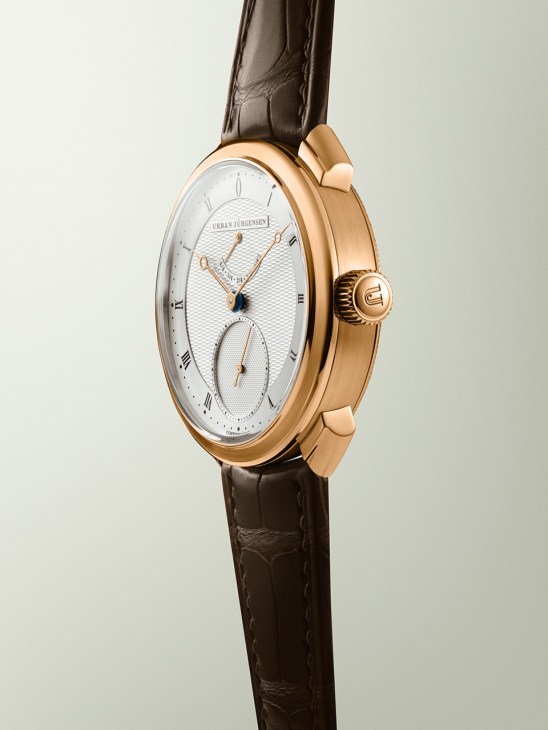
Rosenfield is clear about the strategy. “Companies that make things to the absolute highest standard, with love and care and the inherent limitations that kind of making requires, will always have an audience,” he says. That belief underpins the timing of the relaunch. Although the company was acquired in 2021, the new owners resisted moving too quickly. “Our view was always that when it is ready is when we will do it,” says Rosenfield.
If the business strategy is contemporary, the foundations are anything but. Urban Jürgensen’s history goes back to 18th-century Denmark, when the country relied on imported timepieces. That changed with Jürgen Jürgensen, who trained in Le Locle before returning to Copenhagen to set up Denmark’s first watchmaking workshop in 1773, producing thousands of timepieces and becoming royal clockmaker to the Danish court.
His son, Urban, further elevated the name. His marine chronometers supported the Danish navy, while his pocket watches were prized by the royal family. The business remained in family hands for generations but, by the early 20th century, had drifted away and gradually lost prominence. While contemporaries such as Abraham-Louis Breguet endured, Urban Jürgensen faded from view.
Interest was revived in 1976, when the Danish Clock and Watchmakers’ Guild marked the bicentenary of Urban’s birth. Watchmakers Peter Baumberger and Derek Pratt acquired the name and set about restoring it. From the 1980s onwards, the brand rebuilt its reputation, introducing its first wristwatches. A pivotal moment came in 1996 with the arrival of Voutilainen, who later completed Pratt’s Oval Pocket Watch, a decades-long project that sold at auction in 2006 for CHF3.7m. Even so, stability proved elusive. A private-equity consortium acquired the brand in 2014, before Rosenfields’ takeover marked a more decisive reset.
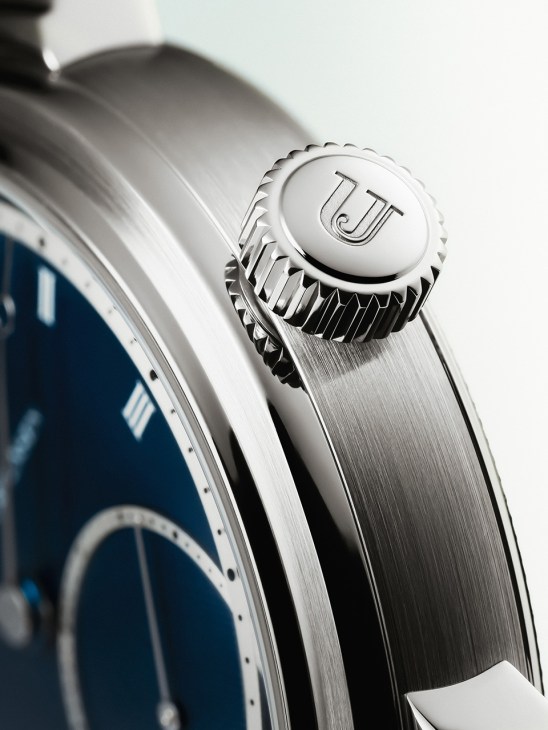
Working alongside Voutilainen, the Rosenfields planned the company’s relaunch with three distinct models aimed at collectors: UJ-1, UJ-2 and UJ-3. The UJ-1 reinterprets Pratt’s Oval Pocket Watch in wristwatch form with a one-minute flying tourbillon. The UJ-2 is a three-hand watch with a double-wheel natural escapement, and the UJ-3 adds a perpetual calendar and instantaneous moonphase.
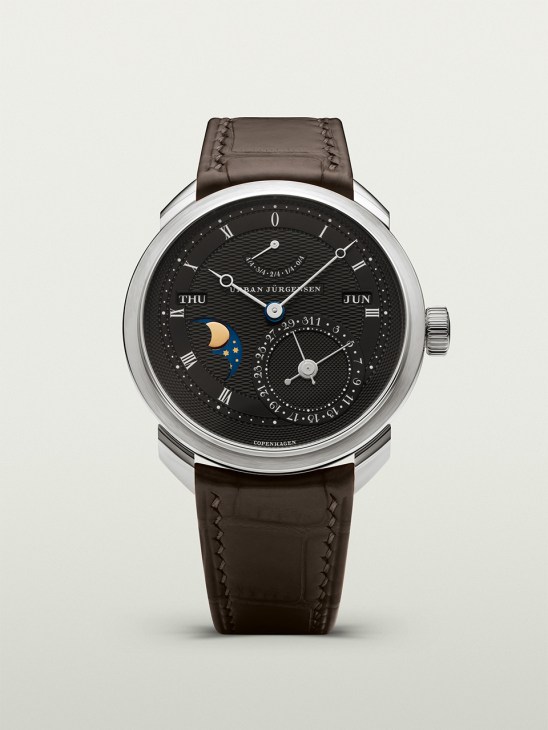
For Rosenfield, the product alone is not enough. “The product matters but an emotional connection is what gets you there in the long run,” he says, adding that the brand is aiming to establish a more cultural presence. The same logic applies to distribution. Urban Jürgensen is currently selling directly to clients through private appointments, with plans for showrooms in Geneva and New York. Rosenfield is also exploring ways to take the watches on the road. “We want to do trunk shows that aren’t like trunk shows,” he says.
That openness is underpinned by a slower approach to production. In Biel, the workshop prioritises precision over scale: watch decorator Stéphane Bastide spends up to 20 hours polishing the screws in a single watch – including heads that remain invisible once assembled. For Voutilainen, this reflects something more fundamental than technique. The workshop, he says, is defined as much by “horological savoir-être” as by technical skill. “There’s harmony inside but we must also be brave enough to break the rules.”
urbanjurgensen.com