Exploring Japan’s most original retailers: Six in-person concept stores with delightful offerings
We celebrate the businesses whose imaginative concepts are re-energising Japan’s in-person retail sector, from the small football hub with an original pitch to the cookware company that’s inviting customers into its kitchen.
1.
Best sporting concept
4BFC
Sendagaya, Tokyo


Founded by four Japanese football fans, 4BFC celebrates global football culture from its base near Japan National Stadium. “We began with the idea of a clubhouse,” says co-founder Takashi Ogami, who is also behind Tokyo-based football-culture magazine Shukyu. “It’s not only a shop but a place where people can gather and all kinds of events can be held.” Since opening in 2023, the tiny space has become a game-day destination for local and visiting fans alike, while also serving as a key stopover for independent brands and creators from around the world. Pop-up events merge sport with fashion, craft and more, drawing interest from beyond the sporting world.
On the shop floor, there are no studded boots or pieces of training equipment. Instead, you are more likely to find vintage J-League and Premier League shirts sourced by co-founder Toshiki Morita of Bene, issues of football-focused Shukyu Magazine and other small-press publications, World Cup-themed throw rugs and various left-field merchandise and memorabilia. Beyond this eclectic selection, 4BFC shows the value of a community hub. Its clubhouse-inspired approach has given rise to a Tokyo- and London-based team, Bene Football Club, while a northern outpost is currently planned for Sendai.
2.
Best ‘konbini’ concept
Convenience Wear
Shibaura, Tokyo
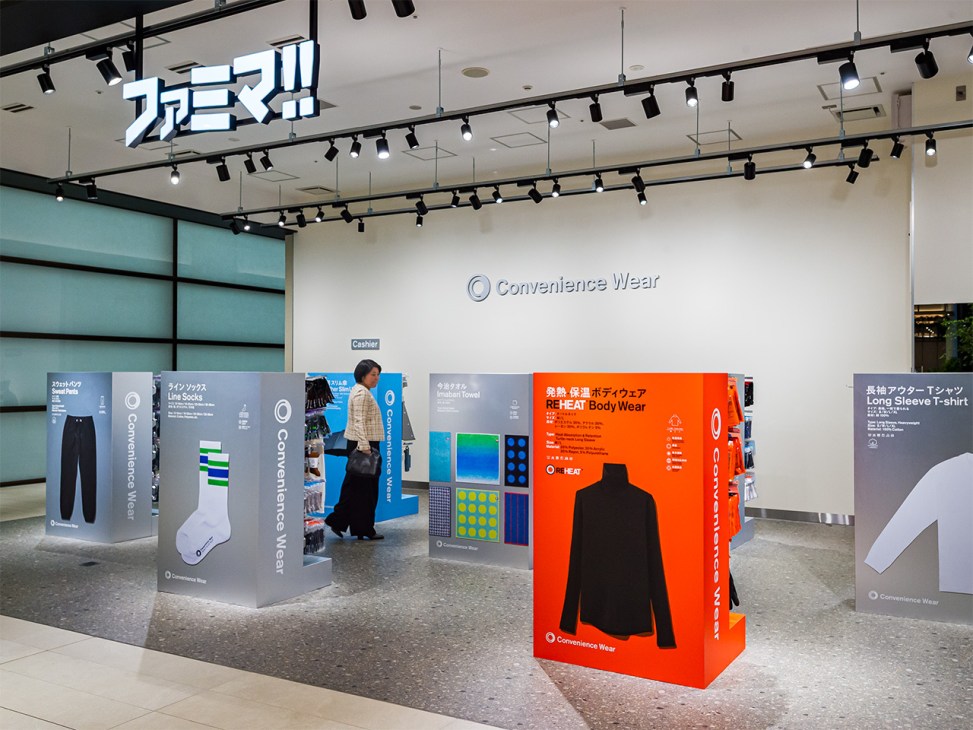
The Japanese konbini (convenience store) is an exemplary retail machine but few had spotted its fashion potential until Familymart – operator of more than 16,000 of them in Japan – worked with Tokyo designer Hiromichi Ochiai to launch Convenience Wear in 2021. Its line-up of T-shirts, hand towels and crew socks was launched to immediate acclaim. With sales now surpassing 30 million pairs of socks and 10 million towel handkerchiefs, Convenience Wear has become a potent force. Last autumn the brand was given its own unmanned shop in Tokyo with the full range of 150 to 200 products. There are samples and large mirrors instead of fitting rooms and customers pay for their purchases at a self-service till. The roster changes with the weather: expect nylon shorts, half-length joggers and sunglasses for summer.
Ochiai has done a stellar job of keeping Convenience Wear’s appeal broad and its quality high, while enlisting respected fashion names for limited-edition collaborations. Sales of ¥20bn (€103m) are projected for 2026, a year-on-year increase of 150 per cent. Influential fashion designer and entrepreneur Nigo is Familymart’s creative director and fans are looking forward to seeing his new format flagship, which is due to open in Tokyo this summer. Familymart is showing the way forward for other konbini retailers.
family.co.jp
3.
Best traditional remix
Goyemon Shibuya
Shibuya, Tokyo


“Traditional Japanese products possess so much depth and history, cultivated over many years,” says Goyemon co-founder Kenta Takeuchi. “They’re so stylish but they often don’t quite fit into life in the current Reiwa era,” adds his fellow co-founder, Ai Onishi. “As designers, we use the latest technology to update their functionality and convey their coolness to the next generation.”
The design brand’s ethos has been translated into spatial form at its sole retail outpost in Shibuya. Incense fills the light-toned interior with an air of calm, while plywood and stainless-steel fixtures are topped with waterproof tatami woven with synthetic fibres. This mixture of tradition and technology, new and old, sets the scene for the brand’s line-up of original products. There’s the signature Unda, a setta sandal and trainer hybrid; Ancoh, a solar-powered washi-paper lantern with an adjustable LED fitting; as well as innovative takes on knives, glassware and apparel.
Its location away from Shibuya’s commercial heart has called for some creative thinking. There’s a gachapon vending machine and branded items including baseball caps and coffee beans available exclusively in store. Playful and reasonably priced, they boost the shop’s destination appeal while adding a layer of accessibility. The design studio is nextdoor, bringing brand and customer even closer together. “During the design process, we always discover bits of traditional knowledge that we can’t wait to share,” says Takeuchi. “That’s the value of having a space like this.”
goyemon.tokyo.
4.
Best footwear concept
OAO Haus Kyoto
Gion, Kyoto


Harnessing the power of both the physical and the digital has always been a key pillar for footwear brand OAO, co-founded in 2019 by software designer Takaaki Itagaki.
The label launched as a “creative foot-gear laboratory” with a direct-to-consumer focus, combining e-commerce with pop-up events featuring installations by artists and creators. Before long, an appointment-only showroom opened in Tokyo and has been central to its strategy ever since.
In December 2025, OAO opened a Kyoto showroom inside a Gion building filled with bars, clubs and other nightlife businesses. “These days, most new shops in Kyoto take old, traditional Japanese houses and modernise them with steel and concrete,” says Itagaki. “But I was drawn to the unique, Gion-like atmosphere of this building. It’s a bit daunting to enter. You would never expect to find a trainers shop here.”
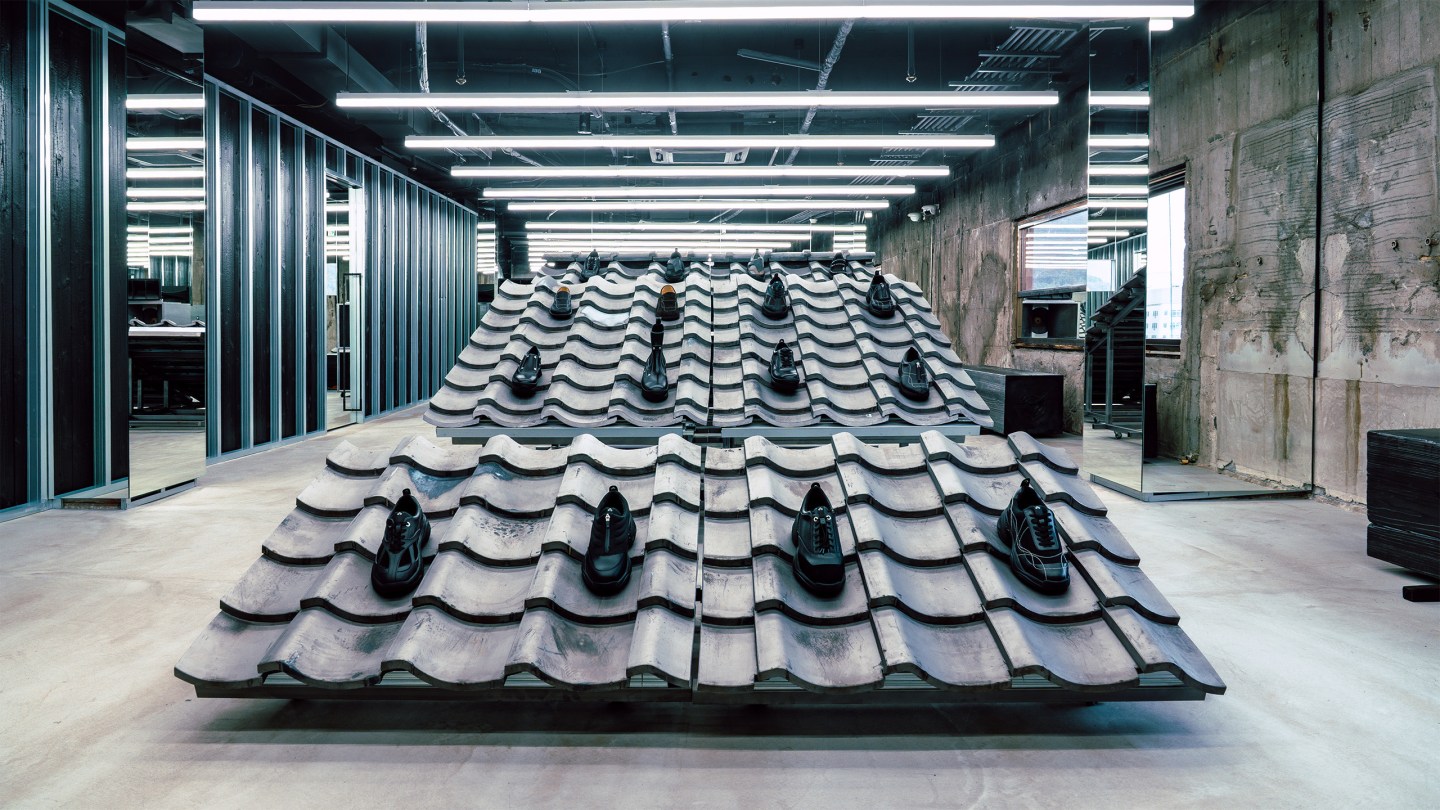
Keen to localise the concept even further, the brand found inspiration in Kyoto’s traditional roof tiles. Tokyo-based studio Daikei Mills designed an installation-like interior with old tiles repurposed as displays, while the use of yakisugi (charred cedar), exposed walls and vintage speakers provide some layers of tactility. For visitors to the showroom, many of whom encounter OAO through its smoothly designed online presence, the space nurtures a new appreciation for the substance of products, ranging from the company’s signature Sunlight series to Osakamade Les Arcs boots.
oaofootwear.com
5.
Best retail hospitality concept
Vermicular at Takanawa Gateway
Minato, Tokyo


When brothers Kuni and Tomo Hijikata inherited the family foundry in Nagoya, they switched from making parts for ships to the world’s finest enamelled cooking pots. The brand that they launched, Vermicular, has a new flagship – part shop, part restaurant, part bakery – in Tokyo’s Takanawa Gateway development. The versatile oven pot is still the signature item but it is now joined by a rice cooker and cast-iron pots and pans. The sales pitch is that once you try the products, you won’t go back to regular cookware. A demonstration kitchen allows passers-by to try rice or freshly sautéed bamboo shoots. There’s a restaurant where the dishes are cooked in Vermicular pots and a bakery that uses Vermicular loaf pans and mini skillets.
For the interior, designer Yoshitaka Okuma of Tokyo studio Line-Inc used earth flooring and metallic textures with a handmade mortar finish on the walls. “The shop was designed to let visitors experience the atmosphere of a factory and the essence of Japanese-made craftsmanship,” he says. The brand is growing fast and moving into the food business with a frozen deli line and meal kits; a sharp, easy-to-maintain knife will go on sale in May. “Being in a complex allows us to reach not only customers already familiar with Vermicular but also those discovering the brand for the first time,” says the company’s Kumiko Kato.
vermicular.jp; line-inc.co.jp
6.
Best factory shop concept
Sotogawa to Nakami
Hasami, Nagasaki prefecture


Hasami-based manufacturer Iwasaki Shiki has been making packaging since 1960. “Most of our work has been behind the scenes until now,” says third-generation head Hirotaka Iwasaki. “Our speciality is haribako [rigid boxes] but, as times change, many of our fellow manufacturers are going out of business. For this industry to continue, we need to be seen.”
To realise this vision, Iwasaki sought out Tokyo-based buyer Yu Yamada of Method, who has built a reputation on working with regional manufacturing businesses across Japan. “In the past we would have made a shop but I’m now more interested in ‘micro-complexes’, in which retail is just one part,” says Iwasaki. “The key element is a whitecube gallery, which adds something fresh to the town, while forging new connections with the creative sector.”
Designed by Nagasaki-born Takeshi Nishio, the Sotogawa to Nakami complex opened last autumn. The gallery holds regular exhibitions, guided by Yamada’s curatorial expertise, spreading the destination’s appeal beyond just packaging and paper enthusiasts. There’s also a shop filled with the company’s original products, as well as those wrapped in its packaging, while the upstairs café includes a box archive and workspaces. An in-store “Box Lab” creates made-to-order products in the customer’s choice of paper. Iwasaki is optimistic about the future. “By adding to Hasami’s appeal, Sotogawa to Nakami can contribute not only to our company but the town as a whole.”
sotonaka.jp