Asics reinforces luxury strategy with expansion of Onitsuka Tiger in Japan
Asics is building on the growth of its fashion label, Onitsuka Tiger, by opening a dedicated shoe factory where every stage of production is handled by local craftspeople. Next up? Beauty and food.
Tottori, one of Japan’s least populated prefectures, has several claims to fame – a 16km stretch of sand dunes among them – but most importantly, perhaps, it’s the birthplace of Kihachiro Onitsuka, the founder of sportswear giant Asics. Now, in a full-circle moment, the company has put the spotlight on this quiet corner of the country, reinventing a shoe-making facility as the Onitsuka Innovative Factory (OIF), the first dedicated production base for the label’s fashion brand Onitsuka Tiger.
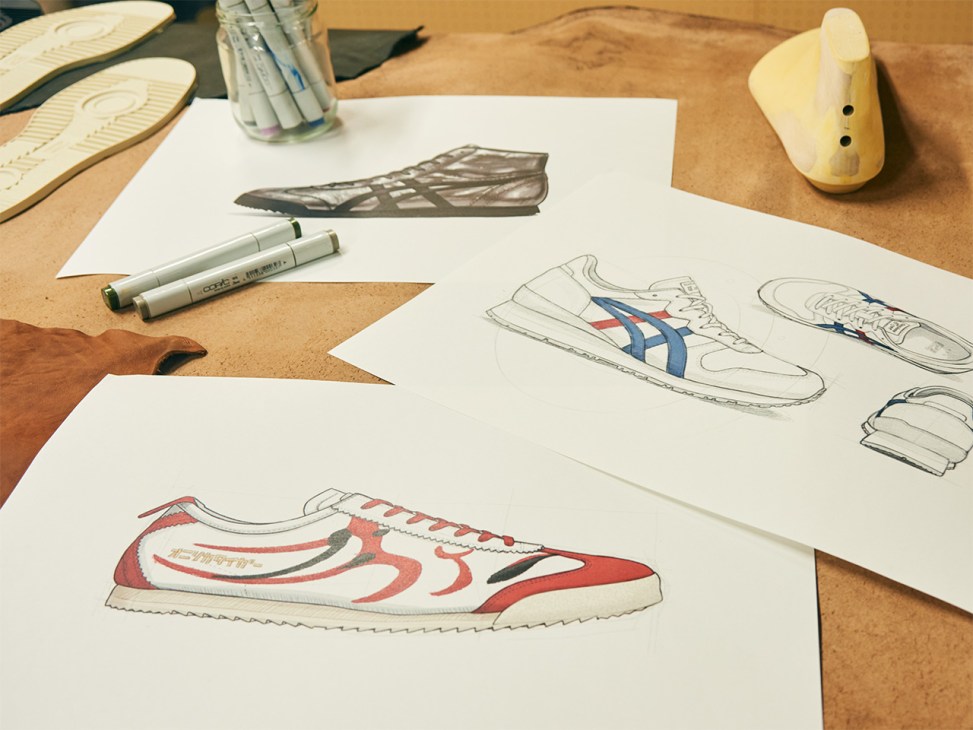
At OIF, the “mother factory”, about 160 people will produce 280,000 pairs of shoes a year, broadcasting Onitsuka Tiger’s techniques to the world, and provide training and technical support for the label’s overseas manufacturing sites. “Craftsmanship is something that can’t be replaced by AI or fully conveyed through data,” says Ryoji Shoda, Onitsuka Tiger’s global head. “At this factory, skills and sensibilities are passed from person to person, from hand to hand, and from one generation to the next.”
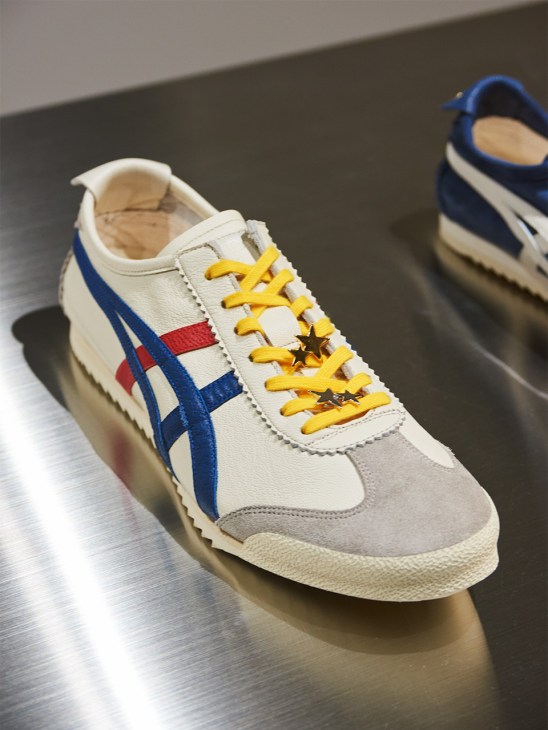
The company, which was founded as Onitsuka in 1949, hit its stride with basketball and running shoes in the 1950s and became Asics (Anima Sana In Corpore Sano, or A Sound Mind in A Sound Body) in 1977. The Onitsuka Tiger name was revived in 2002, with the reissue of classic styles such as the Mexico 66, Ultimate 81 and Nippon 60. The Mexico 66 reboot was propelled by Uma Thurman wearing a pair in Quentin Tarantino’s 2003 film Kill Bill. Sales of Onitsuka Tiger shoes haven’t stopped since and were projected to reach ¥120bn (€653.5m) in 2025, an impressive increase from ¥45.6bn in 2019.
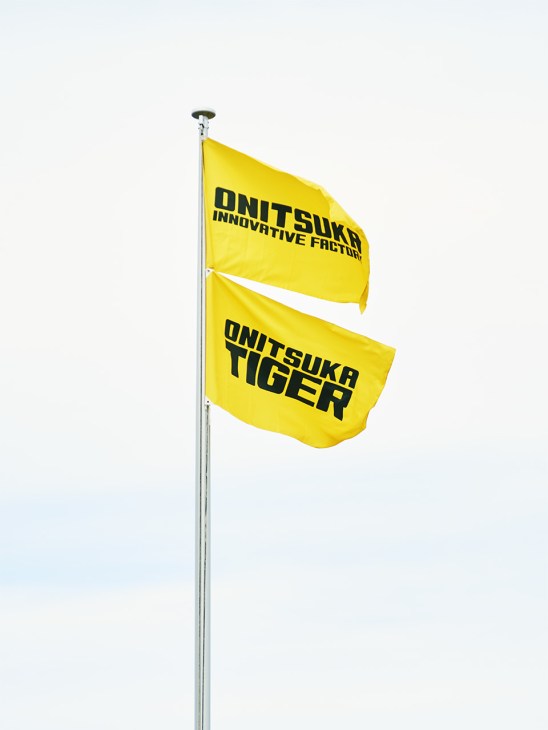
The building’s bright yellow and black exterior is unmissable, while the new facility covers the full span of production, from design and manufacture to a gallery and shop, which will offer the world’s only custom-order Onitsuka Tiger shoes.
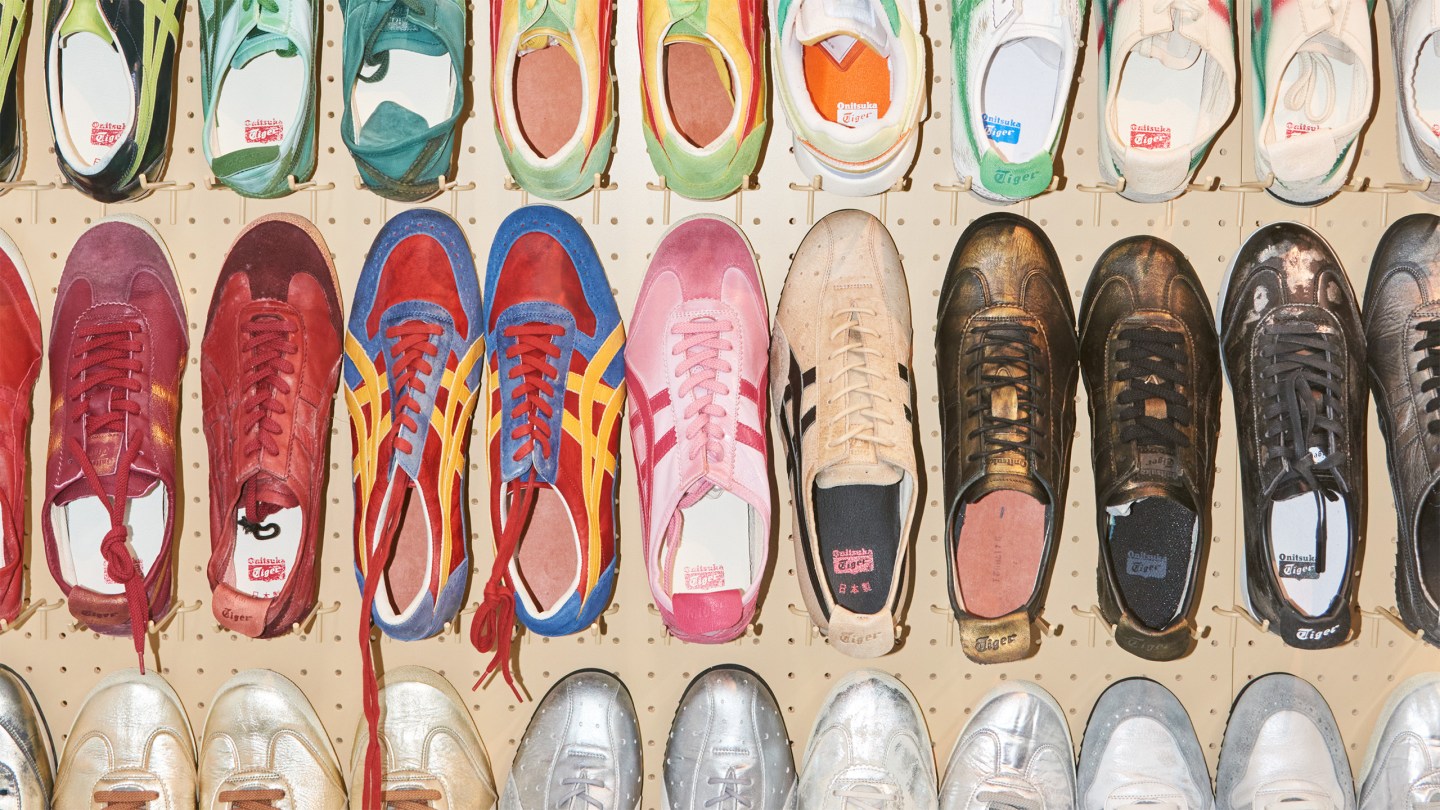
A tour of the pristine factory reveals Onitsuka’s exceptional manufacturing. Over in the “crafted processing building”, shoes are being washed and hand scrunched to give the leather a pleasingly irregular texture. “We don’t place priority on mass production,” says Shoda. “This facility possesses a high level of hand-finished craftsmanship that can’t be achieved at overseas factories or at other domestic sites, particularly in secondary processes such as washing, bleaching and foil stamping.”
Close to the factory floor there is a display of vintage models and shoes that Onitsuka has made with luxury brands, such as Versace and Givenchy. Shoda is adamant that it won’t pair up with just anyone. “Our collaborations are guided not by sales but by a shared pursuit of brand value,” he says. “Each partner is chosen with care and discernment and this thoughtful approach won’t change.”
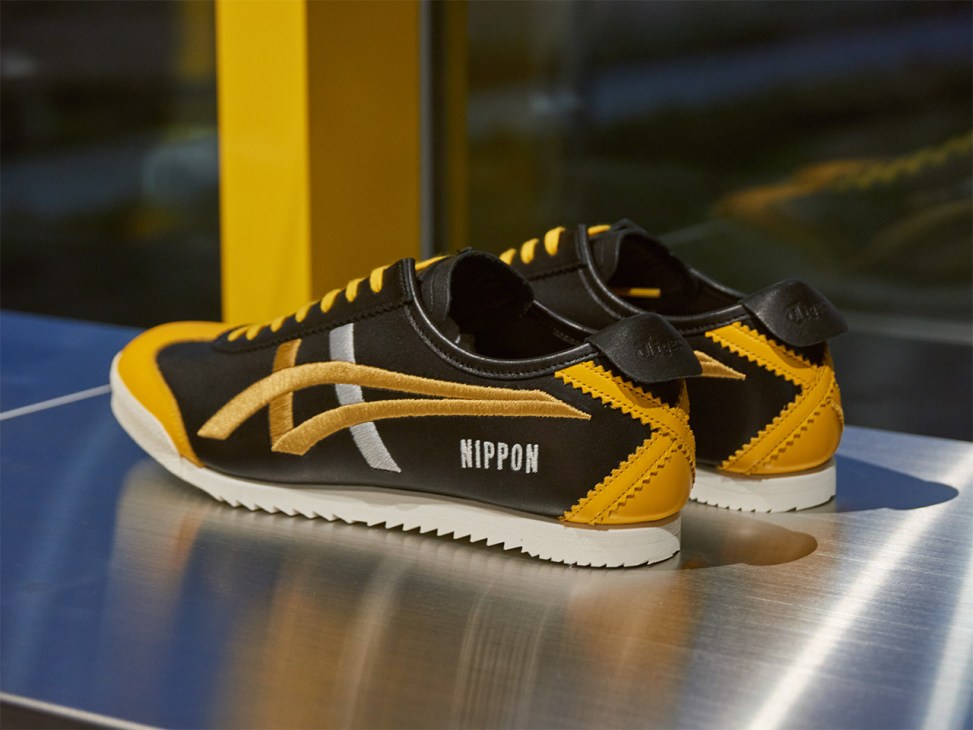
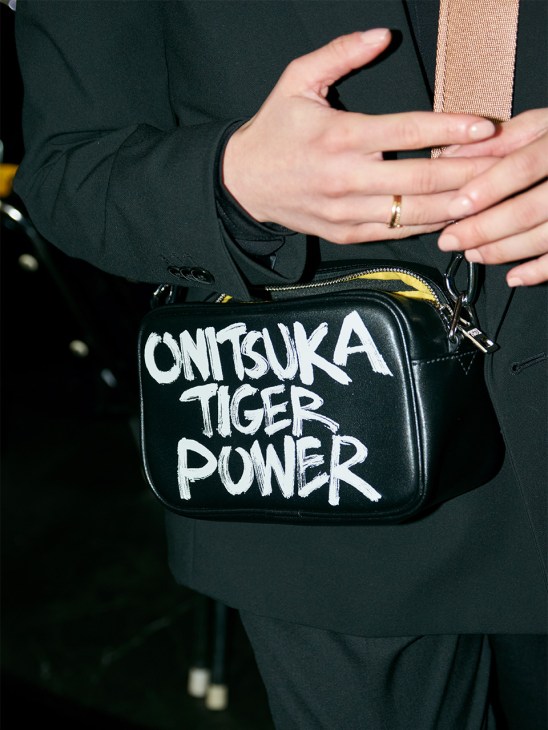
Shoda is reshaping Onitsuka Tiger as a luxury label whose reach will go beyond apparel. “We aim to create experiences that allow people to feel the brand not only through what they wear but through all five senses.” Four Onitsuka Tiger fragrances, devised by Mark Buxton, launched last year, and a Ristorante Onitsuka Tiger concept, conceived by acclaimed chef Yoji Tokuyoshi, is scheduled to open in the Milan shop this September. A flagship opened on Paris’s Champs-Élysées last year.
The ambition is for OIF to boost the local economy through employment and training, as well as bringing tourists to the region. “As a Japanese brand, it’s important for Onitsuka Tiger to have a dedicated factory in Japan,” he says. “It enables the exquisite craftsmanship and the refined, understated sense of beauty inherent in Japanese culture to be reflected in every product.”
onitsukatiger.com
This article is from Monocle’s March issue, The Monocle 100, which features our editors’ favourite 100 figures, destinations, objects and ideas.
Read the rest of the issue here.