Issues
How heritage Spanish wine region Priorat is breathing new life into old vines
In the 1970s a group of winemakers took an interest in a rugged, forgotten corner of Catalonia: the steeply terraced hills of Priorat. Once tended by Carthusian monks and long considered inhospitable, its slate soils, known as licorella, held the potential to produce powerful, earthy wines. Today, Priorat is one of just two Spanish wine regions with the coveted Denominación de Origen Calificada status, the country’s highest classification.


An hour from Tarragona, it has become a destination for visitors drawn by world-class wines, winding cycling routes and mountain scenery. “Priorat is now in a period of consolidation,” says Guillem Pastrana, whose parents, Carles Pastrana and Mariona Jarque, founded the Clos de l’Obac winery in 1987. “We need to take care of the people from all over the world who come to visit us.”
Hence the creation of the five-star Gran Hotel Mas d’en Bruno, a farmhouse amid Clos de l’Obac’s vineyards that was transformed by the Pastrana-Jarque family and Mallorca-based hotelier David Stein. “The enclave in which it is located is unique but it was also a big bet,” says its general manager, Jordi Compte, sitting on the terrace of Tarraco, one of the hotel’s two restaurants. “Catalonia has important inland regions, which help to make tourism less seasonal,” he says. “And wine plays an important role in this.”


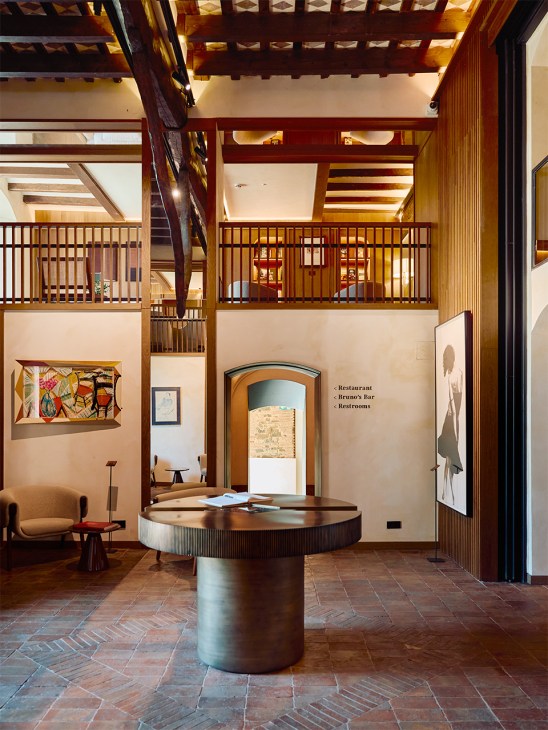
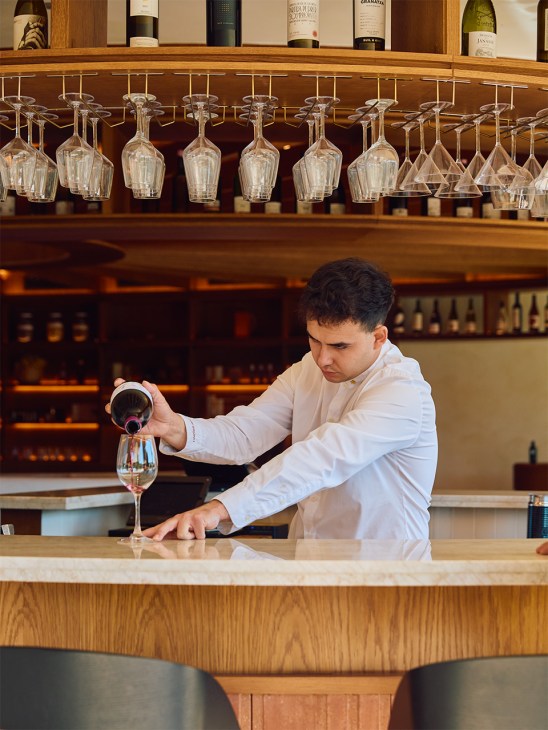
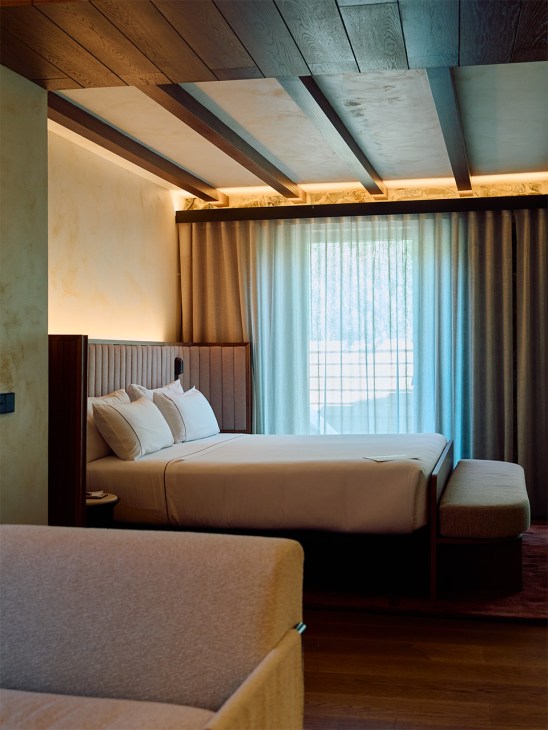
Many of the hotel’s 24 suites have private terraces that open onto the vineyards. Barcelona-based Astet Studio was in charge of reviving the old masía and drawing on its heritage to design the rest of the resort. Inside, a blown-glass light display in the stairwell evokes a bundle of grapes and the theme continues in the spa (which offers wine therapy), located inside an olive-oil mill discovered during excavations.
From the boutique by the poolside terrace, a white spiral staircase leads to the cellar, which stocks a selection of the region’s wines and hosts tastings and masterclasses. With 116 wineries at its doorstep, Mas d’en Bruno is perfect for exploring Priorat’s robust, mineral reds.
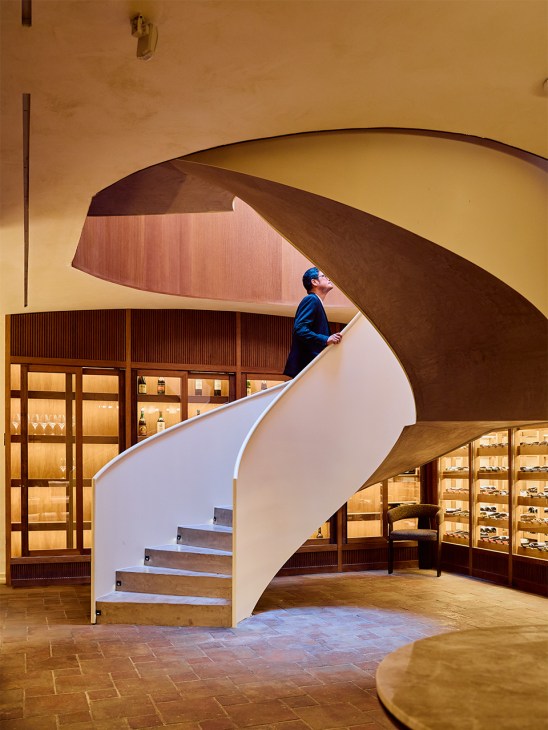
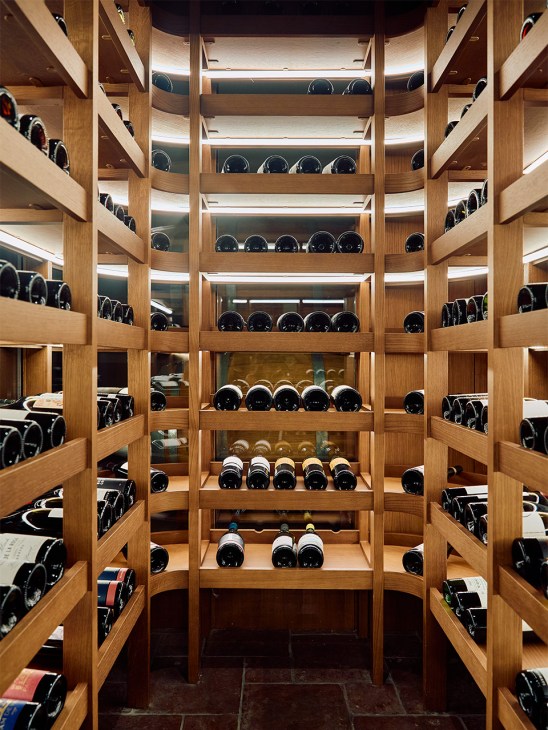
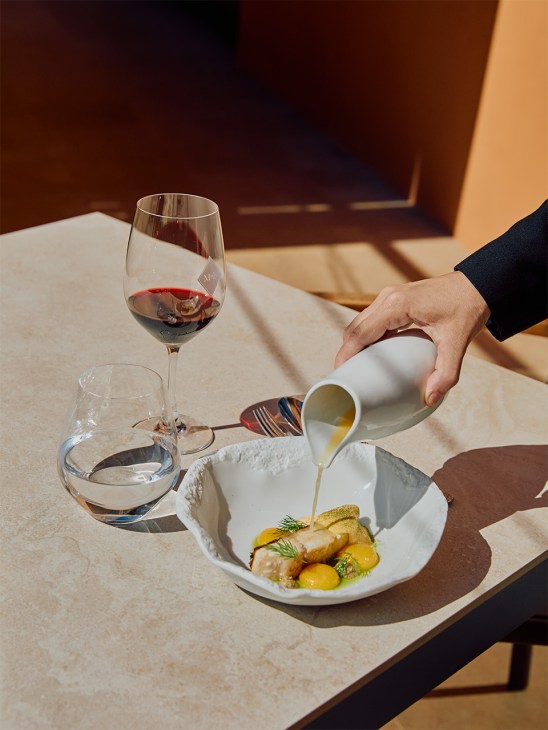
The best place to start is the hotel’s restaurant, Vinum, in the hands of its chief sommelier, Madrid-born Susana Gámez Segovia. Its head chef, Josep Queralt, is from the area, and his cooking is best experienced as a tasting menu. “We have the responsibility to love this land,” says Queralt. “We want every diner to leave feeling imbued with the essence of Priorat, its produce and its customs.”
masdenbruno.com; obac.es
What to visit
Cartoixa d’Escaladei
The town of Escaladei (“stairway to heaven”) houses a Carthusian monastery founded by monks from France who began planting vines in the 12th century. The region took its name from the Prior, the title for the head of the monastery.
Brots Restaurant
Belgian chef Pieter Truyts cooks traditional Catalan cuisine with a modern touch at this restaurant in the small town of Poboleda.
Balcó de Siurana
A popular hiking trail through forests and rocky paths leads to the Siurana “Balcony” with stunning views, including of the Siurana Reservoir and Prades Mountains.
Clos de l’Obac winery
Harvesting its first grapes in 1989, Clos de l’Obac was founded by former journalist Carles Pastrana and artist and current winemaker Mariona Jarque, a couple who are part of the Priorat wine renaissance.
Álvaro Palacios winery
A leading figure of Spanish wine, Álvaro Palacios was among the 1980s pioneers who rediscovered Priorat. His top wine, L’Ermita, comes from a plot planted with vines more than 100 years ago.
Leave the urban sprawl behind at Amaria, a boutique Algarve getaway
A stay at Amaria, a hotel three hours’ drive south of Lisbon, is soundtracked by crashing waves, with views that open onto a tapestry of pines and ancient olive trees. The untamed character of the Costa Vicentina Natural Park was what drew Nuno Oliveira, the founder of Amaria, to this place. “There’s a strong connection here to the sea and to the underlying wilderness,” he says.
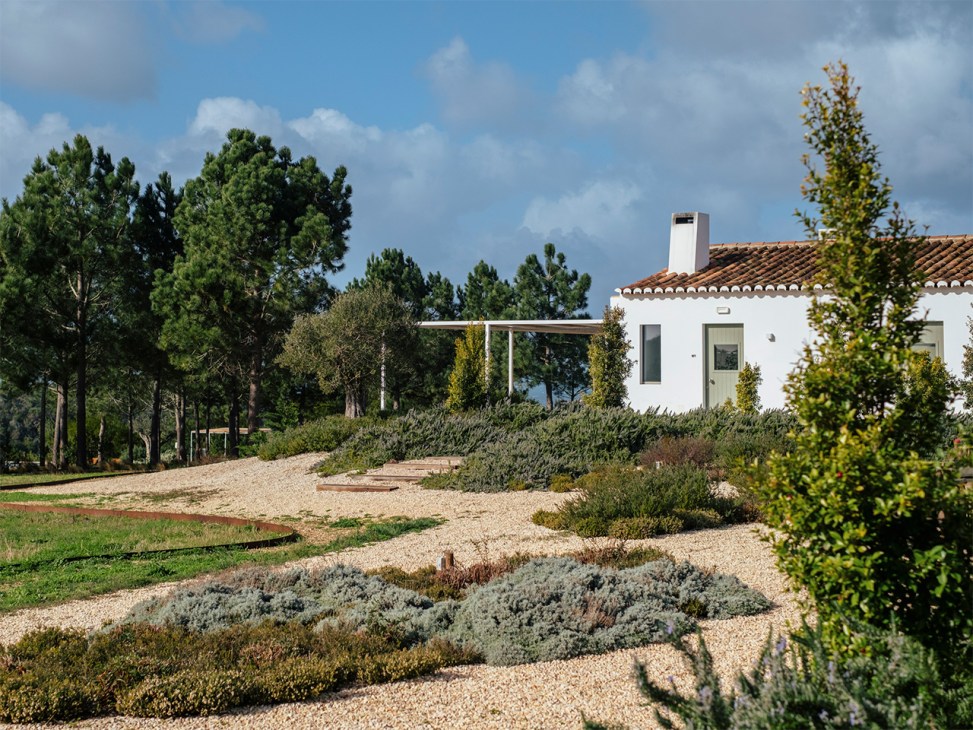
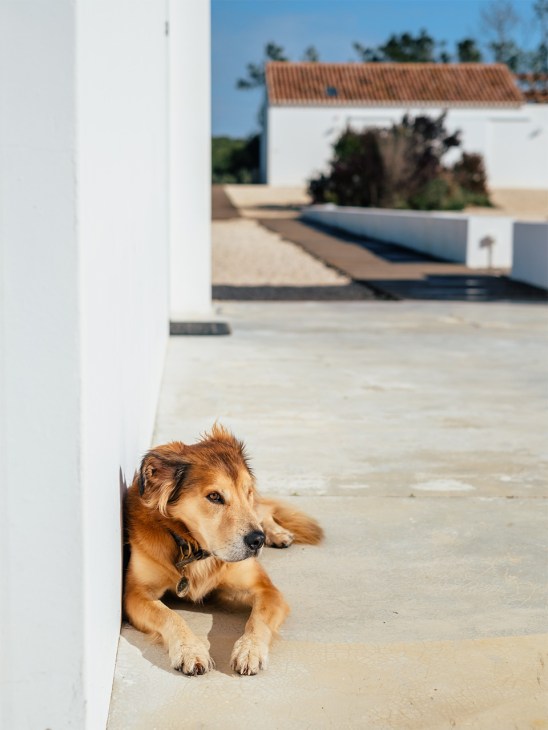
Oliveira had been visiting this patch of the Algarve, between the villages of Odeceixe and Aljezur, since he was 18 years old. He initially came for fishing trips but it wasn’t until 2016 that he imagined putting down roots here.
With his mother, Maria – from whom the hotel takes its name, which also nods to the Portuguese verb amar (to love) – he bought two neighbouring plots in the natural park and made a secondary base for himself in one of the ruins that stood on the property. In 2021 he quit his engineering job in Lisbon in search of a slower pace of life and Amaria started to take shape.


The hotel’s design is faithful to the region’s whitewashed vernacular, though there are modern flourishes. Wide glass doors are positioned to catch the light at every turn. The interiors, meanwhile, are less decorated, more assembled: iron chairs found in an atelier in France, an antique cabinet passed down through generations and unique glassware sourced in Morocco.
While Oliveira had always been drawn to architecture, working on Amaria uncovered an affinity his for landscape design. Beyond the grounds, the vegetation grows denser. “We planted more than 1,500 trees, studying the native species with care for the regeneration of the soil,” he says.
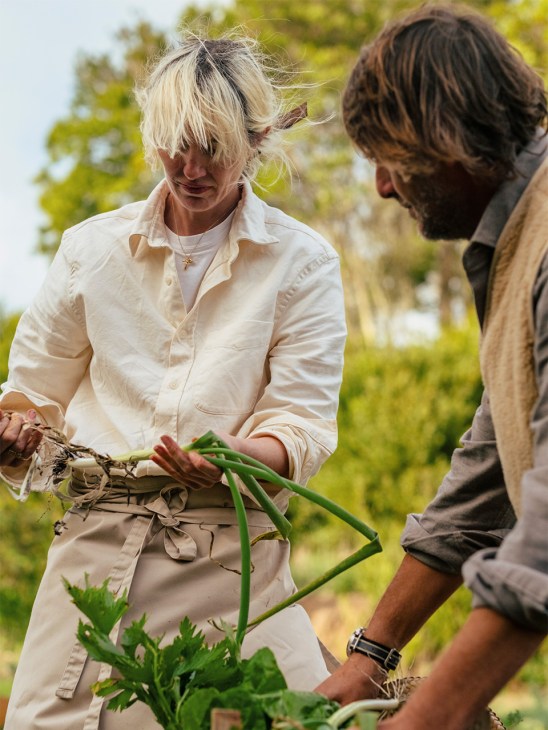
His British wife, former stylist Phoebe Arnold, applied her skills to the project. A self-taught cook, she now oversees the unpretentious food served at the hotel. Breakfast is a spread of homemade granola, Portuguese cheeses and red berries from a neighbouring grower, while lunch and dinner, available on request, are shaped by her daily trips to the market in Aljezur, complemented by supplies from the hotel’s vegetable and herb garden and fruit groves. Nothing here resembles fine dining. Instead, Arnold moves through the open kitchen in the living room, serving guests as though hosting friends at home.


Beyond the hotel, it’s worth exploring Aljezur and Odeceixe, where traditional Portuguese spots serving fresh Atlantic seafood sit alongside contemporary cafés. Prefer to stay put? Try Amaria’s saltwater pool in the summer and cylindrical wood-fired sauna in the winter. Perched above the valley, the view from the latter opens onto the surf breaking below.
amaria.pt
Aljezur address book
Pont’a Pé Restaurant
A typical Portuguese tasca serving regional classics such as baked robalo (sea bass).
12 Largo da Liberdade, Aljezur
Moagem
A café and bar set within an old grain mill that hosts live music on Friday nights.
13 Rua João Dias Mendes, Aljezur
Atlas Land Winery
A small vineyard making natural wines from lesser-known indigenous grapes.
Aljezur
Step inside Chesa Marchetta, Artfarm’s 16th-century guest house
Fifteen minutes from the glitz of St Moritz lies Sils Maria, a small Swiss town nestled in the Upper Engadin valley. Chesa Marchetta is the latest offering from Hauser & Wirth’s hospitality wing, Artfarm.
The genre-defining art behemoth, founded by Iwan and Manuela Wirth in 1992, has moved into the hospitality sphere in the past decade with food retailers, bars and restaurants popping up in London, Los Angeles, Menorca, New York, Scotland and Somerset.
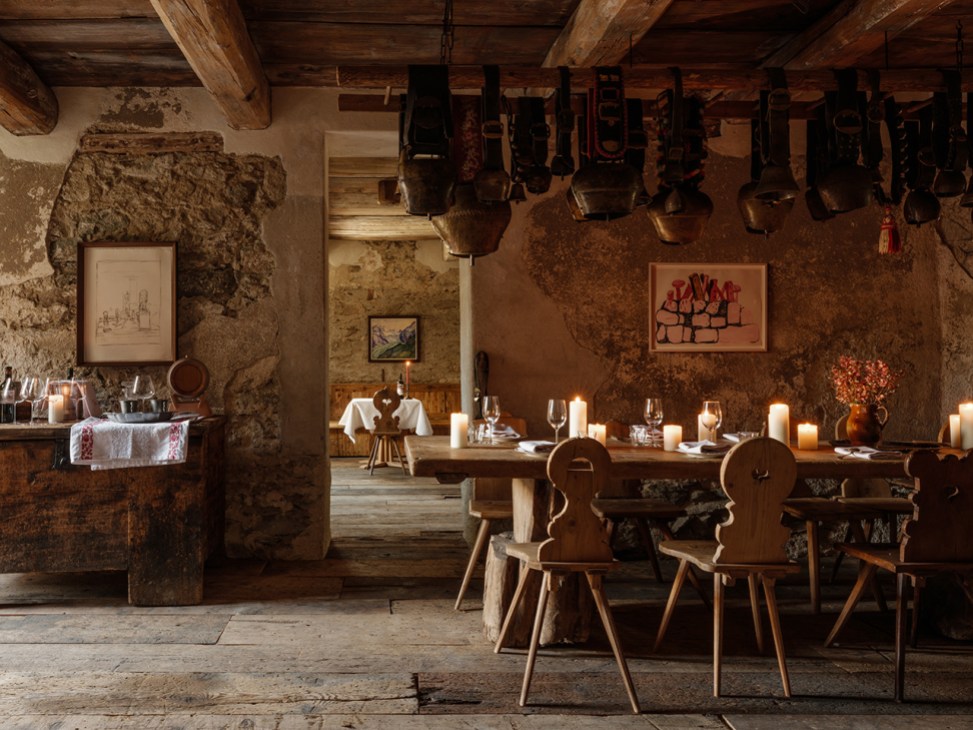
Its latest foray marks the Wirths’ first foothold in their native Switzerland. The original pensione was acquired by the Wirths four years ago and served as the backdrop to the art duo’s first date. The guesthouse once attracted a string of art luminaries including Gerhard Richter and Jean-Michel Basquiat.


Chesa Marchetta was renovated by Laplace, a Paris-based practice that took its cues from the site’s 16th-century beginnings. The interiors of the 13-key hotel are imbued with the perfumed warmth of the Arolla pine cladding and dotted with antique furniture.
Art is a key consideration: works by Richter, Louise Bourgeois and Philip Guston grace the walls. In the restaurant, Italian-accented mountain dishes such as gnocchi in truffled brown butter and roasted artichoke fondue sit next to local favourites such as Engadiner nusstorte (nut cake). Good food, museum-worthy art and spellbinding scenery await.
chesamarchetta.ch
What we can learn from the UK’s shift away from coal-fired power
The three cooling towers of Didcot A power station in Oxfordshire, England, loomed up in the grey morning light on 18 August 2019, as they had for half a century. But having stood idle for over six years, this was to be their last morning. At 07.00 demolition charges were ignited and the towers folded gracefully in on themselves as they collapsed to the ground.
The watching crowd got an extra moment of excitement when a large piece of supposed “debris protection material” dislodged and struck a 30,000-volt overhead line outside of the exclusion area, triggering an explosion and a fire. The break in the network left 40,000 homes without electricity. Their power supply was restored a few hours later but the destruction of Didcot A, which in its heyday generated enough power to supply millions of homes, was irreversible.
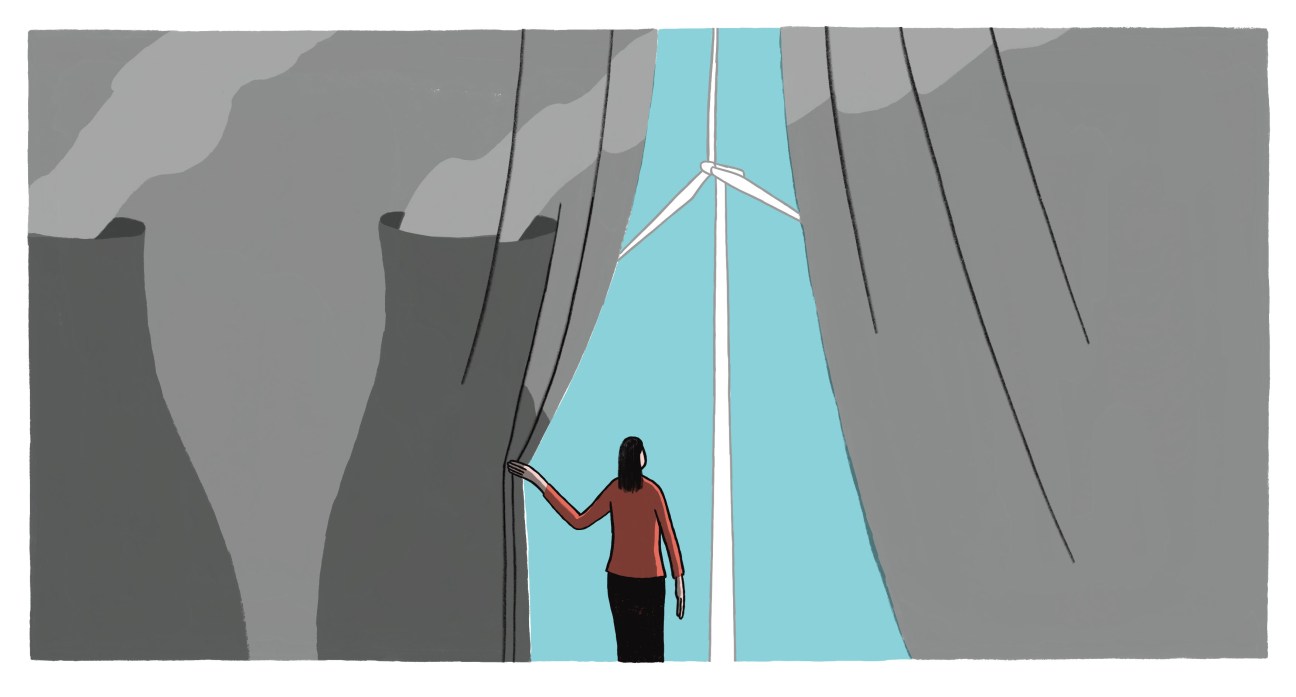
It marked a death knell for coal-burning in the UK, which by 2019 had already fallen to 2 per cent of electricity generation. While seven coal power stations were still operating at the time, two more were decommissioned in 2019, one the following year, another stopped burning coal in 2021 and two more stopped generating in 2023. The last coal-burning power station operating in the UK, Ratcliffe-on-Soar in Nottinghamshire, was closed down in September 2024. Given that coal provided 39 per cent of the UK’s power supply as recently as 2012, that was a remarkable tipping point.
Despite natural-gas-burning replacing coal in the short term, by 2020 – soon after Didcot A was destroyed – renewables including wind, solar and biomass were supplying 43 per cent of UK electricity demand, more than coal had covered back in 2012. Today more than 40 per cent of UK power comes from renewables and wind has become the biggest contributor, providing more than a quarter of the UK’s electricity. This started with onshore wind but now offshore has taken over and is poised to triple its capacity over the next five years. The UK now has about 20 per cent of the world’s offshore wind-energy capacity and in 2023, it generated about 30 per cent of the UK’s electricity.
The success story of the UK (and, incidentally, Denmark) in tipping away from coal power and towards renewables is important for everyone across the globe. That’s because a quarter of global greenhouse gas emissions still come from generating electricity. Positive tipping points away from coal-burning and towards renewables are urgently needed worldwide.
But this process of tipping towards renewables needs to go much faster. Current rates of growth suggest that solar and wind will together provide about a third of global power generation by 2030 but they need to exceed 40 per cent in order to be on track to keep global warming close to 1.5C. Coal power also needs to die, and fast – it has to fall from 36 per cent to about 4 per cent of power generation by 2030.
Overall, about 80 per cent of the world’s population lives in countries that are net fossil-fuel importers and have prosperity to gain in tipping towards renewable energy. As it is inherently more evenly distributed, the transformation will also help to redistribute wealth globally.
Energy can be stored in many forms – for example, in physical form as water pumped uphill or in chemical form as hydrogen or ammonia. But battery storage is the most promising option when it comes to rapidly scaling up. The growth required is enormous. Installed battery storage capacity worldwide was about 56GW by the end of 2023 but it needs to increase at least tenfold by 2030 or double that if we tip rapidly to solar power. Supply of grid-scale battery storage is growing exponentially, with a doubling time of less than two years, but needs to grow even faster to meet demand.
Happily, projections are being continually revised upwards, suggesting that growth will accelerate towards a doubling of battery storage capacity every year and a half. Such rapid expansion is made possible by – and depends upon – the tipping point to electric vehicles because they are projected to make up 90 per cent of the market for batteries in 2030. Passing the EV tipping point is driving down the price of lithium-ion batteries. Every doubling of total installed capacity has reduced their price by nearly 20 per cent and the cost of the energy service that they provide by 30 per cent. This could halve the price of batteries by 2030.
So what stands in the way of accelerating the renewable-energy revolution? Well, unsurprisingly, incumbents with strong vested interests in the fossil-fuel sector are resisting change and they are backed by powerful damping feedback that maintains the status quo. Fossil-fuel subsidies from governments worldwide totalled a record $7trn (€6trn) in 2022, more than a seventh of which was direct subsidies. That is a $2trn (€1.7trn) increase from 2020, and just over 7 per cent of the global GDP. For comparison, the world spends about 4 per cent of GDP on education. Ending fossil-fuel subsidies and shifting that public money towards renewable energy would accelerate change.
About the writer:
Tim Lenton is the chair in climate change and earth systems science at the University of Exeter. He is the author of Positive Tipping Points, published by Oxford University Press, from which this essay is extracted.
How to keep the lights on in the new geopolitical age of energy security
Geopolitics is all about resources. From imperial competition over coal and iron to Cold War rivalries shaped by oil fields and shipping lanes, power in international politics is inseparable from control over the material foundations of economic and military strength. The struggle over geography – resource-rich territories, trade routes, ports, pipelines and choke points – has long defined what states fear, what they protect and what they fight over. Energy isn’t just an economic input but also a strategic asset that underwrites national security and geopolitical influence.
For decades, it was a game of molecules. Energy security was measured in barrels of crude oil, cubic feet of natural gas and the physical steel of pipelines crisscrossing continents. If a tanker was delayed or a pipeline disrupted, strategic petroleum reserves and long-term supply contracts cushioned the blow. The pace of disruption was mostly gradual, the physics tangible and the threats visible on a map. Governments could count, store and redirect energy with a measure of confidence.
Fast-forward to today and we’re living through an invisible revolution. The world is pivoting from molecule security to electron security and the rules of the game have changed. Today our economic lifeline is not just a pipeline or a port but the electrical grid – a sprawling, synchronised machine that must balance supply and demand every millisecond. Unlike oil or gas, electricity cannot be stockpiled at scale without great cost. Nor can it tolerate delays. When electrons stop flowing, systems – and with them nations, cities, businesses and homes – fail and are instantly left powerless.
Living on grid
As transport, industry, data centres and even military platforms electrify, the grid – a mostly unseen and in parts rather old structure for conveying electricity – has become the new centre of gravity for national security. It’s a strategic shift as well as a technical one. Electric vehicles, heat pumps, automated factories and cloud computing all hinge on reliable power. A damaged transformer or severed undersea cable is no longer merely a local inconvenience; it can result in halted ports, stranded trains, disrupted financial markets and hospitals operating on emergency generators.
The grid underpins almost every critical function of modern societies, including communications, water treatment and emergency response. Where governments once worried about how many days of fuel they had in reserve, they must now ask a different question: how long can the system stay up when stressed by cyberattacks, extreme weather or geopolitical sabotage?
Real-time resilience
The shift from stocking up to dealing with outages marks a fundamental change in energy security. Hydrocarbon systems rewarded accumulation. If supply was interrupted, inventories could be drawn down while deals and diplomacy adjusted. Electricity systems operate on a different logic: supply and demand must be balanced and in real time. Frequency deviations of even a fraction can cause protective shutdowns, triggering domino effects across regions.
This reality forces policymakers to prioritise resilience over volume. Redundancy, rapid repair, spare capacity and cross-border interconnections matter far more than headline generation figures. Security is less about “owning” energy resources or how many barrels that you have in reserve and more about managing flows – not to mention recovering quickly if those flows are disrupted.
Pushed to the limit
The issue with the modern grid is that its very efficiency has bred vulnerability. To accommodate renewable energy, electric vehicles and variable demand, grids are now smarter. Sensors, automated substations, predictive software and remote controls now govern what was once managed manually. These digital layers allow grids to operate closer to their limits (a good thing for efficiency). However, they also expand the attack surface.
The convergence of information technology and operational technology means that cyber incidents have physical consequences. A ransomware attack that begins in a billing system or contractor network can pivot to operational systems. State-sponsored actors are no longer merely probing networks for weaknesses; they are now mapping responses and waiting for geopolitical triggers.
Even without malicious intent, complexity itself can be a risk. With millions of energy resources connected to the grid, a faulty software update or flawed algorithm could destabilise the frequency across wide areas. In the electricity era, failure doesn’t always come from an explosion or a missile. It could come from a sloppy line of code.
Plugging in
Different powers are responding to this new reality in distinct ways, reflecting their political systems, industrial bases and threat perceptions. Europe’s experience since Russia’s invasion of Ukraine has fundamentally reshaped its energy-security thinking. Forced to adapt quickly, EU member states diversified gas supplies, accelerated renewables and invested in interconnectors. The result has been a growing recognition that energy security is inseparable from infrastructure protection and collective action. The bloc’s resilience agenda reflects this lesson. By emphasising risk assessments, working across borders and public-private co-operation, it is attempting to move beyond crisis management toward structural preparedness.
Still, gaps remain. Europe needs faster investment in grids, better co-ordination on the procurement of critical components and a clearer division of labour between national authorities and Nato when dealing with hybrid threats. Resilience cannot be built country by country; it must be designed at the system level.
Meanwhile, the US has long framed energy security through the lens of abundance. The rhetoric of “energy dominance”, popularised under the current Trump administration, emphasises domestic production, exports and geopolitical leverage derived from hydrocarbons. That logic still shapes US politics, particularly through liquified natural gas exports and protectionist economic policies.
But abundance can’t secure an electricity-based system by itself. The country’s grid is ageing, fragmented and unevenly regulated. Extreme weather and cyber incidents have exposed vulnerabilities that production levels can’t fix. What the US needs is not just energy dominance but grid resilience too: faster permitting for transmission lines, strategic reserves of crucial equipment and mandatory cybersecurity standards for operators. In the electricity era, security comes not from exporting more fuel but from ensuring that the system at home can withstand shocks.
China’s priority is to reduce vulnerability to external pressure while sustaining economic growth. Huge investment in renewables, nuclear power and grid infrastructure has made it the world’s leading manufacturer of solar panels, batteries and many key components of electricity systems. This dominance brings strategic advantages. Control over supply chains can translate into political leverage, while domestic electrification reduces dependence on imported hydrocarbons. China is also seeking to diversify energy sources and routes, from renewables to nuclear to overseas investments.
For Western policymakers, this creates a dilemma. Co-operation with China is essential for climate goals but dependence on the country’s manufacturing for key grid components introduces fresh vulnerabilities. The challenge is to compete without decoupling entirely: diversify suppliers, invest in domestic and partner production and protect truly sensitive technologies without fragmenting the global energy transition.
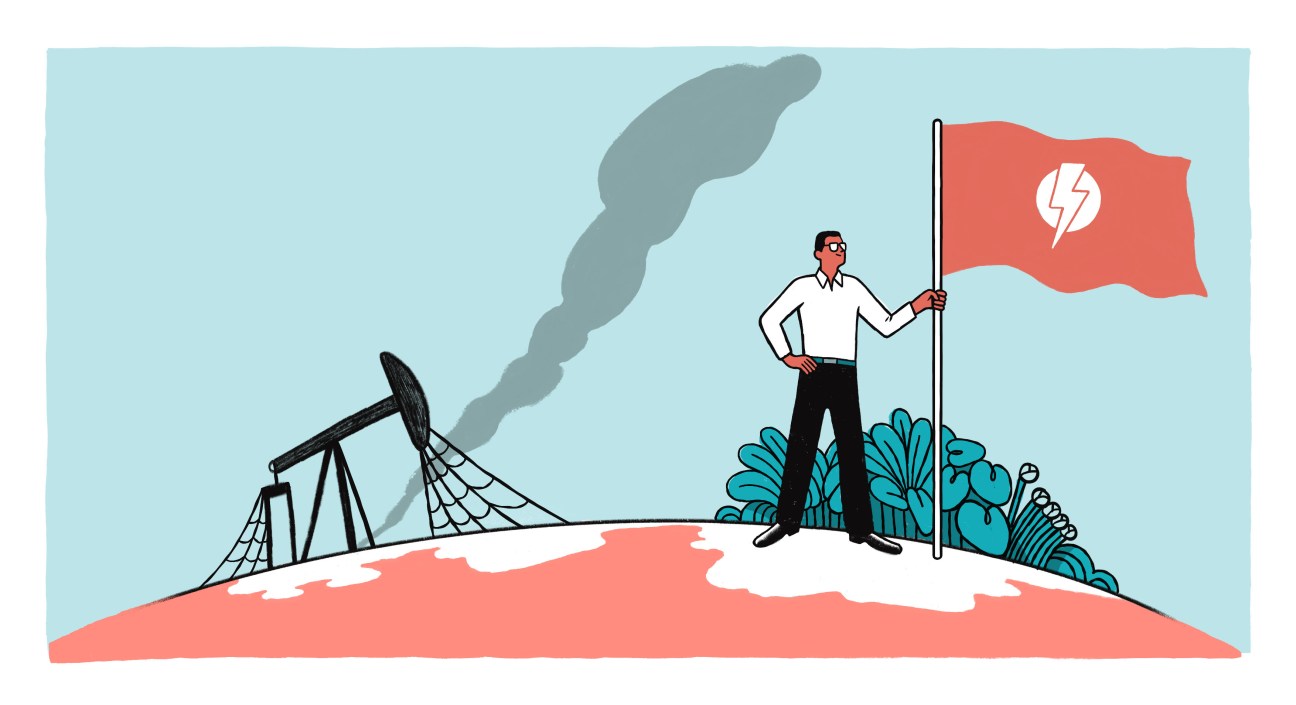
Game changers
Across these approaches, certain assets have emerged as strategically decisive. High-voltage transformers, power electronics, control systems and software updates are now as critical as oil terminals once were. These are expensive, slow to produce and difficult to replace, making them attractive targets when it comes to conflict or coercion. Critical minerals are equally important. Lithium, cobalt, copper and rare earths are the building blocks of batteries, motors and transmission infrastructure. Control over their extraction, processing and manufacturing chains translates directly into strategic leverage. In this sense, supply chains have become the new choke points of energy security.
Resilience is no longer about preventing all disruptions. It is about surviving them. That means assuming that systems will fail and designing them to recover quickly. Physical hardening must be matched by cyber discipline. Stockpiling spare parts must go hand in hand with training a workforce capable of installing and operating them – under pressure if the situation called for it.
Human capital is an underappreciated vulnerability. Power engineers who understand both high-voltage physics and cybersecurity are in short supply. Training and retaining this workforce is a national-security imperative. At the same time, there’s a renewed appreciation for analogue safeguards such as manual controls and offline capabilities that can function if and when digital systems are compromised.
Stress tests
By the end of this decade, energy security will be judged less by who controls fuel reserves and more by who can sustain complex systems under stress. The most secure countries will be those that treat the grid as critical infrastructure in the fullest sense: physical, digital, human and geopolitical. The transition from molecules to electrons is the most consequential shift in energy security in a century. Cheeringly, it promises cleaner growth and greater efficiency. The downside is new fragilities. Whether it strengthens or undermines national power will depend on whether governments grasp a simple truth of the electricity era: energy security is about momentum and means keeping the electrons flowing – everywhere and at all times.
About the writer:
Gorana Grgic is Monocle’s security correspondent and regularly writes for our magazine and website. She is the head of the Global Security team at the eth Zürich Centre for Security Studies.
“Energy security is now national security.” General Tom Middendorp on the risks and rewards of Europe’s defence strategy
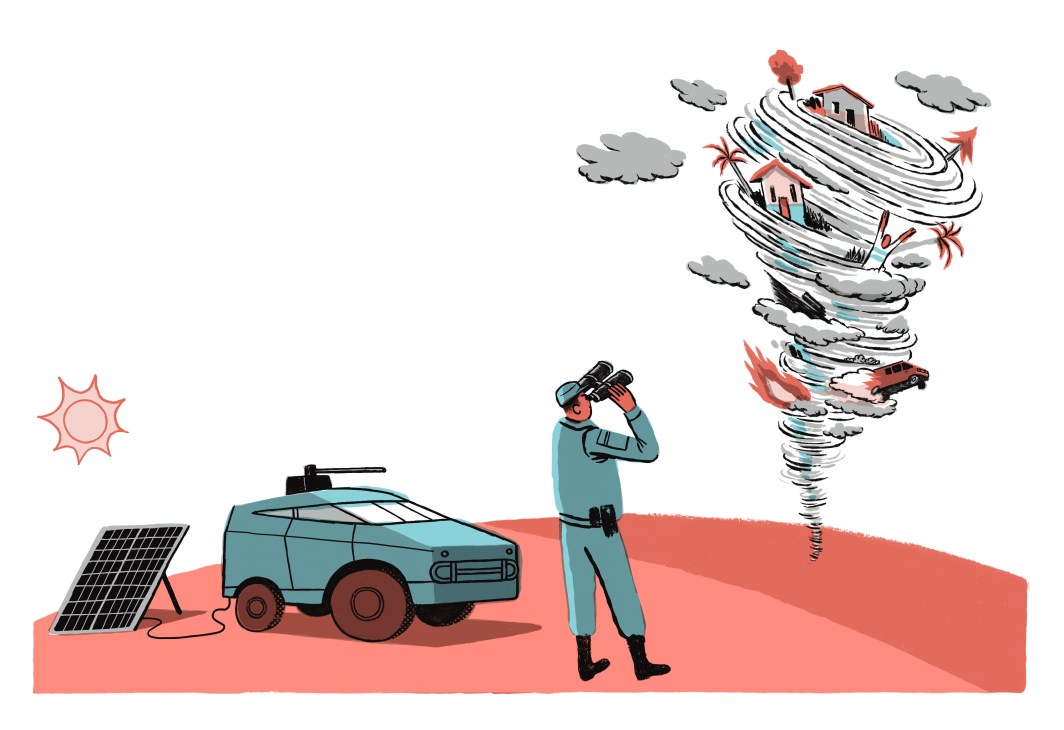
General Tom Middendorp was the chief of defence of the Dutch armed forces from 2012 to 2017. His earlier career in the Royal Netherlands Army included commands in Bosnia and Herzegovina, Iraq and Afghanistan. He is now the chair of the International Military Council on Climate and Security, an association of military leaders and security experts that assesses and anticipates the security risks posed by climate change.
Are we too used to energy security?
Yes. We are a bit spoilt. We come from a golden age of abundance. We’re now realising that we have entered a new era of disruption and that creates completely new dynamics.
In terms of the security of our electricity grids, where do you see the threats?
There are military dependencies on energy and military supply lines are the first targets in any crisis. For the military, it’s important to create energy self-sufficiency. But from a wider resilience perspective, we see in Ukraine that energy grids are on the front line. So it’s not just a technical issue any more. It’s also about how opponents can disrupt societies. And there’s also our dependency on gas- and oil-supplying countries that can use it against us.
Are there any lessons from Ukraine for other European countries?
They’re creating more decentralised energy hubs that are more self-sufficient. If you have local energy supply and production, these are much harder to target than a centralised system.
Are our grids generally better secured than they were five or 10 years ago?
Yes, in certain respects, especially when it comes to cybersecurity, where there’s a good level of resilience. But we are underestimating new hybrid threats – such as Russian tankers dragging their anchors along the seabed and pulling out cables.
The EU still spends more than €1bn a month on Russian oil and gas. Is it extricating itself from its energy dependencies quickly enough?
It needs to be much faster than we’re doing it today. We have to shift to alternative suppliers that are less of a threat and reduce our dependency on that supply by creating more energy independence through the entire energy-transition process. That’s also something that we need to speed up to create more autonomy within Europe and make ourselves less vulnerable.
So there’s a strong overlap between energy security and national security?
Absolutely. The energy transition can make defence forces more autonomous – we now depend on very long supply lines, which are very vulnerable. And it would also reduce the risk to our infrastructure. Creating more self-sufficiency on the local or city level through the energy transition will create more resilience.
That’s a big project.
It’s huge. It’s the complete turnaround of our current system from an imported-fuel and top-down system to a bottom-up, decentralised system – and also a more hybrid one. We now have separate top-down energy systems for gas, oil and electricity. With a bottom-up, hybrid system, you can exchange with each other. You can produce energy as electricity but you can turn it through electrolysis into hydrogen too, so you can make it more hybrid on a local level.
Is there an opportunity here to spend the 1.5 per cent of GDP that’s being mandated for critical infrastructure for Nato members as part of the 5 per cent that they’re supposed to be spending on defence by 2035?
Well, it’s meant to be spent on national resilience. There’s a good case to make here if you realise that energy security is part of that national resilience. They are now developing the criteria to judge whether or not something can be part of that 1.5 per cent because many people want to compete in that area.
Would you like to see some of that 1.5 per cent directed towards cleaner energy?
Yes. Clean energy helps defence to become more autonomous in its operations. There is that dual-use element to it. Defence can be a platform for innovation and the more it can accelerate the energy transition in the operational realm, the more it can be used in civil society. The technology is almost fully driven by civil innovation but integrating these technologies can be a military contribution to developing this new system.
How much enthusiasm for that role do you detect among militaries?
It’s still limited, to be honest. People worry that it will cost more and slow us down, that it’s not as effective as fossil fuels. There’s a lot of prejudice. Until now, energy transition has been a concern from a climate perspective – a solution to lower our carbon footprint. We need to realise that it’s about more than that. It’s also about our security. By approaching it from those two angles, we can accelerate. If we don’t make that transition, we’ll remain dependent on all kinds of suppliers. Of course, the energy transition could create new dependencies – we could become more dependent on critical minerals and components from China. So we need to innovate too.
Are there any useful examples of that?
There’s a company called Solarge producing solar panels that aren’t made from glass and don’t damage quickly. In tests, the panels were shot at but kept functioning. They’re very lightweight and at the end of their life all of the materials can be reused for new panels. That’s the kind of European innovation that could help to make us more independent. In the current system, we are buying Chinese solar panels that can’t be reused: we’re creating billions of panels that we’re turning into waste, including the rare earth minerals inside them that we cannot use again.
Should Europe be wary of replacing a dependence on Russian fossil fuels with a dependence on Chinese rare earths and technology?
It’s important to shape the energy transition in a way that doesn’t create new dependencies. It’s good that Europe is now realising that it needs to become more independent in terms of knowledge development and innovation, because we have outsourced a lot of that – production to China, innovation to the US. We need to reinvent ourselves in those areas.
As Europe focuses on its own security, is the bigger picture being missed? There has been a lot of cutting back on climate measures overseas. Is that a false economy?
Yes, increasingly climate change has effects at the strategic, geopolitical level. The melting Arctic opens up a completely new arena around resources and trade routes – and new possibilities for Russia to position naval and nuclear forces in the north. That’s a game changer for Nato and that’s just one example. But climate change acts as a risk multiplier, especially in the fragile regions around us. Last year I travelled through Somalia, Iraq and Bangladesh, and I saw the enormous impact that the changing climate is already having. Somalia has had only two rain seasons in five years. It used to be a certainty that it would have a rain season every year but that’s gone now, which means that a society that depends upon agriculture and livestock has been completely disrupted. Millions of people have to move and they go to the cities, where they can’t find work and so start making desperate choices that create instability, migration flows, breeding grounds for extremism. A changing climate has many spin-off effects on security. Militaries have to take this seriously and not see it as a distant future topic for other departments to care about.
Is climate change already having an effect on military operations?
Yes. For instance, at the US Navy’s largest base – Norfolk, Virginia – they have to leave the harbour several times a year because of flooding or flood risks. So they are now putting resilience measures in place to ensure that they can maintain operational effectiveness.
Are there any militaries setting an example when it comes to adaptation in terms of procurement and equipment?
In the UK, they’re integrating climate requirements into the whole acquisition process – for everything they buy, they have to check the box on climate. I see it being integrated in procurement processes but also in vital infrastructure. US military bases are installing smart grids to become more energy independent and create more local autonomy. So it’s not just about climate but also operational effectiveness and reducing vulnerability.
Could governments encourage their militaries to act more as laboratories for addressing climate change and the energy transition?
Yes, but maybe not approach it just from the climate angle because that might scare people away, especially in the military. If you approach it from both sides – how to use the energy transition to make your units more autonomous and reduce your carbon footprint – then it becomes more interesting because you put operational effectiveness up front and that makes it appealing for militaries to put their money and effort into it. Countries should indeed include it in their policymaking because, though these technologies come from the civil sector, the military can help by integrating them in a very local, autonomous system that’s also mobile. That is an added value that the military can offer, providing a kind of free experimentation space for civilian innovators in this new, more bottom-up system, realising that it all has a dual-use value.
What are the downsides if that opportunity isn’t embraced?
This is all long-term, complicated and expensive, which tends to put governments off. It’s like Albert Einstein allegedly said: if you do what you did, you get what you got. And what we did was create enormous dependencies. If you keep doing that and just look the other way, you only make yourself more vulnerable. So my greatest concern is that we lack the urgency to move, that we don’t see the full picture, that we see the energy transition as just a climate thing, competing with security. It’s not a competition. It’s a win-win.
About the writer:
General Tom Middendorp’s latest book, The Peace Paradox: Prepared for War to Keep the Peace, is available now in Dutch. His previous book The Climate General has been adapted for Dutch television.
Why I’m hopeful about the future of Europe’s energy transition
Just 50 years ago, the world was a very different place. Nuclear energy was in its infancy, computers were a rarity and the power system was almost wholly dependent on oil and coal. If you consider how far we have come, can you imagine what the step change will be like in the next 50 years?
At Aurora Energy Research, we provide market analytics that help to channel private capital into the green-energy transition. I have seen encouraging signs that we’re on a very positive trajectory. Take, for example, the idea of sharing knowledge. We are seeing increasing collaboration among players who would normally be in competition. Policymakers, regulators, system operators and other agents who might usually be adversarial are working together towards one aim: how can we reach the energy transition affordably and without jeopardising our security of supply?

In certain market segments, such as batteries, competition to develop new technologies and ensure grid connections remains fierce. However, I think that this is a good thing and it’s among the reasons for the significant reduction in costs that we have seen for battery packs. Across the electricity sector, all actors are realising that achieving the common goal of decarbonisation requires close co-operation.
Of course, challenges persist. Europe’s grid network is a critical bottleneck. Network costs are rising and while renewable generation capacity is increasing, grid limitations restrict how many green electrons can flow. To deliver an affordable transition, investment in the network must rise significantly from the current €60bn a year to somewhere between €80bn and €120bn a year.
If we want to achieve our net-zero targets, electrification needs to increase rapidly, leading to a doubling of electricity demand over the next 25 years. This is due to the electrification of industry, electric mobility and hydrogen production. If that is to happen, we need major investment but that does not necessarily mean higher bills. As demand increases, the per-unit cost of each of those electrons will fall too. But we can only get there if we create a necessary backbone in the grid.
Overall, I am optimistic about reaching our goals in Europe. Living in democracies is messy – we have to accept that. We do not live in a planned economy where a top-down scheme is set for the next 10 years. Our liberal market economy means moving in cycles: we have to embrace that. If we take into account all of the positives that we have seen over the past decades, we should be far more confident about the energy transition than the current public discourse suggests. It is difficult to comprehend quite how electrified our world will be within the next half-century. And I truly believe that most of our electricity will be decarbonised. We will continue to see major cost reductions across batteries, solar, wind, EVs and other technologies. That fills me with excitement and positivity about the path ahead.
The question is whether governments are willing to make the political sacrifices needed to implement these changes. Those in Europe are on board and I think that they understand how to get there. But political will is a different issue.
About the writer:
An expert on issues around decarbonisation, Berlinbased Frederik Beelitz heads up Aurora’s Central European Advisory practice and has more than 15 years’ experience in energy-market economics.
Monocle preview: December/January 2025/2026 issue
Monocle’s December/January issue is out now. With handy insights from the past year and a view of what’s to come in 2026, our bumper winter edition is packed with reports, ideas and long reads to savour. We head to Beirut to hear about how the city is bouncing back, step behind the curtains at the Royal Danish Ballet, pick up presents in our festive gift guides and sit down for culinary treats at a few of Paris’s best bistros. Plus: dip into our Japan survey, which has plenty of lessons in mobility and retail for the year ahead.
Monocle’s December/January issue is here to offer you a steer on the new year
There’s a strange thing that happens at this point in the year: time seems to speed up. Summer – at least, in the northern hemisphere – passes at a languorous pace, then autumn pokes its russet-leafed nose in but, when November hits, the toboggan of time suddenly starts careening through the days with gusto, as you hold on for dear life. And then bang! It’s a new year.
Well, this December-January double dose of Monocle is designed to guide you through it all – from planning Christmas, securing gifts (may we suggest a subscription to our magazine?) and plotting your 2026 travels (Japan, here we come) to, hopefully sitting by a roaring fire, contemplating what the year ahead has in store (turn to our perspicacious Forecast pages to find out). But, for all of us, Monocle included, this is also a moment to take stock and ask: what did we achieve in 2025? Regular Monocle readers and subscribers to our daily newsletters might feel that they already know what we have been up to but I’ll flag a few highlights anyway.

In the past 12 months, we have opened a new bureau and café-cum-shop in Paris that has underlined our commitment to taking care of people. Our books team has delivered two new additions to our Handbook series (one on Greece and, just landing, another on Switzerland), as well as the wonderful Designers on Sofas book (fun, quirky, beautiful – what we all need more of in our lives). We also produced a great Companion paperback for the Venice Architecture Biennale. Our events team has bounced around the globe this year but the pinnacle was our Quality of Life Conference in Barcelona – the city shone and our readers once again proved why they are such amazing people. Also out on the road, the team from Monocle Radio turned up everywhere from Abu Dhabi to New York. We continued to invent with print, bringing out the premiere issue of our Design Directory. Plus, we launched a new digital experience, including a sparkling website.
In an industry focused on creativity and finding freshways to deliver stories, I am often asked, “What’s new at Monocle?” I usually need to ask people how long they’ve got before commencing my reply. But I am pleased to add that many are fully aware of Monocle’s ambition and successes – it’s why we have such supportive partners and why this magazine has such a healthy weight. While you catch your breath, let me gently suggest a few stories in the issue that deserve your attention.
In our Concierge pages, we head off for a tour of classic Paris bistros, savouring a feast of seasonal dishes (somehow leaving space for dessert). Our Expo takes you to an island where Swedish and Finnish statespeople meet to discuss their shared concerns; we eavesdrop on the latest get-together. In our design pages, we survey an archive that charts the history of outdoor brands, including the founding days of The North Face and Patagonia. We also look at why Beirutis are allowing themselves to feel more confident about the future.
So I hope that you enjoy this issue and the chute it offers through Christmas and into 2026. And thank you for all your support, ideas and feedback across this year. Here’s wishing you a happy Christmas and the very best 2026. As always, you can contact me at at@monocle.com or check the masthead if you would like to get in touch with any of our editors (we publish all of our addresses).
It’s high time to hoist new standards for flag-bearing as expressions of unity, not division
On 14 September 1814, in the dawn’s early light, US troops stationed at Fort McHenry in Baltimore harbour hoisted their nation’s flag. They did this every morning, as the bugler sounded reveille. At this particular sunrise, though, their routine chore had greater resonance.
For the previous 24 hours, Fort McHenry had been clobbered by the rockets and mortars of a Royal Navy fleet that had sailed up Chesapeake Bay. But it had stood and the flag was the US soldiers’ way of letting the British sailors know. Another witness, Maryland lawyer Francis Scott Key, was moved to verse. His poem and Fort McHenry’s flag would both become known as the star-spangled banner. Americans might therefore have reason to take their flag more seriously than most. And they do.

In October of this year, when the US president, Donald Trump, was due in the UK for a state visit, the 66 star-spangled banners that were to be unfurled on the Mall in London and at Windsor Castle were rejected by the US embassy, which was unhappy with the precise shade of red amid the white and blue. New flags were commissioned at a cost of £52,800 (€60,000).
It might seem like a strange time to make the case that there’s something to be learnt from the US’s affection for its flag. To be clear, we’re talking about the easygoing pride expressed in banners hung from small town porches, not the slobbering flag-fondling regularly perpetrated by the kind of ostentatious patriots more likely to make any decent citizen want to burn a flag than salute it. In 2025, the banner of one of the UK’s constituent nations – the red-on-white St George’s Cross of England – became the subject of a culture war version of Capture the Flag.
In towns across England, St George’s Crosses were hung and spray-painted by that variety of conservative nationalist who would rather conduct this sort of performance than do anything to materially improve their society. The UK’s centre-left government was compelled to contortions, as its senior ministers all but claimed that their home decor was exclusively comprised of the St George’s Cross and Union Flag and that they enjoyed nothing more than sitting down with the family to stare at either or both.
Neither of these is quite the way to go about it. In peacetime, at least, a flag should not be flown in any spirit of vengeance or triumph. Nor should a flag be worshipped or protected. And it should never be compulsory to wave one. A flag should be flown freely; an expression of happiness with and gratitude for the best of the country that it represents. Nevertheless, even the most secular societies contrive to impute something approaching sanctity to these patterned pieces of cloth.
In November 2021, there was moderate uproar when the French president, Emmanuel Macron, switched the blue of Le Tricolore to a somewhat darker shade. People who recalled that the lighter blue was the preference of Europhile former president Valéry Giscard d’Estaing – who changed it in the 1970s to match the EU flag – wondered if his successor was signalling a rift with Brussels or attempting subliminal outreach to nostalgists and nationalists. The response from Macron’s office was “nonsense”; the president stated that he merely preferred the navy blue and its connections to French history.
Flags are not set in stone (they wouldn’t flap, for one thing). Their designs change: the original star-spangled banner had only 15 silver stars on its blue canton. And the meaning that we impose upon them evolves and/or is in the eye of the beholder – or, indeed, burner.
Syria is the most recent country to run up a new standard, or at least to revive an old one. The fall of the Assad regime was marked by hauling down the red, white and black-striped Ba’athist banner with two green stars and replacing it with a variation on the green, white and black-striped flag with three red stars, which heralded Syria’s first flush of independence in the 1930s. It was an important moment, symbolising a fresh start and a return to principles. But, as with anything vexillological, it was essentially a cosmetic gesture. Any flag, like any nation, is an eternal work in progress.
Comment
Modern flags are not symbols of exclusion and aggression; they should be unfurled in a spirit of joy not anger.