Issues
All the trimmings
Homemade earl grey tea-cured salmon blinis
Serves 4
- Ingredients:
- 400g fresh salmon (loin or royal fillet)
- 35g cane sugar
- 25g coarse salt
- 10g loose leaf earl grey tea
- 1 tsp coriander seeds, crushed
- Zest of one lime
- To serve
- 8 blinis
- 2 tbsps sour cream
- Dill or chives
1.
Remove any salmon bones then mix sugar, salt, tea leaves, coriander seeds with the lime zest in a small bowl.
2.
Coat the salmon with the mixture and cover. Leave this to marinate in the fridge for at least 24 hours.
3.
When done, scrape off the sugar and spice, drain off the liquid and leave in the fridge until ready to use.
4.
Cut the salmon into thin 2mm-3mm slices using a sharp knife. Drape across the blinis and garnish with a dollop of sour cream and a sprinkle of herbs.
Pintxos with jamón ibérico and tomato confit
Serves 4
- Ingredients:
- 2 large red tomatoes
- 1 vanilla pod, seeds removed
- 100ml tomato juice
- 2 tbsps jam sugar (caster sugar works too)
- 1 pinch of salt
- 4 slices of baguette
- 2 tbsps olive oil
- 400g jamón ibérico de bellota slices
- 4 pickled chillies, such as guindillas
1.
Cut the tomatoes into small dice. Put in a medium pan with the vanilla seeds, tomato juice, sugar and salt and mix. Boil then reduce to a simmer and leave on a low heat to reduce for 2 to 3 hours. Once reduced, leave aside to cool.
2.
To serve, lightly toast the sliced baguette, drizzle with olive oil and top with jamón, pickle and a dollop of the tomato confit.
Ralph’s tip: For a veggie version, swap the jamón for manchego cheese.
Sherry-and-honey-glazed brussels sprouts
Serves 4 as a side
- Ingredients:
- 350g brussels sprouts, washed, stalks trimmed, outer leaves removed
- 5 tbsps olive oil
- Sea salt
- 1 tsp lemon zest, grated
- 2 tbsps honey
- 40ml sherry
- 1 tsp chilli flakes, lightly crushed
1.
Preheat oven to 230C.
2.
Mix the olive oil, sea salt, lemon zest, honey, sherry and chilli flakes.
3.
Spread over the sprouts in an ovenproof dish making sure they’re all covered.
4.
Roast in the oven for 20-25 minutes (the former for firmer sprouts, the latter for softer ones).
Schupfnudeln (potato dumplings)
Serves 4
- Ingredients:
- 500g floury potatoes
- 1 egg yolk
- ¼ of a nutmeg
- 150g plain white flour
- 25g salt
- 15g butter, for frying
1.
Preheat the oven to 180C. Put the potatoes on a baking tray and bake in the oven for 1 hour. Let them cool a bit then halve and scoop out their insides. Mash the skinless potatoes in a food mill or with a hand-mixer until perfectly smooth. Mix in the egg yolk then grate and mix in the nutmeg. Allow the mixture to cool.
2.
Add flour into the potato mixture to form a dough. Roll out on a floured surface to a thickness of 2cm. Cut into breadstick-like sausage shapes (2cm by 7cm). Form by rolling by hand with a little flour. They don’t have to be neat.
3.
Boil water and salt heavily. Cook in batches for about 3 minutes each, lifting them out with a slotted spoon or spatula onto a paper towel to soak up moisture.
4.
Now heat butter in a coated frying pan and fry the Schupfnudeln in portions until they brown a little all over (for about 4 minutes). Season and serve.
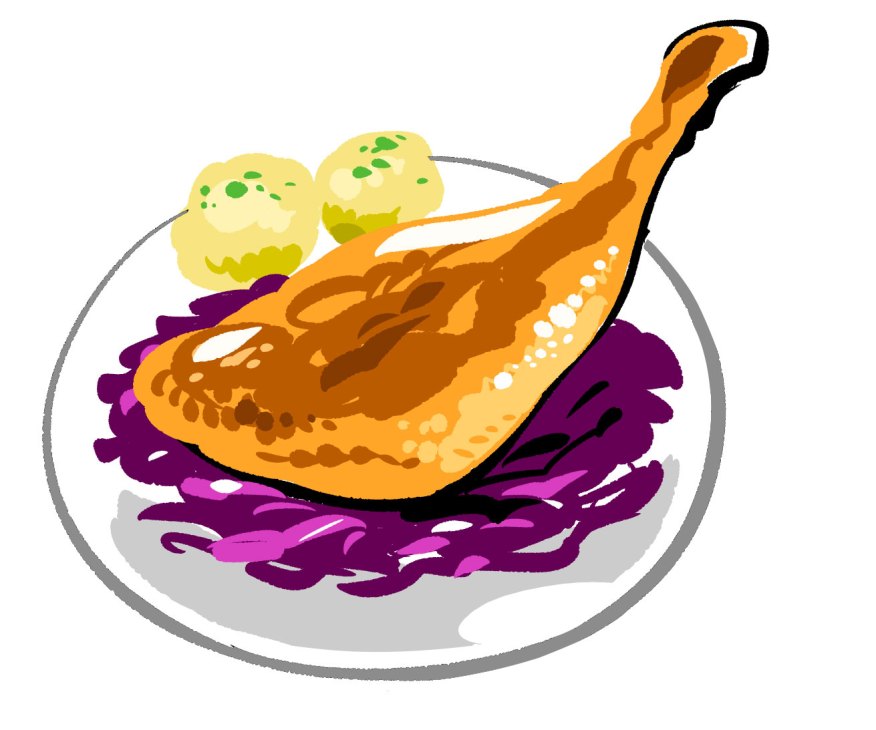
Duck legs on red cabbage
Serves 4 as a main
- Ingredients:
- 500g red cabbage
- Salt
- 1 tbsp sugar
- 2 onions
- 1 tbsp of clarified butter
- 2 bay leaves
- 3 tbsps red wine vinegar
- 100 ml red wine (or chicken stock)
- 4 duck legs (around 300g each)
- 1 tbsp honey
- 1 tsp of chinese five-spice
- 1 tsp sweet paprika powder
- 2 tbsps olive oil
- 1 tart apple
- 1-2 tbsps redcurrant jelly
1.
Remove the tough outer leaves from the cabbage, halve it and cut out the stalk in a wedge shape. Slice the cabbage into 2mm strips. Put in a large bowl, season with salt and sugar and knead vigorously. Cut onions into 2mm strips.
2.
Heat clarified butter in a wide frying pan on a medium heat. Sauté onions for a minute then add cabbage and bay leaves and simmer, while stirring regularly, for 5 minutes or until it softens. Add vinegar and red wine and bring to a boil then turn off the heat.
3.
Cut the thigh bone out from each of the duck legs.
4.
In a small bowl, combine the honey, five-spice, paprika, salt and olive oil. Massage duck legs with seasoning.
5.
Preheat the oven to 200C.
6.
Place the red cabbage into a roasting dish at the bottom of the oven and the duck legs on a rack above it, (so that the juices fall onto the cabbage).
7.
Roast for 30 minutes then reduce the temperature to 180C for a further 45 minutes.
8.
Towards the end of the cooking time, peel and grate the red apple. Remove the red cabbage and duck legs from the oven and mix the apple into the red cabbage. Salt to taste, season with redcurrant jelly and serve.
Panettone bread and butter pudding
Serves 4
- Ingredients:
- 250g panettone, cut into 1cm thick slices
- 100g butter
- 250 frozen berries (such as blackberries and blueberries)
- 2 eggs plus 1 yolk
- 200ml milk
- 200ml double cream
- 60g icing sugar
- To serve:
- Icing sugar, for dusting
1.
Preheat the oven to 160C.
2.
Spread butter on the panettone slices.
3.
Spread berries on a 20x30cm baking tray and arrange the panettone on top of them in slightly overlapping layers – this can be a neat or as jumbled as you like.
4.
Whisk the eggs, egg yolk, milk, cream and icing sugar into a large mixing bowl.
5.
Pour some of the egg mixture over the panettone slices and let them sit for 5 minutes. Repeat the process a few more times until all the mixture is used.
6.
Bake for 25 to 30 minutes, until the top is browned but still a little wobbly. Remove from oven and sprinkle with icing sugar before serving.
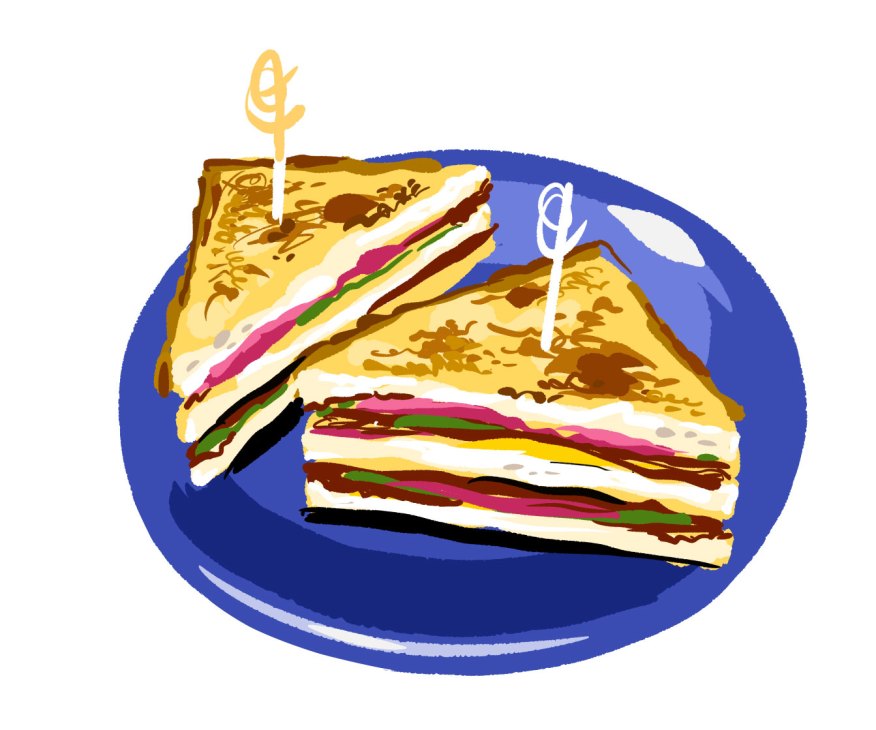
Leftover sandwich
Makes 2
- 1 tbsp olive oil
- 1 small onion, finely chopped
- 2 tablespoons cranberry sauce
- 4 smoked, streaky bacon slices
- 80g leftover stuffing
- 50g butter, soft
- 4 thick slices of bread
- 4 tbsps leftover gravy
- 4 slices of turkey (or any other leftover poultry)
- 100g leftover cheese (gruyère works well)
1.
Heat the oil in a skillet over a medium heat. Fry the onion for 10-15 minutes until browned. Add the cranberry sauce and continue frying for a few minutes.
2.
Meanwhile, fry the bacon in another skillet over a medium heat for 5 minutes, until golden and crisp. Set the bacon aside on a paper towel, then add the stuffing to the same pan. Fry for 3 minutes until it begins to crisp.
3.
Preheat the grill to high.
4.
Butter one side each of two pieces of bread. Put these slices, buttered-sides down, onto a work surface and add a tablespoon of gravy to the unbuttered sides of each slice. Then add half the onion to each and equal amounts of bacon, turkey, stuffing, cheese and the remaining gravy. Butter the remaining slices of bread and top the sandwiches with them with their buttered sides facing up.
5.
Put the sandwiches on the grill for 3-4 minutes on each side until golden brown then close the oven door, with the heat off, to allow the sandwiches to cook through and for the cheese to melt. Serve warm.
Schierker Feuerstein Count Mast
Serves 4
- Ingredients
- 120ml Schierker Feuerstein
- 120ml vermouth
- 120ml gin
- 1 large ice cube
- 4 ribbons of lemons zest
1.
Combine the Schierker Feuerstein, gin, vermouth and ice in a mixing glass and stir well.
2.
Strain directly into coupette glasses and garnish with lemon zest. Enjoy.
Worldwide wonderlands
1.
Cold comforts
Christmas in… Copenhagen
The Danes have a habit of taking German inventions and then going all in. They did it with Lutheranism, with the use of cinnamon in their baked goods and, boy, do they go to town with Christmas. (Then again, what is Christmas if not an almighty collision of Lutheranism and cinnamon?)
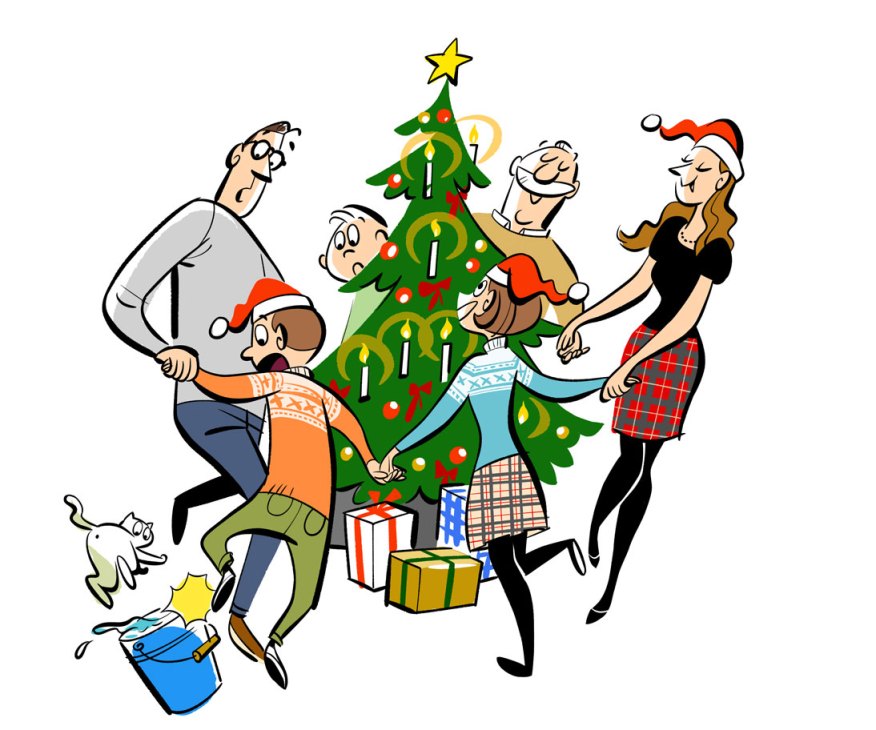
Like hygge, the classic Danish Christmas can also be seen as a natural reaction to the country’s climate and topography. There is little going on outdoors here in the months of November and December (jealous glances are cast towards the ski slopes of Sweden and Norway), so the focus is very much on the indoor sphere. Christmas is the ultimate domestic festival to ward off the winter gloom and see people through to spring. Aside from the afternoon trip to church on Christmas Eve (probably the day’s only mention of Jesus), the Danish Christmas is above all a celebration of home and family.
The ritual varies from family to family but it roughly goes like this: after church, you return home for drinks and marzipan-heavy confections. The centrepiece of the ensuing dinner is typically flaeskesteg (roast pork with crackling), the reasoning being that pork is fine for every other day of the year, so why not Christmas? Alternatives might be duck or goose. Turkey, not so much. Sides: red cabbage and boiled potatoes inexplicably rolled in caramel.
Another notable aspect of a Danish Christmas is how child-unfriendly it is, almost to a sadistic degree. Though their thoughts will naturally be fixated on presents, first the little ones must endure church, then a very adult-oriented meal, traditionally followed by rice pudding. Within this hefty dessert will be concealed a whole almond. Whoever finds it must keep shtum until the entire bowl is empty, forcing people to eat more than is comfortable in their quest to win the “almond present”.
Next comes the lighting of the tree, a magical moment to melt even the Scroogiest of hearts. A sidenote about the tree: it must be real. Since the Danes culled mink as a coronavirus precaution, the country’s Christmas-tree industry is even more vital for the national economy. Meanwhile, the candles in the Georg Jensen candleholders are real, effectively turning the things into giant indoor firelighters.
Family members then take turns to choose a Christmas hymn for all to sing as they hold hands and dance around the tree. (Careful not to trip over the bucket of water that the nervous foreign guest has placed – he thought discreetly – to one side.)
After half a dozen or so songs, someone will finally launch into “Nu är det jul igen” (“Now It’s Christmas Again”) and lead a tipsy conga through every room of the house, tramping joyfully over the beds, before returning finally, perhaps a little out of breath now, to collapse on the sofa for the present-opening orgy, all of them unwrapped long before the dawn of Christ’s actual birthday.
2.
Southern snow
Christmas in… Mexico
It hasn’t snowed in Mexico City since 1967 but the surrounding mountains have been known to get a smattering. In December, though, the weather does get chillier. I always enjoy driving along Paseo de la Reforma in the city centre on a brisk night, passing beneath the Christmas lights en route to buying a tree.
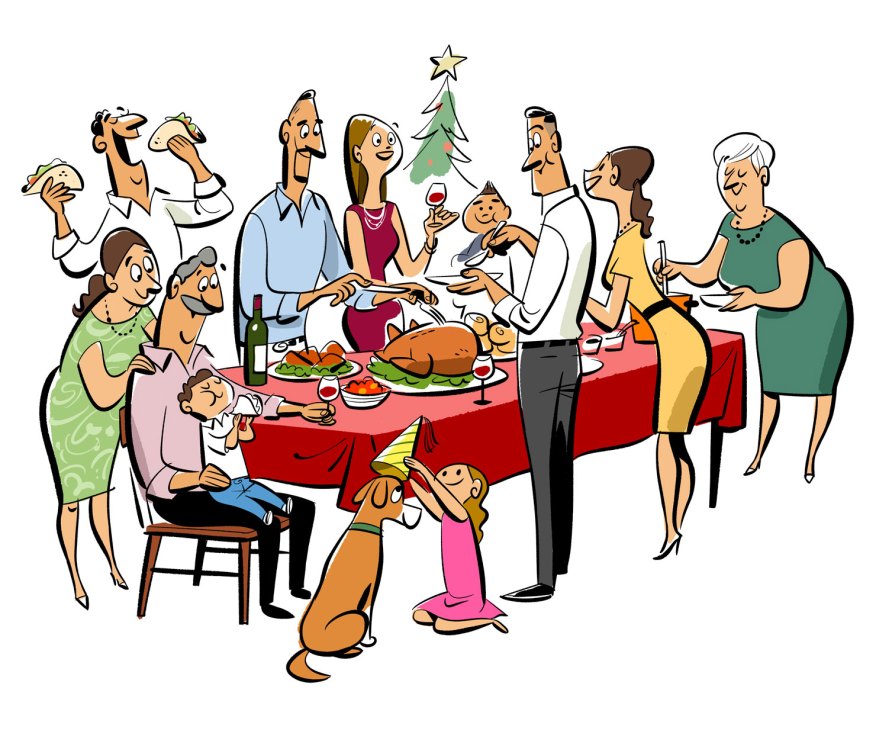
Celebrations in Mexico combine centuries of Catholic traditions with the winter holidays celebrated by the Aztecs before the Spanish arrived. Mexico has deeply religious roots but there is also a strong secular culture, which has evolved from the country’s liberal traditions and residual Marxist ideals. The season is celebrated from early December until the Day of the Three Wise Men on 6 January. The social aspect of Mexico’s winter holiday season is so deeply entrenched that it’s not particularly religious in most settings, though some families might sing a hymn at their gatherings. Many offices hold a secular posada party for their staff. The word means “hostel” or “refuge” in Spanish, a reference to the biblical Christmas story.
At family parties, the dishes are often prepared collectively or brought pot-luck-style and served around the house, rather than as a formal meal around a table. Staple dishes tell the story of the many influences at play: sweet apple salad, spicy fruit punch, roasted ham, fruit-stuffed turkey. Some have romeritos con mole, a sauce-slathered delicacy that combines stewed seepweed with a complex chocolate-and-chilli sauce, while desserts include panettone, apple strudel and flaky buñuelo pastries.
While some families attend church services on Christmas Eve, many mark the occasion by holding their biggest celebration, eating, drinking and talking until well after midnight. For generations of Mexican children, presents landed on 24 December; they would then giddily await gifts from los reyes magos (the three wise men) on 6 January. Because of the US influence, however, many people now exchange presents on 25 December. In Mexico, Christmas Day is a relaxed affair: largely for lounging around the house, playing with toys and eating leftovers.
One of my favourite memories of winter in Mexico is of several years ago, a few days after Christmas Day. I packed my crampons and snowboard into my car and hiked up the face of the Nevado de Toluca mountain to the west of Mexico City. I celebrated the holiday season carving turns in the untouched snow, high above the downtown area. That’s the closest I’ve come to celebrating a white Christmas in Mexico.
3.
Finger-lickin’ good
Christmas in… Tokyo
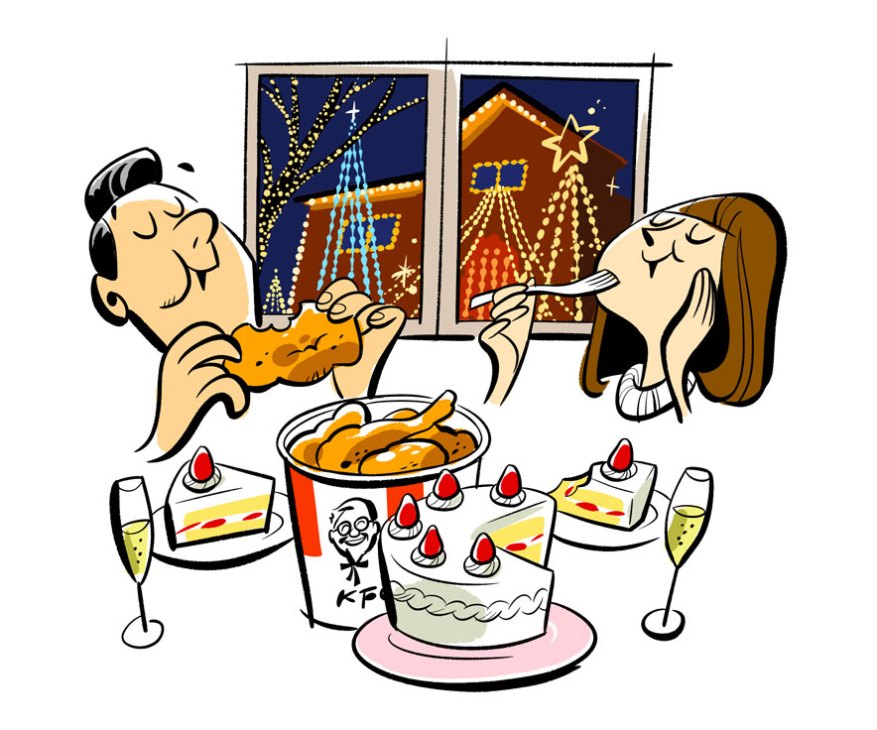
There are many clichés about Christmas in Japan, from the apocryphal crucified Santa in a department store (it didn’t happen) to the more on-the-money reports of people buying KFC party buckets instead of turkey, and fluffy strawberry shortcake in place of the fruitcake that Brits might hanker for. The origins of the “Kentucky for Christmas” tradition are murky with rival creation myths, one of which involves Takeshi Okawara, manager of Japan’s first KFC and eventually CEO, dressing up as Santa at a children’s party in the 1970s. Whatever the truth, Christmas brings bumper sales to KFC, while other shops and restaurants cash in on the association by offering their own boxes of fried chicken.
Meanwhile, confectioner Fujiya, which opened its first Western-style cake shop in Yokohama in 1910, lays claim to initiating Japan’s Christmas tradition of eating sponge cake. Its many branches still sell a classic version.
Christmas Eve is like Valentine’s Day, with couples filling restaurants. Christmas Day, however, is a day like any other. It’s not a public holiday so unless it falls on a weekend, 25 December is a normal working day; children usually go to school.
Real trees are a luxury, mostly bought by homesick expats. Everyone else makes do with a plastic version. Gift-giving is less frenzied than it can be elsewhere too. Japan has all of the Christmas lights and decorations that even the most festive of us could want; you might even find a German-style Christmas market. Yet what it perhaps lacks is the intangible feeling of Christmas.
Is it any wonder? Christmas is not a Japanese tradition but it has taken on a life of its own here. And if that involves sponge cake with whipped cream and strawberries on top, so be it. The proper holiday and the more deeply rooted traditions begin with New Year. The mood then more closely resembles that of Christmas than Christmas itself: shops and restaurants close (for fewer days than they once did; Tokyo used to be a ghost town at the turn of the year), people hunker down with their families, eat too much food and watch television. Sounds pretty merry to me.
4.
Mix and match
Christmas in… Canberra
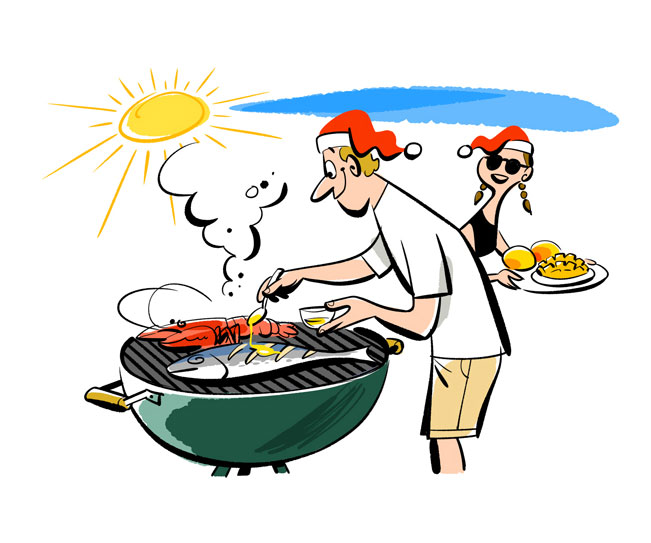
Like water flowing the opposite way down a drain, Christmas in Australia is the same as it is elsewhere but different too. In the northern hemisphere, it’s cold, dark, perhaps snowy and intensely festive. In Australia, it’s hot, sunny and arrives with a plucky pick’n‘mix of customs that are loosely based on those of our northern counterparts. And with any luck, there’s a beach in there too.
Christmas in Oz marks the start of a months-long summer holiday when many workplaces close; employees dribble back to work in fits and starts. It’s a little like August in Italy: everyone has taken days off and the cafés are bustling but some of the best baristas are on holiday too. It’s also virtually impossible to get a plum restaurant reservation as everybody else is out too.
the holiday season is still, to a large extent, stubbornly celebrated along British lines. There’s roast turkey and potatoes, baked ham, gravy and other hot accoutrements that are strangely incongruous with the hot weather.
Over the past few decades, however, there has been a major shift and you’re now more likely to see barbecued seafood on the Christmas table, along with a pavlova, trifle and fresh mangoes. An increasing number of Australians can trace their heritage beyond Europe and so are bringing their own flavours to the festive season: think of a suckling pig roasted over charcoal, called lechon, which is the Filipino answer to a dry turkey. There might be sashimi, Cantonese lobster noodles or a Thai poached salmon. (I’ve been tempted to do a tandoori turkey… one day.)
This willingness to experiment is the real quirk of Christmas in Australia. We have made it our own as a country but on an individual rather than an institutional level. Christmas is a moveable feast, whether you celebrate with mince pies and port or in a paddling pool with a frosty one – and that’s perfectly OK. The one real constant is mangoes.
5.
Sticking together
Christmas in… Hong Kong
A few days before Christmas, Chinese in Hong Kong will get together to eat tangyuan, a clear soup full of sweet rice dumplings. There’s a symbolic meaning behind every Chinese tradition and tangyuan represents family unity. You eat together and stay together.
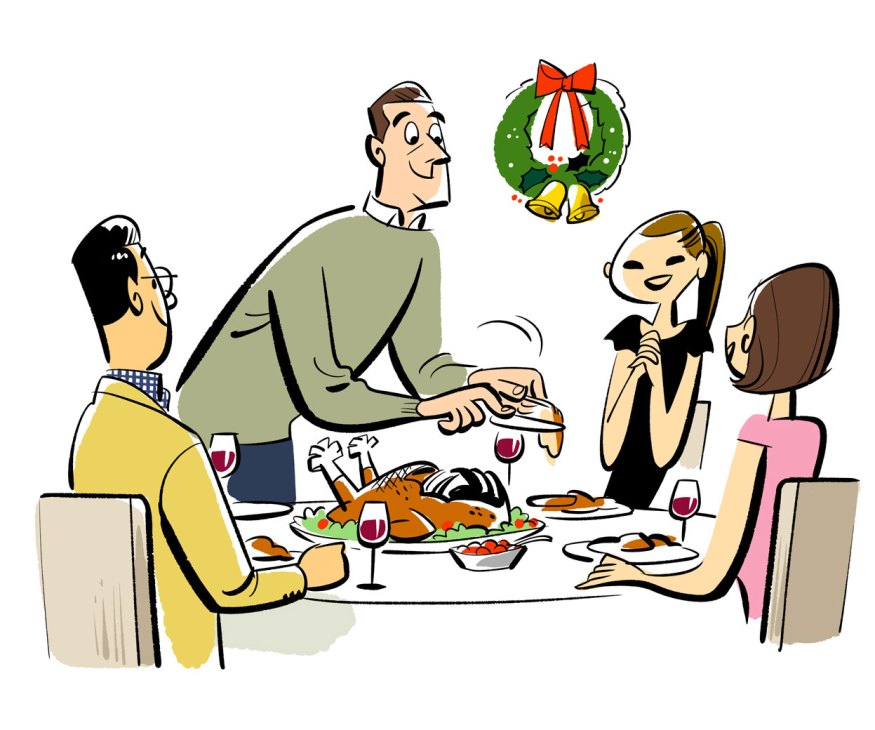
Sharing a bowl of these rice balls will have added meaning this year for all of the Hong Kong families who have been waving off loved ones at the airport – and I can relate to their pangs of separation. This will be my second successive Christmas in Hong Kong and the first with my son, who will not be able to meet his grandparents in the UK.
But Christmas is always more special with children around and I have added reason to go big on the family traditions. Sure, my son might be only nine months old but you can bet your life that he’ll wake up on Christmas morning with a stocking next to his cot stuffed with tangerines. I might even throw in some dragon fruit to add a taste of Hong Kong.
Years from now, when we’re back in the UK, he’ll be able to look at photos of himself in front of Hong Kong skyscrapers that are lit up like Christmas trees and visiting shopping centres decked out in fake snow with models of penguins and polar bears. It will also be a chance for him to try mashed-up turkey for the first time. Chinese don’t eat “fire chicken” (as turkey is known in Cantonese), so we have yet to feed him any.
Last year gave me my first insight into how curious culinary customs can seem to the uninitiated. We hosted Christmas dinner for my wife’s friends, all of whom are Chinese, and it was my job to plan the dinner, carve the turkey and explain what Brits eat at this time of year. Seeing the bewildered faces of my guests when they were presented with a mountain of roast potatoes, sprouts, stuffing, sausages, Yorkshire pudding, parsnips and carrots reminded me of my first run-in with one of their delicacies, chicken feet. There was a lot of gravy-soaked food being pushed around plates and little clamour for seconds.
We’ll adjust it all to regional tastes this Christmas, though I’m expecting fewer sign-ups. Several of the people at our table last year will be spending their first winter in the UK. As they settle into their new surroundings, I hope my crash course has given them a taste for this magical time of year, if not a hankering for turkey with all the trimmings.
Culture: Global
Museums – Rotterdam
Treasure trove
Many invaluable objects never leave the controlled chambers of museum storage spaces but Rotterdam’s Museum Boijmans Van Beuningen is going against the grain: the institution has decided to open its storage facility, becoming the first in the world to do so. Given that the museum itself is closed for renovation until 2028, this seems like a good piece of compensation: visitors can now peruse the lesser-known back-catalogue of the collection in a new building designed by Dutch architecture firm mvrdv (My Cabinet, issue 145).
Inside the new structure, 151,000 objects have been displayed based on their size and climatic requirements, rather than by art movement. This is a revolutionary way to reveal a museum’s inner workings, as most institutions can only show about 10 per cent of their collection at a time.


“As an architecture firm, it was our mission to allow a special art experience to go hand-in-hand with a building that takes an equally special form,” says Winy Maas, founding partner of mvrdv. “The depot, with its reflective façade, blends into its surroundings in a fantastic way.”
The sculptural building has also refreshed Rotterdam’s attitude towards its cultural riches. “The depot is both a place to wander, in an accessible way, among a lot of great art, and a place to enjoy special architecture, whether you are outside or inside,” adds Said Kasmi, the city’s alderman for culture, tourism and education. Step in to discover what used to hide behind the scenes.
boijmans.nl
K-pop – Seoul
Going for a song
The long-touted CJ LiveCity Arena, the world’s first venue dedicated exclusively to K-pop, has broken ground in Seoul. Slated to open in 2024, the stadium will hold 60,000 fans and allow up to 190 performances a year. Outside the venue, a new neighbourhood is being built to include K-pop-themed restaurants, shops and hotels. It’s a new level of investment in the genre’s business potential – and it is having consequences on urban planning. “When the South Korean government surveyed tourists coming into South Korea before coronavirus, bts were responsible for one in 13 tourists,” says Bernie Cho, president of Seoul-based creative agency dfsb Kollective. “So it makes a lot of sense that a huge arena dedicated to K-pop will not only cater to a very dynamic local market but the tourist market too.”
Print – UK
Small world
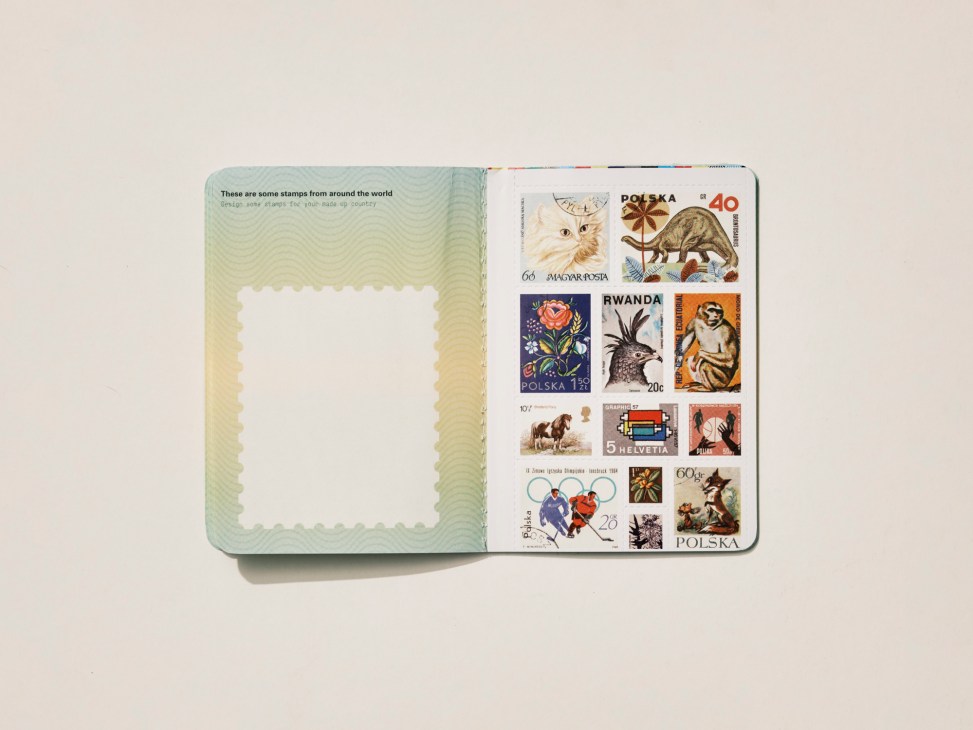
Long-haul trips are slowly becoming more of a possibility, so what better gift for a child dreaming of boundless travel than this passport-shaped activity book? London-based design studio Cicada Books has filled the endearing Passport with guides to aeroplane models, an overview of different cloud shapes and some colourful postage-stamp stickers. It promises its owner the right to “Roam Free” and is possibly the best passport to hold now.
cicadabooks.co.uk
Documentaries
Q&A
Alan Black
Co-Managing Director, Hot Docs
Founded in Toronto in 1993, Hot Docs is one of the world’s largest documentary film festivals. It also has an annual sister event focused on podcasts. As the event returns this January, with an audience of about 400, c0-managing director Alan Black discusses big changes in the audio- production industry – and why listening to a podcast can be a communal experience.
How do you think the podcast sector is changing?
The gatekeepers of non-fiction storytelling are changing, so the types of stories that are being told are changing too. People are telling their own stories and that’s particularly resonant in podcasts because it’s a very accessible medium. You’re seeing singular stories told from unique and specific perspectives – and that’s much richer.
Why do you think a medium that is so inherently solitary has been successful in a festival setting?
The festival audiences enjoy being in a room, laughing and cheering, and feeling emotions that they’ve only felt by themselves. People are going to be very excited to celebrate a lot of these shows – together.
Statues of liberty
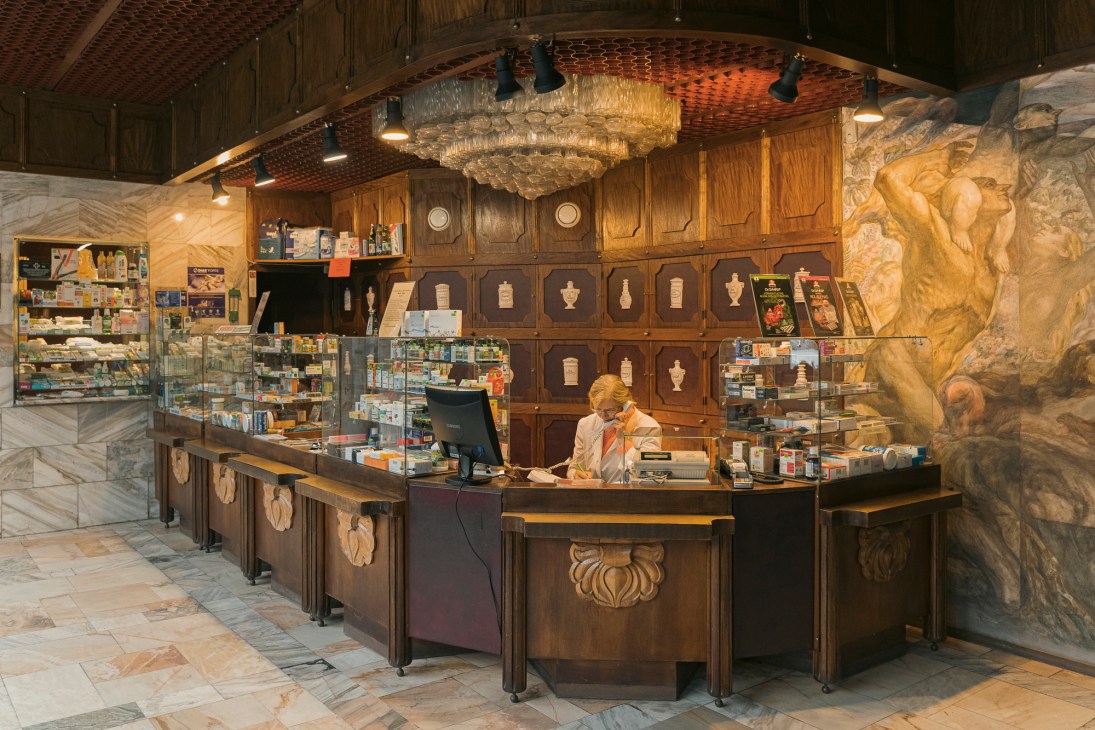
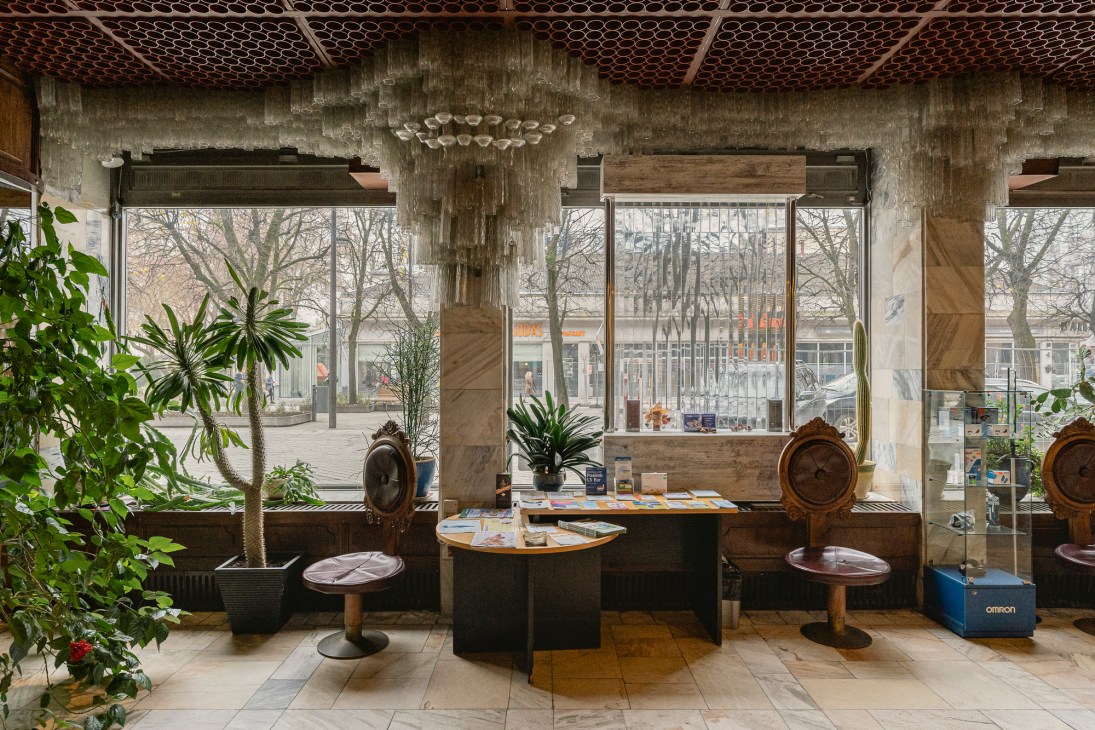
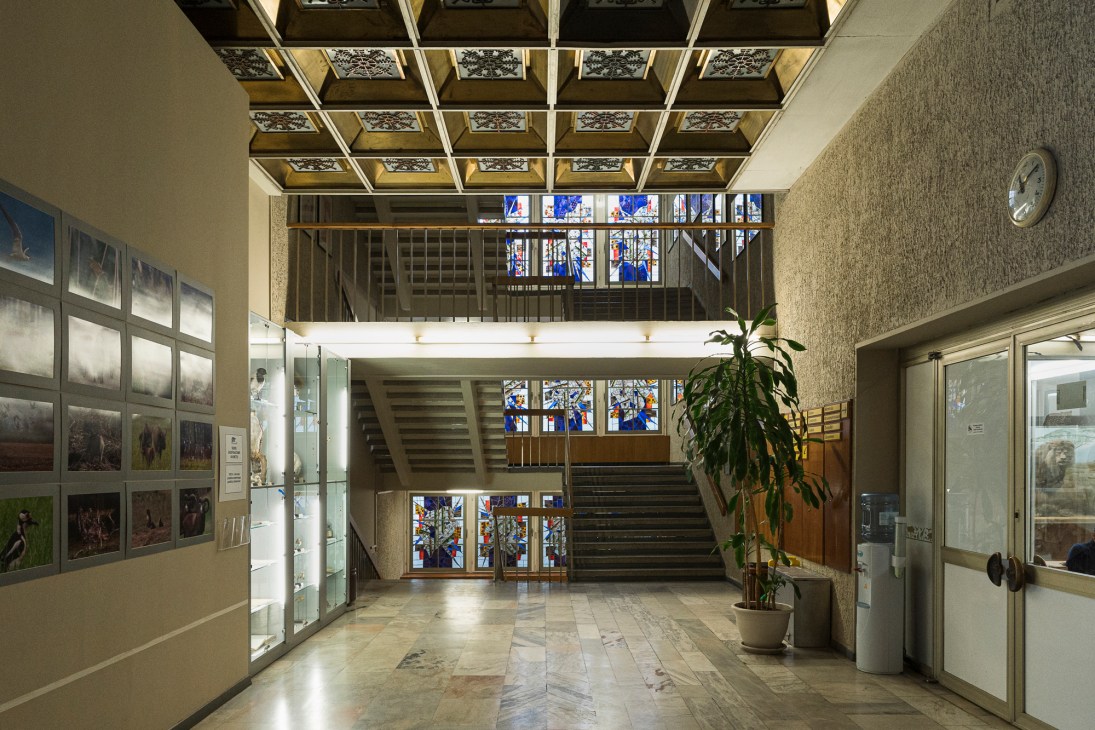
Kaunas rarely receives international attention. While its wide boulevards dotted with baroque spires and Soviet housing blocks offer impressive views to visitors, Lithuania’s second city has remained off the tourist trail for most of its history. But this could be about to change. Kaunas has been named European Capital of Culture for 2022 – and it’s taking the title seriously. When Lithuania separated from Russia in 1918, Kaunas served as the newly independent country’s capital. Architecture was key in transforming this provincial city into an elegant European centre. And it was in this brief period that great swathes of Kaunas were built in a boxy Lithuanian version of modernism. “It’s a big mixture of interpretations,” says architectural historian Vaidas Petrulis, who helped to prepare the city’s bid for the Capital of Culture title. “It’s not quite Bauhaus or art deco. There are influences from Italy, Germany, Belgium and other places too. And instead of looking for a vanguard, Kaunas’s modernism retains local traditions and a national style.”
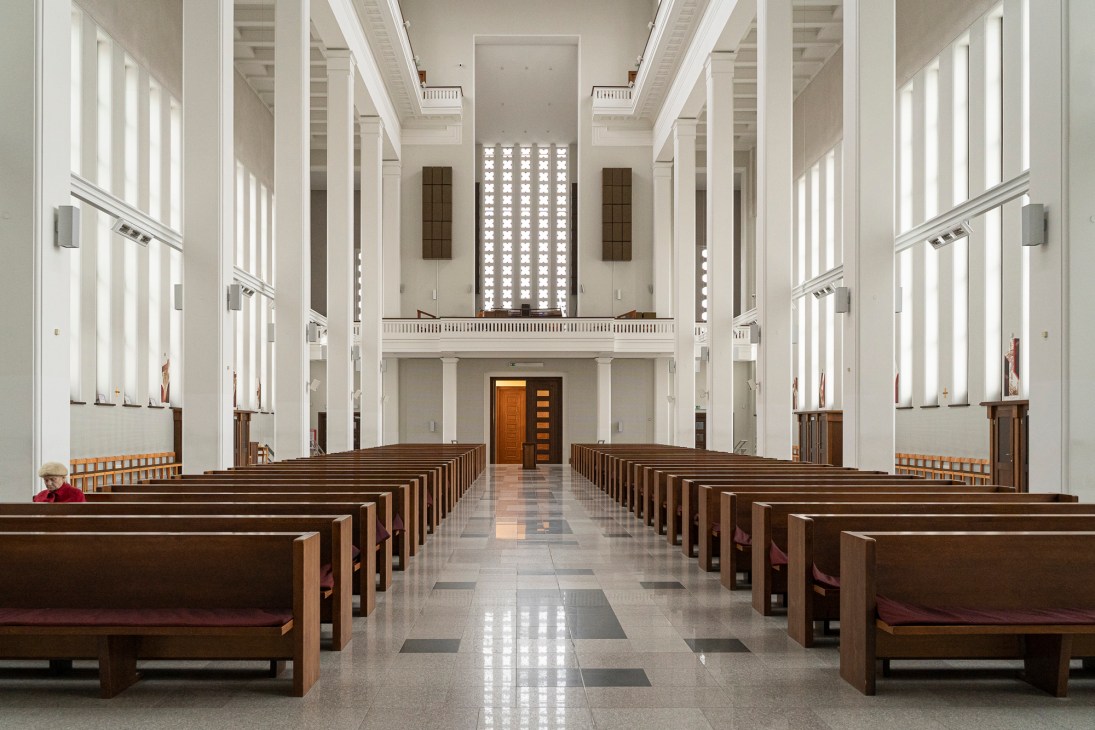
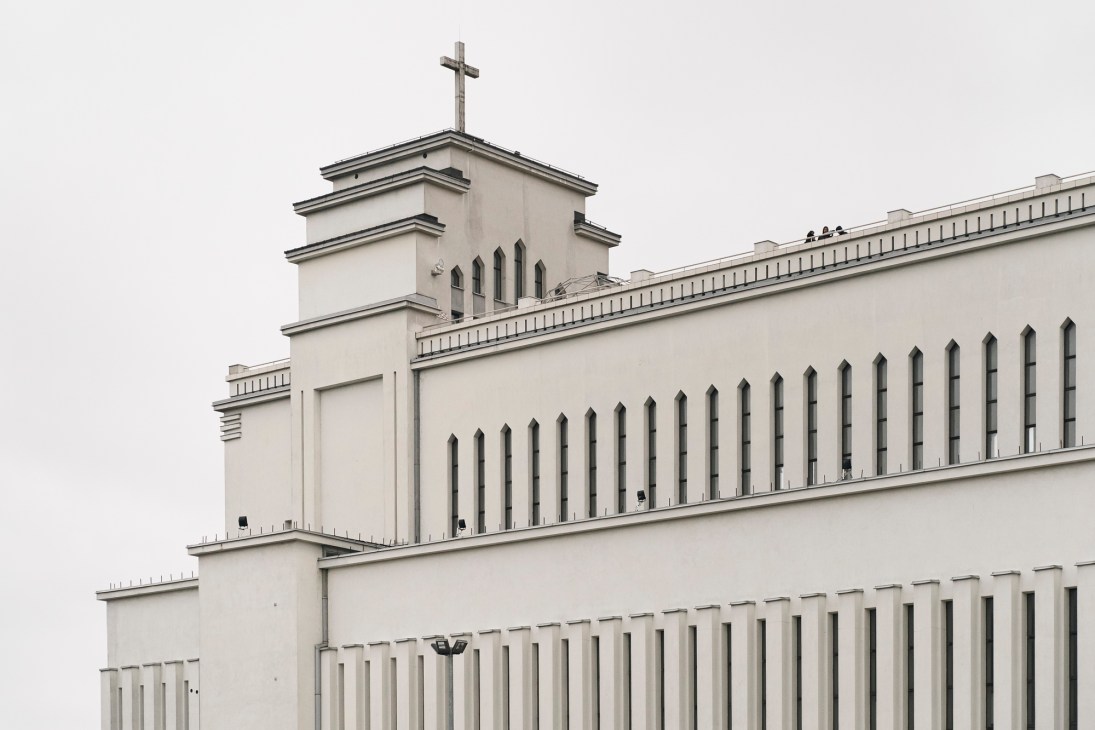
These buildings, from social housing to museums and government offices, became important symbols of renewal as the city rid itself of its imperial past. The most impressive edifice is the colossal Christ’s Resurrection Church. High on a hill just outside the centre of the city, this vast white structure with a 70 metre-tall bell tower looms over Kaunas. “As a visual symbol, the church is very important for the city,” says Petrulis. “It’s a monument to independence.” Architect Karolis Reisonas’s final design for the church, accessible by a funicular railway that chugs slowly up the hill, was approved in the early 1930s. When dwindling funds caused its construction to stall a few years later, some of the city’s residents were so keen to keep the project going that they organised various large-scale fundraising efforts. A donation booth was set up at the construction site and potential supporters were given the opportunity to purchase a brick that would be set in the church walls. Eventually, more than half of the construction costs were covered by private donations.
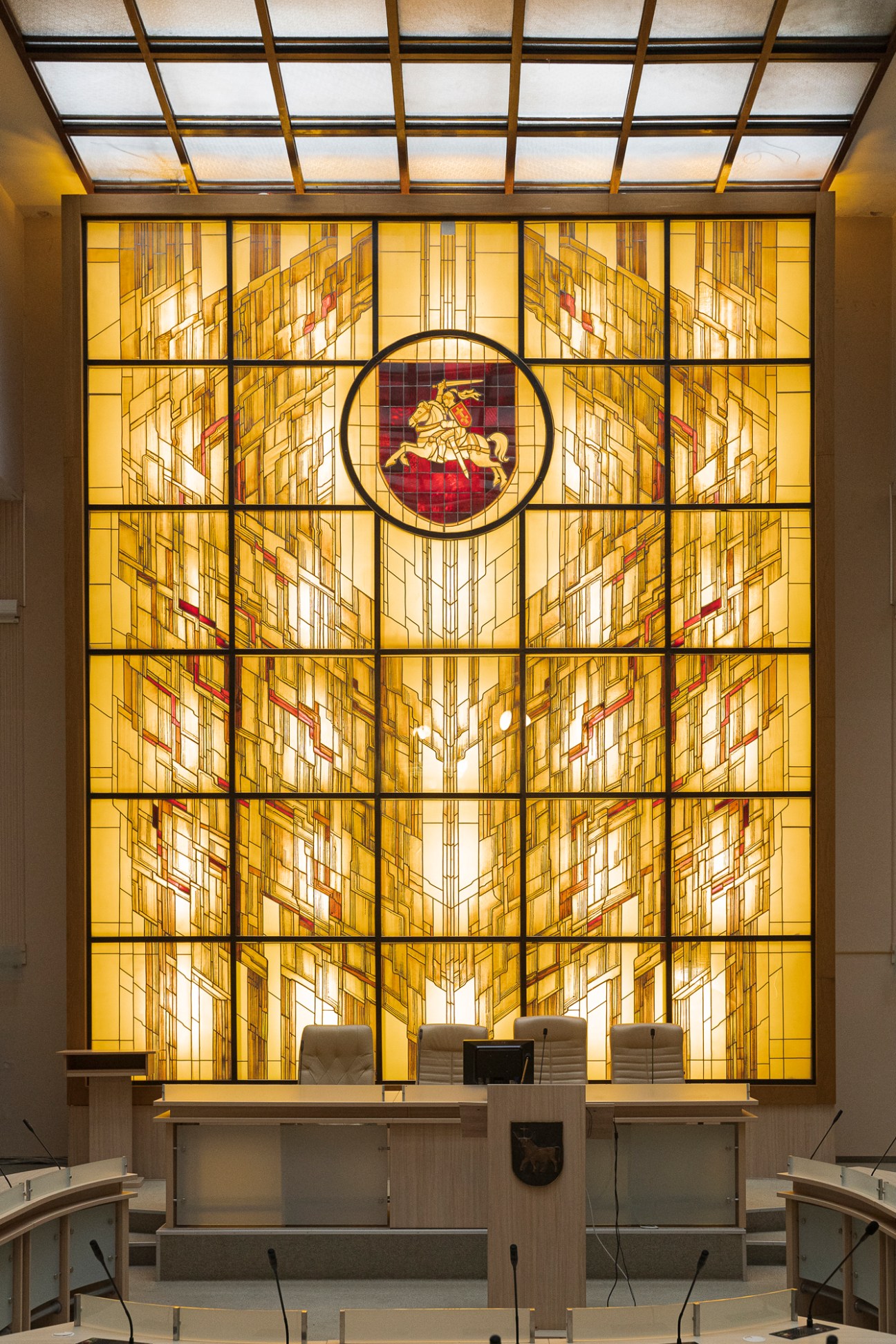
In 2015 a European Heritage Label was awarded to parts of the city built between 1919 and 1940. And since winning the title of Capital of Culture, a committee has been set up to curate a programme celebrating Kaunas’s architectural history. “We have about 6,000 buildings in the city from the interwar period,” says Zilvinas Rinkselis, co-ordinator of the Modernism for the Future programme. “But a large proportion of these are residential housing, so it’s important for us to work closely with communities. We want to focus on people’s emotional attachment to these buildings.”
To achieve this, the programme is putting visitors in touch with people living in (or who once lived in) some of the city’s historic buildings so that they can hear their stories first-hand. One couple taking part in the scheme is Petra Gaidamavicius and Karolis Banys, who in 2017 bought an apartment in a block from 1929 and who have painstakingly returned it to its former grandeur. From tracking down the Czech factory that made the original bathroom tiles to filling the flat with the exact pot plants that were popular at the time – “The palm tree doesn’t love the weather here,” says Banys – the duo have done everything to ensure that the apartment is faithfully restored. And they haven’t stopped there; the couple persuaded their neighbours to get together to fund the repair of the building’s stately façade and stained-glass windows.
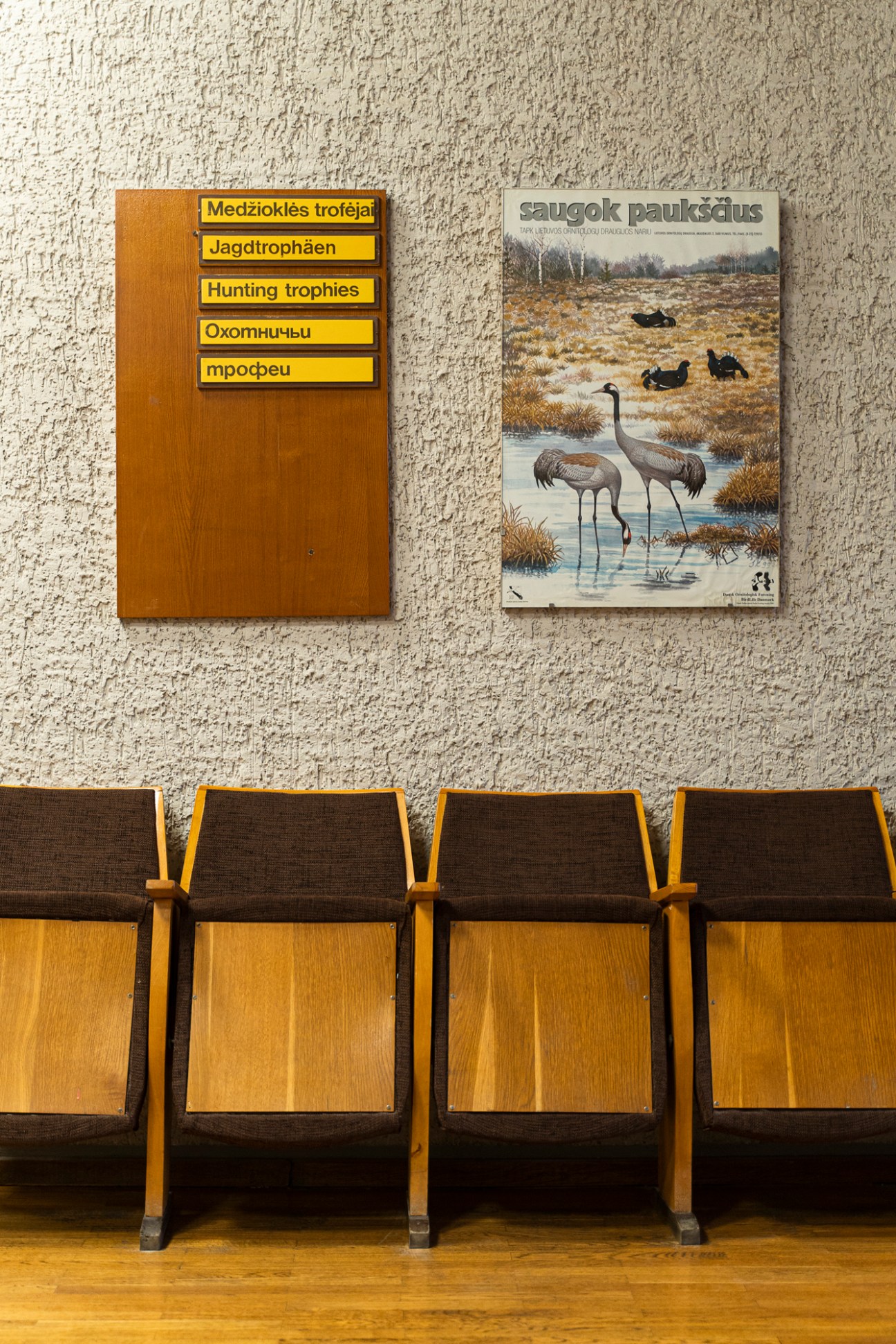
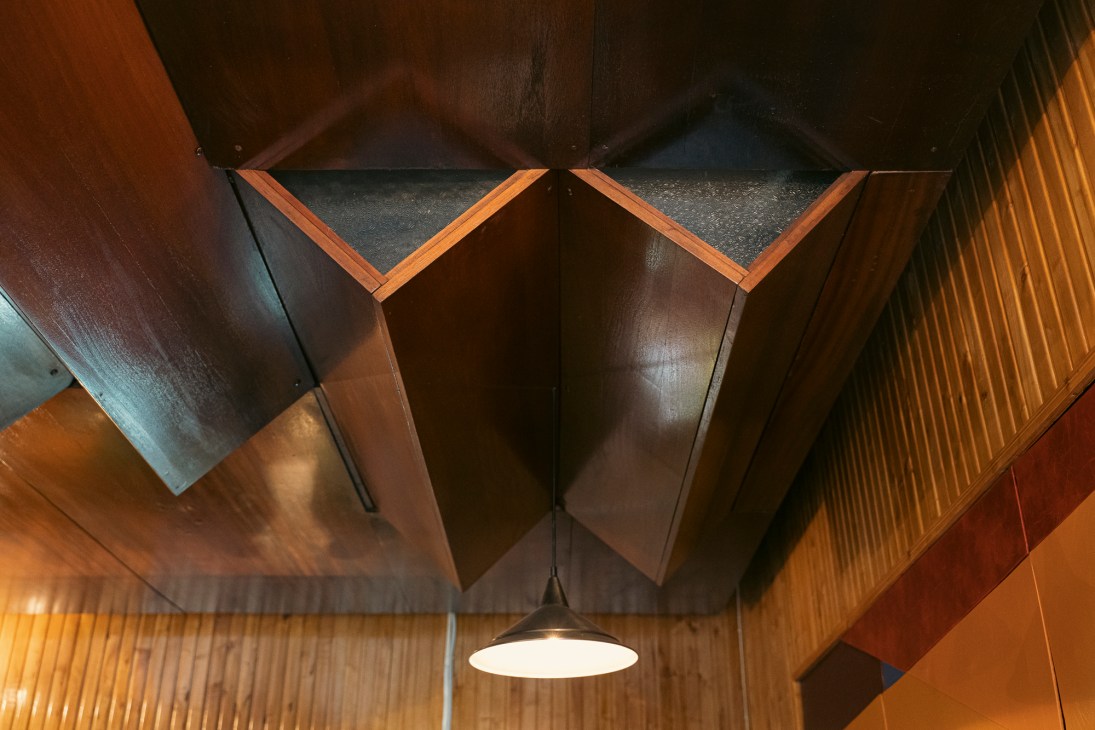
Banys and Gaidamavicius are also in the process of restoring a nearby apartment that was used as a set in the television series Chernobyl. The HBO hit is just one of a string of high-profile international productions that have been shot in the city. Shows shot in Kaunas over the past few years include Catherine the Great, starring Helen Mirren, and the BBC’s Rise of the Nazis. “It’s such a cinematic city,” says producer Lineta Miseikyte, who helped set up the Kaunas Film Office. “Location scouts fall in love with Kaunas and its architecture.” For them the city’s draw goes far beyond the interwar period. There are ancient fortresses, castles and baroque monasteries on the city’s fringes as well as a perfectly preserved medieval Old Town in the centre.
The Soviet occupation that started during the Second World War and lasted until 1990 also vastly changed the architectural make-up of the city. When the Iron Curtain descended in 1940, many of the country’s most influential architects fled to the West. Those who stayed were considered part of the intellectual elite and therefore a potential threat to the Soviet regime. They were relegated to lowly positions within government bodies, fated never to design another building. In the early years of the occupation, efforts were focused on building housing for workers on the city’s industrial outskirts. These took the form of unornamented, highly functional blocks in the style of socialist realism. Stalin’s death in 1953, however, saw a general thawing of rigid aesthetic restrictions, allowing architects more freedom to design interesting and characterful buildings. Examples of this shift towards more expressive architecture include the modular Kaunas Picture Gallery and sleekly geometric Vytautas Magnus University. The city’s grand interwar architecture was, however, considered by Soviets to be a symbol of Kaunas’s distasteful bourgeois aspirations. In an effort to dampen its grandeur, the majestic Christ’s Resurrection Church was repurposed as a television and radio set factory.
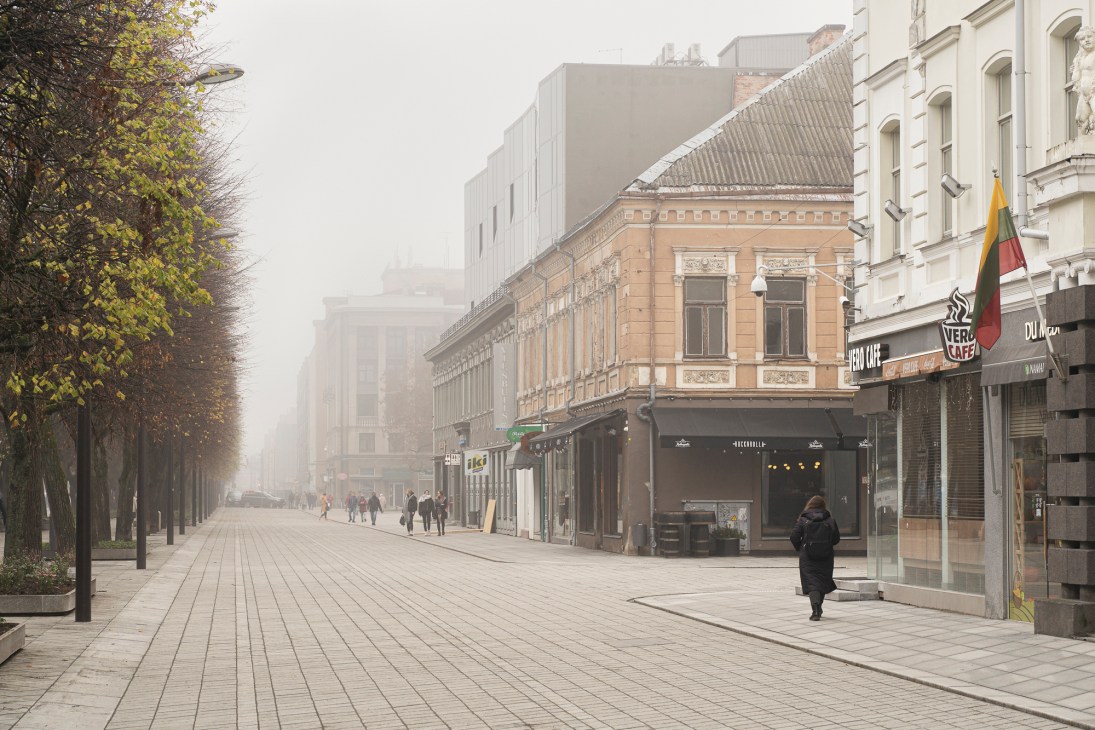
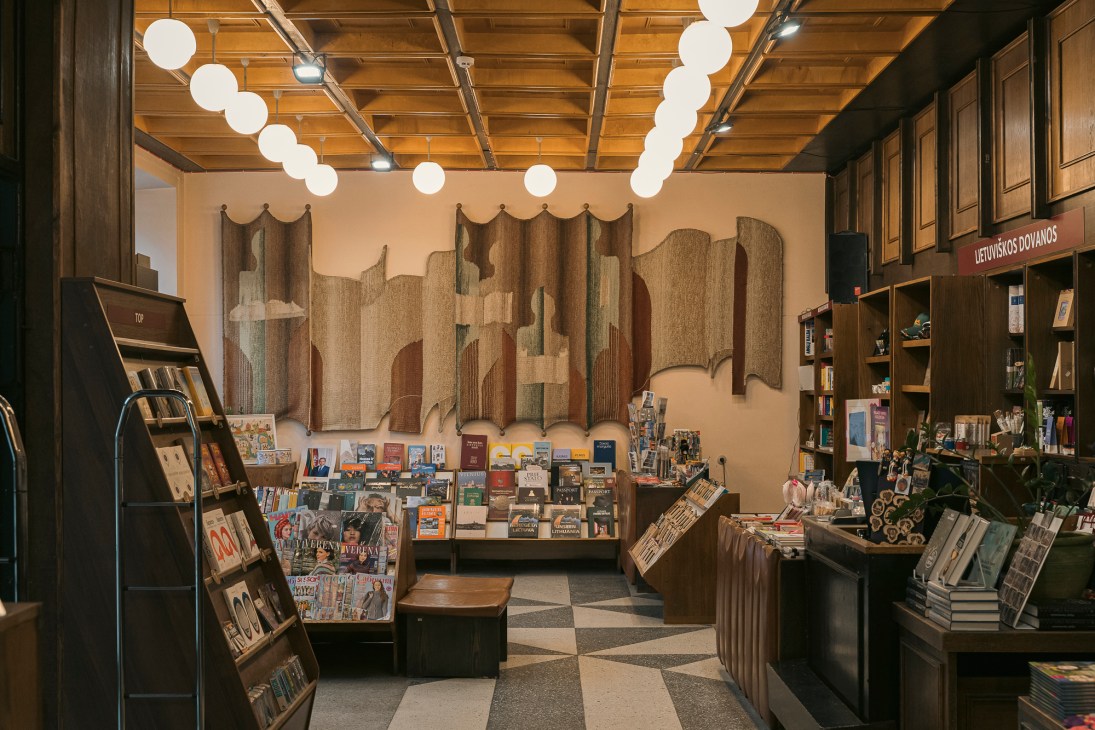
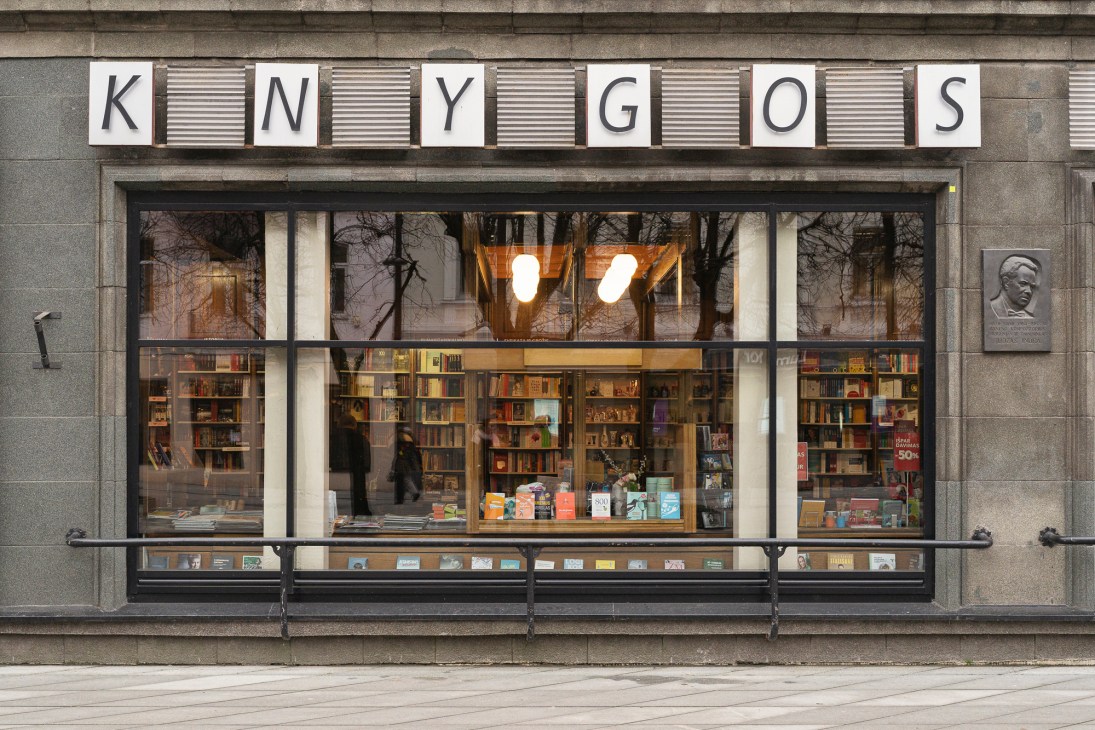
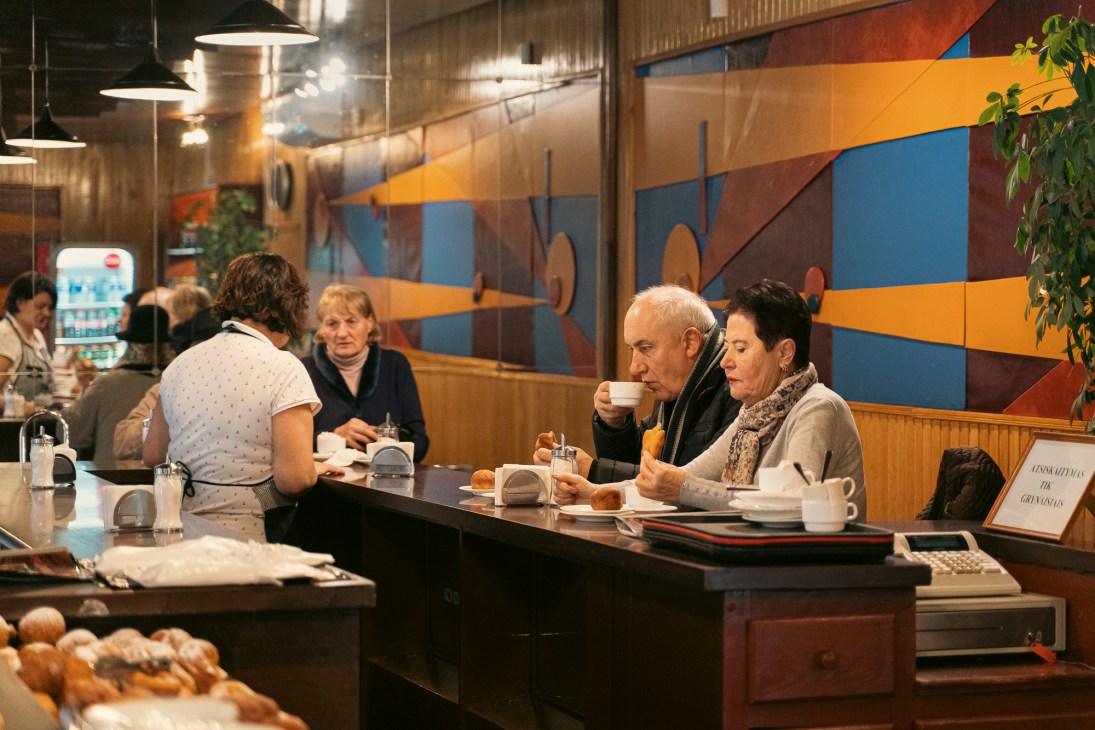
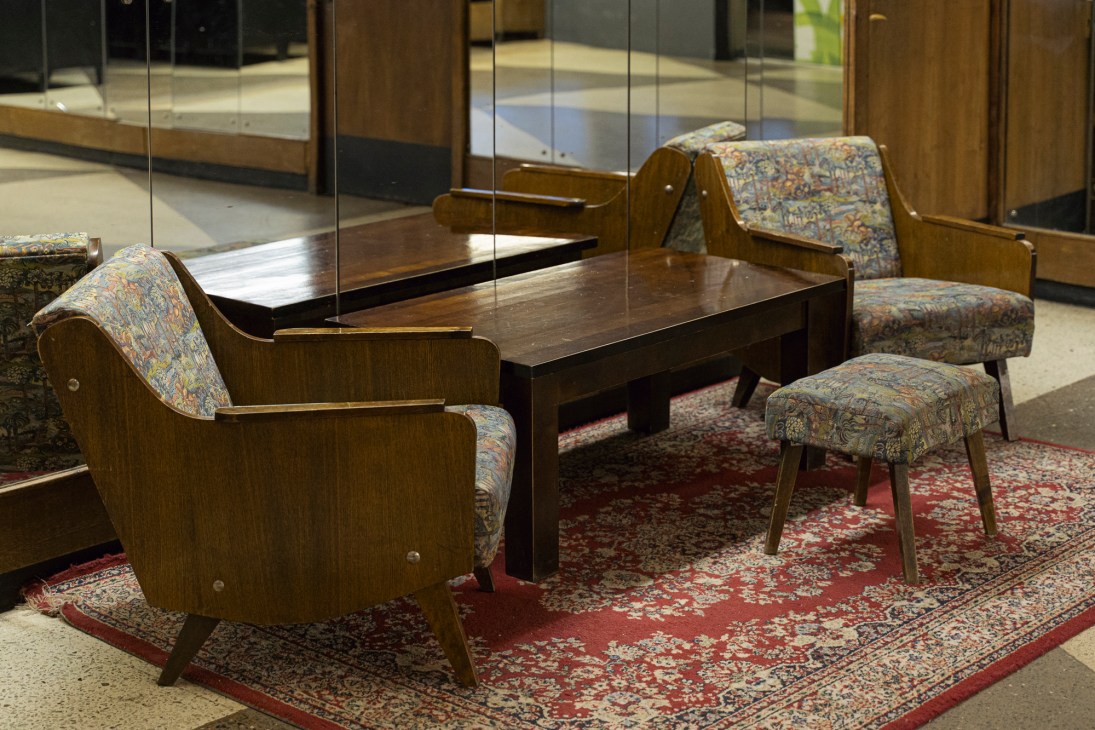
Today the city’s central artery, Laisves Aleja, presents Kaunas’ history in microcosm. The tree-lined boulevard stretches from a domed neo-baroque church built under Russian Tsarist rule, past some of the finest examples of early modernist architecture, including cafés, pharmacies and bookshops with perfectly preserved Soviet-era interiors. When the country became part of the Eastern Bloc, the street was renamed Stalin Avenue. Following Lithuanian independence, however, its original name was restored; fittingly, it translates as Freedom Avenue. More than 30 years on, as the ever-evolving city once again enters a new chapter as the European Capital of Culture, the bright future to which Kaunas’s architects throughout the ages have aspired seems closer than ever.
All together now
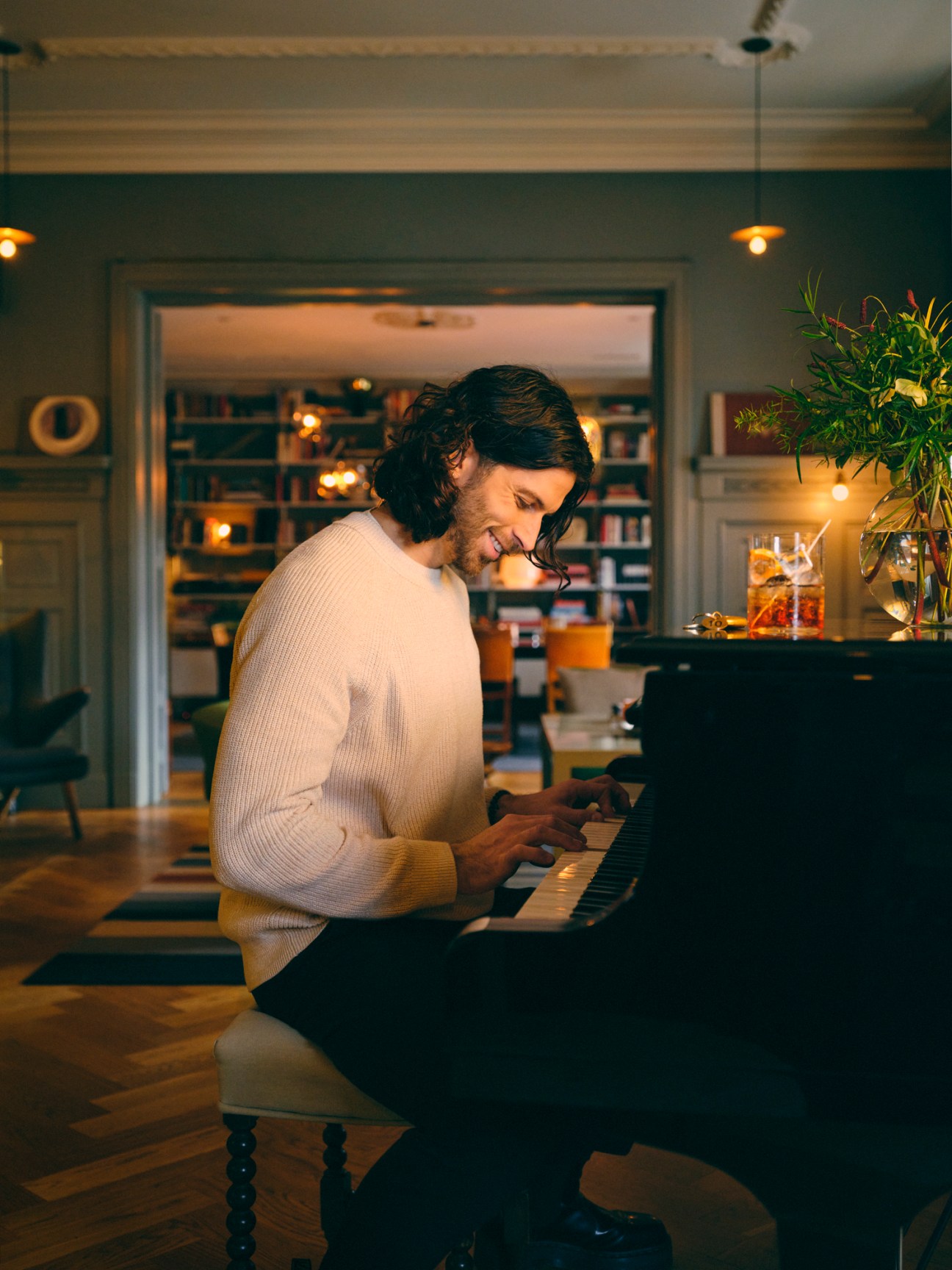
Halls decked? Then it’s time to hit the right note with some seasonal cheer – and perhaps a little Christmas carolling too. Our favourite spot to settle down for a not-quite-silent night at the ivories is at Ett Hem in Stockholm’s Lärkstaden. Fortunately, many of the sad banishments of last year’s lockdowns have passed and we can return to some simple pleasures: sharing the air with loved ones, hoisting a glass and raising our voices in song. Skål!
Business: Global
Print – Russia
Book smart
St Petersburg bookshop Podpisnie Izdaniya has played a vital role in the city’s cultural life since 1926, but its stock fell towards the end of the 20th century, with both its sales and physical size shrinking. A revitalisation began in 2012 when Mikhail Ivanov, then 25, took over as director from his grandmother, who had run the shop for 33 years. “The shop was tired and needed some energy,” he tells Monocle. Ivanov, like his grandmother, dreamed of returning the shop to its historic footprint. During lockdown, the bar that had rented the shop’s second floor moved out. He collected the equivalent of €840,000 in financing, subsidies and loans and decided that this was the moment to “reset history with something new.”
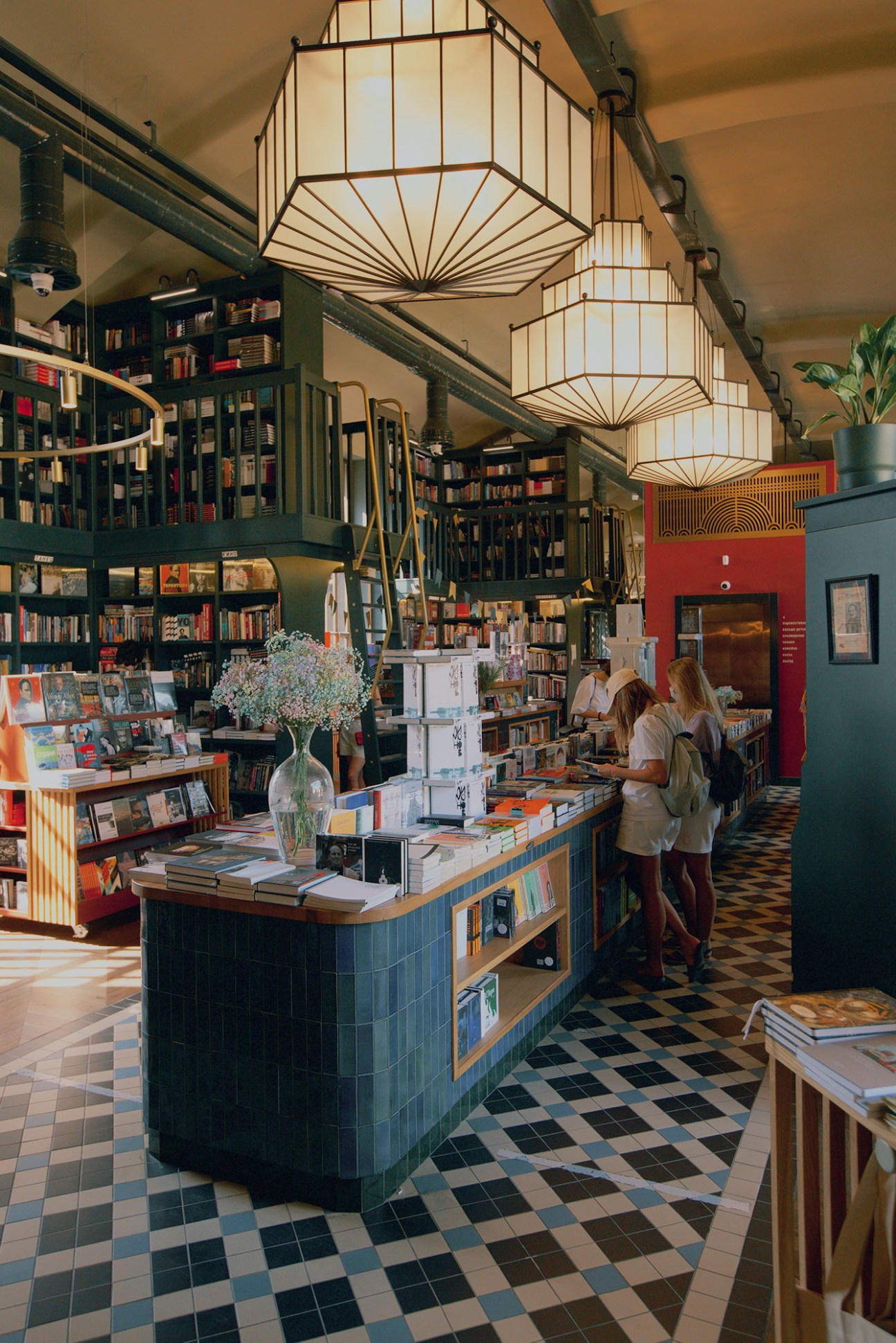
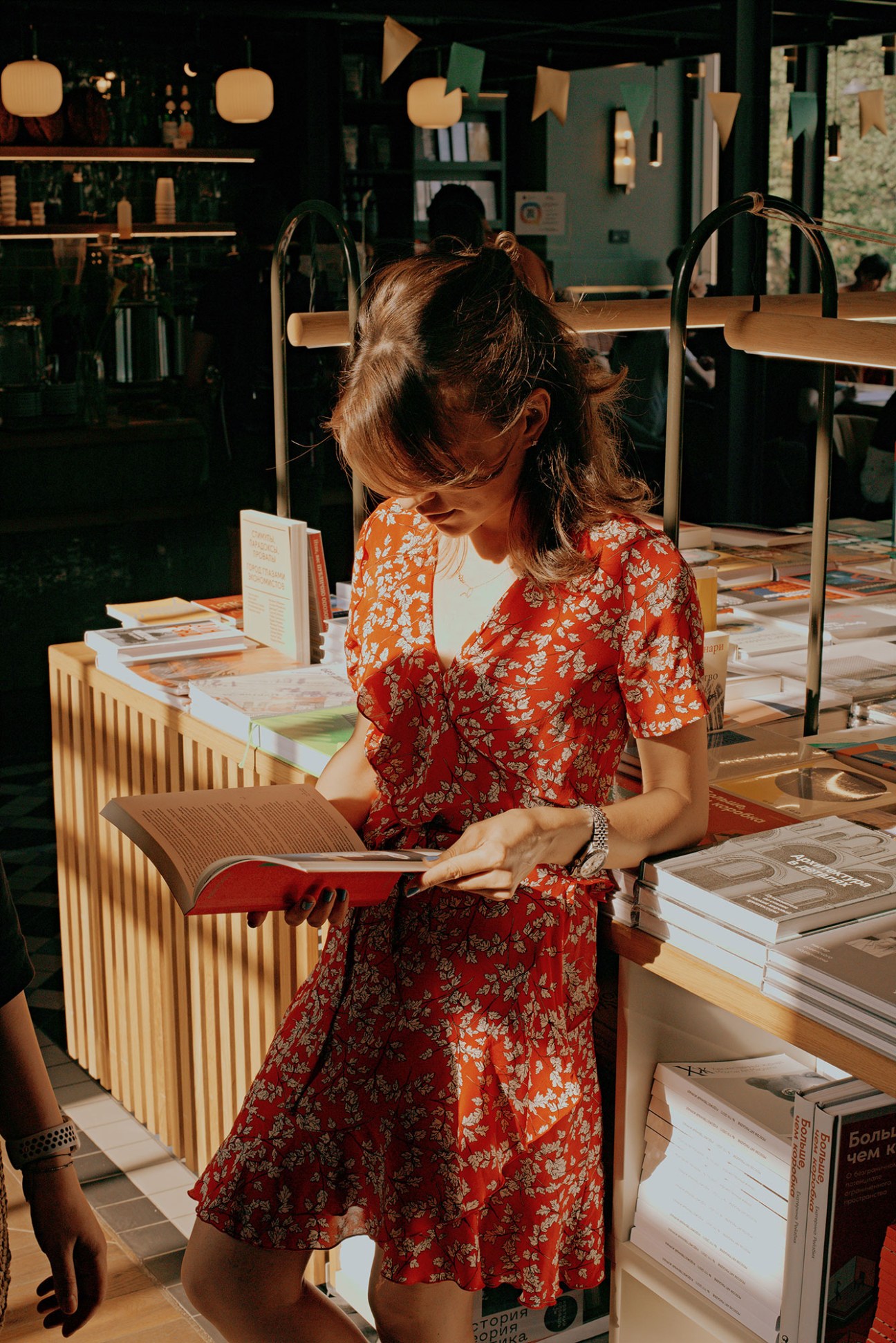
Renovations began last June and, six months later, the bookshop reopened the second floor. Ivanov hired St Petersburg-based designers to create fixtures that echo its art nouveau past. One stand is devoted to vintage books, while its café became an instant favourite among students and young professionals. The decision to expand in the middle of a pandemic has turned out to be prescient: Ivanov reports that the shop has seen a 120 per cent growth in revenue.
Aviation – India
Sky’s the limit
India could see its newest ultra-low-cost airline, Akasa Air, take flight as early as summer 2022. The airline recently received the first of its clearances from the Indian government. The man behind Akasa Air, Rakesh Jhunjhunwala, has been dubbed the Warren Buffett of the Indian stock market – his net worth is currently more than €5bn. But the Indian aviation industry, with its high operating costs and cutthroat pricing, has historically been anything but a sure bet. Some estimates suggest that industry-wide losses have risen to more than €3.5bn a year, and have resulted in the grounding of major full-service carriers. Despite this, Jhunjhunwala is expected to invest about €30m and has reportedly brought on board investors, including Airbnb.
His management team includes former heads of premium and low-cost domestic airlines, who are now negotiating with both Airbus and Boeing for the attainment of their a320Neo and 737Max aircraft. Akasa is expected to acquire 70 aircraft over the next four years and might well be betting on the Indian government’s push to privatise airports in smaller cities and open up new routes to make air travel more accessible to its 1.3 billion people. Either way, Indian aviation is a space to watch.
Tattoos – USA
Ink twice
Want to get inked but just can’t decide between the angel wings or a posthumous picture of the family pet? Fear not, US tattoo studio Ephemeral has the answer. Born in Williamsburg in Brooklyn (where else?) with an outposts in Los Angeles and one soon to open in San Francisco, the company uses trademarked fading ink technology developed by chemical engineers Brennal Pierre and Vandan Shah. While the life span is much shorter than a real tattoo (about nine to 15 months before getting broken down by the body), the price tag of between €170 to €480 is similar.
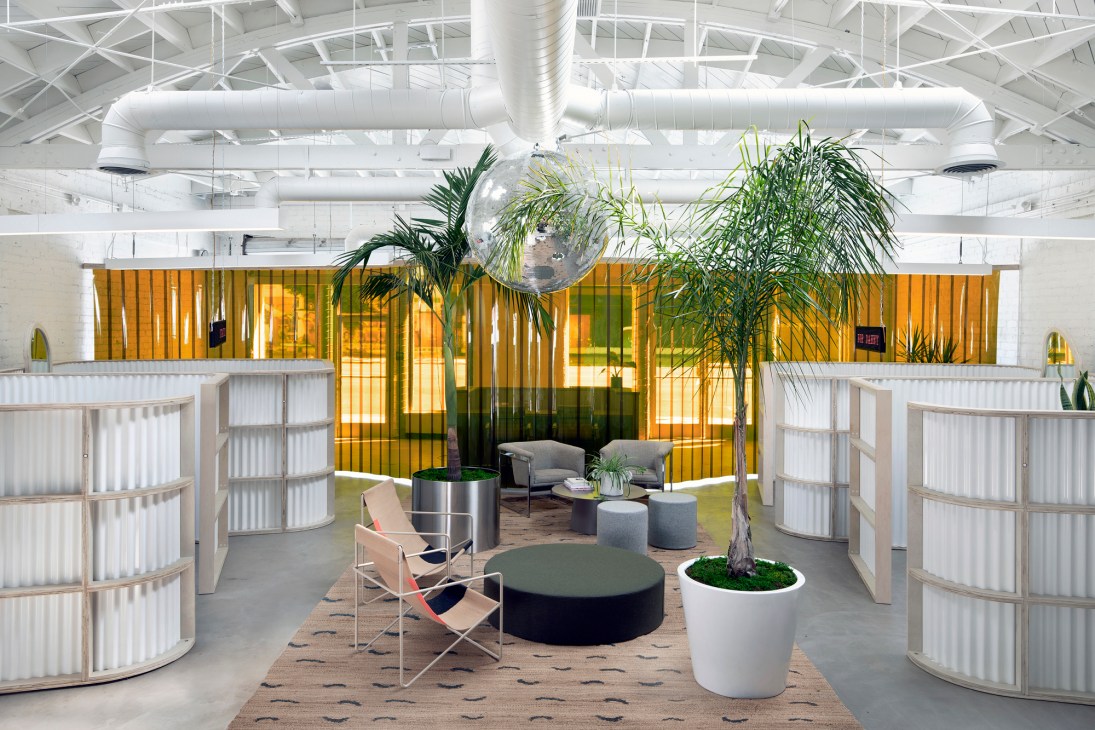

“We’ve seen tremendous growth and months-long waiting lists at our first studio in Brooklyn,” says CEO Jeff Liu. The plan is to expand across the US and to be in 10 to 20 more markets in the next year.
People in the die-hard “real” tattoo community question whether body art that disappears is the opposite of the real deal. But with some 60 million Americans considering real tattoos but not following through, this trend could become more permanent than the tattoos themselves.
Love hotels – Hong Kong
Room with a screw
“Get a room” is a phrase commonly used to gently mock couples kissing and canoodling in public into cutting it out but in Hong Kong people do check in to hotels for sex. The Cantonese even have a phrase for it: baau fong (burst into a house). For most non-married couples it is the very frustrating price you pay for residing in the city; a typical 20-something still lives at their pokey childhood home with their socially conservative parents.
Before the city closed its borders, baau fong was usually pay-by-the-hour at one of the city’s many love hotels. But after almost two years without international tourism, the lines are becoming blurred and some regular hotels now cater to passions by offering short stays in the middle of the day – a more affordable option than a full-night’s rental. A new term has been coined for this blend of baau fong and staycation: baau-cation.

New hotels offer all types of stay and refuse to be labelled. Hillwood House, which launched in the summer, offers hourly packages on its own website and full-night stays on booking sites such as Agoda. Guests using discreet self-service check-in machines in the lobby get a QR code to unlock their rooms, which were designed by a local architect’s studio. The only giveaway (and sole amenity) is a vending machine stocked with snacks and prophylactics.
Waddy and Moomoo is a baau fong review-site. It was set up by the founder of a sex shop and is closely watched by young couples across the city. Reviews from this year range from a new-look themed room at Holy Holies, a traditional love hotel where guests can go for a, ahem, ride in a room decked out as impressively detailed as, say, an mtr subway carriage, to full night, five-star stays at the Conrad, the W and the Upper House – a quick way of blowing the hk$5,000 (€560) vouchers that the government recently handed out to most residents to stimulate the city’s economy. There are many other things too, it seems.
Despite billing themselves as “baau fong specialists”, Waddy and Moomoo’s reviews often read like regular hotel write-ups, with a practical checklist and some handy tips that are relevant no matter how long guests plan to stay. Apparently the mattresses in the mtr room are bouncy but not big enough for two people to sleep on (hello, had anyone mentioned sleeping?), while service at the Upper House is said to be exquisite – it’s just a shame about the scratchy toilet paper in the bathroom and lack of a Japanese-style seat warmer. With Hong Kong’s strict quarantine rules for international travel likely to endure for another year, it would be fair to say that every hotel is currently a love hotel.
Plastics – France
Cleaning up
The issue of ocean plastics has received plenty of public attention lately, not least due to the flurry of clothing brands recycling waste into everything from sunglasses to swimming trunks. In France, one green-technology company has been looking to tackle the issue further up the chain by stopping microplastics getting into the water system – and investors are now all ears.
Paris-based Calyxia, founded in 2015, has been developing the idea of biodegradable microcapsules for use in primarily domestic and agricultural settings. The company is also developing technology that will make materials more durable, targeting both the electronics and automotive industries.
Patents have been registered and, with the EU set to further clamp down on microplastics from 2022, the timing is auspicious. Calyxia has raised €15m in its first funding round, bringing the total to €23m. “Our products are valued by world leaders,” says co-founder and CEO Jamie Walters. “With these funds we can build up capacity in the US, Europe and Asia.” Walters stresses that the microplastics fight is a “collective effort” but believes that the company can reduce their usage tenfold. “This is just the beginning.”
calyxia.com
Investment – Asia
Fund race
Japan is increasing investment across southeast Asia, in an attempt to ward off China.
Beijing is competing with Tokyo for business clout in the region. Japan is ahead, with $259bn (€226bn) invested, according to analytics firm Fitch Solutions. During the pandemic this gap widened, a development that will irk Beijing.
Defence and Diplomacy: Global
Military – Germany
In the basket
All at sea
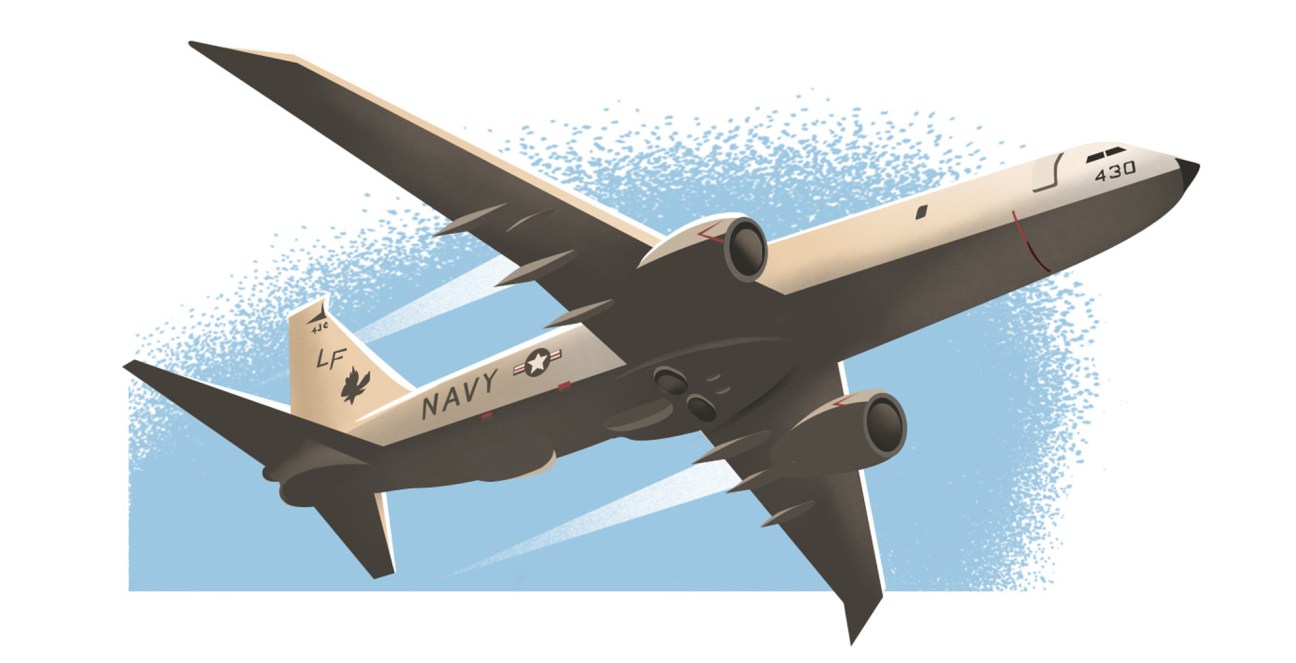
In the basket: Five Boeing p-8a Poseidon maritime patrol aircraft
Who’s buying: Germany
Who’s selling: USA
Price: $1.75bn (€1.5bn), including training and parts
Delivery date: From 2024
The Boeing p-8a Poseidon is essentially a 737 repurposed as a hunter of naval menaces. Aside from its surveillance capabilities, it can be armed with torpedoes, missiles and other weapons. Germany is buying the Poseidon to replace the propellor-powered Lockheed p-3c Orions. It had been working with France on developing a submarine-hunting aircraft – a project that could now be kiboshed.
Politics – North Macedonia
What’s the problem now?
Guy De Launey heads to the capital of North Macedonia as Bulgaria becomes the latest nation to turn on the country.
Bright colours and concrete. Sunshine and sopska salata. Wine and joie de vivre. These are a few of my favourite things about North Macedonia’s capital, Skopje. Over the course of many visits, I’ve seen optimism emerge from the turmoil of violent protests. Voting to add “North” to the country’s name ended a dispute with Greece in 2019, opening the door to Nato membership. Autocratic former prime minister Nikola Gruevski is now a convicted criminal and exiled in Hungary. So why are the fun and frolics in short supply as I arrive?
“We give the name, give the history, give too much,” says taxi driver Dragi, as he manoeuvres his Mercedes through the streets. “People want to join the EU but not pay too much.” Flicking through photos on his phone, Dragi brings up an image from 1936, showing Tsar Boris iii of Bulgaria standing alongside Hitler in Berlin’s Olympiastadion.
Dragi’s research reflects the antipathy most North Macedonians feel towards their neighbours. Just when it seemed that the EU would give the green light for accession talks, Bulgaria wielded its veto. Sofia is demanding that North Macedonia acknowledge the supposedly Bulgarian roots of the Macedonian language and culture. This is an existential outrage for a people who recoil from any suggestion that they might have shared heritage with a Nazi ally like Boris 111.
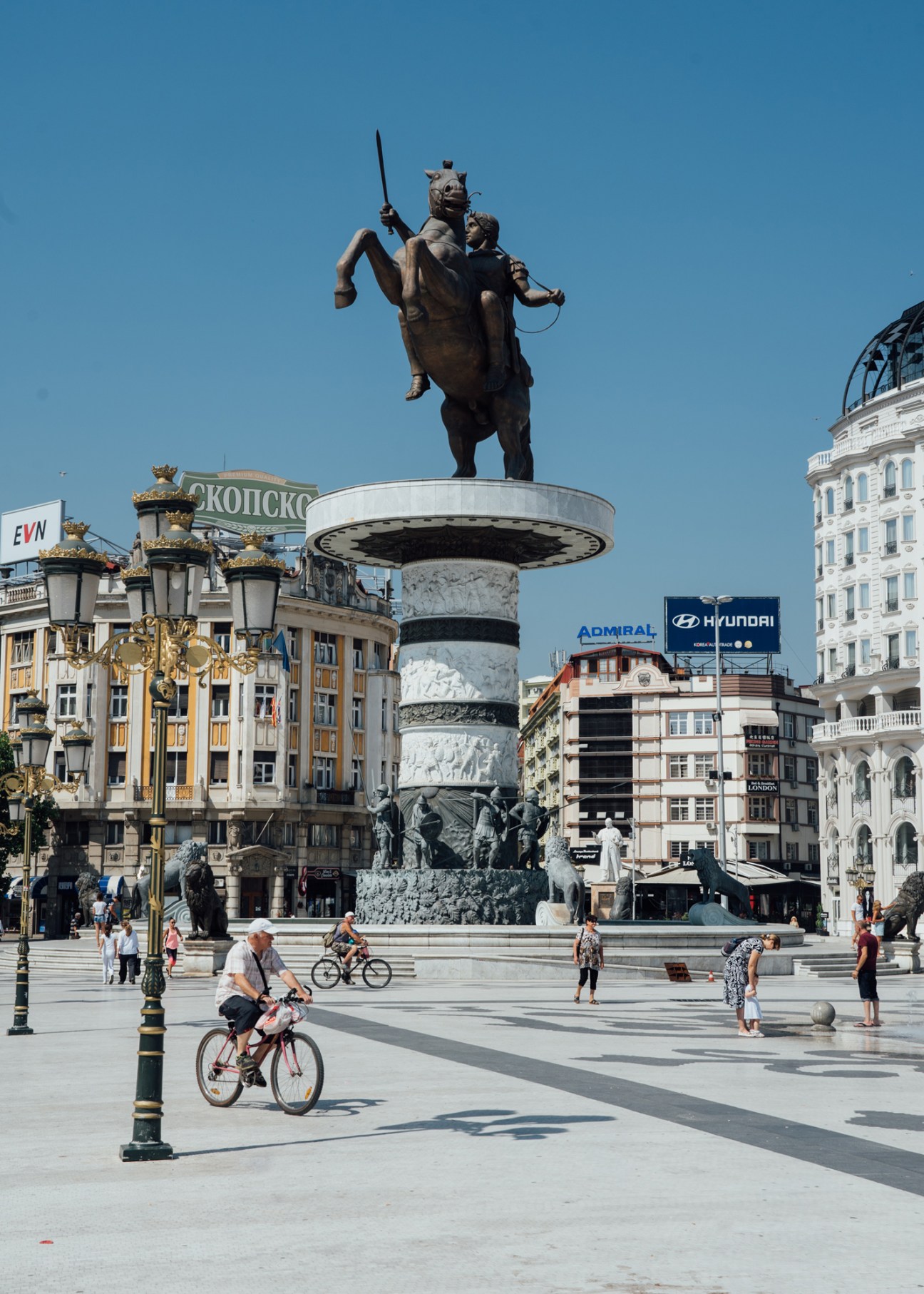
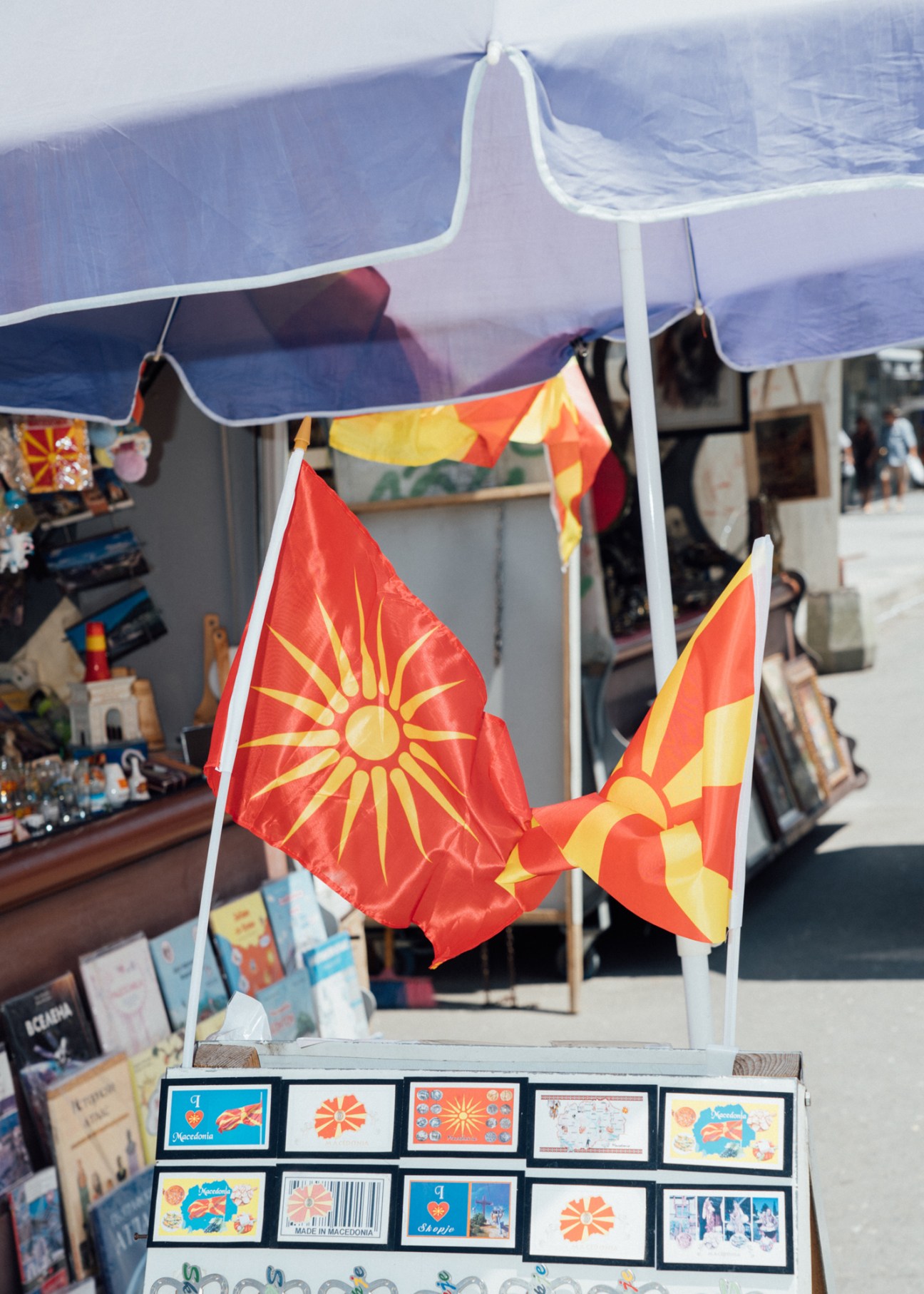
The atmosphere is equally gloomy when I meet Blazhen Maleski and Petar Barlakovski on a chilly terrace overlooking Skopje’s main square. Both have been working with North Macedonia’s young people – building international connections that now seem tenuous, thanks to the Bulgarian veto. “If we had the name change referendum again, I would vote against it,” says Barlakovski. Maleski does not go that far but, he says, he is angry. With Bulgaria, the government and the EU itself. “How is it that one member state can block the will of the 26 countries who want us to start accession negotiations?” he asks.
As we drain our coffees, Ivana Tufegdzic joins us. She became an MP in 2016 at the age of 23 but retired from politics after last year’s elections, feeling the same disillusionment. “We’re not in the mood to hear Brussels saying, ‘You’re part of us but you’re out’. It’s melting the credibility of the EU,” she says.
Foreign Investors Council president Stefan Peter confirms that finding staff is a concern; it’s not just highly educated young people heading for pastures new but workers with transferable skills, such as lorry drivers.
Newspaper editor Saso Ordanovski has seen it all when it comes to North Macedonia’s brief independent history but even he seems befuddled by the veto. “At some point Bulgaria will have to accept that we have the right to choose our own identity,” he says.
It seems strange to be leaving Skopje with a cloud hanging over both the city and North Macedonia’s future. But I understand why people are losing hope. They have ousted an autocrat, implemented reforms, even changed the name of their nation. And it hasn’t been enough to get long-promised talks underway.
If Brussels is serious about bringing North Macedonia into the family, it must show commitment – or those longing to join the bloc might start looking elsewhere.
About the writer:
De Launey is Monocle’s Balkans correspondent and a contributor to Monocle 24.
Politics – Barbados
Passing the baton
Barbados will celebrate the 55th anniversary of its independence from the UK on 30 November by detaching itself from the UK entirely and becoming a republic.
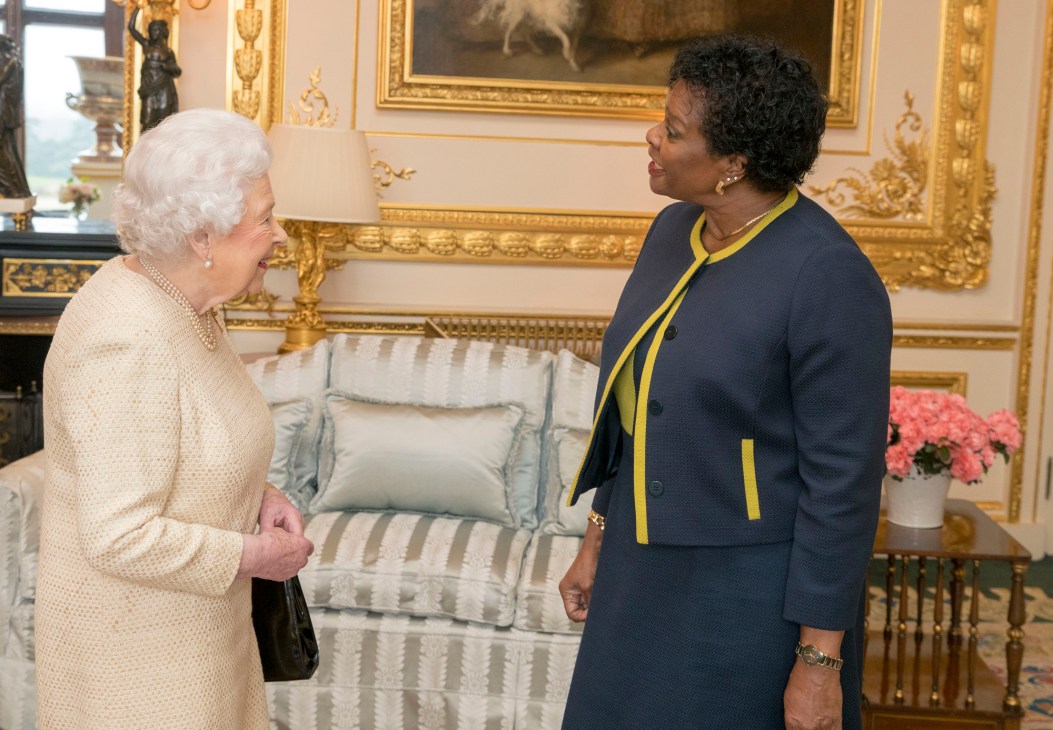
It is a low-key transition. Dame Sandra Mason, the current governor-general – as the Crown’s representatives in Commonwealth countries are called – will now be Barbados’s first president. It is the realisation of an ambition of Barbadian prime minister Mia Mottley who, in Barbados’s most recent election in 2018, led the Labour Party to a clean sweep, winning every seat in the House of Assembly. In 2020, Mottley said, “The time has come to fully leave our colonial past behind.”
“Generally speaking, there is support for the republic,” says Cynthia Barrow-Giles, senior lecturer in political science at the University of the West Indies. “If there is opposition, it is muted, though there is a segment of the population that does not see any tangible benefits to be derived.”
Of the 15 countries of which Queen Elizabeth II (pictured, on left, with Mason) will remain head of state, eight are in the Caribbean. It remains to be seen whether any of these will follow suit. Barbados has acted without a referendum, but this would be a constitutional requirement in other Caribbean jurisdictions.
“However, I fully expect that the move in Barbados will fuel some much-needed conversations across the Eastern Caribbean,” says Barrow-Giles.
Media – Global
And finally…
Journalists often point to the English-language newspapers of a nation as key sources of unbiased, independent information, so the closing of two such publications in November is disheartening. In Lebanon, The Daily Star, the country’s oldest English-language newspaper, founded in 1952, laid off its entire staff. Co-owned by the family of former prime minister Saad Hariri, it played an important role in Lebanon’s once-thriving media scene.
And, in Ukraine, the Kyiv Post suspended publication after 26 years and its journalists were dismissed. Though its owner Adnan Kivan said that the newspaper will close “for a short time”, its journalists accused Kivan of shuttering the paper in response to their attempts to save its editorial independence. “This is not the friendliest climate for independent media,” says Brian Bonner, the newspaper’s chief editor for 13 years. “We have irritated presidents, prime ministers, general prosecutors, MPs, oligarchs and ceos.” Bonner holds out hope that the paper will come back “bigger and better”, as Kivan has promised. But he stresses that its independence – a key plank of any foreign-language media outlet – must be assured. Otherwise, “it wouldn’t be the Kyiv Post,” Bonner says. “It has to be that way.”
Images: Getty Images.
Affairs: Global
Soft power icon
Super troupers
The joy that greeted news of Abba’s first album in 40 years, Voyage, in September was a reminder of the pop group’s global popularity. That its release was announced in London, in English, might have confused some millennials about their heritage but to their original fans, who between their Eurovision Song Contest victory in 1974 and their break-up in 1982, made them the 10th best-selling group ever, Abba will always be unmistakably Swedish.

In line with the Nordic law of Jante, the group achieved this with a certain modesty. “Swedes can be tepid towards their global stars,” says critic Tali da Silva of Swedish Television. “Abba is the exception. They stopped on a high note and steered clear from comebacks for so long.” Singles “Don’t Shut Me Down” and “I Still Have Faith in You” have been well received at home, perhaps because they deliver the Abba sound but with extra patina, like a piece of revarnished Swedish furniture.
Diplomatic spat
Bitter legacy
Who vs who: France vs Algeria
What it’s about: France has cut the number of visas that it will issue to citizens of Algeria (as well as Morocco and Tunisia) as punishment for the insufficient work – as France sees it – done by these countries to repatriate illegal immigrants. Algeria has recalled its ambassador and banned the French military from its airspace, potentially disrupting counterterrorism operations in the Sahel. Algeria was reportedly further inflamed by remarks made by Emmanuel Macron in a meeting with descendants of Harkis, Algerians who took France’s side during its war of independence.
What it’s really about: Partly the past, partly the present. France’s war in Algeria from 1954 to 1962 left a bitter legacy. Amid the recent row, Algerian president Abdelmadjid Tebboune accused France of committing “genocide”; beating up on France is an easy win for any Algerian politician. In France, the Harkis might prove an important bloc in next year’s presidential election.
Likely resolution: Tebboune has demanded “total respect” from France. Macron’s appearance at commemorations of the 60th anniversary of a massacre of pro-independence Algerians by Paris police in October should help; he was the first president to attend such an event. But this spat is perennial.
Year-end outlook ––– Global
News in brief
1.
Broken alliances
Portugal
Socialist prime minister António Costa’s parliamentary alliance with the Portuguese Communist Party and the Left Bloc came to an end in November after they withheld support for a budget proposal, resulting in elections being called for 30 January, two years ahead of schedule. Early polling suggests victory for Costa but the hard-left is likely to lose ground, while the far-right Chega party lurks in the wings. Portugal has been a stable outlier in Europe for much of the past decade. As campaigning gets under way, the question is whether voters will choose stability or seek to shake things up.
2.
Trend-spotting
Japan
As the year draws to a close, so the list season begins. Japanese magazine Nikkei Trendy‘s round-up of hit products makes for a good read: who knew that maritozzi, Italian bread filled with cream, would take off in Japan? A bakery in Fukuoka claims to have started the craze but Yamazaki Baking made it a bestseller, shifting 29 billion buns. Meanwhile, it took drinks giant Kirin five years to create its hit zero-sugar beer. Other items include Ariel sterilising detergent and beak-shaped masks from South Korea. Looks like trend-spotting is as unpredictable as ever.
The Foreign Desk
Andrew Mueller on…
Backing the wrong rebels
In 1980, The Clash released a triple album called Sandinista!. That it’s a bloated folly goes pretty much without saying – name the triple album that isn’t – but among its many misjudgements, none now seems as grotesque as the title. The Clash, like many self-styled leftist mutineers of the period, had been seduced by the Nicaraguan insurgency of the Frente Sandinista de Liberación Nacional and by its frontman Daniel Ortega, an intense thirtysomething Marxist guerilla rocking a Che Guevara moustache and Jim Jones spectacles.Give or take a few decent tracks that might have made the cut for London Calling or Combat Rock, Sandinista! endures as a warning that sections of the Western left still refuse to heed: that of the perils of extending uncritical solidarity to any Latin American firebrand in khaki fatigues and a scarlet beret. This lesson has recently been reinforced by the spectacle of Ortega winning yet another term as Nicaragua’s president in a shamelessly rigged election. Ortega, now 76, runs the country as a family business; his wife, Rosario Murillo, serves as vice-president. Opponents, real and imagined, have been imprisoned or exiled. Not for the first time, a Latin American revolutionary lionised as a heroic if not saintly resistor of capitalism and/or imperialism has been revealed as a crook, crank and despot.
You’d think that people would spot the pattern. Fidel Castro was a tyrant who imprisoned his nation for decades; many were willing to risk death at sea to escape. Hugo Chávez of Venezuela reduced to beggary a country with the world’s largest oil reserves; his successor, Nicolás Maduro, in attempting to perpetuate the Chávez personality cult without the personality, has overseen a humanitarian calamity from which nearly a fifth of the population has fled. Evo Morales of Bolivia attempted to amend or ignore his country’s constitution in order to stay in power forever.
A sentimental sector of the Western left indulged these charlatans because they struck poses against the US. That’s not to suggest that there have never been reasons for Latin American rebels to do so; the gruesome US-backed regimes that Castro and Ortega overthrew assuredly had it coming. But as baffled fans of The Clash surely absorbed upon their first plough through Sandinista!, you have to judge people on their merits, however much they thrilled you once.
Comment: Norway
Lillehammer wants to talk
Olav Brostrup Müller on how the small Norwegian city wants to be the home of free speech, unburdened by Twitter rants and cancellation.
If you had all the knowledge in the world at your fingertips and could say whatever you wanted, whenever you wanted, what would you do? Historically, this has been an unthinkable scenario. Now? Well, this may be the world we live in.
Last January, as the smoke cleared around the dome of the Capitol building in Washington, it became apparent that the age of the internet is not always primed for producing insight and can also create confusion and fear. The latter is an odd beast. It’s not only fear of the other, but also of upsetting people. Even digital natives seem to have a hard time navigating what is strong, spirited debate and what is just plain abuse. The safest option in many cases is to retreat to a corner of the internet filled with cat memes and general silliness, leaving the shouting matches to the shouters. Nor does it help that the streets of Twitter et al are patrolled by an increasing number of self-appointed thought police on the lookout for heretics. For academics, artists and businesses, the fear of being cancelled is all too real. At the same time, semi-medieval libel laws and defamation lawsuits are often obstacles to free and open debate in many parts of the world.
Freedom of expression – both in the legal and cultural sense – is threatened. This is why key figures in Norway’s publishing and media sector have approached Lillehammer Unesco City of Literature, to help found World Expression Forum, a venture designed to tackle global unease around freedom of speech. The ambition is that the annual event will be as vital for the development of freedom of expression as the World Economic Forum is for the advancement of global finance.
Today the Norwegian city of Lillehammer (population 28,000) is best known for having hosted the 1994 Winter Olympics, as well as being a backdrop for the Netflix hit Lilyhammer, starring Steven van Zandt. Famous for its relaxing atmosphere and soothing qualities, this provincial outpost two hours north of Oslo was a favourite destination for 19th and 20th-century painters and writers such as Gustav Fröding, Claude Monet and Nobel laureates Knut Hamsun, Bjørnstjerne Bjørnson and Sigrid Undset. The latter two even settled in the area, chasing what seasoned Monocle readers might recognise as Gentle Living.
From the 1870s onward, Nobel laureate Bjørnson was rooted in the countryside outside the city but still managed to lead a cosmopolitan life, locking horns with intellectuals and politicians from all over the continent through a tireless stream of articles, letters, op-eds, reviews and novels. But Bjørnson’s boots were solidly planted within his community. He insisted on being both a local man and a citizen of the world.
Lillehammer aims to prove the same point. Insisting on the qualities of small-town life combined with a global outlook, it is committed to its historical role of bringing people together. In 2015, Lillehammer hosted the ninth Global Investigative Journalism Conference, and opened its doors to another major conference two years later, on behalf of freedom of expression campaign group pen International and the refuge cities organisation icorn Network. In 2020, Lillehammer was also set to host the 33rd International Publishers Conference, until coronavirus struck.
Why did they all choose to come here? Maybe because sometimes, being away from the buzz and the bright lights of the big city brings a certain clarity. A gulp of fresh air, even. And a chance to have a conversation in depth, away from it all. With World Expression Forum coming up in 2022, this is precisely what we are planning to do.
About the writer:
Müller is Director of Lillehammer Unesco City of Literature.
Call of the wild
On a blustery day at the Glen Alps trailhead on the outskirts of Anchorage, Erin Boklage commands Tucker, her border collie and lab mix, to “load up”. The dog dutifully leaps into her lap. The obedience of Tucker and the rest of the pack sitting next to him – Topo, Kira, Chispa, Finn and Garrus – is exceptional, though not surprising, given their line of work.
These are the K9s of Alaska Search and Rescue Dogs (asard), a not-for-profit organisation founded in 1987 to help locate lost hikers, skiers and adventurers, as well as to assist in rescue missions after avalanches. “We never know the exact situation so we cover many bases,” says Boklage. Training as many as four times a week, the team works on disciplines such as track and trail, and avalanche rescues.
When they’re not honing their skills or on a mission, members of asard lead normal lives. The volunteers have day jobs, while the four-legged friends are family pets. Search missions benefit from the relationship between dog and handler. “Owners understand their dogs,” says Boklage. “They know the different barks, how to read body language. That level of trust and communication is key out in the field.”
Over the years, asard has assisted in finding many lost people and has been among the first responders after avalanches. “Knowing that you played a part in bringing someone home keeps us all going,” says Boklage. In recent years call-outs have declined in frequency, perhaps as a result of technology’s greater role in rescue operations. However, especially in the more remote parts of Alaska, technology cannot be viewed as a failsafe. This is why asard and other similar groups continue to be prepared. “We’re a small part of the rescue puzzle,” says Boklage. “But we do what we do because we love the dogs and we’re ready to help in any mission.”

The Cabinet
(From left to right)
1. Becky Germain, Field support, ‘‘Educating herself in wilderness safety.”
2. Topo, English shepherd and border collie mix,“Loves mountains.”
3. Erin Barker, Support member,“Data analyst by day.”
Erin Boklage
Studying audiology in Chicago might not be a conventional starting point for a leader of an elite volunteer rescue team but that’s precisely asard unit leader Erin Boklage’s pedigree. She moved to Alaska in 2011 and now balances her day job managing people’s hearing with being the state parks’ go-to dog-team leader. “We are some of the first responders in wilderness environments,” she says.
4. Tucker, Border collie and lab mix,“Training in the detection of human remains – grim but important.”
5. Ray Dinger, Treasurer and field support member, ‘A COO by day who runs the books by night.”
6. Kira, Australian shepherd,“The youngest member of the team.”
7. Heather Bell, Operational avalanche team. “Helps dogs to find human scents in snow.”
8. Chispa, English shepherd,“A six-year-old veteran.”
9. Amanda del Frate, Assistant unit leader and operational wilderness team,‘‘Dedicated in the field and office.”
10. Finn, Nova Scotia duck tolling retriever,“Training in avalanche rescue.”
11. David Disselbrett, Member at large and field support,“An experienced set of hands.”
12. Carrie Aleshire, Secretary and support member,“Keeps ASARD organised.”
13. Garrus, Rough collie, “Another new pup.”