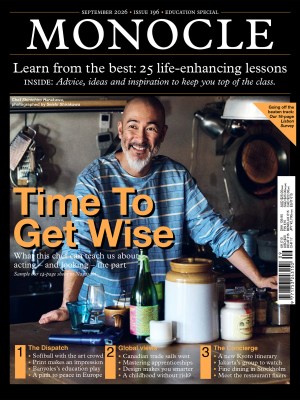
Issues
The Monocle Shop
Monocle swimming trunks
€95
The sun is out, the water is looking oh so tempting, and you need some swimmers that will ensure you look sharp when you take theplunge. We’ve updated our trunks, rendering them from a softer nylon-blend fabric with a natty nylon drawstring and metal hardware. Fellow bathers at the lake will be so charmed by the neat cut and handsome colours – either bright coral or navy – that they won’t even notice that your summer tan isn’t quite there yet.

Material: Brushed nylon.
Colours: Navy or coral.
Sizes: s – xl.
Made in: Portugal.
Shop now
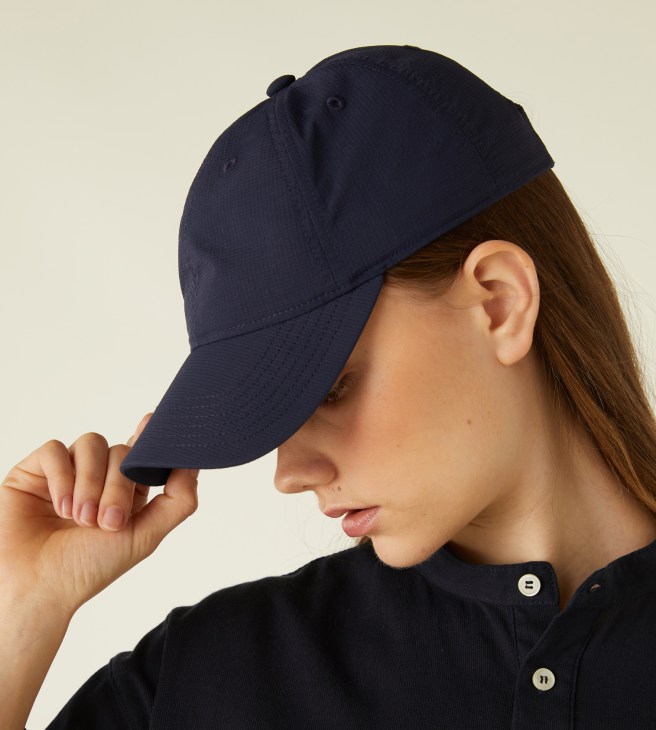
Monocle ball cap
€65
Dad hats, or ball caps, have made a big style comeback lately and this understated take, designed by our in-house team, is made from nylon ripstop that’s as light as it is durable. Whether you opt for navy or olive, and wear it forwards or backwards, it’ll be a surefire summer staple.
Material: Nylon ripstop.
Colours: Navy or olive.
Sizes: One size.
Made in: Portugal.
Shop now
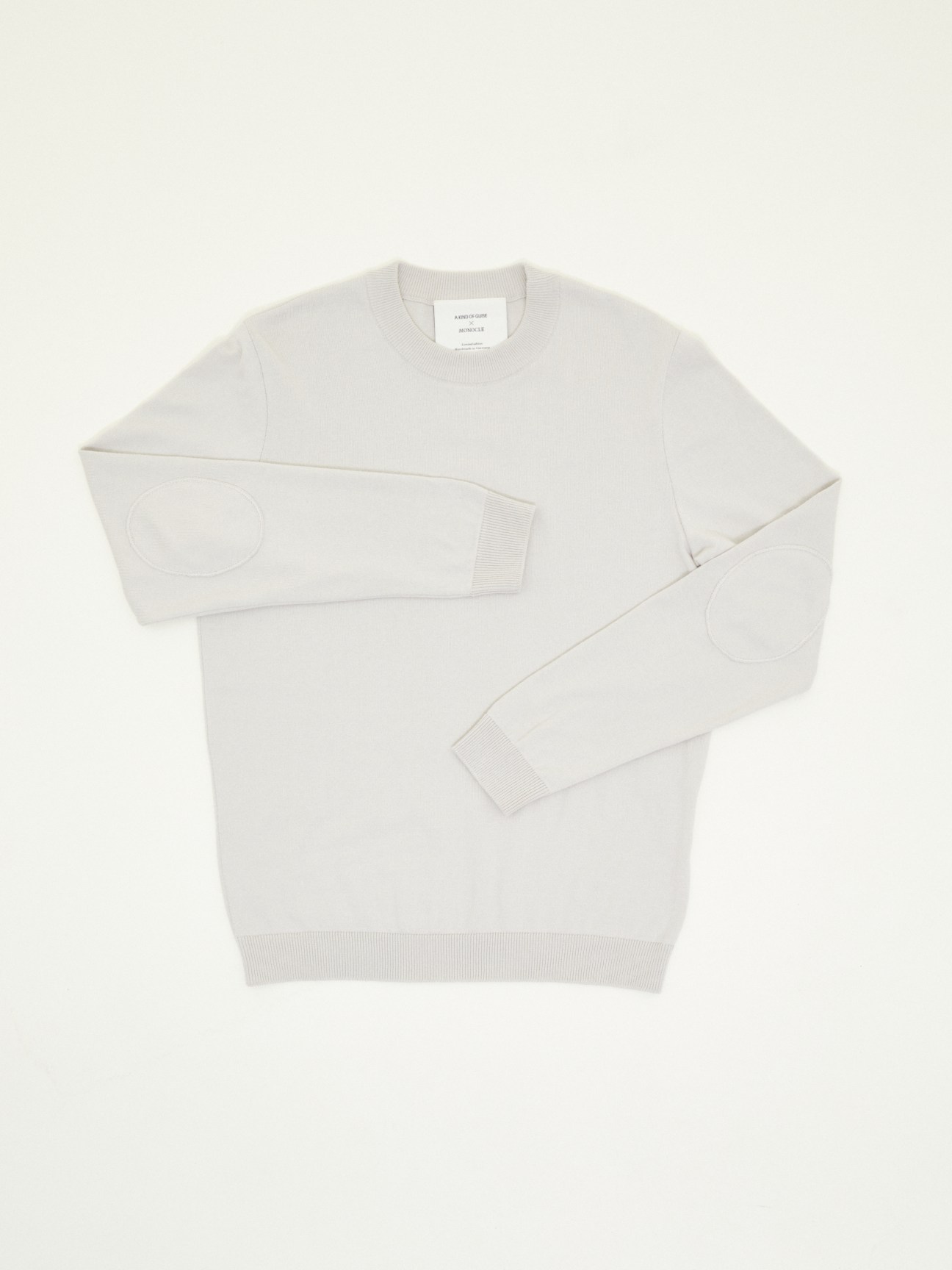
A Kind of Guise x Monocle cotton pullover
€245
Few things are worse than a saggy neckline – but there’s no danger of that here. These fetching and comfortable cotton crewnecks, created with our friends at A Kind of Guise, have sturdy ribbed necklines, cuffs and hems.
Colours: Navy or stone.
Material: Cotton.
Sizes: s – xl.
Made in: Germany.
Shop now
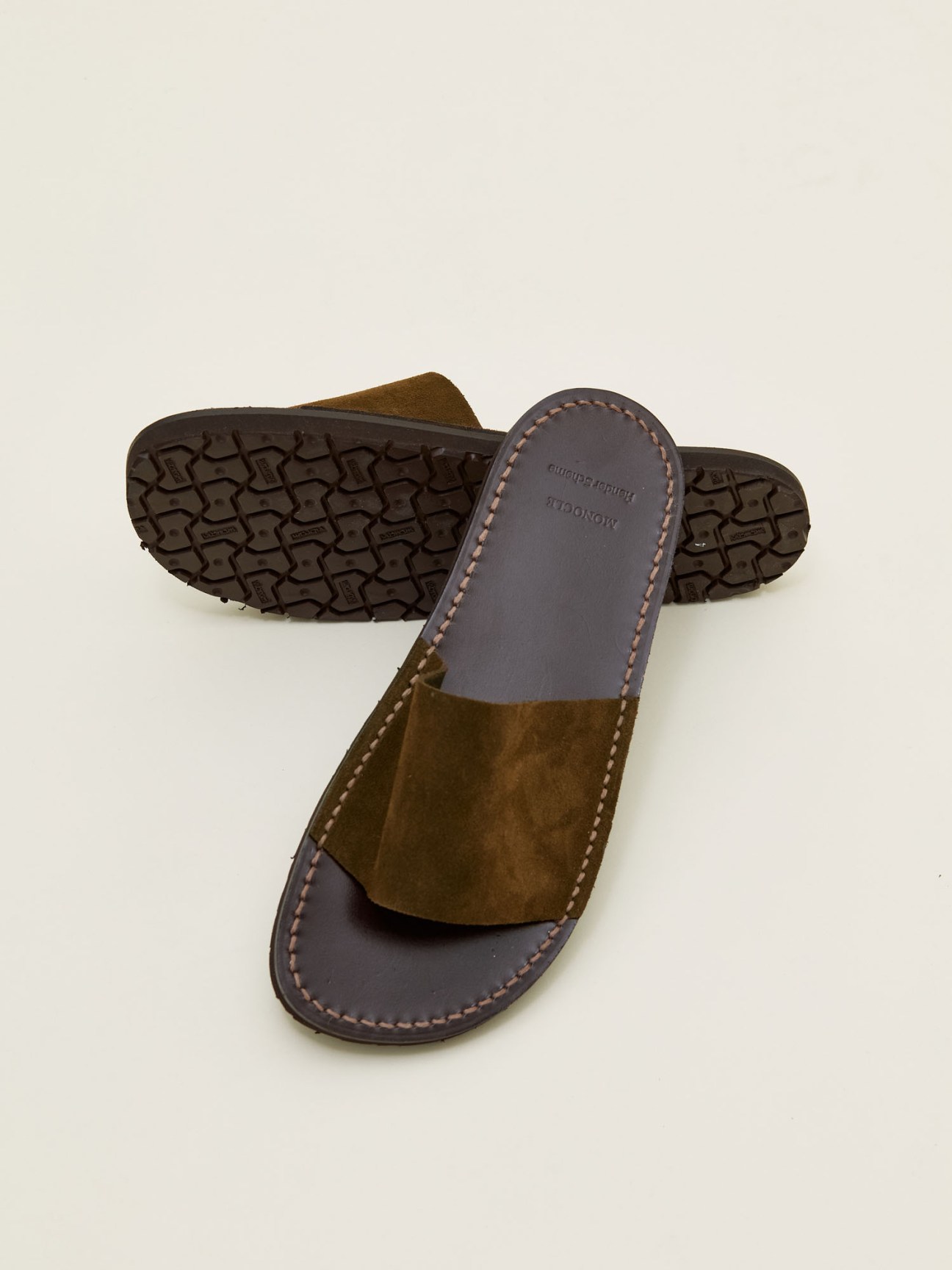
Hender Scheme x Monocle atelier slippers
€240
Hender Scheme’s approach is to rethink materials so that they can be elevated in surprising ways. These minimalist slides, an exclusive style for Monocle, have soft suede uppers and a smooth leather base – both of which will adapt and improve with age – and Vibram soles, perfect for the pool or beach.
Colours: Brown.
Material: Leather, suede and Vibram sole.
Made in: Japan.
Shop now
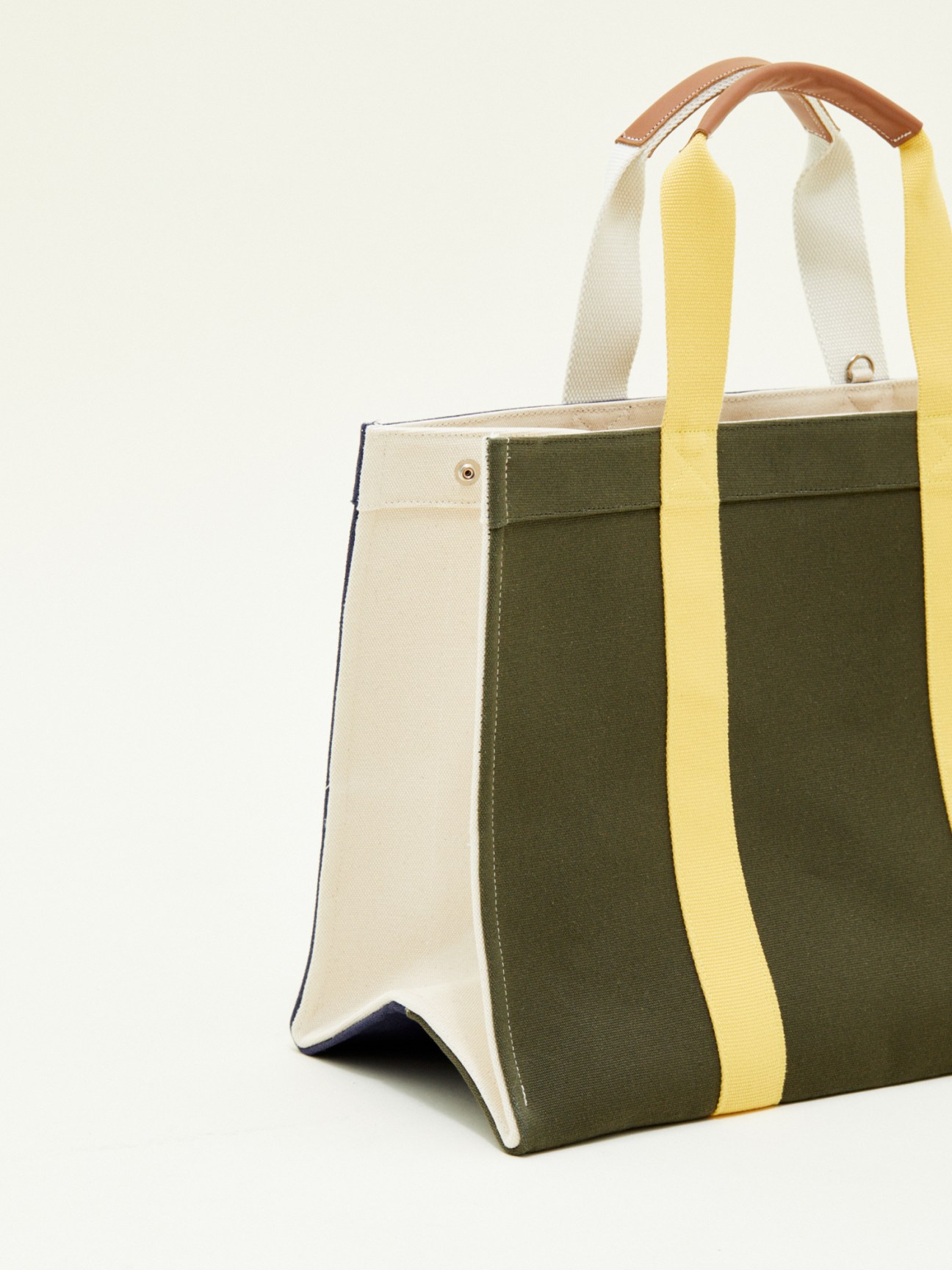
Rue de Verneuil x Monocle medium and large totes
€250 & €275
Monocle has joined forces with Paris brand Rue de Verneuil. Founder Vincent Ribat is a former interior designer and his designs recall both sturdy canvas American tool bags of the 1950s and the sun-kissed glamour of the French Riviera. Plump for navy with white straps or olive with yellow.
Material: Cotton canvas with leather handle.
Colours: Navy or olive.
Sizes: Large: 34cm x 45cm x 23cm. Medium: 24cm x 33cm x 14 cm.
Made in: France.
Shop now
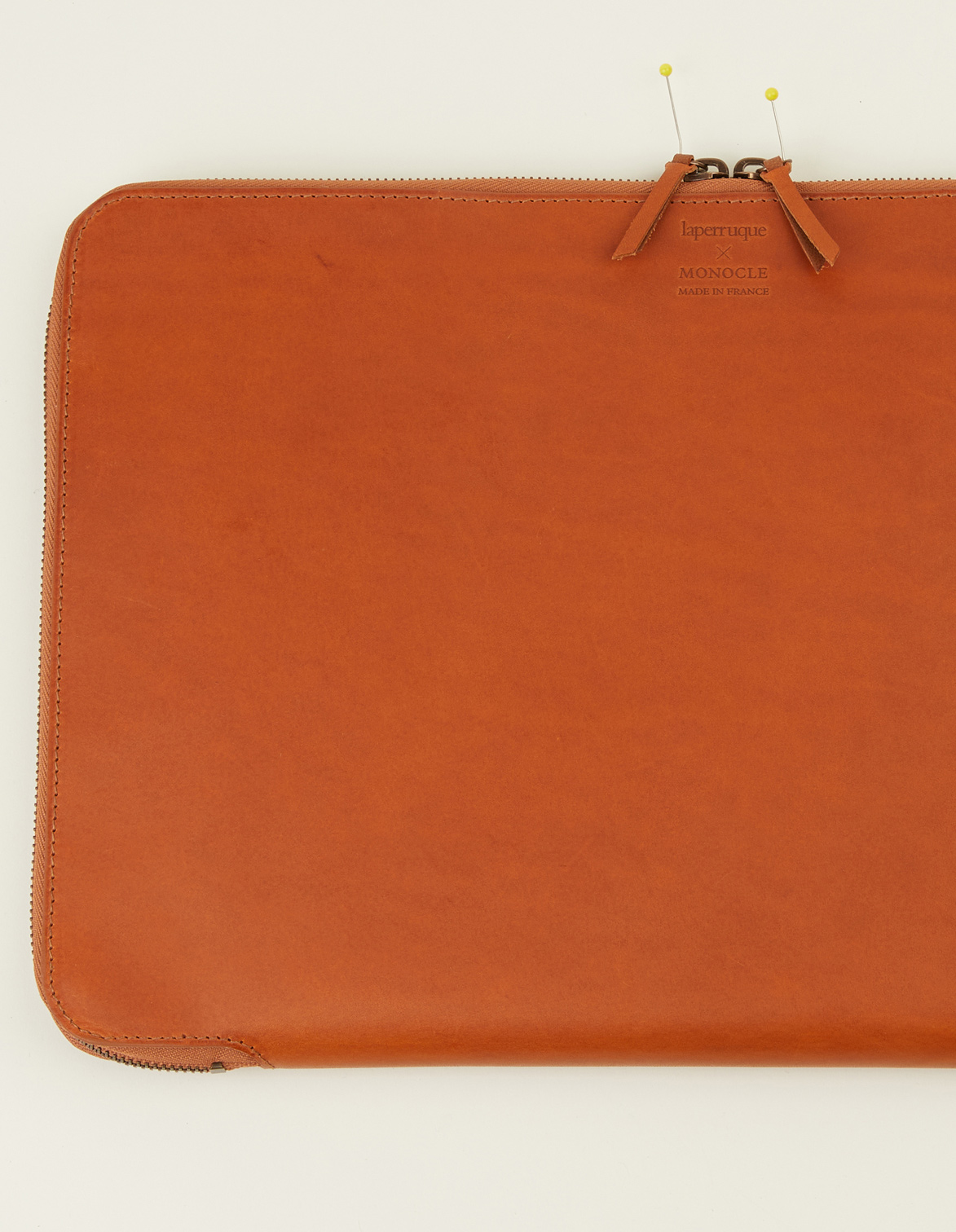
Laperruque x Monocle laptop case
€340 & €375
Parisian brand Laperruque’s computer covers are made from untreated vegetable-tanned leather, which, unlike the laptop they house, will only improve with age.
Material: Leather.
Colours: Navy or tan.
Sizes: 13” and 15”
Made in: Italy.
Shop now
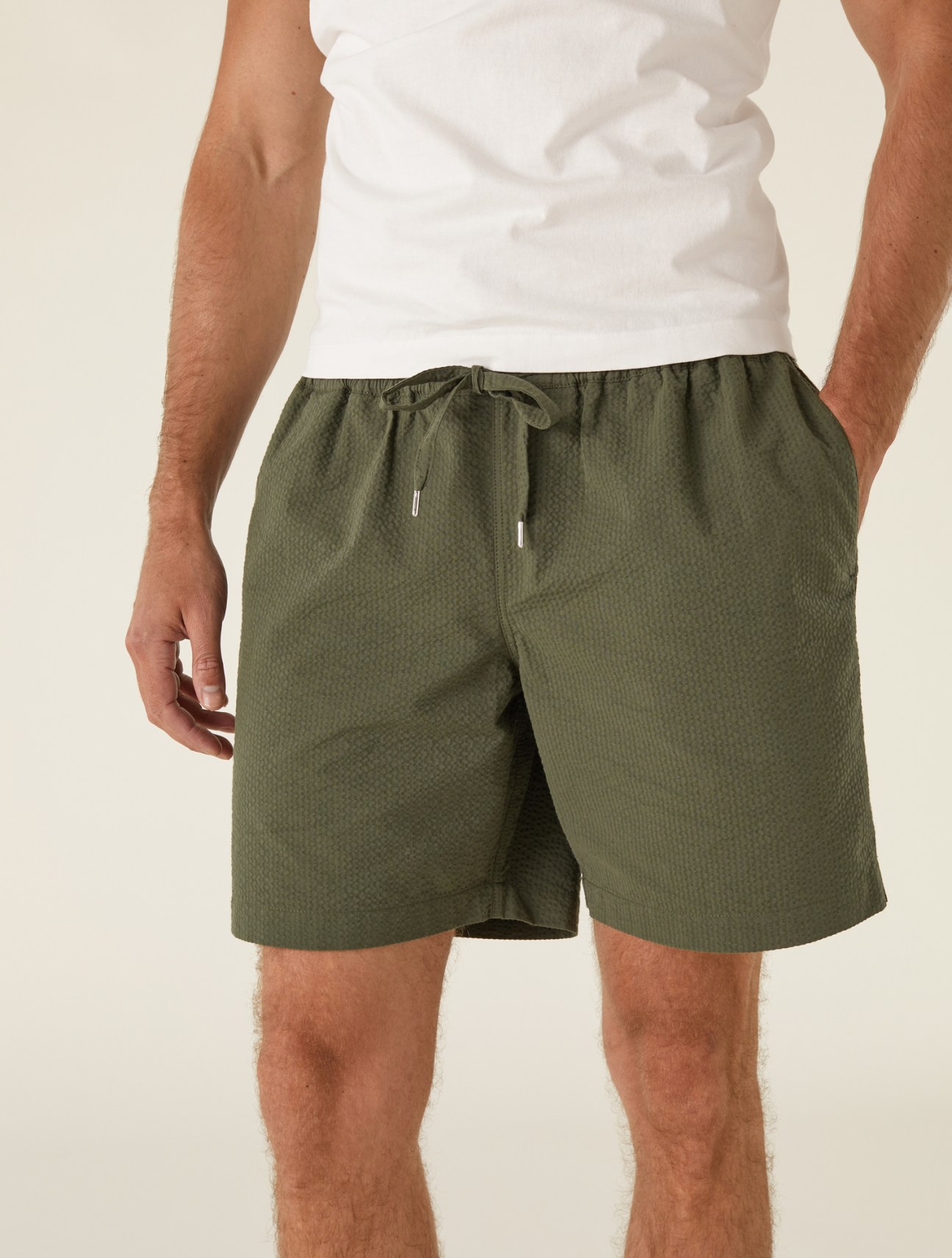
A Kind of Guise x Monocle cotton shorts
€145
These breezy seersucker shorts, created with A Kind of Guise, have a back pocket for stashing your phone and sunnies, and finish a neat distance above the knee. Plus: an adjustable waistband means that you needn’t hold back on that gelato.
Material: Cotton.
Colours: Navy or olive.
Sizes: s – xl.
Made in: Germany.
Shop now
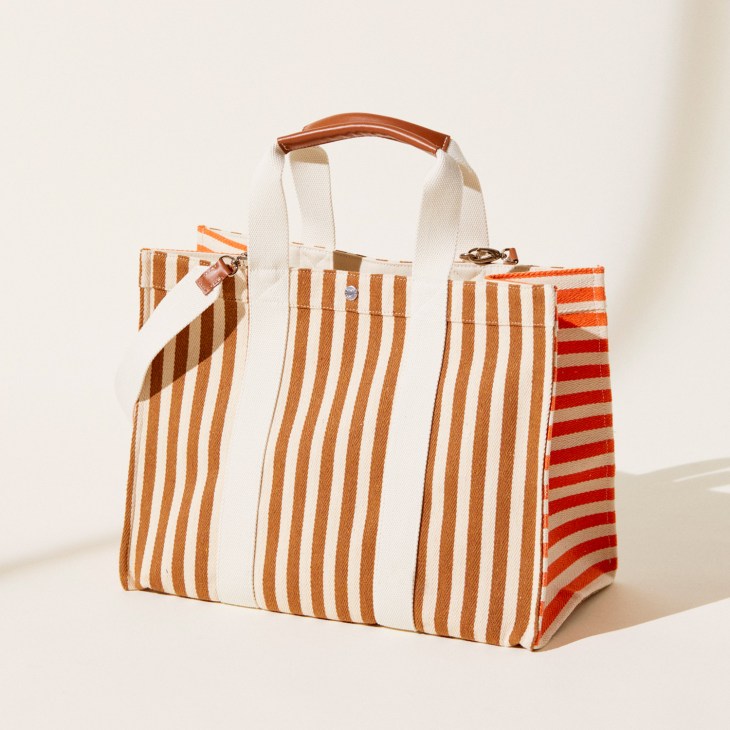
Rue de Verneuil x Konfekt Palais Royal striped canvas tote bag
€250
Monocle’s sister magazine Konfekt has teamed up with Rue de Verneuil to create a head-turning tote. Rue de Verneuil – named after the brand’s studio address in central Paris – brings a vibrant retro flourish to its French-made bags. The Palais Royal tote, named in honour of the 17th-century palace in the 1st arrondissement of Paris, is made of cotton and comes with a detachable shoulder strap.
Material: Cotton canvas with leather handle.
Colours: Camel and orange stripes.
Dimensions: 34cm x 45cm x 23cm.
Made in: France.
Shop now
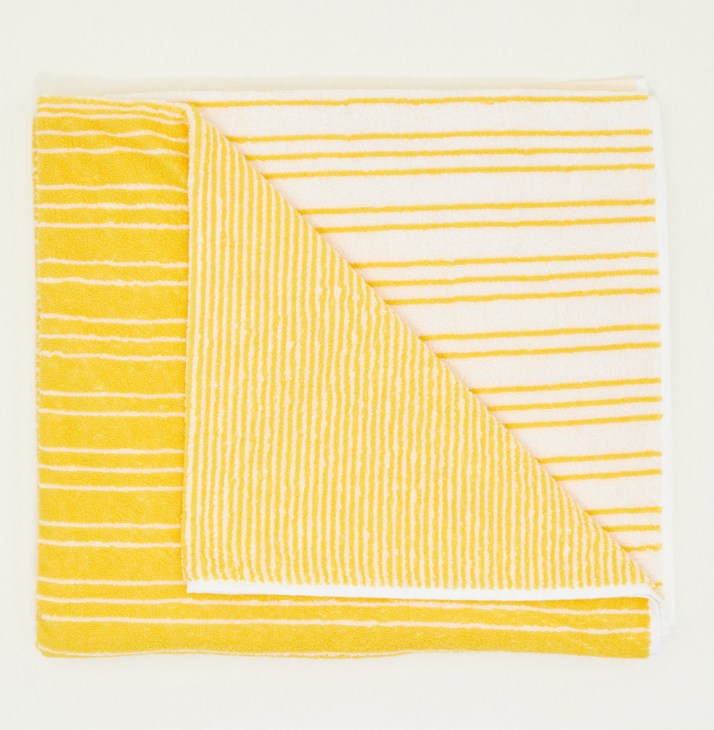
Monocle beach towel
€90
You’ll have the brightest sunbathing patch on the beach thanks to our towels, which come in vivid shades of sky blue and canary yellow. Designed in-house and made in Portugal, these cheery terrycloth numbers are ultra soft and expansive, so you can stretch out as you leaf through a magazine or take a nap.
Material: Cotton.
Colours: Blue or yellow.
Made in: Portugal.
Shop now
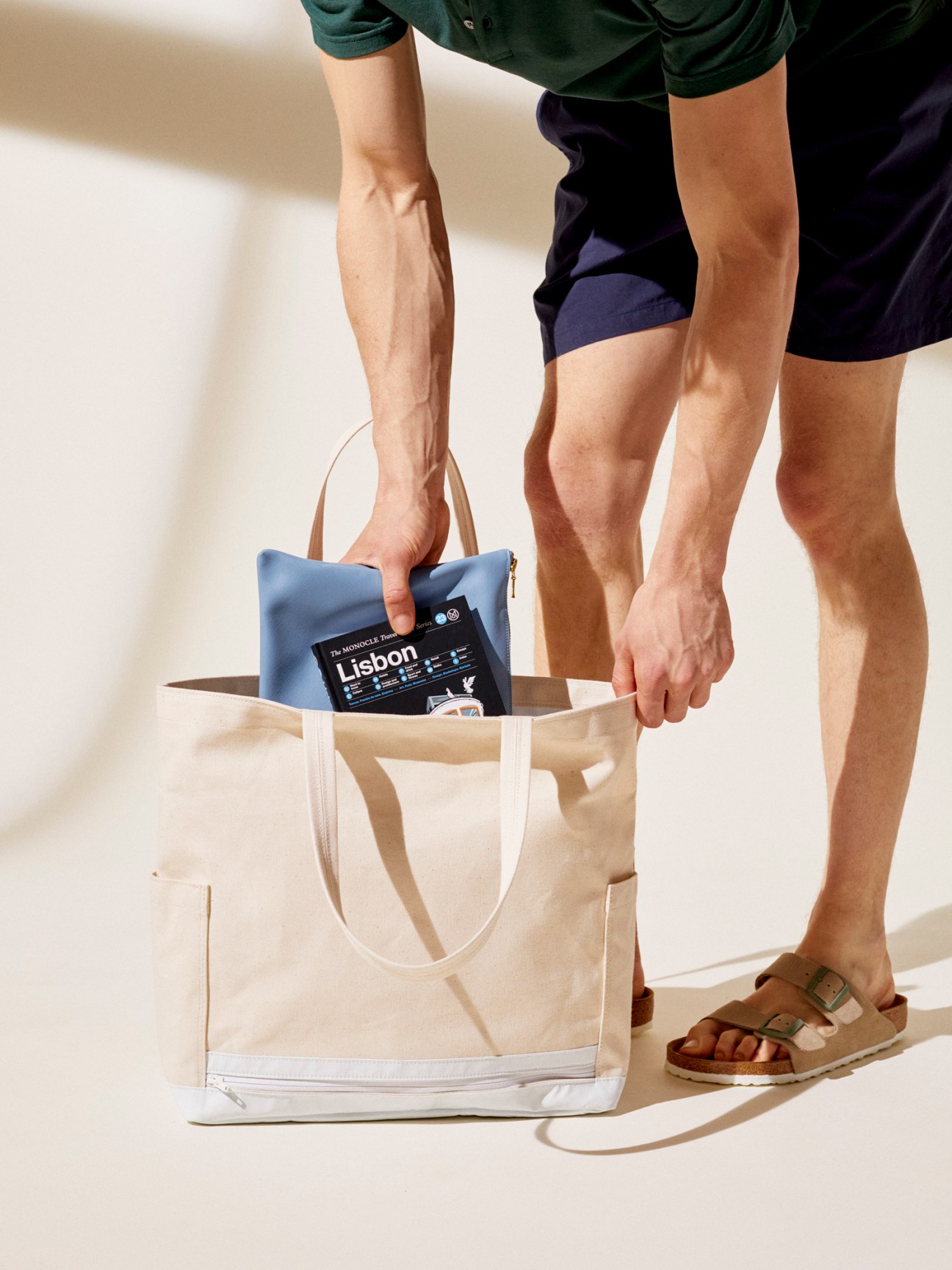
Monocle swim tote
€225
This swim tote should be by your side as you stroll down to the beach, bagni or shores of Lake Zürich for those morning laps or after-work dips. Made in Japan from waterproof canvas, it can withstand splashing and has a waterproof pocket for stowing your swimwear – plus a separate side nook for all your valuables.
Material: Waterproof canvas.
Colours: Navy and white or beige and white.
Made in: Japan.
Shop now
Stylist: Marcela Palek
Ground force
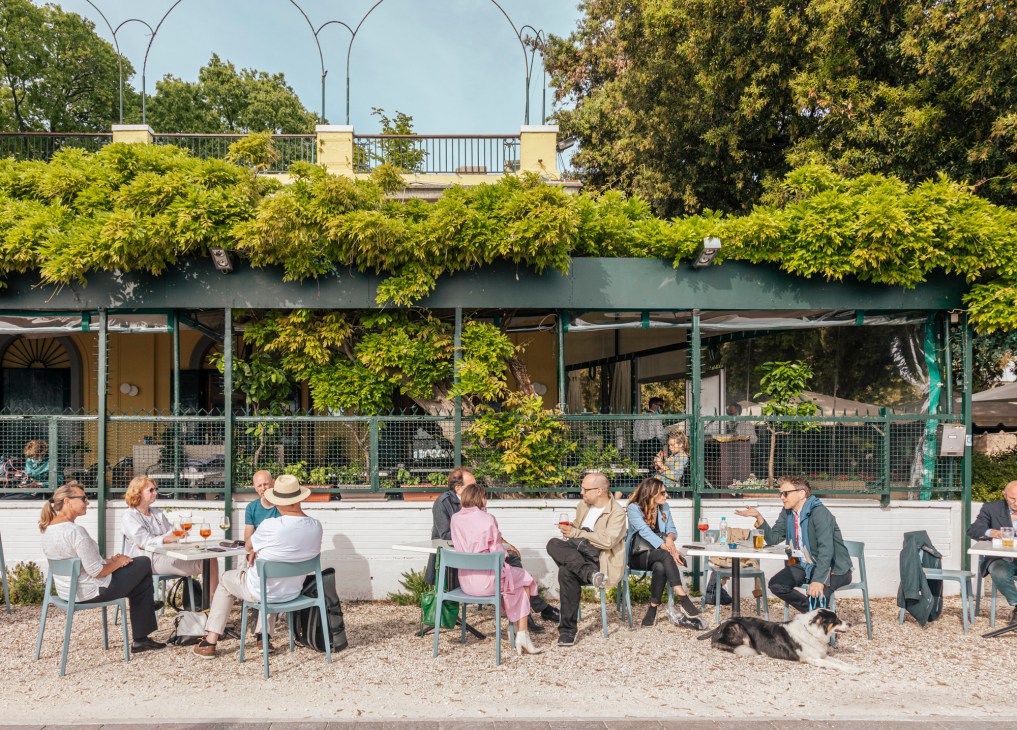
Visitors to the Venice Architecture Biennale breathed a collective sigh of relief as they arrived for the event’s opening in May. Finally together again and re-energised under the Venetian sun, architects, designers, curators and the world’s media congregated to consider the many challenges that our built environment faces, and what this means for all of us. And the place to discuss these questions couldn’t be more apt. “In Venice, high water is an issue; tourism is an issue, the pandemic has been an issue; the vulnerability of history is an issue,” says Lebanese-born, Boston-based architect Hashim Sarkis, who was chosen to be the curator of the 17th Architecture Biennale, which was postponed from 2020 to 2021, and will run until 21 November. Beyond the thought-provoking setting, the event’s success comes from a curator unafraid to ask tough questions but also one demanding practical responses from participants. Unlike more convoluted curatorial concepts from previous iterations (2013’s The Encyclopedic Palace was particularly vague) Sarkis’ theme for the biennale aims a very direct question at architects: how will we live together? From this comes diverse answers and also more questions for the audience to consider in response.
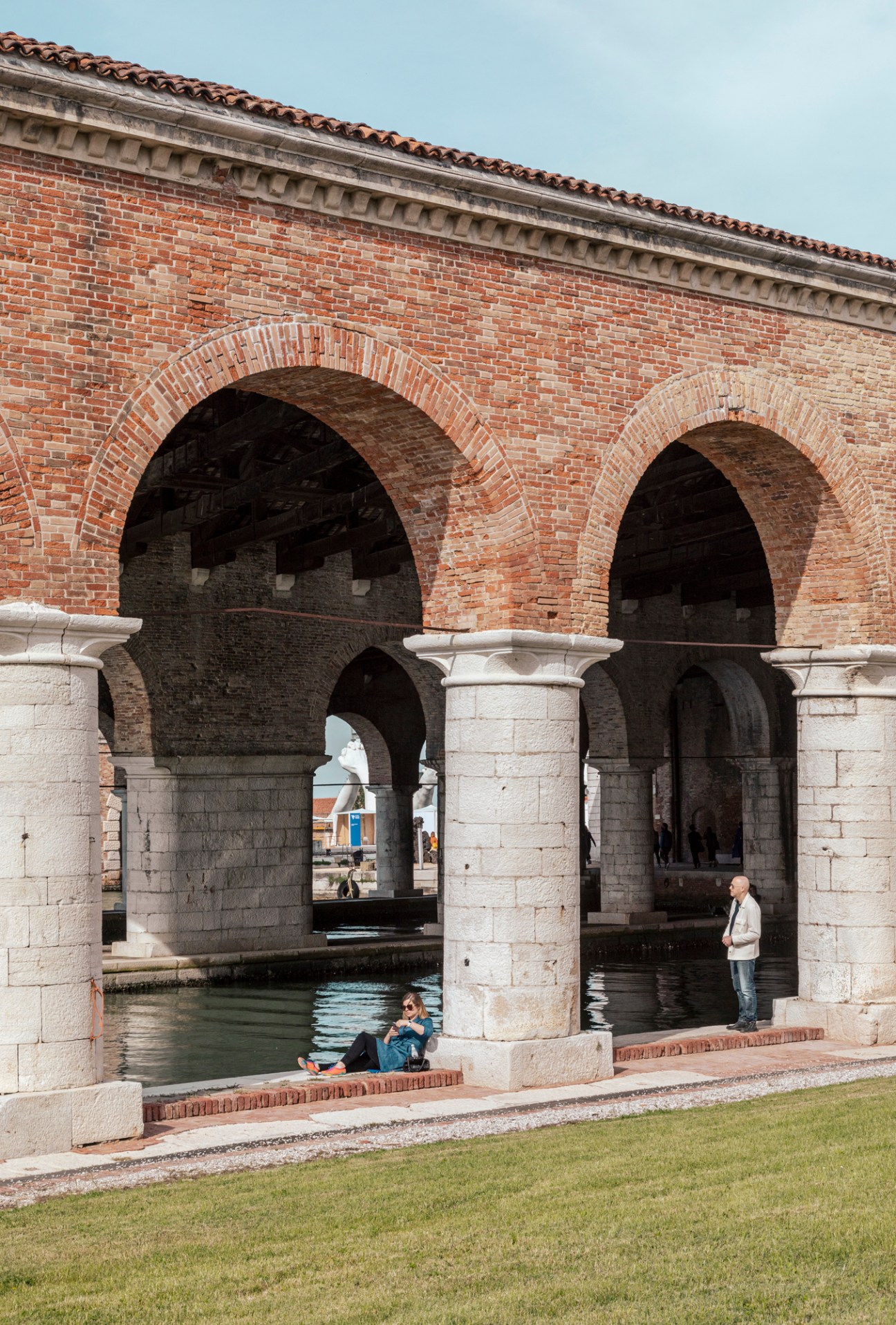
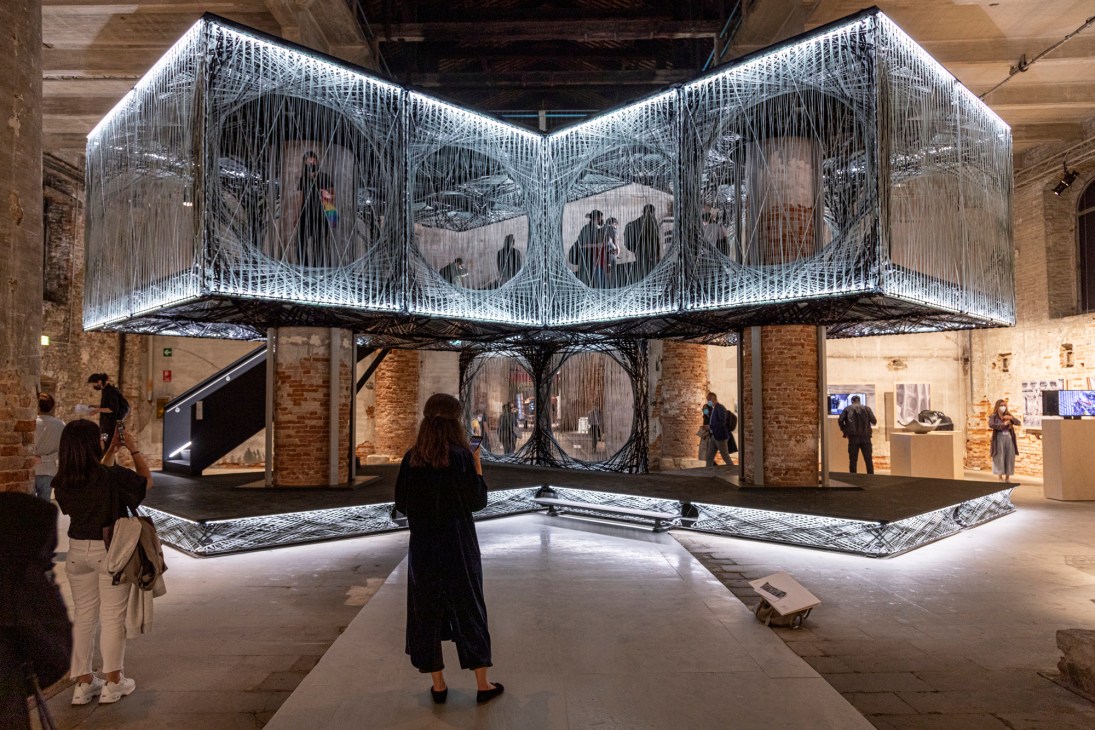
For example, what will happen to the citizens of sinking Venice and the city itself? Amsterdam’s Studio LA, operated by architects Lorien Beijaert and Arna Mackic, teamed up with designer Baukje Trenning to provide a highly literal response. Their installation, City to Dust, found at the biennale’s Arsenale, sees a map of Venice beautifully realised across a tiled floor, which all begins to deteriorate when guests step across it. Offset by ghostly images that are shot by Venetian photographer Marco Cappelletti during the pandemic, the result is something paradoxical – an overly touristy Venice will undoubtedly crumble but one without visitors isn’t great either. “With over-tourism, the beauty of Venice has produced something negative,” says Beijaert. “Yet when the city is empty there’s an awful feeling about the place.”
Beyond the Biennale
While the event spoils architects with myriad installations and exhibitions, it also highlights design efforts in places more removed.
Aristotle Axis
Thessaloniki
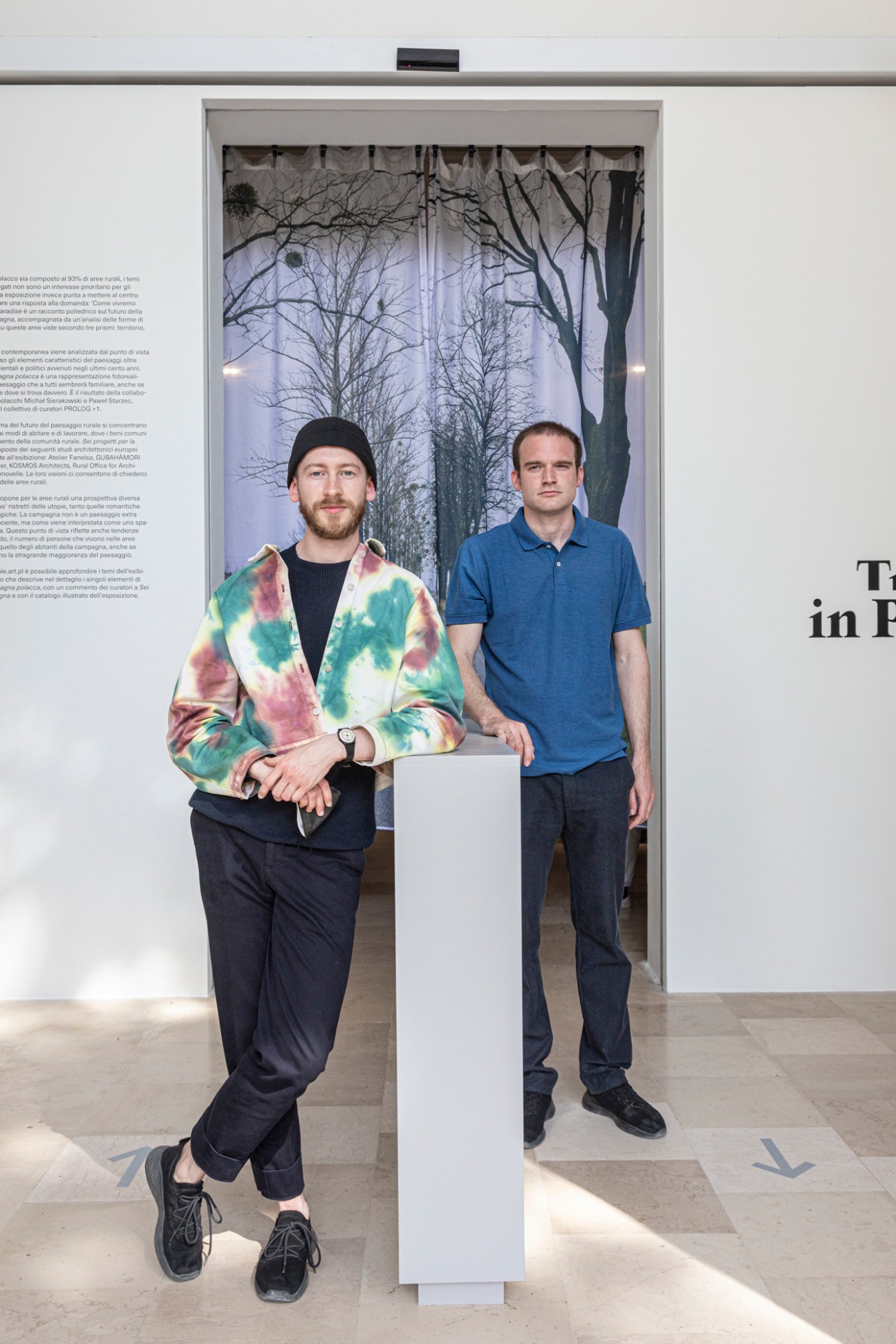
Greece’s pavilion this year hones in on the urban issues the city of Thessaloniki is facing. It focuses on the convergence of different cultures and architectural styles to discuss what a modern Greek city should look like going forward. The curators display the findings through a market-style set-up where “souvenirs” – beautifully presented printed collateral on the topic – can be taken away for free.
Tambacounda Hospital
Senegal
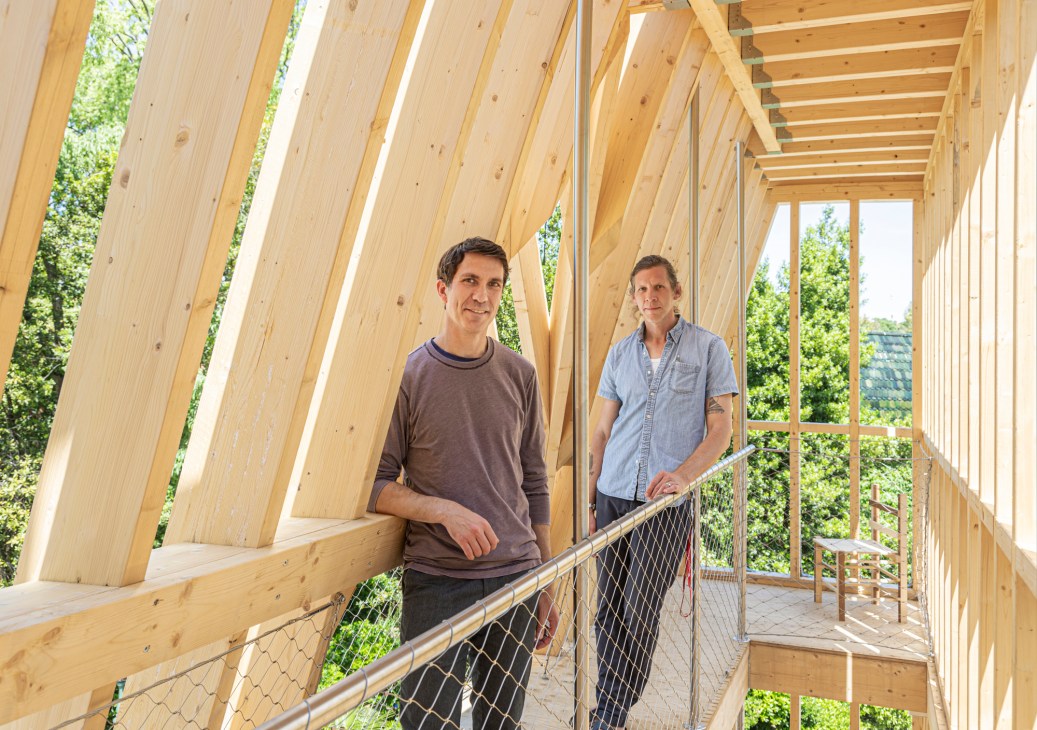
A beautiful, breathable latticed brick wall installed at the Arsenale exhibition by Swiss architect Manuel Herz directs visitors’ attention to this unique building he’s designed in Senegal. The aim is to tell the story of the stakeholders in the project’s design process – the local builders, planners, politicians, doctors and, of course, the patients.
Barrio La Palomera
Caracas
Rather than propose a full-scale solution to improving this particular Caracas district, Elisa Silva and her team have simply realised a scaled-down version of the suburb, which highlights its many positives, including masses of public spaces and parks, as well as flower and vegetable gardens where locals extract plants to use in home-made medicines.
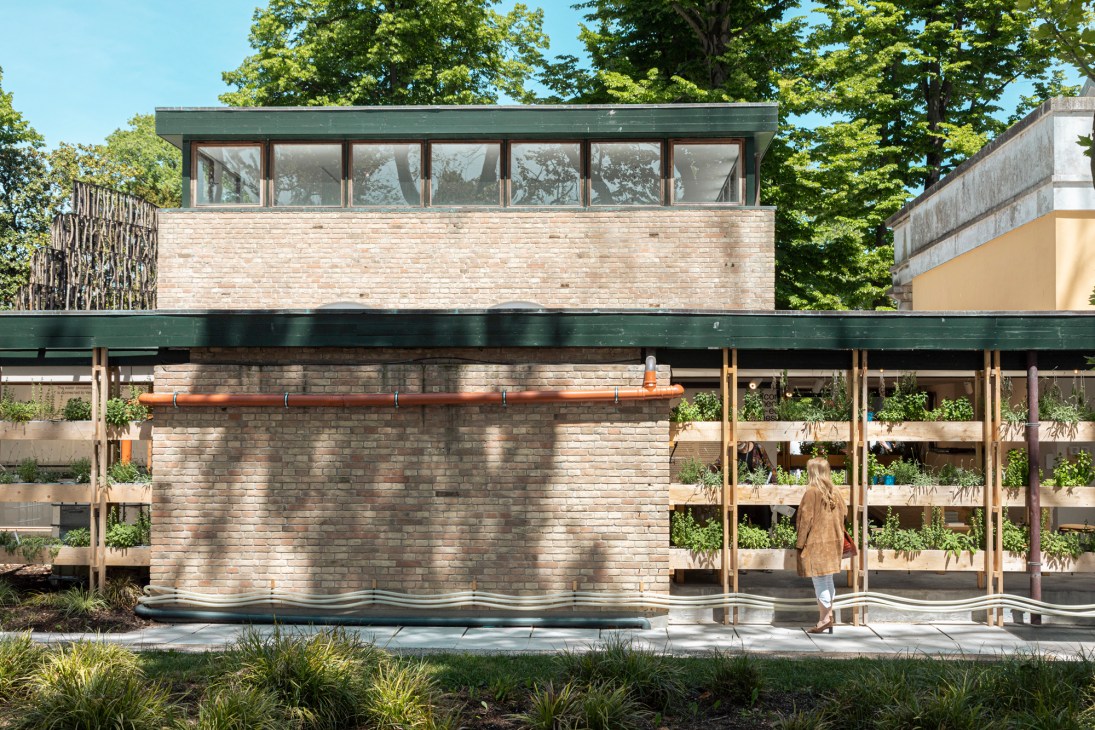
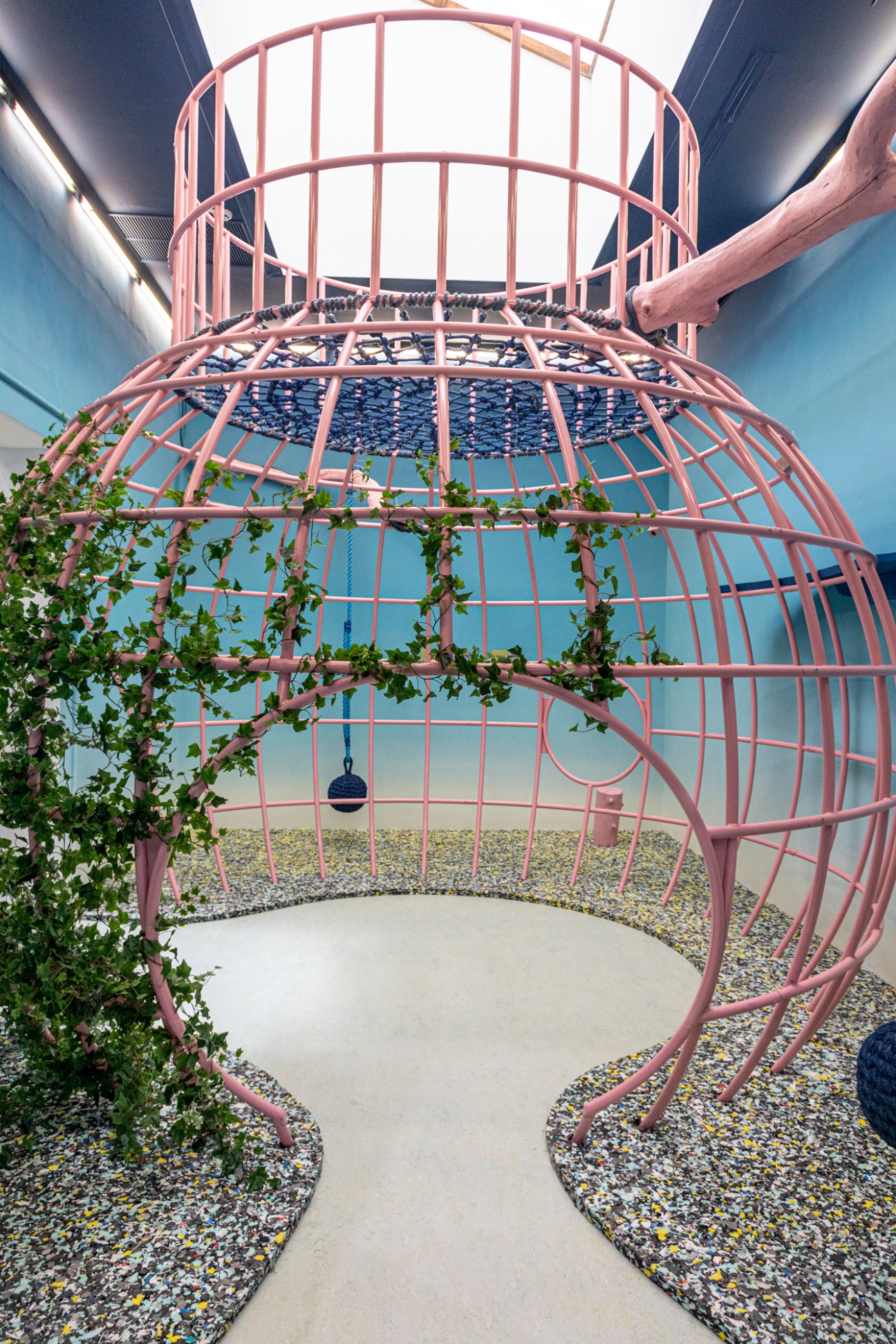
While some installations are left open to interpretation, others focus on certain truths. The Danish National Pavilion’s exhibition Connectedness, for example, elegantly shows us that without water, we are without life. “There are basic elements in our world that we have taken for granted for a very long time,” says its curator Marianne Krogh. “We don’t think about them, we think water is here for us and we have plenty of it, but that’s not the case any more.” Krogh takes us through her semi-flooded space where recycled rainwater runs through the building, helping herbs to grow; they are then used to make tea. “Here you can feel, touch and smell the water but also learn about the political side of it because in many parts of the world people don’t have clean water. We’ve used water as an architectural element to propose the notion that if people can start feeling their surrounding world in a more pronounced way, they can continue this feeling into their everyday life.”
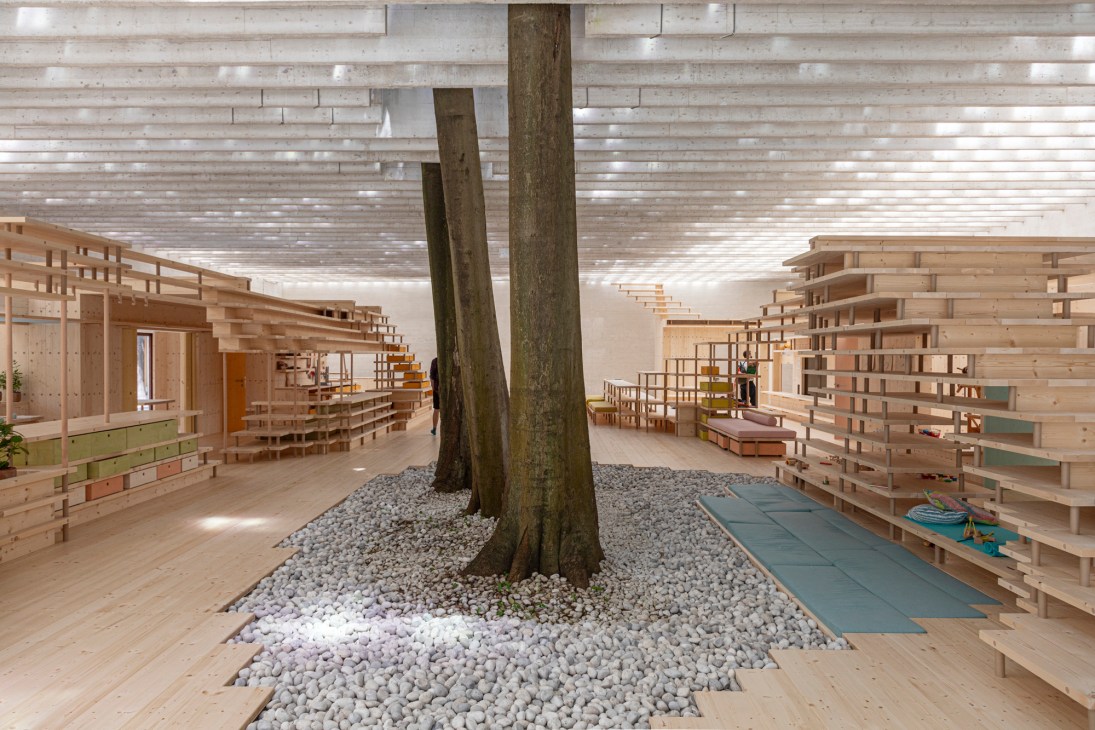
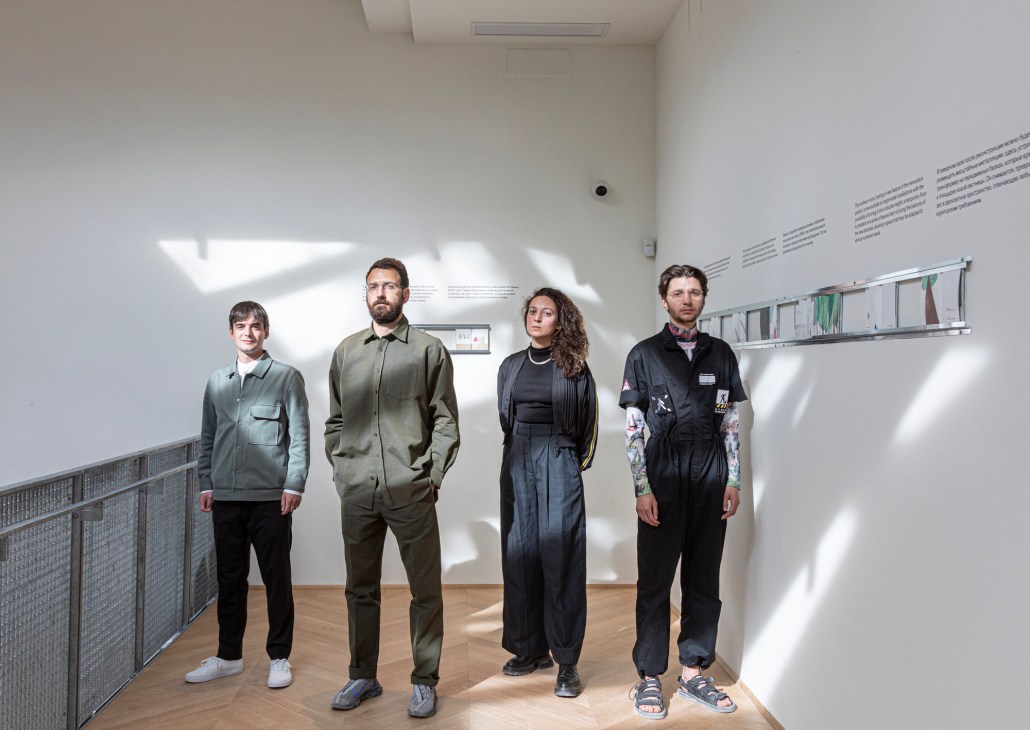
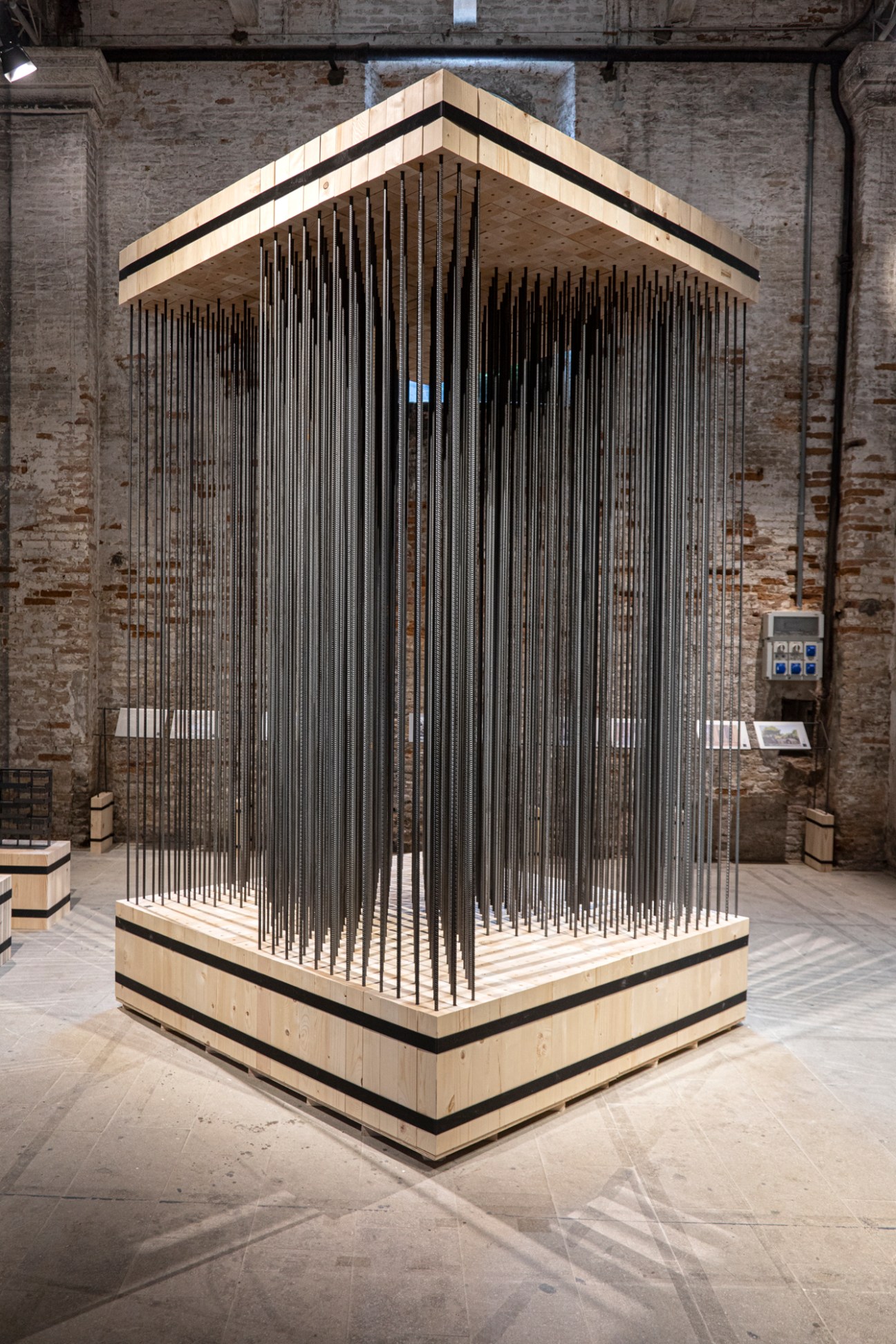
It’s exhibitions like these – ones that enrich the senses and remind architects and designers of the importance of physical built environments that work best at this year’s biennale. Whether it’s breathing in the scent of timber used to construct a community-focused building or being immersed within robotically produced, fibrous building elements in a tree-like structure from the University of Stuttgart, the best installations evoke both a physical and emotional response. Venture into the Russian national pavilion and the focus is largely on the fantastic refurbishment of the space itself, deftly handled by Russian-Japanese architecture firm Kasa. In the past, such an effort might have seemed a touch lazy but considering the circumstances of 2020, when creative collaboration has seemed almost impossible, experiencing this overhaul in person is invigorating. Russian and Japanese designers and Italian builders overcoming the tyranny of distance imposed by the pandemic to create something profound – it serves as a metaphor for the immense effort participants have put in to make this event happen.
And what about the answer to Sarkis’s question – how we will live together? Well, living together again is probably going to be a good start. On the fringes of the biennale, Monocle sits down for coffee with famed Swiss curator Hans Ulrich Obrist, who has been lecturing at the event as well as catching up with old friends and scouting for new talent. “The day of yesterday felt like a month,” he says, recounting social breakfasts, walks, dinners, drinks and, of course, seeing the exhibitions themselves. “So many ideas were born, so many sparks ignited – these things just can’t happen on Zoom.” We wholeheartedly agree. Venice might not be in everyone’s travel vicinity just yet, but the ideas its biennale offers about coming together – and living together – for the greater good will benefit us all.
Tread lightly
In the 1980s and 1990s, a smart young Australian family’s dream home was a clear concept: a big suburban three-bedroom house on a modest block, with a neat lawn and two-car garage, replete with a backyard pool (if you could afford it). Tastes evolved, of course, and as the cultural might of cities such as Melbourne and Sydney boomed, families looked to smaller-footprint living in apartments and terraced homes, closer to the action. Today, with urban property prices soaring, families are retreating back to the suburbs and the Australian bush beyond them. This time, however, they are making more informed decisions and choices about how they live.
The new home of photographer Sean Fennessy, his stylist wife Jessica Lillico and their two small children reflects this change. Having spent most of their professional lives in the well-heeled inner suburbs of Melbourne, the couple have now opted instead for country living in a spot that feels like the bush but is just a 40-minute drive from the city. “Its position and its place, the outlook onto nature, the relative silence except for the birds in the morning and the option to let the kids run around the backyard – the essence of this house is satisfying,” says Fennessy, showing us around the cosy 1969 modernist residence, which the family has just completed renovating.
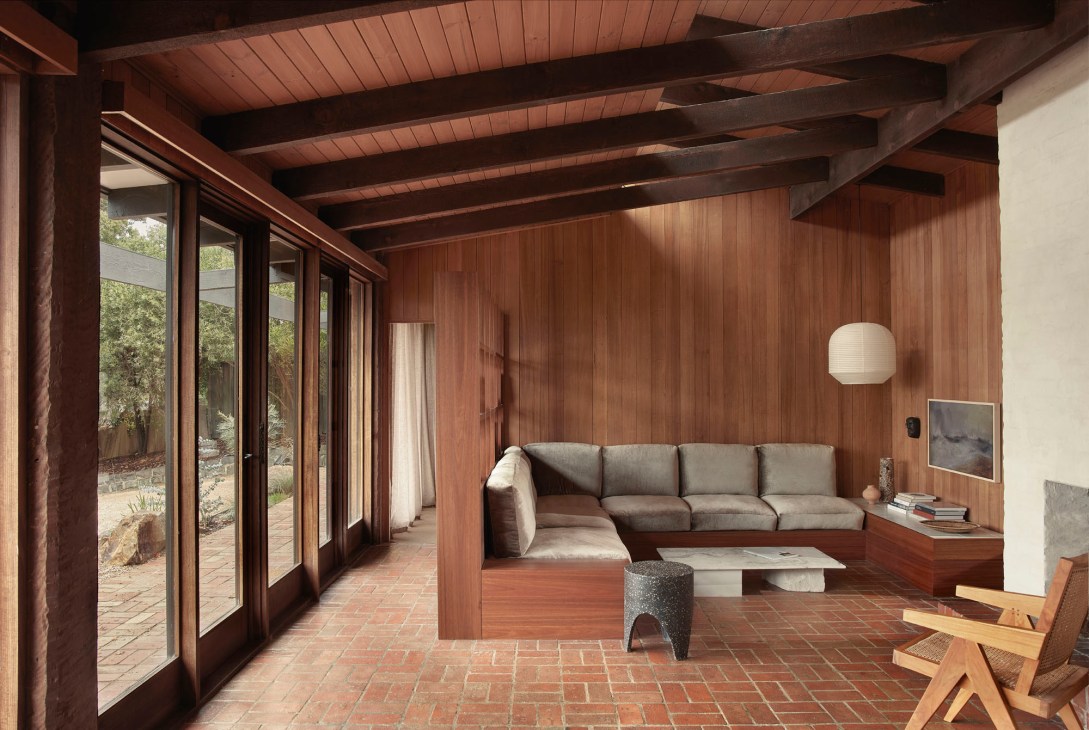
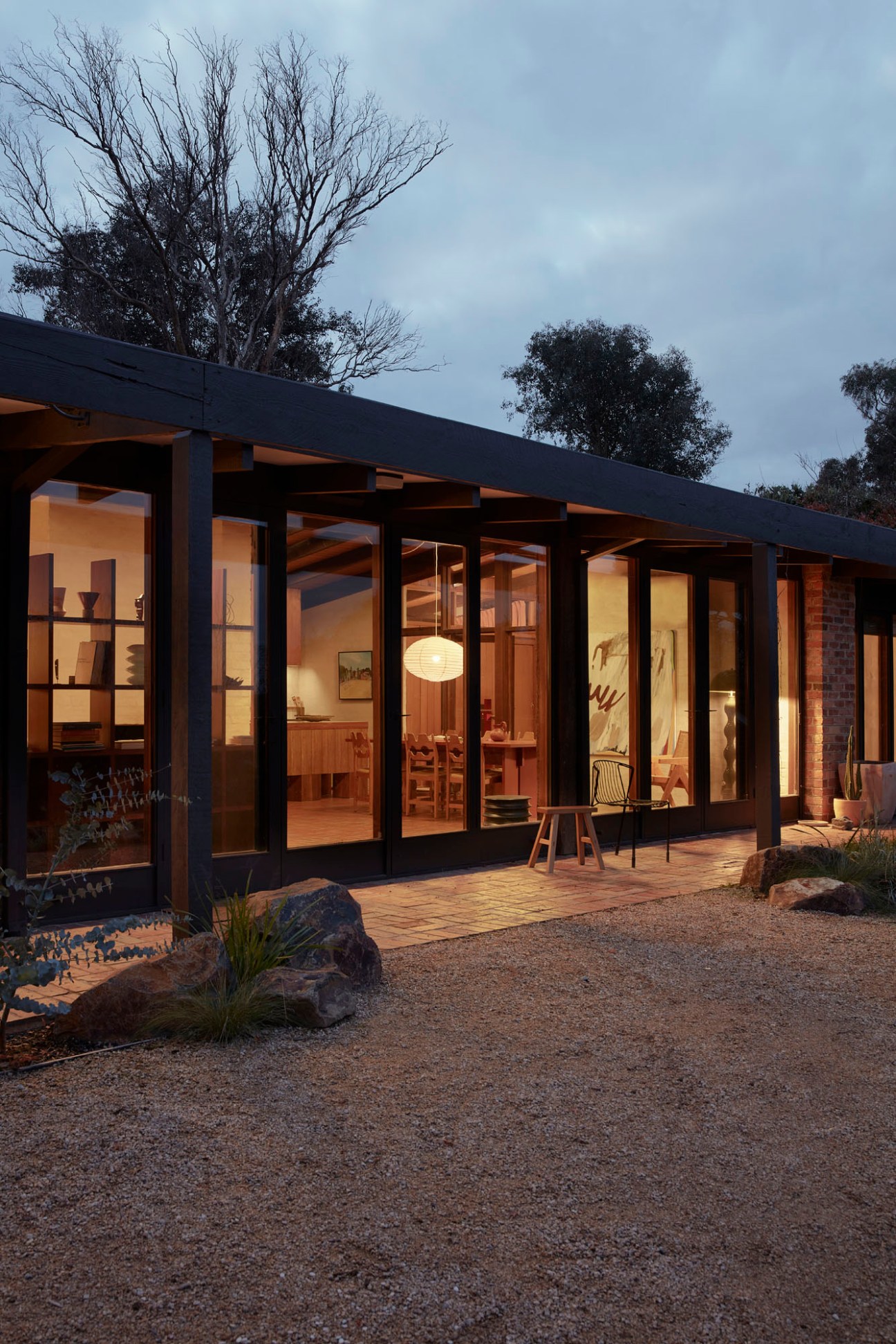
The place is relatively small and could have easily been knocked down in favour of erecting a beefier building but the pair saw something special in the slight timber and brick bones of the property. “The home’s architect was never considered cool, like Robin Boyd and the great Aussie modernists,” says Fennessy of Alistair Knox, the little-known designer who created the home and many others in this leafy, loosely suburban pocket northeast of Melbourne. “He wasn’t even an architect; he was self-trained,” adds Lillico. “For this reason, he maybe didn’t have a desire to replicate the more sophisticated modernism of the time; he was doing his own take on it. It was a bit of a hippy artistic area back in the day and this style suited the place well.”
Whether he knew it or not, the free-spirited approach Knox pioneered here is one that somehow feels better suited for a modern Australian family home now than it did 50 years ago. “The materials he worked with included mud bricks and recycled timbers – just whatever was available to him,” says Melbourne architect Adriana Hanna, who designed the renovation for the family and was attracted to Knox’s low-impact way of working. “The simplicity of his designs seems effortless and there is an appreciation for local materials. It is sustainability in its first principles; it is all passive design.”
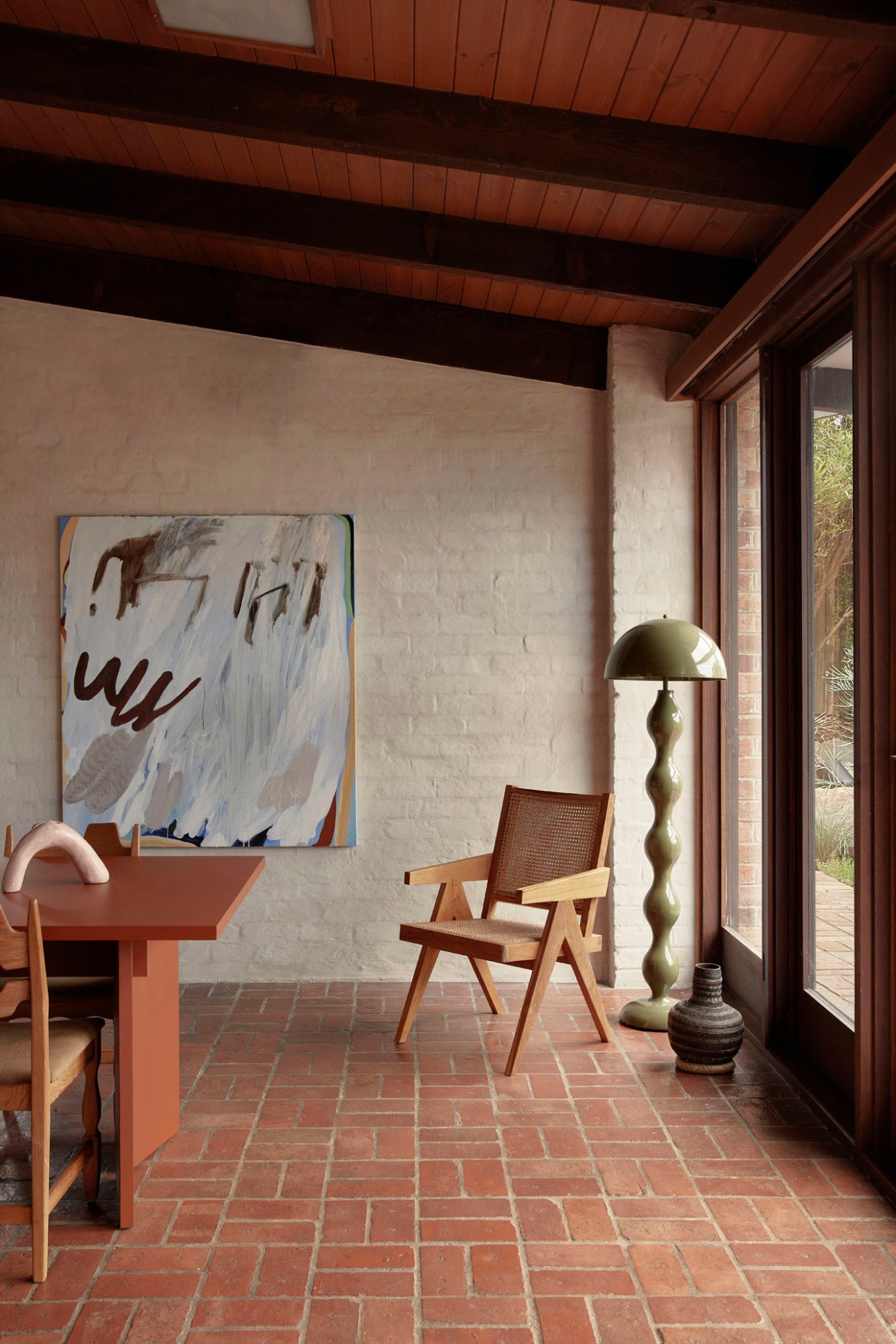
The winning features that create this passivity are simple and smart. The home’s skylight-lined clerestory roof and several openings downstairs negates the need for artificial lighting during the day and allows air to flow freely through the house. The timber deployed across the home is hard-wearing and from the area – spotted gum, blackbutt (an Aussie hardwood) and cedar. The brick floors, meanwhile, help to absorb the day’s heat from the sun to keep the place warm during chillier nights.
Biography: Alistair Knox
Born in 1912, Alistair Knox spent most of his career pioneering a low-impact style of architecture in Melbourne and further into the state of Victoria. Known for drawing upon local materials, his approach was born from shortages after the Second World War but evolved into trailblazing work, for showing what could be achieved with mud brick. Knox was responsible for more than 2,000 properties but, sadly, much of his work has been badly renovated or torn down and replaced with bigger homes. But gems do still exist on the market and are being snapped up by a savvy set of young Aussies.
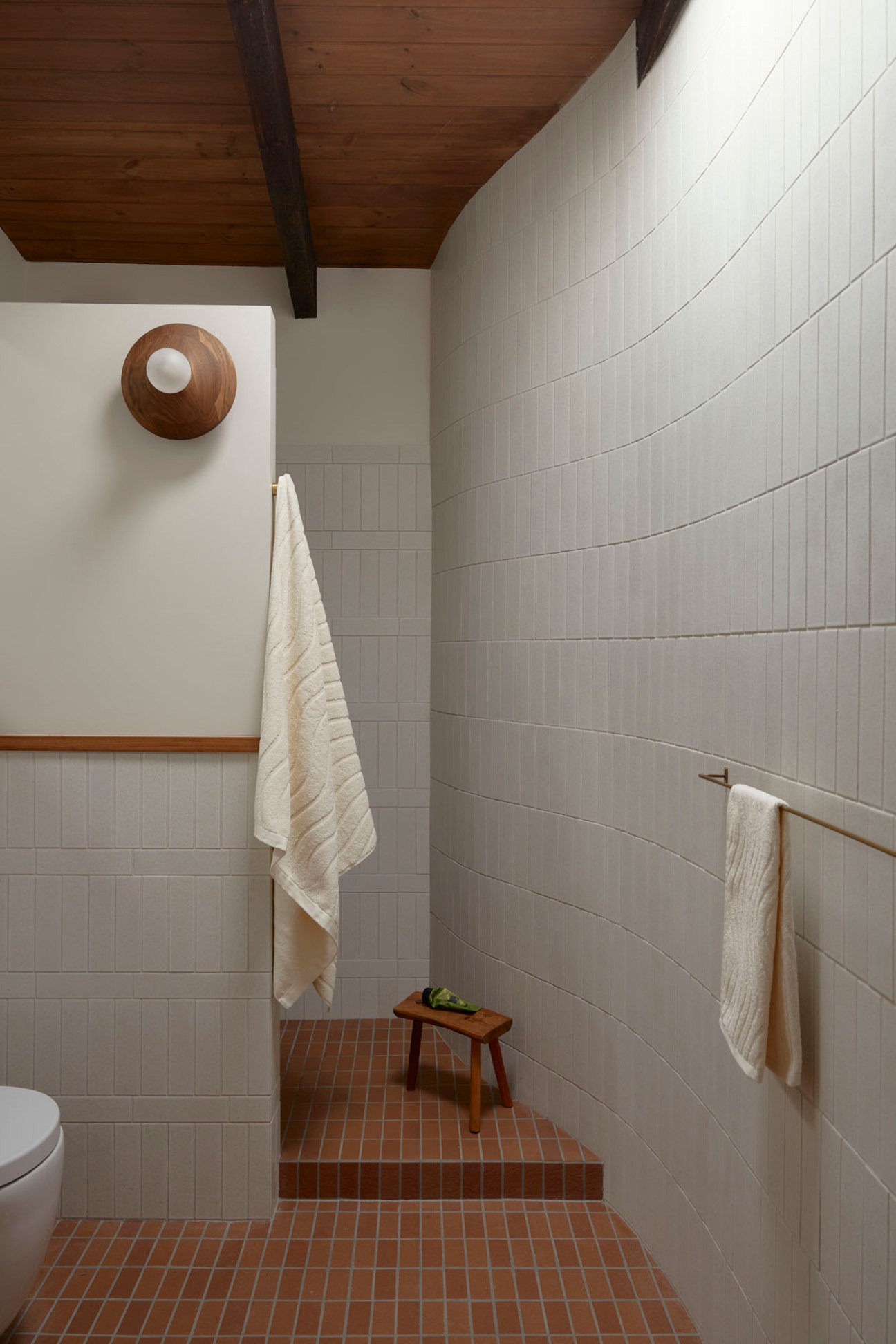
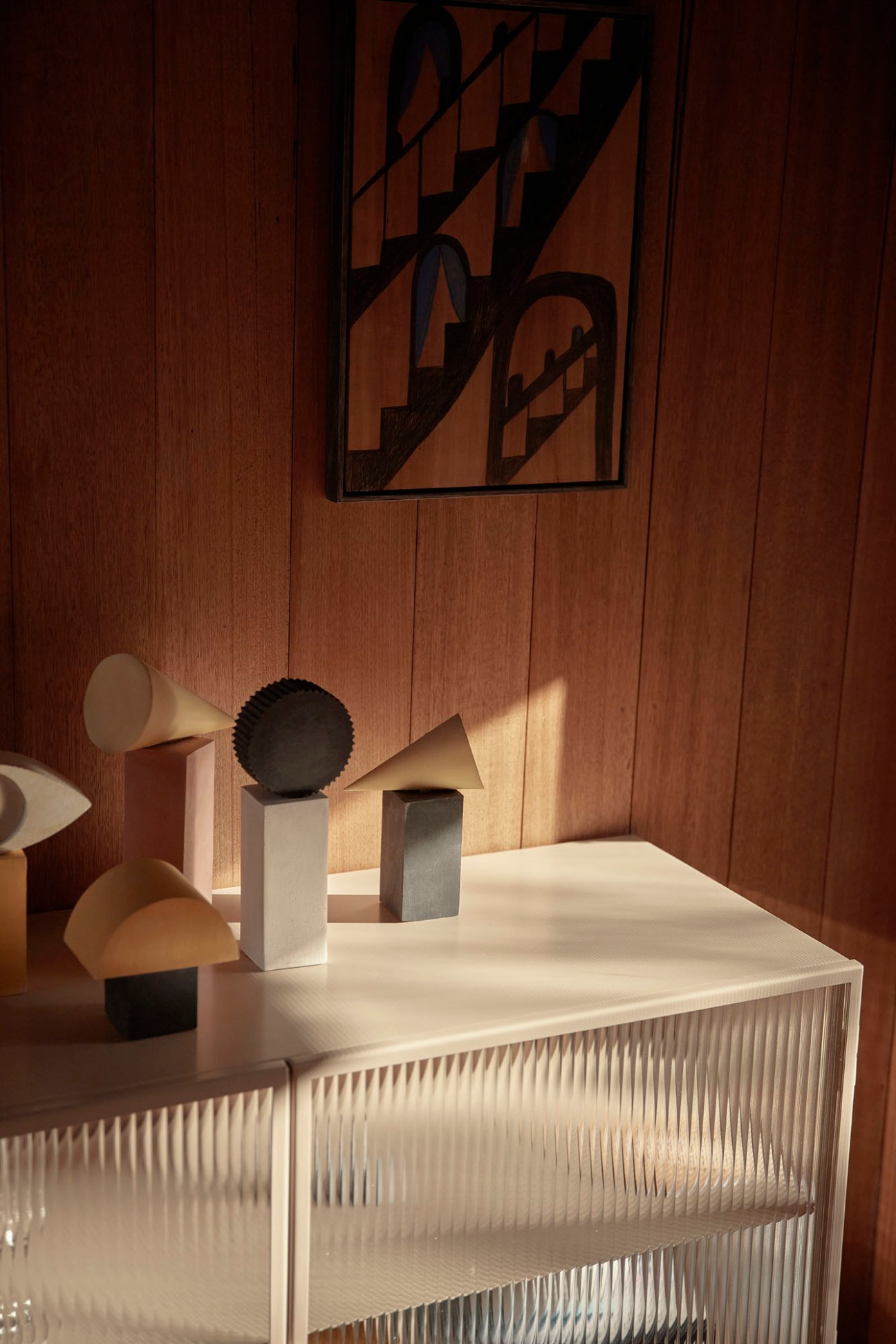
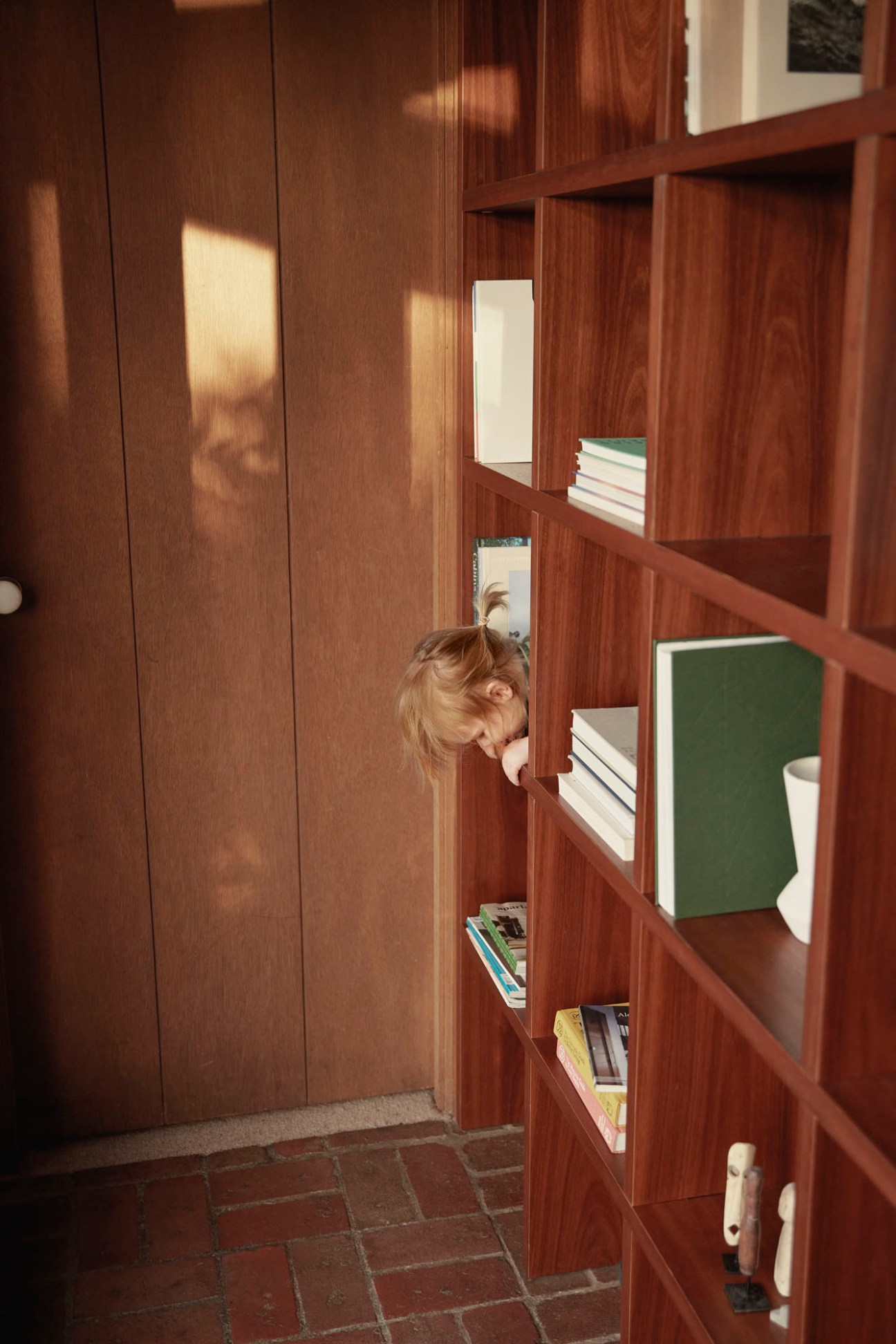
The new owners aimed to honour this approach in their refurbishment. This spans from a development of the hilly garden, with the reintroduction of native plants and hefty boulders (popular in the 1960s) through to the interior. Hanna was asked to design built-in elements that complemented the original look and feel, including a timber-lined lounge, adjoined to a handsome shelving unit that also acts as a dividing screen. Modernist wooden furniture completes the look. “The use of timber links to the idea about the house growing into itself,” says Fennessy. “Its look changes: parts fade in the sun, it takes nicks and bumps. But we don’t want this place to be pristine.”
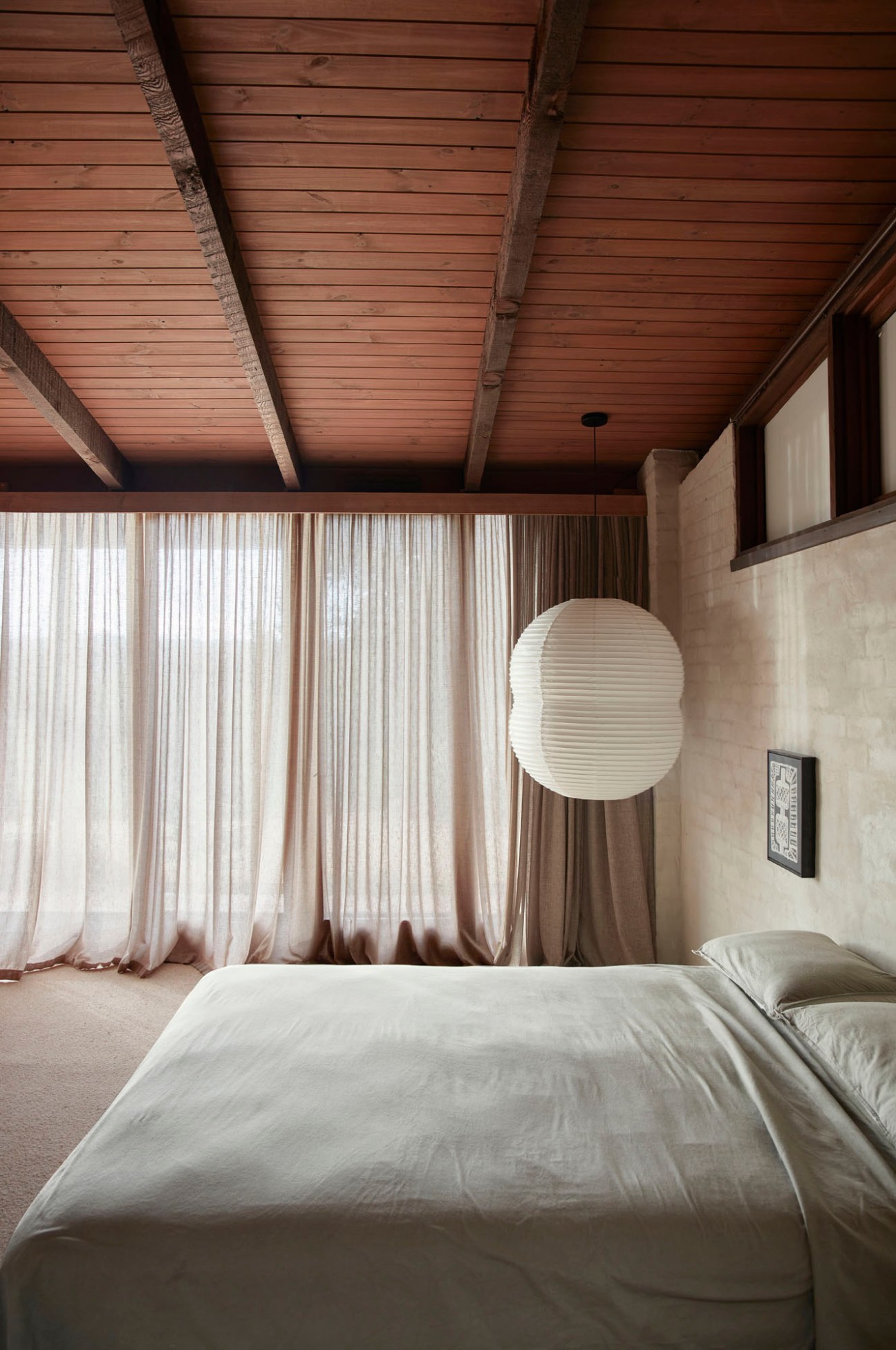
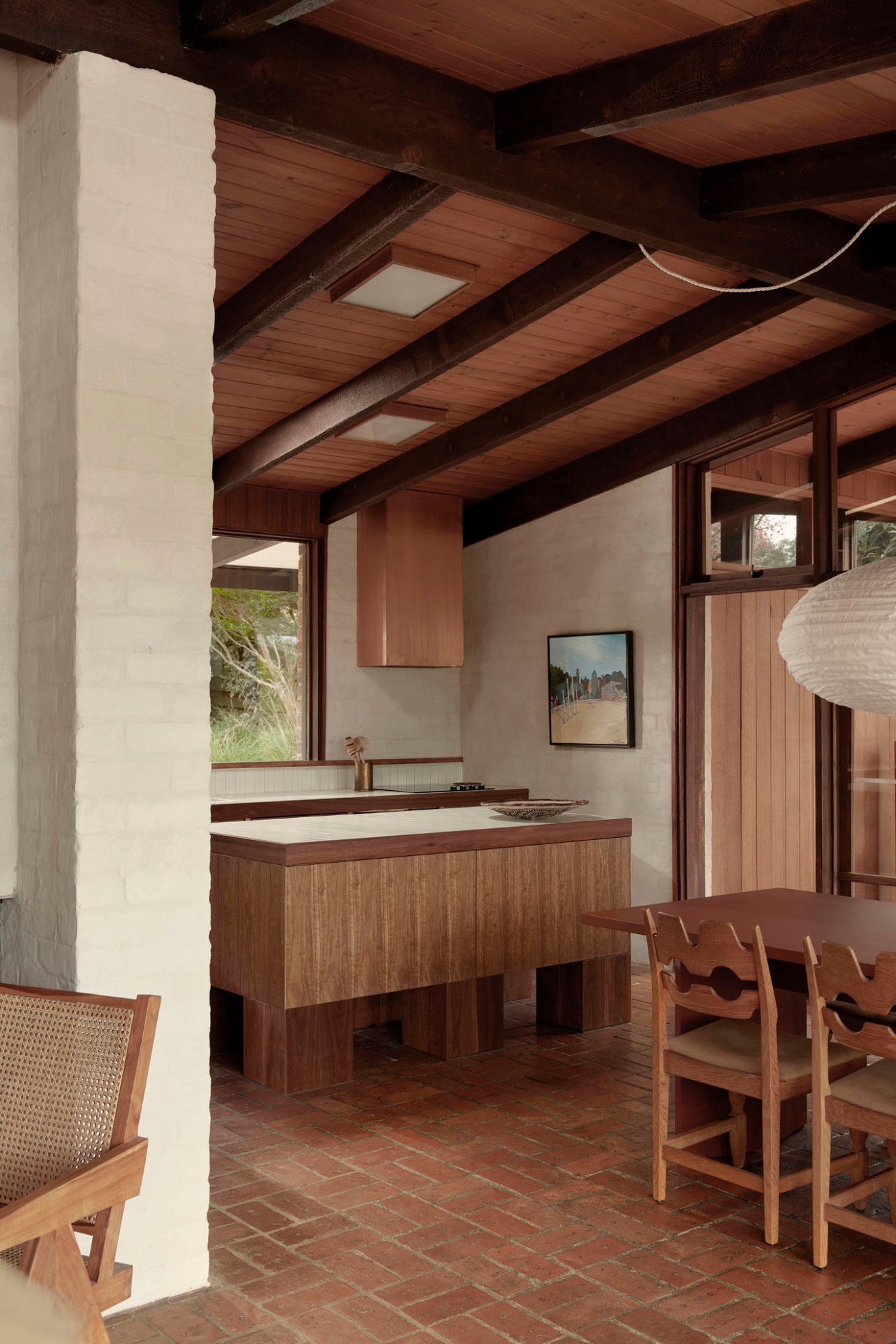
As an architect, and in respect to Knox, Hanna says that her aim was always “to deliver a look that didn’t feel like I put a hand in it”. And she has achieved exactly that. The result is one that will hopefully continue a positive movement in Australian architecture around reducing the impact of the built environment, while eschewing some industry insecurities about relying on what’s available down under.
“For a good quality home you need good quality materials,” says Hanna. “But the mindset here is that this means imported materials,” she adds, noting that Knox showed long ago that buildings which honour the environment could be built entirely from what was easily available. “This home is a joy at all times of the day. The lightness, the warmth – the design really enhances the way you live. It’s a rare thing and it’s something worth celebrating.”
Fit for purpose
Enclosed by a vast forest of tall pine trees, deep in rural southwestern Finland, is the white edifice of the Paimio Sanatorium. Designed by Alvar Aalto and his wife Aino, the sleek, slender building cuts an impressive figure against its green backdrop. Although its setting is discreet, this 1933 structure was a breakthrough project that helped Aalto to become one of world’s most celebrated architects. Today, although the building has spent decades out of the design spotlight, a group of enterprising creatives have grand plans to revive it to pursue its original purpose: improving the lives of those who visit.
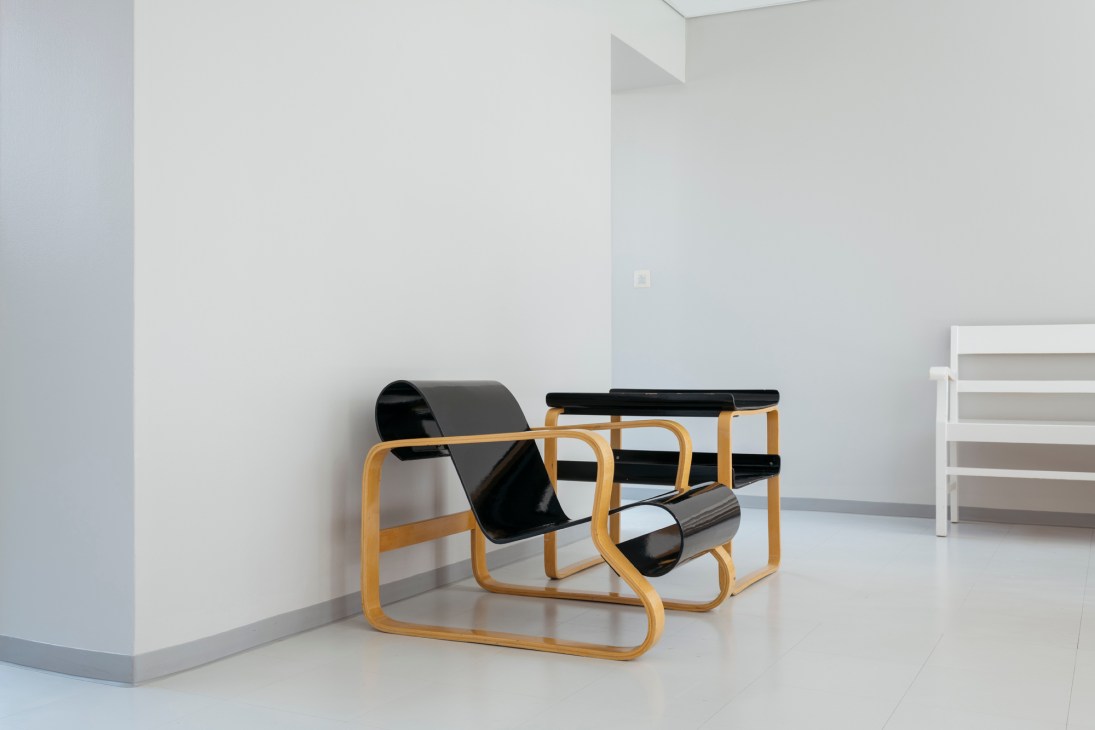
In 2018 the authorities running the hospital district of the Varsinais-Suomi region, where the small town of Paimio lies, put the building up for sale. Designed as a tuberculosis sanatorium by the Aaltos, the functionalist-style structure had since been turned into a multi-use hospital. “We were shocked,” says Henna Helander, president of the Finnish Association of Architects, of the proposed sale. She’s talking to Monocle while sitting in a ruby-red Aalto 611 chair in the sanitorium’s dining hall. “The fear was that a private buyer would not open it to the public. Or perhaps they would sell its invaluable stock of original Aalto furniture.” Helander, along with a group of Finnish architects, designers and the Aaltos’ descendants, were so concerned for the sanatorium’s fate that they offered to buy it. After lengthy negotiations, they gathered funding from the Finnish government, which was keen to safeguard the Aaltos’ legacy. A trust, which Helander now heads, was formed and the local hospital district agreed for the trust to become the sanatorium’s new custodian.
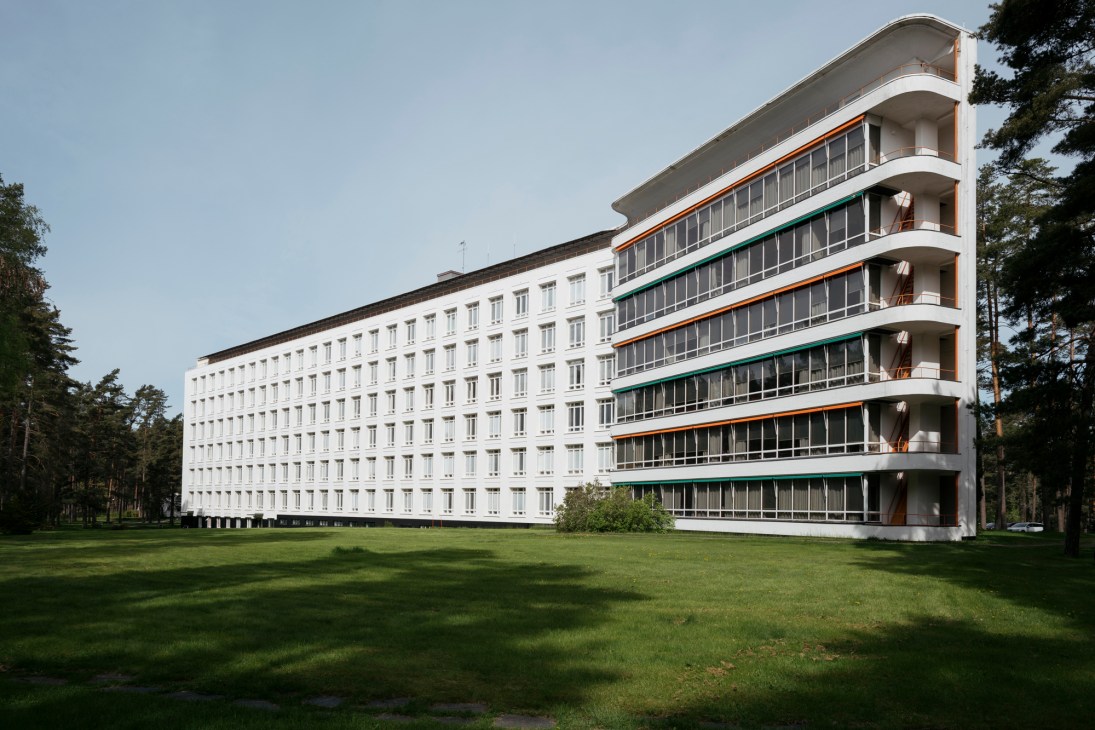
As Helander takes Monocle around the sprawling space that she’s now charged with maintaining, she explains how important the custodianship is. “It is an immense responsibility,” she says. “This building is not only Aalto’s career-defining masterpiece but one of the most celebrated examples of functionalist architecture in the world.” Helander says that the Paimio Sanatorium showed how good architecture could improve people’s lives and many of its innovations are still referenced in hospital design today. “Aalto showed that architecture can heal,” she adds. “In the 1930s tuberculosis killed about 10,000 people a year in Finland. There was no medicine and the only treatment consisted of fresh air, exposure to light and good hygiene. Aalto’s designs provided the patients, more than 300 of them at any one time, with those elements.”
Inside story
Paimio Sanatorium is celebrated by designers not only for its architecture but also its furniture. This includes the classic Paimio chair, still produced by Finnish company Artek. The building’s caretaker, Reijo Vihervirta, has been working here for almost 40 years and knows the place in detail. He tells us how one inconspicuous part of the sanatorium houses dozens of pieces of original Aalto furniture, such as Aalto 611 chairs and Hallway armchairs, which were designed by the Aaltos for the site long before Artek started producing them. “We’ve been fixing them and keeping them here, in case they are needed some day,” says Vihervirta. Thanks to the preservation efforts of Helander and her colleagues, it now seems that day has come.
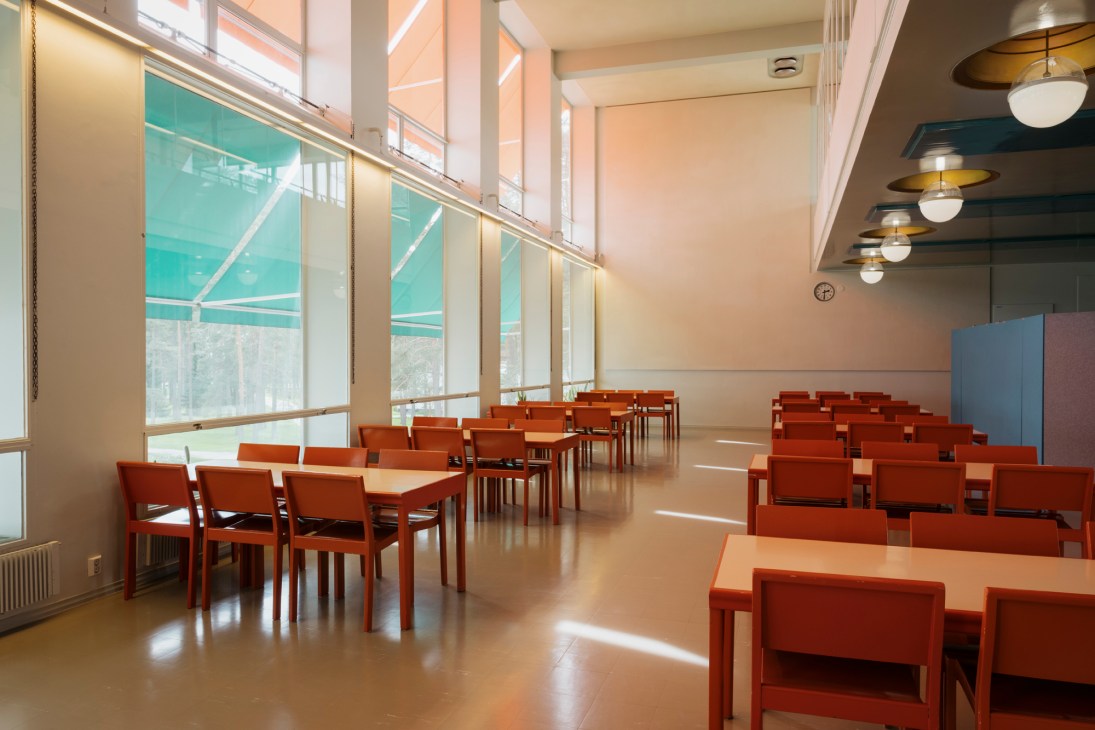
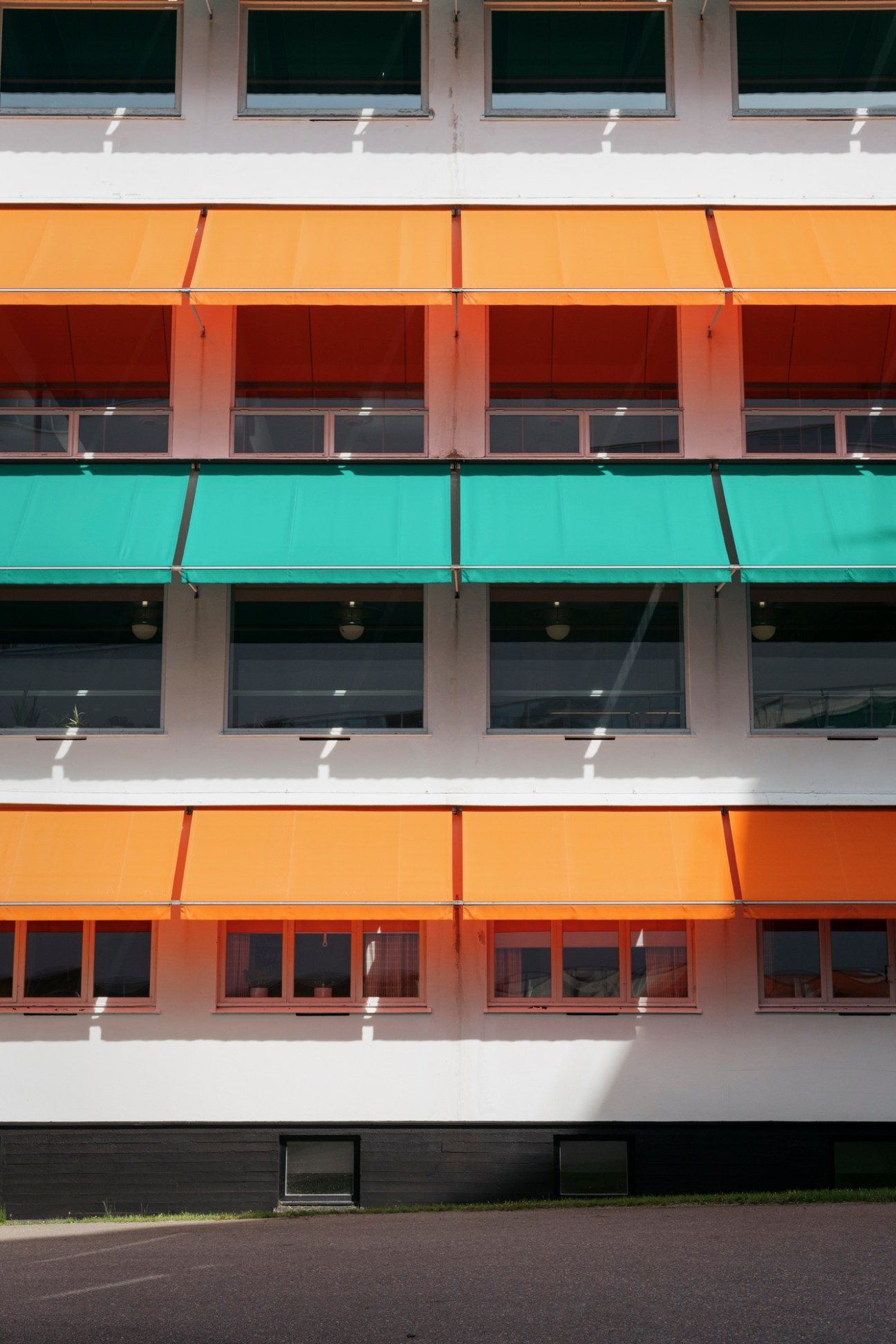
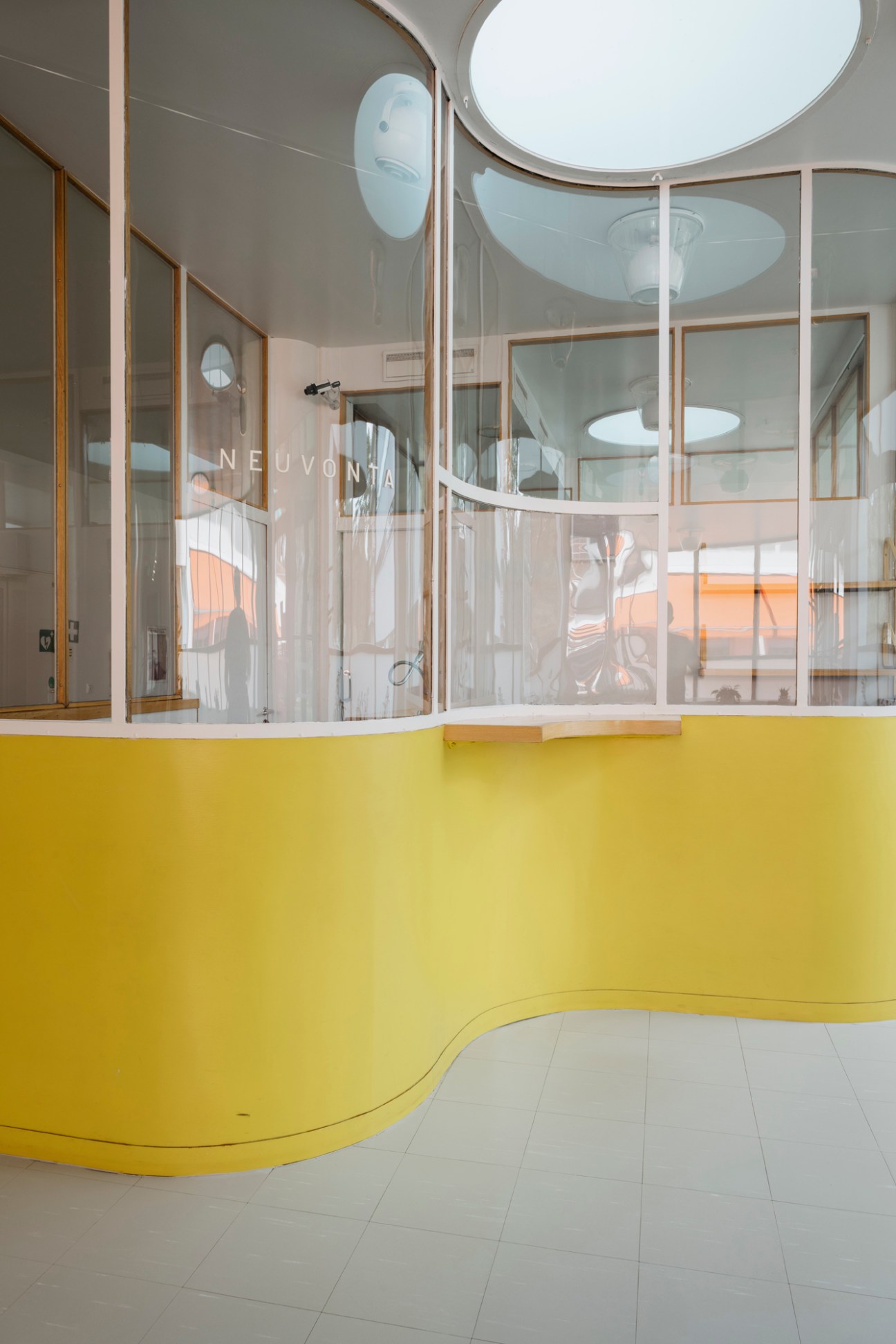
The team’s renovations, which included removing most of the later additions to the sanatorium, have unveiled how the building adhered to these life-enhancing properties. Daylight pours in through its huge curved windows and well-placed circular skylights, bouncing off white walls that are offset by shades of yellow, green, orange and blue. The stark walls and glass that dominate the space are easy to clean, as are all the surfaces. A shaded, concrete roof terrace is reminiscent of an ocean liner’s deck, offering panoramic views of the forest and providing that much-needed access to nature. Enhanced by the breeze crossing through the structures of the long, slender buildings, this effort to bring the outdoors in was novel at the time and helped to cement Aalto’s reputation as a designer to rival Le Corbusier.
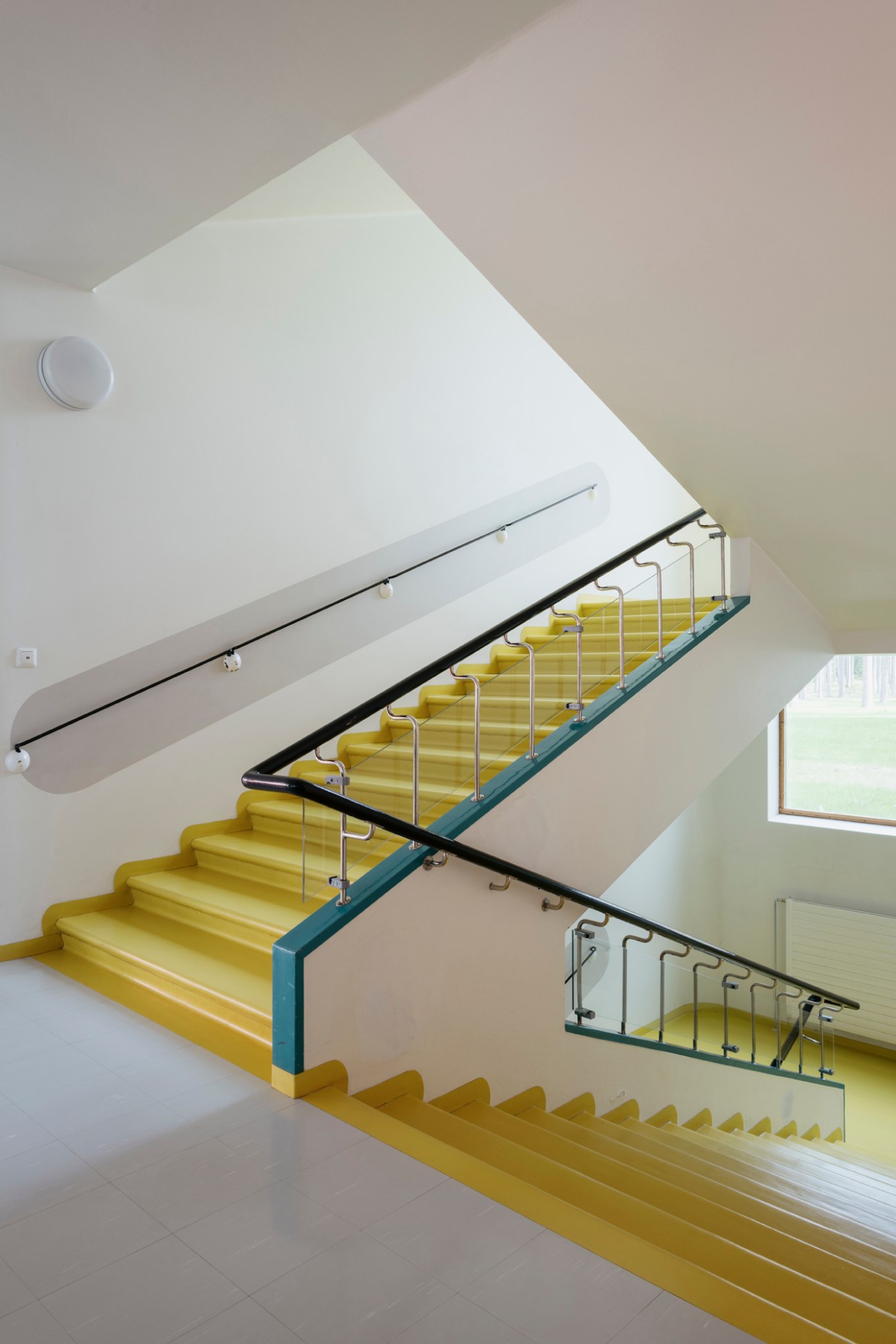
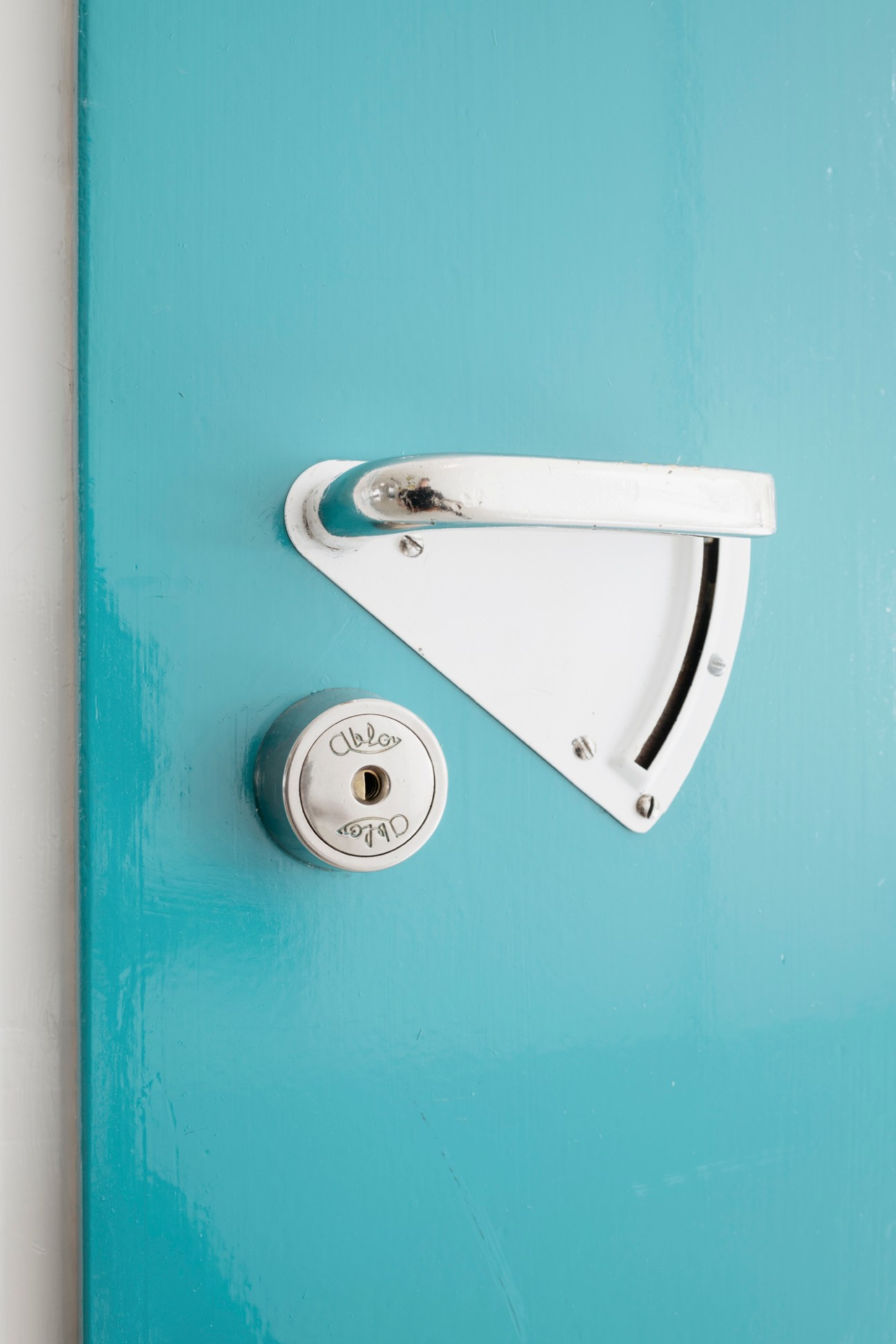
To make the most of these original features, the building’s new guardians want to return it to its role as a place for healing and introspection – but one that can also host events, seminars, discussions and retreats. The plan is to build accommodation nearby so that people who visit the remote location can stay here. There will be artists’ residencies, design events and guided architecture tours.
Many of the changes that Helander and her colleagues make will be subject to the approval of the Alvar Aalto Foundation, which is tasked with safeguarding the architect’s legacy. “This was the best possible solution for the building, as the custodians are people who understand and value its importance,” says Tommi Lindh, the Alvar Aalto Foundation’s CEO. “This building should not stay empty; it was built for the people. We want to see it used for positive things such as therapy, rehabilitation and health – but also tourism.”
Residents’ campaign secures heritage status for Málaga’s Melilla 31
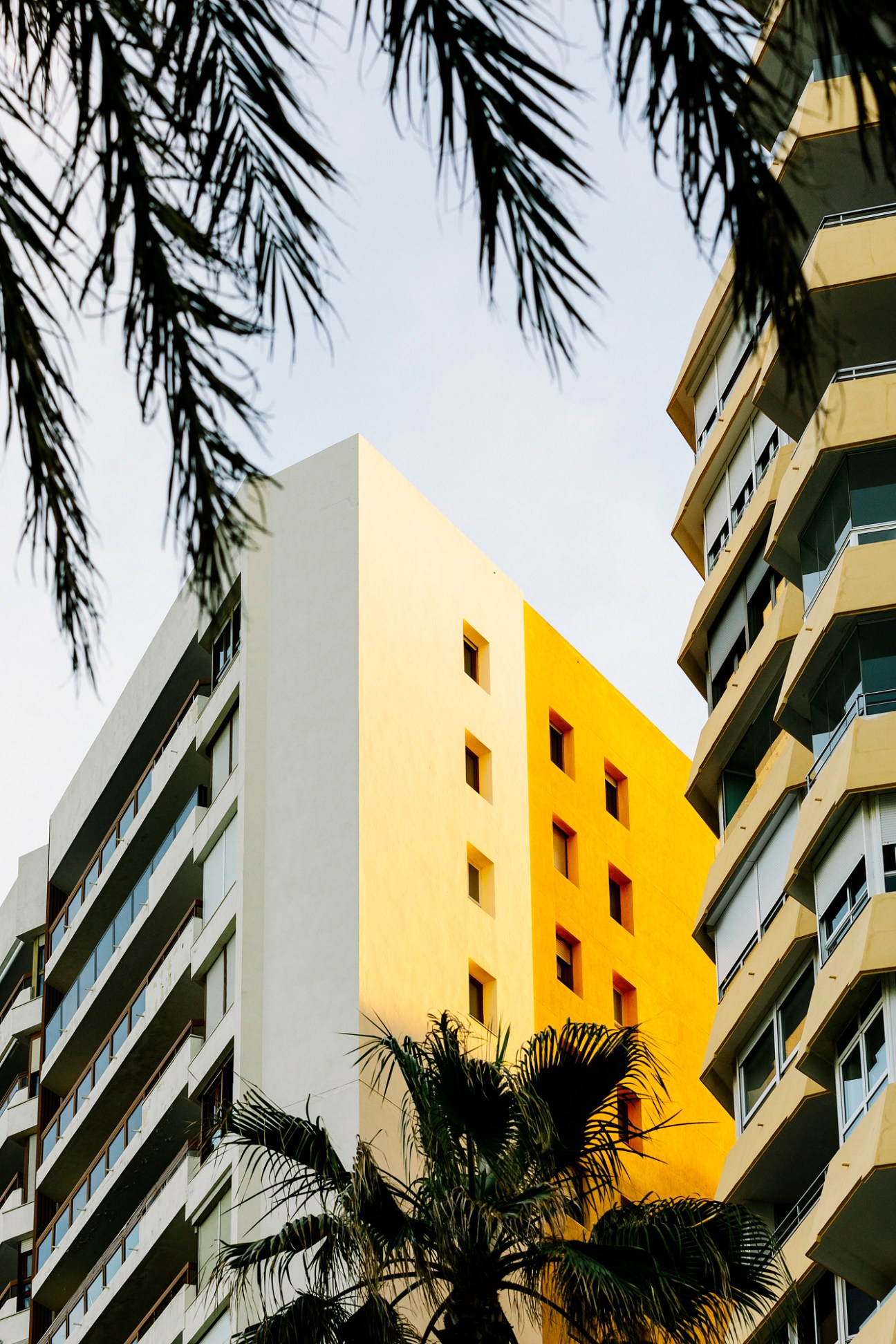
Set just back from the beach in Málaga, the 16-storey apartment block Melilla 31 was one of the sun-soaked Spanish city’s first high-rise buildings. Today the seaside neighbourhood has been built up around Melilla 31 but the building, which has been left almost as it was for 50 years, has found its way back into the spotlight as a perfect example of the Costa del Sol’s modernist movement.
Completed in 1971, the 59 apartments were designed by architect Antonio Lamela as luxury homes for the upper classes. Lamela, who died in 2017, was one of Spain’s most prolific architects and was best-known for his work in Madrid on the Colón Towers and a remodelling and extension of the Santiago Bernabéu football stadium, as well as terminal four of Madrid’s Barajas Airport, designed with architect Richard Rogers. But it’s his residential and tourism projects that perhaps best reflect his style. In the postwar tourism boom of the 1950s and 1960s, he and other top architects went to the Costa del Sol to demonstrate their abilities by creating high-rise residential buildings and hotels that made the very best of the elements.
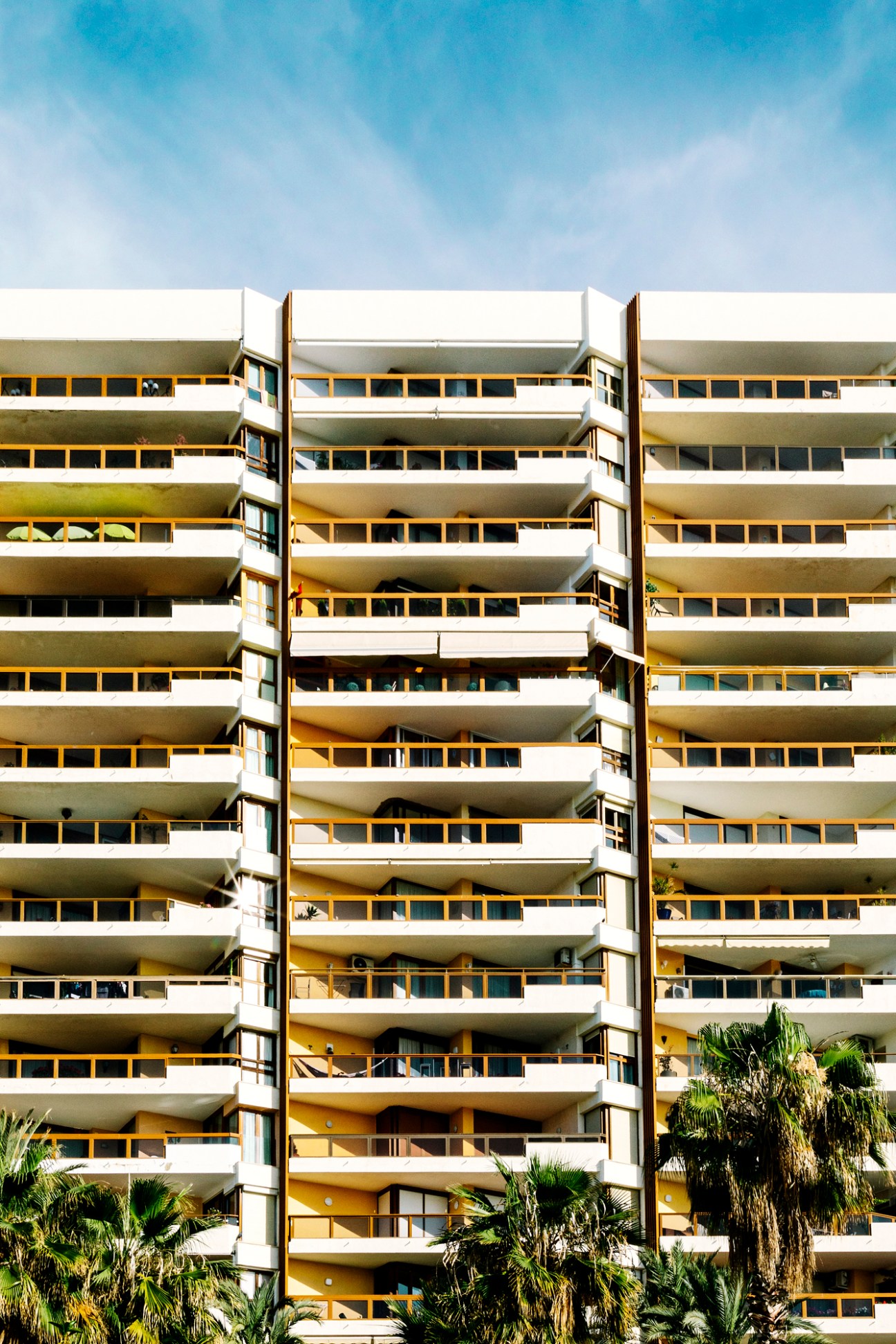
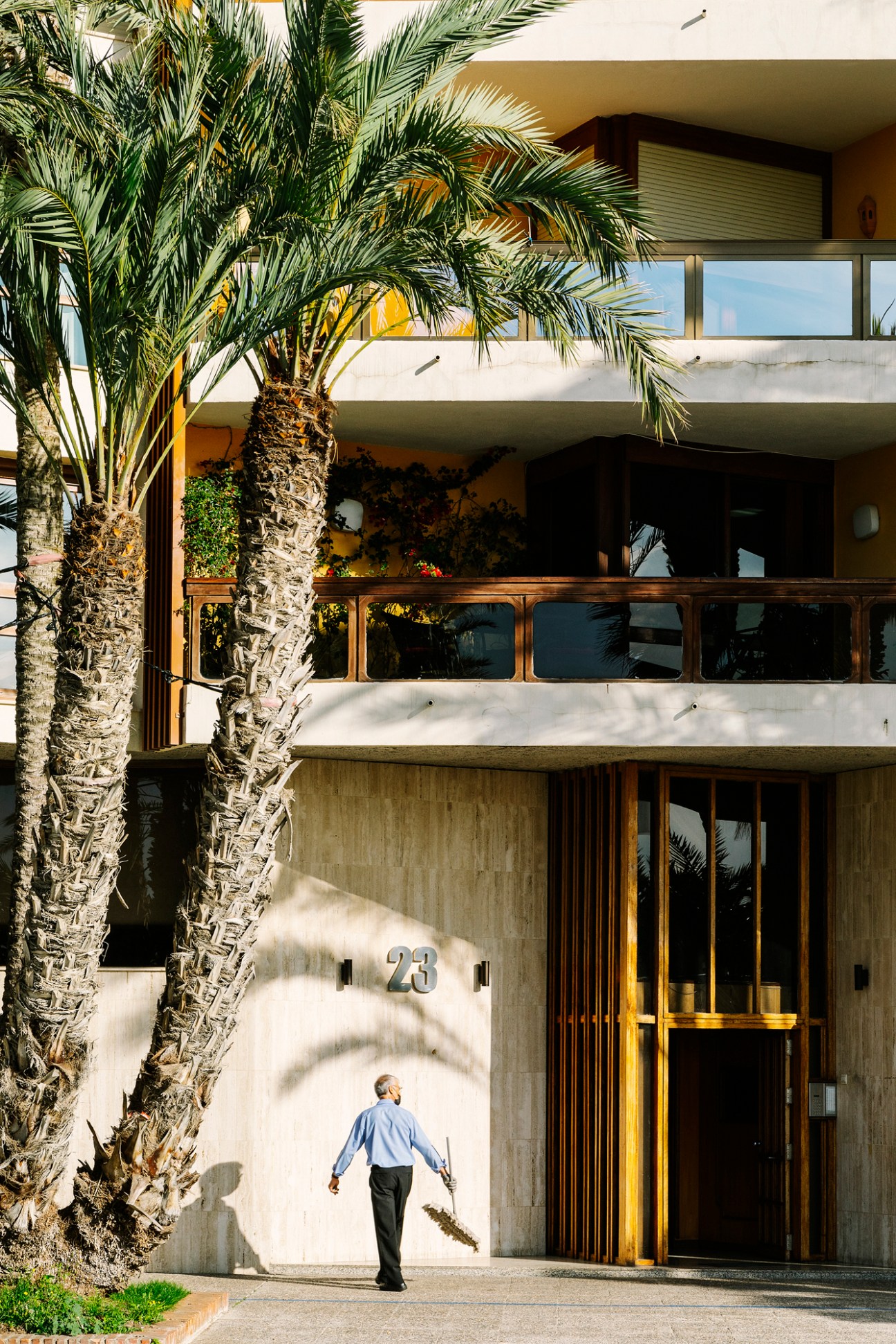
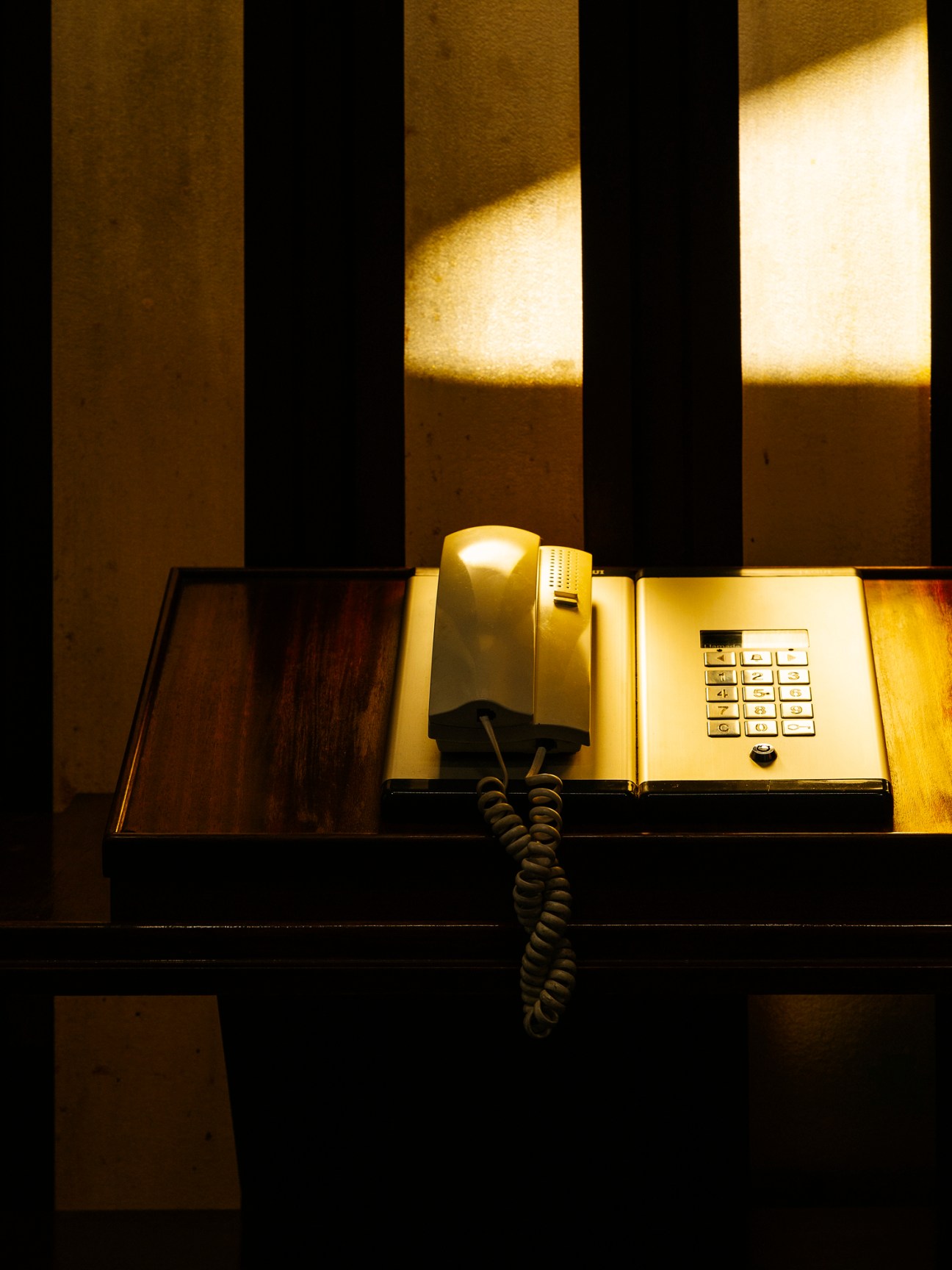
“Antonio Lamela was ahead of his time,” says fellow architect Daniel Rincón, who until recently was on the board of directors at Málaga’s College of Architects. “Modernist architecture arrived a bit late in Spain compared to other countries but Lamela travelled a lot and was very innovative. He did what he called ‘suspended architecture’ which meant that the walls were very light, with forms that floated.” Visiting Melilla 31 today, the first thing that surprises is its spacious terraces, with sweeping views of the Mediterranean and the beach below that extends all the way to the Bellavista neighbourhood. The building is oriented cleverly so that the sunlight floods the apartments in the morning but then stays on the terraces, keeping the interiors cool. “It’s turned slightly diagonally to get the nice views and the sun orientation also makes it very interesting,” says Carlos Lamela, who now runs the practice founded by his father in 1954 and who visited the building for the first time just two years ago. “I recognised a lot of my father’s details,” he says. “That aesthetic of the end of the 1960s: very fluid lines and curves mixed with bright colours – coppers and blues – and also the ceramics, because it incorporated elements of Málaga’s traditional architecture.”
Sunny side up
Often overlooked as the gateway to the Costa del Sol’s beaches, Málaga is in fact a lively and exciting city with a lot to offer its residents, including an enviable art scene, delicious food and year-round sunshine.
Centre Pompidou Málaga
After Madrid and Barcelona, Málaga has the largest cultural offering in Spain. The latest addition to its long list of museums is the first offshoot of Paris’s Pompidou Centre, which opened in the port in 2015, just a few steps from Melilla 31.
El Pimpi
Founded in 1971 in an 18th-century mansion house with numerous dining rooms and patios, El Pimpi is Málaga’s best-known traditional bodega. The walls are covered in photos and signatures of famous customers. In 2017, Malagueñan actor Antonio Banderas became a shareholder in the business.
La Malagueta beach
Málaga’s bustling city beach might not be the most popular in the region but it’s still one of the best things about living here. It’s the perfect place for a refreshing dip before taking lunch at one of the many restaurants nearby.
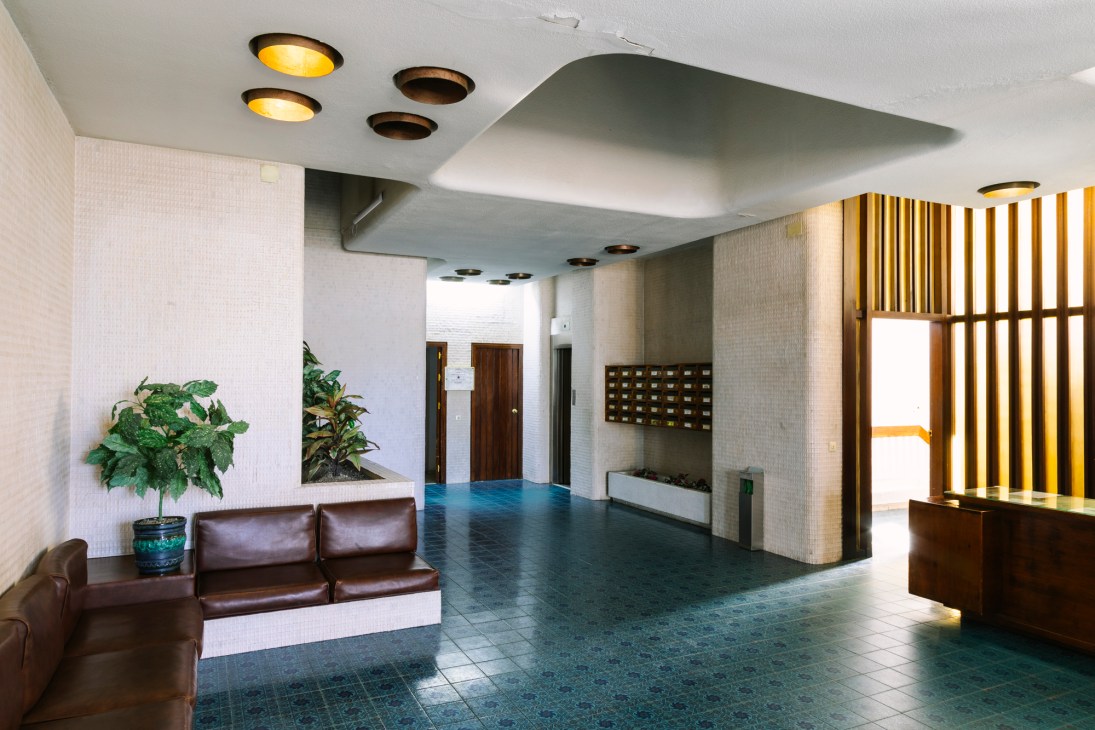
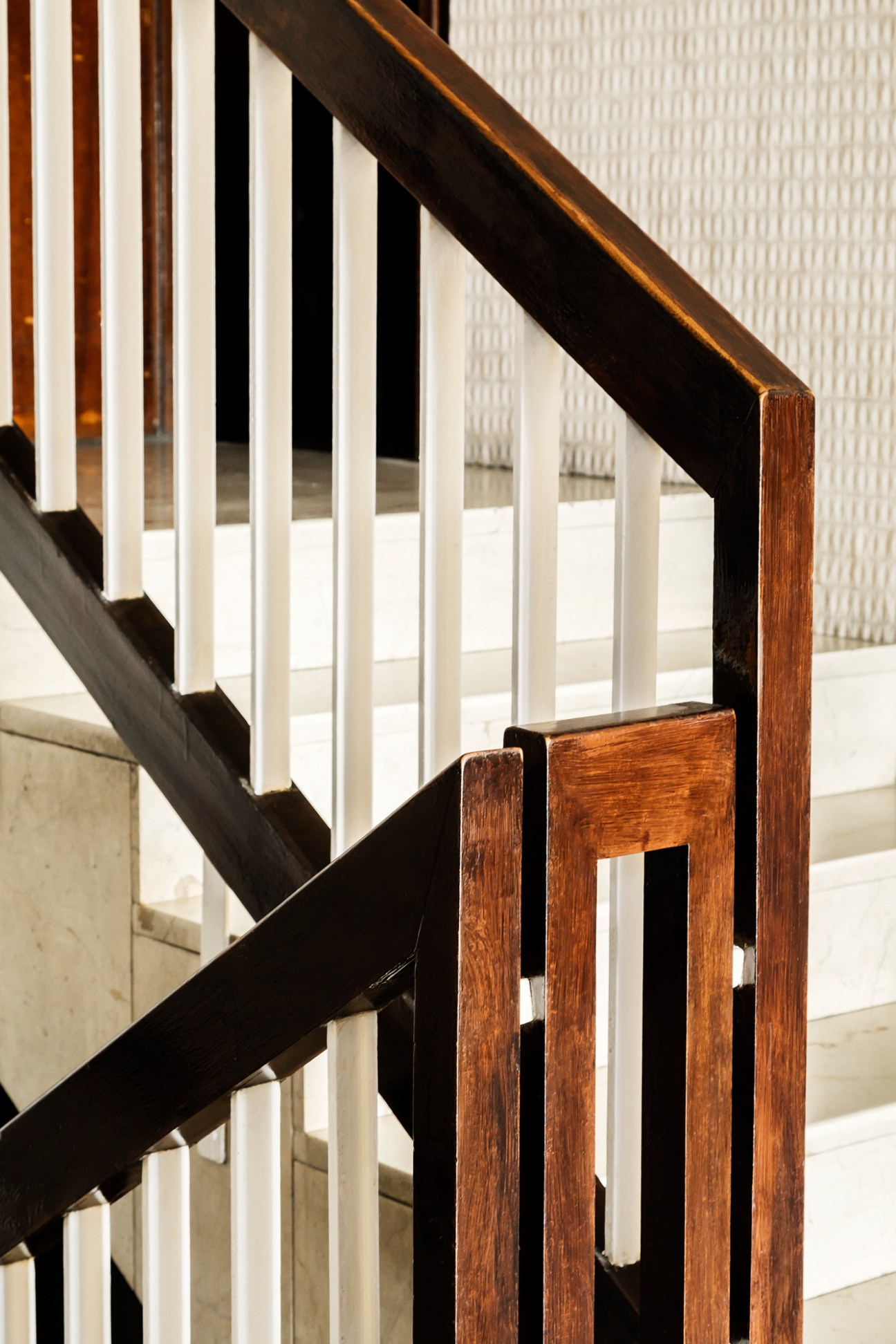
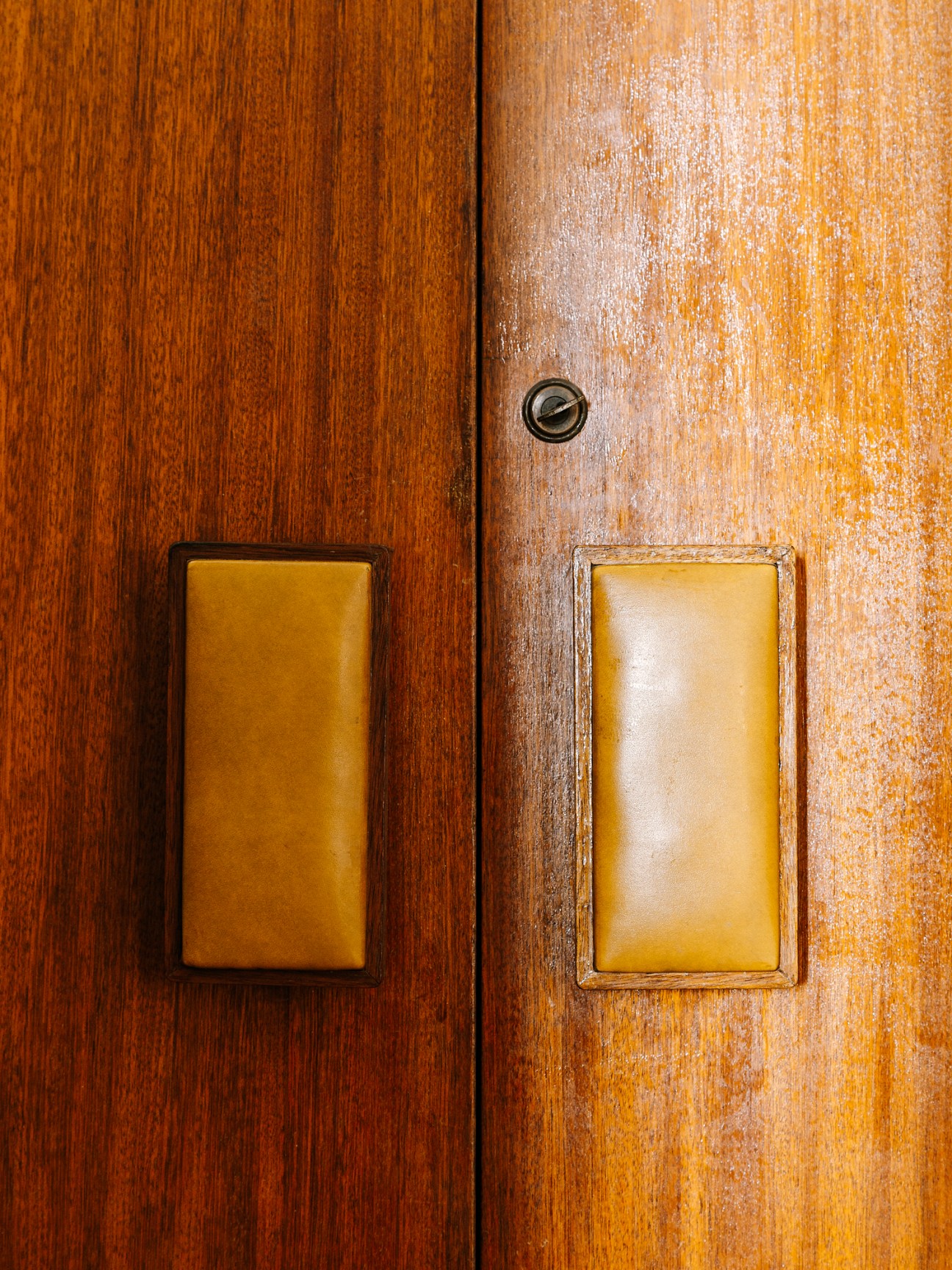
“Nowadays buildings are not as durable, they’re not made with such high-quality materials,” says Pablo Mapelli, who moved into an apartment on the 10th floor with his wife and two young children a year ago. “My father is an architect and my wife is an art historian, so we are particularly sensitive to the importance of this building for the city’s heritage and for architecture in general.” Arguably the most impressive part of Melilla 31 is its entrance hall. Here, bright turquoise tiles meet dark leather sofas, wooden letterboxes and steel ceiling lamps. By the lifts there is an imposing reception desk in front of a stained-glass and wood-panelled wall. “I loved the spaciousness, the immensity,” says Marina Benavides, who moved to Melilla 31 with her husband and two young daughters in 2014 after falling for its modernist charm.
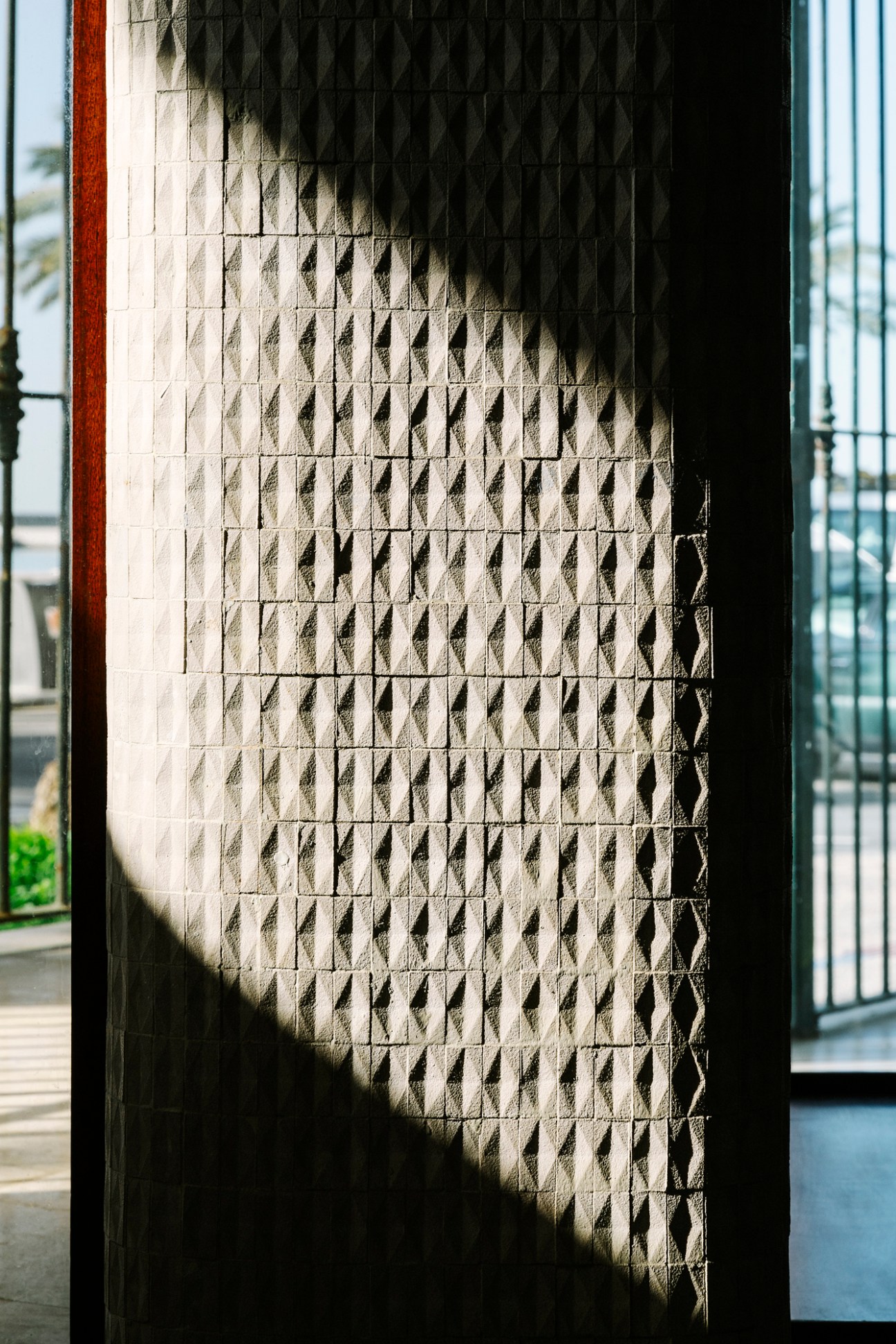
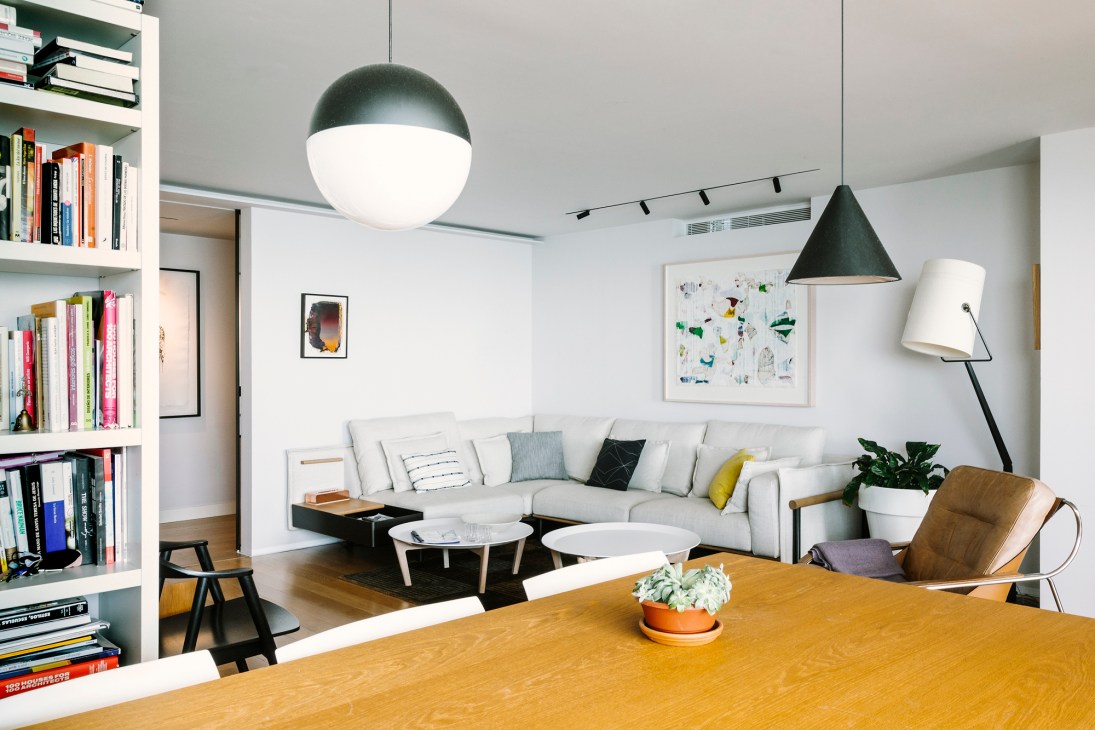
When in 2019 she heard of plans to renovate the entrance as part of a proposed modernisation, she felt she had to do something to prevent it. “I thought, ‘How will I explain it to my girls if one day they ask why it was destroyed?’” she says. “We either stood idly by or we did something about it and I thought that we had to at least try.” She and her husband, Emilio Almagro, made it their mission to inform their neighbours of the building’s unique architectural value and started gathering support from fellow residents, as well as architects, academics and historians in order to make the case for preserving the old entrance. Thanks to this, in March the regional government put the building on Andalucía’s Historical Heritage List.
Marina Benavides and her husband, Emilio Almagro, made it their mission to inform their neighbours of the building’s unique architectural value and started gathering support from their fellow residents
Raising awareness about the building’s architectural significance wasn’t easy. Benavides, an interior designer, saw the beauty in its fading walls which, although in need of a lick of paint, she felt should be preserved. But many of her older neighbours had never heard of Antonio Lamela and wanted the building to be refurbished. The proposed plans involved knocking down the original entrance and overwriting it completely. “Unfortunately in Málaga we have this habit where if something is old we throw it away,” says Benavides.
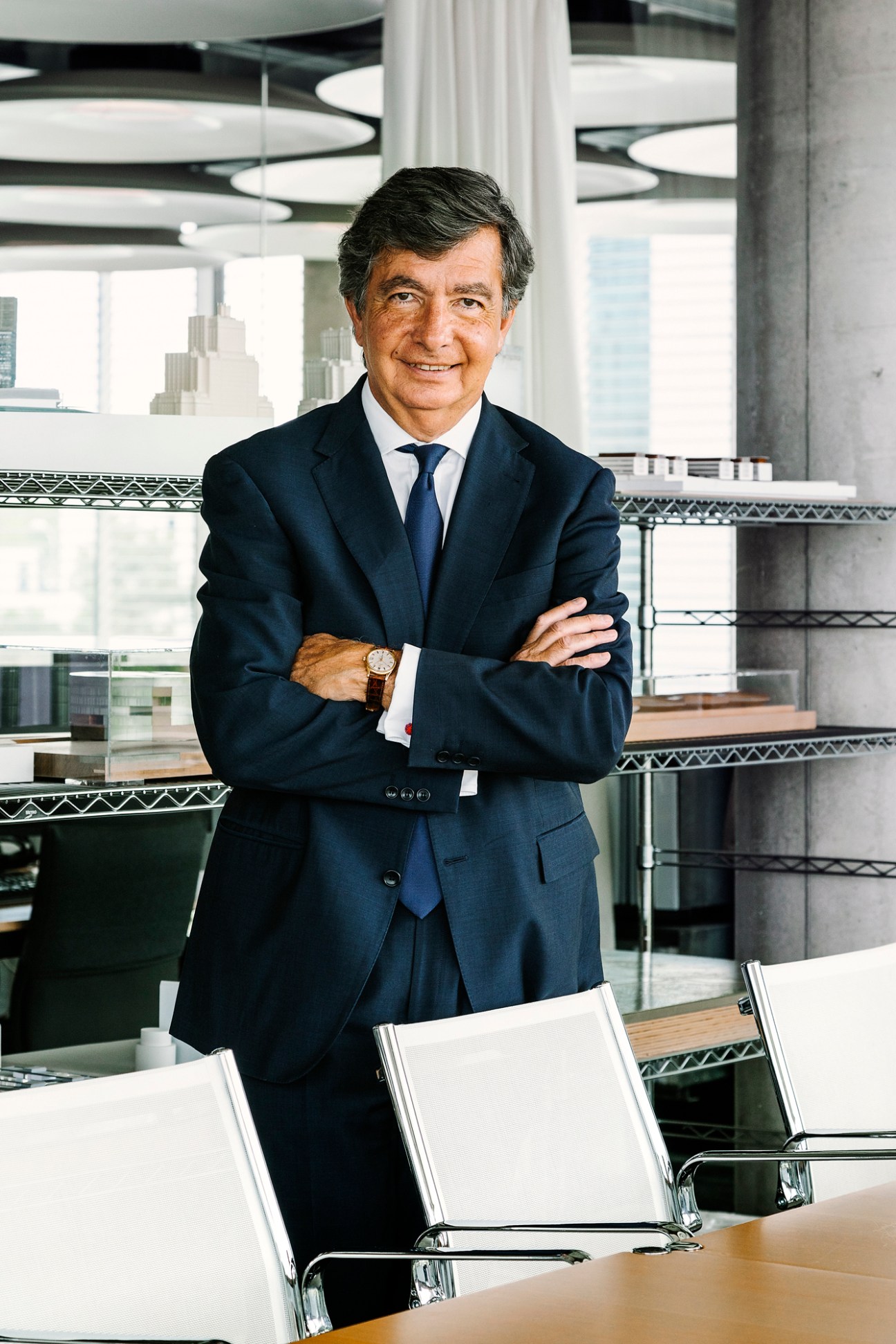
Melilla 31 is the first building by Antonio Lamela to gain listed status but interest in preserving the architecture of the Costa del Sol is growing. “It has been a very important turning point for modern architecture in Málaga,” says Carlos Lamela. “It has set a precedent for valuing contemporary architecture.” The listing of Melilla 31 has encouraged efforts to preserve architecture in the nearby town of Torremolinos, exemplified by the Pez Espada Hotel, the naval-inspired Bazar Aladino and the Hotel Residencia Miami, which was popular among Hollywood stars in the 1950s and 1960s. The mayor, José Ortiz, has expressed his willingness to protect several of the buildings that Lamela built in the city.
For Benavides, recognising the unique nature of the building is a way of stepping away from a wasteful culture and better understanding the city’s history. “We should think twice,” she says, as we sit on her terrace on the 12th floor and watch the locals on the beach below enjoying a morning swim. “We need to appreciate what we have.”
Screen saviour
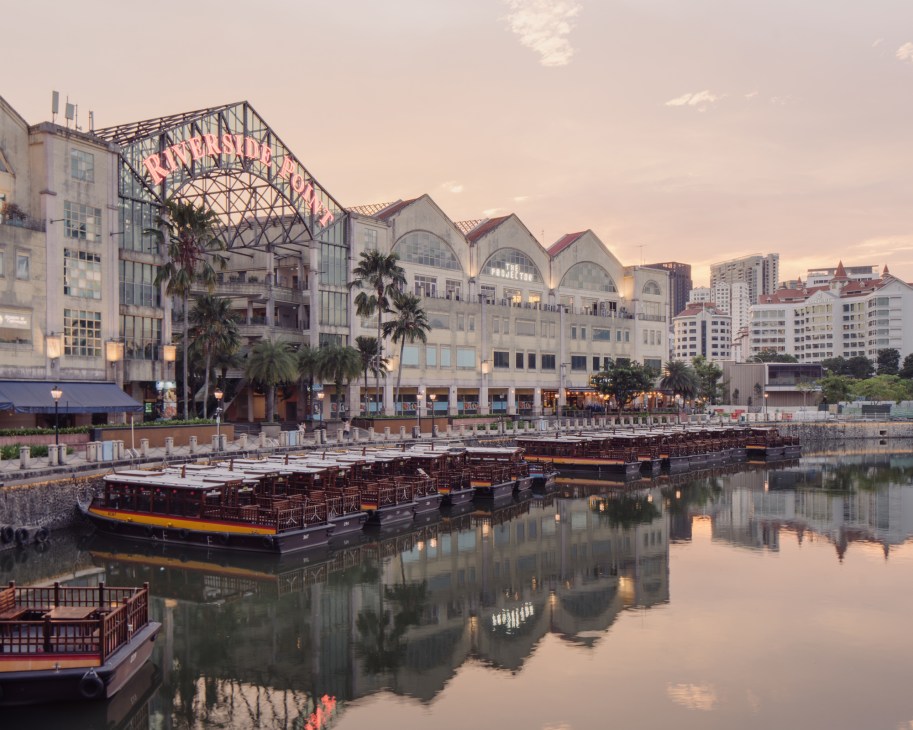
Well-known in Singapore for trans-forming a 1970s brutalist block into the successful cinema, The Projector, entrepreneur Karen Tan is once again breathing new life into a scruffy space while respecting its storied past. This time she’s developed an abandoned Chinese nightclub inside a waterfront complex into Projector X: Riverside.
“When my team and I stepped into the dark, cavernous void, still packed with disco paraphernalia, we instinctively caught a glimpse of its unbridled potential,” says Tan. Their spirited take on adaptive reuse of the space has preserved quirky details such as stray tinsel and the original dressing rooms, where they collaborated with poet-photographer Marc Nair to create an art installation that pays homage to the Chinese disco subculture.
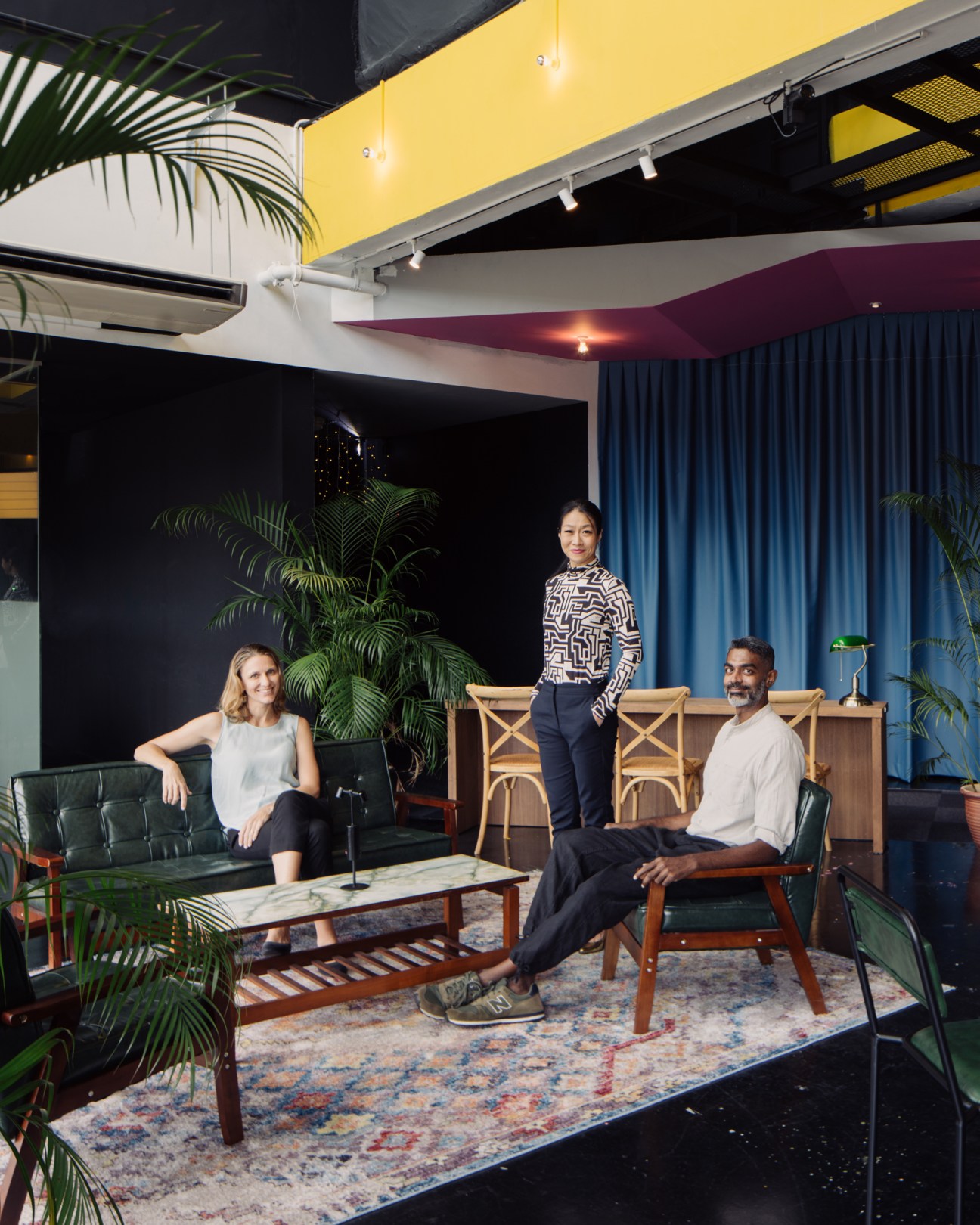
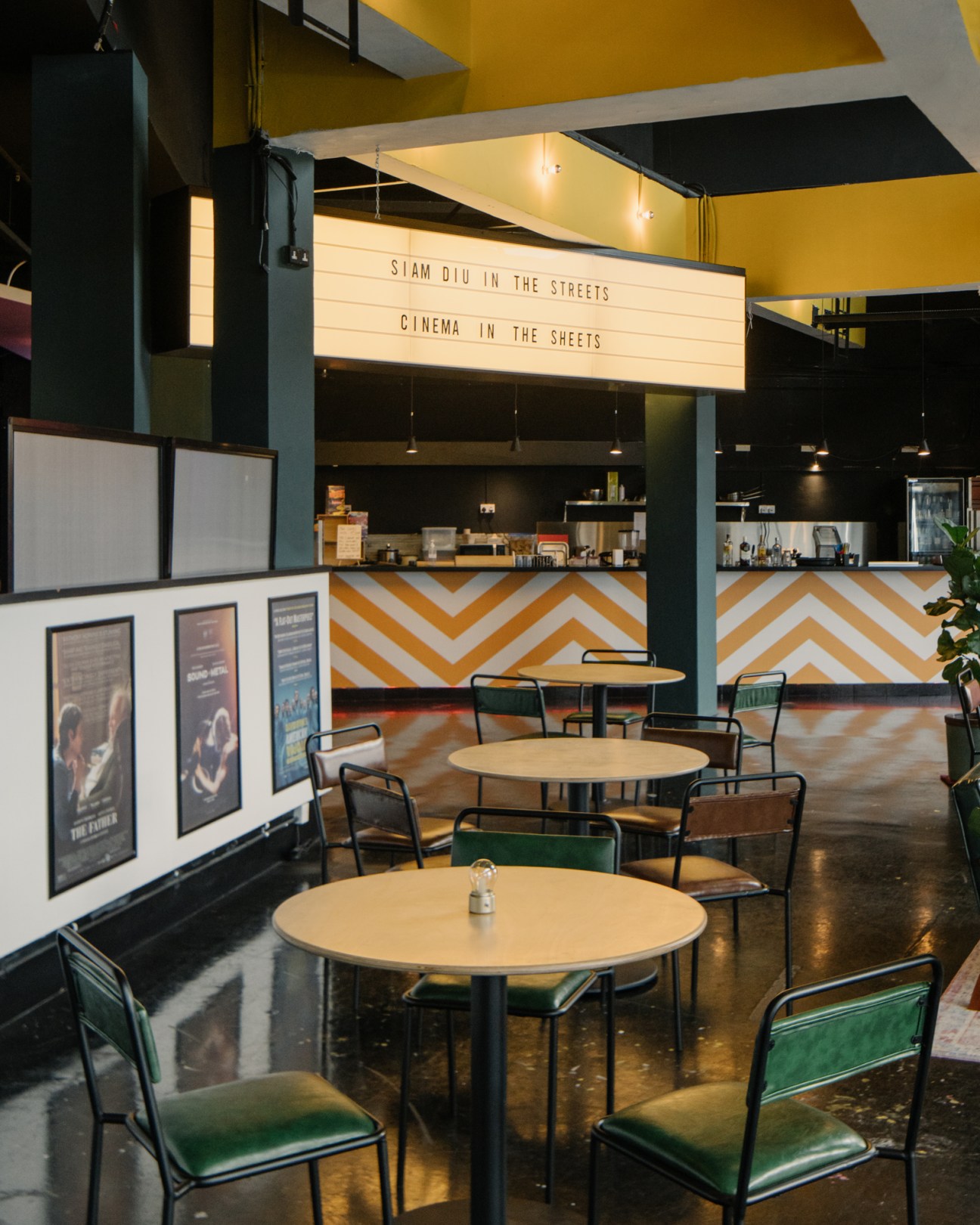
The former dancefloor has been converted into a seating area and karaoke booths have been given a new look as private viewing corners. It might seem like an elaborate refit but the original tenant 20 years ago was a cinema operator. “It feels like we’ve come full circle,” says general man-ager Prashant Somosundram. “We’ve been passed the baton to embark on the latest chapter of the building.”
Since opening, The Projector has shaken up Singapore’s arts and culture scene by screening boundary-pushing films and lending its voice to social causes. Both outposts go beyond the mundane multiplex model: the Riverside location has a café and bar, and it’s become a place to have a drink by the water and for creatives to engage with one another.
In spite of the cinemas’ success, the country’s capricious property rules mean that they could be left homeless if the buildings are sold or demolished for renovation. This has only driven the team to strive further. “We might be in a ‘sunset industry’ but we’re not a sunset firm,” says Tan. “We don’t take our existence for granted.” For Tan, the show must go on.
theprojector.sg
Reformed character
Inside the glass-roofed atrium of a former tobacco factory in Athens, there’s a noticeable buzz: works are being installed, crates shifted, pallets unloaded, and old friends are greeting each other. Everything is almost ready for when this huge space will reopen its doors after being transformed into the city’s newest contemporary art space, renovated and managed by cultural foundation Neon.
“This space is the agora, the meeting point of the exhibition,” says Neon’s director Elina Kountouri, as natural light spills in. “It’s quite special to see contemporary art in this way. We only switch the lights on in the evening.”
A vestige of Greece’s industrial past, the complex comprises eight large buildings. For decades, half of the 1930-built factory lay idle, while the rest is home to the government’s Hellenic Parliament Library and Printing House. Finding a venue of this scale in Athens is no mean feat, which is why when Kountouri first visited it back in 2016, she knew she was onto something special. It was a space grand enough to host an exhibition that would mark the bicentennial of the Greek revolution.
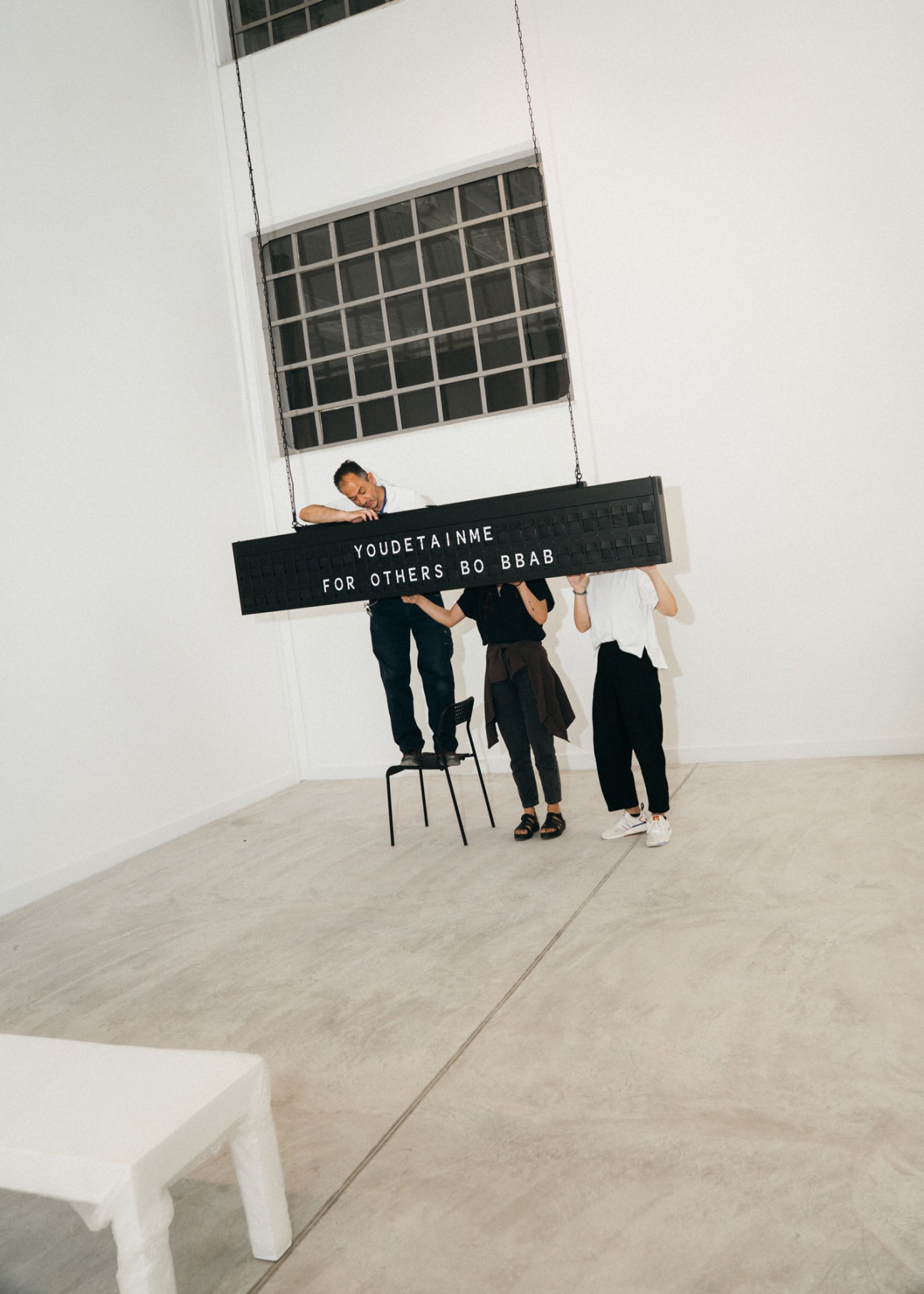
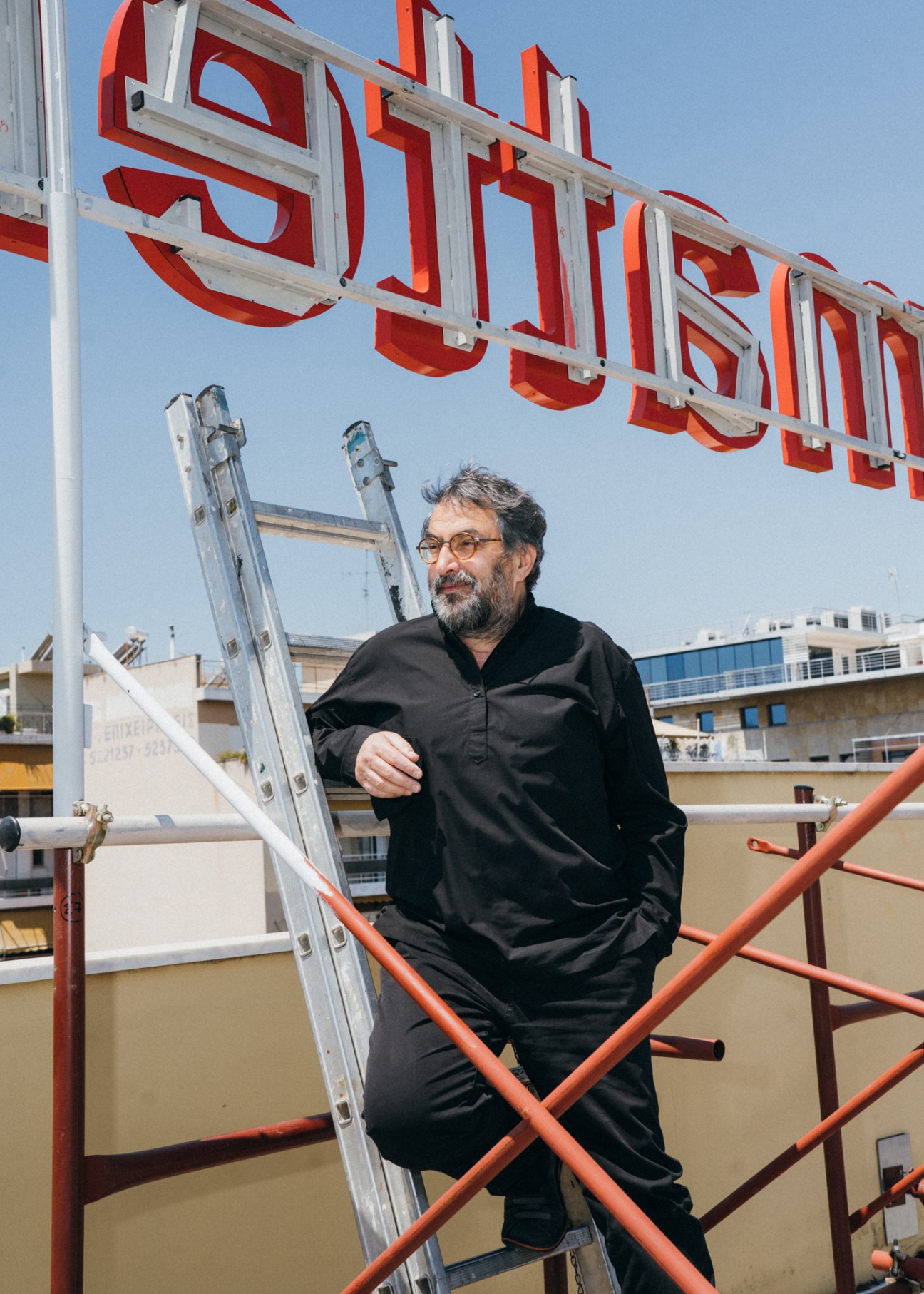
After getting the green light from the Hellenic Parliament to refit the space, she started assembling 59 artists for a spectacular opening show: Portals is an exhibition bringing together works from international heavy-hitters including Irish visual artist Daphne Wright, and sculptors Do Ho Suh, a South Korean, and American Robert Gober, as well as Greek artists Maria Papadimitriou and Kostas Bassanos. “It’s all about how we’re emerging from the other side of the ‘portal’ and uniting again after everything we’ve been through,” says Kountouri of the show’s title. Having conceived the idea at the start of the pandemic, she managed to turn the exhibition around in just over a year.
This is not Neon’s first intervention into a public building: in the past, the foundation has taken over the Athens Conservatoire and the National Observatory, both of which were turned into temporary cultural spaces. Still, the current €1.2m makeover and exhibition is the largest and most ambitious to date. “We don’t just curate our exhibitions; we take it upon ourselves to renovate each space with our own in-house architect,” says Kountouri, flicking on the switch to Mumbai-based artist Shilpa Gupta’s installation, an airport-style display with rotating characters and words.
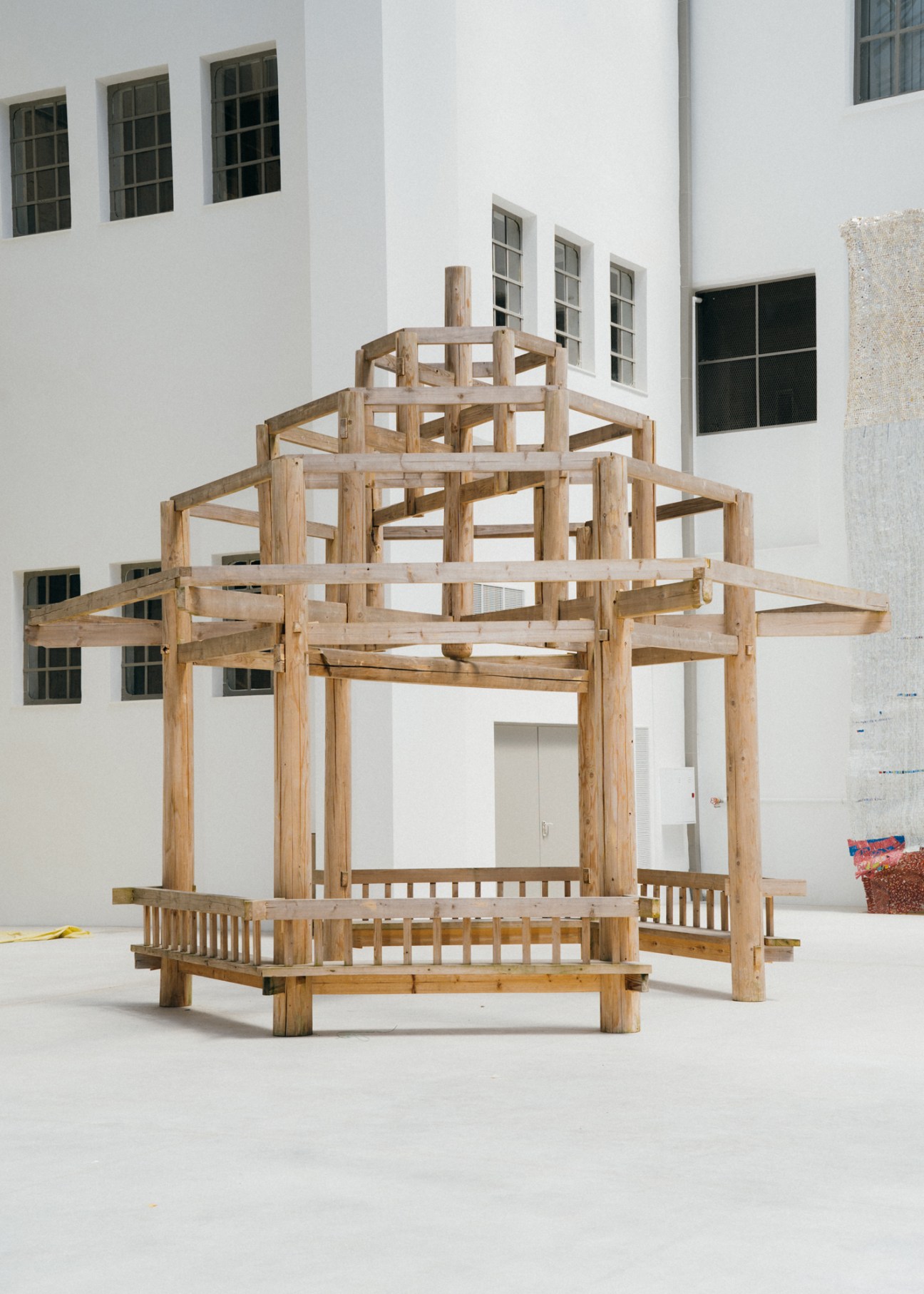
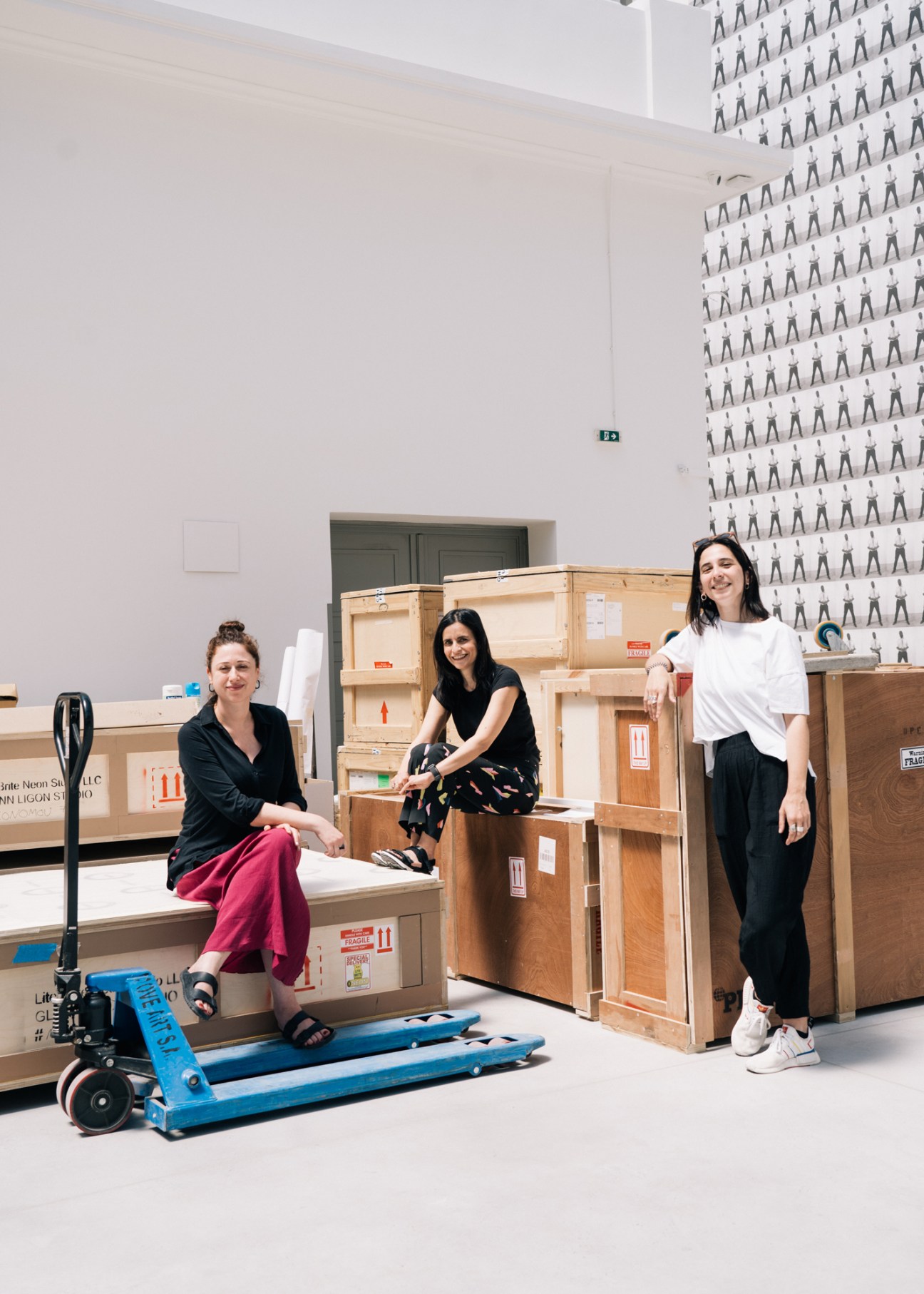
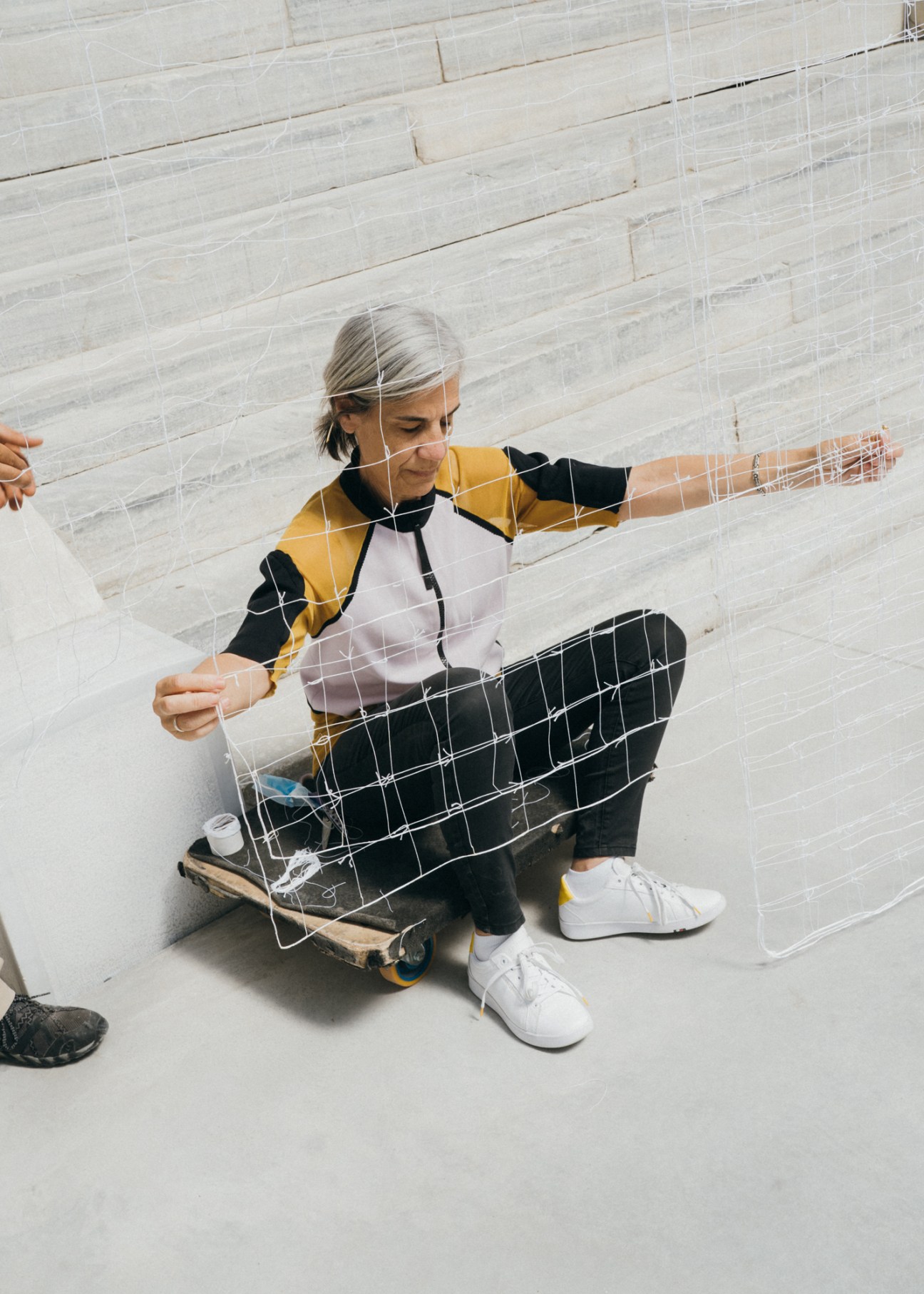
A sense of scale and intricacy is a motif that runs through many of the pieces for this formidable debut show. On one side of the atrium, Cypriot visual artist Maria Loizidou is displaying a work made up of three sheets of white thread, woven together with 516,000 fine knots. “I wanted to create a contrast between the heaviness of the steel and glass roof above, and the lightness of the silk and cotton,” says Loizidou. On the wall opposite, Ghanaian artist El Anatsui has created a mural of metal sheets, made from reclaimed bottles to symbolise transatlantic trade. Meanwhile, the wooden pavilion built by Vietnamese artist Danh Võ to stand in the middle of the exhibition floor acts as an exploration of public space and was constructed and installed with the help of Athenian carpenters. “Athens is a great place for sourcing materials and collaborating with craftsmen,” says Kountouri. “They deliver quickly and in very good quality.”
Further into the gallery, artist Anastasia Douka shows Monocle her sculpture Anger Organizes: two tubes of anodized aluminium exploring the energy consumption of a tobacco factory’s activity. “What I enjoyed most was the relationship with this space and the different layers of history,” says Athens-based Douka, who obtained her master’s in fine arts in the US. “This building is on a totally different scale, as if it’s just landed here, especially when you compare it to the rest of the area.”
There are hopes that the venue will bring a new lease of life to the low-slung neighbourhood of Kolonos, which despite being densely populated is still lacking in cultural spots, restaurants and venues. “This neighbourhood used to be busier, because it’s close to the first university of Athens,” says Kountouri. “We’re hoping to create another centre.”
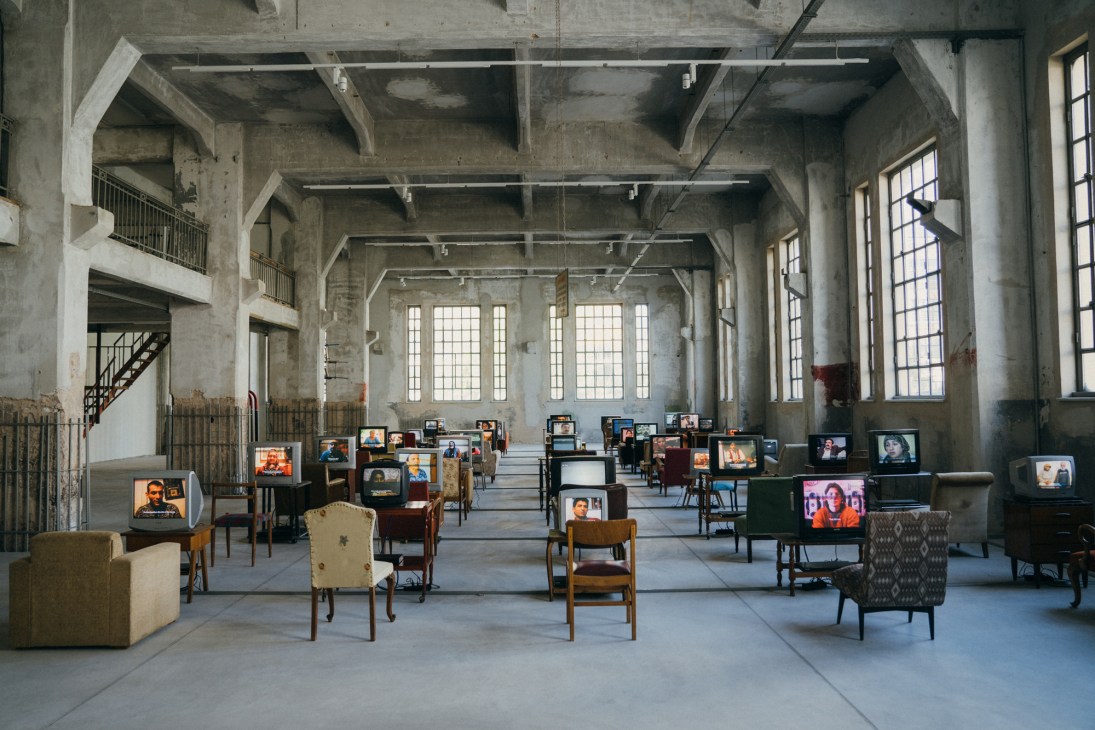
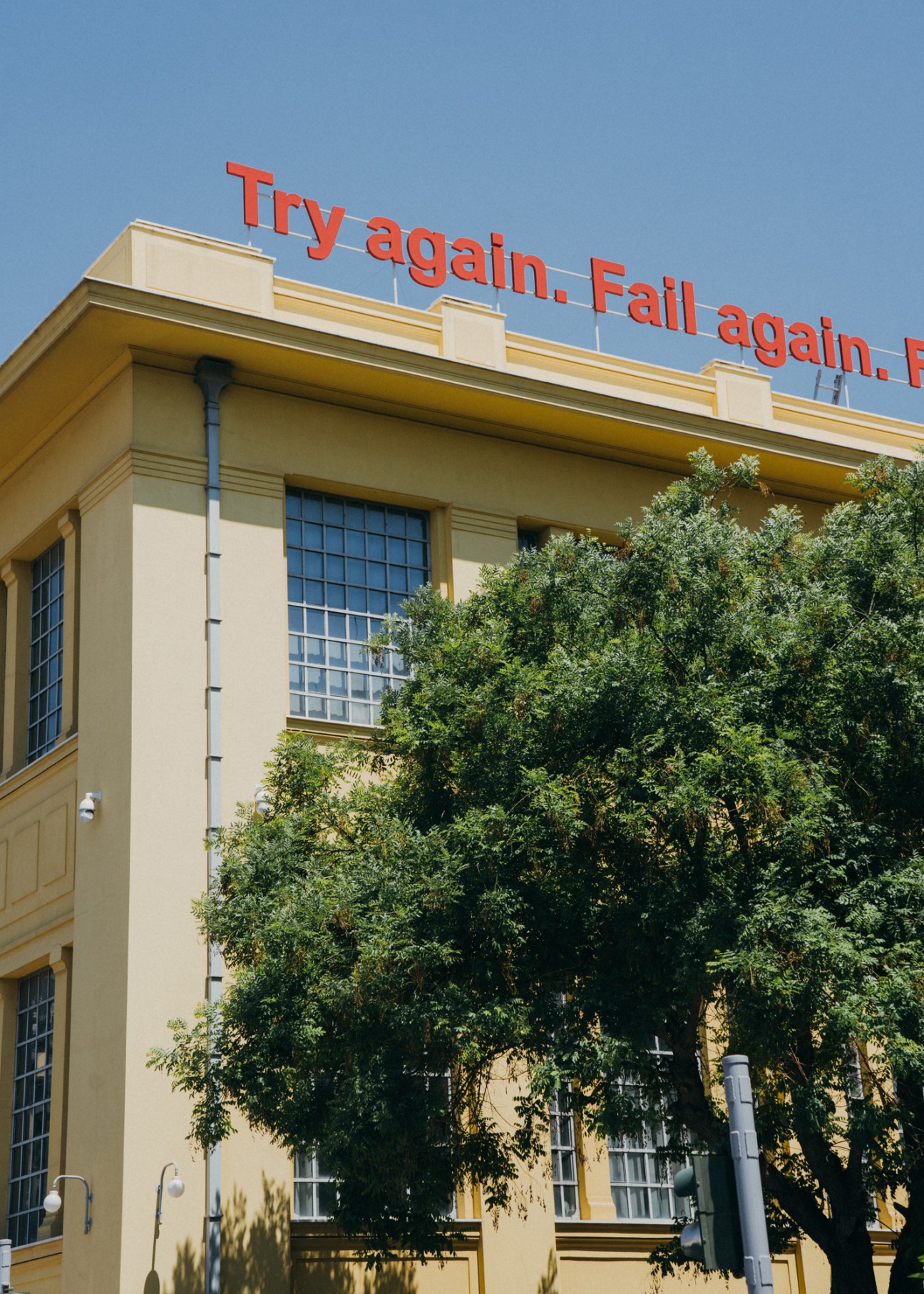
Still, this new venue remains an exception in Athens. While the city has no shortage of small galleries and artist-run spaces, large-scale spaces of this kind are rare. After the foundation’s tenure of the tobacco factory ends in two years’ time, the space will be returned to the Hellenic Parliament. Yet Neon sees giving up the space as a natural part of their cycle. “We’re nomadic,” says the foundation’s founder, prominent collector and entrepreneur Dimitris Daskalopoulos. “We want spaces that inspire artists to do something differently.”
Kountouri agrees that this freedom gives everyone involved an opportunity for experimentation. “When we tell people that we don’t have a permanent space, we mean that our space is the city,” she says. “So you have to constantly redefine it.” With plenty of venues still to be spotted, transformed and rediscovered, it seems that Athens is an apt spot for perpetual reinterpretation.
neon.org.gr
Island inspiration
Launching an art biennial is a brave thing to do for any city. Debuting one now is even more courageous. Helsinki is elbowing its way into the global arts calendar by hosting one of the first major events to go ahead this summer: the inaugural edition of the Helsinki Biennial, which will display works by 40 artists from 17 countries over the next three months.
While the overall aim is to increase the city’s standing in the international art ranks, it’s clear that the organisers have also decided to celebrate the sheer pleasure of leaving the online viewing room behind. “We are hoping to attract people from all over the world but also want to offer locals a way to finally enjoy art in person again,” says the biennial’s director Maija Tanninen-Mattila. “Helsinki’s challenge is not that there isn’t great art but that we have not had enough exposure in the art world.”
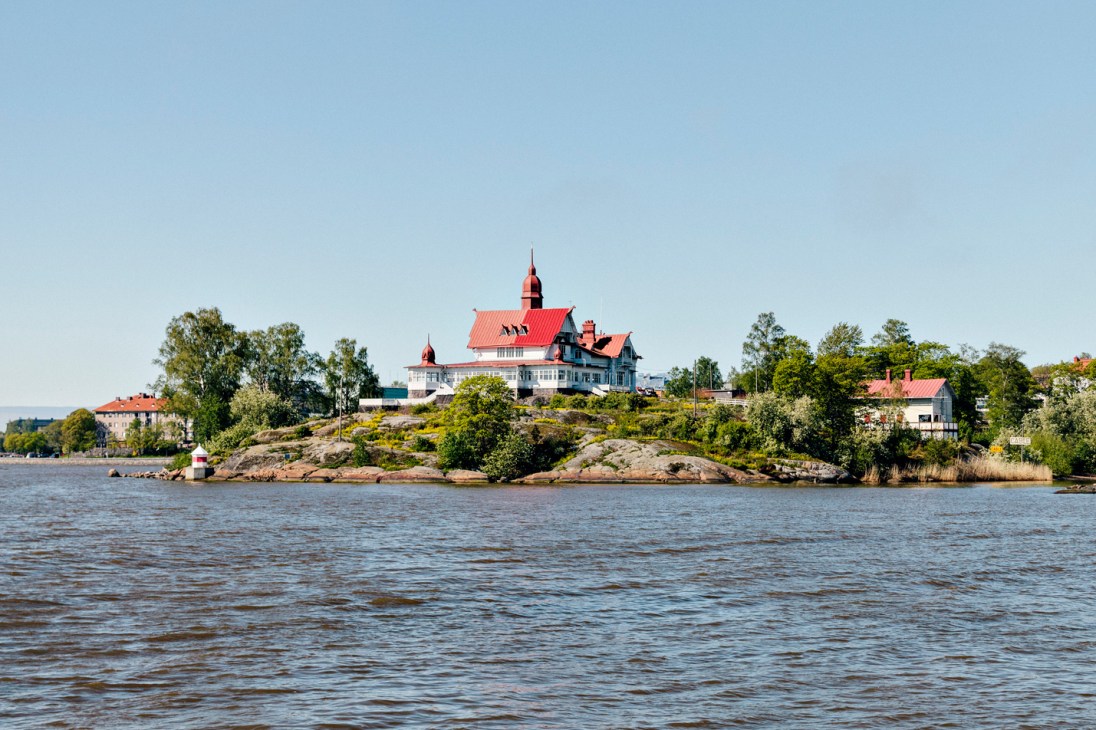
To stand out from other events of this kind, Helsinki has decided to lean into the city’s peculiar geography. Perched on the Baltic coast, Finland’s capital is fronted by more than 300 islands – many of which are underutilised; some are completely uninhabited. “It is a maritime art event where art takes over untouched islands,” says Tanninen-Mattila. Other than being part of the city’s maritime strategy, which aims at finding solutions for these islets, the biennial is also being used to boost residents’ morale. To make the event accessible to all, the city decided early on that entry would be free of charge. “It’s not aimed only at the so-called art elite,” says Tanninen-Mattila. “We have toured nearby schools with the artists, who have talked about their work.”
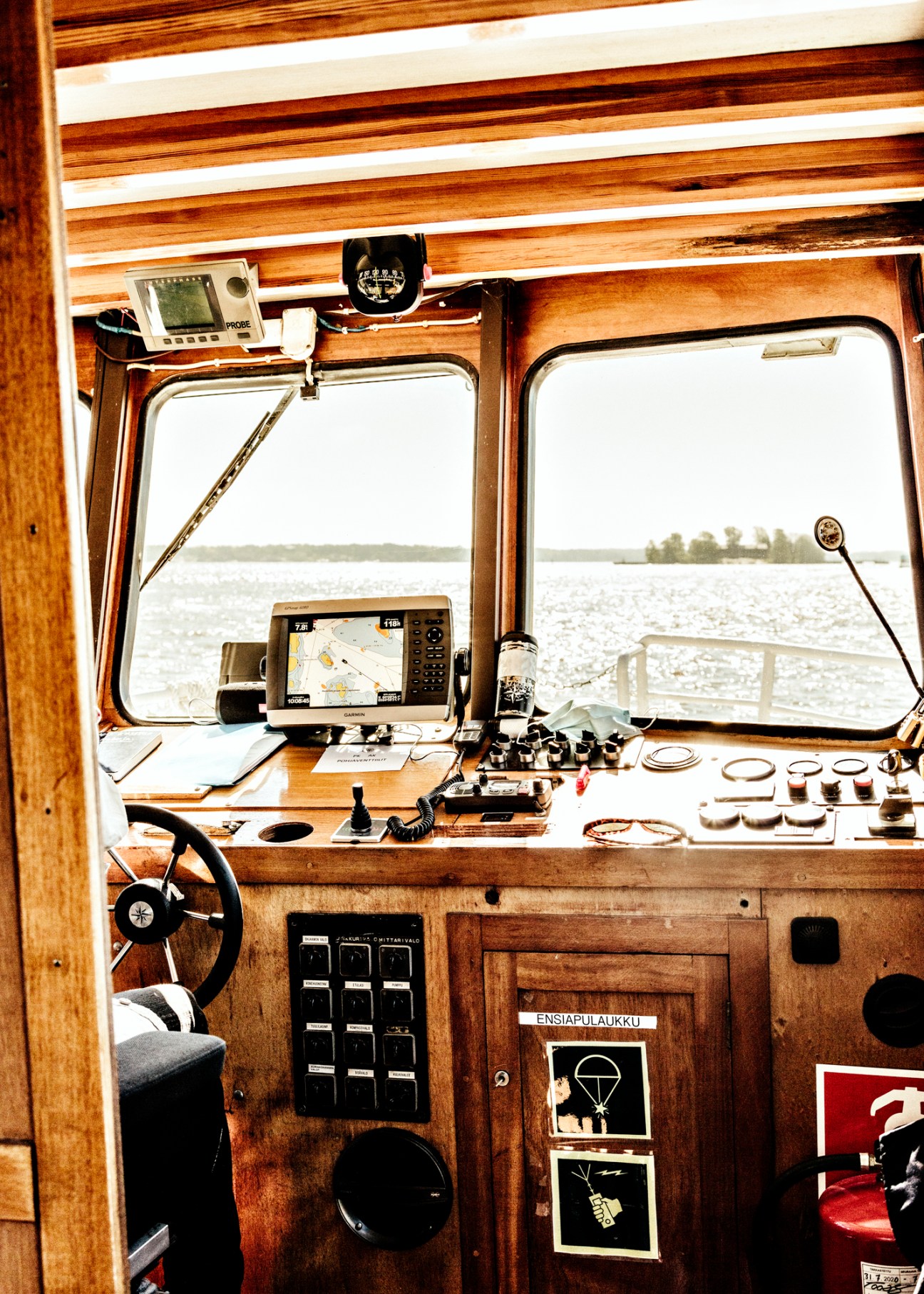
Most of the pieces on display are clustered on the verdant island of Vallisaari. A 15-minute boat ride from the city centre, this former military island was once a mystery to most Finns: it was only officially opened to the public in 2016. When Monocle visits, there is a palpable sense of excitement on board the ferry that delivers visitors to the grounds. Choosing this place as the main site for the biennial makes the exhibition feel distinctly wilder than other similar events. “The pristine, almost virgin nature coupled with the decay of the former military buildings makes for an edgier art experience,” says the biennial’s co-curator Pirkko Siitari. Her colleague Taru Tappola agrees. “We believe that the island’s bunkers and untouched nature provide a new kind of platform and source of inspiration for the artists,” she says.
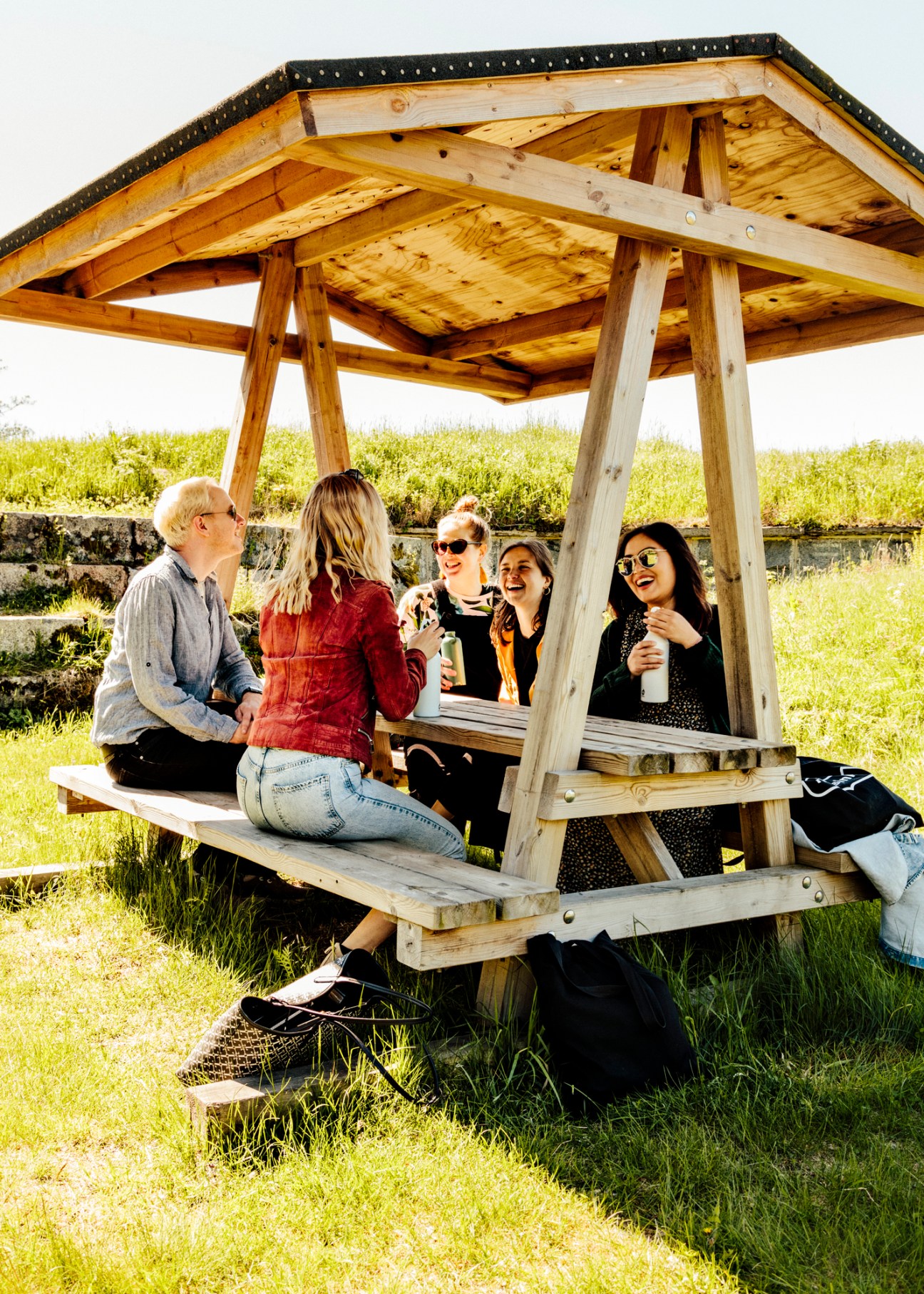
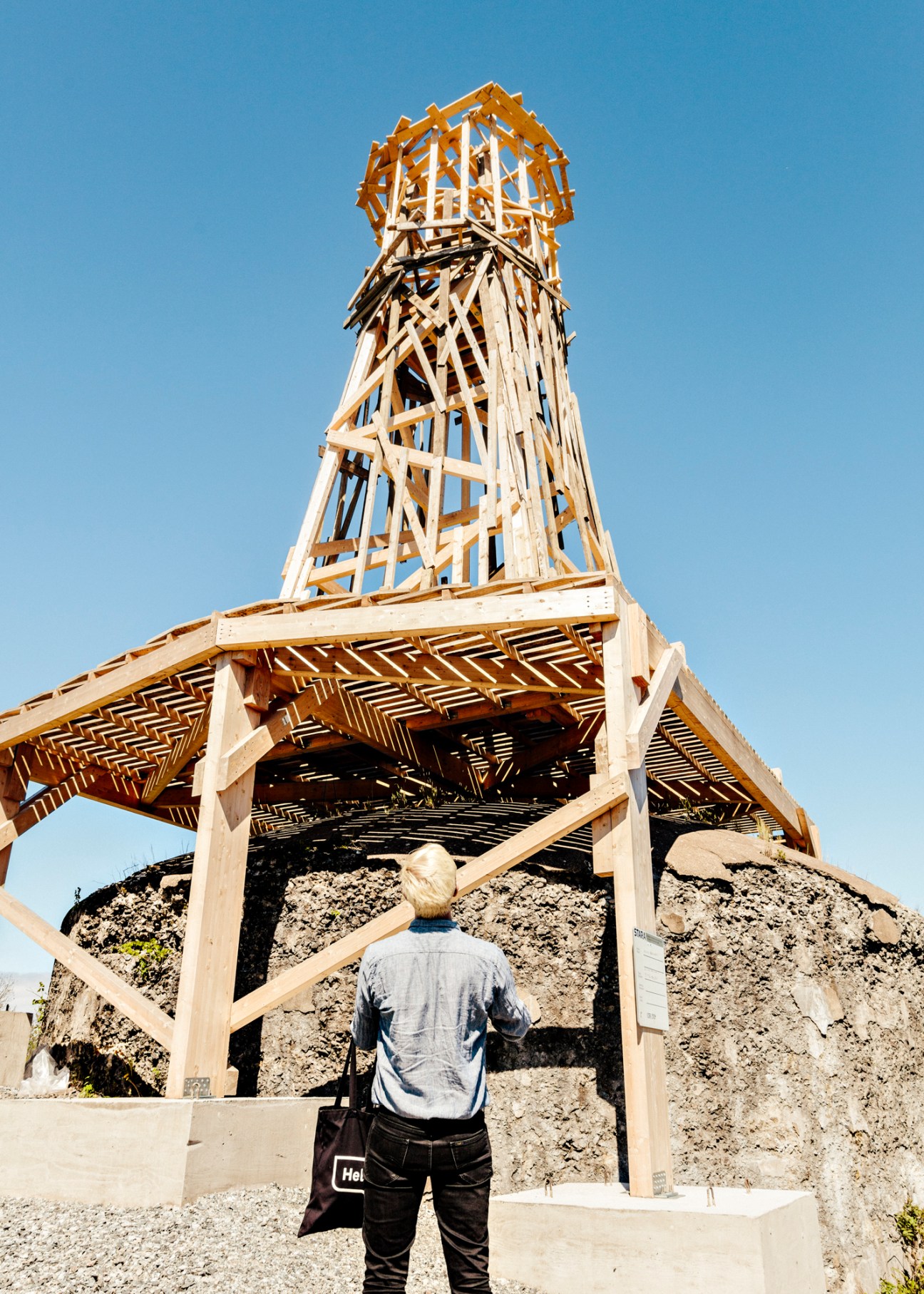
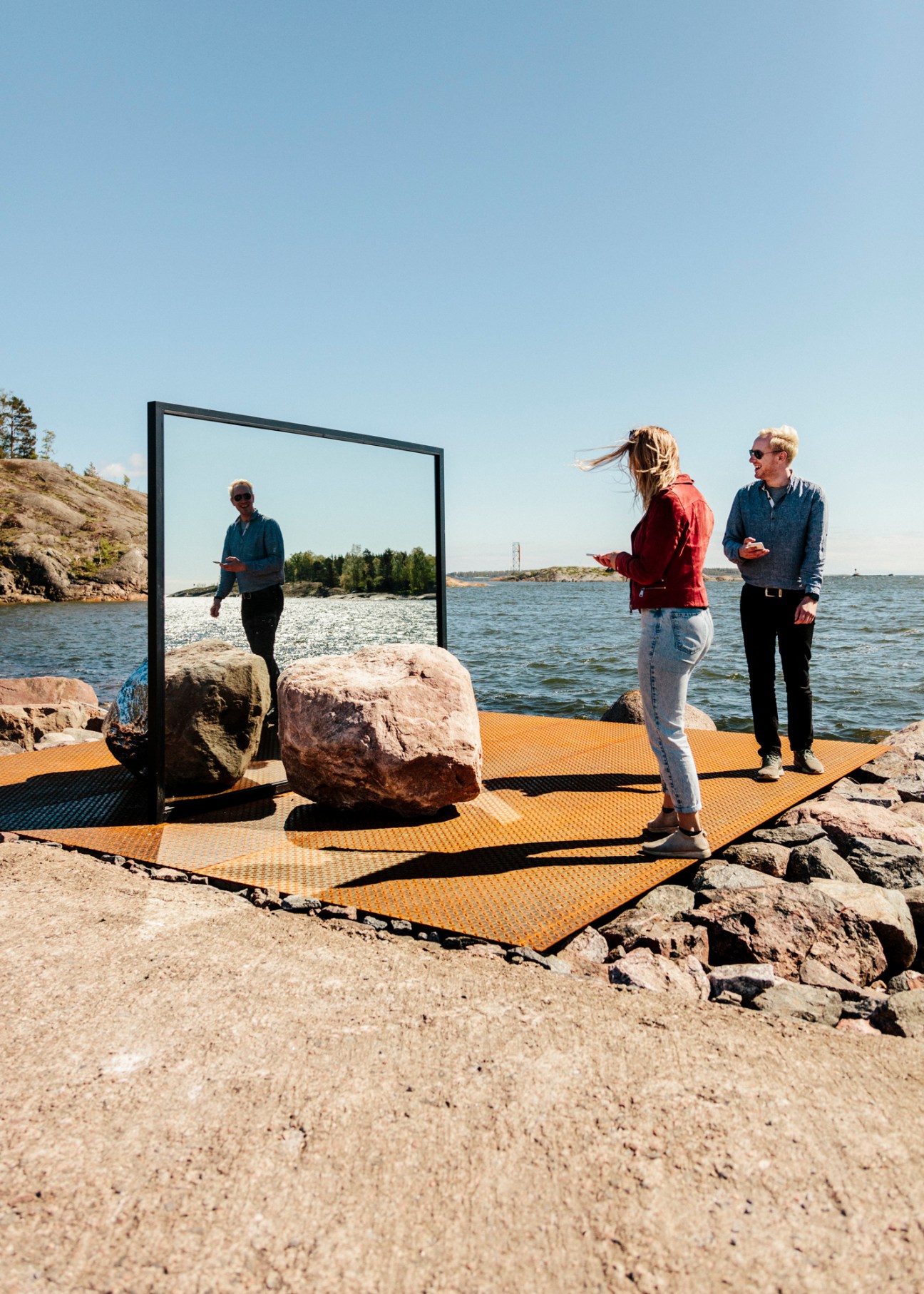
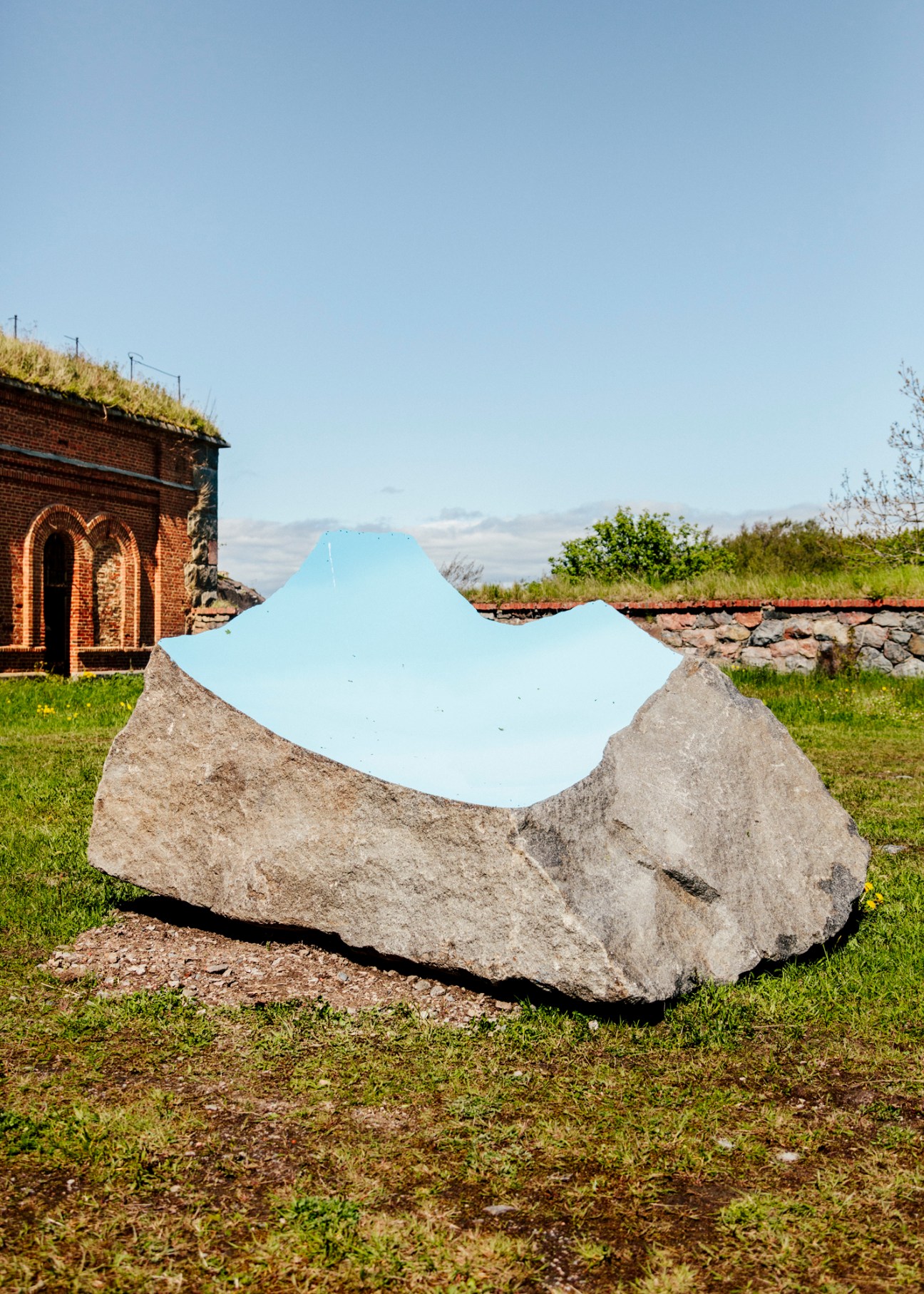
Three quarters of the works on display are new site-specific commissions that the artists created after visiting Vallisaari. “Unlike a museum exhibition where you first agree on a theme and then choose the artists around it, we wanted to have an element of interactivity between the artists and the site,” says Siitari. For Polish artist Pawel Althamer, this meant creating a short film mimicking a prison break with inmates from the open jail on the nearby island of Suomenlinna. Canadian duo Janet Cardiff and George Bures Miller created a sound installation that visitors can experience while seated on tree stumps in the forest. Others have highlighted the terrain’s ruggedness: Polish-German artist Alicja Kwade’s sculpture “Big Be-Hide” features two mirrors and a boulder placed on a narrow peninsula by the sea, creating an optical illusion. “It’s a crazy island that changes all the time. It’s rough but also beautiful, which is a great source of inspiration,” says Indian multi- disciplinary artist Samir Bhowmik. His performance, “Lost Islands”, reflects on how humans use technology to conquer nature by guiding visitors on an expedition through an imaginary underground cable network.
This commitment to reinterpreting the coastal landscape will be maintained in the future. “We will probably stay on Vallisaari for the next edition of the biennial but our plan is to take over more islands in the years to come,” says Tanninen-Mattila. And with a new design and architecture museum set to open in the city over the coming years, a repeat visit will be more than justified.
The Helsinki Biennial runs until 26 September; helsinkibiennaali.fi
Heart of the matter
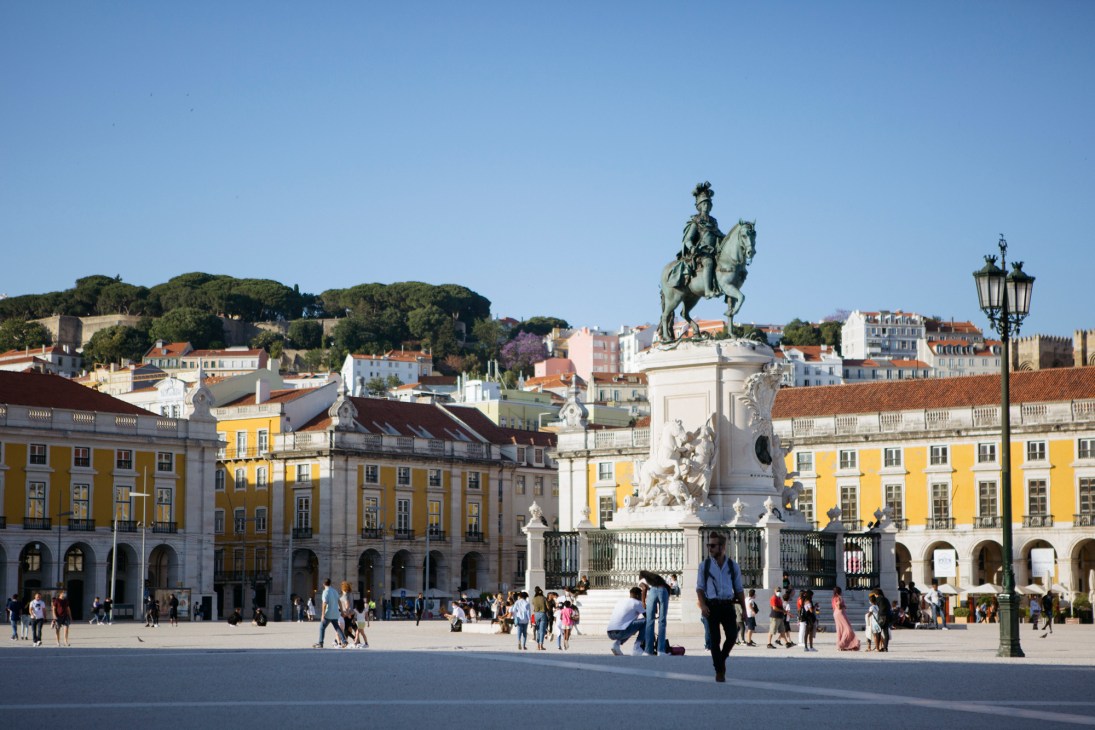
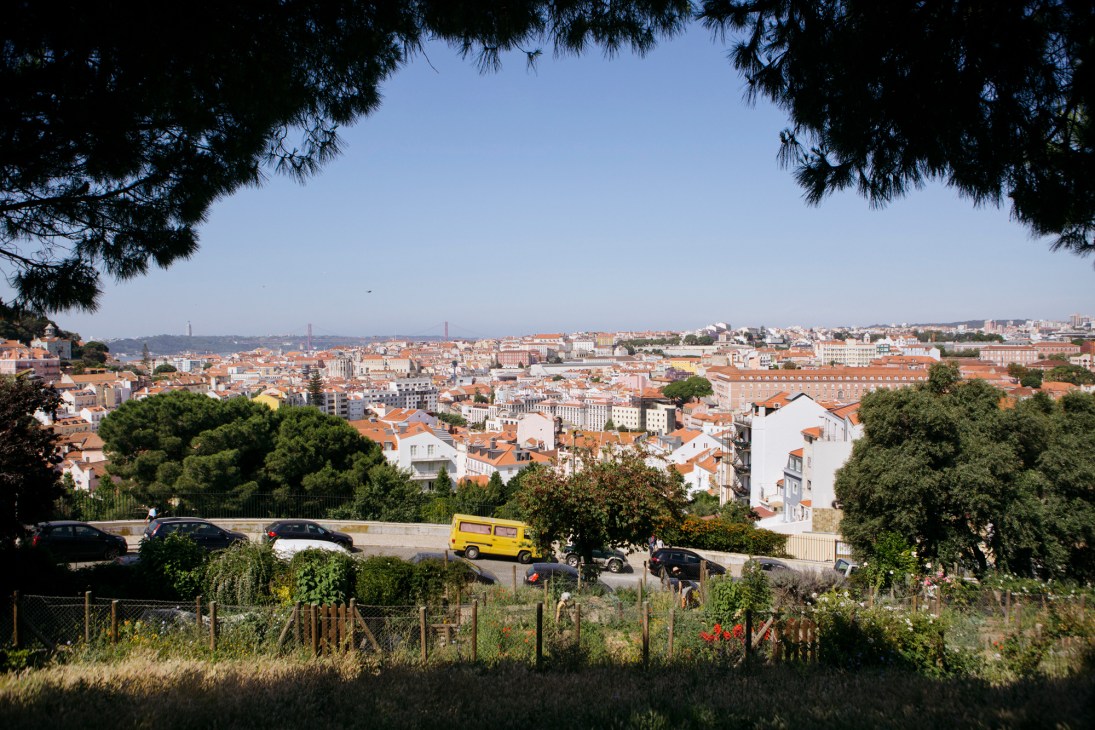
On a balmy evening inside historic café A Brasileira in downtown Lisbon, a small group has convened to attend a debate titled “City-centre versus Periphery”. It has been organised by Mensagem de Lisboa, an online newspaper recently established to expand on news from all neighbourhoods and sectors of the capital. “Journalists in Lisbon aren’t brave enough to explore what’s happening outside the city centre,” says Angolan musician and writer Kalaf Epalanga as a provocation. “That’s where we come in,” says Mensagem de Lisboa‘s editor and debate moderator Catarina Carvalho.
Over the past few years, Lisbon has gained importance in European and global politics, and the city’s media has had to adapt. National news brands have upped their games, widening their nets. CNN is also in town setting up a Portuguese-language service. Filling the gap left for regional output, new publications such as Mensagem de Lisboa have risen, offering citizens more detailed takes on neighbourhood news. The result is a varied and wide-ranging media offering.
Mensagem de Lisboa was launched in February by Carvalho and Ferreira Fernandes. Both had previously been editorial directors at national daily Diário de Notícias, where they often bemoaned the demise of local news coverage in the press. “The papers today are focused on national news and don’t pay enough attention to what’s happening in the city, right around the corner, while people are increasingly interested in where they live and the communities that surround them,” says Carvalho. With a team of eight full-time journalists and several contributors ranging from readers who submit personal columns to international correspondents in the city, Mensagem de Lisboa uncovers all kinds of tales. So far the project has been financed by grants as well as by O Valor do Tempo, a group that invests in Lisbon-based businesses (including A Brasileira, which, as well as hosting tonight’s event also serves as Mensagem‘s headquarters).


Mensagem struck a chord with Lisboetas through coverage of the city’s quirky historical anecdotes, reportage on grassroots initiatives and interviews with neighbourhood ambassadors, forging a loyal group of readers and donors. “We want to find the inspiring stories of this city, and offer solutions to its challenges,” says digital editor Nuno Mota Gomes. Live talks are also central: the next will be a workshop for the city’s expats about how best to vote in municipal elections. “We are not interested in being massive,” says Gomes. “We want to speak to the community and to have this personal and informal take on the city we love.”
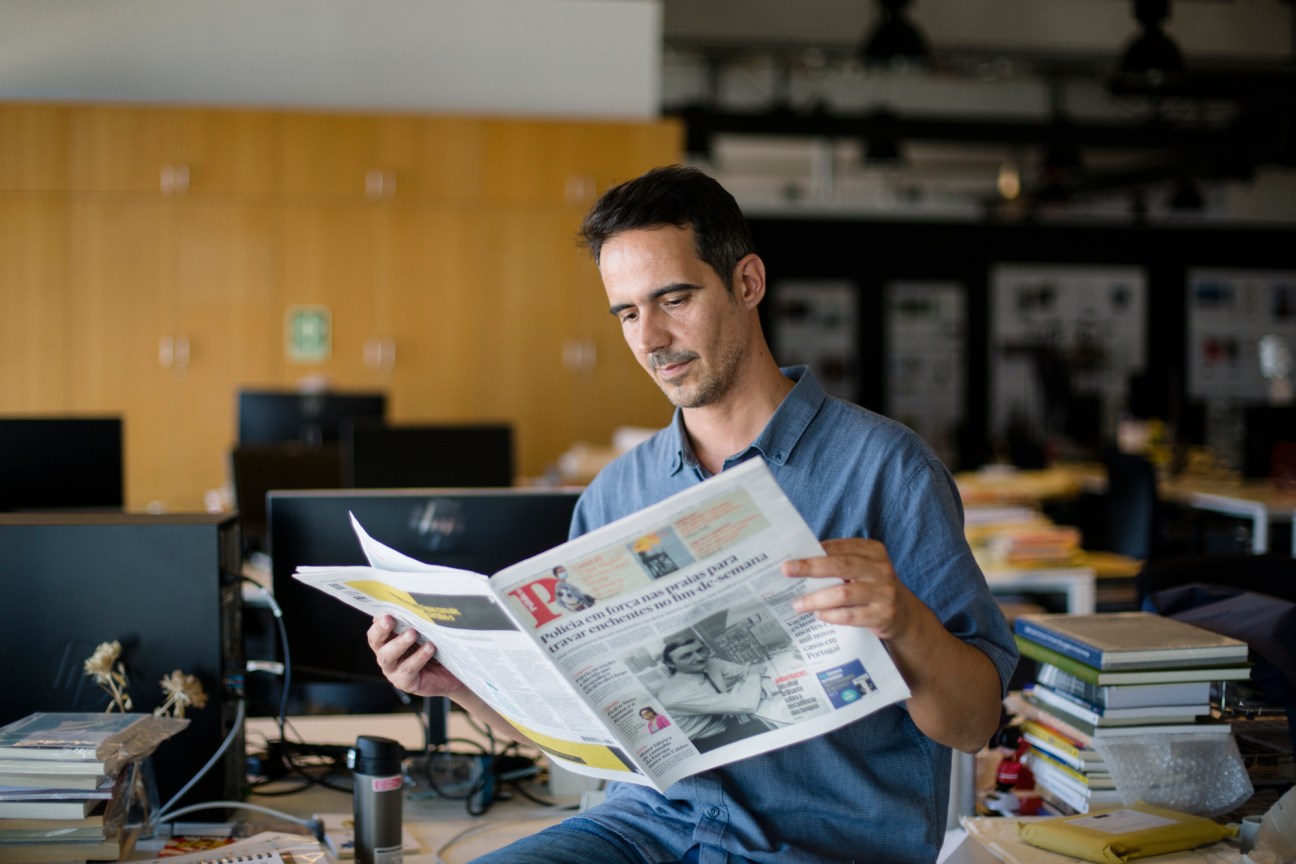
Many of Portugal’s legacy papers and radio stations have also changed to attract younger and more globalised audiences. Thirty-year-old paper Público, for example, has made a number of adjustments, most importantly a new emphasis on digital. “A year and a half ago we had 15,000 online subscribers; today we have 40,000 and we are expected to end the year with 70,000,” says editor-at-large Tiago Luz Pedro.
Público‘s rise has accompanied Portugal’s increasing concern with the international arena. With respected global coverage and a wide range of supplements – Ípsilon, focused on culture, Impar, dedicated to lifestyle and P3, which is aimed at a younger readership – the daily has long been the choice of intellectuals, progressives and a cosmopolitan bunch. “Newspapers around the world have recently come under attack but here we have the resources to persuade the population of the value of qualified, financed and competent storytelling,” says Pedro.
While this is primarily a result of the work of its journalists, Público has also thrived because of its privileged financing model. Owned by Porto-based multinational Sonae, the paper receives funds from the company’s social responsibility branch – a rare kind of philanthropy. “It’s still very difficult to build a media structure in Portugal,” says Pedro. “But things have started to look brighter in the past few years.”
A young player that has managed to grab those chances is Fumaça, an independent podcast project. Founded by a group of journalism graduates, Fumaça started as a weekly interview programme inspired by shows such as This American Life and Democracy Now. “It was a very personal project at the start,” says co-founder Maria Almeida. “We were interviewing people we were curious to hear and who didn’t get a spotlight in the media but we soon realised that we were doing something serious.” In 2017 the project secured a grant from the Open Society Foundation, which was followed by two others totalling more than €300,000. Several national press grants followed.
Kiosk love
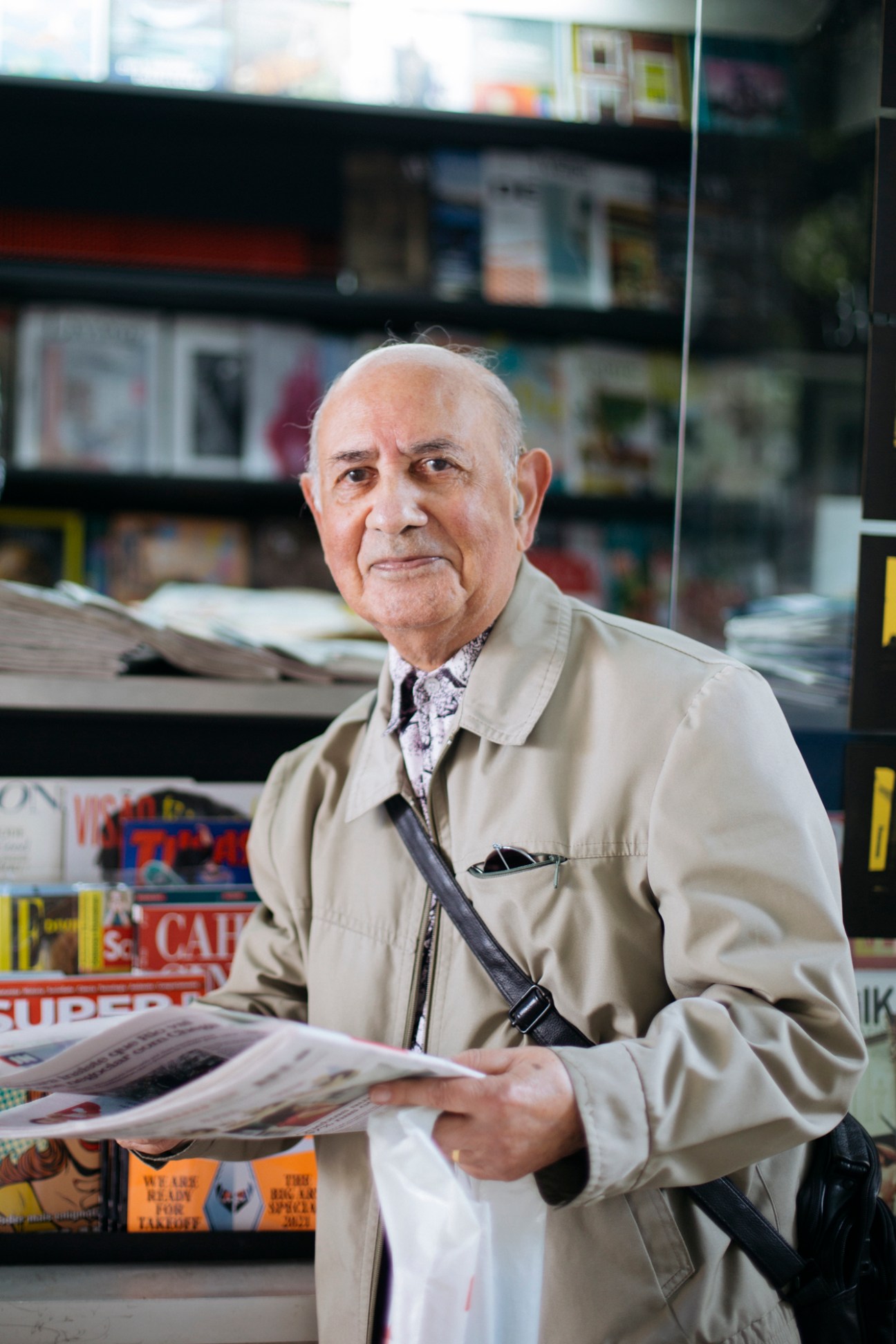
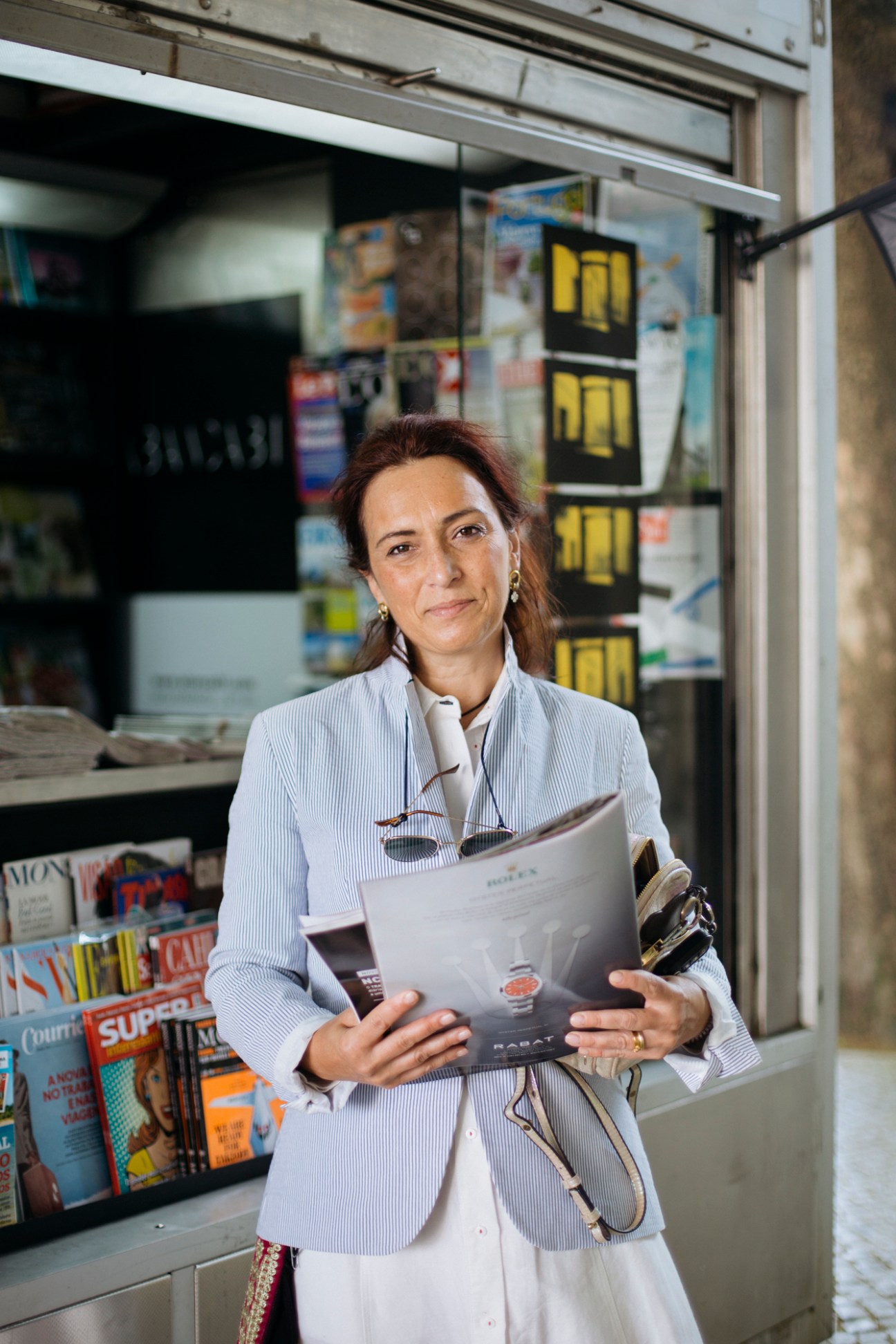
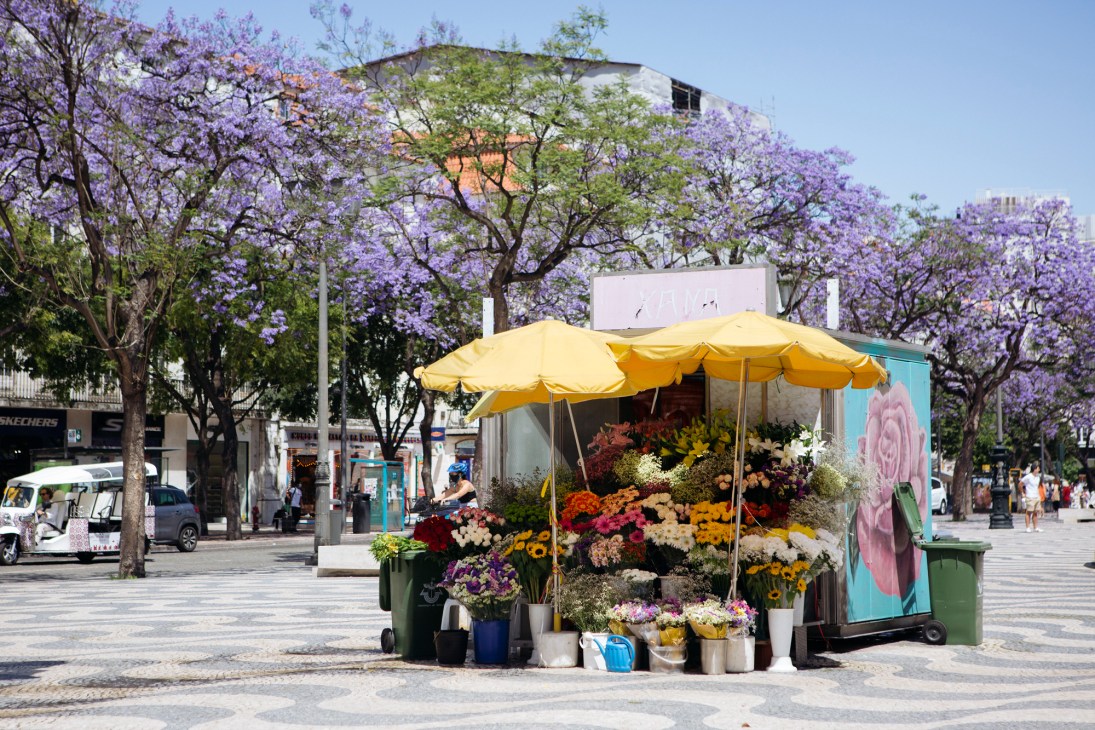
One of Lisbon’s favourite daily rituals involves a single piece of urban architecture: the humble news quiosque (kiosk). Portugal’s love affair with these small, metallic garden pavilions goes back to the late 1860s when city hall saw them as a useful and practical way of embellishing the Portuguese capital. They have maintained their Moorish-meets-art-nouveau look to this day. The quiosque is the perfect spot to get that daily fix of print media and can be found across the city, frequented by Lisboetas of all ages. Some of them also serve espressos and cold drinks.
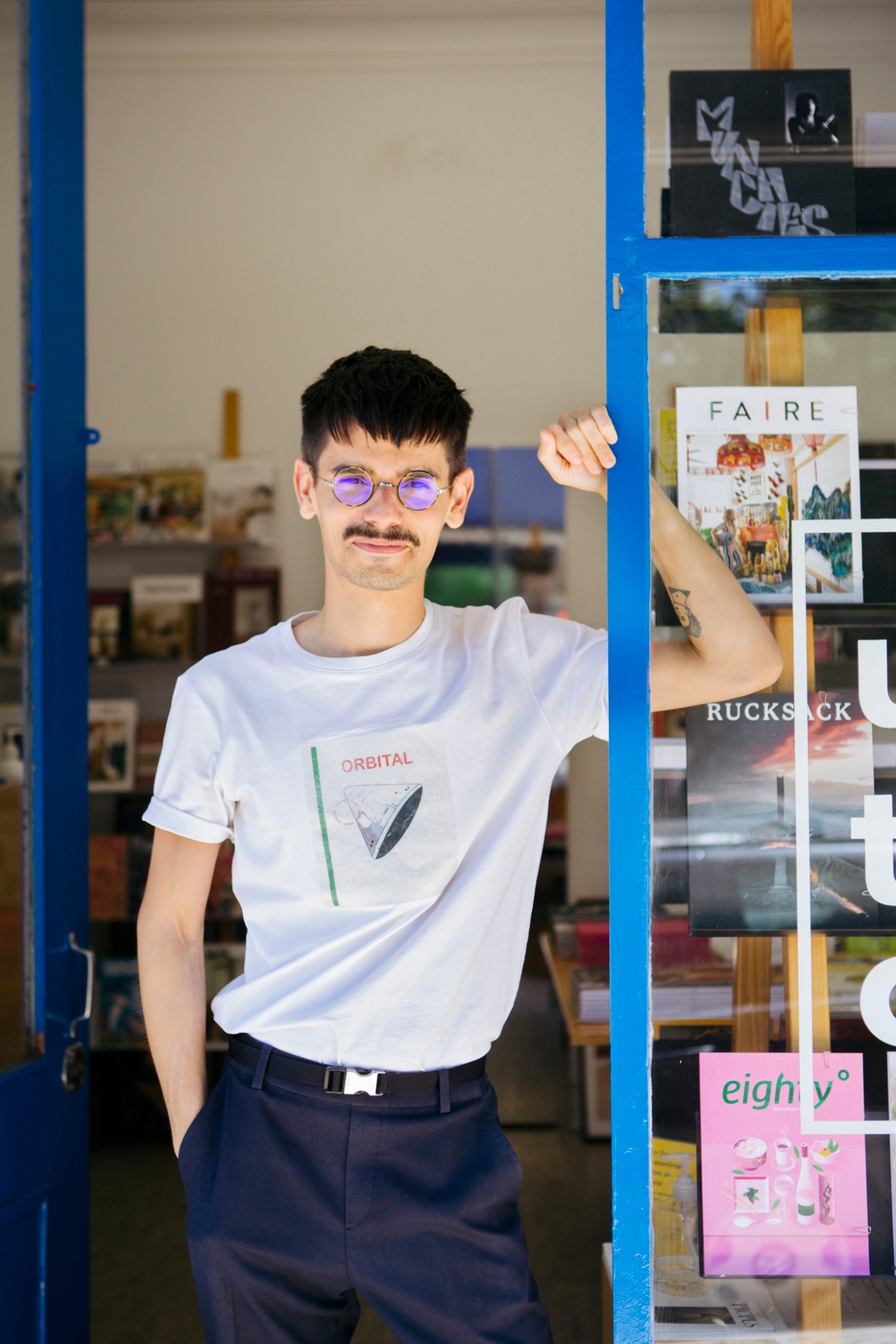

Over the years, Fumaça has grown into a highly prized investigative outfit with an audience of up to 20,000 per episode, many of whom have become regular donors. The editorial team has now abandoned its weekly interview format, instead prioritising long-format reportage and series focusing on human-rights issues from climate-change refugees to the occupation of Palestinian territories. “We do things thoroughly and our series can take months or years to make. We want to reclaim the right to take time over journalism, which seems like a luxury in the media world today,” says reporter Pedro Almeida Santos.
Portugal’s public radio and TV services rtp is a large broadcaster that holds its own in this landscape. Commentators and presenters broadcast across rtp’s eight radio channels – including Antena 1, one of the country’s leading stations. With a schedule of interviews and debates, talk shows, economics explainers, national and international coverage and, of course, top-of-the hour news, the station offers a wide view on happenings of national and global relevance.
“Battery-powered radios are still a part of the recommended emergency kit in this country, along with canned goods. If Lisbon was hit by an earthquake tomorrow, a radio would be how you could remain informed. Broadcasting is a crucial public service in this country,” says rtp’s radio news director João Paulo Baltazar. This critical role became evident in 2017, when wildfires raged. Thousands tuned in to Antena 1 for guidance on safety protocols.
Demographics have also favoured traditional media: given the size of the country’s older population, radio and TV are still popular. But that doesn’t mean rtp can relax. “We also have to evolve. New generations consume in different ways. Audio has never been so alive and we can take what’s best from the world of podcasts to make traditional radio more seductive,” says Baltazar. “I wear the public radio badge proudly. Any distrust people might have towards the media has to be answered through our day-to-day work with balance, rigour and clarity. In the meantime, every time I hear about a new paper or podcast starting out, I can only applaud it.” Judging by the rate at which fresh projects are taking root, it might soon be time for another round of cheering.
Bliss tracks
Álvaro Soler
Spain and Germany
You can trust a musician whose debut album was titled Eterno Agosto (“Eternal August”) and who has a name as sunny as Álvaro Soler to deliver summer anthems. “Magia”, a single that Soler released earlier this year, sounds ready-made for beach dancing. “It’s a song representing hope,” says the singer.
Born in Barcelona to a Spanish mother and German father, Soler grew up between the Catalan city and Tokyo. He has found success in Latin America and across Europe thanks to his Spanish-language hits, such as the ultra-popular “La Cintura”. In Italy he became a beloved judge in the tenth season of The X Factor.

His latest album, also titled Magia, promises to do just as well. And while all of the tracks will stay true to Soler’s infectious energy, the singer is planning some experimentation. “On the album there are a few surprises,” he says. “There are a couple of songs that people wouldn’t normally associate with the music I do.” As well as dipping into different emotions for each track, Soler is using new instruments, many of which he has picked up on his international tours, such as a Colombian flute he bought in Bogotá. Although world tours have not been possible for a while, Soler is happy that he can take to the stage again across Spain and Germany in the coming months.
In line with Soler’s multinational identity – he can speak English, Italian and Japanese, as well as Spanish and German – the album will feature songs in several languages. “Sometimes it’s a mess in my head; it’s not very easy to speak all five fluently!” he says with a laugh. The happiness in his music, though, is easily understood.
‘Magia’ (the album) will be released on 9 July
Soler’s summer playlist:
La Tortura – Shakira feat. Alejandro Sanz
Mi Gente – J Balvin & Willy William
Good Time – Owl City & Carly Rae Jepsen
Eleni Foureira
Greece
From “Caramela” and “El Ritmo Psicodélico” to “Radevou Sti Paralia” (“Meet-up on the Beach”), it’s hard to listen to the music of Eleni Foureira without conjuring images of summer. “It’s my favourite time of year. I want people to remember their happy summer memories when they listen to my songs,” says the 34-year old, whose Albanian parents fled to Greece after the civil war in their country in the late 1990s. But Foureira’s tunes are unmistakably upbeat and they’ve enchanted listeners in Greece and beyond.
Her 2018 Eurovision hit “Fuego” saw her international audience skyrocket. She recently reached the top spot on Spotify Greece and was then selected by the platform to appear as a featured artist on its Times Square billboard. “I didn’t believe it until I saw it,” she says. “I got goosebumps.”
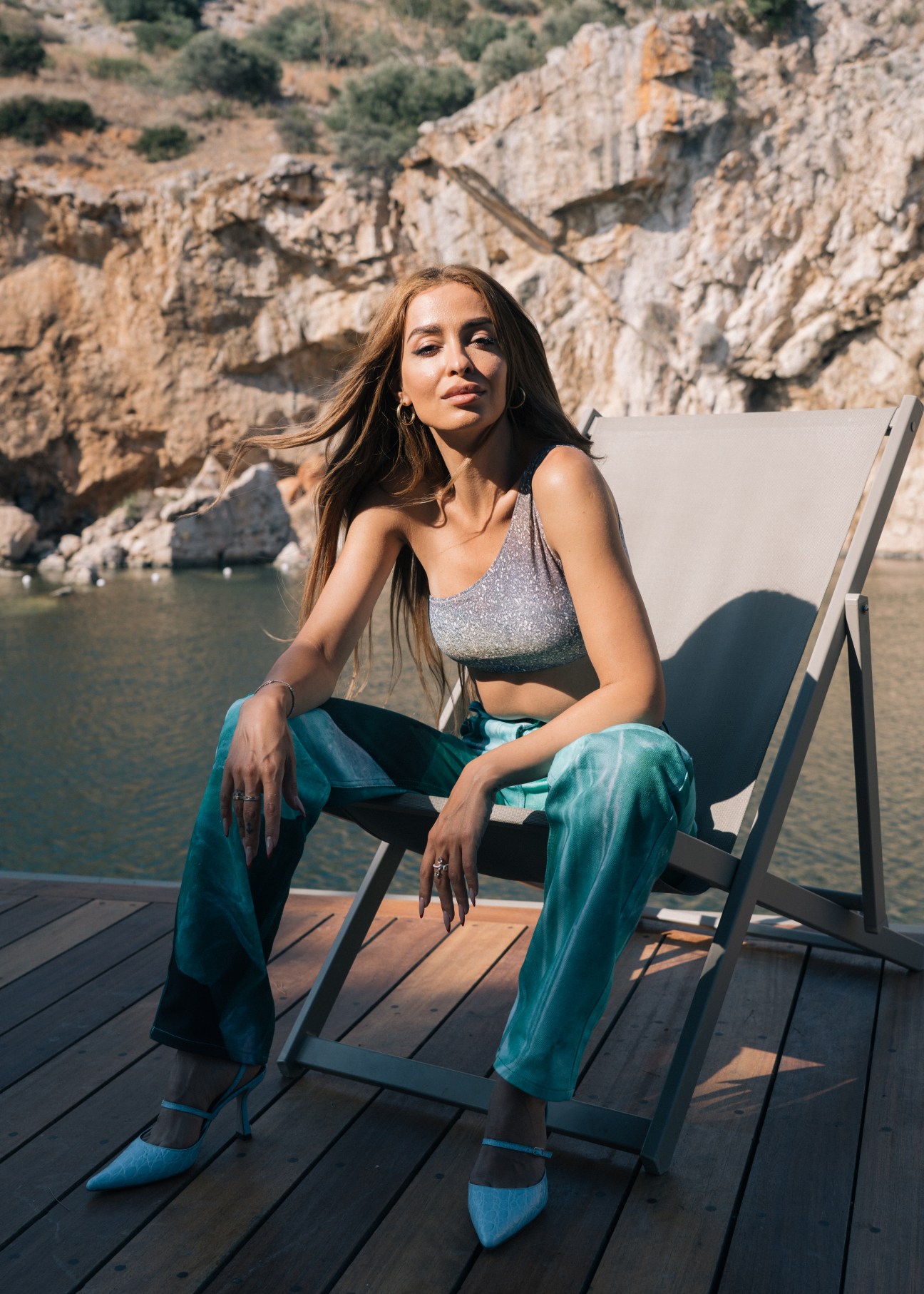
Foureira counts J Balvin, Snoop Dogg, Afro B and Faydee among her growing list of collaborators and has found notable success in Spain, where the Spanish-language versions of her songs, such as “Temperatura”, have been in heavy radio rotation. She was also invited to play at the los40 music awards in Madrid. “I performed on the same day as Dua Lipa and Bebe Rexha,” she says. “It was huge.”
“From the first day I stepped on stage I needed to express myself both through singing and dancing,” she adds. “My body wanted to express what my lips were saying. It came very naturally.” Try to resist doing the same when “Mporei” comes on.
‘Mporei’ is out now
Foureira’s summer playlist:
Shape of You – Ed Sheeran
To Kalokairi Mou – Michalis Hatzigiannis
Say So – Doja Cat
Let’s Get Loud – Jennifer Lopez
Mi Mou Milas Gia Kalokairia – Victoria Halkiti
Luedji Luna
Brazil
If you think of Brazilian music, your mind might turn to the city of Salvador, where Gilberto Gil, Gal Costa and many other famous musicians were born and made their names. Luedji Luna is the latest addition to that eminent line. “Salvador is such a musical city,” she says. “Even the way we talk, our accent is very sing-a-long.”
Although her roots are in the sunny state of Bahia, moving to São Paulo gave Luna her break. “In Salvador these days there is a monopoly of a specific kind of music called ‘axé’ [a mix of genres including calypso and reggae],” says Luna. “It was hard to do something different musically – that’s why I moved to São Paulo. It’s a very dynamic and democratic city.”

There she has come to the fore with her jazzy, soulful version of samba rhythms, sung in the smoothest, most velvety of tones. On her latest album, Bom Mesmo É Estar Debaixo D’Água (“It’s Really Good to be Underwater”), she marries that sense of blissful relaxation with powerful lyrics about Brazilian society. Mainly though, Luna explains, her album is about emotions. “It’s a deep look at how to love and be loved as a black woman,” she says. And it’s easy to fall in love with these songs.
‘Bom Mesmo É Estar…’ is out now
Luna’s summer playlist:
Palm Trees – GoldLink
Toda Sexta-Feira – Belô Velloso
Better Than – Gretchen Parlato
Smooth Operator – Zudizilla
Baby te Liguei – Afrocidade
Babe Rainbow
Australia
Aussie band Babe Rainbow ooze summer fun. Not only do they write psychedelic surf tunes but they look as though they are fresh from a 1970s Californian beach party. Much of what they do, it seems, is born of the ocean. The four surfers met on the sands of Byron Bay and have continued to expand their network that way ever since. “We met a guy in the surf at Malibu and we just ended up going to his studio,” says lead singer Angus Dowling. “I know it’s cheesy but people are just so friendly out there.” The band ended up writing most of their new album, Changing Colours, in Topanga Canyon after this chance encounter. The result feels both breezy and spontaneous and is an apt reflection of how it came about. “The majority of those songs got written the same day they were recorded,” he says. “And that’s also how they are on the record, which is pretty cool.”
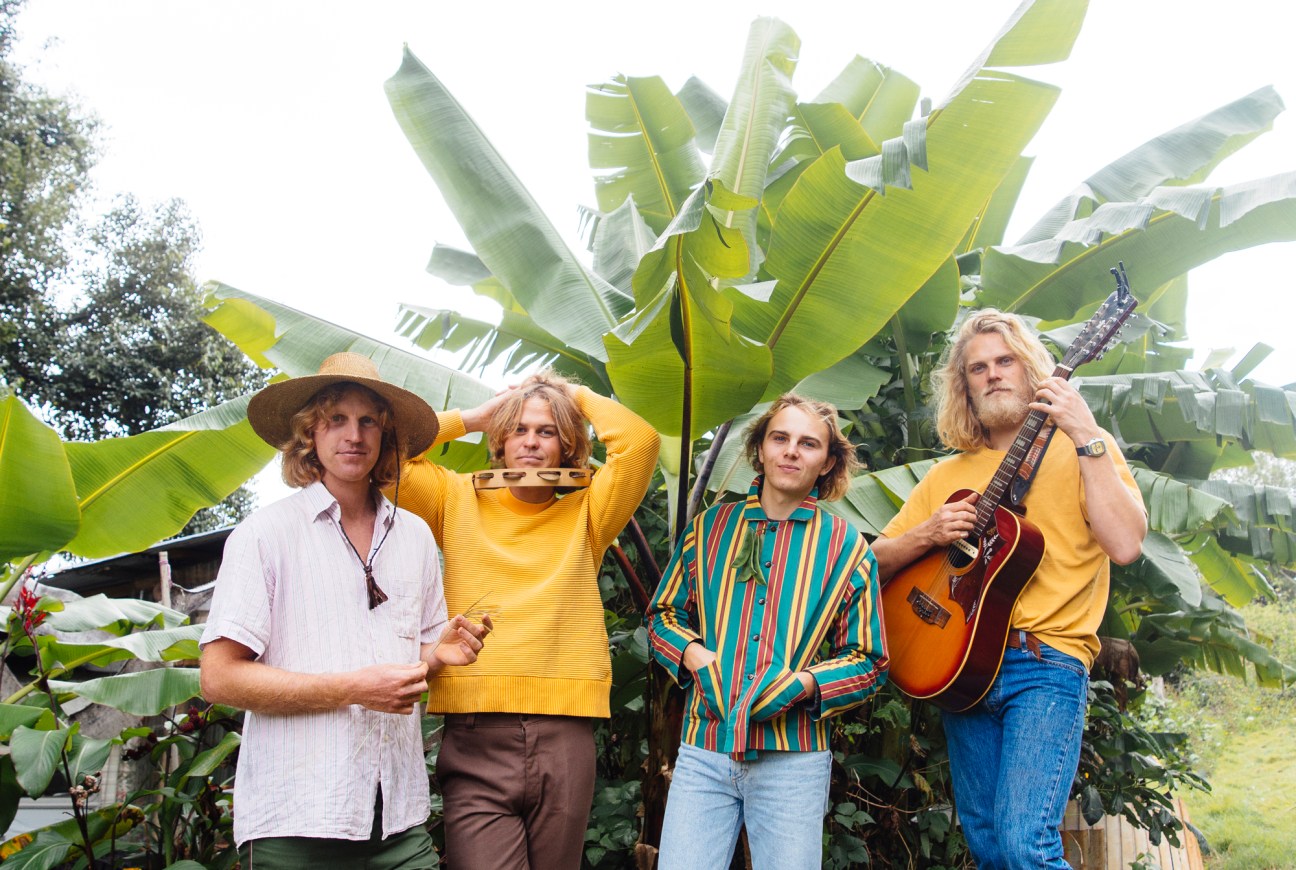
Babe Rainbow seem to draw a lot from their environment. They live in idyllic macadamia country, where two members of the band – Elliot O’Reilly and Jack “Cool Breeze” Crowther – also work on their parents’ farms, and where they have built their own studio.
Just over the ridge is Byron Bay, which Dowling describes as looking “like Peter Pan’s Neverland, the Disney version”, and you can feel some of that fantasy magic in the music they make. Changing Colours evokes these landscapes in the retro, kaleidoscopic pop that the band has become known for over their past three records. Nevertheless, the album also has moments where the waves ripple away and echoes of those Californian canyons – and the many songwriters who have written there before – ring out.
The West Coast influence doesn’t end at the recording location. After collaborating with the singer Jaden (Smith, son of actor Will Smith) on his fashion line, the band ended up working with him on the single “Your Imagination”, a soulful reworking of a lullaby. It might sound like an unlikely partnership but it certainly works on this track, which washes over listeners like a warm evening.
Not all songs were written in the Topanga studio: some came about in perhaps in an even more stereotypical surfer manner, while they were travelling on the road in Dougie, an old orange Volkswagen Kombi. “He’s the best,” says Dowling of the van that stars in this sun-bleached vignette. “We drove around in Dougie, we were surfing and making funny folk songs.” Babe Rainbow certainly know how to channel that vibe and turn it into a fun album; Changing Colours is a pan-continental summer road trip that rides through the mountains to land you straight back in the surf, where it all began.
‘Changing Colours’ is out now
Babe Rainbow’s summer playlist:
Summer Song – Chad & Jeremy
Emotion – Samantha Sang & the Bee Gees
Electric Avenue – Eddy Grant
Guitar Man – Bread
Flowers on the Wall – Tomorrow Tulips
Images: Andreas Schubert